
TL;DR

Get business pricing on tools and workshop supplies
- Business-only prices and quantity discounts
- Tax-exempt purchasing
- Multiple users, one account, clear invoices
A Hunker report describes a do-it-yourself method for making a concrete planter with an old laundry hamper as the outer mold and cardboard as the inner mold. The approach may reduce the need to buy a ready-made planter, but the report does not provide a verified cost comparison, and gardeners will need to plan for drainage and safe handling of cement-based materials.
A Hunker report describes a backyard project that uses an old laundry hamper as a concrete mold to make a custom planter, offering a potential alternative to buying a ready-made model. The method uses a smaller cardboard mold inside the hamper to create space for plants, though the finished planter needs a drainage plan and careful handling during mixing and pouring.
The hamper forms the planter’s outer shape, while a cardboard insert creates its hollow center. The report says the DIY creator applies packing tape to the sides of a hamper with openings to help keep the concrete mix from spilling out. A solid-sided hamper may reduce that preparation. A bucket, water, a measuring scoop, a trowel, and a mixing tool are among the other supplies described.
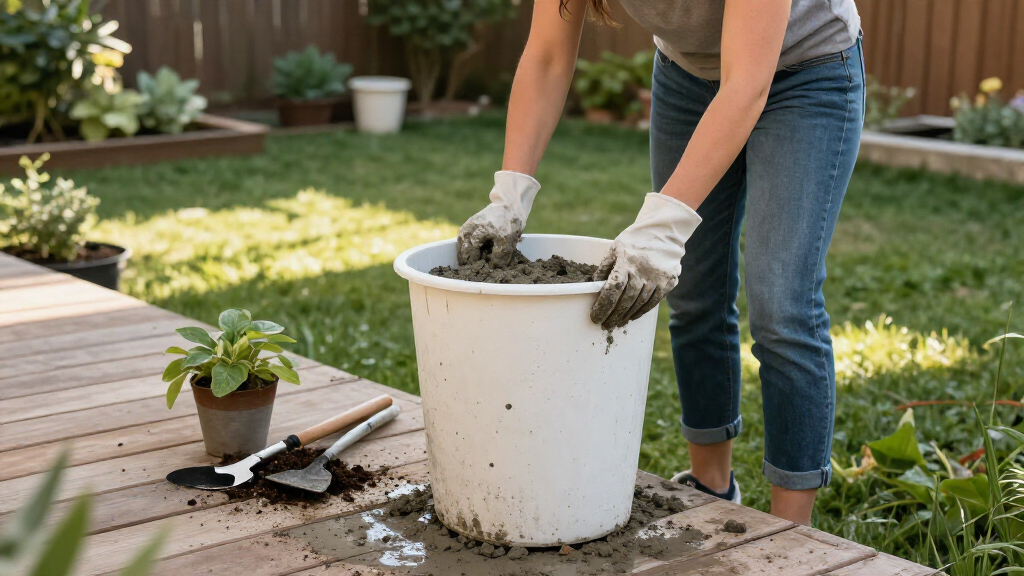
The video creator mixes cement and sand, according to Hunker, but the report says a pre-measured concrete mix is another option. With bagged mix, users add water according to the package directions. The described process starts with a thin layer of mix in the hamper, followed by the centered cardboard insert; sand placed inside the insert can help hold it in position. More mix is added around the insert, with tapping or shaking to settle it and release air bubbles. The planter must cure before the molds are removed.
The report flags a drainage hole missing from the video’s instructions. It describes two possible approaches: place a greased pipe or stopper through the base mold and remove it after curing, or drill a hole once the concrete has cured using a bit suitable for concrete. Hunker also recommends gloves, goggles, and a mask, noting that the video creator was not wearing gloves.
A Lower-Cost Route to Custom Planters
The project could appeal to people who want a large, distinctive planter without paying the retail price of a finished concrete model. Hunker gives the example of a 15.7-inch Kante concrete planter priced at more than $100. That price is an illustration from the report, not a direct comparison with the cost of making the DIY version: the article provides no full materials budget, labor estimate, or assessment of durability.
Reusing an existing hamper also gives household items another possible use. The result can be customized with different molds, textures, and finishes, but the process involves heavy wet material, curing time, and tools. For readers, the practical takeaway is that the technique offers creative flexibility, not a guaranteed saving or a ready-made substitute with established performance.
Popular right now

Dreame L40 Ultra Gen 2 Robot Vacuum and Mop

KitchenAid Artisan Series 5-Quart Tilt-Head Stand Mixer, Dried Rose (KSM150PS)

Vitamix Propel Series 510 Professional-Grade Blender, 3 Programs, Black
As an affiliate, we earn on qualifying purchases.
How the Hamper Shapes the Mold
Concrete planters are made by pouring material into a mold, so the outer container helps determine the planter’s shape. In the method described by Hunker, the laundry hamper is the outer mold and the smaller cardboard structure sets the inner cavity. The amount of space between the two determines how much concrete forms the planter’s walls and base.
Hunker says the technique can also be tried with other household containers, including an old bucket or a small trash can. The report’s video example adds decorative details using cut foam mats to create impressions and uses a stencil and spray paint for an exterior design. Those are optional customization ideas, separate from the basic steps needed to form the planter.
““The trouble is, concrete planters have a high price tag.””
— Hunker report
Costs, Strength and Drainage Details
The source does not give a complete materials cost, the time required for the planter to cure, or a tested comparison of the homemade planter’s lifespan with a purchased product. Actual cost will depend on whether the reader already owns the tools and hamper and on local prices for concrete mix and other supplies.
The report does not specify dimensions, wall thickness, a precise mix recipe for every version, or a drainage-hole size. It also does not establish how well different hamper materials withstand the weight and pressure of wet concrete. Readers should follow the concrete product’s instructions and decide how to form drainage before pouring; the supplied account does not verify a single design for every plant or container.
Plan the Mold Before Pouring
Anyone attempting the project should first choose a hamper that can contain the wet mix and make a stable inner mold with enough room for the planter walls. They should also decide whether to form a drainage opening during molding or drill one after curing, then gather protective gear and follow the mix manufacturer’s directions. Hunker points readers to the full DIY video for step-by-step guidance, but the supplied report does not give a publication date or identify a further update.
After pouring, the concrete needs to cure before the planter is demolded; the source does not state a specific curing period. Once the form is removed, users can finish the exterior with paint or leave it plain, then check that the drainage opening is clear before adding plants.
Key Questions
What materials are used to make the planter?
The method uses an old laundry hamper for the outer mold, cardboard for the inner mold, and concrete mix. The report also lists water, a bucket, a scoop or measuring cup, a trowel, and a mixing tool.
How does the project create space for plants?
A smaller cardboard mold is centered inside the hamper. Concrete fills the space between the two molds, leaving a hollow interior when the planter is demolded.
Does the planter need a drainage hole?
Yes. Hunker flags drainage as a missing step in the video and says a hole can be formed with a pipe or stopper during molding, or drilled after the concrete has cured with a bit suitable for concrete.
Is making one cheaper than buying a concrete planter?
The project may avoid the retail price of a finished planter, but the report does not provide a complete DIY budget or a direct cost comparison. It cites one 15.7-inch store-bought model priced at more than $100.
What safety gear does the report recommend?
Hunker recommends wearing gloves, goggles, and a mask while working with the mix. Follow the concrete product’s handling directions and avoid skin or eye contact with wet cement-based material.
Source: hunker.com