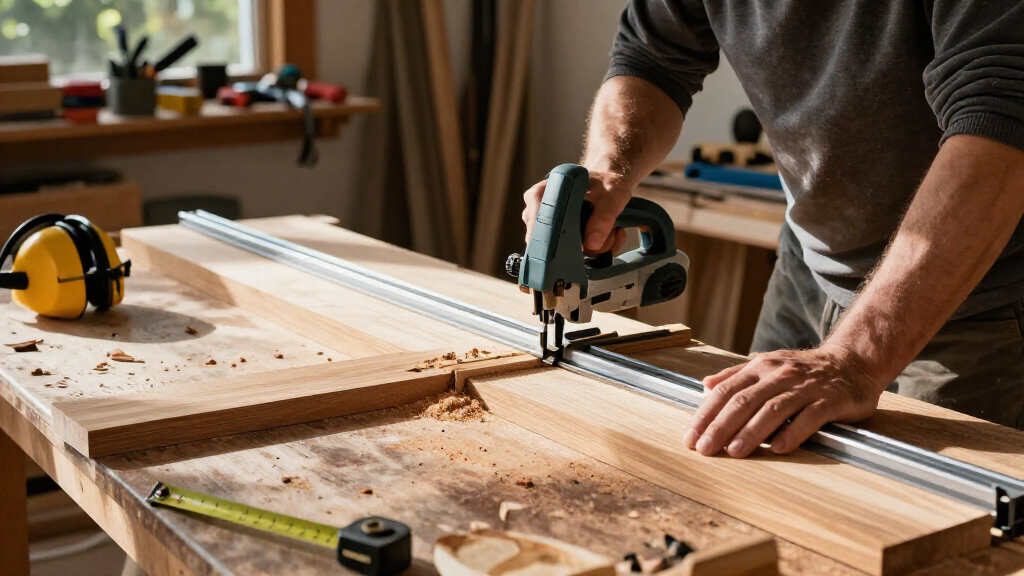

The best track saw system overall in this roundup is the Festool TS 55 FEQ-F-Plus-FS, which pairs a refined plunge saw with a 55-inch guide rail for controlled sheet-goods work. For a more complete premium setup, the Festool TS 60 bundle adds a dust extractor, while the WEN 10-Amp bundle stands out for buyers who want a long 100-inch rail without building a system piece by piece. The main tradeoffs are corded versus cordless convenience, rail length and compatibility, and whether dust extraction is part of the package. A larger blade can help with thicker stock, but it does not automatically make a system easier to guide or more useful for typical panel cuts. Read on for the full comparison and advice on matching a saw, rail, and accessories to your work.

Get business pricing on tools and workshop supplies
- Business-only prices and quantity discounts
- Tax-exempt purchasing
- Multiple users, one account, clear invoices
Complete the kit


Key Takeaways
- The Festool TS 55 is the strongest all-around choice for buyers who want a purpose-built plunge saw and a practical 55-inch rail without the larger extractor bundles.
- The bundled Festool TS 60 and TS 75 systems prioritize dust collection, but their included extractors add bulk and make the most sense for a dedicated shop setup.
- The WEN 10-Amp bundle offers the longest included rail at 100 inches, making it a distinct option for breaking down large panels without joining shorter rails.
- Battery convenience comes with a kit-planning tradeoff: Milwaukee and Kreg are bare tools, so buyers need to account for compatible batteries and chargers.
- Blade diameter is not a substitute for system fit. The larger-blade Evolution and WEN CT1274 options differ from plunge-focused models in how buyers should weigh cut capacity, rail support, and intended work.
| Evolution Power Tools R185CCSX 7-1/4-Inch Multi-Material Circular Track Saw Kit with 40-Inch Track |  | Best for Multi-Material Cutting | Power source: Corded electric, 120 V | Wattage: 1800 W | Speed: 3700 rpm | VIEW LATEST PRICE | See Our Full Breakdown |
| Milwaukee M18 FUEL 6-1/2-Inch Plunge Track Saw, Bare Tool (2831-20) |  | Best Cordless Pick | Power source: Lithium-ion battery, 18 V | Motor: POWERSTATE brushless | No-load speed: 6,300 RPM | VIEW LATEST PRICE | See Our Full Breakdown |
| Festool TS 60 Track Saw System with CT MIDI I Dust Extractor, 55-Inch Guide Rail, and Filter Bags |  | Best Complete Mid-Size System | Power source: Corded electric | Motor: Brushless EC-TEC | Maximum cutting depth: Up to 2-7/16 inches (62 mm) | VIEW LATEST PRICE | See Our Full Breakdown |
| WEN 10-Amp Plunge-Cut Circular Track Saw Bundle with 100-Inch Guide Rail |  | Best for Long Straight Cuts | Power source: Corded electric | Motor: 10 A, 1100 W | Blade diameter: 6.5 inches | VIEW LATEST PRICE | See Our Full Breakdown |
| Festool TS 75 Track Saw System with CT 36 HEPA Dust Extractor, 75-Inch Guide Rail, and Filter Bags |  | Best for Deep Cuts and High-Capacity Extraction | Saw model: 576118 TS 75 EQ-F-Plus | Dust extractor model: 577872 CLEANTEC CT 36 EI HEPA | Guide rail length: 75 inches | VIEW LATEST PRICE | See Our Full Breakdown |
| Kreg 20V Ionic Drive 6 1/2-Inch Plunge-Cut Track Saw, Bare Tool |  | Best Cordless Pick | Model: KPTPS100A | Power: 20V DC | Blade diameter: 6 1/2 inches | VIEW LATEST PRICE | See Our Full Breakdown |
| Festool TS 55 FEQ-F-Plus-FS Plunge-Cut Track Saw with 55-Inch Guide Rail |  | Best for Clean, Controlled Cuts | Model: 576708+491498 | Power: 1200W, 110V | Blade teeth: 48 | VIEW LATEST PRICE | See Our Full Breakdown |
| DEWALT DWS520K 6-1/2-Inch Track Saw Kit |  | Best for Two-Way Rail Cutting | Power: Corded electric, 12A, 1300W, 120V | Speed: 4000 RPM | Blade: 6 1/2 inches, 48 teeth, high-speed steel | VIEW LATEST PRICE | See Our Full Breakdown |
| WEN CT1274 7.25-Inch Variable Speed Track Saw |  | Best for Deeper Cuts and Speed Control | Model: CT1274 | Power: 12A, 1440W | Blade: 7.25 inches, 40-tooth carbide-tipped | VIEW LATEST PRICE | See Our Full Breakdown |
| track saw system | Weight |
|---|---|
| Evolution Power Tools R185CCSX | 18.1 pounds |
| Milwaukee M18 FUEL 6-1/2-Inch | 11.7 pounds |
| Festool TS 60 Track Saw System | 17.4 pounds |
| WEN 10-Amp Plunge-Cut Circular | — |
| Festool TS 75 Track Saw System | 22.7 pounds |
| Kreg 20V Ionic Drive 6 1/2-Inc | — |
| Festool TS 55 FEQ-F-Plus-FS Pl | 22.8 lb |
| DEWALT DWS520K 6-1/2-Inch Trac | — |
| WEN CT1274 7.25-Inch Variable | 13.3 pounds |
More Details on Our Top Picks
Evolution Power Tools R185CCSX 7-1/4-Inch Multi-Material Circular Track Saw Kit with 40-Inch Track
The Evolution R185CCSX stands apart from the wood-focused options here by being designed to cut wood, plastic, and metal without changing blades. That makes it a practical fit for renovation and fabrication jobs where material changes are routine. Its included 40-inch track gets guided cuts started without a separate rail purchase, though it offers less reach than the WEN bundle’s joined 100-inch guides or Festool’s 55-inch system rail. The 15-amp corded motor, adjustable depth, and 0–45° bevel range suit users who value versatility over cordless mobility. The tradeoffs are its 18.1-pound weight and the short included track, which can limit convenience on large sheet goods. Choose it for mixed-material capability; skip it if most of your work demands long, uninterrupted rail cuts.
Pros:- Designed to cut wood, plastic, and metal without changing blades
- Includes a 40-inch track for guided cuts
- Adjustable cutting depth and 0–45° bevel capability
- Dust extraction port and adapter are included
Cons:- Corded operation limits use away from a power outlet
- The 40-inch track is shorter than the WEN bundle’s 100-inch rail setup
- At 18.1 pounds, it is heavier than the Milwaukee M18 FUEL saw
Best for: Renovators and fabricators who need one guided saw for wood, plastic, and metal cuts.
Not ideal for: Sheet-goods users who routinely make long cuts or crews who need cordless mobility; the included rail is only 40 inches and the saw requires an outlet.
- Power source:Corded electric, 120 V
- Wattage:1800 W
- Speed:3700 rpm
- Blade diameter:7-1/4 inches
- Maximum cutting depth:2-1/2 inches
- Bevel range:0–45°
- Included track:40 inches
- Weight:18.1 pounds
Our verdict“Pick the R185CCSX if your track saw needs to handle mixed materials more than it needs long-rail reach or cordless convenience.”
Milwaukee M18 FUEL 6-1/2-Inch Plunge Track Saw, Bare Tool (2831-20)
The Milwaukee M18 FUEL 2831-20 is the lineup’s mobility-first choice: its 18 V brushless motor and plunge design let users make guided cuts without bringing a cord to the workpiece. A riving knife helps reduce blade pinching, while variable speed and smooth plunge controls support more deliberate cuts than a basic circular saw setup. Compared with the corded Evolution R185CCSX, Milwaukee is easier to move around a site, but it gives up the Evolution’s stated multi-material blade capability. This is a bare-tool package, and no track is listed among the included components, so buyers need to account for both battery and rail compatibility. Its 6-1/2-inch blade is also smaller than Evolution’s 7-1/4-inch blade, limiting maximum cut depth relative to that model.
Pros:- Cordless 18 V platform supports mobile jobsite cutting
- Brushless motor with no-load speed of up to 6,300 RPM
- Smooth plunge action and adjustable depth controls support precise cuts
- Riving knife helps reduce blade pinching and kickback
Cons:- Bare-tool package does not include a battery
- Track rail is not listed among the included components
- Its 6-1/2-inch blade is smaller than the Evolution R185CCSX’s 7-1/4-inch blade
Best for: M18 battery-system owners who make guided cuts on jobsites where cord-free setup and portability matter.
Not ideal for: Buyers starting without Milwaukee batteries or a compatible track, and anyone seeking a complete saw-and-rail kit in one package.
- Power source:Lithium-ion battery, 18 V
- Motor:POWERSTATE brushless
- No-load speed:6,300 RPM
- Blade diameter:6-1/2 inches
- Blade teeth:50
- Bevel stops:22.5°, 45°, and 48°
- Track fitment:Adjustable cam system
- Weight:11.7 pounds
Our verdict“Choose this Milwaukee if you already own compatible batteries and track equipment and want cordless plunge-saw mobility.”
Festool TS 60 Track Saw System with CT MIDI I Dust Extractor, 55-Inch Guide Rail, and Filter Bags
The Festool TS 60 system is the most integrated mid-size package here, pairing the saw with a 55-inch guide rail, CT MIDI I HEPA extractor, and filter bags. That ready-to-work combination is a sharper fit for a dedicated indoor workspace than the Milwaukee bare tool, which arrives without a battery or listed rail. KickbackStop and the rail’s splinter protection, anti-slip surface, and adjustable guide jaws support controlled, clean guided cuts; the extractor adds automatic tool activation and adjustable suction. The saw cuts up to 2-7/16 inches deep and bevels from -1° to 47°, while the larger Festool TS 75 system cuts deeper and includes a higher-capacity extractor. The TS 60’s corded power and 55-inch rail, however, are less suited to remote work or very long cuts.
Pros:- Includes saw, CT MIDI I HEPA extractor, 55-inch rail, and filter bags
- KickbackStop helps reduce kickback risk
- Guide rail includes splinter protection, anti-slip performance, and adjustable guide jaws
- Extractor offers five suction levels, automatic tool activation, and wet extraction protection
Cons:- Corded power requires access to an outlet
- The included 55-inch rail is shorter than the Festool TS 75 system’s 75-inch rail
- Maximum cutting depth is less than the TS 75’s 2-3/4 inches
Best for: Woodworkers who want a coordinated saw, guide rail, and HEPA extraction package for a shop or connected jobsite.
Not ideal for: Buyers who need cordless operation, longer rail reach, or the TS 75 system’s 2-3/4-inch cutting depth.
- Power source:Corded electric
- Motor:Brushless EC-TEC
- Maximum cutting depth:Up to 2-7/16 inches (62 mm)
- Bevel range:-1° to 47°
- Guide rail length:55 inches
- Dust extractor:CT MIDI I HEPA
- Extractor suction levels:5
- Weight:17.4 pounds
Our verdict“Choose the TS 60 package if you want a coordinated, dust-managed track saw system and do not need the TS 75’s deeper cut or longer rail.”
WEN 10-Amp Plunge-Cut Circular Track Saw Bundle with 100-Inch Guide Rail
The WEN bundle earns its place through rail reach rather than a premium saw-and-extractor package: two 50-inch guides join to support straight cuts over 8 feet long. That is a major advantage over the Evolution R185CCSX’s included 40-inch track and the Festool TS 60 package’s 55-inch rail when breaking down long panels. The bundle includes a 10-amp plunge-cut saw with a 6.5-inch carbide-tipped blade, adjustable depth, and 45° bevel capability. Its track adapters are listed as compatible with several saw brands, including Evolution, Makita, and Festool, which may make the rails useful beyond the bundled saw. The compromises are a lower-powered motor than Evolution’s 15-amp model and clamps sold separately. Buyers should also verify the specific bundle contents, since the supplied description says track is not included with the saw itself.
Pros:- Two 50-inch guides join for straight cuts over 8 feet
- Adjustable plunge depth and 45-degree bevel cutting
- Carbide-tipped blade and precision-groove saw base
- Track adapters are listed as compatible with several saw brands
Cons:- Track clamps are sold separately
- The supplied description says the track is not included with the saw itself, so bundle contents warrant checking
- The 10-amp motor has less power than the Evolution R185CCSX’s 15-amp motor
Best for: DIY woodworkers and installers who regularly break down long sheet goods and want extended rail reach.
Not ideal for: Buyers who need a complete out-of-box rail-and-saw package, supplied clamps, or greater motor power for demanding cuts.
- Power source:Corded electric
- Motor:10 A, 1100 W
- Blade diameter:6.5 inches
- Blade teeth:24
- Maximum cutting depth:2-1/3 inches
- Maximum bevel angle:45 degrees
- Track length:100 inches (two 50-inch guides)
- Warranty:Two-year limited
Our verdict“Pick the WEN setup if long guided cuts matter more than a higher-powered saw or a fully specified, ready-to-run package.”
Festool TS 75 Track Saw System with CT 36 HEPA Dust Extractor, 75-Inch Guide Rail, and Filter Bags
The Festool TS 75 system is the heavy-duty option in this group, with a 2-3/4-inch cutting depth that exceeds the TS 60’s 2-7/16 inches and the Evolution R185CCSX’s 2-1/2 inches. Its 75-inch guide rail adds reach over the TS 60’s 55-inch rail, while the CT 36 extractor’s 36-liter capacity suits longer sessions before emptying. A riving knife, slip clutch, and FastFix blade-change system add control and simplify maintenance, and the package includes five filter bags. That breadth comes with a larger, heavier system: at 22.7 pounds, it is less appealing for frequent transport than the 11.7-pound Milwaukee saw. Like the other Festool package, it is corded, and the rail still falls short of the WEN setup’s joined 100-inch reach.
Pros:- Maximum cutting depth of 2-3/4 inches
- Includes a 75-inch guide rail and CT 36 HEPA dust extractor
- Riving knife and slip clutch support controlled cutting
- Extractor offers 36-liter capacity, adjustable suction, automatic tool activation, and Bluetooth
Cons:- Corded power limits use where outlets are unavailable
- At 22.7 pounds, the system is heavier than the Milwaukee M18 FUEL saw
- The 75-inch rail offers less reach than the WEN bundle’s joined 100-inch guides
Best for: Cabinetmakers and woodworkers who cut thick stock and want high-capacity dust extraction for sustained shop work.
Not ideal for: Mobile crews, users who prioritize a lighter saw, or buyers whose longest cuts call for more than the included 75-inch rail can provide.
- Saw model:576118 TS 75 EQ-F-Plus
- Dust extractor model:577872 CLEANTEC CT 36 EI HEPA
- Guide rail length:75 inches
- Maximum cutting depth:2-3/4 inches
- Dust extractor capacity:36 liters (nearly 9.5 gallons)
- Extractor suction levels:5
- Filter bags included:5 SELFCLEAN filter bags
- Weight:22.7 pounds
Our verdict“Choose the TS 75 if deep cuts and large-capacity extraction matter more than portability or maximum rail length.”
Kreg 20V Ionic Drive 6 1/2-Inch Plunge-Cut Track Saw, Bare Tool
Cordless operation is the Kreg’s main advantage: it suits job sites and garage work where moving a cord around large panels would get in the way. Its blade-left layout is intended to give right-handed users a clearer view of the cut, while anti-kickback protection and an electronic brake add control. Unlike the corded DEWALT DWS520K, it does not need an outlet nearby, but the Kreg arrives as a bare tool, with both battery and charger sold separately. Its compatible 62-inch guide track is also separate, so the package does not provide a complete track setup out of the box. I’d choose it for portable wood cutting, not for buyers who want an all-in-one system or already value the included rail on the Festool TS 55.
Pros:- 20V cordless design makes guided cutting easier to move between work areas.
- Blade-left layout is designed to improve cut visibility for right-handed users.
- Anti-kickback protection and an electronic blade brake add control.
- Compatible with Kreg’s 62-inch guide track for cutting wood, including plywood.
Cons:- Battery and charger are not included.
- The compatible guide track is sold separately, so the bare tool is not a complete track saw system.
Best for: Right-handed woodworkers who already own compatible Kreg 20V batteries and need to make guided cuts away from a fixed workshop outlet.
Not ideal for: First-time track-saw buyers seeking a ready-to-use kit, since the battery, charger, and compatible guide track are all sold separately.
- Model:KPTPS100A
- Power:20V DC
- Blade diameter:6 1/2 inches
- Bevel range:-1° to 47°
- Blade position:Left
- Safety features:Anti-kickback protection; electronic blade brake
- Compatible guide track:Kreg 62-inch Guide Track
- Included components:Bare tool; battery, charger, and track not included
Our verdict“Choose the Kreg if cordless mobility matters most and you already have compatible batteries; skip it if you need a complete kit.”
Festool TS 55 FEQ-F-Plus-FS Plunge-Cut Track Saw with 55-Inch Guide Rail
The Festool TS 55 is the pick here for buyers who want the saw and guide rail together, with cut-control features aimed at cleaner, more predictable work. Its included 55-inch rail and splinter guard help keep cuts aligned and reduce tear-out, while the riving knife supports safer cutting and positioning in existing joints. The 1200-watt corded motor favors steady workshop use over the freedom of the cordless Kreg, and the matched extraction setup is intended to help manage debris. Compared with the DEWALT DWS520K, this package also includes a rail, but the Festool’s 22.8-pound listed weight makes handling less appealing for frequent repositioning. Its 90°-to-47° bevel range adds flexibility, though this is a more involved setup than a basic saw-and-track pairing.
Pros:- Includes a 55-inch guide rail, so the saw comes with a matched cutting guide.
- Splinter guard helps reduce tear-out on both sides of the cut.
- Riving knife supports safer cutting and positioning in existing joints.
- Bevel capability reaches from 90° to 47°.
Cons:- Listed weight of 22.8 pounds may make repeated repositioning tiring.
- Corded 110V operation is less convenient away from workshop power than the cordless Kreg.
- The included 55-inch rail may not suit buyers who need a longer cutting setup.
Best for: Cabinetmakers and furniture builders who want a matched rail, splinter guard, and riving knife for controlled cuts in a workshop.
Not ideal for: Mobile crews or buyers who frequently lift and reposition a saw, since the listed 22.8-pound weight can make handling more demanding.
- Model:576708+491498
- Power:1200W, 110V
- Blade teeth:48
- Bevel capability:90° to 47°
- Guide rail:55 inches, included
- Included components:Saw, blade, cord, systainer, and 55-inch track
- Weight:22.8 lb
- Warranty:3-year manufacturer warranty
Our verdict“Pick the Festool TS 55 for a rail-included setup focused on clean, controlled workshop cuts, not for lightweight portability.”
DEWALT DWS520K 6-1/2-Inch Track Saw Kit
The DEWALT stands out for its dual-edged, zero-clearance track system, which supports guided cuts in either direction—a practical distinction when panel layout or workpiece access changes. Its anti-splinter edges aim for clean results, while the riving knife, anti-kickback mechanism, and low-profile guard support controlled plunge and bevel cuts. A vacuum connection can collect up to 90% of dust, making this a useful option for indoor cutting where cleanup matters. Compared with the Festool TS 55, the DEWALT’s standout system feature is bidirectional track use; the Festool package, by contrast, explicitly includes a 55-inch rail. The DWS520K is corded, and its 2-1/8-inch on-track cutting depth at 90° sets a firm limit on thicker stock.
Pros:- Dual-edged track system supports straight cuts in either direction.
- Zero-clearance design and anti-splinter edges support cleaner cuts.
- Anti-kickback mechanism, riving knife, and low-profile blade guard aid controlled cutting.
- Vacuum attachment can collect up to 90% of dust.
Cons:- Corded power limits mobility compared with the cordless Kreg.
- On-track cutting depth at 90° is limited to 2-1/8 inches.
- The supplied product details do not specify a guide-rail length.
Best for: Woodworkers who make frequent guided cuts from either side of a workpiece and want dust collection and safety features for indoor use.
Not ideal for: Buyers cutting stock thicker than 2-1/8 inches on the track, or those who need cordless mobility for work away from outlets.
- Power:Corded electric, 12A, 1300W, 120V
- Speed:4000 RPM
- Blade:6 1/2 inches, 48 teeth, high-speed steel
- Cutting depth at 90° on track:2-1/8 inches (54 mm)
- Cutting depth at 45° on track:1-5/8 inches (41 mm)
- Track system:Dual-edged, zero-clearance system
- Dust collection:Vacuum attachment can collect up to 90% of dust
- Included components:48-tooth finishing blade, blade wrench, kit box, heavy-duty track saw
Our verdict“Choose the DEWALT for its bidirectional rail system and dust-control features, provided its cord and on-track depth suit your work.”
WEN CT1274 7.25-Inch Variable Speed Track Saw
The WEN CT1274’s 7.25-inch blade and 2.6-inch maximum cut depth give it more depth capacity than the DEWALT DWS520K’s 2-1/8 inches on track at 90°. Its variable 2000–6000 RPM range also lets buyers adjust speed for different materials, while the included carbide-tipped blade and 360-degree dust-port adapter make it a versatile starting point for a small shop. The tradeoff is that this is not a complete track setup: compatible WEN tracks and clamps are sold separately. Unlike the rail-included Festool TS 55, the WEN requires separate purchases before it can serve as a guided cutting system. Its 13.3-pound weight and corded power also make it less appealing for overhead work or moving between locations.
Pros:- 7.25-inch blade provides a maximum 2.6-inch cut depth at 90°.
- Variable speed from 2000 to 6000 RPM allows adjustment across cutting tasks.
- Includes a 40-tooth carbide-tipped blade and 360-degree dust-port adapter.
- Can function as a track saw or standalone plunge saw.
Cons:- Compatible tracks and clamps are sold separately.
- Corded operation restricts mobility compared with the cordless Kreg.
- At 13.3 pounds, it may cause fatigue during extended overhead use.
Best for: Workshop users cutting thicker plywood, doors, and furniture parts who want variable speed and already plan to buy compatible WEN tracks and clamps.
Not ideal for: Buyers seeking a ready-to-use rail kit or a light, cordless saw for frequent transport and overhead cuts.
- Model:CT1274
- Power:12A, 1440W
- Blade:7.25 inches, 40-tooth carbide-tipped
- Speed range:2000–6000 RPM
- Maximum cut depth at 90°:2.6 inches
- Maximum cut depth at 45°:1.85 inches
- Bevel range:0–45°
- Weight:13.3 pounds
- Track and clamps:Compatible WEN tracks and clamps sold separately
Our verdict“Choose the WEN for greater cut depth and adjustable speed if you are willing to assemble the track setup separately.”
How We Picked
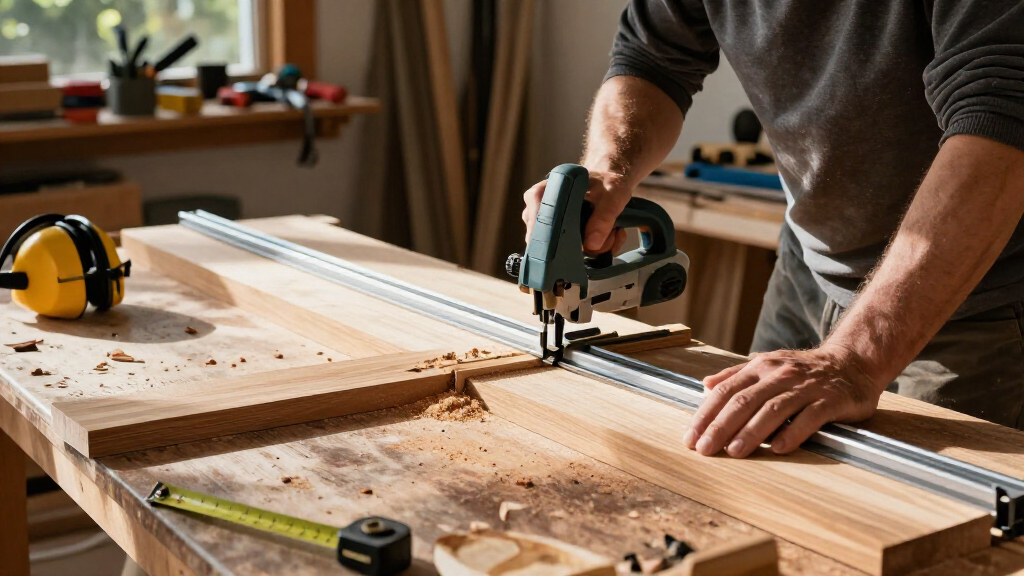
I ranked these track saw systems by how well their saw, rail, power source, and included accessories work together for real cutting tasks. I gave weight to plunge control, guide-rail usefulness, cut capacity, dust-management options, setup demands, and whether a buyer gets a usable system in the box or must add key components. A longer rail can simplify full-panel cuts, but it is not automatically better for storage or everyday smaller work; a bundled extractor adds value only when its capacity and footprint suit the shop.
The order favors well-rounded, purpose-built setups first, followed by packages with a clear advantage for a particular buyer. The Festool TS 55 leads for its balanced saw-and-rail format, while the TS 60 and TS 75 bundles rank highly for buyers who place more emphasis on extraction and a ready-to-work shop setup. Cordless bare tools rank lower for a first-time system purchase because their usefulness depends on owning compatible batteries and sourcing a rail. Value, simplicity, and specialist strengths shape the remaining placements rather than raw blade size alone.
Factors to Consider When Choosing Track Saw Systems
A track saw is only as useful as the system around it. I would choose based on the cuts you make most often, the shop space you have, and what you already own—not just the saw’s motor or blade diameter.
Match Rail Length to the Material You Cut
A rail needs to support the cut from the saw’s starting position through its finish, with enough room for the tool to travel steadily. Short rails are easier to carry and store, while long rails reduce repositioning when cutting full sheets or long worktops. Joining rails can cover longer cuts, but every joint adds setup time and another place where alignment can drift. A common mistake is buying the longest rail available without checking whether it fits the vehicle, wall storage, or work surface. Before choosing, measure the panels you handle most and confirm whether the system supports compatible extensions or connectors. For mixed projects, a manageable rail with a sound extension path can be more useful than a single oversized guide.
Check What the Package Actually Includes
Product names can make a saw sound like a complete system even when the box contains only the tool. Verify whether the package includes a guide rail, clamps, joining hardware, a blade, batteries, charger, and dust adapter. A bare cordless tool may be a sensible addition to an existing battery platform, but it can become an incomplete first purchase if the rail and power gear are missing. Bundles with an extractor may reduce setup decisions, though they take up more space and may include equipment beyond a small shop’s needs. Compare the full working setup you need, not just the main saw. This check helps prevent the common surprise of needing several separate purchases before making a first cut.
Choose Corded or Cordless Around Your Work Routine
Corded saws suit stationary work and long sessions where continuous power matters more than freedom of movement. Cordless models are easier to position on a jobsite or in a crowded space, especially when outlets are inconvenient. Their practical performance depends on battery capacity, charge availability, and whether the buyer already owns compatible packs. Do not compare a bare cordless tool with a complete corded kit as though they are equivalent packages. If you cut large panels repeatedly, plan for battery changes or keep a spare ready; if your work is occasional and near an outlet, a corded system may be simpler. The best choice is the one that removes friction from your usual setup, not the one with the most convenient-sounding power source.
Plan Dust Collection Before Buying Accessories
Track saws can produce substantial fine dust, and the saw’s dust port is only one part of the collection setup. Check the port size and adapter needs, then confirm that your extractor or shop vacuum can work with the tool and hose arrangement. A bundled extractor can make a system easier to deploy, but its footprint, filter needs, and storage demands matter as much as its inclusion. Small shops may prefer an existing compatible vacuum rather than a second extraction unit. Also account for how hose drag could affect movement along the rail, particularly on long cuts. A practical extraction setup is one you can keep connected and use consistently.
Treat Blade Size and Cut Depth as Task-Specific
Blade diameter affects the saw’s potential cutting depth, but the actual usable depth depends on the tool’s design and whether it is cutting with or without a rail. Buyers working mostly with sheet goods may benefit more from clean guidance and repeatable plunge control than extra capacity. Thicker solid stock calls for checking the manufacturer’s stated depth and confirming that the blade is suitable for the material. Larger blades can also influence tool size and handling, so they should not be chosen by diameter alone. Match the saw to the thickest material you regularly cut rather than an occasional theoretical job. For rare oversized cuts, another method may be more convenient than carrying a larger system every day.
Check Rail Compatibility and Long-Term Support
Rails, splinter strips, connectors, and clamps shape how easy a system is to expand after the initial purchase. Before mixing brands, confirm compatibility rather than assuming that similar-looking profiles will align or support the saw correctly. A system with accessible replacement strips and extension parts can be easier to maintain as a shop’s needs change. Think about whether you want to keep one rail standard across multiple tools, since that can reduce accessory clutter. Also check how the rail is secured on narrow workpieces and whether your usual cut layout leaves room for clamps. Buying into a rail ecosystem is a longer-term decision than choosing a blade or making a one-time cut.
Frequently Asked Questions
Should I buy a complete track saw bundle or assemble the system separately?
A bundle is a good fit when it includes the rail and accessories you need for your first cuts, particularly if it also solves a dust-collection need. Separate purchases make more sense when you already own a compatible extractor, batteries, or rails. Check every included item against your current setup; a package can contain useful extras while still leaving out clamps or a needed connector. Also compare the rail length with the size of your workpieces. The right choice is the one that gets you to a complete, compatible setup without buying duplicate equipment.
Can I use a track saw without a dust extractor?
Many track saws can cut without an extractor attached, but the result is more dust around the work area and more cleanup. If you cut indoors or work with sheet goods often, dust collection should be part of the buying decision rather than a later afterthought. Check the saw’s port and the hose or adapter required for your vacuum. A shop vacuum may be enough for some buyers if the connection fits and the unit handles the dust load. Bundled extractor systems suit people who want a coordinated setup, while buyers with compatible equipment may not need another machine.
Is a cordless track saw a good first system?
It can be, if you already own batteries and a charger that match the tool and can source the right guide rail. Cordless operation helps when moving around a jobsite or cutting away from convenient outlets. A bare tool is less straightforward as a first purchase because it may not include the rail or power accessories needed for a working setup. For long cutting sessions, battery changes also need to fit your workflow. If you are starting from scratch and mostly work in one shop, compare complete corded packages before choosing cordless for convenience alone.
Do I need a 100-inch guide rail to cut full sheets?
Not necessarily; the rail length should match the cut path and the way you position the panel. A long rail can reduce repositioning and avoid a joined section, but it takes more room to store and transport. Shorter rails can handle large work when compatible connectors are available and carefully aligned. Check the dimensions of the panels and the cuts you make most often, including any extra travel needed to start and finish the cut. If your work is mostly smaller cabinets or trim parts, a very long rail may spend more time stored than in use.
Should I choose a larger-blade saw for thicker material?
Choose by the saw’s stated cutting capacity and the material you regularly process, not by blade diameter alone. A larger blade may provide more potential depth, but design and rail use affect the actual cut. For sheet goods and standard panel work, control, rail fit, and plunge handling may matter more than extra capacity. If you routinely cut thick stock, verify the tool’s specifications and blade availability before buying. Occasional thick cuts may not justify carrying a larger saw for every job.
Conclusion
For the broadest mix of controlled cutting and a practical rail setup, I recommend the Festool TS 55 FEQ-F-Plus-FS as best overall. The WEN 10-Amp bundle is my best value pick for buyers who want a long rail included, while the Festool TS 60 system is the best premium choice for a buyer seeking a saw-and-extractor package. Beginners should favor a complete bundle with a rail and clear accessory fit; the WEN package is a straightforward starting point if its corded format and long rail suit the workspace. For a large-shop or extraction-focused setup, the Festool TS 75 bundle is the specific-purpose choice, while Milwaukee or Kreg makes more sense for buyers already invested in the matching battery platform. Match the rail and included equipment to your regular cuts, and the right system becomes much easier to pick.
Black Friday Picks

Vitamix 5200 Blender with 64 oz Container, Black
As an affiliate, we earn on qualifying purchases.