
TL;DR
Interior designer Aniela Thorman has called herringbone flooring the “Live, Laugh, Love” of interiors, linking its tired image to mass-market luxury vinyl imitations and its use in modern, neutral homes. The criticism is a designer’s opinion, not evidence that the flooring style has universally fallen out of fashion; the report also notes that other designers continue to support it.
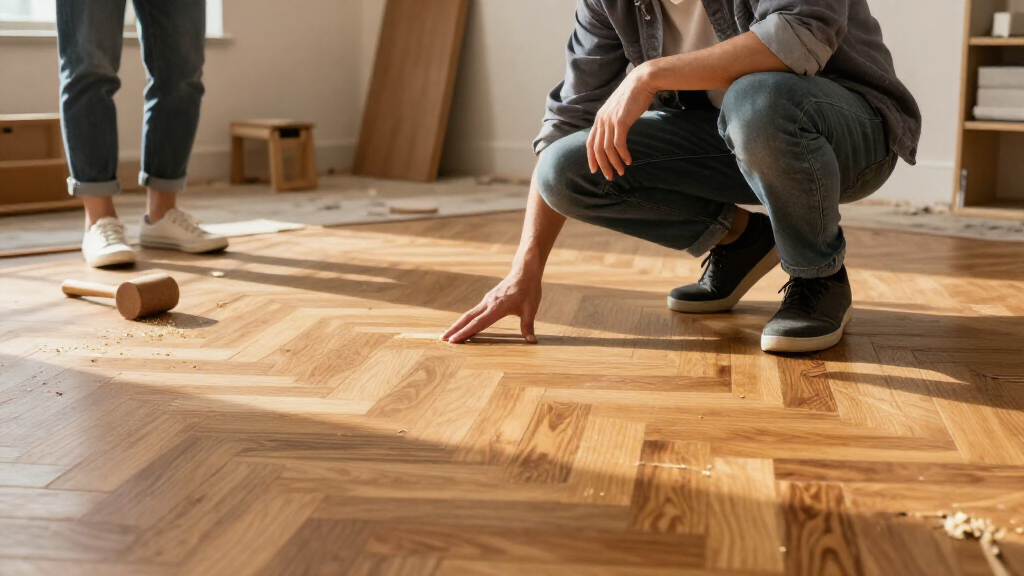
Interior designer Aniela Thorman has called herringbone flooring the “Live, Laugh, Love” of interiors, arguing that its widespread use in mass-market flooring and modern neutral homes has made a once-classic pattern feel overexposed. The comparison reflects Thorman’s design opinion, not a verified industry-wide shift, and other designers cited by Livingetc defend the pattern’s continuing appeal.

Get business pricing on tools and workshop supplies
- Business-only prices and quantity discounts
- Tax-exempt purchasing
- Multiple users, one account, clear invoices
Thorman, of @foundry.interiors, told Livingetc that the pattern’s current image is tied in part to the growth of luxury vinyl tile (LVT). She argued that manufacturers use herringbone as a way to make lower-cost materials appear more high-end. In her view, widespread imitation has altered how people perceive the layout, even though the pattern itself has a much longer history.
She also said herringbone can feel out of place in some contemporary homes, especially when paired with synthetic materials, grey finishes and stark black-and-white schemes. The layout, she argued, is more at home in period properties with architectural details such as high ceilings and decorative molding. For many modern spaces, Thorman said, straight timber planks can be a better fit because they create a more linear look and may visually lengthen walls.
The Livingetc report presents the debate as one about where and how the pattern is used, rather than a simple verdict on its quality. It says some designers still favor herringbone for the movement and rhythm it adds to a room. The supplied report excerpt does not include their full comments, so the reasons and qualifications behind their support are not available here.
Why Herringbone’s Setting Matters
The discussion matters to homeowners planning renovations because a recognizable pattern can shape the feel of a room as much as the flooring material does. Thorman’s criticism points to a practical design question: whether a popular layout complements a home’s architecture, proportions and finishes, rather than whether it is fashionable in the abstract.
Her comments also distinguish the pattern from the products used to reproduce it. A herringbone arrangement in natural timber is not the same material choice as an LVT imitation, even if the layout looks similar. Readers should treat the “Live, Laugh, Love” comparison as a pointed personal judgment about overuse and presentation, not as proof that the pattern has lost all design value. The report supplies no survey or market data showing how many homeowners or designers have moved away from it.
Popular right now

Breville Barista Express Espresso Machine with Built-In Grinder, Brushed Stainless Steel (BES870XL)

KitchenAid 5.5-Qt Bowl-Lift Stand Mixer, Porcelain White

Shark Pet Cordless Stick Vacuum, Up to 40-Minute Runtime, Lightweight, Ocean Blue, IX141
As an affiliate, we earn on qualifying purchases.
A Pattern With a Long History
Livingetc traces herringbone flooring to the 16th century, describing how a zigzag arrangement associated with older stone patterns was adopted for wooden floors and became linked with European luxury interiors. The article says its historical associations help explain why the pattern can look at home in Georgian, Victorian or Edwardian properties, where traditional architectural details provide a similar visual setting.
The report also describes a more recent change in how the pattern appears: it has become common in modern new-builds and widely available in less expensive flooring products. Thorman’s argument is that this shift in setting and material has helped make herringbone feel generic. The article’s broader point is that online design references can encourage homeowners to repeat familiar choices rather than select finishes for the individual character of a space.
“I called it that because of the massive influx of LVT (luxury vinyl tile) flooring.”
— Aniela Thorman, interior designer
No Industry-Wide Verdict Yet
The report does not establish that herringbone flooring has broadly gone out of style. Thorman’s remarks are one designer’s assessment, and the article says other designers continue to support the pattern. The available source excerpt cuts off before their full arguments are provided, leaving that side of the debate incomplete.
It is also unclear how widespread the claimed shift is among designers, retailers or homeowners. The source gives no sales figures, polling, or other data comparing demand for herringbone with straight-plank flooring. The criticism concerns the pattern’s use in particular materials and interiors; it does not show that all herringbone floors, or all LVT products, look alike.
How Designers Apply the Debate
The immediate next step for readers considering new flooring is to compare options against the specific room and building, not to assume the pattern is either dated or universally suitable. Natural timber, vinyl and other products can differ in appearance, cost and performance, and the report does not offer a product-by-product assessment.
Livingetc’s article frames the question as an ongoing disagreement between critics and supporters, rather than announcing a formal trend change. Further details from the designers defending herringbone, as well as any evidence of changing consumer demand, would help clarify whether its reputation is shifting beyond this debate.
Key Questions
Who called herringbone flooring the “Live, Laugh, Love” of interiors?
Aniela Thorman, an interior designer associated with @foundry.interiors, used the comparison in comments reported by Livingetc.
Why does Thorman criticize herringbone floors?
She says mass-market LVT imitations and the pattern’s use in grey, neutral modern homes have made it feel overused and, in some settings, out of place.
Have herringbone floors definitively gone out of style?
The report does not prove an industry-wide change. It presents Thorman’s view alongside continued support for the pattern from other designers.
What flooring does Thorman suggest for some modern homes?
She says longer, straight-plank timber can suit modern spaces, where its linear appearance may visually extend walls.
Source: livingetc.com