TL;DR

Get business pricing on tools and workshop supplies
- Business-only prices and quantity discounts
- Tax-exempt purchasing
- Multiple users, one account, clear invoices
The most cost-effective way to upgrade your home with power tools is to buy four versatile tools — a cordless drill, circular saw, oscillating multi-tool, and sander — on a single battery platform, rent anything you’ll use less than twice a year, and start with high-payback projects like trim, shelving, and deck repairs. Quality over quantity saves money because versatile tools replace a dozen single-purpose gadgets, and proper maintenance can double tool lifespan.
The average contractor-led kitchen remodel runs $25,000 or more. A cordless drill, a circular saw, a weekend, and $300 in lumber can transform a tired wall into custom built-ins. That arithmetic is the foundation of cost-effective DIY: when labor is the dominant cost of a project, the tool that lets you supply that labor yourself pays for itself quickly — often on the first job.
The common failure mode is the opposite strategy: homeowners buy the wrong tools, at the wrong time, for the wrong projects. Many end up owning six single-purpose gadgets that each do one job adequately, while a compact set of four versatile tools covers roughly 80% of residential work. The difference isn’t budget — it’s selection. Versatility per dollar, not tool count, is the metric that matters.
This guide covers the full picture: which tools actually earn their shelf space, how to buy them without overpaying, when renting beats buying, and which projects deliver the biggest return per hour of effort. It also covers safety and code boundaries, because the economics only work if you stay out of the ER and pass inspection — an injury or a red-tagged permit can erase years of tool savings in a single afternoon.
Start with four versatile tools — cordless drill, circular saw, oscillating multi-tool, random orbital sander — instead of a big multi-tool kit; versatile tool…
Commit to one battery platform and buy bare tools afterward: bare tools cost 40–60% less than kit versions, saving 30–50% on your tool collection over time.
Rent anything you’ll use fewer than twice a year (wet tile saw, floor nailer, concrete tools) — rental counters also give you pro-grade machines for $40–80/day.
Target labor-heavy projects for the fastest payback: trim replacement can save $1,500+ on a single home, and cabinet hardware swaps refresh a kitchen for under…
Buy factory-reconditioned and used pro-grade tools at 25–40% off, but never cheap out on blades, bits, or PPE — dull accessories cause kickback and injuries.
The Only 4 Power Tools You Actually Need to Start
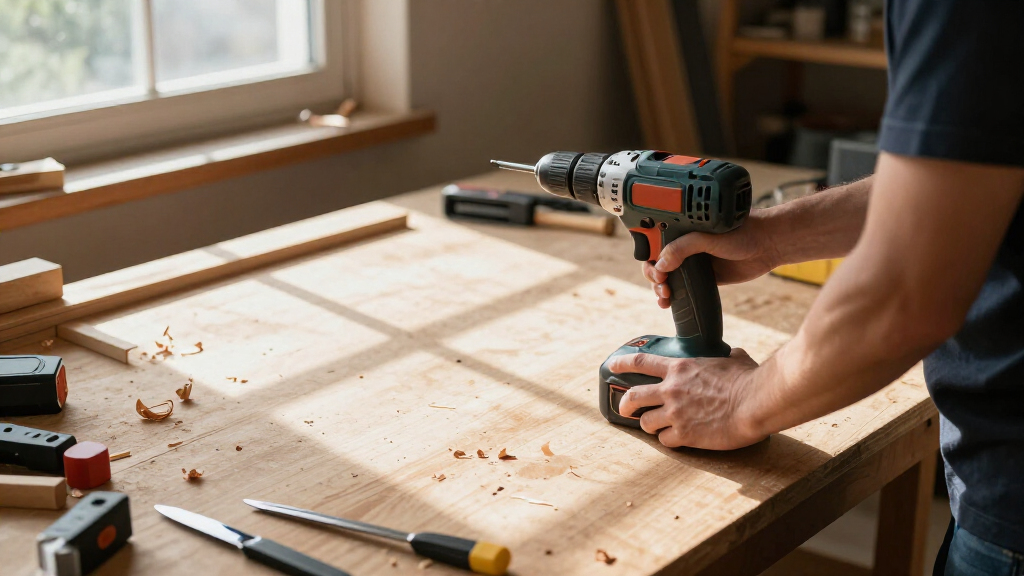
A beginner homeowner needs exactly four power tools to handle most home upgrade projects: a cordless drill/driver, a circular saw, an oscillating multi-tool, and a random orbital sander. This quartet covers drilling, driving, cutting sheet goods and lumber, flush-cutting, plunge-cutting into walls, and surface prep. Everything else is specialized equipment you rent when needed.
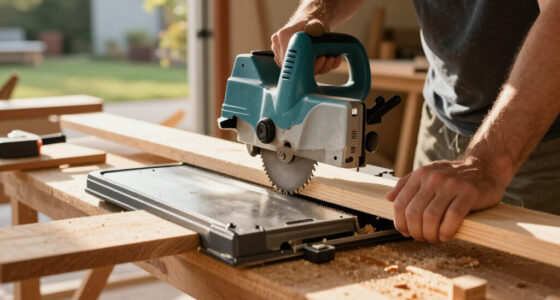
Why these four? Versatility — and the economics of versatility. Each of these tools appears across many unrelated project types, which means its cost is spread over dozens of uses. A drill hangs shelves, assembles furniture, installs cabinet hardware, and mixes paint with a paddle attachment. A circular saw breaks down plywood for built-ins and cuts deck boards. The oscillating multi-tool is the only tool on the list with no practical substitute: it plunge-cuts drywall for outlet boxes, flush-cuts nails and trim, and reaches corners no other saw can. That irreplaceability is exactly why it belongs in the starter set — without it, certain common remodeling tasks simply can’t be done cleanly, which pushes you back toward hiring out work you could otherwise do yourself.
The classic mistake is the opposite approach: a 100-piece tool kit for $199 that includes nine tools, all of them underpowered. The economics look attractive per tool but fail per use — the drill is likely to burn out within a year of regular use, and the rest sit idle in the case. Bundled kits distribute a fixed budget across tools of uneven usefulness, so you pay for tools you’ll rarely use at the expense of quality in the ones you’ll use weekly.
One quality tool that lasts ten years costs less per use than three cheap tools that last eighteen months.
Skip the specialty gadgets — rotary tools, electric nailers, heat guns — until a specific project demands them. Borrow or rent first. The reasoning: specialty tools solve one problem, so their cost-per-use is terrible unless that problem recurs. Half the time, the project that justified the purchase is the last time you’ll ever need it.
Popular right now

Bose QuietComfort Wireless Bluetooth Headphones with Active Noise Cancellation, Mic, USB‑C Charging, Deep Bass, 24‑Hour Battery – White Smok

Bose QuietComfort Wireless Noise-Cancelling Over-Ear Headphones, Black

Apple AirPods Pro 3 Wireless Earbuds with Active Noise Cancellation
As an affiliate, we earn on qualifying purchases.
One Battery Platform: The Trick That Saves You 30–50%
The single biggest money-saver in power tool buying is committing to one battery platform across all your tools. Bare tools — sold without batteries or charger — typically cost 40–60% less than full kit versions, because the battery often accounts for a third or more of a kit’s price. Once you own two batteries and a charger, every future tool purchase gets dramatically cheaper.
Here’s how it plays out in real dollars. Say you buy a drill kit for $179 that includes two 4.0Ah batteries and a charger. Your next purchase — a circular saw, an impact driver, a work light — comes as a bare tool for $89 instead of $159. By tool number five, you’ve saved enough to buy tool six. The implication is significant: the platform decision you make on your very first tool purchase shapes the cost of every purchase after it. That’s why the first kit deserves more research than any subsequent tool — you’re not buying a drill, you’re buying into an ecosystem.
Pick your platform with your eyes open. The major platforms all make solid homeowner-grade lines. Check three things before you commit:
- Battery compatibility across generations — does the brand’s newer tools accept your older batteries? If not, your savings compound stops the moment the brand updates its line.
- Tool availability — can you walk into a store and buy the bare tool you need today? A platform with thin retail availability forces you into kit purchases, defeating the strategy.
- Landscape equipment — if you’ll eventually buy a string trimmer or blower, staying on one battery family saves hundreds more, because outdoor tools carry some of the highest battery costs in any lineup.
Modern lithium-ion batteries have made this strategy viable. Today’s cells hold charge for months, charge in under an hour on fast chargers, and deliver runtime that cordless tools from a decade ago couldn’t touch. For a homeowner doing weekend projects, two batteries rotated means you never wait on a charge — which matters more than it sounds, because dead battery downtime is the most common reason casual DIYers abandon a half-finished project.
Corded vs. Cordless vs. Rental: Which Tool Goes in Which Column
The cheapest tool is the one you use constantly; the most expensive is the one you use once. Match each tool to how often you’ll use it — buy the workhorses, rent the rare birds, and stay corded for high-draw stationary work. That single rule prevents more wasted money than any sale or coupon ever will, because it addresses the root cause of tool overspending: buying for imagined projects rather than actual ones.
Here’s the decision framework, grounded in how frequently each tool typically appears in residential work:
| Tool | Buy or Rent | Why |
|---|---|---|
| Cordless drill/driver | Buy (brushless, 18V/20V class) | Used on every project, weekly |
| Circular saw (7-1/4″) | Buy cordless if on-platform, else corded | Frequent, moderate power draw |
| Oscillating multi-tool | Buy | Cheap, irreplaceable for remodeling |
| Random orbital sander | Buy corded ($60–100 class is fine) | Sanding kills batteries; corded runs all day |
| Miter saw | Buy used, 10″ slider | Trim and decking pay it off fast |
| Wet tile saw | Rent ($40–70/day) | One bathroom = maybe twice ever |
| Concrete/core drill | Rent — and often hire out | Dangerous, expensive, permit-adjacent |
| Floor nailer | Rent ($30–50/day) | One hardwood floor job |
The contractor’s rule of thumb: if you’ll use it fewer than twice a year, rent it. The math behind the rule: a $50/day rental breaks even against a $500 purchase only at ten rental days per year — far beyond occasional use. Rental counters also carry pro-grade machines — the $80/day concrete saw you rent is a $1,200 machine, not the $300 hobbyist version. That means renting doesn’t just save money; it often gives you access to better equipment than you’d ever justify buying, which improves the quality of the finished work too.
Are cordless tools as powerful as corded now? For drills, saws, and impact drivers, yes — brushless motors and modern lithium-ion batteries have closed the gap for homeowner-scale work. Where corded still wins: continuous high-draw tasks like sanding, large-batch ripping, and anything stationary like a table saw. The reason is physics: sustained high current draw drains batteries fast and generates heat that shortens cell life, so tools that run nonstop for hours simply make more sense tethered to an outlet.
5 Smart Ways to Buy Power Tools Without Paying Full Price
You can cut your power tool spending by 30% or more by timing purchases, buying refurbished, and hunting bare-tool deals — without ever touching the no-name junk that dies mid-project. The savings tactics that work are boring and repeatable; the ones that hurt are impulse buys at full retail, because they surrender every leverage point a buyer has.
Effective ways to buy right, in order of savings potential:
- Shop the holiday tool events. Father’s Day, Black Friday, and September’s contractor-focused sales routinely knock 20–40% off. Big-box stores also run battery-and-tool bundle promos where the extra battery is effectively free. The strategy works because tool pricing is seasonal and predictable — patience alone captures the discount.
- Buy factory-reconditioned from the manufacturer. Reputable brands sell reconditioned tools with warranties at 25–40% off. These are returned units rebuilt to spec, not broken tools with a sticker. The key qualifier is from the manufacturer — third-party refurbishers vary widely in quality control.
- Buy bare tools once you have batteries. The platform strategy from earlier, applied consistently.
- Check used marketplaces for pro-grade castoffs. Contractors upgrade constantly and sell 3–5 year old pro tools that still have years of life — a used pro drill beats a new cheap one every time, because professional lines are built to survive daily job-site abuse that homeowner use rarely approaches. Test before buying: run it, check chuck wobble, confirm batteries hold charge.
- Skip the biggest battery. A 5.0Ah battery costs nearly double a 2.0Ah with modest runtime gain for homeowner tasks. Two small batteries rotated beat one giant one — and they’re cheaper to replace when one eventually fails.
What to never cheap out on: blades and bits. A $12 framing blade burns wood and wanders off the line; a $40 quality carbide blade cuts cleaner and lasts for years. Dull, cheap accessories cause kickback — which is a safety issue, not just a quality issue. The tradeoff logic here inverts: tools are where you save money through timing and platform strategy, while consumables are where you spend it, because accessory quality directly determines both cut quality and operator safety.
Starter Projects That Pay You Back Fastest
The best first power tool projects are ones where labor represents most of the contractor cost — trim work, built-in shelving, deck repairs, and hardware swaps. The principle: when labor is 70–80% of a project’s price, the tool does the skilled part and you supply the hours, so a $150 tool investment can displace $800 in labor. Projects dominated by material costs or requiring licensed trades offer far less DIY upside.
Concrete example: replacing dated trim and baseboards in a 1,500 sq ft home. A carpenter typically charges $6–10 per linear foot installed — roughly $2,000–3,000 for the house. Your cost: about $400 in primed pine trim, a miter saw (used, $150), a nail situation you solve with a hammer and finish nails or a rented pneumatic nailer at $35/day, plus paint. The net saving exceeds $1,500 on a single project, and the saw remains an asset for every future trim, decking, or furniture job. This is the compounding logic of tool ownership: each project amortizes the tool further while adding to your skill base, making the next project cheaper still.
More high-payback starters, roughly in order of difficulty:
- Cabinet hardware swap — drill with a jig, one afternoon, instant kitchen refresh for under $100. The best ratio of visual impact to effort in home improvement.
- Floating shelves and closet systems — circular saw, drill, stud finder. Storage upgrades also translate directly to resale appeal.
- Deck board replacement and railing refresh — circular saw, drill, oscillating tool for flush-cutting old fasteners. Deferred deck maintenance becomes exponentially more expensive, so early DIY repair pays twice.
- Accent wall with shiplap or board-and-batten — a miter saw makes repeatable accurate cuts nearly foolproof, which is why it’s the enabling purchase for this project.
- Furniture refinishing — a random orbital sander pays for itself on one dresser versus paying a refinisher, and the skill transfers to every future refinishing job.
Start small and build skill before touching anything structural. The distinction matters: a shelf that’s slightly crooked is a cheap lesson; a load-bearing wall opened without a permit is a lawsuit and a possible forced reversal of the work. Skill-building projects have recoverable failure modes — structural ones don’t.
Power tools save you money on labor — never on expertise. When a project involves structure, gas, or mains electrical, the cost-effective move is hiring a licensed pro.
Safety and Code: The Cheap Insurance Nobody Skips Twice
Using power tools safely costs about $60 in PPE and ten minutes of setup per project — while one kickback injury or one failed inspection can erase every dollar a DIYer ever saved. Framed as an investment, safety gear has an unmatched return profile: tiny, fixed cost versus catastrophic, open-ended downside. That asymmetry is why experienced tool users treat PPE as non-optional rather than as an accessory.
The non-negotiables:
- Safety glasses, always. Not sunglasses. Rated Z87 eyewear. A single thrown wood chip can end an eye — and saws throw debris constantly, including backward during kickback.
- Hearing protection above 85 dB — which is every circular saw and most sanders. Foam plugs are fine; the damage is cumulative and permanent, which is precisely why it’s underestimated: each exposure seems harmless in the moment.
- Dust control. Sanding drywall or cutting pressure-treated lumber without a respirator (N95 minimum, P100 for fine dust) is slow-motion harm — the health cost arrives years later, long after the project is forgotten. Hook your sander to a shop vac where possible.
- Sharp blades, secure clamps, no gloves near spinning blades. Gloves near a blade can catch and pull your hand in — counterintuitively, bare hands are safer around spinning tooling because they release instead of getting drawn in. Clamp the work instead of holding it.
- Know what’s in the wall before you cut. Stud finder plus a voltage detector — always, before any plunge cut. A nicked wire inside a closed wall is a hidden failure that surfaces later as a fault or a fire risk.
Then there’s code and permits. Deck rebuilds, any structural modification, electrical panel or circuit work, gas lines, and roof penetrations typically require permits and, in most jurisdictions, a licensed professional for electrical and gas work. Cutting a hole for a range hood vent? Check your local requirements first. The economics are stark: unpermitted work that surfaces during a future sale can force re-doing the entire project to code, and failing a permit inspection on a DIY job costs more than hiring it out would have. Permits are best understood as a form of insurance on the project itself.
Learning the skills is cheap or free: manufacturer tutorials, big-box store workshops, and community maker spaces offer hands-on training for little or nothing. An afternoon of instruction prevents the mistakes that eat your savings — the cheapest risk reduction available in this entire hobby.
Make Your Tools Last: 10-Minute Maintenance That Doubles Tool Life
Regular cleaning, dry storage, and timely blade changes can realistically double the working life of your power tools, turning a $179 drill into a 15-year tool instead of a 7-year one. Maintenance is the cheapest form of tool buying — every year of life you add is a year you don’t spend money. Framed differently: ten minutes of upkeep per project buys years of service, which is the highest hourly return of anything in this guide.
The routine takes ten minutes after each project:
- Blow out vents with compressed air — dust packing motor vents is the number one killer of brushed motors, because trapped dust insulates the windings and heat that should escape cooks the insulation instead.
- Wipe down housings and clear debris from chucks and blade guards. A sticky blade guard is a safety hazard, not just an annoyance — the guard is what stands between your hand and the blade during kickback.
- Charge batteries to ~50% before storage and store them cool and dry — lithium-ion cells degrade fastest at full charge and high temperature. Never store them in a freezing garage if you can help it. Batteries are the most expensive consumable in a cordless system, so battery care is where maintenance pays off most directly.
- Retire dull blades and bits immediately. A dull blade makes the motor work harder, which kills the tool and risks kickback — a dull blade harms you three ways at once: worse cuts, shorter tool life, and higher injury risk.
- Keep tools in cases or on a shelf, off concrete floors where moisture and condensation attack metal parts and contacts.
Can you upgrade existing tools instead of replacing? Sometimes, yes. A new blade turns a mediocre old circular saw into a good one. Fresh carbon brushes (a $10 part on many older drills) can revive a tool that seems dead. And if your platform sells higher-capacity batteries that fit your older tools, that’s a genuine performance upgrade for far less than a new tool. The general principle: upgrade the parts that wear or bottleneck performance, replace only when the motor or housing itself fails.
Skip the temptation to rebuild cheap tools, though. Once a $79 drill dies, the math says replace it — ideally with the better tool you should have bought the first time. Throwing repair money at a low-quality tool compounds the original mistake.
Frequently Asked Questions
What are the must-have power tools for a beginner homeowner?
Four tools cover most home projects: an 18V/20V brushless cordless drill/driver, a 7-1/4 inch circular saw, an oscillating multi-tool, and a random orbital sander. Buy them all on the same battery platform. Add a used 10-inch sliding miter saw when trim or decking work justifies it.Are cordless power tools as powerful as corded ones?
For homeowner-scale work — yes. Brushless motors and modern lithium-ion batteries have closed the gap for drills, impact drivers, and circular saws. Corded tools still win for continuous high-draw tasks like all-day sanding or stationary tools such as table saws, which is why a corded random orbital sander is often the smarter buy.How can I find quality power tools at an affordable price?
Shop holiday sales (20–40% off is common), buy factory-reconditioned tools directly from manufacturers with warranties at 25–40% off, purchase bare tools once you own batteries, and look for used pro-grade tools from contractors upgrading their kits. Test used tools before buying: run them, check for chuck wobble, and confirm batteries hold a charge.What safety precautions should I take when using power tools?
Wear Z87-rated safety glasses, hearing protection (most saws exceed 85 dB), and a respirator for sanding or cutting treated lumber. Clamp your work instead of holding it, keep gloves away from spinning blades, use sharp quality blades, and always locate wiring with a voltage detector before cutting into walls. For electrical, gas, structural, or roof work, hire a licensed professional and pull the required permits.Should I buy a power tool or rent it?
Use the contractor’s rule: if you’ll use it fewer than twice a year, rent it. Wet tile saws ($40–70/day), floor nailers, and concrete equipment are classic rentals. Rentals also give you pro-grade machines rather than hobbyist versions. Buy the tools that appear in nearly every project — drill, circular saw, multi-tool, sander.Can I upgrade my existing power tools instead of buying new ones?
Often, yes. A quality new blade transforms an older circular saw, $10 carbon brushes can revive a ‘dead’ drill, and newer higher-capacity batteries on your existing platform boost performance cheaply. The exception is cheap homeowner-grade tools: once they fail, replacement with a better tool usually beats repair.Conclusion
The cost-effective path isn’t a garage full of tools — it’s four good ones, one battery platform, and a rental counter for everything else. Buy your workhorses during sales or reconditioned, spend real money on blades and safety gear, and point your tools at labor-heavy projects where your hours replace a contractor’s invoice.
The underlying strategy is letting projects dictate purchases rather than buying ahead of them. Start with the four-tool core, then add tools only when a real project demands them — by which point you’ll know whether the tool earns its place or belongs at the rental counter. Pick one high-payback project this month — the trim, the shelves, the deck boards — and let the tools earn their keep. A well-maintained drill bought this weekend can plausibly still be hanging on the wall decades from now.