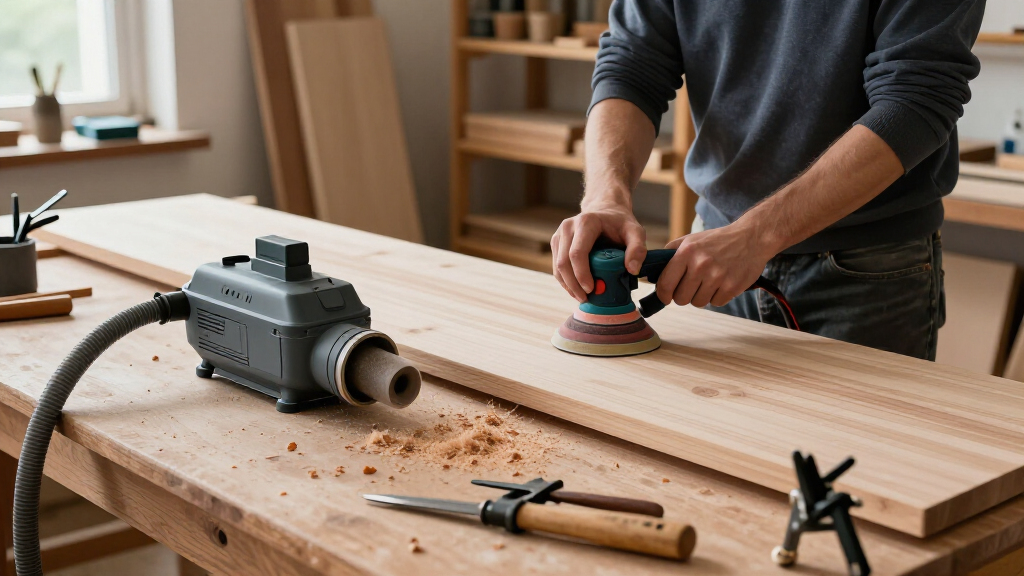

For woodworking, the best portable dust extractor depends on whether you need to capture fine dust at a power tool or collect larger volumes from stationary machines. I’d choose the Festool CT 15 as the best overall for its HEPA filtration and automatic tool start, while the Bosch VAC090AH stands out for HEPA filtration and automatic filter cleaning, and the WEN DC1300 suits high-volume collection with its 1,300 CFM rating. The main tradeoff is between a compact extractor that connects neatly to tools and a mobile bag collector built to move more air. Tank capacity, filter maintenance, and portability also shape which setup makes sense. Read on for the full comparison and guidance on matching a collector to your shop.

Get business pricing on tools and workshop supplies
- Business-only prices and quantity discounts
- Tax-exempt purchasing
- Multiple users, one account, clear invoices
Complete the kit


Key Takeaways
- Tool-connected extractors and bag collectors serve different jobs: the Festool, Bosch, DEWALT, Fein, and Rockler picks focus on point-of-use collection, while the VEVOR, POWERTEC, and WEN DC1300 are built for broader shop collection.
- The Festool CT 15 leads this lineup for integrated tool use with HEPA filtration, automatic tool start, and an AutoClean system; its premium feature set is more than some occasional users need.
- The Bosch VAC090AH and DEWALT DWV010 pair HEPA filtration with automatic filter cleaning, making them strong options for sustained tool-connected work where filter upkeep matters.
- The WEN DC1300 and VEVOR favor higher-volume collection over fine-dust convenience: their larger bags and high airflow ratings suit stationary machines, but they need more floor space than compact extractors.
- Smaller mobile units trade capacity for easier placement: the 12-gallon WEN and DYNAVEX are easier to position around a compact shop, while the Fein’s wet/dry design adds cleanup flexibility.


| portable dust extractors for woodworking | Weight | Capacity | Airflow | Motor power |
|---|---|---|---|---|
| VEVOR Dust Collector | 68.1 pounds | — | 1,100 CFM | 1.5 HP |
| POWERTEC 1 HP Dust Collector w | 55 pounds | — | — | 1 HP |
| WEN DC1300 1,300 CFM 14-Amp 5- | — | — | 1,300 CFM | — |
| WEN Woodworking Dust Collector | 17 pounds | 12 gallons | 660 CFM | 5.7 amps |
| DEWALT DWV010 HEPA Dust Extrac | 22 pounds | 8 gallons | — | 15 amps |
| Fein Turbo I Set Wet/Dry Dust | — | 5.8 gallons | 151 CFM | 1100 watts |
| DYNAVEX 10 Amp Woodworking Dus | 29.9 pounds | — | 142 CFM | — |
| Festool CT 15 Dust Extractor w | — | 15 liters | — | — |
| Rockler 9 Gal HEPA Dust Collec | — | 9 gallons | — | — |
| Bosch VAC090AH 9-Gallon Dust E | 28 pounds | 9 gallons | — | — |
More Details on Our Top Picks
VEVOR Dust Collector, 1100 CFM, 2.5 Micron Vortex Cone, 1.5HP Sawdust Collection System with 35-Gallon Dust Collector Bag & 42-Gallon Filter Bag, 3400 RPM
The VEVOR’s 1,100 CFM airflow and 1.5 HP motor place it between the more powerful WEN DC1300 and the smaller POWERTEC 800 CFM collector. That makes it a sensible fit for a shop that needs substantial airflow and longer runs between bag changes, rather than a compact extractor for one portable power tool. Its 35-gallon collection bag and 42-gallon filter bag support that workshop-scale role, while 2.5-micron filtration is specified for dust capture. Compared with the WEN DC1300, the VEVOR has less stated airflow, but its listed filtration rating is finer than the WEN’s 5-micron rating. The tradeoff is its nearly 76-inch height and 68.1-pound weight: it needs a dedicated spot, so I would skip it for a small garage or frequent jobsite moves.
Pros:- 1,100 CFM airflow suits substantial stationary-tool dust collection.
- Large collection and filter bags reduce interruptions for bag maintenance.
- 2.5-micron filtration is finer than the WEN DC1300’s listed 5-micron filtration.
- Bag access is described as easy for routine maintenance.
Cons:- Its tall, heavy footprint is poorly suited to cramped shops or frequent moves.
- 2.5-micron filtration is not as fine as the HEPA filtration on the DEWALT DWV010.
- Noise level is not specified, making it harder to judge for shared indoor spaces.
Best for: Woodworkers with a dedicated shop who want high airflow and large bags for sustained collection at stationary machines.
Not ideal for: Small-shop users or anyone needing a frequently carried extractor; its 68.1-pound weight and 75.59-inch height demand space and make relocation less convenient.
- Airflow:1,100 CFM
- Motor power:1.5 HP
- Filtration:2.5 microns
- Dust collection capacity:35-gallon collection bag and 42-gallon filter bag
- Motor speed:3,400 RPM
- Weight:68.1 pounds
- Dimensions:36.22 x 29.13 x 75.59 inches
- Voltage:120 volts
Our verdict“Choose the VEVOR for a spacious woodworking shop that values large-capacity collection over compact portability or HEPA filtration.”
POWERTEC 1 HP Dust Collector with 1 Micron Dust Collector Bags and Mobile Base, 800 CFM for Woodworking
The POWERTEC is a practical middle ground for a stationary woodworking setup: its 800 CFM airflow is below the VEVOR and WEN DC1300, but its listed 1-micron bag filtration is finer than either of those collectors’ stated ratings. That distinction may matter to buyers who want a conventional bag-style collector with a finer specified filter, rather than the DEWALT DWV010’s much lower 155 CFM and HEPA extractor format. Four casters and a mobile base let it move between machines, though its 55-pound weight makes that less effortless than the 17-pound WEN collector. The 1 HP motor and quick-release clamps suit workshop connections, but this is not a grab-and-go canister for tool cleanup. I would choose it for a shop with room for a mobile base and skip it if maximum airflow or easy carrying matters more than bag filtration.
Pros:- Listed 1-micron bag filtration is finer than the VEVOR’s 2.5-micron and WEN DC1300’s 5-micron ratings.
- 800 CFM airflow supports general stationary woodworking collection.
- Four casters make it movable around a workshop.
- Quick-release clamps simplify bag servicing.
Cons:- Its 800 CFM rating is lower than the VEVOR and WEN DC1300.
- At 55 pounds, frequent lifting or transport is cumbersome.
- Assembly and setup are required before use.
Best for: Woodworkers who want a wheeled shop collector with a specified 1-micron bag and move it between stationary machines.
Not ideal for: People who need a lightweight extractor for jobsite cleanup or maximum airflow for demanding collection; it weighs 55 pounds and produces less airflow than the VEVOR and WEN DC1300.
- Motor power:1 HP
- Air suction capacity:800 CFM
- Filtration:1-micron bag
- Voltage:120V/240V
- Motor speed:3,450 RPM
- Weight:55 pounds
- Base dimensions:15-1/4 x 25-1/2 inches
- Wheels:Four casters
Our verdict“Pick the POWERTEC if finer specified bag filtration matters more than maximum airflow or light carry weight.”
WEN DC1300 1,300 CFM 14-Amp 5-Micron Woodworking Dust Collector with 50-Gallon Collection Bag and Mobile Base
With 1,300 CFM airflow, the WEN DC1300 leads this group on stated air-moving capacity, making it the strongest fit here for a shop prioritizing collection at stationary woodworking tools. Its 50-gallon bag also holds more than the POWERTEC’s listed capacity, though the POWERTEC offers a finer 1-micron filtration rating compared with the WEN’s 5-micron rating. Dual 4-inch inlets add flexibility for connecting tools, while four swivel casters help reposition the unit around a workshop. This is still a large collector, not a compact power-tool extractor: the VEVOR is also a substantial shop unit, but the WEN’s specified airflow is higher. The main compromise is its single-speed operation, which gives less control over use than a variable-speed setup, alongside the space and effort required to move a large collector. I would skip it for small rooms or frequent transport.
Pros:- The lineup’s highest stated airflow at 1,300 CFM.
- 50-gallon collection bag supports longer work sessions between emptying.
- Dual 4-inch inlets allow connections for multiple tools.
- Four swivel casters help reposition the unit within a shop.
Cons:- Single-speed operation offers limited control over airflow.
- Large-shop form factor needs substantial setup space.
- Its 5-micron filtration rating is coarser than the POWERTEC’s listed 1-micron bag.
Best for: Woodworkers with room for a shop collector who prioritize high stated airflow, a large collection bag, and connections for more than one tool.
Not ideal for: Small-shop owners, frequent movers, or buyers seeking finer stated filtration; its 5-micron rating is coarser than the POWERTEC’s 1-micron bag rating.
- Airflow:1,300 CFM
- Motor:14 amps
- Filtration:5 microns
- Collection capacity:50 gallons
- Inlet size:4 inches
- Impeller speed:3,450 RPM
- Wheels:Four swivel casters
Our verdict“Choose the WEN DC1300 when maximum stated airflow and large-bag capacity matter more than compact size or finer bag filtration.”
WEN Woodworking Dust Collector, 5.7-Amp Motor, 12-Gallon Capacity, Mobile Base, Wall Mount Option
The smaller WEN trades the DC1300’s 1,300 CFM and 50-gallon capacity for a 17-pound body that can roll on lockable casters or mount on a wall. Its stated 660 CFM is also below the POWERTEC’s 800 CFM, so this is better matched to a compact workspace and lighter collection needs than a high-demand, multi-tool shop. A 12-gallon bag offers more capacity than a small cleanup canister, but far less than the VEVOR’s large bags; expect more frequent emptying during extended work. The 4-inch dust port connects it to compatible woodworking setups, while the lack of an included hose means buyers need to plan for that separately. I’d choose it over the larger collectors when floor space and repositioning matter most, but not for users who need maximum airflow or a ready-to-connect hose package.
Pros:- At 17 pounds, it is much lighter than the POWERTEC and VEVOR collectors.
- Wall-mount option can free up limited shop floor space.
- Lockable swivel casters support repositioning and parking.
- A 12-gallon bag provides more capacity than a small handheld cleanup unit.
Cons:- 660 CFM is lower than the POWERTEC’s 800 CFM and the larger collectors’ ratings.
- The 12-gallon capacity means more frequent emptying than the VEVOR or WEN DC1300.
- No dust hose is included, adding a separate setup requirement.
Best for: Garage woodworkers with limited floor space who need a light collector that can roll between tasks or mount on a wall.
Not ideal for: Users running demanding stationary tools for long sessions or anyone needing a complete hose setup; its 660 CFM and 12-gallon capacity are below the larger shop collectors, and no hose is included.
- Motor power:5.7 amps
- Airflow:660 CFM
- Capacity:12 gallons
- Dust port:4 inches
- Dimensions:34.25 x 13 x 14.2 inches
- Weight:17 pounds
- Wheels:Four lockable swivel casters
- Warranty:2 years
Our verdict“Choose this WEN for a space-conscious garage shop that values wall mounting and light weight over high airflow and long collection runs.”
DEWALT DWV010 HEPA Dust Extractor with Automatic Filter Cleaning, 8-Gallon
The DEWALT DWV010 serves a different job from the VEVOR and WEN DC1300: its 155 CFM airflow is far below their shop-collector ratings, but it pairs a portable 8-gallon canister with HEPA filtration and automatic filter cleaning. That makes it the more relevant choice for fine-dust cleanup at a power tool or around a work area, rather than moving large volumes of chips from stationary machines. The automatic pulse every 30 seconds is designed to keep the filter clear during operation, and the 15-foot hose provides reach without moving the unit constantly. At 22 pounds, it is heavier than the small WEN collector, and its 80 dB noise rating may be unwelcome in a quiet indoor workspace. Choose it over the larger collectors for HEPA-focused portability; skip it if high-volume workshop collection is the priority.
Pros:- HEPA filtration suits buyers focused on capturing fine dust.
- Automatic filter-cleaning pulses every 30 seconds support continued operation.
- A 15-foot hose offers useful reach around a work area.
- Heavy-duty wheels and casters aid movement between cleanup tasks.
Cons:- 155 CFM is far lower than the VEVOR and WEN DC1300, limiting high-volume collection.
- At 22 pounds, it is heavier than the compact 17-pound WEN collector.
- The listed 80 dB noise level may be disruptive in quiet indoor spaces.
Best for: Woodworkers who need a portable HEPA extractor for fine-dust cleanup and tool-connected work rather than high-volume chip collection.
Not ideal for: Shops seeking high airflow for stationary machines or users who need a quiet extractor; its 155 CFM is far below the WEN DC1300, and its listed noise level is 80 dB.
- Capacity:8 gallons
- Maximum suction:155 CFM
- Motor power:15 amps
- Filter type:HEPA
- Automatic filter cleaning:Pulses every 30 seconds
- Hose:15 feet long, 1.25 inches in diameter
- Weight:22 pounds
- Noise level:80 dB
- Power voltage:120 volts
Our verdict“Choose the DEWALT for portable HEPA-focused fine-dust extraction, not as a substitute for a high-airflow shop dust collector.”
Fein Turbo I Set Wet/Dry Dust Extractor 5.8-Gallon Capacity
The Fein Turbo I suits woodworkers who want capable tool-connected extraction without the louder shop-vac feel. Its 151 CFM airflow and 98 inches of water lift give it a strong combination for capturing dust at a connected tool, while the stated 66 dB operating level is a draw for indoor work. Compared with the larger DYNAVEX 12-gallon extractor, its 5.8-gallon tank means more frequent emptying, but the long 13-foot hose and 19.7-foot cord help it reach around a bench without constant repositioning. Tool-activated suction supports hands-free operation, and wet/dry capability adds cleanup flexibility. The tradeoff is a 25-pound body that is less convenient to carry between floors, plus indoor-only use. I’d choose it for a quieter, well-equipped fixed workshop, not for maximum tank capacity or frequent carry-and-go jobs.
Pros:- 151 CFM airflow and 98 inches of water lift support strong tool-connected dust pickup.
- 66 dB stated noise level is suited to indoor work where noise matters.
- 13-foot hose and 19.7-foot cord provide useful reach around a workshop.
- Tool-activated suction and wet/dry capability add flexibility for work and cleanup.
Cons:- The 5.8-gallon capacity is much smaller than the DYNAVEX’s 12-gallon tank.
- At 25 pounds, it is less convenient to carry than a compact portable extractor.
- Listed for indoor use, limiting its fit for exposed outdoor work.
Best for: Woodworkers in indoor garages or home workshops who value lower operating noise, tool-triggered extraction, and long reach.
Not ideal for: Buyers who need a lightweight extractor to carry between job sites or want a large tank to reduce emptying.
- Capacity:5.8 gallons
- Airflow:151 CFM
- Water lift:98 inches
- Noise level:66 dB
- Motor power:1100 watts
- Hose length:13 feet
- Cable length:19.7 feet
- Filter type:HEPA
Our verdict“Choose the Fein Turbo I for quieter indoor woodworking with tool-triggered pickup; skip it if tank capacity or easy carrying matters more.”
DYNAVEX 10 Amp Woodworking Dust Extractor Portable 12 Gal. Tank
The DYNAVEX is the capacity-first pick here: its 12-gallon tank can mean fewer interruptions when sanding or routing across a busy session. Its 142 CFM airflow and 0.5-micron HEPA filtration make it a practical workshop extractor, while the auto-start switch can coordinate collection with a connected tool. Against the Fein Turbo I, it gives up some listed airflow but more than doubles the tank capacity; compared with the Bosch VAC090AH, it has a larger stated tank but lacks the Bosch’s published 150 CFM airflow and 97-inch water lift figures. The 29.9-pound weight and 15.75-by-15.75-by-24.4-inch footprint make it less nimble than a compact canister. Also, the connected-tool wattage limit is 550 watts, so buyers should check compatibility before relying on auto-start. I’d pick it for longer shop sessions, not for the lightest or simplest setup.
Pros:- 12-gallon tank reduces how often work must stop for emptying.
- 142 CFM airflow is suited to routine woodworking dust collection.
- 0.5-micron HEPA filtration is specified for capturing fine particles.
- Auto-start connection and mobile-wheel design support workshop use.
Cons:- At 29.9 pounds, it is heavier than the Fein Turbo I and less convenient to carry.
- Connected tools are limited to 550 watts, which can rule out some setups.
- The wheels may require installation, and the larger body takes more floor space.
Best for: Woodworkers with a dedicated workshop who generate substantial dust and want fewer tank-emptying breaks.
Not ideal for: Mobile users who prioritize low carry weight, or owners of tools that exceed the 550-watt connected-tool limit.
- Tank capacity:12 gallons
- Airflow:142 CFM
- Motor:10 amp, 1200 watts
- Filter:HEPA, 0.5 micron
- Weight:29.9 pounds
- Dimensions:15.75 × 15.75 × 24.4 inches
- Voltage:120 volts
- Connected-tool limit:550 watts
Our verdict“Choose the DYNAVEX for long, dusty workshop sessions where tank capacity matters more than low weight or broad tool compatibility.”
Festool CT 15 Dust Extractor with HEPA Filter, AutoClean System, and Automatic Tool Start
The Festool CT 15 stands apart for buyers who want a compact canister with HEPA filtration, automatic tool start, and an AutoClean system. That cleaning feature is intended to reduce filter-maintenance interruptions, a useful contrast with extractors that rely on manual attention. It also includes a hose, filter bag, crevice nozzle, and upholstery brush, giving it more out-of-box cleanup versatility than the basic spec lists for the Bosch VAC090AH. But the Festool’s listed 15-liter capacity is far smaller than the Bosch’s 9-gallon tank or the DYNAVEX’s 12-gallon tank, so it is less suited to long runs producing heavy volumes of sawdust. The available data also lists just one power level and does not provide airflow, water lift, or noise figures for direct performance comparison. I’d favor it where compact storage and maintenance features take priority over capacity and published extraction metrics.
Pros:- Compact canister format is suited to workshops with limited storage.
- HEPA filtration and AutoClean system support fine-dust capture and filter upkeep.
- Automatic tool start can coordinate extraction with connected tools.
- Includes a hose, filter bag, crevice nozzle, and upholstery brush.
Cons:- 15-liter capacity is much smaller than the Bosch VAC090AH and DYNAVEX tanks.
- Only one power level is listed.
- The supplied data does not state airflow, water lift, or noise level.
Best for: Woodworkers with limited storage who want a compact HEPA extractor with automatic tool start and included cleaning attachments.
Not ideal for: High-volume shop users who need a large collection tank or published airflow and water-lift figures to compare extraction performance.
- Capacity:15 liters
- Filter type:HEPA
- Filter cleaning:AutoClean system
- Tool activation:Automatic tool start
- Power source:Corded electric
- Power levels:1
- Design:Canister
- Included accessories:Suction hose, filter bag, crevice nozzle, upholstery brush
Our verdict“Choose the Festool CT 15 for a compact, feature-rich setup, but look to the Bosch or DYNAVEX for larger-volume collection.”
Rockler 9 Gal HEPA Dust Collector Power Tool Activated System
The Rockler makes a straightforward case for woodworkers who want a 9-gallon collector with tool-triggered startup and a useful set of cleanup attachments. Its 110V outlet activates with connected tools up to 7 amps, while the washable HEPA cartridge is specified to capture particles down to 0.3 microns. Four oversized casters and a 12-foot hose help it move around a shop, and filter-pulse cleaning offers a way to clear buildup. Compared with the Bosch VAC090AH, the Rockler supplies more included accessories and specifies a washable filter, while Bosch provides published airflow, water-lift, and noise figures that make performance easier to compare. The Rockler’s listed 9-gallon capacity is a middle ground: less than the DYNAVEX, but more than the Fein. Its single power level and indoor-focused design make it less adaptable for varied settings.
Pros:- Auto-start outlet coordinates dust collection with tools rated up to 7 amps.
- Washable HEPA cartridge is specified to capture particles down to 0.3 microns.
- Filter-pulse cleaning helps address filter buildup.
- Four casters, a 12-foot hose, and included nozzles support shop mobility and cleanup.
Cons:- Only one power level is listed, unlike the Bosch VAC090AH’s three.
- The 7-amp tool limit may exclude higher-draw equipment.
- Designed primarily for indoor use.
Best for: Workshop woodworkers who want automatic tool activation, a washable HEPA filter, and included floor and crevice-cleaning accessories.
Not ideal for: Users who need multiple power settings, outdoor flexibility, or verified compatibility with tools drawing more than 7 amps.
- Capacity:9 gallons
- Filter:Washable HEPA cartridge, captures particles down to 0.3 microns
- Tool activation:110V auto-start outlet, tools up to 7 amps
- Noise level:≤ 65 dB
- Hose length:12 feet
- Wheels:4 oversized casters
- Power levels:1
- Included accessories:Extension wands, floor brush, utility nozzle, crevice tool, accessory adapter
Our verdict“Choose the Rockler for a mobile woodworking setup that benefits from tool-triggered operation and washable filtration, provided your tools fit its 7-amp limit.”
Bosch VAC090AH 9-Gallon Dust Extractor with Auto Filter and HEPA Filter
The Bosch VAC090AH earns the leading spot for the broadest documented balance of airflow, suction lift, filtration, and tool-connected use in this group. Its 150 CFM and 97 inches of static water lift provide useful reference points for pairing it with woodworking tools, while automatic filter cleaning helps keep dust buildup from becoming a constant maintenance task. The HEPA filter is specified to capture 99.97% of particles at 0.3 microns. Compared with the Rockler 9-gallon extractor, Bosch offers three power levels and published extraction figures; Rockler counters with a washable filter and more listed accessories. Bosch’s 9-gallon capacity is smaller than the DYNAVEX’s 12 gallons, but more manageable for a portable unit. At 28 pounds, it is still a carry between locations rather than a lightweight hand-held vacuum, and its corded power limits where it can operate.
Pros:- 150 CFM airflow and 97 inches of water lift provide clear extraction-performance specifications.
- Automatic filter cleaning helps maintain airflow during dusty work.
- HEPA filter is specified to capture 99.97% of particles at 0.3 microns.
- Three power levels offer more adjustment than the Rockler’s single listed level.
Cons:- At 28 pounds, it is not lightweight for frequent carrying.
- Corded electric operation limits use where power is unavailable.
- Its 9-gallon capacity is smaller than the DYNAVEX’s 12-gallon tank.
Best for: Woodworkers and contractors who need a portable, corded extractor with documented airflow, HEPA filtration, and automatic filter cleaning.
Not ideal for: Buyers seeking cordless operation, the largest tank in the group, or a particularly light extractor to carry frequently.
- Capacity:9 gallons
- Maximum airflow:150 CFM
- Static water lift:97 inches
- Filter:HEPA; captures 99.97% of particles at 0.3 microns
- Power source:Corded electric
- Voltage:120 volts
- Weight:28 pounds
- Noise level:60 dB
- Power levels:3
Our verdict“Choose the Bosch VAC090AH for a well-specified, tool-ready portable extractor; pick the DYNAVEX instead if maximizing tank capacity is your priority.”

How We Picked
I compared the ten models by the kind of woodworking dust they are designed to collect, not by treating every machine as interchangeable. Key criteria included stated airflow and filtration, compatibility with power tools, collection capacity, filter-cleaning features, mobility, and useful extras such as automatic tool start or wet/dry capability. I also weighed how much space and maintenance each design may ask of a small shop.
The order gives priority to versatile, tool-connected extraction and useful filtration for woodworking tasks, then distinguishes high-volume collectors and simpler compact options by their intended role. The Festool CT 15 ranks first for its combination of HEPA filtration, AutoClean, and automatic tool start. The Bosch and DEWALT follow as capable HEPA-focused alternatives, while the larger VEVOR, POWERTEC, and WEN DC1300 are better matched to stationary machines and higher-volume collection. Models with fewer published details or narrower use cases rank lower, not because they cannot suit a shop, but because buyers have less basis for comparing their fit.
Factors to Consider When Choosing Portable Dust Extractors For Woodworking
Choosing a portable collector starts with the machine you plan to connect, then the dust you need to capture and the space available around your work. These factors can prevent a common mismatch: buying a high-airflow bag collector for a handheld sander, or expecting a compact extractor to serve several stationary machines at once.
Match the Collector to the Tool
A portable extractor connected to a sander or track saw needs to manage dust close to the source and work with the tool’s hose or adapter. A larger bag collector is a different solution: it can move substantial air for a stationary saw or planer, but its size and ducting may make it awkward for handheld tools. Check the tool’s dust port dimensions and the collector’s hose connection before choosing. Adapters can help, but extra joints may make a setup cumbersome or prone to leaks. If you want one unit for several tools, list the tools and connection types first rather than assuming a single hose will fit them all. Match the extractor’s intended use to your most frequent task, not the most demanding task you perform once in a while.
Read Airflow and Filtration as Separate Specs
Airflow figures and filter ratings answer different questions: one concerns how much air the collector can move, while the other concerns what the filter is designed to retain. A high CFM figure alone does not establish that a unit is suited to capturing fine dust at a handheld tool. Look for a clearly stated filtration level when fine dust control is a priority, and also check whether the unit maintains airflow as its filter loads. Dust collection at the tool depends on the whole setup, including hose length, fittings, and the tool’s shroud. A short, direct connection may work better than a long hose with several bends. Avoid comparing headline airflow numbers across different collector styles without considering how each will be connected.
Choose Capacity for Your Work Rhythm
A larger tank or bag means fewer interruptions to empty it, but it also adds bulk and takes up room. Capacity matters most when you generate a steady stream of chips or sawdust from a stationary machine. For sanding or cutting jobs that produce smaller quantities, a more compact canister can be easier to roll beside the tool and store afterward. Think about where you will empty the collector and how often you are willing to stop work. Fine dust can fill a container differently from bulky chips, so advertised capacity is not a guarantee of a fixed work interval. Buy enough capacity for your routine, but do not let a large bag dictate a layout that makes the extractor hard to move or connect.
Plan for Filter Cleaning and Maintenance
Filter loading can reduce collection performance, so maintenance features matter when a tool produces fine dust for extended periods. Automatic cleaning can reduce manual interruptions, but it does not remove the need to inspect filters, empty containers, and maintain seals. Check how the filter is accessed and whether replacement filters are available for the model. A system that is easy to maintain may be a better fit for regular shop use than one with a larger capacity but awkward servicing. Also consider whether your dust type and work pattern call for a disposable bag or a reusable collection arrangement. Keep the collector’s maintenance steps in view before buying, rather than treating them as an afterthought.
Account for Shop Layout and Power
Mobility is useful only when the collector can reach the work without blocking walkways or tugging on the hose. Measure storage space, doorways, and the area around stationary machines, then compare those dimensions with the unit’s footprint and base. Wall-mountable designs can free floor space, while wheeled units may be easier to move between tools. Automatic tool-start functions can make a connected setup more convenient, but check whether the collector’s outlet and electrical requirements match your tools. A long extension cord may create a trip hazard or affect practical placement. In a small shop, hose routing and storage can matter as much as the machine’s stated capacity.
Decide When HEPA and Extra Features Are Worth It
HEPA filtration, automatic cleaning, and tool-triggered operation can make a setup more convenient, but each feature should solve a real need in your shop. If you sand frequently or want a dedicated extractor for portable power tools, fine filtration and a well-sealed system deserve close attention. If your main job is collecting larger debris from a stationary machine, a high-volume collector may be a better match than paying for features you rarely use. Wet/dry capability can add flexibility for cleanup, though it does not replace a dedicated approach to fine woodworking dust. Consider the full setup, including bags, filters, hoses, and adapters, when comparing feature-rich models. Pay more when the feature improves your regular workflow, not simply because the spec sheet is longer.
Frequently Asked Questions
Can a portable dust extractor replace a dust collector for a table saw or planer?
It can work for some setups, but the answer depends on the machine’s dust port, the collector’s airflow, and how much debris the tool produces. Compact tool extractors are designed around point-of-use collection and are not automatically a substitute for a high-volume collector on a machine that makes lots of chips. The WEN DC1300 and VEVOR are more aligned with that higher-volume role than small tank extractors. Check the machine maker’s dust-collection guidance and match the hose and port sizes. If you use both handheld tools and stationary machines often, separate systems may be more practical than forcing one unit to cover both.
Is a HEPA filter enough to control fine woodworking dust?
A HEPA filter rating is useful, but filtration depends on the whole system, not just the filter. Leaks at the lid, bag, hose, or tool connection can let dust escape before it reaches the filter. Good source capture also matters: the extractor needs to connect effectively to the tool’s dust port and maintain airflow as the filter loads. Use suitable bags and filters, maintain seals, and follow the manufacturer’s instructions. For frequent fine-dust work, consider the extractor alongside shop ventilation and respiratory protection rather than treating one feature as a complete dust-control plan.
Should I choose automatic filter cleaning or a larger collection bag?
Choose based on what interrupts your work most. Automatic filter cleaning is useful when fine dust loads the filter during extended tool-connected tasks, since it can help limit manual cleaning stops. A larger bag matters more when a stationary machine produces a steady volume of sawdust or chips and frequent emptying would slow the job. These features solve different problems, so one does not replace the other. For sanding-heavy work, prioritize filter upkeep; for repeated high-volume cuts, capacity may matter more. If your shop does both, compare the collector’s connection style and intended use before deciding which feature should lead.
Will one extractor work with my sander, track saw, and other power tools?
Possibly, but compatibility depends on each tool’s dust-port size, the hose diameter, and whether the extractor can start automatically with the tool. Some setups need brand-specific or third-party adapters, and adapters can add bulk or create a less secure connection. Before buying, check the port dimensions on your most-used tools and confirm what connections come with the extractor. A flexible hose can make switching tools easier, but a long or poorly routed hose may reduce convenience. If you regularly move between tools, prioritize easy connection changes and storage as well as filtration.
Which type is the better choice for a small woodworking shop?
For a small shop centered on handheld tools, a compact extractor with tool-start features can be easier to place and store than a large bag collector. The Festool CT 15, Bosch VAC090AH, and DEWALT DWV010 are aimed more at connected tool use, while the smaller WEN offers a wall-mount option that may help reclaim floor space. If your main machine produces large amounts of sawdust, a higher-volume unit may still be the better fit despite its footprint. Measure the space around your tools and plan hose routing before choosing. A smaller unit is only convenient if its capacity and collection performance suit your actual workload.
Conclusion
My best overall pick is the Festool CT 15 for woodworkers who want HEPA filtration, automatic tool start, and AutoClean in a tool-connected setup. For a best value direction, the WEN DC1300 makes sense for buyers who prioritize high-volume collection and a mobile base, while the compact WEN is a practical choice for beginners with limited space and straightforward needs. The best premium choice is also the Festool when its integrated features fit regular shop use; buyers who want HEPA filtration with automatic filter cleaning should compare the Bosch VAC090AH and DEWALT DWV010. Choose the Fein Turbo I if wet/dry flexibility is a specific need, or the Rockler if power-tool activation and a HEPA-focused setup fit your workflow. For stationary machines that generate more debris, consider the VEVOR or POWERTEC rather than expecting a compact extractor to do every job. Pick the collector style that matches your main tool, then use capacity, filtration, and maintenance features to settle the final choice.
Halloween Picks

Max Fun 10-Foot Halloween Dragon and Pumpkin Inflatable Archway with LED Lights

Spirit Halloween 54-Inch Sitting Scarecrow Animatronic

MGparty 14.5 ft Halloween Inflatable Walk-In Pumpkin House with LED Lights
As an affiliate, we earn on qualifying purchases.