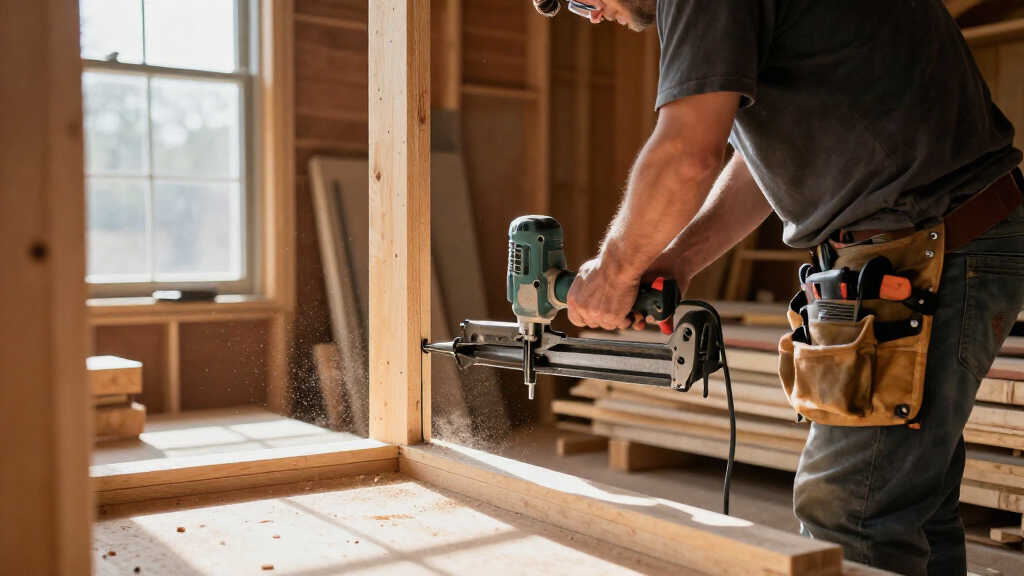
Cordless framing nailers trade compressor hoses and setup for a heavier, battery-powered tool, with differences in nail angle, collation, and platform shaping which one fits your work. I’d put the Metabo HPT NR1890DCA first for buyers who want a 30° paper-tape kit, while the FLEX 24V 21° kit stands out as a bundled option and the Makita XNB03M1 offers a 21° full-round-head format. The main choice is whether your existing nails, batteries, and framing tasks favor a 21° or 30° model. Tool-only versions can suit established battery users, while kits reduce the need to source a compatible battery and charger separately. Read on for the full comparison, selection criteria, and advice on matching a nailer to your projects.

Get business pricing on tools and workshop supplies
- Business-only prices and quantity discounts
- Tax-exempt purchasing
- Multiple users, one account, clear invoices
Complete the kit



Key Takeaways
Collation angle affects nail compatibility: The lineup includes both 21° and 30° nailers, so existing nail stock and local availability can narrow the field before brand or battery platform does.
Kit contents change the buying decision: The Metabo HPT, Makita, and FLEX kits include batteries and chargers, while several other options are tool-only and make more sense for buyers already invested in that battery system.
Head style is a practical distinction: Makita’s XNB03M1 is the listed 21° full-round-head choice; several 30° models use clipped-head nails, which may affect code requirements and nail availability.
Battery platform and nail format pull in different directions: A familiar battery ecosystem can simplify ownership, but choosing a nailer that takes the wrong collation for your fasteners can create ongoing friction.
Brushless drive is common, not the whole ranking: Several picks use brushless motors, so I weigh included kit, collation, and role fit alongside motor type rather than treating it as a stand-alone reason to choose.


| cordless framing nailer | Weight | Motor | Firing modes | Model |
|---|---|---|---|---|
| RYOBI ONE+ HP 18V Brushless Co | — | Brushless | — | — |
| Metabo HPT 18V Cordless 30° Pa | 8.2 lb without battery | Brushless | Sequential and bump fire | — |
| Makita XNB07Z 18V LXT Brushles | 11.9 lb with battery | — | Sequential and bump fire | — |
| RYOBI ONE+ HP 18V Brushless Ai | 11 lb | Brushless | — | — |
| RIDGID 18V Brushless Cordless | 10.2 lb | Brushless | — | — |
| CRAFTSMAN V20 Cordless 21° Fra | 10.75 pounds | — | — | CMCN621PLB |
| Makita XNB07M1 18V LXT Brushle | — | Brushless | Sequential and bump fire | XNB07M1 |
| FLEX 24V Brushless 21° Cordles | 22.1 pounds | — | Bump and sequential | FX4351A-1C |
| CRAFTSMAN V20 Brushless Cordle | 9.83 pounds | Brushless | — | CMCN630PTB |
| Makita XNB03M1 18V LXT Brushle | — | Brushless | Sequential and bump fire | XNB03M1 |
| Metabo HPT 18V MultiVolt 21° C | 8.4 lbs without battery | — | Bump and sequential | NR1890DRA |
More Details on Our Top Picks
RYOBI ONE+ HP 18V Brushless Cordless AirStrike 30° Framing Nailer (Tool Only)
I’d choose the RYOBI PBL350B when switching between careful placement and faster repetitive framing matters more than getting a battery in the box. Its single-sequential and contact-actuation modes cover both styles of work, while tool-free depth adjustment helps change how nails sit without reaching for a separate tool. The stated capacity of up to 750 nails per charge gives ONE+ users a useful runtime reference, though it depends on a compatible 4.0 Ah battery.
Compared with the Metabo HPT NR1890DCA, this is the more appealing route for someone already invested in RYOBI batteries; Metabo includes a battery and charger, but its listed capacity is up to 500 nails per charge. The tradeoff is that the RYOBI is a bare tool, and its 5.19 kg listed weight may feel substantial during extended overhead work.
Pros:- Sequential and contact-actuation modes support precise placement and faster repetitive nailing.
- Tool-free depth adjustment simplifies changes between flush and countersunk driving.
- Rated for up to 750 nails per charge with a compatible 4.0 Ah battery.
- Cordless operation avoids compressor and hose setup.
Cons:- Battery and charger are not included.
- The stated per-charge capacity depends on using a compatible 4.0 Ah battery.
- Listed weight of 5.19 kg may be tiring during extended overhead work.
Best for: Framers who already own compatible RYOBI ONE+ batteries and want both controlled and rapid firing modes.
Not ideal for: First-time cordless nailer buyers who need a battery and charger included, or crews prioritizing a lighter tool for long overhead sessions.
- Voltage:18V
- Nailer angle:30°
- Motor:Brushless
- Maximum nail length:3-1/2 in.
- Drive modes:Single sequential; contact actuation
- Nails per charge:Up to 750 with a compatible 4.0 Ah battery
- Battery:Sold separately
- Listed weight:5.19 kg
Our verdict“I’d pick this for a RYOBI ONE+ owner who wants flexible firing modes and can supply a suitable battery.”
Metabo HPT 18V Cordless 30° Paper Tape Framing Nailer Kit, NR1890DCA
The Metabo HPT NR1890DCA is the most ready-to-work option in this group: the kit includes a 4.0 Ah battery, charger, carrying bag, wrench, and safety glasses. Its air spring drive and brushless motor are designed to deliver consistent operation, while the listed firing speed of up to three nails per second suits crews moving through repetitive framing. Sequential and bump-fire modes, plus tool-less depth adjustment, let the user choose between controlled placement and faster work.
Unlike the bare-tool RYOBI PBL350B and RIDGID R098941B, this package avoids a separate battery purchase for someone starting fresh. The tradeoffs are its 8.2-pound tool weight before the battery and its restriction to 30° paper tape collated nails. Its stated capacity is up to 500 nails per charge, below the RYOBI’s stated 750 with a 4.0 Ah battery.
Pros:- Kit includes a 4.0 Ah battery, charger, bag, wrench, and safety glasses.
- Brushless motor and air spring drive system are designed for efficient, consistent operation.
- Sequential and bump-fire modes support controlled or faster nailing.
- Rated for speeds up to three nails per second.
Cons:- At 8.2 lb without the battery, it is already a substantial tool to carry.
- Accepts 30° paper tape collated nails, limiting collation choices.
- Listed capacity is up to 500 nails per charge.
Best for: Framing crews or first-time cordless nailer buyers who want a 30° system with battery, charger, and carrying accessories included.
Not ideal for: Buyers already committed to another battery platform, or crews who need compatibility beyond 30° paper tape collated nails.
- Voltage:18V
- Nailer angle and collation:30° paper tape collated
- Compatible nail length:2–3-1/2 in.
- Drive system:Air spring
- Motor:Brushless
- Firing modes:Sequential and bump fire
- Nailing speed:Up to 3 nails per second
- Weight:8.2 lb without battery
- Included battery:4.0 Ah lithium-ion
Our verdict“I’d choose this kit when included power and accessories matter more than minimizing weight or choosing a different nail collation.”
Makita XNB07Z 18V LXT Brushless Cordless 30° Clipped-Head Framing Nailer, Tool Only
The Makita XNB07Z stands out for its stated up to 1,000 nails per charge, the highest figure among the five products here. That can mean fewer battery changes across a framing shift, provided the user supplies a compatible LXT battery. Its anti-dry-fire mechanism helps prevent firing when the magazine is empty, and the 58-nail magazine gives a practical reserve between reloads. Sequential and bump-fire modes and tool-less depth adjustment add flexibility on site.
Compared with the Metabo HPT NR1890DCA, the Makita has a higher stated per-charge capacity, but Metabo is the more convenient purchase for someone without batteries because its kit includes one. The Makita is also listed at 11.9 lb with battery, so its runtime advantage comes with a substantial carry weight. It uses 30° clipped-head nails and arrives without a battery or charger.
Pros:- Rated for up to 1,000 nails per charge with a compatible battery.
- Anti-dry-fire mechanism helps limit empty-magazine firing.
- 58-nail magazine reduces how often reloading interrupts work.
- Includes a work light, No-Mar tip, belt hook, and rafter hook.
Cons:- Battery and charger are not included.
- Listed weight is 11.9 lb with battery.
- Designed for 30° clipped-head nails.
Best for: Makita LXT users framing for long stretches who value fewer battery changes and want an anti-dry-fire feature.
Not ideal for: Buyers without Makita LXT batteries, workers who need a lighter framing nailer, or users whose nail supply is not 30° clipped head.
- Voltage:18V
- Battery platform:Makita LXT Lithium-Ion
- Nailer angle and nail type:30° clipped head
- Maximum nail length:3-1/2 in.
- Magazine capacity:58 nails
- Nails per charge:Up to 1,000
- Weight:11.9 lb with battery
- Firing modes:Sequential and bump fire
- Battery and charger:Not included
Our verdict“I’d favor the XNB07Z for an LXT-equipped crew that values its high stated capacity enough to accept the added weight.”
RYOBI ONE+ HP 18V Brushless AirStrike 21° Framing Nailer (Tool Only)
I’d shortlist the RYOBI PBL345B for buyers who specifically want a 21° cordless framing nailer and are already equipped for RYOBI 18V tools. The brushless motor and battery-powered design remove the need for a compressor and hose, making it easier to move between work areas than a pneumatic setup. Its listed 11 lb weight gives a useful sense of the carry burden, though the product data does not specify firing modes, nail capacity, or compatible nail length.
Compared with the RIDGID R098941B, which specifies 2–3-1/2-inch plastic-collated nails and tool-free depth adjustment, the RYOBI listing leaves more buying questions unanswered. Both are bare tools, so neither is the convenient pick for someone starting without batteries. I’d choose the RIDGID when nail compatibility details are a priority; this RYOBI makes more sense when its 21° format and existing platform fit come first.
Pros:- Cordless 18V design avoids compressor and hose setup.
- Brushless motor.
- 21° magazine angle suits buyers committed to that format.
- Listed weight and dimensions provide a basis for judging portability.
Cons:- Battery is not listed as included.
- Product data does not specify compatible nail length or collation.
- Firing modes and per-charge nail capacity are not provided.
Best for: RYOBI 18V owners who need a 21° cordless framing nailer and can confirm the nail specifications they require.
Not ideal for: Buyers who need a battery and charger included or want clearly listed nail-length, collation, and firing-mode details before buying.
- Voltage:18V DC
- Nailer angle:21°
- Motor:Brushless
- Power source:Battery-powered
- Weight:11 lb
- Dimensions:14.3 x 4.4 x 13.25 in.
- Included components:Framing nailer
- Battery:Not listed as included
Our verdict“I’d consider this RYOBI only when the 21° format and existing 18V platform fit, and its nail compatibility is confirmed before purchase.”
RIDGID 18V Brushless Cordless 21° Framing Nailer, 3-1/2 in., Tool Only
The RIDGID R098941B earns its place by clearly stating the nail range and collation: it accepts 21° plastic-collated nails from 2 to 3-1/2 inches. That detail makes it easier to check against an existing supply than the RYOBI PBL345B listing, which does not provide nail-length or collation information. Tool-free depth adjustment also helps users change the nail set without stopping to find a separate tool, and its brushless 18V design runs without a compressor, hose, or gas cartridge.
This is a more informative bare-tool choice than the RYOBI on nail compatibility, but buyers still need to supply the battery and charger. At 10.2 lb, it is lighter on paper than the 11 lb RYOBI, though the gap is modest and neither listing provides a battery-attached weight. Its 21° plastic collation also limits nail choice compared with the 30° options from Makita and Metabo HPT.
Pros:- Accepts clearly specified 2–3-1/2-inch framing nails.
- Tool-free depth adjustment makes setting changes quicker.
- Brushless 18V design avoids compressor, hose, and gas-cartridge needs.
- Listed weight is 10.2 lb.
Cons:- Battery and charger are not included.
- Limited to 21° plastic-collated nails.
- Firing modes and nails-per-charge capacity are not specified in the supplied product data.
Best for: RIDGID 18V users who already source 21° plastic-collated nails and want a clearly specified 2–3-1/2-inch range.
Not ideal for: Buyers who need a complete battery kit, use 30° nails, or prefer a nailer with listed firing modes and per-charge capacity.
- Voltage:18V
- Motor:Brushless
- Magazine angle:21°
- Nail collation:Plastic collated
- Compatible nail length:2–3-1/2 in.
- Depth adjustment:Tool-free
- Weight:10.2 lb
- Dimensions:5 x 16 x 14 in.
- Included components:Tool only; battery and charger not included
Our verdict“I’d choose the RIDGID for an 18V owner who wants clearly stated 21° plastic-nail compatibility and can provide the battery.”
CRAFTSMAN V20 Cordless 21° Framing Nailer, Tool Only (CMCN621PLB)
The CMCN621PLB suits builders who already own CRAFTSMAN V20 batteries and want cordless framing without adding a compressor, hose, or gas cartridge to the job. It drives 21° full-round-head nails up to 3-1/4 inches, including into laminated veneer lumber, and its tool-free depth adjustment makes it easier to change fastening depth as materials vary. Compared with the FLEX 24V 21° Framing Nailer Kit, this is a simpler tool-only choice without a stated high nails-per-charge figure or included battery and charger. Its 10.75-pound listed weight also makes it less appealing for long overhead sessions than the lighter CRAFTSMAN 30° brushless model. The tradeoff is straightforward: existing V20 owners avoid buying another battery platform, while newcomers must budget for the battery and charger separately.
Pros:- Works without a compressor, hose, or gas cartridge.
- Drives full-round-head nails up to 3-1/4 inches into lumber, including laminated veneer lumber.
- Tool-free depth adjustment supports quick changes between materials.
- Includes a rafter hook and supports VERSATRACK accessories.
Cons:- Battery and charger are sold separately.
- At 10.75 pounds, it may feel tiring during extended overhead use.
- VERSATRACK clip and accessories are sold separately.
Best for: Home remodelers and framing crews who already use CRAFTSMAN V20 batteries and need a cordless tool for full-round-head nails.
Not ideal for: First-time cordless tool buyers who want a complete kit, or crews prioritizing a lighter nailer for extended overhead work.
- Model:CMCN621PLB
- Power:20V battery
- Collation angle:21°
- Nail type:Full-round-head
- Maximum nail length:3-1/4 inches
- Weight:10.75 pounds
- Warranty:3-year limited
Our verdict“Choose it if you already own V20 batteries and want a capable 21° full-round-head nailer without compressor equipment.”
Makita XNB07M1 18V LXT Brushless Cordless 30° Clipped-Head Framing Nailer Kit with 4.0Ah Battery
For builders working with dense engineered lumber, the XNB07M1 pairs a brushless motor with 30° clipped-head nails from 2 to 3-1/2 inches. Sequential and bump-fire modes give it more flexibility across precise placements and faster runs than the tool-only CRAFTSMAN V20 21° nailer, while the anti-dry-fire mechanism helps avoid blank shots when the magazine runs low. This Makita kit also includes a 4.0Ah battery, rapid charger, and case, so it is ready to go without assembling a separate power package. Its 58-nail magazine means more frequent reloads than the 21° Makita XNB03M1’s 41-nail magazine? Actually, 58 rounds is the larger capacity in this lineup’s Makita pair, but still a limitation versus larger magazines elsewhere. The kit’s stated up-to-1,000-nail runtime refers to a 6.0Ah battery, not the included 4.0Ah pack.
Pros:- Brushless motor and 30° clipped-head format suit dense engineered lumber.
- Offers sequential and bump-fire modes with tool-free depth adjustment.
- Anti-dry-fire mechanism helps prevent blank shots.
- Kit includes a 4.0Ah battery, rapid charger, case, and accessories.
Cons:- The 58-nail magazine requires regular reloading.
- The stated up-to-1,000-nail runtime is based on a 6.0Ah battery, while the kit includes a 4.0Ah battery.
- Its 11.9-pound weight with battery may be tiring for extended overhead work.
Best for: Framing crews using Makita 18V LXT tools who need 30° clipped-head nails for dense engineered lumber and want a complete kit.
Not ideal for: Buyers who require full-round-head nails, or who want the stated 1,000-nail runtime from the included 4.0Ah battery.
- Model:XNB07M1
- Power:18V LXT battery
- Motor:Brushless
- Nail angle and type:30° clipped-head
- Nail length:2 to 3-1/2 inches
- Magazine capacity:58 nails
- Firing modes:Sequential and bump fire
- Included battery:18V LXT 4.0Ah
Our verdict“Pick this kit for Makita 18V LXT users who need a ready-to-use 30° clipped-head nailer for engineered lumber.”
FLEX 24V Brushless 21° Cordless Framing Nailer Kit with 5.0Ah Battery and Fast Charger
The FLEX FX4351A-1C is built around pace: it can drive up to three nails per second and is rated for up to 1,100 nails per charge with the included 5.0Ah battery. Bump and sequential modes let crews choose speed or more controlled placement, while dry-fire lockout prevents the tool from continuing to fire when nails run out. Unlike the tool-only CRAFTSMAN V20 21° model, this is a complete kit with a fast charger, bag, three no-mar tips, and worklights for dim framing areas. The main cost in handling is its listed 22.1-pound weight, which makes it a poor fit for extended overhead work. Its 24V battery also commits buyers to FLEX’s platform, so Makita or CRAFTSMAN users may prefer to stay with their existing batteries.
Pros:- Rated for up to 1,100 nails per charge with the included 5.0Ah battery.
- Drives up to three nails per second.
- Bump and sequential modes, adjustable depth, and dry-fire lockout support varied work.
- Includes a fast charger, dual LED worklights, three no-mar tips, and a carrying bag.
Cons:- Listed weight of 22.1 pounds may contribute to fatigue.
- Requires the FLEX 24V battery platform.
- The warranty extends to five years only with registration within 30 days.
Best for: Production framers who want a complete 21° kit, high stated output, and bump-fire capability for repetitive work.
Not ideal for: Solo remodelers doing frequent overhead fastening, or buyers already invested in another battery platform.
- Model:FX4351A-1C
- Power:24V battery
- Fastener angle:21°
- Fastener length:2 to 3.5 inches
- Battery:5.0Ah included
- Drive rate:Up to 3 nails per second
- Firing modes:Bump and sequential
- Weight:22.1 pounds
Our verdict“Choose the FLEX kit for fast production framing if its heavier body and 24V platform fit your crew.”
CRAFTSMAN V20 Brushless Cordless 30° Framing Nailer, Tool Only (CMCN630PTB)
At a listed 9.83 pounds, the CMCN630PTB is the lightest option in this five-tool group, making it a more practical choice for framers who regularly work overhead or move between fastening locations. Its brushless motor, rapid sequential firing, jam indicator, and tool-free depth adjustment give it a more feature-rich profile than the non-brushless CRAFTSMAN V20 21° model. The 30° format takes full-round-head nails up to 3-1/4 inches, including in laminated veneer lumber, while the adjustable rafter hook helps keep the tool accessible on site. Compared with the complete Makita XNB07M1 kit, this CRAFTSMAN is lighter by listed tool weight but arrives without a battery or charger. Buyers also need to account for those separately and for the VERSATRACK accessories, which are not included.
Pros:- Listed weight of 9.83 pounds is the lowest among these five products.
- Brushless motor is designed for runtime and performance.
- Drives full-round-head nails up to 3-1/4 inches, including into laminated veneer lumber.
- Tool-free depth adjustment, jam indicator, and adjustable rafter hook support jobsite use.
Cons:- Battery and charger are sold separately.
- VERSATRACK storage accessories are sold separately.
- The listed maximum nail length is shorter than the 3-1/2-inch capacity of the Makita 30° model.
Best for: Framers who already own V20 batteries and want a lighter 30° full-round-head nailer for mobile or overhead tasks.
Not ideal for: Buyers seeking a ready-to-use kit or fast bump-fire operation; the listed features specify rapid sequential firing instead.
- Model:CMCN630PTB
- Power:20V battery
- Motor:Brushless
- Nail angle:30°
- Nail type:Full-round-head
- Maximum nail length:3-1/4 inches
- Weight:9.83 pounds
- Included battery and charger:Sold separately
Our verdict“This is a strong choice for V20 owners who value a lighter 30° full-round-head tool and can supply their own battery.”
Makita XNB03M1 18V LXT Brushless Cordless 21° Full Round Head Framing Nailer Kit with 4.0Ah Battery
The XNB03M1 gives Makita 18V LXT owners a complete 21° full-round-head kit with a 4.0Ah battery, charger, tool case, and jobsite hooks. Its brushless motor, anti-dry-fire mechanism, and tool-free depth adjustment support consistent work without a compressor, while sequential and bump-fire modes let the user shift between controlled placement and faster runs. Compared with the Makita XNB07M1, this model accepts full-round-head rather than clipped-head nails; it also holds 41 nails against that model’s 58, so expect more reloads. The 21° format and 2- to 3.5-inch range suit common framing tasks, though the 11.9-pound with-battery weight can become noticeable during long overhead sessions. Its included battery and charger make it more convenient than CRAFTSMAN’s tool-only choices, provided Makita’s platform fits the buyer.
Pros:- Includes a 4.0Ah battery, charger, case, and jobsite accessories.
- Accepts 21° plastic-collated full-round-head nails from 2 to 3.5 inches.
- Brushless motor, anti-dry-fire mechanism, and tool-free depth adjustment.
- Sequential and bump-fire modes accommodate controlled and faster nailing.
Cons:- The 41-nail magazine means more frequent reloads than the Makita XNB07M1.
- At 11.9 pounds with battery, it may cause fatigue during extended overhead work.
- Limited to 21° plastic-collated nails within its specified size range.
Best for: Makita 18V LXT users who need a complete 21° full-round-head kit for conventional framing and sheathing work.
Not ideal for: Crews that prioritize fewer reloads, lighter overhead handling, or 30° clipped-head nails for their applications.
- Model:XNB03M1
- Power:18V LXT battery
- Motor:Brushless
- Collation angle and type:21° plastic-collated, full-round-head
- Nail length:2 to 3.5 inches
- Magazine capacity:41 nails
- Firing modes:Sequential and bump fire
- Included battery:18V LXT 4.0Ah
- Weight with battery:11.9 pounds
Our verdict“Choose this kit if you use Makita 18V LXT batteries and need a complete 21° full-round-head framing setup.”
Metabo HPT 18V MultiVolt 21° Cordless Framing Nailer Kit, NR1890DRA
The NR1890DRA is the most self-contained choice here: its kit includes a 4.0Ah battery and charger, so buyers starting without a compatible battery system can get to work without sourcing those separately. Its air spring drive is designed to drive nails without ramp-up time, while tool-free depth adjustment and bump or sequential firing let users adapt from controlled placement to faster nailing. Compared with the tool-only RYOBI ONE+ HP 21° AirStrike, this Metabo HPT provides more of the essential setup in the box. The tradeoff is its 8.4-pound bare weight; the battery adds more, which can make overhead or extended framing tiring. Its stated capacity of up to 500 nails per charge is useful for planning, but frequent users should still expect to manage battery changes during larger jobs.
Pros:- Includes a 4.0Ah battery and charger for a ready-to-use kit
- Air spring drive is designed to operate without ramp-up time
- Tool-free depth adjustment and bump or sequential firing modes
- Accepts framing nails up to 3-1/2 inches
Cons:- 8.4-pound bare weight increases fatigue once the battery is attached
- Up to 500 nails per charge may require battery changes on larger jobs
- Battery is required for operation
Best for: Framers who need a complete 21° nailer kit and do not already own a compatible 18V battery and charger
Not ideal for: Crews prioritizing lower carry weight for long overhead sessions, or users who already have batteries and prefer a tool-only option
- Model:NR1890DRA
- Nail angle:21°
- Power source:18V battery
- Drive system:Air spring
- Weight:8.4 lbs without battery
- Battery:4.0Ah lithium-ion
- Nails per charge:Up to 500
- Maximum nail length:3-1/2 inches
- Firing modes:Bump and sequential
Our verdict“Choose this kit if you want a 21° cordless framing nailer with its battery and charger included and can manage its substantial working weight.”

How We Picked
I compared the 11 listed models on the details that affect framing work and ownership: 21° versus 30° collation, clipped-head versus full-round-head format where specified, battery platform, brushless designation, and whether a battery and charger come in the box. I also considered how clearly each configuration serves a distinct buyer, from someone adding a tool to an existing platform to someone starting with a complete kit. These details influence fastener compatibility and what else a buyer may need to acquire.
The ranking puts the Metabo HPT NR1890DCA first because it pairs a 30° paper-tape format with a kit configuration, a useful combination for buyers seeking a ready-to-use option in that collation. The FLEX kit and Makita XNB03M1 follow for buyers prioritizing a bundled 21° setup or full-round-head nails. Tool-only models rank better for owners of their matching battery platform; they rank lower for a new cordless-tool buyer who would need to add power equipment. Product names and listed configurations establish the comparisons here; performance claims such as drive speed, runtime, and depth consistency are not used to separate models because no comparable measurements are provided.
| cordless framing nailer | Firing modes | Model |
|---|---|---|
| RYOBI ONE+ HP 18V Brushless Co | — | — |
| Metabo HPT 18V Cordless 30° Pa | Sequential and bump fire | — |
| Makita XNB07Z 18V LXT Brushles | Sequential and bump fire | — |
| RYOBI ONE+ HP 18V Brushless Ai | — | — |
| RIDGID 18V Brushless Cordless | — | — |
| CRAFTSMAN V20 Cordless 21° Fra | — | CMCN621PLB |
| Makita XNB07M1 18V LXT Brushle | Sequential and bump fire | XNB07M1 |
| FLEX 24V Brushless 21° Cordles | Bump and sequential | FX4351A-1C |
| CRAFTSMAN V20 Brushless Cordle | — | CMCN630PTB |
| Makita XNB03M1 18V LXT Brushle | Sequential and bump fire | XNB03M1 |
| Metabo HPT 18V MultiVolt 21° C | Bump and sequential | NR1890DRA |
Factors to Consider When Choosing Cordless Framing Nailers
Before choosing a cordless framing nailer, match the tool to the fasteners and work you actually do. Nail compatibility, battery ownership, and kit contents can matter more to the job than a feature label on the box. These broader checks can prevent a tool that looks suitable from becoming inconvenient once it reaches the site.
Match the Collation to Your Fasteners
Start with the nails you already use or can reliably source, then check the nailer’s angle and collation type against the manufacturer’s specifications. A 21° or 30° label describes the magazine’s nail arrangement; it does not mean that every nail at that angle fits every tool. Paper-tape and plastic-collated nails are not interchangeable, and clipped-head and full-round-head styles can differ in local availability or acceptance. If a job has specified fasteners, confirm the nailer supports those exact requirements before choosing by battery brand. Switching nail formats later may mean managing separate stock for different tools. For mixed projects, common local supply can be more useful than a small difference in tool features.
Check Local Rules and Plans for Nail Head Style
Framing requirements can specify fastener type, length, placement, and holding capacity, so do not assume a nailer’s compatibility settles whether a particular nail is acceptable. Clipped-head nails pack efficiently, while full-round-head nails retain a full head shape; the right choice depends on the plans and applicable building requirements. Ask the inspector or responsible professional when a project specification is unclear. This check matters especially when replacing a pneumatic nailer, since the new tool may take a different collation or head style than your old one. Keep the approved fastener details with the job documents so substitutions are easy to verify. A tool that accepts the nails required for your work is the useful choice, regardless of its headline feature.
Account for the Complete Tool Weight
Cordless framing nailers remove the compressor and hose, but the tool itself carries its drive system and battery. That weight can change how comfortable overhead work, ladder use, or repeated positioning feels over a full shift. Product listings often identify the battery supplied, but listed configurations alone do not give a fair comparison of ready-to-use weight across models. Look for the tool weight with the battery attached and, if possible, handle a comparable setup before committing. A larger battery may add working time but also adds mass in the hand. For occasional repair work, manageable handling may matter more than maximizing capacity for a long production run.
Compare Kit Contents With Your Battery Shelf
A tool-only model can be a sensible addition when you already own compatible batteries and chargers, but the platform name and voltage need to match exactly. Kit bundles can make startup simpler by including a battery and charger, though the supplied capacity may not suit every workday. Check whether the kit’s charger supports your other tools and whether the battery can move between them. Buyers changing brands should account for the full ecosystem, including replacement batteries and charging time, rather than comparing the nailer alone. Avoid buying a tool-only configuration on the assumption that a battery from another manufacturer will fit. The lowest-friction choice is often the platform already established on your site.
Plan for Work Pace and Downtime
Battery runtime and recovery between shots can influence how well a cordless nailer fits repetitive production, but published labels alone do not establish real jobsite pace. Consider the number of nails per task, how continuously you work, and whether you can rotate batteries while one charges. If the tool is for occasional framing or punch-list work, avoiding compressor setup may matter more than maximizing sustained output. For a crew using the nailer all day, seek comparable manufacturer runtime and drive-rate information, and check what conditions those figures assume. A spare compatible battery may be a more useful addition than choosing a model by motor type alone. Confirm that your charging plan fits the job before relying on one battery kit for continuous work.
Think Through Jam Access and Routine Care
Framing nailers work in dusty conditions, and a jam or inspection can interrupt a job even when the battery is ready. Before buying, review the manual for the prescribed jam-clearing procedure, nose access, lubrication requirements, and cleaning guidance. Do not assume every cordless model handles maintenance the same way just because it uses a similar nail angle. Check whether the manufacturer specifies particular nails or operating conditions, since those can affect reliable feeding. Keep the correct fasteners dry and stored as directed, especially for paper-tape or plastic-collated strips. Simple access and clear care instructions can save frustration over the life of the tool.
Frequently Asked Questions
Can I use 21° nails in a 30° cordless framing nailer?
No. The magazine angle and collation have to match the nailer’s approved fasteners; a 21° strip is not a substitute for a 30° strip. Also check whether the tool is designed for paper tape or another collation type, along with the permitted nail lengths and head style. Confirm compatibility in the manual before loading a new nail brand. If your current stock is 21°, a 21° model may reduce the need to maintain separate fastener supplies.
Should I choose a tool-only nailer or a kit?
Choose tool-only when you already have a compatible battery and charger on the same platform and their capacity suits the work. A kit is simpler if you are entering that platform, since it supplies the matching battery and charger. Compare the included battery capacity and charging setup with your expected work pace rather than assuming every bundle is equally complete for a full shift. Also check whether you will need a spare battery for continuous use. The listed Metabo HPT, Makita, and FLEX kits bundle power equipment, while several other picks are tool-only.
Is a clipped-head nailer acceptable for my framing job?
That depends on the plans and the applicable building requirements for the project. Nail head style can affect approval, so verify the specified fastener with the inspector or responsible professional before buying nails or starting work. The roundup includes clipped-head 30° Makita options and a 21° full-round-head Makita configuration, but those labels alone do not establish which nail is permitted. Confirm nail length and other specifications as well as head style. If the requirement is uncertain, resolve it before selecting a nailer around a particular fastener type.
Will a cordless framing nailer replace my pneumatic nailer for every job?
It can remove compressor and hose setup for compatible framing tasks, but suitability depends on the work volume, required fasteners, and the specific tool’s documented performance. A battery-powered tool also needs charging and may require spare batteries during sustained work. Check the manufacturer’s guidance for the materials and nail lengths you plan to use, then compare those requirements with your existing pneumatic setup. For infrequent repairs, the portability may be a strong fit; for continuous production, runtime and recovery information deserve closer scrutiny. Keep the pneumatic tool for tasks or fasteners the cordless model does not support.
What should I prioritize if I am buying my first framing nailer?
Begin with the fastener specifications for your intended projects, then choose a compatible nail angle and head style. Next, decide whether a kit or an existing battery platform makes more sense, and check the ready-to-use weight for the positions where you will work. For a first cordless setup, a kit can simplify getting started; the FLEX and Metabo HPT bundles in this lineup are examples in different collation formats. Read the manual’s maintenance and jam-clearing instructions before use, and follow required safety practices. If you are new to framing, get suitable hands-on instruction before relying on any nailer for structural work.
Conclusion
For the strongest all-around starting point in this comparison, I’d choose the Metabo HPT NR1890DCA if a 30° paper-tape kit matches your fasteners. My best value for existing platform owners is a tool-only model from the battery system they already use, with the RYOBI ONE+ HP 18V 21° model a practical contender when its nail format fits. For a best premium kit pick, the FLEX 24V 21° bundle brings a battery and fast charger; for a beginner, a kit such as the Metabo HPT or FLEX avoids sourcing the core battery equipment separately. Choose the Makita XNB03M1 when 21° full-round-head nails are the specific requirement, and consider the 30° Makita models when clipped-head compatibility and the LXT platform suit your work. The right final choice is the one that matches approved fasteners, battery needs, and the pace of your projects.