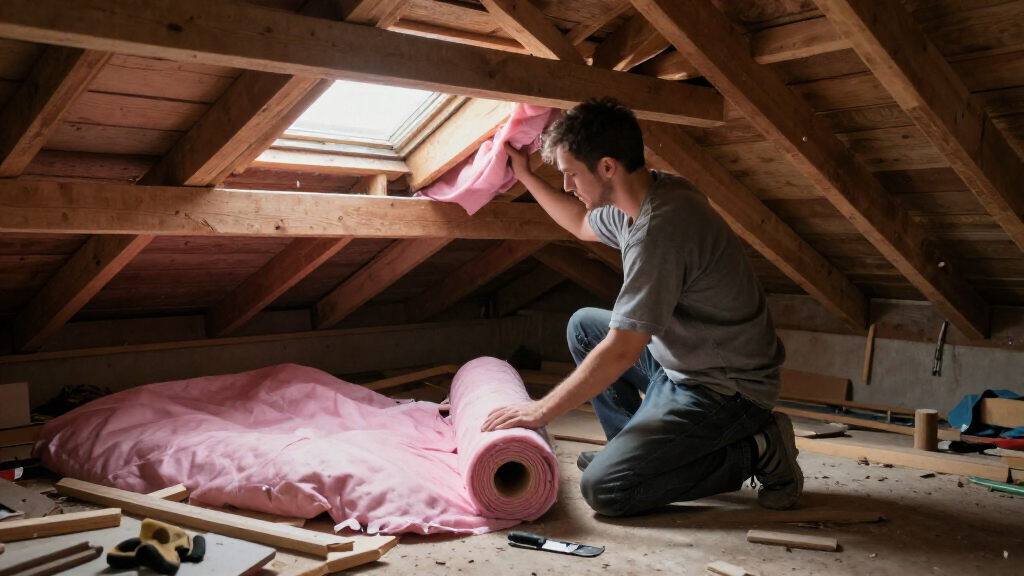

The best attic insulation products depend on whether you need to slow heat transfer through the ceiling, reduce radiant heat, or seal small gaps. My best overall pick is Owens Corning R-38 Unfaced Fiberglass Batt Insulation for adding substantial thermal resistance across an attic floor; US Energy Products Radiant Barrier Roll stands out for broad coverage, while the BEEST FullStop Spray Foam Kit suits targeted air sealing. The main tradeoff is that fiberglass batts and radiant barriers solve different problems, and neither automatically replaces the other. I also weigh coverage, installation demands, and whether a product’s format fits the attic layout. Read on for the full breakdown and help matching a product to your project.

Get business pricing on tools and workshop supplies
- Business-only prices and quantity discounts
- Tax-exempt purchasing
- Multiple users, one account, clear invoices
Complete the kit


Key Takeaways
- Owens Corning R-38 batts are the clearest choice in this lineup for adding high-R-value insulation over a large attic floor, but their bulk and installation needs may not suit tight or obstructed spaces.
- Owens Corning R-19 batts come in several listed formats, so buyers should compare package coverage and dimensions against joist spacing rather than choosing by the R-value label alone.
- US Energy Products, Margar, and AtticFoil offer 1,000-square-foot radiant-barrier rolls; large coverage can suit open areas, but reflective foil is not a direct substitute for bulk insulation.
- Radiant Guard Xtreme and the two NASA TECH rolls stand apart through narrower or more specialized formats, including perforated and solid, non-perforated designs that call for different installation conditions.
- Reflectix bubble insulation and the BEEST spray foam kit address more specific jobs: the former is a compact reflective product, while the latter is aimed at sealing targeted gaps rather than insulating an entire attic floor.


| attic insulation product | Coverage | Material |
|---|---|---|
| Owens Corning R-38 Unfaced Fib | 512 sq. ft. | Fiberglass |
| Owens Corning R-19 Unfaced Fib | 128 sq. ft. per pack | Fiberglass |
| US Energy Products Radiant Bar | 1,000 sq. ft. | — |
| Reflectix BP24025 24-Inch x 25 | 7,200 sq. in. | — |
| Owens Corning R-19 Unfaced Fib | 77.5 sq. ft. per bag | Fiberglass |
| Margar Radiant Barrier Insulat | 1,000 sq ft | Double-sided perforated foil |
| Radiant Barrier Insulation Rol | 1,000 sq ft | Double-sided aluminum foil |
| Radiant Guard Radiant Barrier | 542 sq ft | Reinforced aluminum |
| 500 sqft | 500 sq ft | Aluminum |
| 500 sqft | 500 sq ft | Aluminum |
| AtticFoil Original Attic Radia | 1,000 sq. ft. | Double-sided pure aluminum foil with internal tear-resistant fabric |
| BEEST FullStop Spray Foam Insu | Up to 240 board feet | — |
More Details on Our Top Picks
Owens Corning R-38 Unfaced Fiberglass Batt Insulation, 24 x 48 in, 8 Bags, 512 sq. ft.
For buyers adding substantial thermal resistance across a large attic, this R-38 fiberglass batt pack is the strongest fit in this group. Its 512 square feet of coverage, split across eight bags, suits a broad project better than the smaller R-19 Owens Corning packs. The 12-inch thickness is designed for attic use, but the unfaced construction calls for at least 2 inches of properly ventilated air space; that makes ventilation planning part of the job, not an optional detail. Unlike the US Energy Products radiant barrier roll, these batts provide a stated R-value rather than reflecting radiant heat as their primary function. The tradeoff is bulk and limited flexibility: these are not suitable for exterior walls, and the dimensions may require careful fitting around attic obstacles.
Pros:- R-38 thermal resistance for substantial attic insulation.
- 512 square feet of coverage across eight bags suits larger projects.
- Unfaced construction can fit attic assemblies with separate moisture control.
- Fiberglass can also help reduce sound transmission.
Cons:- Requires at least 2 inches of properly ventilated air space in attic applications.
- Not suitable for exterior walls.
- 12-inch thickness can be difficult to fit around tight or obstructed attic areas.
Best for: Homeowners insulating a large, well-ventilated attic who want R-38 batts and can accommodate 12-inch-thick material.
Not ideal for: Buyers insulating exterior walls or attics where the required ventilated air gap cannot be maintained.
- Material:Fiberglass
- Insulation type:Unfaced batt
- R-value:R-38
- Batt dimensions:24 x 48 in
- Thickness:12 in
- Coverage:512 sq. ft.
- Pack quantity:8 bags; 8 batts per bag
- Installation note:Leave at least 2 in of properly ventilated air space
Our verdict“Choose this pack for broad attic coverage and R-38 performance if your attic can accommodate the thick batts and required ventilation gap.”
Owens Corning R-19 Unfaced Fiberglass Insulation 128-sq ft (24-in W x 96-in L)
This pack suits attic projects where R-19 batts fit the framing and a larger piece format reduces the number of sections to place. Five batts cover 128 square feet, more than the 77.5-square-foot Owens Corning R-19 pack, so it makes more sense for a broader retrofit than a small patch job. At 6.5 inches thick, it is intended for 2×6 framing, floors, and crawlspaces rather than a deep, high-R attic build like the R-38 option in this roundup. The unfaced design leaves moisture control to the assembly, while the cuttable fiberglass can be shaped around framing. Buyers should plan for protective gear during installation and confirm that R-19 suits their attic goals before choosing it over the thicker R-38 batts.
Pros:- R-19 rating suits compatible 2×6 framing.
- 128 square feet per pack covers more area than the 77.5-square-foot Owens Corning R-19 pack.
- Soft fiberglass batts are described as easy to cut.
- Provides sound attenuation as well as thermal resistance.
Cons:- R-19 is a lower thermal resistance than the R-38 Owens Corning attic pack.
- Unfaced construction has no built-in vapor barrier.
- Fiberglass handling may call for protective clothing and gear.
Best for: DIYers covering a larger attic or floor section built for 6.5-inch batts who want one pack with 128 square feet of coverage.
Not ideal for: Homeowners seeking high-R-value insulation for a deep attic build or who need a batt with an integrated vapor barrier.
- Brand:Owens Corning
- Model:M50A
- Material:Fiberglass
- R-value:R-19
- Dimensions:24 in W x 96 in L
- Thickness:6.5 in
- Coverage:128 sq. ft. per pack
- Pack contents:5 batts
- Facing:Unfaced; no vapor barrier
Our verdict“Pick this larger R-19 pack for compatible framing and broader coverage, but choose the R-38 batts if your attic needs a higher stated R-value.”
US Energy Products Radiant Barrier Insulation Roll, 1,000 sq ft, 4 ft Wide
For an attic project aimed at reducing radiant heat gain, this roll stands out for 1,000 square feet of coverage and a 4-foot width that can span broad sections with fewer seams. Its perforated, double-sided construction is designed to allow airflow, unlike the solid, non-perforated radiant barrier option elsewhere in the roundup. The stated 99.7% reflective value describes its reflective surface, not an R-value comparable to the Owens Corning R-38 batts; these products address heat differently and should not be treated as interchangeable. The lightweight foil, Mylar, and nylon scrim layers are made for cutting and handling, though a thin roll still needs care during installation. Its benefit depends on climate and placement, so buyers seeking a defined batt R-value should choose fiberglass instead.
Pros:- 1,000 square feet per roll suits broad coverage.
- Perforated design allows air circulation.
- Lightweight material can be cut with utility scissors.
- Five-layer foil, Mylar, and nylon scrim construction is described as tear-resistant.
Cons:- Does not provide a stated R-value comparable to the Owens Corning fiberglass batts.
- Thin material needs careful handling during installation.
- Cooling performance can vary with climate and application.
Best for: Homeowners covering a broad attic roof area with a perforated radiant barrier and who understand it is not a substitute for R-value-rated batts.
Not ideal for: Buyers who need a specified thermal R-value, or whose project requires a small roll rather than 1,000 square feet of material.
- Coverage:1,000 sq. ft.
- Dimensions:4 ft wide x 250 ft long
- Construction:Five-layer foil, Mylar, and nylon scrim
- Reflective value:99.7%
- Radiant heat blocked:97%
- Design:Double-sided, perforated, breathable
- Weight:70 grams
- Listed standards:ASTM E84, E2599, C1313, and 96-00
Our verdict“Choose this roll for large attic areas where a breathable radiant barrier fits the plan, not as a replacement for R-value-rated insulation.”
Reflectix BP24025 24-Inch x 25-Foot Bubble Pack Reflective Insulation
Reflectix BP24025 is the more manageable reflective-roll choice for a small attic section or targeted retrofit: its 24-inch width and 25-foot length are easier to handle than the 1,000-square-foot US Energy Products roll. Seven layers combine foil faces with insulating bubbles, so this material is intended to reflect radiant heat and resist some conductive heat flow. That construction sets it apart from the broad, thin radiant barrier roll, but its 7,200 square inches of coverage is limited for whole-attic work. The product description does not give an R-value, so I would not use it as a stand-in for the Owens Corning R-38 batts when a defined thermal resistance is needed. It is fiber-free and lightweight, though buyers should check the application requirements before using it as primary attic insulation.
Pros:- Compact 24-inch-wide roll is easier to handle than the 1,000-square-foot US Energy Products roll.
- Seven-layer foil and bubble construction targets radiant and conductive heat flow.
- Fiber-free material avoids fiberglass handling.
- Suitable for several listed applications, including attics and crawl spaces.
Cons:- Coverage is limited to 7,200 square inches per roll.
- The description does not specify an R-value.
- Reflective insulation does not provide the same stated thermal resistance as the Owens Corning R-38 batts.
Best for: DIYers handling a small attic section or retrofit who want a narrow, lightweight reflective material without fiberglass.
Not ideal for: Homeowners insulating a whole attic or needing a stated R-value for comparison with fiberglass batts.
- Brand:Reflectix
- Model:BP24025
- Dimensions:24 in W x 25 ft L
- Thickness:0.31 in
- Coverage:7,200 sq. in.
- Layers:7
- Materials:Aluminum foil, polyethylene, and insulating bubbles
- Weight:16 oz
Our verdict“Choose this roll for small, targeted reflective-insulation work, but use R-value-rated batts when attic thermal resistance is the priority.”
Owens Corning R-19 Unfaced Fiberglass Insulation Batts, 15 x 93 in., 77.5 sq. ft.
These 15-inch-wide R-19 batts give buyers a narrower format than the 24-inch Owens Corning R-19 pack, which can suit framing bays that do not take wider batts. Eight pieces cover 77.5 square feet, making this a more contained purchase for a modest attic section or retrofit rather than a broad project. At 6.5 inches thick, the insulation suits deeper framing; it is not the same high-R attic approach as the 12-inch R-38 pack. The unfaced fiberglass has no vapor barrier, so moisture control must come from the surrounding assembly. Its easy-cut, recoverable form can simplify fitting, but buyers should check framing dimensions and installation conditions before ordering. I would skip it for shallow spaces or when the attic calls for more thermal resistance per batt.
Pros:- 15-inch width suits narrower framing bays than the 24-inch Owens Corning R-19 pack.
- R-19 rating fits compatible 2×6 framing.
- Batts are described as easy to cut and quick to recover.
- Fiberglass provides sound reduction alongside thermal insulation.
Cons:- 77.5 square feet per bag is less coverage than the other Owens Corning R-19 pack.
- Unfaced design does not include a vapor barrier.
- 6.5-inch thickness may not fit shallow attic spaces or deliver the higher R-value of the R-38 batts.
Best for: Homeowners insulating narrow 15-inch framing bays in a small attic retrofit who need R-19 batts and can manage moisture control separately.
Not ideal for: Buyers covering a large attic, insulating shallow framing, or seeking the higher R-value offered by the Owens Corning R-38 pack.
- Brand:Owens Corning
- Material:Fiberglass
- R-value:R-19
- Facing:Unfaced
- Thickness:6.5 in
- Batt dimensions:15 in wide x 93 in long
- Coverage:77.5 sq. ft. per bag
- Quantity:8 batts
- Recommended uses:Walls, floors, and attics
Our verdict“Choose this pack for narrow, compatible framing bays and modest coverage, but select the larger R-19 pack for more area or R-38 batts for higher attic resistance.”
Margar Radiant Barrier Insulation Roll – 1000 Sq Ft (4ft x 250ft), Perforated Breathable Double Foil Reflective Heat Shield
I’d put Margar first for buyers covering a broad attic who want a large, breathable radiant-barrier roll with durability and safety details spelled out. Its 1,000-square-foot coverage matches the Houseables roll, while Margar specifies double-sided perforated foil, tear resistance, and Class A/1 fire rating. Perforations allow moisture vapor to pass through, a useful distinction from the solid, non-perforated NASA TECH option, which calls for careful ventilation planning. Margar also claims up to 97% radiant-heat blocking and can be cut with ordinary scissors, so the material is approachable for a DIY installation. The tradeoff is physical bulk: a 250-foot roll can be awkward to maneuver in a tight attic, and staples or nails are still needed. Like other radiant barriers, it is not a replacement for conventional insulation where conductive heat loss is the concern.
Pros:- Covers 1,000 square feet in one roll, reducing the need to join multiple smaller rolls.
- Double-sided perforated foil combines radiant reflection with vapor permeability.
- Tear-resistant construction is suited to handling across a large installation.
- Lists Class A/1 fire rating and ASTM breathability standards.
Cons:- The 250-foot roll can be cumbersome to move and position in tight spaces.
- Installation requires staples or nails and basic fastening work.
- Radiant-barrier performance does not replace the R-value of batt or blown-in insulation.
Best for: DIY homeowners covering a large, accessible attic who want a perforated foil barrier and clearly listed fire and breathability standards.
Not ideal for: People working alone in a cramped attic or anyone seeking loose-fill or batt insulation to add R-value rather than reduce radiant heat transfer.
- Coverage:1,000 sq ft
- Roll dimensions:250 ft x 4 ft
- Material:Double-sided perforated foil
- Radiant heat claim:Blocks up to 97%
- Standards:ASTM E84 and E96
- Item weight:28.3 lb
- Color:Silver
Our verdict“Choose Margar for broad attic coverage with perforated, reinforced foil; skip it if your main need is added R-value or easy handling in a confined space.”
Radiant Barrier Insulation Roll, 250′ x 4′, 1000 sq ft
Houseables is the straightforward pick when the priority is 1,000 square feet of reflective coverage without moving to a narrower roll. Its 250-by-4-foot format matches Margar’s coverage, and the listed reflectivity exceeds 97%. Houseables also describes the foil as non-toxic and moisture resistant, with several ASTM fire and smoke standards identified. Compared with Margar, however, the product details say less about perforation and vapor movement, while Margar explicitly identifies a breathable perforated construction. Houseables is easy to cut with scissors, but its own cautions about punctures and tears make careful handling important during a long installation. It is a radiant barrier, not a complete insulation layer: the listing notes that supplemental insulation may be needed in extreme climates. I’d choose it for broad coverage, not for a project where vapor-management details are the deciding factor.
Pros:- Provides 1,000 square feet of coverage in a 4-foot-wide roll.
- Lists reflective value above 97% for reducing radiant heat transfer.
- Can be cut with standard scissors without specialized cutting tools.
- Described as non-toxic and moisture resistant, with multiple ASTM standards listed.
Cons:- Thin foil can puncture or tear if pulled or handled roughly.
- Product details do not identify a perforated design, so installation needs careful moisture and ventilation planning.
- May need to be paired with conventional insulation in demanding climates.
Best for: Homeowners covering a large attic or outbuilding who want a full-width reflective roll and are comfortable checking ventilation and layering needs.
Not ideal for: Buyers who need explicitly perforated, vapor-permeable foil or a material intended to supply substantial conductive R-value on its own.
- Coverage:1,000 sq ft
- Roll dimensions:250 ft x 4 ft
- Reflective value:More than 97%
- Material:Double-sided aluminum foil
- Tear resistance:Described as tear-resistant; handle carefully to avoid punctures
- Moisture resistance:Moisture resistant
- ASTM standards:E-84, E2599, C1313, ASTM 96-00
- Model number:RaBa
Our verdict“Pick Houseables for a large reflective barrier roll and simple cutting, but favor Margar if explicitly perforated construction is a priority.”
Radiant Guard Radiant Barrier Xtreme Attic Insulation 542 sq ft, 26 in x 250 ft
RadiantGUARD Xtreme takes a different approach from the 4-foot-wide Margar and Houseables rolls: its 26-inch width can be easier to feed along narrower rafter spaces, and the reinforced aluminum is described as heavier than many competing barriers. That narrower format also means less coverage—542 square feet rather than 1,000—so buyers with a broad open attic may need multiple rolls. The material claims up to 95% radiant-heat blocking and meets ASTM C1313; it is also fiber-free and non-toxic, which avoids handling loose fibers during installation. Unlike the foil rolls that can be cut with scissors, this product’s instructions also mention a hacksaw, and it must be stapled to rafters. There is no adhesive backing, so installation takes deliberate fastening rather than a quick stick-on approach. I’d favor it where width and reinforced construction matter more than maximum coverage per roll.
Pros:- Narrow 26-inch roll may be easier to position in tighter framing than 4-foot-wide rolls.
- Reinforced aluminum is described as heavier and more durable than many competing barriers.
- Fiber-free, non-toxic material avoids the loose-fiber handling associated with some insulation.
- Staple installation uses common fastening methods.
Cons:- 542-square-foot coverage is substantially less than the 1,000-square-foot Margar and Houseables rolls.
- Requires stapling to rafters and has no adhesive backing.
- The listing claims up to 95% radiant-heat reflection, below the higher figures claimed by several other foil options.
Best for: DIY installers working through narrower rafter bays who want reinforced, fiber-free foil and can fasten it directly to framing.
Not ideal for: People covering a large open attic who want 1,000-square-foot rolls, or installers who need an adhesive-backed product with minimal fastening.
- Coverage:542 sq ft
- Roll dimensions:26 in x 250 ft
- Material:Reinforced aluminum
- Radiant heat claim:Blocks up to 95%
- Fire standard:ASTM C1313
- Installation:Staples to rafters
- Cutting:Scissors or hacksaw
- Item dimensions:52 L x 6 W inches
Our verdict“Choose RadiantGUARD Xtreme for a narrower, reinforced barrier roll in accessible rafter bays, not for maximum coverage or adhesive-free installation.”
500 sqft (4ft x 125ft) of NASA TECH Commercial Grade Perforated No Tear Green Energy Radiant Barrier Reflective Insulation Attic Foil Roof Attic House Wrap SCIF RIFD
NASA TECH’s perforated 500-square-foot roll suits projects that need less material than the 1,000-square-foot Margar or Houseables rolls, such as a smaller attic section, shed, or workshop. Its 4-by-125-foot dimensions retain the familiar full-width format, while the perforated construction supports airflow through the material rather than using the solid face found on the white NASA TECH barrier. The listing identifies aluminum and a 1-mil thickness, but provides little detail on reflectivity, fire standards, or installation beyond its commercial-grade and “no tear” claims. That limited specification record makes it harder to compare on documented performance than Margar, which lists a heat-blocking figure and ASTM standards. I’d treat this as a practical size choice when the coverage fits, not as a proven substitute for conventional insulation or a product with fully stated technical ratings.
Pros:- 500-square-foot coverage can limit leftover material on smaller projects.
- Perforated foil design is suited to installations where vapor permeability is wanted.
- Four-foot width is compatible with common attic framing layouts.
- Listed for use in attics, sheds, garages, workshops, warehouses, and barns.
Cons:- The supplied product data does not state a reflectivity percentage or ASTM fire rating.
- At 1 mil thick, the stated material thickness offers little detail for comparing durability.
- Half the coverage of the Margar and Houseables rolls may mean more seams on a large attic.
Best for: Owners insulating a smaller attic section, garage, shed, or workshop who want perforated foil in a 500-square-foot roll.
Not ideal for: Buyers who need published reflectivity and fire-test figures, or those covering enough area to benefit from a 1,000-square-foot roll.
- Coverage:500 sq ft
- Roll dimensions:125 ft x 4 ft
- Material:Aluminum
- Thickness:1 mil
- Construction:Perforated
- Product type:Commercial-grade radiant barrier foil
- Listed uses:Attics, sheds, warehouses, house wrap, garages, workshops, storage units, barns, and older multi-storied homes
Our verdict“Choose this NASA TECH roll for a smaller perforated-foil job, but pick Margar or Houseables when you need broader coverage and clearer performance specifications.”
500 sqft (4ft x 125ft) NASA TECH Commercial Grade Solid White One-Sided Non-Perforated Radiant Barrier Insulation
This NASA TECH option is the lineup’s specialized choice: its listing pairs a solid, non-perforated surface with claims of up to 99% radiant-heat reflection and over 99% RF-signal blocking. That makes it more relevant to buyers specifying RF shielding, such as a SCIF installation, than to someone simply choosing attic foil. Its 500-square-foot roll is more manageable for smaller jobs than Margar’s 1,000-square-foot format, but the solid construction needs careful ventilation planning because it does not have the perforations found in Margar or the other NASA TECH roll. The product data cites ASTM C1313 and other standards, though the listing’s “E-86” reference is reproduced as provided. I’d select it only when the solid barrier and RF-blocking claims match the project; for a typical attic, a perforated option is the more straightforward choice.
Pros:- Claims up to 99% radiant-heat reflection.
- Lists over 99% RF-signal blocking for specialized shielding applications.
- 500-square-foot roll is a smaller project format than the 1,000-square-foot Margar and Houseables rolls.
- Cites ASTM C1313 and additional fire, smoke, and breathability standards.
Cons:- Non-perforated construction can trap moisture without appropriate ventilation planning.
- One-sided reflective design differs from double-sided foil options such as Margar.
- RF-blocking features may be unnecessary for ordinary attic insulation projects.
Best for: Contractors or property owners specifying a solid radiant barrier for an RF-sensitive room or a carefully designed retrofit with planned ventilation.
Not ideal for: DIY attic installers who want a vapor-permeable foil barrier or lack a clear ventilation plan for non-perforated material.
- Coverage:500 sq ft
- Roll dimensions:125 ft x 4 ft
- Material:Aluminum
- Construction:Solid, non-perforated, one-sided
- Radiant heat claim:Reflects up to 99%
- RF signal claim:Blocks over 99%
- ASTM certification:C1313, E-86, 96-00
- Manufacturer part number:23242
Our verdict“Choose this solid NASA TECH barrier for projects that specifically need its RF-blocking claims and can manage ventilation; otherwise, favor a perforated roll.”
AtticFoil Original Attic Radiant Barrier, 48-Inch Wide, 1,000 Sq. Ft.
AtticFoil Original is a fit for homeowners who want to limit radiant heat reaching an attic, rather than add conventional bulk insulation. Its double-sided aluminum surface reflects radiant heat, while perforations let moisture pass through; that makes it a different kind of solution from the Owens Corning R-38 fiberglass batts, which provide a stated R-value as thermal insulation. The internal tear-resistant fabric and included seam tape are useful for handling and joining the material across a large area. The tradeoff is that radiant barrier is not a vapor barrier and does not replace insulation that slows conductive heat flow. Its 48-inch width is intended for horizontal installation in standard open-frame attics, so buyers planning a different layout should check fit before choosing it.
Pros:- Double-sided pure aluminum construction reflects radiant heat from either face.
- Perforations allow moisture to pass through the material.
- Internal tear-resistant fabric supports handling during installation.
- Includes foil seam tape for joining sections.
Cons:- Radiant reflection does not replace bulk insulation for slowing conductive heat flow.
- It is not a vapor barrier.
- The 48-inch width is intended for horizontal installation in standard open-frame attics.
Best for: Homeowners with a standard open-frame attic who want a perforated radiant barrier roll for horizontal installation and already have or plan separate thermal insulation.
Not ideal for: Buyers seeking a standalone R-value insulation layer, a vapor barrier, or material sized for an attic layout that does not suit 48-inch-wide horizontal runs.
- Coverage:1,000 sq. ft.
- Width:48 in.
- Material:Double-sided pure aluminum foil with internal tear-resistant fabric
- Perforated:Yes; allows moisture to pass through
- Reflectivity:Up to 97%
- Included components:Insulation roll and foil seam tape
- Product dimensions:48 x 6 x 6 in.
- Model number:1000AK2FT1
Our verdict“Choose AtticFoil Original for a perforated, wide radiant barrier in a standard open-frame attic, but pair it with suitable thermal insulation when you need an R-value layer.”
BEEST FullStop Spray Foam Insulation Kit, 12 Cans, Up to 240 Board Feet
BEEST FullStop is the targeted choice for attic cracks and gaps where air leakage matters more than covering a broad surface. The moisture-cured polyurethane foam expands, bonds to common building materials, and can reach up to 240 board feet; the included gun, cleaner, gloves, goggles, and coverall give DIYers more of the application gear in one kit than a roll-based option such as AtticFoil Original. Its stated R-value is 8.24 at 2 inches, but that figure depends on achieving that thickness, and the kit is not a practical substitute for insulating an entire attic floor. Application is also limited to 68–77°F, which can narrow the work window. I’d choose it for air-sealing tasks, then use batts or another broad-coverage insulation product where larger areas need thermal resistance.
Pros:- Expanding foam fills cracks and gaps that flat rolls or batts may not seal.
- Bonds to wood, metal, drywall, concrete, and brick.
- Kit includes an applicator gun, cleaner, gloves, goggles, and coverall.
- Cured foam resists water absorption.
Cons:- Recommended application temperature is limited to 68–77°F.
- The stated R-value of 8.24 applies at a 2-inch thickness.
- Up to 240 board feet is better suited to targeted sealing than insulating a whole attic.
Best for: DIY homeowners sealing localized attic gaps around wood, metal, drywall, concrete, or brick who can work within the specified application-temperature range.
Not ideal for: Anyone insulating a large attic surface in one pass, working outside 68–77°F, or needing a broad-area insulation layer without separate products.
- Coverage:Up to 240 board feet
- Number of cans:12
- R-value:8.24 at 2-inch thickness
- Foam type:Moisture-cured polyurethane
- Application temperature:68–77°F
- Compatible surfaces:Wood, metal, drywall, concrete, and brick
- Included components:Foam gun, 12 foam insulation cans, cleaner, glasses, coverall, and gloves
- ASTM E84 indices:Flame spread index: 0; smoke developed index: 120
Our verdict“Choose BEEST FullStop for sealing attic cracks with a supplied application kit, not as your main insulation for large attic areas.”
How We Picked
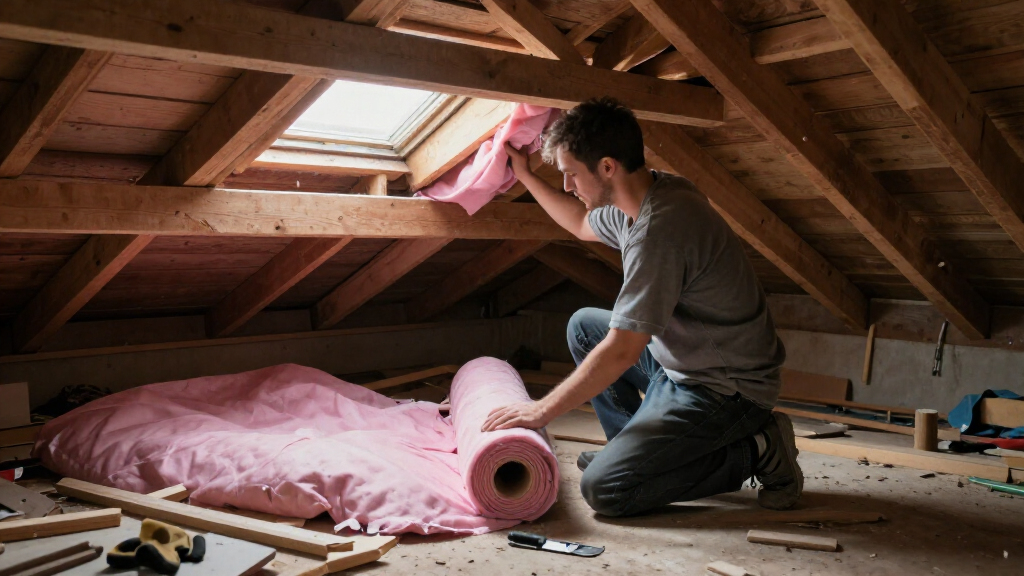
I compared these 12 attic products by the job their listed format and specifications suggest they can do: adding thermal resistance, reflecting radiant heat, or sealing localized gaps. I considered stated R-values where provided, roll or batt dimensions, package coverage, material type, and the practical demands those formats place on an installer. I also looked at how clearly a product’s intended role could be distinguished from the others, since a radiant barrier should not be ranked as a like-for-like replacement for fiberglass or spray foam.
The ranking favors products with a clearly defined attic use and useful coverage for that role. R-38 fiberglass leads for broad thermal-insulation needs; large radiant-barrier rolls rank well for projects specifically targeting radiant heat; and specialty formats or a multi-can foam kit rank lower for whole-attic coverage because they suit narrower tasks. The listed product details do not establish a complete insulation system or confirm suitability for every climate, roof assembly, or local code, so I treat those as project checks rather than assuming a product can serve every attic.
| attic insulation product | Material |
|---|---|
| Owens Corning R-38 Unfaced Fib | Fiberglass |
| Owens Corning R-19 Unfaced Fib | Fiberglass |
| US Energy Products Radiant Bar | — |
| Reflectix BP24025 24-Inch x 25 | — |
| Owens Corning R-19 Unfaced Fib | Fiberglass |
| Margar Radiant Barrier Insulat | Double-sided perforated foil |
| Radiant Barrier Insulation Rol | Double-sided aluminum foil |
| Radiant Guard Radiant Barrier | Reinforced aluminum |
| 500 sqft | Aluminum |
| 500 sqft | Aluminum |
| AtticFoil Original Attic Radia | Double-sided pure aluminum foil with internal tear-resistant fabric |
| BEEST FullStop Spray Foam Insu | — |
Factors to Consider When Choosing Best Attic Insulation Products
Before choosing among these products, decide what problem you are solving and where the insulation will go. Attic-floor insulation, roofline work, radiant barriers, and air sealing are related but different tasks; buying by product name alone can lead to the wrong material or an incomplete upgrade.
Match the Product to the Heat-Transfer Problem
Bulk insulation such as fiberglass batts slows heat moving through the attic floor, while reflective barriers target radiant heat and spray foam can seal gaps as it expands. These materials are not interchangeable, even when each is marketed for attic use. A reflective roll may help in a suitable assembly, but it does not provide the same listed R-value information as the fiberglass options here. Likewise, a foam kit intended for localized sealing is not a straightforward substitute for covering a large attic floor. Start by identifying whether the main issue is insufficient ceiling insulation, radiant heat, air leakage, or a combination. If you are unsure, an energy assessment can help identify the work with the greatest impact before you buy materials.
Check R-Value, Coverage, and Fit Together
An R-value describes resistance to heat flow, but it does not tell you how many packages you need or whether a batt fits your framing. Compare the product’s coverage and dimensions with the attic area, joist spacing, obstructions, and existing insulation. A high-R-value batt can leave gaps if cut or installed poorly, while a roll with extensive square-foot coverage can still be the wrong choice for the intended surface. Do not compare square footage alone across different material types. Measure the area, account for edges and cuts, and check the label for installation instructions and stated performance. If you are layering insulation, confirm that the assembly and facing orientation follow manufacturer guidance and local requirements.
Choose the Installation Location Before the Material
Insulating the attic floor differs from insulating the underside of a roof, and the choice can affect ventilation, moisture management, and access to services. A radiant barrier is commonly associated with roof or attic applications where its placement and air space matter; simply laying reflective material anywhere may not deliver the intended result. Fiberglass batts are often more suited to open floor cavities, while spray foam is useful for hard-to-reach cracks but demands careful handling. Before installing anything, map vents, recessed fixtures, chimneys, wiring, and access points. Keep required ventilation paths open and follow clearance rules around heat-producing equipment. When a roof assembly or moisture condition is unclear, get qualified advice rather than covering it up.
Account for Climate, Moisture, and Existing Insulation
Local climate and the attic’s current condition influence which upgrade makes sense. Before adding material, look for roof leaks, damp insulation, condensation, pest damage, or blocked ventilation; adding a new layer over an unresolved problem can make repairs harder. Check local energy guidance for recommended insulation levels instead of assuming that one R-value fits every home. Also inspect whether existing material is settled, damaged, or uneven, since those conditions can change what the next layer needs to accomplish. Unfaced batts avoid adding a facing layer, but the correct vapor-control approach depends on the assembly and local rules. A professional assessment is useful when moisture or combustion-safety concerns are present.
Price the Whole Project, Not Just the Package
Material coverage is only one part of the project: protective equipment, cutting waste, delivery, access, and installation time can affect the real workload. Large rolls may reduce the number of separate pieces across an open area, but they can be awkward to handle around rafters and obstructions. Smaller or narrower formats can be easier to position in confined sections, though they may require more seams. A spray foam kit may fit a small sealing task but is not necessarily economical or practical for broad coverage. Compare the complete bill of materials and read the installation and safety instructions before deciding to DIY. Paying more for a better-fitting format can be worthwhile when it reduces gaps, excess cuts, or installation risk.
Know When to Hire an Installer
DIY work is more manageable when the attic is accessible, dry, and free of complicated wiring, tight clearances, or active ventilation problems. Fiberglass installation still calls for suitable protective gear and careful fitting, while spray foam introduces product-specific handling and ventilation requirements. Radiant barriers can be difficult to position neatly across a roof structure, and installation mistakes may reduce their usefulness. Hire a qualified contractor if you find moisture damage, uncertain electrical conditions, difficult roof geometry, or equipment that requires special clearances. Ask for a scope that states the intended location, target insulation level, air-sealing work, and ventilation plan. A clear scope helps prevent paying for a material upgrade that leaves the underlying issue unresolved.
Frequently Asked Questions
Can a radiant barrier replace fiberglass insulation in my attic?
Usually, you should not treat a radiant barrier as a direct replacement for fiberglass batts. The radiant-barrier rolls in this roundup are designed around reflecting radiant heat, while the Owens Corning batts list R-values for resistance to heat flow. Which measure matters most depends on your climate, attic layout, and existing insulation. Some homes may benefit from a combination, but placement and ventilation details affect performance. Check local energy guidance and the product instructions before combining materials.
Should I choose R-38 batts or R-19 batts for an attic upgrade?
Start with the insulation level already present, the target recommended for your location, and the depth available in the attic floor. The R-38 option offers a higher listed R-value per product than the R-19 options, but it may be too bulky for some framing or layering situations. R-19 products can make sense for a more limited upgrade or a space where their dimensions fit better. Compare package coverage and batt dimensions as well as R-value. If you plan to layer batts over existing material, check facing and installation guidance to avoid creating moisture problems.
Is a perforated radiant-barrier roll better than a solid one?
Neither format is universally better; the choice depends on the intended assembly and the manufacturer’s directions. The Margar and NASA TECH perforated options allow some moisture vapor movement through the material, while the NASA TECH solid, non-perforated roll has a different barrier profile. That difference can matter in roof assemblies where moisture needs to dry toward a particular side. Do not choose based only on the word “commercial” or a roll’s size. Confirm the product is suitable for your roof construction and local climate, and ask a building professional if the vapor-control path is unclear.
Can I install attic insulation over old insulation?
Often, an additional layer can be installed over existing insulation if the old material is dry, clean, and in usable condition. First check for leaks, mold, pest activity, compressed areas, and blocked soffit or roof ventilation. Avoid covering wiring, fixtures, or equipment that must remain accessible or meet specific clearance rules. Follow the new product’s instructions on layering and facing, and do not assume the existing insulation has its labeled performance if it is damaged or settled. If you find moisture or suspect unsafe electrical conditions, resolve those issues before adding insulation.
When does a spray foam kit make more sense than rolls or batts?
A small spray foam kit may suit targeted cracks or irregular gaps that are difficult to fill neatly with batts, rather than broad attic-floor coverage. Rolls and batts are generally easier to plan for large, regular areas, while the BEEST kit’s stated capacity is limited compared with a whole-attic project. Foam application also requires careful attention to product instructions, protective equipment, and ventilation. It should not block required vents or be applied near heat sources outside the specified clearances. If you need extensive air sealing or are unsure about the roof assembly, get an installer’s assessment before using foam.
Conclusion
For most buyers adding thermal resistance across an accessible attic floor, I’d start with Owens Corning R-38 Unfaced Fiberglass Batt Insulation as the best overall fit in this lineup. For broad radiant-heat coverage, my best value-oriented choice is the US Energy Products Radiant Barrier Roll, provided a radiant barrier suits the assembly; among the larger foil options, the AtticFoil Original or Margar perforated roll may better fit buyers who need a specific format or vapor-permeable design. The best premium pick for targeted work is the BEEST FullStop Spray Foam Kit, not a whole-attic replacement, and beginners may find the clearly dimensioned Owens Corning R-19 batts easier to plan around than installing a roof-mounted barrier. For narrow areas, compare Radiant Guard Xtreme and Reflectix by fit and application; for a specialized foil choice, compare the perforated and solid NASA TECH rolls against the roof assembly requirements. Choose by the job, installation location, and existing attic condition—not by coverage alone.