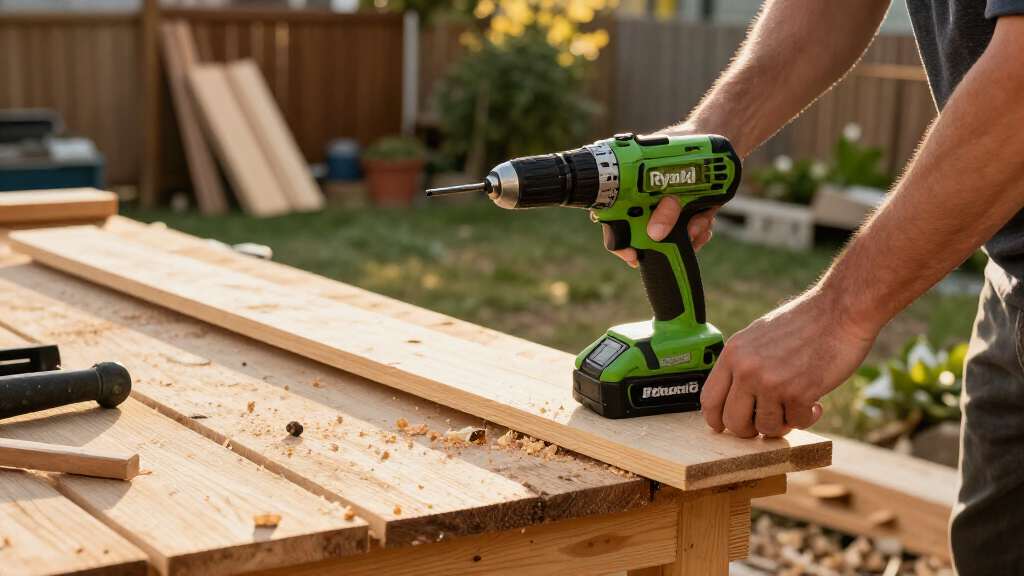

The best Ryobi tools depend on whether you need a starter set, a focused workshop tool, or help with outdoor chores. I rank the Ryobi P1819 six-tool combo kit as the best overall starting point because it covers several common jobs in one package. For targeted work, the ONE+ impact driver is a practical pick for fastening, while the 40V leaf blower suits buyers who want a dedicated yard tool. The main tradeoffs are choosing between the 18V ONE+ and 40V platforms, buying a kit or bare tool, and favoring versatility over task-specific performance. Read on for the full breakdown, including who each tool suits and what to weigh before choosing.

Get business pricing on tools and workshop supplies
- Business-only prices and quantity discounts
- Tax-exempt purchasing
- Multiple users, one account, clear invoices
Complete the kit


Key Takeaways
- The P1819 six-tool kit is the broadest starting point in this lineup, while individual bare tools make more sense when you already own compatible batteries and a charger.
- Battery platform choice shapes the whole purchase: most listed tools use 18V ONE+, but the leaf blower is a 40V option with a separate battery ecosystem.
- Workshop airflow and yard cleanup are different jobs. The compact P755 blower is aimed at clearing a bench or work area; the 40V blower is the yard-focused choice.
- Several tools solve narrow, useful problems: the handheld vacuum, LED light, and 160 PSI inflator add convenience, but they do not replace core cutting or fastening tools.
- Two multi-tools appear in the lineup. Compare their exact model and accessory compatibility before buying; similar names do not automatically mean identical kits or fit.


| Ryobi tool | Model | Weight | Voltage |
|---|---|---|---|
| RYOBI ONE+ 18V Cordless Recipr | PCL515B | 4.2 lb | — |
| Ryobi ONE+ 18V Cordless Oscill | PCL430B | 1.5 lb | 18V |
| RYOBI 18V ONE+ Cordless Handhe | RHV18-0 | 2.6 lb | 18V |
| RYOBI PCL500B 18V Cordless 5-1 | PCL500B | 4.5 lb | — |
| RYOBI ONE+ 18V Cordless 1/4-In | PCL235B | 2 lb | 18V |
| RYOBI RY40LB01B 40V Cordless L | RY40LB01B | — | 40V |
| RYOBI ONE+ 18V Cordless Compac | P755 | 2.5 lbs | 18V |
| RYOBI P1819 18V ONE+ 6-Tool Li | P1819 | — | 18V |
| RYOBI ONE+ 18V Cordless LED Li | PCL660B | 8.8 oz | 18V |
| RYOBI RMT18-0 18V ONE+ Cordles | RMT18-0 | 0.9 kg | 18V |
| RYOBI ONE+ 18V Cordless High-P | — | 600 g | 18 V |
| RYOBI PCL445B 18V Cordless 4-1 | PCL445B | 5.6 lb | 18 V |
More Details on Our Top Picks
RYOBI ONE+ 18V Cordless Reciprocating Saw, 3,400 SPM, 1-Inch Stroke, Tool Only (PCL515B)
The PCL515B reciprocating saw is the lineup’s practical choice for cutting where a circular saw’s straight, supported cuts are not the goal. Its variable speed reaches 3,400 SPM, and the 1-inch stroke suits pruning, remodeling cuts, and general tear-out work. RYOBI includes a 6-inch high-speed steel blade, so there is a blade in the box to get started, but the tool is sold without a battery.
Compared with the PCL500B circular saw, this saw handles awkward angles and plunge-style cuts more naturally, while giving up the circular saw’s cleaner, more controlled cuts through sheet goods. Its 4.2-pound weight is manageable, but the listed 30-day limited warranty is a real drawback for a tool likely to see demanding work. I’d choose it for occasional demolition, not precision finish cutting.
Pros:- Variable speed up to 3,400 strokes per minute helps adapt cutting pace to the task
- One-inch stroke supports general demolition and pruning cuts
- Includes a 6-inch high-speed steel blade
- Cordless 18V platform allows use away from an outlet
Cons:- Battery and charger are not included
- A 30-day limited warranty offers little coverage for a demanding tool
- Reciprocating action is less suited to clean, accurate cuts than the PCL500B circular saw
Best for: ONE+ owners who need a cordless saw for pruning, renovation tear-out, and cuts in places a circular saw cannot easily reach
Not ideal for: Woodworkers focused on straight, repeatable cuts in sheet goods, or buyers who need a battery and charger included
- Model:PCL515B
- Power source:18V battery
- Maximum speed:3,400 SPM
- Stroke length:1 inch
- Included blade:6-inch high-speed steel
- Weight:4.2 lb
- Battery included:No
- Warranty:30-day limited
Our verdict“Choose the PCL515B for portable rough cutting and tear-out, but pick the PCL500B when straight wood cuts matter more.”
Ryobi ONE+ 18V Cordless Oscillating Multi-Tool (Tool Only)
The PCL430B oscillating multi-tool earns its place through task range: interchangeable accessories let one compact tool cut, sand, and scrape, making it useful for trim adjustments, small repairs, and detail work. Its variable speed up to 20,000 OPM gives more control than a one-speed driver such as the PCL235B impact driver, especially when a delicate surface calls for a slower pace. The 1.5-pound weight and lock-on button also help during longer sanding or scraping jobs.
On-board accessory storage is a handy advantage when switching tasks, though the product data does not specify which accessories are included. That makes this a less ready-to-work purchase than the PCL515B, which comes with a saw blade. Battery and charger are sold separately, and the listed 30-day limited warranty is short. I’d pick it for varied, close-control jobs rather than repeated heavy cutting.
Pros:- Variable speed control reaches up to 20,000 OPM
- Supports cutting, sanding, and scraping with interchangeable accessories
- Lock-on button can reduce hand fatigue during sustained operation
- On-board accessory storage keeps spare attachments with the tool
Cons:- Battery and charger are sold separately
- Included accessories are not specified in the supplied product information
- 30-day limited warranty is short
Best for: DIYers and repair-focused homeowners who need one cordless tool for trim cuts, sanding corners, and scraping small areas
Not ideal for: Buyers who need a complete accessory set or want a tool built primarily for fast, repeated heavy cuts
- Model:PCL430B
- Voltage:18V
- Maximum speed:20,000 OPM
- Weight:1.5 lb
- Dimensions:12 × 3 × 6 in
- Speed control:Variable speed dial
- Other features:Lock-on button and on-board accessory storage
- Battery and charger:Sold separately
Our verdict“Choose the PCL430B for varied detail work and speed control; choose a dedicated saw when cutting is your main task.”
RYOBI 18V ONE+ Cordless Handheld Vacuum Cleaner (RHV18-0)
The RHV18-0 handheld vacuum brings the ONE+ battery platform into cleanup rather than cutting or fastening. Its 600 ml dust container is generous for a handheld unit, while the HEPA filter and included crevice tool with retractable brush make it a useful option for car interiors, workshop debris, and small household messes. At 2.6 pounds, it is easier to carry around than a full-size vacuum, and the lockable switch supports continuous operation without holding the trigger.
Unlike the PCL430B multi-tool, this is a single-purpose tool, so it will not add much if your priority is expanding workshop task coverage. Its stated runtime is about 31 minutes, it has only one speed, and the battery and charger are not included. I’d favor it for spot cleaning and portability, not as a replacement for a full-size vacuum or for jobs that need adjustable suction.
Pros:- 600 ml dust container reduces how often small cleanup jobs need an emptying break
- HEPA filter and included crevice tool with retractable brush suit detailed cleanup
- Lockable switch supports continuous operation
- Portable 2.6-pound weight is practical for cars and workshop use
Cons:- Battery and charger are not included
- Approximately 31-minute runtime may limit longer cleaning sessions
- Single speed provides no suction adjustment
Best for: ONE+ owners who regularly clean car seats, workbenches, and small household messes and value a portable cordless vacuum
Not ideal for: People who need adjustable suction, long uninterrupted cleaning sessions, or a vacuum supplied with its battery and charger
- Model:RHV18-0
- Voltage:18V
- Airflow:1,000 L/min
- Suction power:29 AW
- Dust capacity:600 ml
- Filter:HEPA
- Weight:2.6 lb
- Battery runtime:Approximately 31 minutes
- Included accessory:Crevice tool with retractable brush
Our verdict“Choose the RHV18-0 for portable spot cleaning if you already own a ONE+ battery, but not as your main household vacuum.”
RYOBI PCL500B 18V Cordless 5-1/2 in. Circular Saw (Tool Only)
The PCL500B circular saw is the lineup’s focused pick for portable straight cuts in wood. Its 5.5-inch blade spins at 4,700 RPM, and the saw’s 4.5-pound weight keeps it easier to carry than a larger, heavier cutting setup. The 45-degree bevel capability adds flexibility for angled cuts, giving it a clearer role than the PCL515B reciprocating saw, which is better suited to rough cuts and awkward access.
The tradeoff is blade size: this compact saw is less suited to deeper cuts than a larger circular saw, and the supplied data does not state cutting depth. It also arrives without a battery or charger, and its listed 30-day limited warranty is brief. I’d choose it for mobile DIY projects where portability and straight cuts matter more than cutting capacity or extended warranty coverage.
Pros:- Compact 5.5-inch blade format suits portable cutting tasks
- 4,700 RPM operating speed supports efficient wood cutting
- Bevel capability reaches 45 degrees
- 4.5-pound weight is manageable to carry between work areas
Cons:- Battery and charger are sold separately
- Smaller blade limits its suitability for deeper cuts compared with larger circular saws
- 30-day limited warranty is short
Best for: DIYers with ONE+ batteries who make portable straight and bevel cuts in wood for smaller home projects
Not ideal for: Buyers who need greater cutting depth, a battery-ready kit, or a tool with longer stated warranty coverage
- Model:PCL500B
- Power source:18V battery
- Blade diameter:5.5 inches
- Blade material:High-speed steel
- Speed:4,700 RPM
- Blade teeth:18
- Maximum cutting angle:45 degrees
- Weight:4.5 lb
- Battery and charger:Sold separately
Our verdict“Choose the PCL500B for portable straight and bevel cuts, but favor the PCL515B for rough, irregular cutting.”
RYOBI ONE+ 18V Cordless 1/4-Inch Impact Driver, Tool Only (PCL235B)
The PCL235B impact driver is the clearest choice here for driving fasteners, with up to 1,800 in-lb of torque and a 1/4-inch chuck for compatible driver bits. Its compact 2-pound weight and built-in LED work light make it handy for assembly, repairs, and fastening in dim corners. Compared with the PCL500B circular saw, it serves a different job entirely: it trades cutting ability for a tool designed to drive screws and other fasteners efficiently.
The main compromise is control. This model has one speed, so it offers less adjustment than the PCL430B oscillating multi-tool’s variable-speed dial. Battery and charger are also sold separately, and the stated 30-day limited warranty is short. I’d choose it for routine fastening if I already own ONE+ batteries, but not for users who need several speed settings or a complete kit.
Pros:- Up to 1,800 in-lb of torque for fastening tasks
- 1/4-inch chuck accepts compatible driver bits
- Built-in LED work light helps illuminate the work area
- Compact 2-pound weight supports portable use
Cons:- Single-speed operation offers less control than variable-speed tools
- Battery and charger are not included
- 30-day limited warranty is short
Best for: ONE+ owners who assemble furniture, handle home repairs, or drive fasteners in tight or poorly lit work areas
Not ideal for: Buyers who need adjustable speed for delicate fastening or expect a battery and charger in the package
- Model:PCL235B
- Voltage:18V
- Maximum torque:1,800 in-lb
- Maximum rotational speed:3,400 rpm
- Maximum impact rate:3,400 IPM
- Chuck size:1/4 inch
- Number of speeds:1
- Weight:2 lb
- Battery included:No
Our verdict“Choose the PCL235B for compact ONE+ fastening work, but pick the PCL430B if adjustable speed matters more than driving power.”
RYOBI RY40LB01B 40V Cordless Leaf Blower, Tool Only
The 40V RY40LB01B is the yard-focused pick here: its 550 CFM airflow suits moving broader piles of leaves and debris, while adjustable speed gives you more control when clearing lighter messes. It has a different job from the ONE+ 18V P755 Workshop Blower, which is lighter and better suited to benches, garages, and tight spaces. The tradeoff is commitment to RYOBI’s 40V battery system; an 18V ONE+ battery won’t power it. This listing also includes the tool only, so buyers need a compatible battery and charger. I’d choose it for outdoor cleanup, not as an all-purpose blower for small indoor jobs.
Pros:- Up to 550 CFM airflow is suited to moving broader piles of debris.
- Adjustable speed offers more control across different cleanup tasks.
- Handheld cordless design avoids managing a power cord outdoors.
Cons:- Battery and charger are not included.
- Requires a compatible 40V battery, separate from the 18V ONE+ system.
- Larger yard-cleanup format is less targeted than the compact P755 for workshop tasks.
Best for: Homeowners with a compatible RYOBI 40V battery who need a handheld blower for leaves and outdoor debris.
Not ideal for: ONE+ 18V owners who want to use their existing batteries, or buyers mainly clearing dust from a workshop.
- Model:RY40LB01B
- Voltage:40V
- Power source:Battery powered
- Airflow capacity:Up to 550 CFM
- Maximum air speed:Up to 120 MPH
- Form factor:Handheld
- Dimensions:36 x 8 x 11 in
- Included:Blower tool only; battery and charger not included
Our verdict“Choose this 40V blower for yard debris if you already own a compatible battery; pick the P755 for compact indoor cleanup.”
RYOBI ONE+ 18V Cordless Compact Workshop Blower (Tool Only, P755)
At 2.5 lb, the P755 is the nimble choice for clearing sawdust, debris from work surfaces, and other small messes around a garage or home. Its listed 160 mph maximum air speed gives it a strong focused blast, but this compact blower provides less airflow volume than the yard-oriented RY40LB01B, so it is not the better pick for broad leaf piles. Its 18V ONE+ compatibility is an advantage for buyers already invested in that battery family, and adjustable speed helps tailor the blast to the job. The plastic construction and limited airflow volume make it less suited to demanding outdoor cleanup. Like the 40V blower, it is sold without a battery or charger.
Pros:- Light 2.5 lb body is easier to handle for small cleanup jobs.
- Up to 160 mph air speed helps direct debris from tight spaces.
- Adjustable speed settings offer control for different surfaces.
- Uses the RYOBI ONE+ 18V battery system.
Cons:- Tool-only listing requires a compatible battery and charger.
- Compact design has less airflow volume than the 40V RY40LB01B.
- Plastic construction is less suited to heavy-duty handling.
Best for: DIYers and homeowners with an 18V ONE+ battery who want a lightweight blower for workshop and household cleanup.
Not ideal for: People clearing large outdoor leaf piles or buyers who need a blower with a battery and charger included.
- Model:P755
- Voltage:18V
- Maximum air speed:160 mph
- Weight:2.5 lbs
- Dimensions:19.8 x 5.25 x 10 in
- Form factor:Handheld
- Material:Plastic
- Included:Tool only; battery and charger not included
Our verdict“Pick the P755 for portable workshop cleanup on the ONE+ platform, not for moving large volumes of yard debris.”
RYOBI P1819 18V ONE+ 6-Tool Lithium-Ion Combo Kit
The P1819 six-tool kit is the strongest starting point in this group for someone building a workshop from scratch. Instead of buying standalone tools like the RMT18-0 multi-tool one at a time, you get a drill/driver, impact driver, reciprocating saw, circular saw, multi-tool, and worklight, plus two batteries and a charger. The impact driver’s listed 1,800 in-lb torque supports fastening jobs, while the circular saw’s 1-9/16-in. cut depth signals a more modest cutting capacity than a full-size saw. The kit’s breadth is its advantage, but it is less tailored than choosing a single tool for a specific task. The batteries also differ in capacity, so the smaller one is better treated as a lighter-duty backup.
Pros:- Combines six useful tools in one kit.
- Includes two batteries, a charger, a bag, and accessories.
- Impact driver delivers up to 1,800 in-lbs of torque.
- Works within the RYOBI ONE+ 18V battery system.
Cons:- The two included batteries have different capacities: 4.0 Ah and 1.5 Ah.
- A broad starter selection may include tools a buyer does not need.
- Circular saw depth of cut is limited to 1-9/16 in.
Best for: New DIYers or homeowners who need several core tools and want to start with batteries and a charger included.
Not ideal for: Buyers who already own a substantial ONE+ collection or need one specialized tool with greater capacity.
- Model:P1819
- Voltage:18V
- Battery type:Lithium-ion
- Batteries included:Two: 4.0 Ah and 1.5 Ah
- Tools included:Drill/driver, impact driver, reciprocating saw, circular saw, multi-tool, LED worklight
- Drill/driver torque:Up to 500 in-lbs
- Impact driver torque:Up to 1,800 in-lbs
- Circular saw depth of cut:Up to 1-9/16 in.
- Other included items:Charger, bag, and accessories
Our verdict“Choose the P1819 if you need a ready-to-start collection of common tools, rather than just the standalone multi-tool.”
RYOBI ONE+ 18V Cordless LED Light (Tool Only)
The PCL660B LED light fills a different role from the cutting and fastening tools in this roundup: it is for lighting a work area without relying on a nearby outlet. Its 130-degree beam spreads illumination broadly, making it more useful for general workspace coverage than a narrowly aimed light. At 8.8 ounces, it is easy to carry between rooms or keep in a tool bag. Compared with the P1819 kit’s included worklight, this is a standalone lighting option for ONE+ owners who want another portable light, but the supplied details do not identify a runtime or brightness measure beyond wattage. It is tool-only, and the lightweight ABS body prioritizes portability over a more rugged construction.
Pros:- Wide 130-degree beam spreads light across a work area.
- Lightweight 8.8-ounce body is easy to carry.
- Compatible with RYOBI ONE+ 18V lithium-ion batteries.
Cons:- Battery and charger are sold separately.
- ABS plastic construction may not suit rough handling.
- Listed specifications do not provide a runtime figure.
Best for: RYOBI ONE+ owners who need a lightweight handheld light for temporary work areas, repairs, or indoor projects.
Not ideal for: Buyers without an 18V battery, or those who need a specified runtime, rugged jobsite housing, or a complete light-and-battery package.
- Model:PCL660B
- Voltage:18V
- Light source:LED
- Wattage:50 watts
- Beam angle:130 degrees
- Weight:8.8 oz
- Material:ABS plastic
- Battery:RYOBI 18V lithium-ion; sold separately
Our verdict“Choose this light for portable, broad-area illumination if you already have a ONE+ battery; the P1819 kit is more practical if you also need a worklight and several tools.”
RYOBI RMT18-0 18V ONE+ Cordless Multi-Tool, Bare Tool
The RMT18-0 oscillating multi-tool earns its place for jobs where a full-size saw cannot reach: trimming, plunge cuts, and sanding detailed surfaces. Its six-position speed selector lets buyers adjust the tool across materials, while the included blades, sanding pad, and sheets make it more project-ready than a bare standalone tool with no listed accessories. That gives it a focused advantage over the P1819 kit, which includes a multi-tool alongside five other tools but is aimed at buyers who need a broader setup. The RMT18-0 remains a specialist, not a replacement for a circular saw or reciprocating saw on larger cuts. It also requires a separate 18V battery and charger, and frequent accessory changes may still slow work compared with dedicated tools.
Pros:- Cuts and sands a range of materials, including wood, drywall, metal, and plastic.
- Six-position speed selection helps match tool speed to the task.
- Includes cutting blades, a sanding pad, sanding sheets, and a universal adaptor.
- LED work light helps illuminate confined work areas.
Cons:- Battery and charger are not specified as included.
- Oscillating format is less suited to long, high-volume cuts than a dedicated saw.
- Switching attachments can interrupt work when moving between tasks.
Best for: DIYers with an 18V ONE+ battery who need controlled cutting and sanding for trim, drywall, laminate, or other detailed work.
Not ideal for: Buyers who mainly make long, fast cuts or need a complete kit with battery and charger included.
- Model:RMT18-0
- Voltage:18V
- Tool type:Cordless oscillating multi-tool
- Functions:Cutting and sanding
- Speed range:10,000–20,000 rpm
- Speed settings:Six-position variable speed
- Weight:0.9 kg
- Included components:Plunge-cutting blade, flush-cutting blade, sanding pad, five sanding sheets, hex key, universal accessory adaptor
- Battery requirement:One lithium-ion battery required; battery and charger not specified as included
Our verdict“Choose the RMT18-0 for detailed cuts and sanding on a ONE+ battery platform, or the P1819 kit if you need several tools at once.”
RYOBI ONE+ 18V Cordless High-Pressure Inflator, 160 PSI, Tool Only
I’d choose this inflator for keeping car tires, bicycle tires, and sports gear topped up without hunting for an outlet. Its 160 PSI capacity and digital pressure display suit pressure-sensitive jobs, while preset shut-off helps limit overinflation once the target is set. Compared with the PCL445B angle grinder, this is a dedicated maintenance tool rather than a material-removal tool; it earns its place by solving a different, recurring task with less setup. The 60 cm hose and onboard accessory storage also keep the valve connector, ball needle, and tapered nozzle close at hand. The tradeoff is that it needs a separate ONE+ battery, and its 16 L/min airflow is better for tires and smaller inflatables than high-volume items. I’d skip it if you need a shop compressor for sustained airflow.
Pros:- 160 PSI maximum pressure suits many vehicle and bicycle tire needs.
- Digital display and preset shut-off support controlled inflation.
- Onboard storage keeps the three included accessories together.
- Runs on the RYOBI ONE+ 18V battery platform.
Cons:- Battery and charger are not included.
- 16 L/min airflow is not suited to fast, high-volume inflation.
Best for: RYOBI ONE+ owners who want a portable inflator for car or bicycle tires, balls, and small inflatables.
Not ideal for: People inflating large-volume items often or needing a complete kit, since airflow is limited and the battery is not included.
- Power source:Battery powered
- Voltage:18 V
- Battery type:Lithium-ion
- Maximum pressure:11 bar (160 PSI)
- Airflow capacity:16 L/min
- Hose length:60 cm
- Weight:600 g
- Included accessories:Valve connector, sports ball needle, tapered nozzle
Our verdict“Choose this if you already own a ONE+ battery and want a compact, pressure-controlled inflator for tires and small gear.”
RYOBI PCL445B 18V Cordless 4-1/2-Inch Angle Grinder (Tool Only)
The PCL445B is the more demanding pick in this pair: it’s built for grinding and cutting work, not routine inflation. Its 9,000 RPM motor supports rapid material removal, while the 4-1/2-inch disc gives it a familiar size for common grinding tasks. A three-position side handle lets me tailor the grip to the work angle, and the tool-free guard and spindle lock reduce friction when setting up or changing accessories. Compared with the ONE+ high-pressure inflator, this model is a better fit for workshop and renovation tasks, but it brings more weight and requires compatible grinding discs. The die-cast metal gear case adds a sturdy element, though the 5.6-pound bare tool can feel tiring during extended overhead work. Battery and charger are sold separately, so it makes most sense for existing ONE+ users.
Pros:- 9,000 RPM motor supports rapid material removal.
- Three-position side handle allows grip adjustments for different work angles.
- Tool-free guard and spindle lock simplify setup and accessory changes.
- Die-cast metal gear case adds durability.
Cons:- Battery and charger are sold separately.
- At 5.6 pounds, it may be tiring during extended overhead work.
- Bulk packaging and bare-tool contents mean accessories may need to be sourced separately.
Best for: DIY renovators and workshop users who already own ONE+ batteries and need a cordless grinder for cutting or material removal.
Not ideal for: Buyers seeking a lightweight tool for prolonged overhead grinding or a ready-to-use kit with battery, charger, and accessories.
- Model:PCL445B
- Power source:Battery powered
- Voltage:18 V
- Maximum rotational speed:9,000 RPM
- Disc size:4-1/2 in.
- Handle positions:3
- Gear case:Die-cast metal
- Dimensions:12.53 × 2.75 × 5.46 in.
- Weight:5.6 lb
Our verdict“Pick the PCL445B for cordless grinding and cutting if you have a ONE+ battery and can manage its weight.”
How We Picked
I ranked these tools by the job they solve, how broadly useful they are to a typical homeowner or DIYer, and how much commitment they require from a buyer. That meant weighing versatility, stated performance, portability, task fit, and whether a product is a complete starting point or a bare tool that assumes an existing battery and charger. I also separated tools by role: a workshop blower should not be judged as a yard blower, and a compact inflator should not be treated as a substitute for a full air compressor.
The ranking favors options that cover more everyday needs without hiding their limits. The P1819 kit leads for breadth, while focused tools rank higher for buyers with a clear task and compatible batteries. The 40V leaf blower is evaluated on its outdoor role rather than against the 18V workshop blower; similarly, the two multi-tools call for model-specific checking rather than an assumption that their accessories or included equipment are interchangeable. Since most products are tool-only, battery ownership and total setup needs factor into their value.
Factors to Consider When Choosing Best Ryobi Tools
Before choosing among the best Ryobi tools, start with the work you actually do and the batteries you already own. These lineup-wide decisions can matter more than a headline speed or pressure rating.
Choose the Battery Platform Before the Tool
Most options here belong to Ryobi’s 18V ONE+ platform, while the leaf blower uses 40V. If you already own ONE+ batteries, a bare 18V tool can be a straightforward addition, but a 40V purchase starts a separate battery decision. Don’t assume batteries cross between voltage platforms just because the tools share a brand. For a first purchase, compare the complete setup you need—tool, battery, and charger—not only the tool listing. Also think about how many tools you plan to add: a platform is more useful when it can support your likely next purchases. A dedicated outdoor tool may justify a separate system, but occasional yard cleanup may not warrant another battery family.
Kit or Bare Tool: Calculate the Whole Setup
A combo kit can reduce the friction of starting from zero by grouping several tools and the essentials needed to run them. Bare tools are often a better fit when you already have compatible batteries and a charger, since duplicate equipment can sit unused. Check exactly what a kit includes rather than assuming it has every accessory required for your jobs. For standalone listings, verify whether a battery, charger, blades, discs, or other consumables are included; the supplied details identify many of these tools as tool-only. Consider how often you will use each item, too: a bundle is less useful if several included tools do not match your work. The right comparison is the complete working setup against the jobs you expect to do.
Match the Tool to the Scale of the Job
Tool labels can make very different tasks sound interchangeable. A compact workshop blower is meant for localized cleanup, while a yard blower is intended for outdoor debris; choosing by name alone can lead to a poor fit. The same applies to saws and grinders, where the material, cut size, and frequency of use affect whether a compact cordless model suits the job. Think through the toughest regular task you expect, not just the easiest one. For occasional household repairs, portability and storage may matter more than extended-duty capacity. If your work is frequent or demanding, check the tool’s stated limits and the accessories it accepts before committing.
Treat Runtime as Part of Performance
Cordless performance depends on the battery as well as the tool. A tool-only listing does not tell you how long a particular battery will last on your workload, and demanding tasks can drain a pack faster than light, intermittent use. If you expect to move between jobs without waiting, a second compatible battery may matter more than choosing a tool with a higher headline specification. For occasional use, one pack may be enough, especially when several tools share a platform. Look at whether the work can be done in short bursts or requires sustained operation. Keep battery, charger, and charging time in your decision rather than treating them as afterthoughts.
Check Accessories and Model Details
Accessory fit affects how useful a tool is after it leaves the box. For cutting, grinding, and oscillating tools, confirm the required blade or disc type and whether the accessories you already own are compatible. This matters especially with the two differently identified Ryobi multi-tools in this roundup: compare model numbers, included accessories, and attachment requirements before selecting one. A tool may be a good match for a task yet still require extra purchases to get started. Check replacement consumables and availability as well as the initial setup. A little model-specific research can prevent buying a near-match that does not accept the accessory you intended to use.
Pay for Capability You Will Use
More voltage or a broader kit does not automatically make a better choice for every buyer. A dedicated 40V yard tool may be the right step for regular outdoor cleanup, while an 18V tool may better suit small household tasks and buyers already invested in ONE+. A six-tool kit earns its place when you will use several of its tools, but it can be an inefficient choice if you need only one specialist tool. Prioritize comfort, portability, and task frequency alongside raw capability. For occasional jobs, a focused tool that fits your existing battery collection can be a smarter buy than expanding into equipment you rarely use. Spend extra only when the added reach, capacity, or convenience maps to a real task.
Frequently Asked Questions
Which Ryobi tool should I buy first if I own no batteries?
I would start by comparing the P1819 six-tool combo kit with the jobs you expect to do, since this roundup’s standalone options are generally listed as tool-only. A kit can establish an 18V ONE+ base and cover several types of work, but its usefulness depends on whether its included tools match your needs. If your main priority is yard cleanup, the 40V leaf blower belongs to a different battery platform, so factor in that separate setup. Check the kit contents and battery details before ordering. Choose a focused tool instead only if you have a clear primary task and have accounted for the battery and charger.
Can I use the 18V ONE+ battery with the 40V leaf blower?
No—choose a battery made for the tool’s stated platform rather than assuming Ryobi batteries are interchangeable across voltages. The leaf blower in this roundup is a 40V model, while most of the other listed tools use 18V ONE+. That distinction affects both the initial setup and how conveniently you can share batteries across your tools. If you already own ONE+ equipment, an 18V tool may be the simpler addition. If the leaf blower is your priority, budget and plan around its 40V system separately.
Is the workshop blower a substitute for a leaf blower?
No; the two are aimed at different cleanup settings. The P755 compact workshop blower is meant for a bench or work area, whereas the 40V model is the yard-focused pick in this lineup. A compact blower’s portability can be useful indoors or around a project, but that does not make it the right choice for moving outdoor debris across a larger area. Match the tool to the size and location of the cleanup. If you need both roles, treat them as separate tools rather than expecting one to cover every task.
Should I choose the combo kit or buy individual tools?
Choose the P1819 kit if several of its tools fit your planned projects and you need a starting setup. Individual bare tools make more sense when you already own compatible batteries and chargers, or when you need a particular tool the kit does not cover. A kit can look versatile while still leaving you with tools you rarely use, so make a short list of likely jobs first. For any standalone option, confirm what accessories and power equipment are included. Compare the total setup against your actual workload, not the number of tools in the package.
How do I choose between the two Ryobi oscillating multi-tools listed?
Start with the exact model numbers: one listing is described as a ONE+ 18V cordless oscillating multi-tool, and the other is the RMT18-0. The supplied product details do not establish that their accessories, included components, or attachment systems are identical. Check the listing for included blades, any adapter requirements, and compatibility with accessories you already own. If the details do not clearly answer those points, compare the manufacturer’s specifications before buying. Select based on the setup that matches your work rather than assuming the similar tool names mean the models are interchangeable.
Conclusion
For the best overall starting point, I’d choose the P1819 six-tool kit if its included tools fit your projects and you need an 18V base. For best value, I’d favor a focused ONE+ bare tool—such as the impact driver—when you already own compatible batteries and need that specific capability. The kit is also my best pick for beginners who want several tools at once, while the 40V leaf blower is the more suitable choice for buyers focused on yard cleanup and ready to use a separate platform. For specific needs, the handheld vacuum, LED light, inflator, workshop blower, saws, and grinder each serve narrower jobs; match one to a task you do often. There is no clearly designated premium tier in this lineup, so I would not pay extra for a label alone—choose the tool and battery system that fit your work.