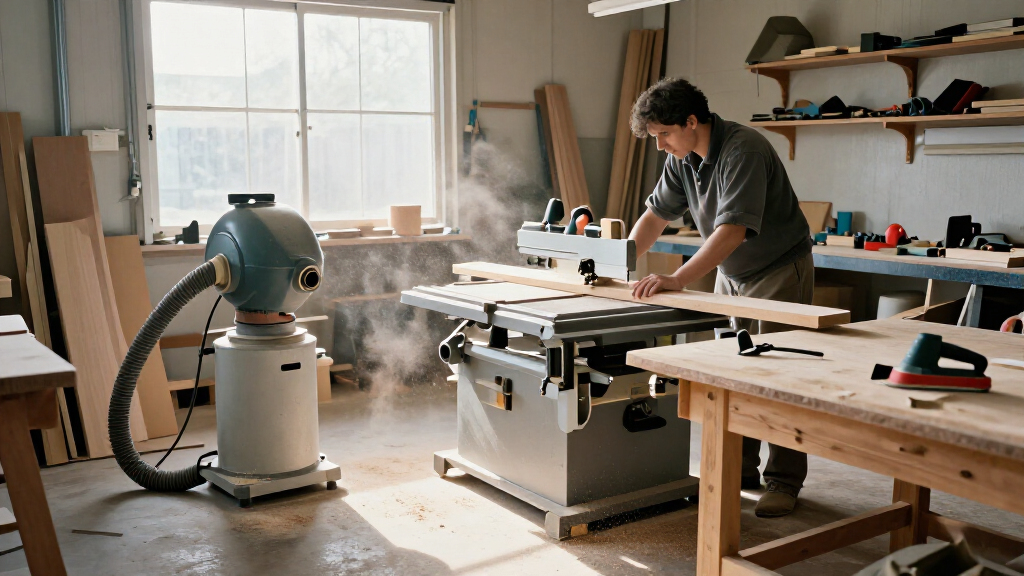

For most workshop buyers, I would start with the Bosch VAC090AH: its 9-gallon capacity, HEPA filtration and automatic filter cleaning make it a strong all-round choice for tool-connected dust collection. The DEWALT DWV010 also stands out for automatic filter cleaning, while the Festool CT 15 is a premium option for buyers who value a mobile, compact extractor. The main tradeoffs are filtration and sustained airflow versus tank size, portability, wet-pickup capability and the cost of consumables. A shop vacuum may handle general cleanup well, but it is not automatically a substitute for an extractor designed to manage fine dust at a power tool. Continue reading for the full comparison, buying criteria and recommendations by workshop type.

Get business pricing on tools and workshop supplies
- Business-only prices and quantity discounts
- Tax-exempt purchasing
- Multiple users, one account, clear invoices
Complete the kit



Key Takeaways
- Automatic filter cleaning is a meaningful separator: the Bosch VAC090AH and DEWALT DWV010 offer it, which can help preserve suction during longer dusty tasks.
- Capacity and portability pull in different directions: the 9- and 10-gallon models suit longer cleanup runs, while the 4-, 5.8- and 6.6-gallon options are easier to position in tighter work areas.
- HEPA labeling alone does not settle the choice: buyers should also check the complete filtration setup, compatible bags and whether the intended tool connection is supported.
- Not every wet/dry vacuum is equally suited to fine dust extraction: models such as the Kärcher WD 5 P and WECLEAN V7 add general cleanup or blower versatility, while extractor-focused models prioritize dust control.
- The lineup spans corded shop use and portable convenience: the DEWALT 20V MAX DWH161B is a tool-only cordless option, so buyers need to account for the battery and its more specialized role.
| DEWALT DWV010 8-Gallon HEPA Dust Extractor with Automatic Filter Cleaning |  | Best for Continuous Tool-Connected Work | Capacity: 8 gallons | Filter: HEPA | Motor: 15 A | VIEW LATEST PRICE | See Our Full Breakdown |
| ECOMAX 8-Gallon HEPA Shop Vac and Dust Extractor |  | Best for Workshop Versatility | Capacity: 8 gallons | Filter: HEPA | Motor: 6.5 HP; 15 A | VIEW LATEST PRICE | See Our Full Breakdown |
| Bosch VAC090AH 9-Gallon Dust Extractor with Auto Filter Clean and HEPA Filter |  | Best for Fine-Dust Control | Capacity: 9 gallons | Filter: HEPA; captures 99.97% of particles at 0.3 microns | Maximum airflow: 150 CFM | VIEW LATEST PRICE | See Our Full Breakdown |
| PEMEDOR 9-Gallon Wet/Dry Dust Extractor, 1400W |  | Best for Wet-and-Dry Workshop Cleanup | Capacity: 9 gallons (35 liters) | Motor power: 1400 W | Suction: Up to 19 kPa | VIEW LATEST PRICE | See Our Full Breakdown |
| YOWMOFT 10-Gallon HEPA Dust Extractor for Woodworking, 150 CFM |  | Best for High-Capacity Tool Extraction | Capacity: 10 gallons | Airflow: 150 CFM | Static pressure: 96 in. H₂O | VIEW LATEST PRICE | See Our Full Breakdown |
| Kärcher WD 5 P Wet/Dry Shop Vacuum, 6.6 Gallon |  | Best for Mixed Workshop Cleanup | Capacity: 6.6 gallons | Maximum suction: 74.6 inches | Power: 1273 watts | VIEW LATEST PRICE | See Our Full Breakdown |
| YOWMOFT 8-Gallon Dust Extractor, 150 CFM |  | Best for Automated Fine-Dust Collection | Capacity: 8 gallons | Motor power: 1200 watts | Airflow: 150 CFM | VIEW LATEST PRICE | See Our Full Breakdown |
| WECLEAN V7 4-Gallon Wet Dry Vacuum Cleaner with HEPA Filter and Blower Function |  | Best Compact Wet/Dry Pick | Capacity: 4 gallons | Power: 1200 W | Suction power: 14–18 kPa | VIEW LATEST PRICE | See Our Full Breakdown |
| DEWALT 20V MAX Brushless Universal Dust Extractor (Tool Only, DWH161B) |  | Best Wearable Tool-Side Extractor | Motor: 20V MAX brushless | Filter: HEPA | Compatibility: SDS Plus rotary hammers, sanders, routers, and jigsaws | VIEW LATEST PRICE | See Our Full Breakdown |
| 8-Gallon Dust Extractor Shop Vacuum with Remote Control |  | Best Accessory Bundle | Capacity: 8 gallons | Motor power: 1000 W | Functions: Wet vacuuming, dry vacuuming, and blowing | VIEW LATEST PRICE | See Our Full Breakdown |
| Fein Turbo I Wet/Dry Dust Extractor, 5.8-Gallon |  | Best Quiet Tool-Connected Pick | Capacity: 5.8 gallons | Motor power: 1100 watts | Airflow: 151 CFM | VIEW LATEST PRICE | See Our Full Breakdown |
| Fein Turbo I HEPA Pro Wet/Dry Dust Extractor – 5.8-Gallon Capacity |  | Best Quiet HEPA Workshop Upgrade | Capacity: 5.8 gallons | Airflow: 151 CFM | Water lift: 98 inches | VIEW LATEST PRICE | See Our Full Breakdown |
| Festool CT 15 HEPA Mobile Dust Extractor |  | Best for Home and Upholstery Cleanup | Capacity: 15 liters (3.96 gallons) | Filter type: HEPA | Power source: Corded electric | VIEW LATEST PRICE | See Our Full Breakdown |
| dust extractor vacuum cleaner | Capacity | Filter |
|---|---|---|
| DEWALT DWV010 8-Gallon HEPA Du | 8 gallons | HEPA |
| ECOMAX 8-Gallon HEPA Shop Vac | 8 gallons | HEPA |
| Bosch VAC090AH 9-Gallon Dust E | 9 gallons | HEPA; captures 99.97% of particles at 0.3 microns |
| PEMEDOR 9-Gallon Wet/Dry Dust | 9 gallons (35 liters) | HEPA |
| YOWMOFT 10-Gallon HEPA Dust Ex | 10 gallons | HEPA; captures 99.97% of particulates at 0.3 microns |
| Kärcher WD 5 P Wet/Dry Shop Va | 6.6 gallons | Flat pleated, top-mounted filter |
| YOWMOFT 8-Gallon Dust Extracto | 8 gallons | HEPA wet/dry |
| WECLEAN V7 4-Gallon Wet Dry Va | 4 gallons | HEPA |
| DEWALT 20V MAX Brushless Unive | — | HEPA |
| 8-Gallon Dust Extractor Shop V | 8 gallons | — |
| Fein Turbo I Wet/Dry Dust Extr | 5.8 gallons | — |
| Fein Turbo I HEPA Pro Wet/Dry | 5.8 gallons | — |
| Festool CT 15 HEPA Mobile Dust | 15 liters (3.96 gallons) | — |
More Details on Our Top Picks
DEWALT DWV010 8-Gallon HEPA Dust Extractor with Automatic Filter Cleaning
The DEWALT DWV010 suits workshop users who want a corded extractor to run alongside a power tool without frequent manual filter attention. Its filter pulses every 30 seconds, while power tool actuation starts and stops extraction with the connected tool. The 15-foot anti-static hose also gives more reach than the ECOMAX’s 10-foot hose, which can reduce repositioning around a bench or job site. At 8 gallons and about 21–22 pounds, it balances usable capacity with easier movement than the 28-pound Bosch VAC090AH. The tradeoff is that its listed airflow and weight vary between supplied specifications, and EPA RRP compliance depends on using DWV9330 filters. Its 80 dB noise rating may also bother users working indoors for long periods.
Pros:- Automatic filter cleaning pulses every 30 seconds to help limit suction loss during extended work.
- Power tool actuation synchronizes extraction with a connected tool.
- The 15-foot anti-static hose offers more reach than the ECOMAX’s 10-foot hose.
- Heavy-duty wheels and a roughly 21–22-pound listed weight support easier repositioning than the Bosch VAC090AH.
Cons:- EPA RRP compliance requires DWV9330 filters.
- Supplied specifications differ on airflow and weight.
- The listed 80 dB noise level may be intrusive in enclosed workspaces.
Best for: Woodworkers and contractors who want automatic filter cleaning, tool-triggered operation, and a longer hose in a movable 8-gallon extractor.
Not ideal for: Buyers who need verified EPA RRP compliance without checking filter compatibility, or anyone prioritizing quiet operation over tool-linked convenience.
- Capacity:8 gallons
- Filter:HEPA
- Motor:15 A
- Airflow:150–155 CFM (listed figures differ)
- Hose:15 ft, 1.25 in diameter
- Weight:21–22 lb (listed figures differ)
- Power:Corded, 120 V
- Noise:80 dB
Our verdict“Choose the DWV010 for mobile, tool-triggered extraction and frequent automatic filter cleaning, provided you can work around its filter requirement and specification discrepancies.”
ECOMAX 8-Gallon HEPA Shop Vac and Dust Extractor
The ECOMAX EM18412PE-8AA is the most adaptable pick here for buyers who alternate between tool extraction and general cleanup. It switches between those jobs, and its automatic tool activation starts the vacuum when a connected tool runs. That flexibility gives it an edge over the more extraction-focused DEWALT DWV010, while the included wands, floor nozzle, and disposable bags make it ready for varied workshop tasks. Semi-automatic filter cleaning and a dust-full indicator add useful cues as the tank fills. The compromises are a shorter 10-foot hose than DEWALT’s 15-foot one and corded power that restricts reach to outlets. At 75 dB, it is quieter on paper than the DEWALT and PEMEDOR, but still may be loud for shared indoor spaces.
Pros:- Switches between standard vacuuming and power-tool dust extraction.
- Tool activation starts the extractor when a connected power tool runs.
- The included accessory kit supports floor, crevice, and general workshop cleanup.
- A drain port and polymer tank support practical wet cleanup and emptying.
Cons:- The 10-foot hose is shorter than the DEWALT DWV010’s 15-foot hose.
- Corded power limits movement around larger work areas.
- The listed 75 dB noise level may still be disruptive indoors.
Best for: DIYers and small workshop owners who want one corded machine for power-tool dust extraction, floor cleanup, and occasional wet pickup.
Not ideal for: Users who need long hose reach, cordless portability, or a quiet extractor for occupied indoor work areas.
- Capacity:8 gallons
- Filter:HEPA
- Motor:6.5 HP; 15 A
- Hose:10 ft, anti-static
- Power:Corded, 120 V
- Noise:75 dB
- Tank:Polymer, with drain port
- Features:Power tool activation, semi-automatic filter cleaning, dust-full indicator
Our verdict“Pick the ECOMAX if you want a broad accessory set and one machine for extraction plus general cleanup, and can accept a shorter hose and corded operation.”
Bosch VAC090AH 9-Gallon Dust Extractor with Auto Filter Clean and HEPA Filter
For buyers prioritizing documented fine-particle filtration and adjustable suction, the Bosch VAC090AH is the most specification-led option in this group. Its HEPA filter is listed to capture 99.97% of particles at 0.3 microns, and automatic cleaning every 15 seconds supports longer extraction sessions. A Power Broker dial lets users reduce suction when a task or connected tool calls for it, a level of control the DEWALT DWV010 does not list. Bosch also has a 9-gallon tank, one gallon more than the DEWALT and ECOMAX. The tradeoff is portability: at 28 pounds, it is heavier than the DEWALT, and it remains tethered to a cord. Its 60 dB listed noise level is lower than the other corded models here, making it a stronger fit for indoor work.
Pros:- HEPA filtration is listed to capture 99.97% of particles at 0.3 microns.
- Automatic filter cleaning runs every 15 seconds.
- Power Broker suction adjustment provides more control than the DEWALT DWV010 lists.
- The 9-gallon tank holds more than the 8-gallon DEWALT and ECOMAX.
Cons:- At 28 pounds, it is heavier than the DEWALT DWV010.
- Corded operation limits mobility away from outlets.
- The larger capacity and filtration features come in a bulky unit measuring 20.5 × 14.5 × 22.6 inches.
Best for: Contractors and woodworkers who need HEPA filtration, frequent automatic filter cleaning, adjustable suction, and a larger tank for corded work.
Not ideal for: Buyers who move an extractor frequently between floors or job sites, or who need cordless operation.
- Capacity:9 gallons
- Filter:HEPA; captures 99.97% of particles at 0.3 microns
- Maximum airflow:150 CFM
- Maximum static pressure:97 in. water lift
- Weight:28 lb
- Power:Corded electric, 120 V
- Noise:60 dB
- Features:Auto filter cleaning, power tool activation, adjustable suction, wet/dry use
Our verdict“Choose the Bosch for specified fine-dust filtration and adjustable suction in stationary or site-based work where its weight is manageable.”
PEMEDOR 9-Gallon Wet/Dry Dust Extractor, 1400W
The PEMEDOR WD-1400 is a better match for buyers who collect mixed debris than for those who want the most convenient tool-linked extractor. Its 9-gallon tank handles wet and dry cleanup, while dual-stage cyclone separation is designed to reduce how quickly debris loads the HEPA filter. That separates it from the Bosch VAC090AH, which offers more frequent automatic filter cleaning and adjustable suction but is lighter and has a lower listed noise level. PEMEDOR instead emphasizes debris handling and capacity, with up to 19 kPa suction. Its 8.2-foot hose is shorter than the DEWALT DWV010’s 15-foot hose, so it may need more repositioning around a larger work area. At 35.5 pounds and 80 dB, it is also the heaviest and loudest option in this five-product group.
Pros:- Wet-and-dry operation handles more than sawdust and dry workshop debris.
- Dual-stage cyclone separation is designed to reduce filter loading.
- The 9-gallon capacity matches the Bosch VAC090AH and exceeds the 8-gallon DEWALT and ECOMAX.
- HEPA filtration and up to 19 kPa suction suit workshop debris collection.
Cons:- At 35.5 pounds, it is heavier than the Bosch VAC090AH and DEWALT DWV010.
- The 8.2-foot hose is shorter than the DEWALT DWV010’s 15-foot hose.
- The listed 80 dB noise level is high for prolonged indoor use.
Best for: Workshop users who regularly collect both wet messes and dry wood debris and value cyclone separation with a 9-gallon tank.
Not ideal for: Buyers who need a lightweight, quiet extractor, long hose reach, or listed automatic power-tool activation.
- Capacity:9 gallons (35 liters)
- Motor power:1400 W
- Suction:Up to 19 kPa
- Filter:HEPA
- Separation:Dual-stage cyclone
- Hose:8.2 ft, anti-static
- Weight:35.5 lb
- Use:Wet and dry
Our verdict“Choose PEMEDOR for wet-and-dry cleanup and cyclone-assisted collection, not for easy portability or quiet, tool-synchronized extraction.”
YOWMOFT 10-Gallon HEPA Dust Extractor for Woodworking, 150 CFM
The YOWMOFT CVMA40-S offers the largest stated capacity in this set, making it a strong fit for longer jobs where stopping to empty a tank is unwelcome. It pairs a 10-gallon container with 150 CFM airflow, automatic HEPA filter cleaning, and tool-linked auto-start. A dust indicator light adds a clear fill cue, while remote-control capability may help when the extractor sits in a cluttered or awkward spot. Compared with the Bosch VAC090AH, YOWMOFT provides one more gallon of capacity and lists remote control, but Bosch gives a defined HEPA capture figure, a suction-adjustment dial, and a 60 dB noise rating. YOWMOFT’s listed data do not specify its noise level, and the remote is sold separately. Its 10-amp motor rating is also lower than the 15-amp DEWALT and ECOMAX listings.
Pros:- The 10-gallon capacity is larger than the other four extractors in this group.
- Automatic HEPA filter cleaning and power-tool auto-start support continuous tool use.
- A dust indicator light helps signal when the container needs attention.
- The 11.5-foot hose is longer than the ECOMAX and PEMEDOR hoses.
Cons:- The remote control is sold separately.
- The supplied specifications do not state a noise level.
- Its 10-amp motor rating is below the 15-amp DEWALT and ECOMAX listings.
Best for: Woodworkers and site users who want a larger extractor for longer tool-connected sessions and value a fill indicator and remote-control option.
Not ideal for: Buyers who require a remote in the box, a stated noise level, or a specified HEPA particle-capture figure before choosing.
- Capacity:10 gallons
- Airflow:150 CFM
- Static pressure:96 in. H₂O
- Motor:10 A
- Filter:HEPA; captures 99.97% of particulates at 0.3 microns
- Hose:11.5 ft
- Power:110 V
- Features:Automatic filter cleaning, power-tool auto-start, dust indicator, remote-control capability
Our verdict“Pick the YOWMOFT for larger capacity and tool-synchronized extraction, but check remote availability and noise information before buying.”
Kärcher WD 5 P Wet/Dry Shop Vacuum, 6.6 Gallon
The Kärcher WD 5 P is a flexible workshop vacuum for buyers who need to collect both dry debris and spills, rather than a dedicated high-spec extractor for constant fine-dust work. Its semi-automatic filter cleaning helps maintain suction, while the included power-tool adapter makes it easier to connect to compatible tools. Compared with the YOWMOFT 8-Gallon Dust Extractor, it offers less capacity and lacks the listed HEPA filtration and automatic tool start, but adds a blower and a 26-foot power cord for general cleanup around a garage or vehicle. The 6.6-gallon tank is a useful middle ground for routine jobs. Its tradeoffs are a corded setup, one speed, and a listed 76 dB noise level; buyers focused on fine-dust capture should compare its filtration details carefully.
Pros:- Handles wet and dry cleanup without removing the filter when switching modes.
- Semi-automatic filter cleaning can help sustain suction during dusty jobs.
- Power-tool adapter, floor and crevice nozzles, and fleece filter bag are included.
- 26-foot cord and 11.5-foot hose give useful reach around a work area.
Cons:- No HEPA filtration or automatic tool-start feature is listed.
- Requires a power outlet and produces a listed 76 dB of noise.
- Single-speed operation offers limited control over suction.
Best for: Garage and workshop owners who alternate between power-tool dust, ordinary debris, and occasional liquid spills.
Not ideal for: Woodworkers who need specified HEPA filtration and automatic tool synchronization, or anyone who wants cordless portability.
- Capacity:6.6 gallons
- Maximum suction:74.6 inches
- Power:1273 watts
- Filter:Flat pleated, top-mounted filter
- Hose length:11.5 ft
- Power cord length:26 ft
- Noise level:76 dB
- Special features:Blower, power-tool adapter, semi-automatic filter cleaning
Our verdict“Choose the Kärcher for versatile wet-and-dry workshop cleanup, but pick the YOWMOFT if HEPA filtration and automatic filter cleaning are higher priorities.”
YOWMOFT 8-Gallon Dust Extractor, 150 CFM
The YOWMOFT 8-Gallon Dust Extractor earns a place for buyers who want a more automated setup for woodworking or construction. Its stated 150 CFM airflow and 96 in. H₂O static lift describe both air movement and pulling force, while automatic HEPA filter cleaning every 20 seconds reduces the need to stop and clear the filter manually. Auto-start synchronization can switch the extractor on with a connected tool, a workflow advantage over the Kärcher WD 5 P, which has a power-tool adapter but no listed auto-start. The tradeoff is a 35.2-pound corded unit with an 11.5-foot hose, so moving it across a large site may interrupt the convenience of its automation. For buyers prioritizing mobility, the wearable DEWALT is a more compact alternative, though it serves a different scale of collection.
Pros:- HEPA wet/dry filter and automatic cleaning cycle are specified.
- 150 CFM airflow and 96 in. H₂O static lift are stated for demanding dust collection.
- Tool auto-start can reduce separate switching during connected-tool use.
- Remote control supports operation from a distance.
Cons:- At 35.2 pounds, it is less convenient to move than the wearable DEWALT DWH161B.
- The 11.5-foot hose may limit reach in larger work areas.
- Corded power restricts use away from an outlet.
Best for: Woodworkers and tradespeople who use compatible corded tools regularly and want HEPA filtration with automatic filter cleaning and tool start.
Not ideal for: Users who frequently carry an extractor between rooms or need a long hose for a large, spread-out worksite.
- Capacity:8 gallons
- Motor power:1200 watts
- Airflow:150 CFM
- Static lift:96 in. H₂O
- Filter:HEPA wet/dry
- Hose length:11.5 ft
- Weight:35.2 lbs
- Tool control:Remote control and tool auto-start
- Filter cleaning:Automatic, every 20 seconds
Our verdict“Pick the YOWMOFT for automated HEPA dust collection at a stationary workbench, not for frequent carrying or maximum reach.”
WECLEAN V7 4-Gallon Wet Dry Vacuum Cleaner with HEPA Filter and Blower Function
The WECLEAN V7 suits buyers who need a smaller wet/dry vacuum with HEPA filtration and a blower, rather than a large-capacity extractor built for long production runs. Its 4-gallon capacity makes it a more compact choice than the 8-gallon YOWMOFT, but it also means more frequent emptying when collecting substantial sawdust or debris. The 1200W motor and stated 14–18 kPa suction support general cleanup, while the blower adds utility for clearing leaves or debris from hard-to-reach spots. The product description claims more than 24 feet of cleaning reach, though the listed hose itself is only 33 cm; I would not treat those figures as interchangeable. At a listed 80 dB, it may also be a loud choice for enclosed work areas.
Pros:- HEPA filtration is included for dry-dust collection.
- Wet, dry, and blower functions cover several household and workshop tasks.
- 1200W motor and stated 14–18 kPa suction provide useful general-purpose cleaning power.
- Compact 4-gallon capacity is easier to accommodate than the 8-gallon YOWMOFT.
Cons:- The 4-gallon tank may need frequent emptying on larger jobs.
- Listed noise level is 80 dB.
- The 33 cm hose specification conflicts with the claimed cleaning reach of more than 24 feet.
Best for: DIYers with a small workshop or garage who want one unit for occasional dust, spills, and blower tasks.
Not ideal for: Busy workshops handling large debris volumes, or buyers who need a clearly specified long hose and quieter operation.
- Capacity:4 gallons
- Power:1200 W
- Suction power:14–18 kPa
- Filter:HEPA
- Hose length:33 cm
- Power cord length:18 ft
- Noise level:80 dB
- Functions:Wet vacuuming, dry vacuuming, and blower
Our verdict“Choose the WECLEAN V7 for occasional, space-conscious wet-and-dry cleanup, but favor a larger extractor for sustained workshop dust collection.”
DEWALT 20V MAX Brushless Universal Dust Extractor (Tool Only, DWH161B)
The DEWALT DWH161B takes a different approach from the wheeled extractors in this roundup: it is a wearable, tool-side dust extractor for compatible rotary hammers, sanders, routers, and jigsaws. Its compact form and HEPA filter make it useful when a hose running back to an 8-gallon unit would get in the way, especially for mobile work or overhead tasks. Compared with the YOWMOFT 8-Gallon Dust Extractor, it gives up tank capacity and the stated high airflow and lift, but is easier to carry alongside a tool. This is a specialized accessory, not a general workshop vacuum. The listing identifies it as tool-only, and the Wireless Tool Control key fob is sold separately. A stated runtime of just three minutes is a major limitation that buyers should clarify before relying on it for extended work.
Pros:- Wearable design is easier to carry than wheeled extractors such as the YOWMOFT.
- HEPA filter is included.
- Listed compatibility spans SDS Plus rotary hammers, sanders, routers, and jigsaws.
- Wireless Tool Control supports remote activation when paired with the separately sold key fob.
Cons:- Tool-only listing means compatible tools and the key fob are sold separately.
- Stated runtime is only 3 minutes, limiting continuous use.
- Small dust-box capacity is described comparatively, without an absolute volume.
Best for: Tradespeople doing short, mobile drilling or sanding tasks with compatible DEWALT tools who value a wearable dust collector.
Not ideal for: Buyers seeking a standalone wet/dry shop vacuum, long continuous runtime, or a complete ready-to-use kit with battery and control accessories.
- Motor:20V MAX brushless
- Filter:HEPA
- Compatibility:SDS Plus rotary hammers, sanders, routers, and jigsaws
- Dust-box capacity:45% more than the DWH302DH dust box
- Wireless control:Wireless Tool Control; key fob sold separately
- Included components:Dust extractor, shoulder strap, and belt hook
- Noise level:80 dB
- Stated runtime:3 minutes
Our verdict“Choose the DEWALT for compact, tool-mounted collection during mobile tasks, but skip it as a replacement for a full-size shop extractor.”
8-Gallon Dust Extractor Shop Vacuum with Remote Control
This 8-gallon dust extractor shop vacuum is aimed at buyers who want wet, dry, and blower functions plus a broad set of attachments in one package. The included HEPA filter and paper bag offer two listed filtration components, and the remote control adds convenience when the vacuum is positioned beside a tool or under a bench. Against the WECLEAN V7, this model offers twice the stated tank capacity and a longer accessories list, while the WECLEAN provides specified suction and noise figures that are absent here. That missing performance information is the key tradeoff: the description does not state airflow, static lift, hose length, or automatic filter cleaning. Its multiple wheels may aid movement, but the listing does not explain their arrangement or how they affect maneuverability, so I would choose it for the included kit rather than proven extraction performance.
Pros:- 8-gallon capacity is larger than the WECLEAN V7’s 4-gallon tank.
- Supports wet vacuuming, dry vacuuming, and blowing.
- Includes both a HEPA filter and a paper bag.
- Remote control and a range of brushes, tubes, and adapters are included.
Cons:- No airflow, suction-lift, or noise specifications are provided.
- Hose length and filter-cleaning method are not specified.
- The extensive wheel listing does not clarify the unit’s actual mobility or wheel layout.
Best for: DIY workshop owners who want an 8-gallon wet/dry unit, blower function, remote, and multiple attachments for varied cleanup.
Not ideal for: Buyers comparing extractors by verified airflow, static lift, hose reach, or automatic filter-cleaning performance.
- Capacity:8 gallons
- Motor power:1000 W
- Functions:Wet vacuuming, dry vacuuming, and blowing
- Included filtration:HEPA filter and paper bag
- Remote control:Included
- Included accessories:Brushes, two straight tubes, hose, half-round brush, pagoda adapter
- Wheels:Four wheels and four swivel wheels listed
Our verdict“Consider this model for its capacity and included accessories, but choose a better-documented extractor if measured dust-collection performance is your priority.”
Fein Turbo I Wet/Dry Dust Extractor, 5.8-Gallon
The Fein Turbo I suits indoor workshop users who want tool-triggered dust pickup without a loud extractor dominating the room. Its autostart outlet can switch suction on with a connected power tool, while the 13-foot hose and nearly 20-foot cord give useful reach around a bench. At 66 dB, it is quieter than many shop-style options, and its 5.8-gallon tank handles both wet and dry cleanup.
Compared with the Fein Turbo I HEPA Pro, this model has a similar airflow and capacity but lacks the Pro version’s stated 98-inch water lift and included anti-static hose. The anti-static function is listed, though anti-static accessories are optional. Its corded design and 25-pound weight also make it less convenient to move than a compact jobsite option. I’d choose it for quieter tool-connected work, not for cordless mobility or larger debris loads.
Pros:- Autostart outlet links extraction to a connected power tool.
- 66 dB operation is suited to noise-sensitive indoor work.
- Wet/dry capability handles both dust and liquid cleanup.
- 13-foot hose and 19.7-foot cord offer useful working reach.
Cons:- Corded operation limits use away from outlets.
- Anti-static accessories are optional rather than included.
- The 5.8-gallon capacity can mean more frequent emptying on larger jobs.
Best for: Woodworkers and indoor workshop users who want quieter wet/dry extraction that starts with a connected power tool.
Not ideal for: Buyers needing cordless mobility, a larger collection tank, or anti-static accessories included in the package.
- Capacity:5.8 gallons
- Motor power:1100 watts
- Airflow:151 CFM
- Maximum suction:59.85 inches
- Noise level:66 dB
- Filter type:HEPA
- Hose and cord:13-foot hose; 19.7-foot power cord
- Weight:25 pounds
Our verdict“Choose the Fein Turbo I for quieter, tool-triggered wet/dry cleanup in a workshop, but skip it if you need cordless freedom or included anti-static accessories.”
Fein Turbo I HEPA Pro Wet/Dry Dust Extractor – 5.8-Gallon Capacity
The Fein Turbo I HEPA Pro is a strong fit for indoor work where fine-dust filtration and restrained noise matter as much as pickup. It pairs HEPA filtration with 151 CFM airflow and a stated 98-inch water lift, while its 66 dB operation is a practical advantage in shared garages or occupied workspaces. The included 13-foot anti-static hose and accessory kit make it better equipped out of the box than the standard Fein Turbo I, whose anti-static accessories are optional.
The tradeoff is capacity: its 5.8-gallon tank is smaller than the 8- and 9-gallon extractors elsewhere in this roundup, so larger jobs may call for more stops to empty it. At 25 pounds, it is also not a lightweight stair-carry option, and the single speed gives less control over suction. I’d pick it for quieter, filtered workshop cleanup rather than long sessions with high-volume debris.
Pros:- HEPA filtration is suited to fine-dust collection indoors.
- 151 CFM airflow and 98-inch water lift support demanding wet/dry cleanup.
- 66 dB operation helps limit noise in shared workspaces.
- Includes a 13-foot anti-static hose and accessory kit.
Cons:- The 5.8-gallon tank is smaller than several larger-capacity roundup options.
- At 25 pounds, it can be cumbersome to carry between floors.
- One speed setting offers limited adjustment for different tasks.
Best for: Indoor woodworkers and garage users who want HEPA filtration, included anti-static hose, and quiet wet/dry extraction.
Not ideal for: Contractors handling large debris volumes or users who need multiple suction settings and frequent stair transport.
- Capacity:5.8 gallons
- Airflow:151 CFM
- Water lift:98 inches
- Motor power:1100 watts
- Noise level:66 dB
- Filter type:HEPA
- Hose and cord:13-foot hose; 19-foot cord
- Weight:25 pounds
- Wheels:4
Our verdict“Choose the HEPA Pro for quiet, fine-dust workshop extraction with anti-static accessories included, but look to a larger-capacity model for extended high-volume jobs.”
Festool CT 15 HEPA Mobile Dust Extractor
The Festool CT 15 HEPA takes a more home-oriented approach to dust extraction than the two Fein workshop models. Its 15-liter container is compact, and the included crevice nozzle and upholstery brush make it ready for furniture, floors, and tight indoor spaces as well as tool-connected cleanup. HEPA filtration, touch controls, automatic tool start, and an AutoClean system add useful convenience for buyers who want one extractor for several indoor tasks.
Its capacity is only 3.96 gallons, smaller than either Fein’s 5.8-gallon tank, so it is less suited to extended debris collection. The product data also lists one power level, limiting adjustment, and its corded design keeps it tied to an outlet. Compared with the Fein Turbo I HEPA Pro, the Festool offers more home-cleaning accessories and a stated three-year warranty, but less capacity. I’d favor it for mixed household and workshop use, not large-volume site cleanup.
Pros:- HEPA filtration supports fine-dust cleanup indoors.
- Crevice nozzle and upholstery brush cover more home-cleaning tasks than a workshop-focused setup.
- Automatic tool start and AutoClean system add convenience during connected work.
- Compact chassis and 15-liter container suit mobile indoor cleanup.
Cons:- The 3.96-gallon capacity is smaller than the Fein Turbo I models’ 5.8-gallon tanks.
- One power level limits suction adjustment.
- Corded operation restricts mobility away from outlets.
Best for: Homeowners and finish carpenters who want HEPA extraction for furniture, floors, tight spaces, and occasional tool use.
Not ideal for: Users cleaning large work areas or collecting heavy debris for long periods without stopping to empty the container.
- Capacity:15 liters (3.96 gallons)
- Filter type:HEPA
- Power source:Corded electric
- Controls:Touch operation
- Special features:Automatic tool start; AutoClean system; high-power suction
- Included cleaning tools:Crevice nozzle and upholstery brush
- Hose:27/32-inch diameter x 3.5 meters
- Warranty:3-year comprehensive warranty including wear and tear
Our verdict“Choose the Festool CT 15 for compact HEPA cleanup across floors, furniture, and occasional tool work, but pick a larger Fein if tank capacity is your priority.”

How We Picked
I compared these dust extractor vacuum cleaners around the tasks buyers are trying to solve: capturing dust at a connected tool, cleaning a workshop, and moving the unit between work areas. The ranking gives more weight to filtration, airflow and the ability to maintain suction during dusty work than to tank size alone. I also considered capacity, portability, wet-pickup versatility, filter-cleaning features, and the practical implications of bags, filters and tool compatibility.
The order reflects how broadly useful each model appears from its stated features, not a claim that every machine performs identically in every workshop. Extractor-focused options with HEPA filtration and filter-cleaning features rank ahead for fine-dust work; compact, cordless or general-purpose vacuums rank for narrower needs. Where product information does not establish details such as included adapters, automatic cleaning or consumable availability, I treat that uncertainty as something buyers should verify rather than assume.
| dust extractor vacuum cleaner | Filter |
|---|---|
| DEWALT DWV010 8-Gallon HEPA Du | HEPA |
| ECOMAX 8-Gallon HEPA Shop Vac | HEPA |
| Bosch VAC090AH 9-Gallon Dust E | HEPA; captures 99.97% of particles at 0.3 microns |
| PEMEDOR 9-Gallon Wet/Dry Dust | HEPA |
| YOWMOFT 10-Gallon HEPA Dust Ex | HEPA; captures 99.97% of particulates at 0.3 microns |
| Kärcher WD 5 P Wet/Dry Shop Va | Flat pleated, top-mounted filter |
| YOWMOFT 8-Gallon Dust Extracto | HEPA wet/dry |
| WECLEAN V7 4-Gallon Wet Dry Va | HEPA |
| DEWALT 20V MAX Brushless Unive | HEPA |
| 8-Gallon Dust Extractor Shop V | — |
| Fein Turbo I Wet/Dry Dust Extr | — |
| Fein Turbo I HEPA Pro Wet/Dry | — |
| Festool CT 15 HEPA Mobile Dust | — |
Factors to Consider When Choosing Dust Extractor Vacuum Cleaners
Choosing a dust extractor is less about finding the biggest tank and more about matching the machine to the dust, tools and work pattern in your shop. These factors help separate a dedicated extractor from a general wet/dry vacuum and can prevent a mismatch that only becomes clear after setup.
Match filtration to the dust you make
Fine sanding and woodworking dust call for more than a vacuum that can pick up visible debris. Check whether the model has HEPA filtration, what the manufacturer says about the full filter and bag arrangement, and whether replacements are easy to source. A HEPA label on a component does not, by itself, tell you how the complete system behaves or whether dust can escape during bag changes. For occasional coarse cleanup, elaborate filtration may add cost and maintenance without much benefit. For frequent fine-dust work, filtration should rank above a larger tank or a blower feature.
Look beyond the airflow number
Airflow figures can help compare machines, but they do not tell the whole story once a hose, filter and tool adapter are attached. A long or narrow hose, a full bag, or a restrictive tool port can reduce the dust capture a user actually gets. Compare the extractor’s intended tool connections and hose options with the saw, sander or router you plan to use. If several tools share one extractor, check how quickly the hose and adapters can move between them. Avoid choosing on a single airflow figure without confirming that the machine suits your real setup.
Choose capacity for your work pattern, not just the largest tank
A larger container can mean fewer stops to empty it, which helps during long cleanup sessions or work that produces bulky debris. It also tends to take up more floor space and can be less convenient to move around a small shop. Compact models make sense when the extractor must follow a handheld tool or fit into a vehicle, but frequent emptying can interrupt larger jobs. Think about how much dust your tools produce between breaks and where the vacuum will live when not in use. Capacity is useful only when the added size does not get in the way of the work.
Decide whether automatic filter cleaning earns its complexity
Filter-cleaning systems can help maintain suction as fine dust builds up, which is especially useful during extended sanding or cutting sessions. They add mechanisms and can affect noise, maintenance and the machine’s overall complexity. Buyers doing short, intermittent tasks may be comfortable cleaning a filter manually and may gain little from automation. Those working for long stretches should weigh fewer interruptions against the need to maintain the cleaning system and use compatible filters or bags. Check the manufacturer’s instructions for the dust types and operating conditions the feature is intended to handle.
Check wet pickup, power and portability as separate needs
Wet/dry capability is valuable for spills and mixed cleanup, but it does not automatically make a vacuum a strong fine-dust extractor. Confirm how the machine must be set up for wet pickup, since a filter or bag used for dry dust may need to be removed or changed. Corded models are generally better suited to longer shop sessions where continuous power matters, while a cordless tool-only extractor offers mobility but requires a compatible battery and charger. Also check whether the unit’s weight, wheels, hose storage and handle suit the places you will use it. A feature that sounds versatile can be a poor trade if it adds bulk to a task that mainly needs dust capture.
Factor in consumables and tool compatibility before buying
Bags and filters affect both ongoing upkeep and how cleanly collected dust can be removed. Before choosing, check the availability and cost of compatible consumables, whether the extractor can operate with or without a bag, and how its filter is serviced. For tool use, verify port dimensions, adapter availability, power-control features and any requirements for automatic tool activation. A vacuum that needs an awkward adapter or has no convenient hose route may see less use, even if its headline specifications look suitable. Confirming these details first can prevent a capable extractor from becoming an inconvenient fit for your tools.
Frequently Asked Questions
Can I use a regular wet/dry shop vacuum instead of a dust extractor for woodworking?
You can use a wet/dry vacuum for general cleanup, but do not assume it will provide the same fine-dust control as an extractor designed for tool-connected dust collection. Compare filtration, bag compatibility, hose connections and any stated guidance for fine dust before attaching it to a sander or saw. A general shop vacuum may suit occasional coarse debris, while frequent sanding calls for closer attention to filtration and filter loading. If the work produces fine dust, pair the vacuum choice with suitable respiratory and workshop dust-control practices. The right answer depends on the dust and the machine’s stated use, not its wet/dry label alone.
Is HEPA filtration enough to protect a small workshop from fine dust?
HEPA filtration is a useful specification, but it is only one part of dust control. The filter, collection bag, seals, hose connections and method of emptying all affect how dust is contained. A vacuum also needs to capture dust at the tool rather than leave it airborne in the room. Check the manufacturer’s instructions for the complete filtration setup and replacement parts, and use appropriate protective measures for the material you are cutting or sanding. For a small enclosed shop, plan for ventilation and broader dust management rather than relying on a filter label alone.
Should I choose automatic filter cleaning or a larger tank?
Choose based on what interrupts your work more often. Automatic filter cleaning can be more useful during long, dusty runs where filter loading may reduce suction, while a larger tank helps when collected material fills the container quickly. Neither feature fixes a poor tool connection or an unsuitable filtration setup. If your work is brief and intermittent, a simpler extractor with adequate capacity may be easier to live with. For sustained sanding or cutting, filter maintenance and airflow consistency may matter more than adding a few gallons of capacity.
Will a cordless dust extractor replace a full-size shop vacuum?
A cordless extractor can be a good fit for mobility, quick tool-connected tasks and work areas without convenient access to an outlet. It is not automatically a replacement for a larger corded vacuum used for extended cleanup or wet pickup. Check whether the product is sold as a tool only, which battery platform it uses, and what runtime to expect for your workload. Also confirm its intended dust-control role and container capacity. Buyers with both stationary shop work and mobile tasks may find that the two formats serve different jobs.
What should I verify before connecting an extractor to my power tools?
Check the tool’s dust port diameter and confirm that the vacuum includes, or can use, a compatible hose or adapter. If you want the extractor to switch on with the tool, verify that the model supports that feature and that the tool’s electrical requirements match. Look at hose length and routing too: a connection that pulls on the tool or gets in the way can make dust collection frustrating. Confirm whether using a bag is recommended for the material and whether the filter needs a particular setup. These checks can matter more to daily convenience than a small difference in tank capacity.
Conclusion
For a broad mix of tool-connected shop work, I would choose the Bosch VAC090AH as the best overall, with the DEWALT DWV010 as a strong alternative for buyers who value automatic filter cleaning. The best value depends on your needs: buyers who mainly want a larger-capacity extractor can compare the ECOMAX and YOWMOFT options closely, then verify filtration details, adapters and consumables before deciding. For a best premium choice, the Festool CT 15 suits buyers prioritizing a compact, mobile extractor; those who want an established extractor format with HEPA filtration should also compare the Fein Turbo I HEPA Pro. For beginners doing mixed household and workshop cleanup, the Kärcher WD 5 P or WECLEAN V7 may be simpler starting points, though they should not be treated as interchangeable with a dedicated fine-dust setup. For specific needs, pick the DEWALT DWH161B for cordless mobility, a larger 9- or 10-gallon model for fewer emptying stops, or a compact unit when storage and maneuverability matter most. Before ordering any of them, confirm tool fit, filtration requirements and the availability of replacement bags and filters.