
TL;DR

Get business pricing on tools and workshop supplies
- Business-only prices and quantity discounts
- Tax-exempt purchasing
- Multiple users, one account, clear invoices
Apartment Therapy editor Lizzy Francis reported finding clothes moths in her New York City apartment after noticing damage to a wool rug. Pest professionals and a researcher advised locating the infestation, treating affected items and working with an experienced exterminator; the report does not establish that one method will resolve every infestation.
Apartment Therapy editor Lizzy Francis reported finding clothes moths in her New York City apartment after noticing damage to a wool rug, then consulted a pest-control professional and an insect researcher about treatment. Their advice centers on finding the source, treating affected textiles and getting help from an exterminator experienced with clothes moths—not relying on traps or a quick spray alone.
Francis said she saw flying insects for several weeks before identifying them as clothes moths. After discovering damage to her vintage wool shag rug, she tried vacuuming, traps and deterrents, but said those steps did not solve the problem. She then sought advice from Eric Braun, a technical services manager at Terminix, and Isabel Novick, an evolutionary biology PhD candidate who studies moths including the webbing clothes moth.
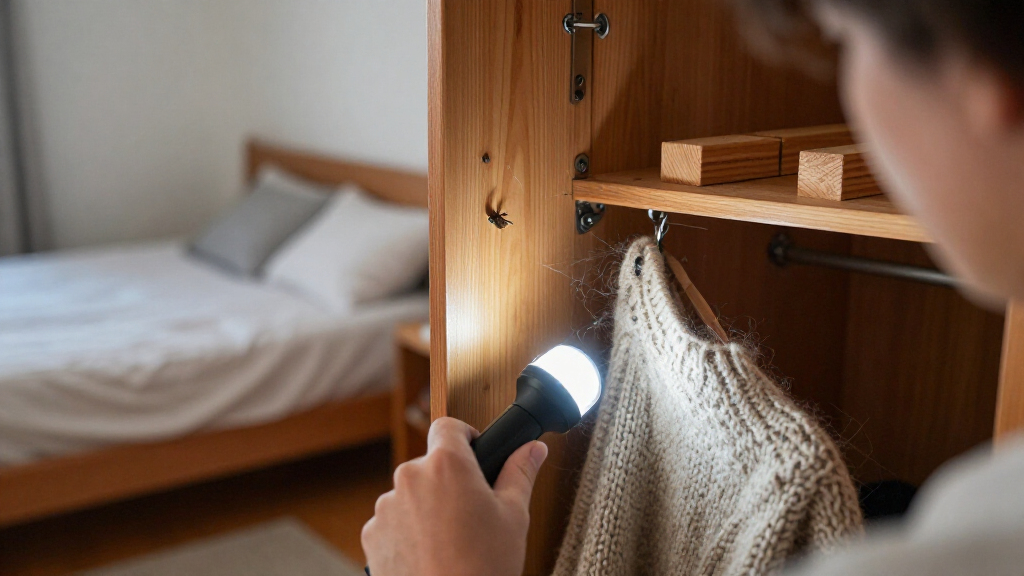
The experts’ recommendations begin with locating the infestation’s source, including checking cracks and crevices near areas where moths feed. Francis said she found eggs and adult moths. Braun and Novick advised treating affected belongings—through professional dry cleaning, heat treatment or freezing, depending on the item—and sealing clean clothes in hard plastic, water-tight containers. Novick cautioned that some moths can chew through softer plastic.
For larger or persistent infestations, both sources recommended contacting an exterminator familiar with clothes moths. Braun said treatment involves inspection and more than a simple spray. The report also recommends professional cleaning for infested carpets, or thorough vacuuming before treatment, and washing and drying washable items at high temperatures where the material can tolerate it. Readers should follow care labels and consult cleaners or pest professionals about delicate fabrics.
Protecting Wool and Other Textiles
Clothes moths can damage belongings made from animal fibers, including wool, cashmere, silk and leather. The report says the larvae cause the most damage as they feed; adult moths reproduce and continue the cycle. For households with rugs, coats or stored clothing made from these materials, identifying the source matters because treating only visible flying moths may leave eggs or larvae behind.
The advice also has practical limits: cleaning, freezing or heat treatment may not suit every textile, and the report does not provide a single guaranteed procedure for all homes. A pest professional can inspect the affected space and help match treatment to the items and the scale of the problem.
Popular right now

Dyson Ball Animal 3 Upright Vacuum

Shark Navigator Lift-Away Upright Vacuum, NV360

Shark Rotator Lift-Away Upright Vacuum, White/Red (NV501)
As an affiliate, we earn on qualifying purchases.
How the Infestation May Begin
The experts differed on how often moths enter a home by flying in. Braun said they may come through a window and settle where food is available. Novick said she had not found evidence to support that explanation as a general account, while allowing that people in dense cities may be more exposed to moths from outside. She said infestations are often brought in on items made from animal fibers, such as rugs, sweaters or leather jackets.
Braun said soiled textiles may be more attractive because they carry body oils and other residues. Regular cleaning and careful storage can help reduce risk, but the report does not establish that dirt alone causes an infestation or identify the source of Francis’s moths.
What the Report Cannot Establish
The source does not identify how moths entered Francis’s apartment, how extensive the infestation was, or which specific professional treatments were used. It also does not give a treatment outcome in the material provided, despite referring to an update a year later. The experts’ advice is not a guarantee that any one approach will work in every home, and the source does not give product-specific instructions, costs or a timeline for eliminating an infestation.
Novick and Braun also offered different views on whether moths commonly arrive by flying in from outdoors. The report leaves that point unresolved and does not establish the route in this particular case.
Inspection and Treatment Steps
For someone who suspects clothes moths, the report’s next steps are to inspect likely feeding areas and affected textiles, isolate items where practical, and contact a pest professional with clothes moth experience. A cleaner or textile-care specialist can advise whether individual belongings should be dry-cleaned, frozen or heat-treated. After treatment, the article recommends storing clean items in sealed hard-plastic bins and continuing to check vulnerable fabrics for signs of activity.
The source does not announce a scheduled follow-up or report a confirmed resolution. The outcome will depend on identifying and treating the infestation’s source, and whether moths or signs of damage return after the measures are taken.
Key Questions
What materials can clothes moths damage?
The report says they are attracted to animal fibers such as wool, cashmere, silk and leather. Their larvae do the feeding damage.
Are traps and vacuuming enough to eliminate an infestation?
Francis said vacuuming and traps did not resolve her infestation. The experts recommended finding the source, treating affected items and consulting an exterminator familiar with clothes moths.
How should affected clothes and fabrics be treated?
The report lists professional dry cleaning, heat treatment or freezing, depending on the item. Check care instructions and ask a qualified cleaner or pest professional before treating delicate materials.
Can clothes moths come in from outside?
Braun said they may fly through a window. Novick said she had not found evidence for that as a general explanation and said moths are often brought in on items made from animal fibers. The source of Francis’s infestation was not established.
How can cleaned items be protected afterward?
The report recommends storing clean clothing in water-tight, hard-plastic bins. Novick warned that some clothes moths may chew through softer plastic.
Source: apartmenttherapy.com