
Choosing among the best energy-efficient windows means looking beyond the phrase “double-pane.” Glass construction, frame material, window size, weather sealing, and how the opening fits the room all affect whether a unit makes sense for your project. I compared five residential options here, with an emphasis on the available thermal features and the practical tradeoffs the descriptions reveal.

Get business pricing on tools and workshop supplies
- Business-only prices and quantity discounts
- Tax-exempt purchasing
- Multiple users, one account, clear invoices
The NOTASA 24 x 36-inch single-hung window is my most balanced pick for a standard replacement or remodel: it pairs insulated double-pane glass with a tilt-in sash, screen, and rear drainage outlet. For a larger opening, I favor the COLORPAPA 36 x 60-inch window, which offers similar core features in a taller format, though its greater weight calls for careful handling. The NOTASA basement hopper is the more fitting choice for a compact utility space where inward-opening ventilation matters more than a conventional window layout.
These are not interchangeable choices, and the information supplied does not include verified U-factor, Solar Heat Gain Coefficient, or whole-window air-leakage ratings. I treat double-pane glass and weather-oriented frame details as useful clues, not proof of a particular energy bill reduction. The main tradeoffs are opening style, fit, installation demands, and missing performance data; buyers should confirm dimensions and request rating documentation before committing.
Complete the kit



Key Takeaways
- The NOTASA 24 x 36-inch single-hung is my best all-around fit because it combines double-pane insulated glass, a tilt-in sash, screen, and rear drainage in a mid-size format.
- COLORPAPA is the largest listed option at 36 x 60 inches, but its 58.9-pound weight makes installation handling a bigger concern than with the smaller windows.
- TANVILL is the compact pick at 18 x 24 inches; its double-pane glass and tilt-in sash suit small openings, but installation hardware and instructions are not specified.
- BLCKTIGR is the only aluminum-frame choice and provides stated air, water, and wind resistance levels, yet the supplied details do not include an energy rating or thermal-break information.
- NOTASA’s 32 x 14-inch hopper is aimed at basement and bathroom openings; its inward swing requires interior clearance, so it is not a direct substitute for a vertical-sliding window.
| NOTASA Vinyl Single-Hung Window, 24 x 36 in, White |  | Best Overall | Window type: Single-hung, vertical sliding | Size: 24 x 36 in | Frame: Reinforced white vinyl | VIEW LATEST PRICE | See Our Full Breakdown |
| COLORPAPA 36 x 60 in. White Vinyl Single-Hung Window | 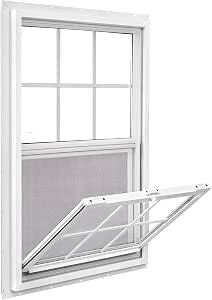 | Best for Large Openings | Window type: Single-hung | Dimensions: 36 x 60 x 1.6 in | Frame: White reinforced UV-resistant vinyl | VIEW LATEST PRICE | See Our Full Breakdown |
| NOTASA Vinyl Basement Hopper Window, 32 x 14 in, Black |  | Best for Basements and Utility Rooms | Window type: Bottom-hinged hopper | Dimensions: 32 x 14 in | Frame: Black moisture-resistant PVC (vinyl) | VIEW LATEST PRICE | See Our Full Breakdown |
| TANVILL Vinyl Single-Hung Window, 18 × 24 in, White |  | Best Compact Window | Window type: Single-hung | Size: 18 x 24 in | Frame: White vinyl | VIEW LATEST PRICE | See Our Full Breakdown |
| BLCKTIGR Single-Hung Aluminum Window, Double-Pane Tempered Glass, Gray, 23 × 28 in |  | Best for Stated Weather-Resistance Levels | Window type: Single-hung, vertical sliding | Dimensions: 23 x 28 in | Frame: Gray aluminum | VIEW LATEST PRICE | See Our Full Breakdown |
| energy efficient window | Window type | Frame | Glass | Screen |
|---|---|---|---|---|
| NOTASA Vinyl Single-Hung Windo | Single-hung, vertical sliding | Reinforced white vinyl | Double-pane insulated tempered glass | Included |
| COLORPAPA 36 x 60 in. White Vi | Single-hung | White reinforced UV-resistant vinyl | Double-pane insulated tempered glass | Included |
| NOTASA Vinyl Basement Hopper W | Bottom-hinged hopper | Black moisture-resistant PVC (vinyl) | Double-pane insulated tempered glass | Fiberglass screen included |
| TANVILL Vinyl Single-Hung Wind | Single-hung | White vinyl | Double-pane tempered glass | Included |
| BLCKTIGR Single-Hung Aluminum | Single-hung, vertical sliding | Gray aluminum | Double-pane, 5 mm tempered glass | — |
More Details on Our Top Picks
NOTASA Vinyl Single-Hung Window, 24 x 36 in, White
I rank this NOTASA 24 x 36-inch single-hung first because its feature set covers the needs of a typical smaller residential opening without being limited to a specialized room. It has double-pane insulated tempered glass, a reinforced vinyl frame, an included screen, a tilt-in sash, and a rear drainage outlet. Those details make it a more rounded option than the compact TANVILL, whose listing gives less installation information, and a more manageable choice than the much larger COLORPAPA.
The tilt-in lower sash is useful for cleaning from indoors, particularly where access to the outside is awkward. The screen lets you ventilate without leaving the opening unprotected from insects, while the drainage outlet is intended to channel water outward. Double-pane glass is a sensible starting point for limiting heat transfer compared with single-pane glazing, but the supplied information does not provide a U-factor or other measured energy rating. I would treat its thermal performance as unconfirmed until the seller can provide documentation.
Its main limitation is the single-hung opening: only the lower sash moves, so ventilation is confined to that part of the window. The 27.2-pound listed weight also calls for care when positioning the unit. For buyers who need a larger glazed area, COLORPAPA offers a taller format; for a basement opening, the NOTASA hopper has a more suitable inward-opening design. This pick makes the most sense when its 24 x 36-inch size matches the opening and a conventional vertical slider is preferred.
Pros:- Double-pane insulated tempered glass is intended to help limit heat transfer and outside noise.
- Tilt-in sash allows interior access for cleaning.
- Included screen supports ventilation while keeping insects out.
- Rear drainage outlet and reinforced vinyl frame add practical weather-oriented details.
Cons:- No U-factor, Solar Heat Gain Coefficient, or certified air-leakage rating is provided.
- Single-hung operation opens only at the lower sash.
- At 27.2 pounds, careful handling may be needed during installation.
Best for: Homeowners seeking a mid-size single-hung window with double-pane glass, a tilt-in sash, screen, and drainage feature.
Not ideal for: Buyers needing a documented thermal rating, a wider opening area, or a window that opens from the top as well as the bottom.
- Window type:Single-hung, vertical sliding
- Size:24 x 36 in
- Frame:Reinforced white vinyl
- Glass:Double-pane insulated tempered glass
- Sash:Lower sash tilts inward
- Screen:Included
- Drainage:Built-in rear outlet
- Item weight:27.2 lb
Our verdict“I’d choose this as the most balanced general-purpose option when its dimensions fit and the seller can confirm its energy ratings.”
COLORPAPA 36 x 60 in. White Vinyl Single-Hung Window
For a tall opening, the COLORPAPA 36 x 60-inch window offers the broadest listed format in this group. It shares the double-pane insulated glass and tilt-in lower sash found on the NOTASA 24 x 36-inch pick, but the larger dimensions suit a different job: replacing or fitting a more substantial vertical window rather than a compact room opening. Its reinforced, UV-resistant vinyl frame and built-in J-channel are useful installation-oriented details, and the J-channel can support a finished exterior appearance.
The tilt-in sash and included screen preserve practical features that can otherwise get overlooked when selecting a larger unit. Cleaning from inside may be easier than reaching the exterior glass, and the screen allows ventilation. Pre-drilled holes and a rear drainage system add helpful fit and water-management features. Still, these are not substitutes for a correctly measured rough opening, flashing, and installation. The listing does not state a formal thermal rating, so I would not assume the larger glass area performs like a certified high-efficiency window simply because it is double-pane.
At 58.9 pounds, this is substantially heavier than TANVILL’s 15.88-pound compact window and the 27.2-pound NOTASA single-hung. That weight makes careful lifting and a second set of hands sensible. Its lower sash is the only moving portion, so buyers seeking more flexible ventilation should look elsewhere. I place it below the NOTASA overall pick because its size and handling requirements narrow its audience, not because the described glass or frame is inherently less useful. Choose it when the opening calls for 36 x 60 inches and installation support is available.
Pros:- Double-pane insulated tempered glass is designed to improve thermal performance.
- Lower sash tilts inward for cleaning from inside the home.
- Reinforced UV-resistant vinyl, rear drainage, and a built-in J-channel add weather and finish details.
- Pre-drilled holes and included screen support installation planning and ventilation.
Cons:- Listed weight of 58.9 pounds may make handling and installation more demanding.
- Only the lower sash opens, limiting ventilation options.
- No measured U-factor or Solar Heat Gain Coefficient is listed.
Best for: Buyers replacing or fitting a large 36 x 60-inch vertical opening who want vinyl framing, a screen, and a tilt-in sash.
Not ideal for: Solo installers, small-opening projects, or shoppers who require published thermal ratings before selecting a window.
- Window type:Single-hung
- Dimensions:36 x 60 x 1.6 in
- Frame:White reinforced UV-resistant vinyl
- Glass:Double-pane insulated tempered glass
- Sash:Lower sash tilts inward
- Screen:Included
- Installation features:Pre-drilled holes; built-in J-channel
- Weight:58.9 lb
Our verdict“I’d pick COLORPAPA for a correctly measured large opening, provided the installer can handle its weight and its thermal documentation meets the project’s needs.”
NOTASA Vinyl Basement Hopper Window, 32 x 14 in, Black
The NOTASA 32 x 14-inch hopper fills a role the vertical sliders cannot: a low, wide opening where inward-opening ventilation is a better fit than a conventional raised sash. Double-pane insulated tempered glass and a moisture-resistant PVC frame make it relevant to energy-conscious basement or bathroom projects, while the included fiberglass screen and locking mechanism add practical everyday features. Compared with the 18 x 24-inch TANVILL, this unit is much wider and shorter, so the opening shape—not just the frame or glazing—should drive the choice.
Its bottom-hinged inward swing can provide ventilation through a compact opening and keeps the window’s operation distinct from the single-hung products. The vinyl frame does not require painting, which is useful in a damp utility space. Double-pane glass may reduce heat transfer compared with a single pane, but no formal thermal rating is included. I would confirm the window’s suitability for the climate, room, and local code rather than treating the construction description as a quantified efficiency claim.
The main tradeoff is room clearance. Because the hopper opens inward, shelves, fixtures, or stored items near the window may interfere with operation. It is also less versatile as a general replacement window than the mid-size NOTASA single-hung, which offers a familiar vertical opening and tilt-in cleaning. At 16.61 pounds, the listed weight is relatively manageable, but installation still requires an appropriate opening and sealing work. I rank it for its specialized fit, not as the strongest all-purpose window in the lineup.
Pros:- Double-pane insulated tempered glass is intended to reduce heat loss.
- Moisture-resistant vinyl frame does not require painting.
- Inward-opening hopper design offers ventilation in a low, wide format.
- Includes a fiberglass screen and locking mechanism.
Cons:- Inward swing requires clear space inside the room.
- Specialized dimensions and operation limit its use as a general-purpose window.
- No quantified thermal rating is provided.
Best for: Basement, bathroom, and utility-room projects with a 32 x 14-inch opening that can accommodate an inward-swinging sash.
Not ideal for: Rooms with obstructions close to the window, or buyers looking for a standard vertical-sliding replacement.
- Window type:Bottom-hinged hopper
- Dimensions:32 x 14 in
- Frame:Black moisture-resistant PVC (vinyl)
- Glass:Double-pane insulated tempered glass
- Opening:Inward-opening
- Screen:Fiberglass screen included
- Lock:Included
- Weight:16.61 lb
Our verdict“I’d choose this hopper for a suitable basement or bathroom opening, not as a replacement for a conventional single-hung window.”
TANVILL Vinyl Single-Hung Window, 18 × 24 in, White
When the opening is small, the TANVILL 18 x 24-inch single-hung is the most compact option in this lineup. Its double-pane tempered glass, vinyl frame, screen, and tilt-in sash give it a similar core feature mix to the larger NOTASA single-hung, but the smaller dimensions make it more suitable for a shed, mobile home, or compact residential opening. The stated product weight of 15.88 pounds is also far below COLORPAPA’s 58.9 pounds, which can make positioning less cumbersome.
The tilt-in sash is a useful inclusion at this size because it allows access to both sides of the glass for cleaning. A rear drainage outlet is intended to direct water outward, and the screen supports ventilation. Those features offer practical reassurance, but the listing does not state a U-factor, Solar Heat Gain Coefficient, air-leakage rating, or detailed installation requirements. Buyers focused on energy performance should request those ratings and verify whether the glazing package suits the local climate.
The compromise is that installation details are sparse: hardware and detailed instructions are not specified. That makes it a less reassuring choice for a first-time installer than a product listing with clearer mounting guidance. Its small size also means it cannot substitute for COLORPAPA or NOTASA’s 24 x 36-inch unit when a larger glazed area is required. I place it below the broader-use NOTASA pick because its strongest advantage is fit for a compact opening, not a more complete energy-performance case.
Pros:- Double-pane tempered glass is designed to reduce thermal transfer and outside noise.
- Tilt-in sash allows access to both sides of the glass for cleaning.
- Rear drainage outlet and weather-resistant vinyl frame offer practical water-management details.
- Included screen supports ventilation.
Cons:- Installation hardware and detailed instructions are not specified.
- Compact dimensions limit the amount of glass and opening area.
- No quantified energy rating is supplied.
Best for: Projects with an 18 x 24-inch opening, including compact residential, mobile-home, and shed applications.
Not ideal for: Buyers who need a larger window, detailed installation guidance, or published energy-performance ratings.
- Window type:Single-hung
- Size:18 x 24 in
- Frame:White vinyl
- Glass:Double-pane tempered glass
- Sash:Tilt-in
- Drainage:Rear drainage outlet
- Screen:Included
- Weight:15.88 lb
Our verdict“I’d select TANVILL when the compact dimensions are the deciding factor and the installer can confirm the mounting requirements.”
BLCKTIGR Single-Hung Aluminum Window, Double-Pane Tempered Glass, Gray, 23 × 28 in
The BLCKTIGR 23 x 28-inch aluminum window stands apart because its listing gives stated resistance levels for wind, water, and air: level 8 wind pressure, level 5 water tightness, and level 4 air tightness. That makes its weather-resistance information more specific than the broad weather-resistant descriptions attached to the vinyl options. It is also the only aluminum-frame model here, making it a potential fit for buyers who prioritize a rigid frame and a gray, flush-mount appearance.
Its double-pane 5 mm tempered glass and vertical sliding operation are intended to support insulation and ventilation without requiring extra interior or exterior swing space. Compared with the NOTASA hopper, that operating style is more familiar for a standard wall opening; compared with the NOTASA 24 x 36-inch vinyl window, it is smaller and uses a different frame material. The listing describes the aluminum as stable and resistant to deformation, but gives no information about a thermal break. That missing detail matters because the frame itself can influence heat transfer.
I rank it fifth for an energy-efficiency roundup because its thermal evidence is the least complete, despite its stated weather resistance. Air-tightness level language is not the same as a published whole-window U-factor, and the listing does not include a Solar Heat Gain Coefficient or installation guidance. A buyer should ask what standards the stated levels use and confirm the ratings apply to the complete window. Choose it when aluminum, a compact flush-mount design, or the listed resistance claims matter most; skip it if verified thermal performance is the main selection criterion.
Pros:- Listing states level 8 wind pressure, level 5 water tightness, and level 4 air tightness.
- Double-pane construction uses 5 mm tempered glass.
- Vertical sliding design avoids the clearance needs of an outward- or inward-swinging sash.
- Flush-mount design and gray aluminum frame suit projects seeking that appearance.
Cons:- No U-factor or Solar Heat Gain Coefficient is provided.
- Thermal-break details for the aluminum frame are not stated.
- Vertical sliding operation may provide less opening area than a fully opening design.
Best for: Buyers seeking a compact aluminum single-hung window with stated wind, water, and air resistance levels.
Not ideal for: Shoppers who need verified thermal ratings, a confirmed thermal break, or detailed installation instructions.
- Window type:Single-hung, vertical sliding
- Dimensions:23 x 28 in
- Frame:Gray aluminum
- Glass:Double-pane, 5 mm tempered glass
- Mounting:Flush mount
- Water tightness:Level 5, as stated in product information
- Air tightness:Level 4, as stated in product information
- Wind pressure resistance:Level 8, as stated in product information
Our verdict“I’d consider BLCKTIGR for its stated weather-resistance levels and aluminum construction only after confirming thermal-break and whole-window rating details.”
How We Picked
I ranked these five options by how clearly their described features support an energy-conscious window choice, while accounting for where each design makes practical sense. Double-pane insulated glass appears across the lineup, so it provides a shared baseline rather than a reason by itself to rank one window far above another. I gave extra weight to useful supporting details such as a tilt-in sash for maintenance, weather-oriented frame construction, drainage, and a screen for controlled ventilation.
I also considered frame material and operating style. Vinyl models have practical weather-resistance claims and avoid the maintenance associated with painted wood, while the BLCKTIGR aluminum frame is described as stable but lacks information about thermal breaks. Single-hung units open at the lower sash and take little clearance, whereas the NOTASA hopper opens inward and suits a narrower set of rooms. These differences affect installation and everyday use, even when all offer double-pane glass.
My ranking does not treat unverified claims as measured energy performance. None of the supplied product information lists a whole-window U-factor, Solar Heat Gain Coefficient, or certified air-leakage result. The BLCKTIGR listing does state air, water, and wind resistance levels, but those are not substitutes for thermal ratings. Before purchasing, I would confirm the rough-opening dimensions, local code needs, glazing rating, and installation method with the seller or installer. The order reflects the balance of stated features and likely use case—not a guarantee of energy savings.
| energy efficient window | Window type | Frame | Glass | Sash |
|---|---|---|---|---|
| NOTASA Vinyl Single-Hung Windo | Single-hung, vertical sliding | Reinforced white vinyl | Double-pane insulated tempered glass | Lower sash tilts inward |
| COLORPAPA 36 x 60 in. White Vi | Single-hung | White reinforced UV-resistant vinyl | Double-pane insulated tempered glass | Lower sash tilts inward |
| NOTASA Vinyl Basement Hopper W | Bottom-hinged hopper | Black moisture-resistant PVC (vinyl) | Double-pane insulated tempered glass | — |
| TANVILL Vinyl Single-Hung Wind | Single-hung | White vinyl | Double-pane tempered glass | Tilt-in |
| BLCKTIGR Single-Hung Aluminum | Single-hung, vertical sliding | Gray aluminum | Double-pane, 5 mm tempered glass | — |
Factors to Consider When Choosing Best Energy Efficient Windows
I would use the product list as a shortlist, then check the measurements and performance documents that determine whether a window is suitable for a specific home. Double-pane glass is a starting point, not a complete efficiency rating. The right choice also depends on climate, orientation, frame construction, air sealing, and how well the unit is installed.
Ask for whole-window ratings
Request the whole-window U-factor, which indicates how readily heat passes through the assembled window; a lower number generally means less heat transfer. Ask for the Solar Heat Gain Coefficient as well, since the useful balance depends on climate, window direction, and whether reducing summer solar heat or admitting winter sun matters more. None of the five listings supplies these values. A glass description such as double-pane or insulated cannot tell you the precise performance of the full unit, including its frame and spacers.
Where available, check for recognized certification and make sure the listed values apply to the exact size and glazing configuration you intend to buy. If the seller cannot provide documentation, treat energy claims as unverified and compare alternatives with published ratings.
Match the frame to the climate and project
Vinyl frames are used across four of these picks and are described as weather-resistant or moisture-resistant. They generally require little upkeep compared with painted frames, but the specific frame design and construction still matter. The BLCKTIGR uses aluminum, which the description presents as stable and resistant to deformation; ask whether it includes a thermal break, since no such detail is supplied. A frame material alone does not prove that one window will save more energy than another.
For a damp basement or bathroom, the NOTASA hopper’s moisture-resistant PVC frame may suit the setting. For a larger standard opening, COLORPAPA’s reinforced vinyl has a built-in J-channel. Compare the manufacturer’s care instructions and warranty details before deciding.
Choose an opening style you can use
The four single-hung models open at the lower sash, which keeps the operation compact and avoids a sash swinging into the room or outside. Their limitation is restricted ventilation area: only the lower portion opens. A tilt-in feature, offered on the vinyl single-hung choices, can make interior cleaning easier, but it is not the same as a second operating sash.
The NOTASA hopper opens inward from the bottom, a layout suited to low basement or utility-room openings. Check for shelves, plumbing, or other obstructions before selecting it. Style should follow the room and opening, not just the glass description.
Measure the opening and plan installation
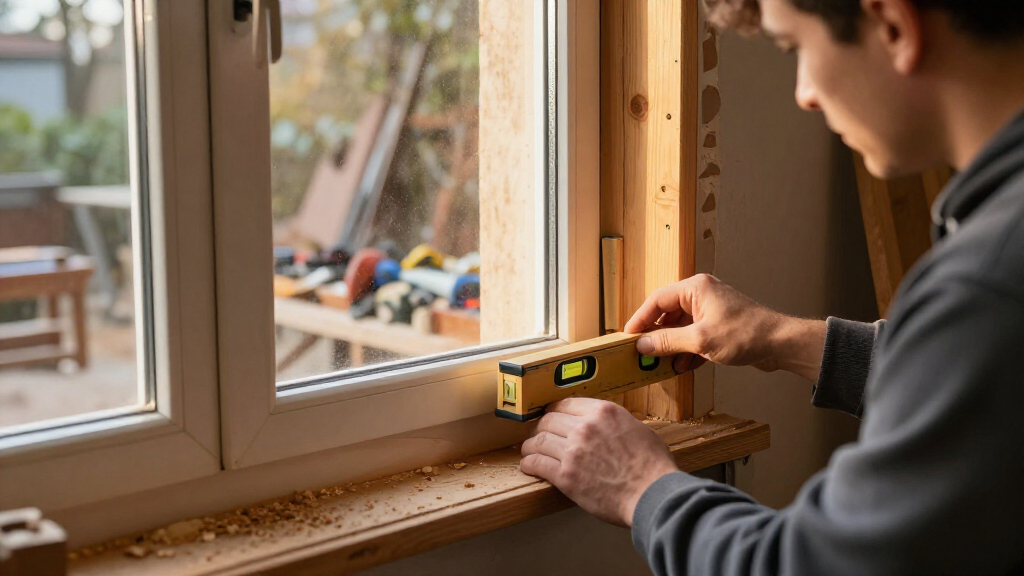
Do not order from nominal dimensions alone. Confirm the manufacturer’s stated unit dimensions, the rough-opening requirements, and whether the product is designed for your wall and existing trim. The listed measurements vary widely, from TANVILL’s 18 x 24 inches to COLORPAPA’s 36 x 60 inches; the larger unit weighs 58.9 pounds and may need more than one person to position safely.
TANVILL does not specify installation hardware or detailed instructions, while COLORPAPA lists pre-drilled holes and a built-in J-channel. Those details do not replace correct flashing, shimming, fastening, and air sealing. If the installation is unfamiliar, ask a qualified installer to confirm compatibility before purchase.
Check drainage, sealing, and ventilation
Rear drainage outlets on the NOTASA 24 x 36-inch and TANVILL windows are intended to direct water outward; COLORPAPA also lists a rear drainage system. These features can support water management, but installation and flashing remain central to keeping rain out of the wall. The BLCKTIGR lists water- and air-tightness levels, but you should ask which testing standard and product configuration those levels refer to.
Screens allow ventilation while keeping insects out, but an open window also changes indoor heat flow. Use ventilation when conditions suit the home, and close and latch windows when heating or cooling. A secure, well-sealed fit helps the window perform as intended.
Match size and shape to the room
Choose the window that fits the opening and the room’s purpose. COLORPAPA is the large-opening option; NOTASA’s 24 x 36-inch unit is the more general mid-size single-hung; TANVILL serves compact openings; and the NOTASA hopper suits a short, wide basement or bathroom opening. BLCKTIGR offers another compact vertical slider, with aluminum framing and stated weather-resistance levels as its differentiators.
Replacing a window with a different operating style or size can involve structural and finishing work. Before treating one of these as a direct replacement, compare the frame depth, mounting approach, egress needs, ventilation requirements, and local building rules.
Frequently Asked Questions
Are double-pane windows automatically energy efficient?
No. Double-pane glass can reduce heat transfer compared with single-pane glazing, but the complete window’s performance also depends on the glass coatings and gas fill, spacer, frame, seals, and installation. These five listings describe double-pane glass but do not provide U-factors or Solar Heat Gain Coefficients. I would ask for verified whole-window figures before comparing their expected energy performance.
Which window in this roundup is the best all-around choice?
I rank the NOTASA 24 x 36-inch single-hung as the best all-around option because its mid-size format combines double-pane insulated glass, a tilt-in sash, a screen, reinforced vinyl, and a rear drainage outlet. That recommendation applies when the dimensions suit the opening. It does not replace checking thermal ratings or installation compatibility, and buyers who need a large opening or a basement hopper should choose a different model.
Which option is best for a basement?
The NOTASA 32 x 14-inch hopper is the lineup’s clearest basement choice because its short, wide format and inward-opening design are intended for utility spaces. Confirm that the room has enough clearance for the sash to swing inward and that the opening dimensions match. A basement window may also need to meet local requirements for ventilation or emergency egress, so check the applicable rules before ordering.
What should I check before buying one of these windows?
Confirm the exact unit and rough-opening measurements, mounting method, frame depth, included hardware, and installation instructions. Then request the whole-window U-factor and Solar Heat Gain Coefficient, along with any air-leakage or certification documents. For the aluminum BLCKTIGR, ask whether the frame has a thermal break; for inward-opening NOTASA, check room clearance. A qualified installer can verify fit, flashing, and local code needs.
Can a window’s installation affect its energy performance?
Yes. Even a window with strong published ratings can lose performance if it is poorly sized, inadequately sealed, or installed without suitable flashing and insulation around the frame. Correct air sealing and water management help limit drafts and moisture problems. Follow the manufacturer’s installation requirements, and use a qualified installer if you are unsure how the window should be fastened and sealed into the wall.
Conclusion
For most buyers whose opening matches, I would start with the NOTASA 24 x 36-inch single-hung because it offers the broadest mix of everyday features in a manageable size. Choose COLORPAPA for a large 36 x 60-inch opening if careful handling and installation support are available. For a small opening, TANVILL has the compact dimensions; for a basement or bathroom, NOTASA’s hopper better suits a low, wide opening with inward clearance. Consider BLCKTIGR when its aluminum frame and stated weather-resistance levels fit the project, but ask for thermal-break and whole-window rating details first.
My final filter would be documentation: confirm the size, request verified energy ratings, and check that the chosen opening style suits the room. No single model is the right fit for every home, and none of the supplied listings gives enough measured thermal data to promise a specific energy saving.