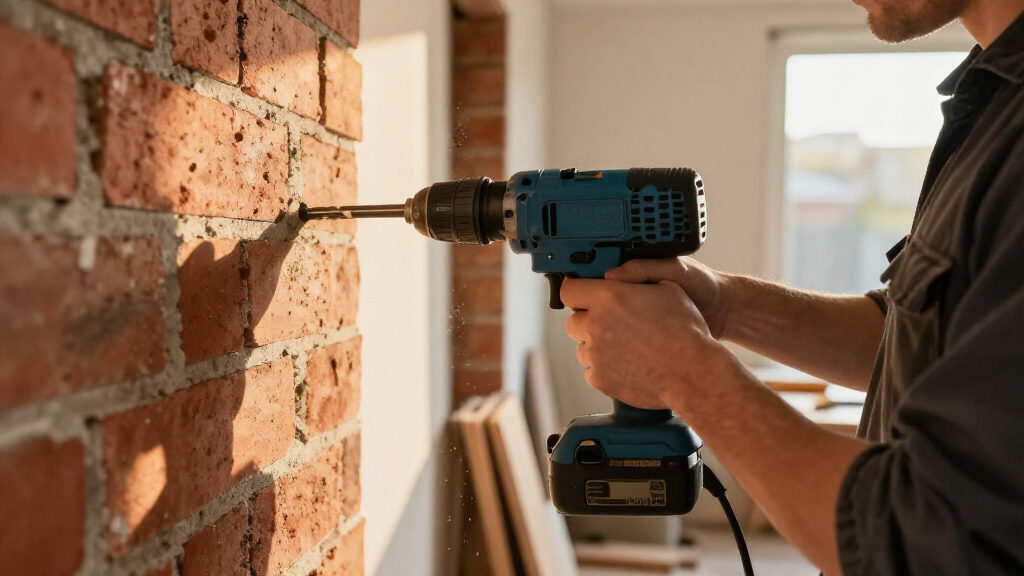

The best cordless rotary hammers balance concrete-drilling power with manageable weight, useful battery life, and a platform you can support. My best overall pick is the DEWALT DCH273P2, which pairs a brushless SDS-Plus tool with two 5 Ah batteries; the Milwaukee M18 FUEL kit stands out for buyers already committed to M18, while the compact Makita XRH06ZB suits lighter-duty work in tight spaces. The main tradeoffs are drilling capacity versus handling, kit completeness versus tool-only flexibility, and established battery systems versus lower-cost bundles. Some listings in this roundup are corded or provide limited specifications, so checking the exact configuration matters. Read on for the full breakdown and guidance on matching a hammer to your projects.

Get business pricing on tools and workshop supplies
- Business-only prices and quantity discounts
- Tax-exempt purchasing
- Multiple users, one account, clear invoices
Complete the kit


Key Takeaways
- The DEWALT DCH273P2 is the strongest all-around kit choice here: it includes two 5 Ah batteries, while the similar DCH273B is sold as a bare tool.
- The Milwaukee M18 FUEL kit is the clearest premium platform pick: its two 6.0 Ah batteries favor sustained work, but the larger kit may be more than occasional users need.
- Compact tools trade capacity for easier handling: Makita’s 11/16-inch XRH06ZB is more suited to lighter drilling than the 1-inch-class models.
- Battery and charger inclusion varies widely: Greenworks includes a 4 Ah battery and charger, while several DEWALT and Makita options are tool-only.
- Not every listed tool is cordless: the DESHUO is explicitly corded, so it does not meet a strict cordless requirement despite appearing in this comparison.


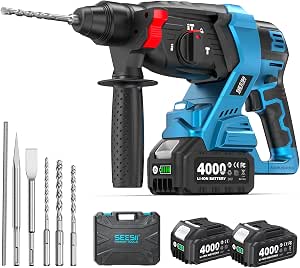

| cordless rotary hammer | Motor | Impact energy | Voltage | Maximum rotational speed |
|---|---|---|---|---|
| Seesii 1-Inch Cordless SDS-Plu | Brushless | 2.8 J | 18 V | 1,150 rpm |
| DEWALT 20V MAX Brushless 1-Inc | Brushless | 2.1 J | 20 V MAX | 1,100 rpm |
| Greenworks 24V Cordless SDS-Pl | Brushless | 2 J in description; 2.1 J in title | 24 V | 1,000 rpm |
| 20V Brushless SDS-Plus Cordles | Brushless | 2.5 J | 20 V | — |
| DEWALT DCH273P2 20V Max Brushl | Brushless | 2.1 J | 20 V | 1,050 rpm |
| Milwaukee M18 FUEL 1-Inch Cord | Brushless | 2 ft-lb | 18 V | — |
| DEWALT 20V MAX Cordless Rotary | Brushless | 2.6 ft-lb | 20 V | 1,500 rpm |
| Makita XRH06ZB 18V LXT Sub-Com | Brushless | 0.81–0.88 ft-lb (listed figures vary) | 18 V | 680 RPM |
| DESHUO 1-Inch SDS-Plus Corded | 9 A | 2.21 ft-lb (3 J) | — | — |
| Makita XRH04Z 18V LXT Cordless | — | — | 18 V | 1,200 RPM |
| DEWALT DCH293B 20V MAX XR Brus | Brushless | 3.5 J | 20 V | 1,000 rpm |
| Milwaukee M18 Cordless SDS-Plu | Brushless | 1.7 ft-lb | 18 V | — |
| Seesii 1-Inch Cordless SDS-Plu | Brushless | 2.5 J | — | — |
| DCK 20V Brushless Cordless SDS | 750W brushless | 2.8 J | — | 1,125 rpm |
More Details on Our Top Picks
Seesii 1-Inch Cordless SDS-Plus Rotary Hammer Drill, 2.8 J, Brushless
I’d pick the Seesii 2.8 J when a ready-to-work package matters more than a familiar major-brand battery system. Its two 4.0 Ah batteries, charger, case, bits, and chisels make it more self-contained than the DEWALT DCH273B, which is sold as a bare tool. The listed 2.8 J impact energy is also higher than DEWALT’s 2.1 J, while four modes add chisel positioning for setting the working angle. That combination suits varied home and installation jobs without an extra accessory run. The tradeoff is less clarity around the listed 15 A figure, and the tool’s 1/2-inch metal capacity is modest. I’d also weigh battery-system fit carefully: its stated compatibility is with Ma-kita batteries, not DEWALT’s 20V MAX platform.
Pros:- Includes two 4.0 Ah batteries, charger, case, drill bits, and chisels.
- Listed 2.8 J impact energy exceeds the DEWALT DCH273B’s 2.1 J.
- Four modes include chisel positioning as well as drilling and chiseling.
- Brushless motor, safety clutch, LED light, and adjustable side handle support controlled work.
Cons:- The stated 15 A amperage lacks context, making that specification difficult to interpret.
- Battery compatibility is listed as Ma-kita, which may not suit buyers on other tool platforms.
- The 1/2-inch maximum metal drilling capacity limits larger metal-hole work.
Best for: DIYers and maintenance workers who want a cordless SDS-Plus hammer with batteries, charger, bits, chisels, and case included.
Not ideal for: Tradespeople already invested in DEWALT 20V MAX who want to share batteries, or buyers who need frequent drilling in metal larger than the listed 1/2-inch capacity.
- Voltage:18 V
- Motor:Brushless
- Impact energy:2.8 J
- Modes:Drill, hammer drill, chisel, chisel positioning
- Maximum concrete drilling capacity:1 in (26 mm)
- Maximum rotational speed:1,150 rpm
- Battery package:Two 4.0 Ah lithium-ion batteries and charger
- Chuck:SDS-Plus
Our verdict“Choose the Seesii if you want a comparatively complete two-battery kit and higher listed impact energy, but skip it if a DEWALT battery platform is a priority.”
DEWALT 20V MAX Brushless 1-Inch SDS Rotary Hammer, 3 Modes, Bare Tool (DCH273B)
The DEWALT DCH273B is the lineup’s focused pick for mounting and repeated concrete drilling, where a lighter tool and active vibration control matter more than maximum impact energy. At 6.4 pounds, it is substantially lighter than the listed 11.7-pound DCH273P2 package, though that figure may reflect a different configuration. Its three modes cover drilling, hammer drilling, and chipping; unlike the Seesii 2.8 J, it has no chisel-positioning mode and is listed at 2.1 J. The main drawback is that this is a bare tool, so buyers need a DEWALT 20V MAX battery and charger. Dust-control compliance also depends on adding the compatible DWH303DH extractor, sold separately.
Pros:- Active vibration control is designed to reduce vibration felt at the handles.
- Listed 6.4-pound weight suits mounting and overhead tasks.
- Brushless motor and three modes cover drilling, hammer drilling, and chipping.
- Compatible with DEWALT 20V MAX batteries and the DWH303DH extractor.
Cons:- Bare-tool package does not include a battery or charger.
- At 2.1 J, its listed impact energy is lower than the Seesii 2.8 J model’s 2.8 J.
- OSHA Table 1 requirements depend on a separately sold compatible extractor.
Best for: DEWALT 20V MAX owners doing repeated concrete mounting or overhead installation who value lower handle vibration and a lighter listed tool weight.
Not ideal for: First-time cordless-tool buyers who need batteries and a charger in the box, or users seeking the highest listed impact energy or four-mode versatility.
- Voltage:20 V MAX
- Motor:Brushless
- Impact energy:2.1 J
- Modes:Drill, hammer drill, chip
- Tool weight:6.4 lb
- Maximum rotational speed:1,100 rpm
- Battery compatibility:DEWALT 20V MAX
- Included accessories:360° side handle, depth rod, adjustable hook
Our verdict“Choose the DCH273B for lighter, vibration-conscious concrete installation if you already own DEWALT 20V MAX batteries.”
Greenworks 24V Cordless SDS-Plus Rotary Hammer with 4Ah Battery and Charger
At a listed 5.44 pounds, the Greenworks is the lightest clearly specified option in this five-tool group, making it a sensible choice for short drilling sessions, tight spaces, and work where carrying weight adds up. It includes a 4 Ah battery and charger, unlike the bare-tool DEWALT DCH273B, and its four modes add chisel rotation lock. That gives it more operating flexibility than DEWALT’s three-mode setup, though its listed 1,000 rpm is lower than the Seesii 2.8 J’s 1,150 rpm. The impact-energy data is inconsistent: the description says 2 J while the title says 2.1 J. I’d treat it as a lighter-duty option rather than choose it on a precise power comparison, especially for work demanding higher speed or dependable published specifications.
Pros:- Listed 5.44-pound weight makes it especially manageable to carry and position.
- Includes a 4 Ah battery and charger, unlike the DEWALT DCH273B bare tool.
- Four modes include chisel rotation lock.
- Brushless motor, SDS-Plus chuck, depth guide, and LED light support practical site use.
Cons:- Impact energy is reported as both 2 J and 2.1 J in the supplied product information.
- Listed maximum speed of 1,000 rpm is lower than the Seesii 2.8 J model’s 1,150 rpm.
- Its stated maximum power is 96 W, a figure buyers should clarify before comparing performance.
Best for: Home renovators and installers who prioritize a light tool with a battery and charger for occasional concrete drilling and light chiseling.
Not ideal for: Crews drilling concrete frequently at higher speeds, or buyers who need consistent impact-energy figures to compare tools confidently.
- Voltage:24 V
- Motor:Brushless
- Impact energy:2 J in description; 2.1 J in title
- Modes:Drilling, hammer drilling, chisel, chisel rotation lock
- Weight:5.44 lb
- Maximum rotational speed:1,000 rpm
- Battery package:4 Ah lithium-ion battery and charger
- Warranty:3 years for tool and battery
Our verdict“Pick the Greenworks for a light, battery-included kit and four modes, not for speed or the clearest published power specifications.”
20V Brushless SDS-Plus Cordless Rotary Hammer Drill, 4 Functions, Includes 5 Drill Bits and Gloves (Battery Not Included)
This four-function hammer is most appealing to buyers who already own DEWALT 20V MAX batteries and want a listed 2.5 J of impact energy without buying into another battery system. Its drill, hammer-drill, chisel, and chisel-angle functions are more varied than the three modes on the DEWALT DCH273B; it also lists a safety clutch, variable-speed control, and shock-absorbing grip. But the package includes only five bits and gloves—not a battery or charger—so its convenience depends on existing compatible batteries. The Seesii 2.8 J lists more impact energy and includes a substantial battery kit, while this model’s specifications provide no weight or speed figure and give unusually small 5 × 5 × 5-inch dimensions. I’d verify those details before relying on them for planning or comparison.
Pros:- Four functions include chisel-angle adjustment, beyond the three modes listed for the DEWALT DCH273B.
- Listed 2.5 J impact energy is higher than the DEWALT DCH273B’s 2.1 J.
- Compatible with DEWALT 20V MAX batteries.
- Variable-speed control, safety clutch, and shock-absorbing grip support control.
Cons:- Battery and charger are not included.
- The stated 5 × 5 × 5-inch dimensions are unusual and may not describe the tool’s working size.
- Supplied specifications omit tool weight and maximum rotational speed.
Best for: DIYers who already own DEWALT 20V MAX batteries and want four operating functions with basic bits included.
Not ideal for: Buyers without compatible batteries, or professionals who need well-documented weight, speed, and dimensions before selecting a site tool.
- Voltage:20 V
- Motor:Brushless
- Impact energy:2.5 J
- Modes:Drilling, hammer drilling, chiseling, chisel-angle adjustment
- Chuck:SDS-Plus
- Battery compatibility:DEWALT 20V MAX lithium-ion batteries
- Battery included:No
- Included accessories:Five drill bits and gloves
Our verdict“Consider this model if you already have DEWALT 20V MAX batteries and want four functions, but verify its size and performance details before buying.”
DEWALT DCH273P2 20V Max Brushless SDS Plus Rotary Hammer with 5 Ah Batteries
The DEWALT DCH273P2 makes more sense than the DCH273B for buyers who want the same vibration-conscious, three-mode approach but need batteries in the package. Its 5 Ah battery setup is a practical advantage over the bare-tool DCH273B, while active vibration control targets comfort during repeated drilling and light chipping. Against the Seesii 2.8 J, however, DEWALT lists lower impact energy at 2.1 J and offers no chisel-positioning mode. The tool remains geared toward installation and moderate concrete work, not maximum versatility. Its listed 11.7-pound weight is notably higher than the DCH273B’s 6.4-pound figure, so I would check what that weight includes before comparing handling. Dust extraction is also separate, and OSHA Table 1 compliance requires the compatible DWH303DH extractor.
Pros:- Includes 5 Ah batteries, unlike the DCH273B bare-tool package.
- Active vibration control is designed to reduce vibration at the handles.
- Brushless motor and three modes suit drilling, hammer drilling, and light chipping.
- DEWALT 20V MAX platform compatibility can simplify battery sharing for existing owners.
Cons:- Listed 2.1 J impact energy is lower than the Seesii 2.8 J model’s 2.8 J.
- Dust extraction equipment is not included; OSHA Table 1 compliance requires the DWH303DH.
- The listed 11.7-pound weight is much higher than the DCH273B’s 6.4-pound figure, so package weight details merit checking.
Best for: DEWALT 20V MAX users who want a brushless SDS-Plus hammer with 5 Ah batteries for repeated mounting, drilling, and light chipping.
Not ideal for: Buyers seeking the highest listed impact energy, four-mode chisel adjustment, or the lightest specified tool for overhead work.
- Voltage:20 V
- Motor:Brushless
- Impact energy:2.1 J
- Modes:Drill, hammer drill, chip
- Battery capacity:5 Ah
- Maximum rotational speed:1,050 rpm
- Listed weight:11.7 lb
- Warranty:3-year limited warranty
Our verdict“Choose the DCH273P2 over the DCH273B if you need included 5 Ah batteries, but look elsewhere for higher impact energy or four-mode flexibility.”
Milwaukee M18 FUEL 1-Inch Cordless SDS Plus Rotary Hammer Kit with Two 6.0 Ah Batteries
The Milwaukee M18 FUEL makes the most sense for buyers who want a ready-to-work cordless setup rather than a bare tool. Its two 6.0 Ah batteries and fast charger reduce interruptions on longer jobs, while 2 ft-lb of impact energy and a 4,800 BPM impact rate suit routine concrete drilling. AUTOSTOP kickback control and the AVS anti-vibration system add useful control features when a bit binds or a job runs long. Compared with the DEWALT DCH133B, this kit includes batteries and charger, but the DEWALT is lighter and lists higher impact energy. The tradeoff here is the 21.8 lb kit weight and single speed setting, which make it less appealing for frequent overhead work or users who want more speed adjustment.
Pros:- Includes two 6.0 Ah batteries and a fast charger for a complete cordless kit.
- Brushless motor delivers up to 1,330 RPM and 4,800 BPM.
- AUTOSTOP kickback control helps limit over-rotation if the bit binds.
- AVS system is designed to reduce vibration during use.
Cons:- Listed kit weight of 21.8 lb is a substantial burden for overhead or extended handheld work.
- Single speed setting offers less control than variable-speed alternatives.
- Impact energy is lower than the DEWALT DCH133B’s listed 2.6 ft-lb.
Best for: M18 platform owners and concrete crews who want two included batteries, a charger, and added kickback and vibration controls for sustained drilling.
Not ideal for: Buyers prioritizing a light tool for overhead drilling, or anyone who needs multiple speed settings and a more compact setup.
- Voltage:18 V
- Motor:Brushless
- Impact energy:2 ft-lb
- Maximum speed:1,330 RPM
- Impact rate:4,800 BPM
- Batteries included:2 × 6.0 Ah
- Safety and vibration features:AUTOSTOP kickback control; AVS Anti-Vibration System
- Warranty:Limited 5-year warranty
Our verdict“Choose the Milwaukee if you want a well-equipped M18 kit for longer concrete jobs; skip it if low weight is your main priority.”
DEWALT 20V MAX Cordless Rotary Hammer, SDS Plus, D-Handle, 1-Inch
At 5.9 lb, the DEWALT DCH133B is the clearest choice here for buyers who need a cordless rotary hammer that is easier to maneuver in restricted spaces. Its brushless motor pairs with a listed 2.6 ft-lb impact energy and up to 5,500 strokes per minute, giving it stronger impact figures than the Milwaukee M18 FUEL in this group. The compact design and D-handle also suit routine concrete drilling where access and handling matter more than a battery-ready package. A stop-rotation feature adds utility for chipping tasks. The main catch is that this is a tool-only purchase; unlike the Milwaukee kit, it does not include batteries or a charger. Its listed maximum speed is 1,500 rpm, but buyers seeking a broader speed range should check the specific control details before choosing.
Pros:- Light 5.9 lb listed weight helps with maneuvering and overhead drilling.
- Brushless motor is designed to maintain speed under load.
- Listed 2.6 ft-lb impact energy exceeds the Milwaukee M18 FUEL’s 2 ft-lb.
- Compact design and stop-rotation feature support restricted-space and chipping work.
Cons:- Battery and charger are sold separately.
- Bare-tool format adds a platform-entry cost for buyers without compatible batteries.
- Maximum rotational speed is listed at 1,500 rpm, with no higher-speed option specified.
Best for: DEWALT 20V MAX owners who regularly drill concrete in tight spaces and value a lighter tool with higher listed impact energy.
Not ideal for: New cordless-tool buyers who need a battery and charger included, or users who want a fully equipped kit out of the box.
- Voltage:20 V
- Motor:Brushless
- Chuck type:SDS Plus
- Impact energy:2.6 ft-lb
- Maximum rotational speed:1,500 rpm
- Impact rate:0–5,500 strokes per minute
- Concrete capacity:1 in.
- Weight:5.9 lb
- Battery included:No; tool only
Our verdict“Pick the DCH133B for a lighter DEWALT-platform tool with strong listed impact energy, provided you already have a compatible battery.”
Makita XRH06ZB 18V LXT Sub-Compact Brushless Cordless 11/16-Inch Rotary Hammer, Tool Only
The Makita XRH06ZB favors reach and handling over raw breaking force. At 4.6 lb with battery and 10-3/4 inches long, this sub-compact model is easier to position in cramped areas or overhead than the heavier Makita XRH04Z. Its rotation-only and hammer-with-rotation modes cover straightforward drilling tasks, while the variable-speed trigger, vibration-absorbing handle, and one-touch sliding chuck add day-to-day control. It is not a substitute for the higher-impact DEWALT DCH133B: Makita lists just 0.81–0.88 ft-lb of impact energy, and its maximum speed is 680 RPM. The battery is also sold separately. I’d choose it for smaller holes and hard-to-reach work, not for faster progress through demanding concrete drilling.
Pros:- Compact 10-3/4-inch length suits tight spaces and overhead positioning.
- Listed weight of 4.6 lb with battery is lower than the Makita XRH04Z’s 7.4 lb.
- Brushless motor, variable-speed trigger, and vibration-absorbing handle support controlled use.
- One-touch sliding chuck makes SDS-Plus bit changes simpler.
Cons:- Low listed impact energy is less suited to demanding concrete drilling.
- Battery is not included.
- Product data gives two impact-energy figures: 0.81 ft-lb and 0.88 ft-lb.
Best for: Makita 18V LXT users who make smaller concrete holes, work overhead, or need a compact hammer drill for tight access.
Not ideal for: Contractors tackling frequent large-diameter holes or buyers who need higher impact energy and a battery included.
- Voltage:18 V
- Motor:Brushless
- Chuck type:SDS-Plus
- Impact energy:0.81–0.88 ft-lb (listed figures vary)
- Maximum rotational speed:680 RPM
- Impact rate:Up to 4,800 BPM
- Modes:Rotation only; hammering with rotation
- Length:10-3/4 in.
- Weight:4.6 lb with battery
Our verdict“Choose this Makita for compact access and lighter drilling, but move to the DEWALT DCH133B or a larger model for higher-impact work.”
DESHUO 1-Inch SDS-Plus Corded Rotary Hammer Drill
The DESHUO is the outlier in this cordless roundup: it is corded, not cordless. I’m including it as a practical alternative for buyers who care more about continuous power and a ready-to-use accessory set than moving freely around a site. Its 9-amp motor produces a listed 2.21 ft-lb of impact energy, and four modes cover rotary hammer drilling, rotation-only drilling, hammer-only work, and chisel positioning. That gives it more mode flexibility than the two-mode Makita XRH06ZB, and its kit includes SDS-Plus bits, chisels, a depth gauge, and a case. The cord limits mobility, while the product data says it is not intended for heavy-duty demolition. It is a sensible stationary-work alternative, but buyers who need cordless access should choose the Milwaukee or DEWALT instead.
Pros:- Four operating modes handle drilling, hammer drilling, hammer-only work, and chisel positioning.
- Includes drill bits, chisels, a depth gauge, spare carbon brushes, and a carrying case.
- Safety clutch and vibration control are designed to aid handling.
- Corded power avoids battery-runtime interruptions near an outlet.
Cons:- Not cordless, so the cord restricts movement and access compared with every battery-powered option here.
- Product description says it is unsuitable for heavy-duty demolition.
- Compatible only with SDS-Plus bits.
Best for: DIYers and maintenance workers drilling or doing light chipping near an outlet who want multiple modes and included SDS-Plus accessories.
Not ideal for: Cordless-tool users, crews working away from outlets, or anyone planning heavy-duty demolition.
- Power source:Corded electric
- Motor:9 A
- Impact energy:2.21 ft-lb (3 J)
- Maximum speed:1,100 RPM
- Impact rate:5,300 BPM
- Operating modes:Rotary hammer; rotary only; hammer only; chisel position adjustment
- Compatible bits:SDS-Plus only
- Weight:7.19 lb
- Warranty:24 months
Our verdict“Choose the DESHUO only if continuous corded operation and included accessories matter more than cordless mobility.”
Makita XRH04Z 18V LXT Cordless 7/8-Inch SDS-Plus Rotary Hammer, Tool Only
The Makita XRH04Z is a more versatile jobsite choice than the compact XRH06ZB: it offers three modes, including hammering only, for users who switch between drilling and light chipping. Its variable-speed motor reaches 1,200 RPM and 4,000 BPM, while the torque-limiting clutch helps protect the gears if a bit binds. A shock-absorbent handle also helps protect the battery housing. Against the DEWALT DCH133B, the XRH04Z supplies a dedicated hammer-only mode but has lower listed impact energy, at 1.44 N·m maximum torque rather than a comparable impact-energy figure in the supplied specs. At 7.4 lb, it is also much heavier than the XRH06ZB. It is tool-only, so existing Makita 18V LXT owners get the clearest fit.
Pros:- Three modes include hammer-only operation for light chiseling.
- Variable-speed motor reaches up to 1,200 RPM and 4,000 BPM.
- Torque-limiting clutch helps protect the gears if the bit binds.
- Shock-absorbent handle helps protect the battery housing.
Cons:- Battery and charger are not included.
- At 7.4 lb, it is heavier than the compact Makita XRH06ZB.
- Requires SDS-Plus bits and does not list an impact-energy figure.
Best for: Makita 18V LXT owners who need a three-mode SDS-Plus hammer for concrete drilling and occasional light chiseling.
Not ideal for: Buyers prioritizing low weight, higher listed impact energy, or a kit that includes a battery and charger.
- Voltage:18 V
- Maximum rotational speed:1,200 RPM
- Impact rate:Up to 4,000 BPM
- Operating modes:Rotation only; hammering with rotation; hammering only
- Chuck and bit compatibility:SDS-Plus
- Maximum power:350 W
- Maximum torque:1.44 N·m
- Weight:7.4 lb
- Battery and charger:Not included
Our verdict“Pick the XRH04Z if you want three operating modes on the Makita 18V platform; choose the XRH06ZB for lighter, tighter-access work.”
DEWALT DCH293B 20V MAX XR Brushless 1-1/8-Inch SDS Plus Rotary Hammer, Tool Only
The DEWALT DCH293B is the control-focused pick here: its 3.5 J impact energy and 1-1/8-inch SDS Plus format suit substantial concrete drilling, while E-Clutch helps manage sudden bind-up. Compared with the Milwaukee M18 2712-20, it offers twice the listed impact energy, though Milwaukee has a higher no-load speed and a lighter stated tool weight. DEWALT’s SHOCKS Active Vibration Control is a useful advantage for repeated holes, and compatibility with the D25304DH dust extractor gives users a path to dust collection. The main catch is that this is a bare tool: you need a compatible 20V battery and charger, and dust extraction requires a separate attachment. I’d choose it for control and concrete capacity, not for an all-in-one kit.
Pros:- 3.5 J impact energy supports demanding concrete drilling.
- E-Clutch helps control sudden tool rotation during bind-up.
- Active vibration control can make repeated drilling more comfortable.
- Brushless motor and retractable utility hook suit regular jobsite use.
Cons:- Battery and charger are not included.
- Dust extraction requires the separately obtained D25304DH attachment.
Best for: DEWALT 20V MAX owners who regularly drill larger holes in concrete and value vibration and bind-up control.
Not ideal for: Buyers starting without DEWALT batteries, or anyone who wants dust collection included in the box.
- Voltage:20 V
- Motor:Brushless
- Chuck type:SDS Plus
- Impact energy:3.5 J
- Maximum rotational speed:1,000 rpm
- Speed settings:3
- Wood drilling capacity:1.13 in
- Included:20V MAX rotary hammer; battery and charger not included
Our verdict“Choose the DCH293B if you already own DEWALT 20V batteries and want strong concrete performance with added control features.”
Milwaukee M18 Cordless SDS-Plus Rotary Hammer, 18V
The Milwaukee M18 2712-20 favors pace and manageable handling over maximum impact force. Its stated 1,400 rpm and 4,900 blows per minute make it a compelling fit for routine anchor holes and mixed drilling, while its 6.9-pound tool weight is lighter than the supplied DEWALT DCH293B data suggests. That DEWALT, however, delivers considerably more listed impact energy at 3.5 J versus Milwaukee’s 1.7 ft-lb, so it is the stronger candidate when concrete work gets heavier. Milwaukee adds an anti-vibration system, LED light, and stop-rotation mode, but the battery is not included. It also has a D-handle and a 1-inch concrete capacity, making this a practical choice for users already invested in M18 rather than a complete starter setup.
Pros:- 6.9-pound stated tool weight supports easier handling than heavier-duty options.
- Up to 1,400 rpm and 4,900 blows per minute suit routine drilling tasks.
- Anti-vibration system and LED light support more comfortable work in dim areas.
- Stop-rotation mode adds flexibility for chiseling tasks.
Cons:- Battery and charger are not included.
- Its stated 1.7 ft-lb impact energy is lower than the DEWALT DCH293B’s 3.5 J.
- Concrete capacity is limited to 1 inch.
Best for: M18 platform users who want a comparatively light SDS-Plus hammer for routine concrete holes and overhead or mixed-material work.
Not ideal for: People tackling frequent, larger concrete holes who would benefit from the DEWALT DCH293B’s higher stated impact energy, or buyers without M18 batteries.
- Model:2712-20
- Voltage:18 V
- Motor:Brushless
- Chuck type:SDS Plus
- Impact energy:1.7 ft-lb
- No-load speed:0–1,400 rpm
- Impact rate:0–4,900 blows per minute
- Tool weight:6.9 lb
- Concrete capacity:1 in
Our verdict“Pick this Milwaukee for lighter, faster routine drilling if you already own M18 batteries, but choose a higher-impact model for heavier concrete work.”
Seesii 1-Inch Cordless SDS-Plus Rotary Hammer Drill, 2.5 J, Brushless, 4 Modes
The Seesii’s strongest case is not peak power but what comes in the kit: two 4.0 Ah batteries, a charger, bits, chisels, and a case make it more job-ready than the bare-tool DEWALT DCH293B or Milwaukee M18 2712-20. Its four modes cover drilling, hammer drilling, chiseling, and chisel-angle adjustment, giving it broader task flexibility for home projects and light renovation. At 2.5 J, it sits below DEWALT’s 3.5 J impact energy, so I’d reserve repeated, demanding concrete work for the stronger option. The anti-kickback clutch, adjustable handle, and LED light add practical control, but the stated battery compatibility with Ma-kita 18V batteries may complicate expansion or replacement. Its 1-inch concrete limit also sets a clear boundary.
Pros:- Includes two 4.0 Ah batteries and a charger, unlike the bare-tool DEWALT and Milwaukee picks.
- Four modes cover drilling, hammer drilling, chiseling, and chisel positioning.
- Anti-kickback clutch and adjustable side handle support control.
- Kit includes drill bits, chisels, depth gauge, and carrying case.
Cons:- 2.5 J impact energy is below the DEWALT DCH293B’s 3.5 J.
- Maximum concrete capacity is 1 inch.
- Specified compatibility with Ma-kita 18V batteries may limit battery-platform choices.
Best for: Home renovators and occasional contractors who need a complete cordless kit for drilling, light chiseling, and varied jobs.
Not ideal for: Heavy concrete crews seeking higher impact energy, or buyers who need a clearly established battery platform beyond the listed Ma-kita compatibility.
- Chuck type:SDS-Plus
- Motor:Brushless
- Impact energy:2.5 J
- Impact rate:4,800 BPM
- Modes:Drill, hammer drill, chisel, chisel angle adjustment
- Maximum concrete capacity:1 in (26 mm)
- Batteries included:2 × 4.0 Ah
- Included accessories:Charger, 3 SDS-Plus drill bits, pointed and flat chisels, depth gauge, carrying case
Our verdict“Choose the Seesii if you want batteries, accessories, and four operating modes in one package for light-to-moderate concrete work.”
DCK 20V Brushless Cordless SDS-Plus Rotary Hammer with Dust Collector
The DCK makes a distinct trade: it bundles a dust collector, 6 Ah battery, and charger rather than asking buyers to assemble a bare-tool setup. That integrated collection can help limit airborne debris and cleanup for indoor drilling, a convenience the DEWALT DCH293B only offers with its separate D25304DH attachment. The DCK lists 2.8 J impact energy and three modes, including demolition, putting it between the DEWALT and Seesii on stated impact energy. Its vibration reduction, safety clutch, and anti-twist feature add useful control, but the 15 in³ dust box may need frequent emptying on longer jobs. The listed maximum chuck size is 0.5 inches, so buyers should check that limitation against their intended bits. I’d favor it for contained indoor tasks, not uninterrupted heavy drilling.
Pros:- Integrated dust collector helps reduce airborne dust and cleanup.
- Includes a 6 Ah battery and 4A charger.
- Three modes include drilling, rotary hammering, and demolition.
- Vibration reduction, safety clutch, and anti-twist feature support control.
Cons:- The 15 in³ dust box may require frequent emptying during extended work.
- Listed maximum chuck size is 0.5 inches.
- At 2.8 J, it has less stated impact energy than the DEWALT DCH293B.
Best for: DIY renovators and maintenance workers drilling indoors who want a battery, charger, and built-in dust collection in the package.
Not ideal for: Users drilling for long stretches without pauses to empty the dust box, or those whose work requires bits beyond the listed 0.5-inch chuck size.
- Power source:20V battery
- Motor:750W brushless
- Impact energy:2.8 J
- Impact frequency:5,100 BPM
- Maximum rotational speed:1,125 rpm
- Modes:Drill, rotary hammer, demolition
- Dust box capacity:15 in³
- Battery capacity:6 Ah
- Charging time:1.5 hours
Our verdict“Choose the DCK for indoor drilling where included dust collection and a bundled battery matter more than long uninterrupted runs.”
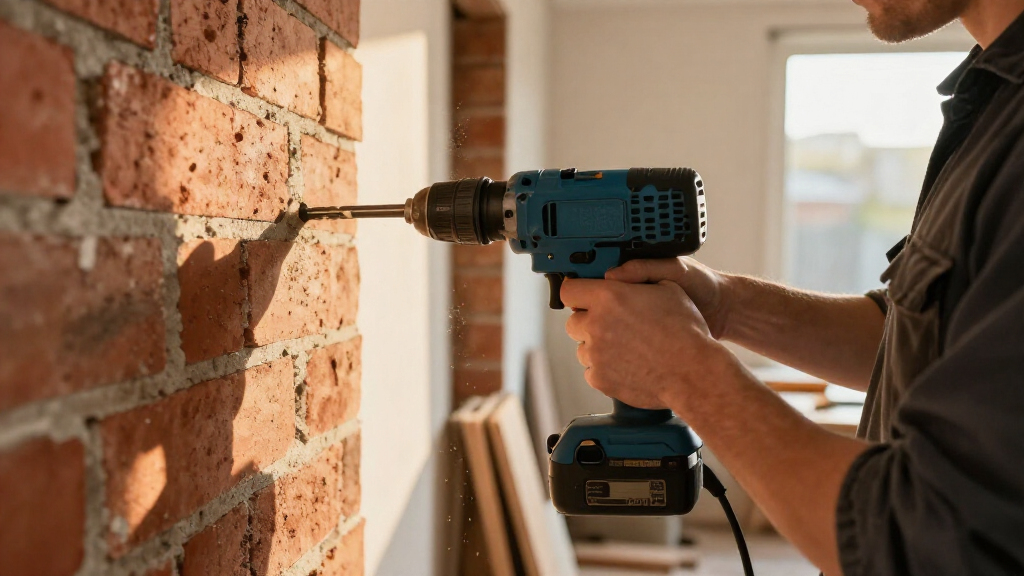
How We Picked
I compared these options around the choices that shape real concrete-drilling work: stated drilling capacity, motor type, SDS-Plus fit, operating modes, battery and charger inclusion, handling category, and available dust-control features. I gave more weight to clear specifications and useful cordless configurations than to broad claims or accessory counts, since an included bit set cannot make up for a mismatched tool or battery platform.
The order favors adaptable, established cordless kits first, then tools that make more sense for a particular platform, task size, or budget. Bare tools rank below comparable kits for buyers starting from scratch, though they may be the better fit for owners with compatible batteries. Compact and higher-capacity tools serve different jobs, so their position reflects intended use rather than a claim that one size suits everyone. The corded DESHUO ranks as a category mismatch, and products with limited identifying specifications merit closer checking before purchase.
Factors to Consider When Choosing Best Cordless Rotary Hammers
Before choosing a cordless rotary hammer, match the tool to the holes you actually drill and the battery system you can keep charged. A larger rating is not automatically a better fit: tool weight, accessories, and the amount of work between charges can matter as much as headline capacity.
Match SDS-Plus Capacity to the Holes You Drill
Start with the diameter and depth of the holes you make most often, not the largest hole you might drill once. A compact hammer can be easier to control for anchors and smaller fixings, while a higher-capacity model is a better match for repeated, larger holes. Check the manufacturer’s stated drilling range and recommended bit sizes rather than treating a capacity label as a promise of equal speed across all materials. Oversizing can add weight and cost without helping routine work. Undersizing can lead to slow drilling, extra heat, and greater strain on the tool. For regular heavy drilling, also check whether the maker publishes suitable duty limits and maintenance guidance.
Choose a Battery Platform Before Comparing Kits
A kit with batteries and charger is often the straightforward choice if you are starting without compatible tools. If you already own batteries in a platform such as DEWALT 20V MAX, Milwaukee M18, Makita 18V LXT, or Greenworks 24V, a bare tool may avoid paying for duplicate gear. Do not compare battery capacity numbers alone across different systems; runtime depends on the tool, bit, material, and work pace. For repeated drilling, a second battery can keep work moving while the first charges. Check that the listed kit includes the charger as well as the batteries, since some bundles omit one or both. Also confirm the exact battery generation and compatibility for your existing equipment.
Balance Power Against Weight and Overhead Control
Rotary hammers are held close to the wall or above shoulder height often enough that handling affects productivity. A smaller tool can reduce fatigue and help with accurate starts, while a larger model may feel more capable in sustained, demanding drilling. Think about where the tool will be used: overhead anchor holes, ladder work, and tight mechanical spaces reward compactness. A D-handle can suit some work positions, but grip shape is personal and should not be chosen from capacity figures alone. If possible, compare the tool’s weight with the battery installed, because the bare-tool figure does not tell you how heavy it feels in use. A heavier hammer is only an advantage when its additional capacity serves your workload.
Understand Modes, Chiseling, and the Work You Need Done
Rotary hammers can offer rotation with hammering, rotation-only drilling, or hammer-only action, but exact mode sets vary. Match those modes to your tasks: concrete anchors call for hammer drilling, while tile removal or light chipping may require hammer-only operation. A mode count by itself does not tell you how well a tool performs each job, so read the manual for permitted applications and accessories. Avoid using a rotary hammer as a general-purpose drill if its size and controls make that awkward; a standard drill may be easier for routine wood or metal work. Confirm the chuck and bit interface before buying, since SDS-Plus bits are not interchangeable with every other system. Extra modes help only when they support work you actually do.
Plan for Dust, Bits, and Ongoing Maintenance
Concrete dust is a health and cleanup concern, not just a nuisance around the work area. A built-in dust collector can make some drilling jobs tidier, but it does not replace appropriate dust-control practices or protective equipment. Check whether the collector needs compatible bits, filters, or other parts that may add upkeep. Budget for suitable SDS-Plus bits, since a low-quality or worn bit can make even a capable hammer seem weak and can slow the job. Keep the bit shank clean and follow the manual’s lubrication and inspection guidance. For frequent site work, consider whether replacement parts and service support are easy to obtain before settling on a less familiar brand.
Check the Listing for the Exact Tool and Included Equipment
Product titles can blur important distinctions between a tool-only listing, a complete kit, and a similar model with a different capacity. Verify the model number, whether batteries and a charger are included, and which accessories are actually in the box. This roundup includes a corded DESHUO model, so buyers seeking a cordless tool should rule it out rather than assume the listing title is accurate. Some generic listings also provide less detail about battery compatibility, performance, or service support than established tool platforms. Treat unverified accessory bundles cautiously and focus on the tool’s core specifications. When the listing and manufacturer documentation differ, rely on the official manual and confirm the configuration with the seller before ordering.
Frequently Asked Questions
Is the DEWALT DCH273P2 a better buy than the DCH273B?
The core distinction in these listings is the package: the DCH273P2 includes two 5 Ah batteries, while the DCH273B is listed as a bare tool. If you already own compatible DEWALT batteries and a charger, the bare tool may be the simpler addition to your kit. If you are entering the platform, the included batteries make the P2 configuration more ready for work. Check the exact box contents and model number before ordering, since retailer bundles can vary. Choose based on the equipment you already own rather than assuming the tool itself differs from the model name alone.
Should I buy the Milwaukee M18 FUEL kit if I only drill occasional anchor holes?
For occasional small anchor holes, a two-battery M18 FUEL kit may provide more capacity and battery equipment than your work requires. It makes more sense if you already use M18 tools, expect longer concrete-drilling sessions, or want a kit for repeated site work. Occasional users should compare the complete kit against a smaller or more basic tool that suits their usual hole sizes. Battery compatibility is a major part of the decision: the included batteries have added value if they can support other tools you own. Match the package to your workload, not just the largest stated capacity.
Can the Makita XRH06ZB replace a 1-inch rotary hammer?
The XRH06ZB is an 11/16-inch sub-compact model, so it is better viewed as a lighter-duty choice than a direct substitute for a 1-inch-class hammer. It may suit smaller holes, tight spaces, or work where reduced bulk matters more than maximum capacity. If your projects regularly call for larger holes or long runs of drilling, choose a model whose stated range fits that work. Verify the manufacturer’s specifications for your bit sizes and material before relying on it for a particular job. The compact format is a deliberate tradeoff, not simply a smaller version with identical scope.
Does the DESHUO rotary hammer belong in a cordless-tool shortlist?
No. The listed DESHUO 1-inch SDS-Plus model is described as corded, so it does not satisfy a strict cordless requirement. It may still interest someone who wants continuous power near an outlet and does not need battery mobility, but it should be compared separately from battery tools. Check the product listing and manufacturer details carefully, since this roundup contains one clear category mismatch. If you need to work away from mains power, select one of the cordless models and confirm battery inclusion. A corded tool cannot be made cordless simply by comparing its drilling capacity with battery models.
Is a dust collector worth prioritizing on a cordless rotary hammer?
A dust collector can be useful when you drill many holes indoors or need to limit mess around a work area, but it should not be the only basis for choosing a hammer. Check whether the collector is included, whether it is compatible with your intended bits, and what filter or cleaning tasks it adds. For occasional outdoor drilling, battery fit, handling, and suitable drilling capacity may matter more. Dust collection also does not remove the need for appropriate protective practices. The DCK listing makes this feature a point of distinction, while the right choice depends on how often your work creates concrete dust.
Conclusion
For the broadest mix of cordless capability and kit readiness, I recommend the DEWALT DCH273P2 as best overall; its two included 5 Ah batteries set it apart from the bare-tool DCH273B. The Greenworks 24V kit is my value-oriented pick for buyers who want a battery and charger included, while the Milwaukee M18 FUEL kit is the premium choice for M18 users tackling longer or heavier sessions. Beginners should prioritize a complete kit with a familiar support network, making the DEWALT DCH273P2 a practical starting point if its platform suits their other tools. For compact, lighter drilling, look at the Makita XRH06ZB; for dust-conscious work, investigate the DCK’s collector details. Skip the corded DESHUO if cordless operation is non-negotiable, and verify each listing’s exact batteries, charger, and accessories before buying.