TL;DR
A homeowner in the Twin Cities area says MemBrain was installed behind a fiberglass shower on an exterior wall during a rebuild after mold remediation. The account raises questions about moisture movement and an opening beneath the shower, but it does not establish that the assembly has failed or that MemBrain is unsuitable there.
A homeowner rebuilding after mold remediation in the Twin Cities area says a layer of MemBrain vapor retarder was left uncovered behind a one-piece fiberglass shower on an exterior wall, prompting concern about moisture reaching the wall assembly in winter. The account raises a construction question, but it does not confirm that the wall is damaged or that MemBrain is a poor choice for every exterior shower wall.

Get business pricing on tools and workshop supplies
- Business-only prices and quantity discounts
- Tax-exempt purchasing
- Multiple users, one account, clear invoices
The homeowner describes a 1980s rambler in a climate they believe is Zone 6A. The main-level exterior walls were gutted to the studs during work following mold remediation. The reported rebuilt assembly, from outside inward, is vinyl siding, Tyvek, OSB sheathing, 2-by-6 framing with R-23 mineral-wool batts, air sealing with caulk and spray foam, MemBrain, and drywall.
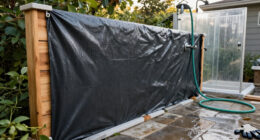
The concern is a bathroom where a fiberglass shower unit touches and runs perpendicular to an exterior wall. The homeowner says the narrow, non-plumbing end of the shower sits against that wall, with MemBrain taped at its edges but otherwise left open to the cavity behind the shower rather than covered with drywall. A plumbing opening under the shower connects to the laundry room below, adding another possible route for air or moisture movement.
The homeowner asks whether moisture escaping behind the shower could pass through MemBrain toward the exterior during winter and condense at the colder sheathing. The account does not include measurements, photographs, product documentation, a site inspection, or an independent review of the installation. It also does not establish how the shower and wall are sealed against water or how the opening below is detailed.
Is MemBrain a poor choice? What this account shows
A Twin Cities homeowner describes MemBrain left exposed behind a fiberglass shower on an exterior wall. The account raises questions about moisture and installation, but does not establish damage or prove the product is unsuitable.
The reported wall assembly
The homeowner describes a rebuild after mold remediation, with the shower against the exterior wall.
Vinyl siding, Tyvek, and OSB sheathing.
2-by-6 framing with R-23 mineral-wool batts and air sealing.
MemBrain and drywall; behind the shower, the homeowner says MemBrain was left uncovered.
Questions raised by the installation
The description identifies details to inspect, not proof that moisture is moving through the wall.
Winter concern
The homeowner asks whether moisture could reach colder sheathing. No readings or damage findings are reported.
Concealed cavity
The enclosure sits in front of the exterior wall, where inspection and repair may be difficult.
Below the shower
A plumbing opening connects to the laundry room below; its sealing and details are unknown.
What remains unknown
The account does not provide enough evidence for a definitive judgment about this installation.
Before considering demolition
A builder and qualified building-envelope professional can inspect the shower, concealed cavity, and opening below, then compare the installation with relevant product and enclosure instructions.
- Inspect the actual installation and look for signs of leakage.
- Use targeted investigation if moisture concerns are found.
- Base any repair decision on on-site findings.
Moisture Risks Behind the Shower
The question matters because this assembly places a finished shower enclosure in front of an exterior wall that the homeowner says was rebuilt after mold problems. If water or humid air reaches a concealed cavity, the shower enclosure can make inspection and repair difficult. The homeowner also reports that correcting the installation now could require substantial demolition, making it important to distinguish a plausible risk from a confirmed defect before deciding on work.
Whether moisture accumulates depends on more than the presence of a membrane. Relevant details include how the shower enclosure is installed and sealed, whether plumbing or drainage leaks are present, how air moves through the wall, and the materials and conditions on both sides of the assembly. The homeowner’s concern about wintertime vapor movement is a question, not evidence that condensation is occurring. No moisture readings or damage findings are provided.
The reported opening beneath the shower also deserves attention as a separate detail. The account does not say whether it is sealed, what passes through it, or whether it allows air from the laundry room to reach the wall cavity. Without that information, it is not possible to assess the route or amount of any moisture movement from the description alone.
Popular right now

Shark HydroVac MessMaster Wet Dry Vacuum & Mop Combo (AW261)

Sony 65 Inch BRAVIA 3 LED 4K HDR Smart Google TV (K-65S30)

Apple AirPods Pro 3 Wireless Earbuds with Active Noise Cancellation
As an affiliate, we earn on qualifying purchases.
How the Wall Was Rebuilt
The home’s main-level exterior walls were reportedly opened to studs during remediation and rebuilt with mineral-wool insulation and MemBrain on the interior side. The homeowner says the remediator recommended MemBrain instead of polyethylene sheeting, and describes the material as being used in the wall much as traditional poly would be. The post does not provide the product’s installation instructions or state what requirements apply to this particular shower and enclosure.
The homeowner says the MemBrain was intended to be covered by drywall and notes that it was not covered behind the shower. That distinction is central to the question: the described area is a concealed space behind a fiberglass unit, not a conventional finished wall surface. The available account does not specify the shower model, its installation method, the wall’s full air and water-control details, or whether the enclosure manufacturer gives instructions for exterior-wall installations.
The homeowner says the rebuild is still in process and describes the overall work as imperfect but generally acceptable. No contractor, building official, building-science professional, or product representative is quoted in the account. The question therefore remains a request for guidance about a particular installation rather than a reported technical finding.
““My concern is that I know MemBrain is intended to be covered with drywall.””
— The homeowner
What the Description Cannot Establish
The available details do not establish whether moisture is entering the wall, whether the sheathing is wet, or whether mold has returned. There is no site assessment, moisture testing, record of leaks, or description of observed damage. The homeowner’s reference to winter vapor drive identifies a concern, not a verified mechanism or outcome in this specific wall.
Other important details remain unknown: the exact MemBrain product and installation instructions, the shower enclosure’s seals and connections, the condition of the wall behind it, and the treatment of the plumbing opening beneath the unit. The account also does not confirm the home’s climate-zone designation or provide local code guidance. Without those facts, a definitive yes-or-no judgment about the installation would go beyond what is established.
There is likewise no evidence in the account that MemBrain is generally unsuitable for exterior shower walls. The issue described is a particular combination of materials and installation details, and whether it presents a problem would require evaluation of that assembly rather than a conclusion based on the product name alone.
Inspection Before Any Demolition
The next step is a review of the actual installation by the builder and a qualified building-envelope professional familiar with cold-climate wall assemblies. They can inspect how the shower is sealed, the cavity behind it, and the opening below, then compare the installation with the relevant product and enclosure instructions. If there are signs of leakage or elevated moisture, targeted investigation can help establish the condition before anyone recommends opening the wall.
Because the homeowner says access would require substantial demolition, any repair decision should follow findings from an on-site assessment rather than assumptions about vapor movement. The account does not say that an inspection has been scheduled or that a repair plan has been chosen. Until those details are available, the condition of the concealed wall and the need for corrective work remain unresolved.
Key Questions
Does this account prove that MemBrain is a poor choice for an exterior shower wall?
No. It documents a homeowner’s concern about one installation. It provides no inspection or testing showing that MemBrain caused damage, and does not establish that the material is unsuitable in all such assemblies.
What is the homeowner concerned could happen in winter?
The homeowner asks whether moisture behind the shower could move through the MemBrain toward the exterior and condense near the colder sheathing. That possibility has not been confirmed in this home.
Is there confirmed mold or water damage behind the shower?
No damage behind the shower is reported. The homeowner says the house underwent mold remediation, but provides no findings of current moisture or mold in this specific wall area.
What details would help determine whether the wall needs work?
An on-site review could check the shower’s seals, the concealed cavity, the plumbing opening, product instructions, and evidence of moisture. The post does not supply those details or report that an assessment has taken place.
Source: greenbuildingadvisor.com