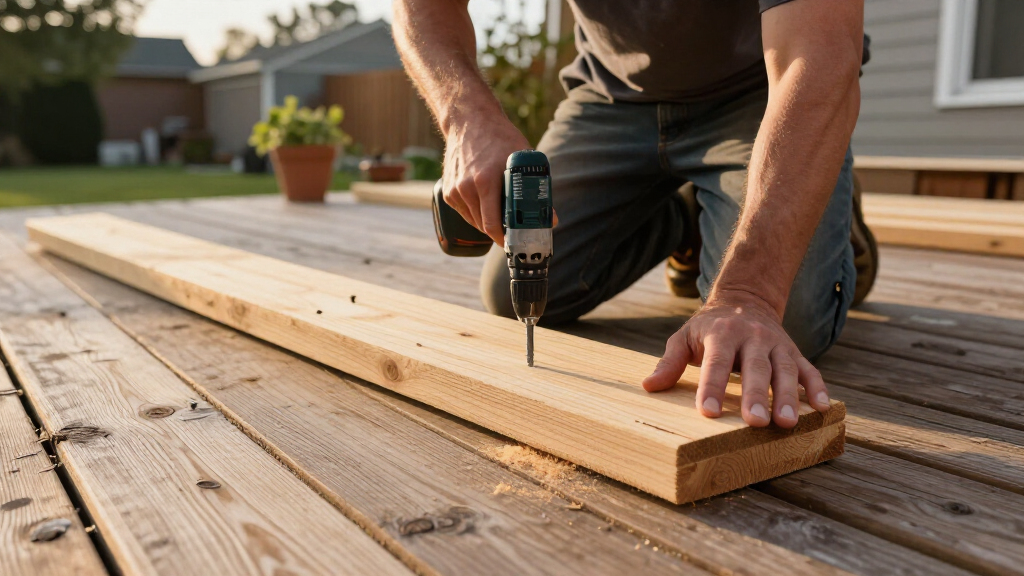

The best deck replacement boards depend on whether you need to replace individual planks, cover a small surface, or rebuild a larger area. I rank Treslam Composite Decking Boards as the best overall option here for buyers seeking long, solid composite boards, while the NewTechWood UltraShield 1-by-3-foot tile stands out for a tile-based refresh and BuyPlastic Tangent Poly Lumber suits short, targeted repairs. The main tradeoffs are board length and installation fit, natural wood’s maintenance needs, and the convenience of tiles versus their different look and layout. These products are not interchangeable, so matching dimensions and installation method to your existing structure matters as much as material choice. Read on for the full breakdown and guidance on choosing the right replacement approach.

Get business pricing on tools and workshop supplies
- Business-only prices and quantity discounts
- Tax-exempt purchasing
- Multiple users, one account, clear invoices
Complete the kit



Key Takeaways
- Treslam’s 96-inch composite boards are the most direct fit in this lineup for replacing longer deck planks; verify board width, thickness, fastening method, and joist spacing before ordering.
- BuyPlastic Tangent Poly Lumber comes in 36-inch lengths, making it more suited to short repairs or smaller builds than replacing long runs without seams.
- NewTechWood’s tile options change the installation approach: the 1-by-1-foot tiles support smaller, modular layouts, while the 1-by-3-foot format covers more area per tile.
- Wood and composite call for different upkeep. Western red cedar and acacia bring natural wood character, while composite and poly lumber avoid some routine wood-finishing tasks.
- The sample board and aluminum-composite option answer different questions. The sample helps check color and appearance before a larger commitment; the aluminum-composite board needs careful compatibility checks against the existing deck system.
| Treslam Composite Decking Boards, 96 x 5.4 x 0.9 Inches, 9 Pieces, Black |  | Best for Full-Length Board Replacements | Brand: Treslam | Material: Composite | Color: Black | VIEW LATEST PRICE | See Our Full Breakdown |
| BuyPlastic Tangent Poly Lumber – Driftwood Gray, 1×6 (0.75″ x 5.5″), 36″ Length |  | Best for Short Sections and Custom Cuts | Brand: BuyPlastic | Material: HDPE (high-density polyethylene) | Color: Driftwood Gray | VIEW LATEST PRICE | See Our Full Breakdown |
| ShunHong Outdoor Solid Composite Decking Boards, 8ft, 6-Pack, Rosewood and Light Grey |  | Best for Slip-Resistant Composite Decking | Brand: ShunHong | Material: WPC made from recycled wood fibers and HDPE | Length: 8 ft | VIEW LATEST PRICE | See Our Full Breakdown |
| NewTechWood UltraShield Naturale 1 ft. x 1 ft. Composite Deck Tiles |  | Best Tool-Free Modular Replacement | Brand: NewTechWood | Material: Composite: high-density polyethylene and wood fibers | Tile size: 1 x 1 ft | VIEW LATEST PRICE | See Our Full Breakdown |
| THYOI Acacia Wood Interlocking Deck Tiles, 10-Pack, Golden Teak Crossed Pattern |  | Best Natural-Wood Tile Alternative | Material: Acacia wood with PPC base | Finish: Deep-oil finish | Color: Golden Teak | VIEW LATEST PRICE | See Our Full Breakdown |
| NewTechWood UltraShield Naturale Composite Deck Tile, 1 ft. x 3 ft., Peruvian Teak |  | Best for Fast Surface Makeovers | Tile dimensions: 1 ft. x 3 ft. | Coverage per box: 15 sq. ft. | Color: Peruvian Teak | VIEW LATEST PRICE | See Our Full Breakdown |
| bingaai Western Red Cedar Decking Boards, 7 ft, 4-Pack |  | Best for Natural Wood Repairs | Material: Western Red Cedar | Grade: Clear grade, virtually knot-free | Quantity: 4 boards | VIEW LATEST PRICE | See Our Full Breakdown |
| Treslam Aluminum Composite Decking Boards, 96 x 5.5 in, Gray | 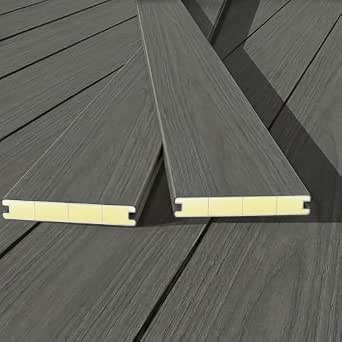 | Best for Low-Maintenance Durability | Material: Aluminum composite | Board length: 96 in. | Board width: 5.5 in. | VIEW LATEST PRICE | See Our Full Breakdown |
| NewTechWood Cortes Plus Composite Decking Board Sample (Peruvian Teak) |  | Best for Comparing Grain and Color | Brand: NewTechWood | Model number: PARENT US07-16-G9–S | Material: Composite | VIEW LATEST PRICE | See Our Full Breakdown |
| deck replacement board | Material | Color | Brand | Quantity |
|---|---|---|---|---|
| Treslam Composite Decking Boar | Composite | Black | Treslam | 9 pieces |
| BuyPlastic Tangent Poly Lumber | HDPE (high-density polyethylene) | Driftwood Gray | BuyPlastic | — |
| ShunHong Outdoor Solid Composi | WPC made from recycled wood fibers and HDPE | — | ShunHong | 6 pieces |
| NewTechWood UltraShield Natura | Composite: high-density polyethylene and wood fibers | Peruvian Teak | NewTechWood | — |
| THYOI Acacia Wood Interlocking | Acacia wood with PPC base | Golden Teak | — | 10 tiles |
| NewTechWood UltraShield Natura | Recycled plastic and wood composite | Peruvian Teak | — | — |
| bingaai Western Red Cedar Deck | Western Red Cedar | — | — | 4 boards |
| Treslam Aluminum Composite Dec | Aluminum composite | Gray | — | 3 boards |
| NewTechWood Cortes Plus Compos | Composite | Peruvian Teak | NewTechWood | — |
More Details on Our Top Picks
Treslam Composite Decking Boards, 96 x 5.4 x 0.9 Inches, 9 Pieces, Black
For replacing long runs of deck surface, Treslam’s 8-foot boards cover more distance per piece than the 36-inch BuyPlastic Tangent board, which is better suited to short sections or smaller builds. The nine-board set includes stainless steel clips, screws, edge clips, and a tool kit, so buyers have mounting hardware in the package rather than sourcing every component separately. Its black, wood-like surface is described as resisting stains, fading, water, scratches, insects, and wear, which points to less routine upkeep than untreated lumber. The tradeoff is that the listing does not spell out joist spacing or compatibility with existing deck systems; I would verify both before planning a retrofit. The resistance claims also come from the product description, not independent test data.
Pros:- Eight-foot boards suit long deck runs with fewer seams than short replacement pieces.
- Includes stainless steel clips, screws, edge clips, and a tool kit.
- Wood-like texture offers a lumber-inspired appearance in composite material.
- Described as resistant to weathering, stains, scratches, insects, and wear.
Cons:- Installation guidance and compatibility details are not specified.
- Durability and resistance statements are product-description claims.
- Black may be a poor visual match for lighter existing decking.
Best for: Deck owners replacing several long surface runs who want dark composite boards and included mounting hardware.
Not ideal for: Buyers matching an existing deck system without checking clip and joist compatibility, or anyone who needs published structural and installation specifications.
- Brand:Treslam
- Material:Composite
- Color:Black
- Board dimensions:96 x 5.4 x 0.9 inches
- Quantity:9 pieces
- Included accessories:Stainless steel spiked clips, screws, edge clips, and tool kit
- Model number:Treslam01
- Part number:01
Our verdict“Choose Treslam for long, dark replacement runs when its mounting system is confirmed compatible with your deck.”
BuyPlastic Tangent Poly Lumber – Driftwood Gray, 1×6 (0.75″ x 5.5″), 36″ Length
The 36-inch length makes this BuyPlastic Tangent board a more targeted replacement option than the 8-foot Treslam boards: it suits a short damaged section, a small platform, or a project where manageable pieces are easier to handle. Its HDPE construction is described as resisting rot, cracking, splintering, and UV fading, while cleanup calls for soap and water rather than wood treatments. The board can be worked with standard woodworking tools, giving DIY builders room to cut and shape it for a repair. That flexibility does not make it a structural member, though—the product description explicitly rules out structural applications. The stated length also has a ±0.125-inch tolerance, so I would measure the actual piece before making a precise replacement cut.
Pros:- Short length is manageable for localized repairs and small projects.
- HDPE is described as resistant to rot, cracking, splintering, and UV fading.
- Can be cut and shaped with standard woodworking tools.
- Cleans with soap and water and needs minimal routine care.
Cons:- Not suitable for structural applications.
- Length tolerance of ±0.125 inch may complicate exact-fit replacements.
- A 36-inch board is less practical for long deck runs than Treslam’s 96-inch boards.
Best for: DIYers replacing a short non-structural deck section or fabricating outdoor trim and components from durable poly lumber.
Not ideal for: Owners replacing long deck runs or seeking boards for structural use; the listed piece is only 36 inches long and is not structural lumber.
- Brand:BuyPlastic
- Material:HDPE (high-density polyethylene)
- Color:Driftwood Gray
- Dimensions:36 x 5.5 x 0.75 inches
- Weight:3.8 lbs
- Part number:PLA-303-1S9HDD
- Length tolerance:±0.125 inch
- Structural use:Not suitable for structural applications
Our verdict“Pick this board for short, non-structural repairs where easy fabrication matters more than full-length coverage.”
ShunHong Outdoor Solid Composite Decking Boards, 8ft, 6-Pack, Rosewood and Light Grey
ShunHong’s textured, solid composite boards are the clearest fit here for buyers who want a longer replacement board with extra attention to underfoot grip. The listing describes a slip-resistant wood-grain surface and flame-retardant properties, alongside resistance to rot, cracking, and UV fading. That makes this six-board, 8-foot set a more conventional board replacement than the modular NewTechWood UltraShield Naturale tiles, which suit small, removable surface areas rather than board-by-board deck repairs. ShunHong also uses recycled wood fibers and HDPE, with soap-and-water care instead of sanding or sealing. Its drawbacks are practical: only Rosewood and Light Grey are listed, the boards may feel warmer than natural wood in sun, and the listing does not provide board thickness or fastening details for checking a retrofit.
Pros:- Eight-foot boards are suited to long replacement runs.
- Slip-resistant wood-grain texture is intended to improve grip.
- Recycled wood fibers and HDPE provide a composite alternative to lumber.
- Described as rot-proof, UV-resistant, flame-retardant, and easy to clean.
Cons:- Board thickness and installation hardware details are not provided.
- Only Rosewood and Light Grey are listed.
- Composite surfaces can retain more heat than natural wood.
Best for: Deck owners replacing long boards who prioritize a textured surface and want composite material made with recycled wood fibers.
Not ideal for: Buyers needing detailed fastening or thickness specifications before matching an existing frame, or those who prefer a wide choice of colors.
- Brand:ShunHong
- Material:WPC made from recycled wood fibers and HDPE
- Length:8 ft
- Quantity:6 pieces
- Total coverage:21.72 square feet
- Colors:Rosewood and Light Grey
- Surface:Slip-resistant wood-grain texture
- Listed features:Rot-proof, flame-retardant, and UV-resistant
Our verdict“Choose ShunHong when longer composite replacement boards and a slip-resistant texture matter more than extensive color or installation details.”
NewTechWood UltraShield Naturale 1 ft. x 1 ft. Composite Deck Tiles
These interlocking 12-inch composite tiles take a different approach to deck replacement: instead of removing and fastening individual boards, you cover a firm, flat surface with snap-together squares. The tool-free connection and raised drainage base make them a convenient choice for balconies, patios, and small areas where access to the surface below matters. Compared with the THYOI acacia tiles, NewTechWood asks for less finish maintenance; its composite blend is described as resisting fading, cracking, and water damage. The limitation is system compatibility: the tiles are designed to connect with other NewTechWood tiles, not mixed brands, and a box covers only 10 square feet. They also do not replace damaged framing or serve as structural deck boards, so the existing base must already be sound.
Pros:- Four-way interlocking design installs without tools.
- Raised base supports drainage beneath the tiles.
- Composite construction is described as resisting fading, cracking, and water damage.
- Tiles can be removed or rearranged when access to the base is needed.
Cons:- Compatible only with other NewTechWood deck tiles.
- Each box covers 10 square feet, so larger areas require multiple boxes.
- Requires a firm, flat surface and does not repair underlying framing.
Best for: Renters and DIYers covering a small, sound balcony or patio with a removable, tool-free surface.
Not ideal for: People replacing individual structural deck boards, covering a large area with few seams, or mixing tile brands in one installation.
- Brand:NewTechWood
- Material:Composite: high-density polyethylene and wood fibers
- Tile size:1 x 1 ft
- Tile dimensions:12 x 12 x 0.88 inches
- Pieces per box:10
- Coverage per box:10 sq ft
- Color:Peruvian Teak
- Weight:25 pounds
- Form:Four-way interlocking square tiles
Our verdict“Choose these tiles for a small, sound surface that needs a quick removable covering rather than replacement boards.”
THYOI Acacia Wood Interlocking Deck Tiles, 10-Pack, Golden Teak Crossed Pattern
For buyers who want the look and feel of wood rather than a composite board, THYOI’s oil-finished acacia tiles offer a modular alternative to long replacement planks. Their snap-lock PPC base raises the wood surface for airflow and drainage, and the crossed pattern gives small patios or balconies a more decorative finish. Like the NewTechWood UltraShield tiles, these install without tools; unlike that composite option, THYOI calls for periodic oil or hard-wax treatment to keep the finish in good condition. The tiles can be cut to fit, but they still need firm, flat ground—they are not a fix for unstable decking or damaged joists. Choose them for surface refreshes where natural wood character is worth the added upkeep.
Pros:- Acacia wood provides a natural surface unlike the composite NewTechWood tiles.
- Snap-together installation requires no tools.
- Elevated PPC base and slat spacing support drainage and airflow.
- Tiles can be cut to fit irregular areas.
Cons:- Needs periodic oil or hard-wax treatment to maintain the finish.
- Requires firm, flat ground and is not suited to unstable surfaces.
- Not designed for radiant or underfloor heating.
Best for: Homeowners refreshing a firm, flat patio or balcony who prefer natural acacia and accept periodic finish care.
Not ideal for: Buyers seeking maintenance-free surfaces, installation over soft or uneven ground, or replacement boards for a framed deck.
- Material:Acacia wood with PPC base
- Finish:Deep-oil finish
- Color:Golden Teak
- Pattern:Crossed
- Quantity:10 tiles
- Tile dimensions:12 x 12 inches
- Installation:Snap-together; no tools required
- Surface requirement:Firm, flat ground
- Care:Periodic oil or hard-wax treatment
Our verdict“Pick THYOI for a natural-wood tile surface on stable ground if you are willing to maintain its finish.”
NewTechWood UltraShield Naturale Composite Deck Tile, 1 ft. x 3 ft., Peruvian Teak
For a flat concrete patio or balcony that needs a quick refresh, these snap-together composite tiles avoid the framing and board-by-board fastening involved with conventional deck replacements. Each tile covers a 1-by-3-foot area, and the pieces can be cut with a table saw to fit edges or obstacles. The recycled plastic-and-wood construction also calls for little routine upkeep compared with the bingaai cedar boards, which need compatible stainless steel fasteners to help prevent staining.
The tradeoff is that these are a surface covering, not a fix for a damaged deck structure: they require a flat, solid base and connect only with other NewTechWood deck tiles. Buyers replacing individual boards on a raised or uneven deck should look instead at full-length boards such as the Treslam aluminum composite option. I’d pick these for a stable slab, not for structural repairs.
Pros:- Interlocking installation keeps the surface makeover simpler than fastening individual boards.
- Recycled plastic-and-wood composite needs little routine maintenance.
- Can be cut with a table saw for a more tailored perimeter fit.
- Peruvian Teak finish offers a wood-inspired look without cedar upkeep.
Cons:- Requires a flat, solid surface such as a concrete slab.
- Compatible only with other NewTechWood deck tiles.
- Not suited to replacing structural deck boards or correcting an uneven base.
Best for: Patio and balcony owners who want a low-maintenance surface refresh over an existing, level concrete slab.
Not ideal for: Homeowners replacing individual boards on a raised, uneven, or structurally damaged deck; these tiles need a flat base and are not conventional decking boards.
- Tile dimensions:1 ft. x 3 ft.
- Coverage per box:15 sq. ft.
- Color:Peruvian Teak
- Material:Recycled plastic and wood composite
- Installation:Interlocking, snap-together
- Maintenance:Ultra low maintenance
Our verdict“Choose these tiles for a quick, low-maintenance refresh over level concrete, but choose full-length boards for a true deck-board replacement.”
bingaai Western Red Cedar Decking Boards, 7 ft, 4-Pack
These boards make the most sense when a repair calls for real cedar rather than a composite surface. The four clear-grade, virtually knot-free pieces are sanded on every side and have eased edges, giving a finished feel that rougher replacement lumber may lack. At 7 feet long, they suit shorter repairs and outdoor projects such as pergolas or saunas; the cedar’s natural resistance to rot, decay, and insects is another advantage outdoors.
Compared with the Treslam aluminum composite boards, cedar brings an authentic wood material but asks more of the installer: stainless steel screws are recommended to reduce black staining, and the pack covers just 12.8 square feet. It is also not a match for buyers seeking a no-seal, no-stain composite replacement. I’d choose this pack for a small repair where clear grain and natural wood matter more than minimizing upkeep or covering a large area.
Pros:- Clear-grade boards are virtually knot-free.
- Western Red Cedar naturally resists rot, decay, and insects.
- Sanded faces and eased edges provide a smooth, finished surface.
- Suitable for deck repairs as well as pergolas, saunas, and other outdoor projects.
Cons:- Stainless steel screws are recommended to help prevent black staining.
- Four boards cover only 12.8 sq. ft.
- Natural wood does not offer the same low-upkeep approach as composite alternatives.
Best for: Deck owners repairing a small section who want smooth, clear-grade cedar boards for a natural wood match or related outdoor projects.
Not ideal for: Buyers covering a large deck or seeking a low-maintenance composite replacement; this pack has limited coverage and calls for stainless steel fasteners.
- Material:Western Red Cedar
- Grade:Clear grade, virtually knot-free
- Quantity:4 boards
- Board length:7 ft.
- Nominal dimensions:1 x 6 x 7 ft.
- Actual thickness:0.95 in. (24 mm)
- Coverage:12.8 sq. ft.
- Finish:S4S (sanded on all four sides), E4E (eased edges)
- Fastener recommendation:Stainless steel screws; 304 grade for most climates, 316 grade for coastal or high-humidity environments
Our verdict“Pick this pack for a small, natural-cedar repair where smooth clear-grade boards matter more than broad coverage or minimal upkeep.”
Treslam Aluminum Composite Decking Boards, 96 x 5.5 in, Gray
If reducing routine upkeep is the priority, these 96-inch aluminum composite boards offer a different proposition from natural cedar: an aluminum alloy core pairs with a wood-grain polymer surface designed to resist water, scratches, warping, and fading. That combination may suit damp or exposed decks where a buyer wants to avoid regular painting, staining, or sealing. The gray finish and 5.5-inch width also give the boards a conventional plank format rather than the interlocking surface treatment of the NewTechWood deck tiles.
This option ranks ahead of sample-only products for an actual replacement project, but the listing leaves important installation details unspecified. I’d verify fastening method and compatibility with the existing joists before ordering. Unlike the bingaai cedar pack, it avoids a natural-wood fastener and upkeep approach, but it also lacks the cedar’s clear-grade wood character. Choose it for a low-maintenance board format, not if installation guidance or natural timber is your deciding factor.
Pros:- Aluminum alloy core and polymer surface are designed to resist water and rot.
- Surface is designed to resist scratches, warping, cracking, and fading.
- Low-maintenance construction does not call for regular painting, staining, or sealing.
- Full 96-inch board format is more suited to plank replacement than a one-foot sample.
Cons:- Installation and fastening details are not provided in the supplied product information.
- A three-board set may not cover a larger replacement project.
- Composite construction lacks the material character of natural cedar.
Best for: Deck owners replacing planks in an exposed or moisture-prone area who want a low-maintenance composite board format.
Not ideal for: DIY buyers who need clear installation and fastening instructions before purchase, or those seeking real wood grain and cedar material.
- Material:Aluminum composite
- Board length:96 in.
- Board width:5.5 in.
- Thickness:0.9 in.
- Color:Gray
- Quantity:3 boards
- Surface:Wood grain
- Shape:Rectangular
Our verdict“Choose these boards when low upkeep and moisture resistance matter most, provided you confirm the installation method fits your deck.”
NewTechWood Cortes Plus Composite Decking Board Sample (Peruvian Teak)
This is a one-foot sample, so its value is in checking the finish before committing to a full decking order—not in repairing a deck by itself. The Peruvian Teak piece has two faces, with rustic wood grain on one side and classic cathedral grain on the other. That gives a buyer a direct way to compare surface character against options such as the Treslam gray aluminum composite boards before settling on a look. Its four-sided cap and water-resistant construction also preview features intended for outdoor use.
Unlike the NewTechWood interlocking tiles, this is a board sample that requires screws, but the supplied details do not establish full-length board availability or broader installation requirements. The small size is a meaningful limitation: one square foot cannot cover a replacement area. I’d use it to check color and grain in the intended setting, then confirm full-board dimensions and fastening compatibility before planning a project.
Pros:- Two-sided design shows rustic and cathedral grain options.
- Four-sided cap is designed to improve weather protection.
- Water-resistant composite construction is intended for outdoor styling.
- Small format allows finish evaluation before a larger material decision.
Cons:- One-foot sample is not a usable replacement board for a deck repair.
- Requires screws for installation.
- Full-length board dimensions and project installation details are not specified here.
Best for: Deck renovators who want to check Peruvian Teak color and compare the two grain patterns before choosing full-length composite boards.
Not ideal for: Anyone ready to replace deck boards now; this is a one-foot sample with only one square foot of coverage.
- Brand:NewTechWood
- Model number:PARENT US07-16-G9–S
- Material:Composite
- Dimensions:0.88 x 5.43 in. x 1 ft.
- Color:Peruvian Teak
- Thickness:0.88 in.
- Unit count:1 square foot
- Surface design:Rustic wood grain on one side; classic cathedral grain on the other
- Construction:Capped on all four sides; water-resistant
Our verdict“Buy this sample to judge the Peruvian Teak finish and grain in person, not to complete a deck replacement.”

How We Picked
I compared these nine options as deck replacement solutions, not as interchangeable decking products. The ranking favors products that appear more directly suited to replacing individual boards, with attention to stated dimensions, material, product format, and the practical scale of a repair. I also considered how much a buyer may need to verify before installation, including joist layout, fastening compatibility, and whether the product is a full board, tile, or sample.
Long composite boards rank ahead of tiles and samples for a conventional plank-replacement project because their format more closely matches that job. Short poly lumber can make sense for limited repairs, while interlocking tiles serve surface refreshes where a modular covering fits the site. Natural wood remains a distinct choice for buyers who want its appearance and accept added care. The ordering reflects likely fit for replacement work and the clarity of the product’s role—not a claim that every board will work with every deck.
| deck replacement board | Brand | Color |
|---|---|---|
| Treslam Composite Decking Boar | Treslam | Black |
| BuyPlastic Tangent Poly Lumber | BuyPlastic | Driftwood Gray |
| ShunHong Outdoor Solid Composi | ShunHong | — |
| NewTechWood UltraShield Natura | NewTechWood | Peruvian Teak |
| THYOI Acacia Wood Interlocking | — | Golden Teak |
| NewTechWood UltraShield Natura | — | Peruvian Teak |
| bingaai Western Red Cedar Deck | — | — |
| Treslam Aluminum Composite Dec | — | Gray |
| NewTechWood Cortes Plus Compos | NewTechWood | Peruvian Teak |
Factors to Consider When Choosing Best Deck Replacement Boards
Before choosing a material, I would treat replacement as a fit-and-system decision. A board that looks right may still be incompatible with the frame, fasteners, or exposure conditions of the existing deck. These checks can help prevent ordering the wrong format or discovering mid-project that the surface needs a different solution.
Match the Board to the Existing Frame
Measure the old boards’ width, thickness, and usable length, then note the spacing and condition of the joists underneath. A replacement board can be dimensionally close yet sit too high, leave uneven gaps, or fail to align with the original fastening points. Do not assume nominal measurements match actual dimensions; check the product’s stated size and ask the supplier about tolerances. Also confirm whether the board is intended for the same span and support spacing as your deck. If the frame is damaged or widely spaced, replacing surface boards alone may not address the underlying problem. A small test fit can reveal issues before you order for the whole deck.
Choose Between Boards and Tiles
Deck boards and interlocking tiles solve different problems. Boards are generally the more direct choice when you are removing existing planks and fastening replacements to a sound frame. Tiles can make sense for a balcony, patio, or stable surface where a modular cover is appropriate, but they may raise the finished height and change drainage or edge details. Check how water moves beneath the tiles and whether the substrate is flat and suitable. A tile layout may also leave cut edges around posts and boundaries that need a tidy finishing plan. Avoid choosing tiles solely because installation appears simpler; first confirm that the underlying surface and intended use suit that format.
Compare Upkeep, Appearance, and Exposure
Material choice affects maintenance as well as appearance. Natural cedar and acacia offer wood grain and a familiar feel, but outdoor exposure can change their color and may call for cleaning or protective treatment. Composite and poly lumber can reduce some wood-finishing chores, though they still need routine cleaning and can differ in surface texture, heat retention, and fading behavior. Ask for care instructions specific to the product rather than assuming every composite behaves alike. Consider the deck’s sun exposure, wet conditions, and how much seasonal upkeep you are willing to do. Color samples or a small trial area can help you judge how a finish looks beside existing railings and trim.
Check Fasteners, Span, and Installation Rules
Material alone does not establish structural compatibility. Confirm the manufacturer’s guidance for joist spacing, fastening type, edge gaps, and any required ventilation before mixing new boards with an existing installation. Composite, poly lumber, aluminum-composite products, and wood may expand, contract, or attach differently. Reusing old screws or clips without checking compatibility can cause poor seating, movement, or visible damage. When replacing only part of a deck, ask whether the new profile can share the same fastening system as the old boards. If specifications are unclear, get written guidance from the manufacturer or a qualified installer before purchase.
Plan for Cuts, Waste, and Matching
Order planning matters especially with short boards and tiles. Map the deck and mark board runs, seams, obstacles, and edges before estimating quantities. Shorter lengths may create more joints and offcuts on a long deck, while longer boards can be harder to handle and may not suit every access route. Keep extra material for cuts and future repairs, but check whether color or finish can vary between production batches. A sample board is useful for judging shade and texture, though it cannot confirm fit or fastening compatibility by itself. For a partial replacement, compare the new material in daylight and account for weathering on the existing surface.
Decide Where Paying More Makes Sense
Spend for a specific advantage, not a label. A premium material may be worthwhile when its documented durability, finish, or care requirements match your climate and how long you plan to keep the deck. For a small repair, a larger-format system or specialized finish may add little value if the main need is a compatible replacement piece. Conversely, choosing solely by the lowest upfront material cost can lead to extra cutting, mismatched fittings, or more maintenance later. Compare the complete job: boards or tiles, fasteners, trim, delivery, waste, and any preparation the frame needs. If uncertainty about color is the main obstacle, a sample may be a more useful first purchase than committing to a full set.
Frequently Asked Questions
Can I replace only a few deck boards without changing the rest of the deck?
Often, but the new boards must match the old decking’s dimensions and work with its fastening system and support spacing. Check the frame for rot, loose connections, or other damage before treating the job as a surface-only repair. A different material or profile may sit unevenly or weather at a different rate from the surrounding boards. If the original product is unknown, remove a board or inspect an exposed edge to record its actual dimensions and attachment method. When compatibility remains uncertain, test one replacement before buying enough for the full repair.
Are interlocking deck tiles a suitable substitute for replacement boards?
They can be suitable when you want to cover a stable, flat surface and the tile system is approved for that use. They are not automatically a direct replacement for planks attached to joists, since tiles have different support, drainage, edge, and height requirements. Check what lies beneath the deck surface and whether water can escape without collecting under the tiles. Also measure door thresholds and transitions to other surfaces so the added height does not create a trip or access issue. For a damaged structural deck, address the underlying frame rather than covering it with tiles.
How do I know whether a short board length will work for my repair?
Measure each damaged run and plan where joints would fall before choosing short lengths. A 36-inch board may suit a localized repair, but longer runs could require repeated seams that affect appearance and installation. Check whether the product can be cut and fastened as planned, and whether seams will land over adequate support. Add a cutting and waste allowance to your material plan, especially around stairs, corners, and posts. If the deck uses long uninterrupted boards, a longer replacement format may reduce joints and simplify the layout.
Should I choose composite or natural wood for replacement boards?
Choose based on the upkeep you accept, the appearance you want, and whether the material matches the existing deck system. Natural wood offers grain and can blend with an older timber deck, but outdoor exposure may change its color and call for ongoing care. Composite and poly lumber can reduce some finishing work, yet they still need cleaning and may look or feel different from wood. Confirm product-specific instructions for spacing, fastening, and maintenance rather than relying on broad material assumptions. For a partial replacement, appearance matching can be difficult even when the species or material category is similar.
What should I verify before ordering composite or aluminum-composite boards?
Start with actual board dimensions, the installation guide, required fasteners, and the joist spacing the product allows. Then confirm that the board profile and attachment method are compatible with your existing frame and neighboring decking. Ask about expansion gaps, cutting requirements, drainage, and approved uses for the particular product. Aluminum-composite construction may not attach or behave like conventional capped composite, so do not assume existing clips will work. If you are replacing only a few boards, get confirmation that the new profile can sit safely and evenly beside the old one.
Conclusion
For the best overall fit among these picks, I’d start with Treslam Composite Decking Boards when the job calls for longer replacement planks and the dimensions suit the existing frame. For best value in a small, targeted repair, BuyPlastic Tangent Poly Lumber’s shorter format may limit unnecessary material, though it is less suited to long runs. Buyers who want a modular surface refresh should compare the NewTechWood tile sizes; the 1-by-3-foot tile covers more area per unit, while the 1-by-1-foot format offers a smaller layout module. For beginners, I’d favor a straightforward board replacement only after confirming measurements and fastening requirements; those who are unsure about color can start with the NewTechWood sample. For a natural-wood look, consider the cedar or acacia options and accept their added care needs. I’d treat the aluminum-composite board as a specific-fit choice: verify its installation system before committing.