
TL;DR

Get business pricing on tools and workshop supplies
- Business-only prices and quantity discounts
- Tax-exempt purchasing
- Multiple users, one account, clear invoices
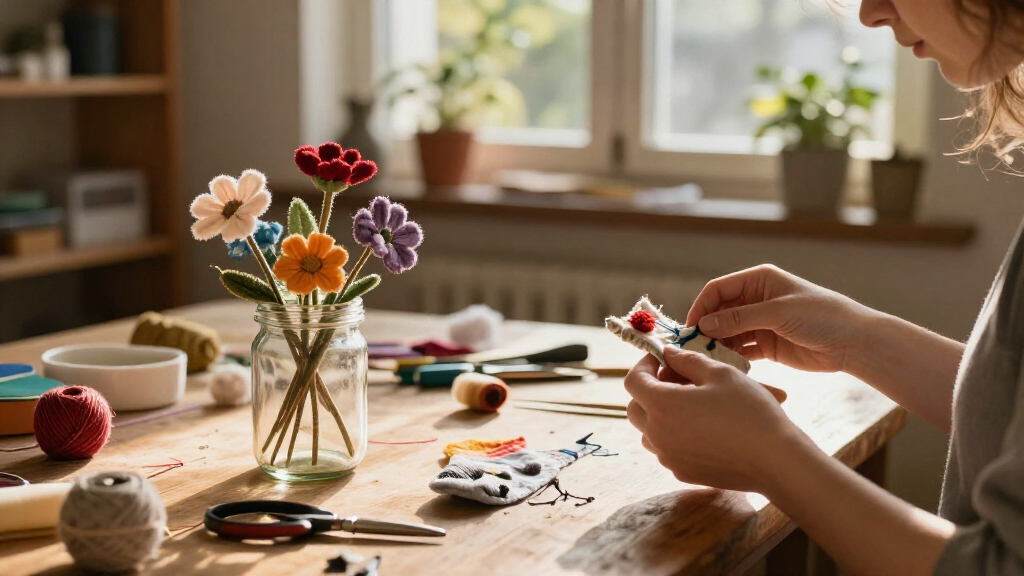
Hunker has published a do-it-yourself guide to turning old socks into fabric flowers for indoor display. The project uses socks and dowels, with optional floral tape or paint; the guide cautions that moisture can contribute to mold in the fabric folds.
Hunker has published a DIY guide showing readers how to roll old socks into fabric flowers and mount them on dowels for indoor decor. The project offers a way to reuse orphaned or unwanted socks, though the guide warns that the finished flowers should be kept away from damp conditions because moisture can collect in their folds.
The project calls for clean, dry socks and a matching number of dowels. The source says popsicle sticks or bamboo skewers can substitute for dowels. Floral tape or spray paint is optional for covering the stems, and a spare vase can be used to display the finished arrangement. Fillers, whether artificial or real, are also suggested to make the bouquet look fuller.
Hunker describes several ways to shape the flowers. In one method, flatten a sock, fold it lengthwise, and roll it from the toe, adding twists as desired before tucking the end beneath the layers. A simpler version rolls from the toe to the cuff, then flips the cuff over the base and fluffs the folds. Another approach rolls a sock and secures it at the middle with a rubber band; the folds can then be loosened to create a more flower-like shape. The guide recommends a pair of socks for a larger bloom made with this last method.
Once shaped, each flower is turned upside down so a painted or floral-tape-covered stem can be inserted through its center. The article presents the craft as a low-supply project that may be done with children, but it does not provide measurements, a fixed time estimate, or instructions for permanently securing every flower to its stem.
A Second Use for Unmatched Socks
The idea gives readers a reuse option for socks that might otherwise sit unused in a drawer or be discarded. Because the listed materials are basic household or craft items, the arrangement may be made without buying a full set of specialized supplies; however, the source does not quantify any cost savings or environmental benefit.
The project also offers a decorative use for small groups of mismatched socks. Readers can choose colors and lengths that work together, then place the blooms in a vase. Its practical limitation is equally clear: these are fabric objects, not outdoor flowers, and the guide advises against displaying them where rain or humidity could leave the material damp.
Popular right now

KitchenAid Classic Series 4.5 Quart Tilt-Head Stand Mixer K45SS, Onyx Black

KitchenAid Artisan Series 5-Quart Tilt-Head Stand Mixer, Dried Rose (KSM150PS)

Roborock F25 BX Cordless Wet Dry Vacuum Mop
As an affiliate, we earn on qualifying purchases.
How the Sock-Flower Craft Works
The Hunker report focuses on a simple construction method rather than a commercial product or a tested craft kit. Its central technique is to roll fabric into layered petals, use the sock cuff or a rubber band to help hold the shape, and place a stem through the center. Variations in twisting and fluffing produce different appearances, according to the instructions.
The source mentions that laundering old socks before crafting is advisable if they have been stored in a musty drawer. It also suggests using an old vase and, if desired, adding other decorative elements to the arrangement. No independent testing, expert assessment, or comparison among the methods is included in the supplied report.
““transform them into adorable flowers for your home””
— Hunker
Durability and Moisture Risks
The source does not report how long the flowers keep their shape, how securely different sock fabrics hold a roll, or whether the stems need glue or another fastener. It also does not describe a treatment that would make the flowers water-resistant. Hunker warns that moisture can seep into the folds and that mold may develop if the fabric remains damp, but the report gives no tested humidity threshold or drying guidance.
The project is presented as a craft suggestion, not as a product test. The source does not establish how much material is needed for particular bloom sizes or whether all sock types will work equally well. Readers may need to adjust the rolling and shaping based on the fabric and the look they want.
Making and Displaying the Flowers
The next step for readers is to wash and dry the socks, select a folding method, and assemble the stems and display vase. The guide suggests covering plain dowels with floral tape or paint before placing them into the rolled fabric. After shaping the flowers, readers can loosen or fluff the folds and arrange the finished pieces indoors.
Keep the bouquet dry, particularly during humid or rainy periods, and check the folds if the fabric becomes damp. The supplied report does not announce a follow-up test or additional instructions, so advice on long-term care and secure attachment remains unavailable in the source.
Key Questions
What supplies are needed to make flowers from old socks?
The basic materials are clean socks and dowels. Popsicle sticks or bamboo skewers can serve as stems. Floral tape or spray paint, a vase, and optional bouquet fillers are suggested but not required for shaping the flowers.
Do the socks need to be washed first?
Hunker recommends laundering socks that have been stored in a musty drawer and letting them dry before crafting.
Can one sock make a flower?
Yes. The guide describes methods using a single sock. It recommends using a pair of socks for a larger bloom with the rubber-band method, or combining two orphan socks of similar color and length.
Can sock flowers be displayed outdoors?
The guide advises against outdoor display, especially in rainy or humid conditions. Moisture can collect in the fabric folds and may contribute to mold growth.
Source: hunker.com