
TL;DR

Get business pricing on tools and workshop supplies
- Business-only prices and quantity discounts
- Tax-exempt purchasing
- Multiple users, one account, clear invoices
The U.S. House Ways and Means Committee held a field hearing at Orgill’s Innovation Center in Collierville, Tennessee, to hear how tax provisions in the One Big Beautiful Bill Act affect businesses and workers. Orgill CEO Boyden Moore testified about the company’s tax benefits and how provisions could affect independent hardware and home-improvement retailers; the supplied report does not quantify those effects.
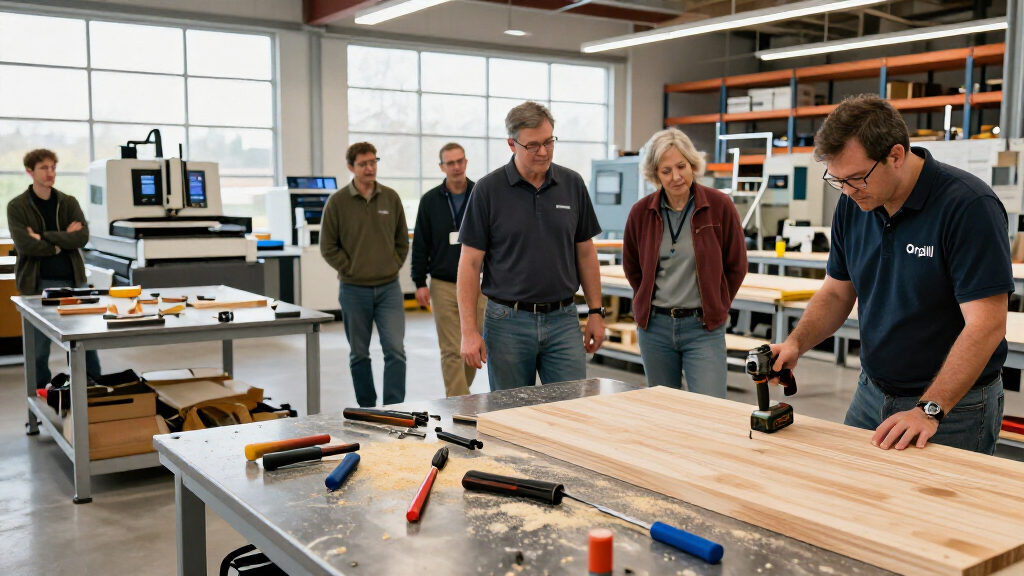
Orgill hosted members of the U.S. House Committee on Ways and Means at its Innovation Center in Collierville, Tennessee, on Tuesday for a field hearing about the effects of tax provisions in the One Big Beautiful Bill Act. Orgill President and CEO Boyden Moore testified, discussing the company’s tax benefits and the possible effects of the law on the independent retailers it serves.
Committee Chairman Jason Smith, a Republican from Missouri, said members came to hear how the legislation was affecting workers, families and small businesses in West Tennessee. The hearing included testimony from Moore and three other business leaders: Alex Grover, CEO and owner of i2M; Wade Thomson, president of Thomson Prestress; and Mike Miller, owner of Patrick’s Neighborhood Bar and Patio.
Other committee members named in the report were Ron Estes of Kansas, David Kustoff of Tennessee, Nicole Malliotakis of New York, Carol Miller of West Virginia, Nathaniel Moran of Texas and Beth Van Duyne of Texas. The hearing’s stated purpose was to gather business perspectives on the law, rather than announce a new committee action.
Moore said Orgill received tax benefits from provisions allowing accelerated depreciation and immediate expensing of software development costs. He said the resulting cash-flow support helped the company continue investing and serve customers. He also described the continuation and optimization of the 20% small-business deduction and the restoration of bonus depreciation as provisions customers have found meaningful. The source provides no dollar figures for the company’s benefits or customers’ savings.
Tax Relief and Independent Retailers
The hearing put the perspective of a large distributor and the independent businesses it serves before lawmakers considering the effects of federal tax policy. Orgill supplies independent hardware stores, home centers, lumberyards and farm-supply stores, according to Moore’s testimony. Changes to deductions, depreciation and interest rules can affect how businesses weigh spending on equipment, technology, inventory, stores and staffing.
Moore argued that tax relief can give retailers more capacity to invest and compete with larger chains. He also pointed to the expanded employer childcare tax credit, known as 45F, and a new deduction for qualifying overtime compensation as provisions that could support employers and workers. These are statements about potential benefits and business experience; the report does not independently measure the law’s effects across retailers or workers.
Popular right now

Shark Navigator Lift-Away Upright Vacuum (NV360)

Dreame L40 Ultra Gen 2 Robot Vacuum and Mop

KitchenAid Artisan Series 5-Quart Tilt-Head Stand Mixer, Dried Rose (KSM150PS)
As an affiliate, we earn on qualifying purchases.
What Businesses Told the Committee
The hearing focused on how the law’s tax provisions might show up in practical decisions, including hiring, purchases and investment. Smith framed the session around hearing from witnesses about effects on paychecks, hiring decisions and equipment purchases, as well as family finances and employee benefits.
Moore said he was speaking both for Orgill and for the independent businesses in its customer network. He described possible uses for tax savings, including new product assortments, store openings, operating systems and additional staff. He also cited interest deductibility as relevant to independent stores with working-capital loans, equipment financing, seasonal credit lines or property mortgages. The report does not provide a transcript or detailed testimony from the other witnesses.
“Today, we are here to learn how the One Big Beautiful Bill is showing up in the lives of workers, families and small businesses across West Tennessee.”
— Jason Smith, chairman of the House Ways and Means Committee
Limits of the Reported Evidence
The report does not specify the calendar date of the Tuesday hearing, provide the witnesses’ full written statements or detail questions and responses from committee members. It also does not quantify Orgill’s tax savings, identify which customer businesses have used particular provisions, or establish how much the law has changed hiring, investment or household finances.
Moore’s comments describe Orgill’s experience and his assessment of potential customer benefits. They should not be read as an independent evaluation of the law’s effects across the industry. The account also does not say whether the committee reached findings or plans follow-up action.
Committee Review and Business Effects
The committee’s next steps are not stated in the supplied report. The hearing gave members testimony from Orgill and other business leaders, but no decision, vote or formal recommendation was announced in the account.
Further information that would clarify the development includes the committee’s hearing record, any follow-up questions or analysis, and data on how the cited tax provisions are being used. For now, the reported evidence consists chiefly of business leaders’ accounts of the legislation’s effects and anticipated benefits.
Key Questions
What happened at Orgill’s Innovation Center?
The House Ways and Means Committee held a field hearing at Orgill’s Collierville, Tennessee, Innovation Center to hear business testimony about the One Big Beautiful Bill Act’s tax provisions.
Who testified for Orgill?
Boyden Moore, Orgill’s president and CEO, testified about the company’s experience and the potential effect of tax provisions on independent retailers it serves.
Which tax provisions did Moore discuss?
Moore cited accelerated depreciation, immediate expensing of software development costs, the 20% small-business deduction and bonus depreciation. He also discussed the employer childcare tax credit, qualifying overtime compensation and interest deductibility.
Did the report quantify the financial impact?
No. The report relays Moore’s account that certain provisions generated tax benefits for Orgill, but gives no dollar amounts or independent industry-wide measurements.
What happens after the hearing?
The report does not identify a committee decision or scheduled follow-up. It says the hearing was held to gather business perspectives on the law’s effects.
Source: rss