
TL;DR
A home-improvement tip describes wrapping stair railings in aluminum foil before painting nearby walls. The foil can mold around rail details and catch paint drips, but the advice is a practical suggestion, not a tested time-saving guarantee.
A home-improvement article from Hunker recommends wrapping stair railings in aluminum foil before painting nearby walls, as a way to protect the banister from drips without removing it or carefully taping around every part. The approach may reduce preparation and cleanup, though the article provides no measured time savings or test results.

Get business pricing on tools and workshop supplies
- Business-only prices and quantity discounts
- Tax-exempt purchasing
- Multiple users, one account, clear invoices
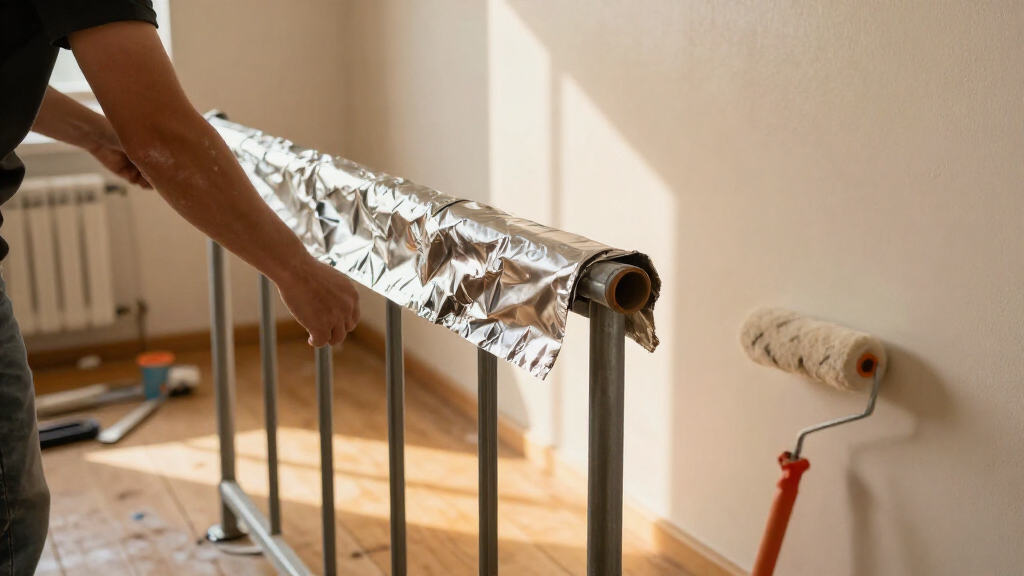
Hunker’s suggested method is to tear off generous pieces of foil and press them around the handrail so they conform to its shape. The article advises covering the full railing, including the underside, and overlapping pieces slightly to limit gaps where paint could reach the surface. It also recommends using separate pieces for decorative features such as spiral end pieces, rounded rail caps and grooves.
Hunker presents foil as an alternative to painter’s tape because it can be molded around curved or detailed areas, while tape may take longer to wind around the rail. The article also says foil does not absorb paint, which can help keep the covered surface dry. These are claims made in the tip; it provides no comparison test or independent evidence.
After painting, Hunker advises leaving the foil in place until the paint is cured or the painter has checked for missed areas beneath the railing. The article says the strips may be wiped with an old rag and reused on another wall or stored for a future project if they come off cleanly. It also suggests foil can cover a doorknob when painting a door.
Protect stair rails with aluminum foil
Hunker suggests molding foil around railings before painting nearby walls. It may simplify masking, but time savings have not been measured.
How the tip works
Foil can be pressed around curved rails and decorative details while the railing stays in place.
Press generous pieces around the handrail, including its underside and detailed areas.
Overlap adjoining pieces and check for exposed areas before painting.
Leave foil in place until paint is cured or you have checked beneath the rail.
Where foil may help
Molds to the rail
The tip says foil can conform to shaped areas that may be awkward to wrap with tape.
Covers grooves
Use separate pieces for rounded caps, spiral ends and other decorative features.
Catches drips
Foil does not absorb paint, according to the tip, and may be wiped and reused if it comes off cleanly.
Foil or painter’s tape?
The suggested advantage is easier coverage around detailed shapes; no comparison test is provided.
- Presses around curves and details
- Needs secure, overlapping coverage
- Familiar masking option
- May take longer to wind around a rail
Check before painting
- Try a small section and check that foil stays in place.
- Inspect the full railing, including the underside, for gaps.
- Use care around delicate finishes; the tip does not address their suitability.
Protecting Rails Without Removal
Painting a wall behind a staircase railing can involve awkward angles and a risk of getting paint on a finished banister. Removing the railing may make access easier, but it requires tools and confidence that it can be securely reattached. The foil covering proposed in Hunker’s tip offers a low-effort protective option for people who want to leave the rail in place.
The suggestion may be useful for railings with curves and decorative details that are difficult to mask with tape. Its value depends on the foil staying in place and fully covering the surface; loose edges or uncovered gaps could still allow paint through. The tip is not a substitute for careful preparation, and its claimed time advantage has not been quantified.
Popular right now

Roborock Q10 S5+ Robot Vacuum and Mop with Self-Emptying Station, 10,000 Pa Suction

Hisense 85U6SF Pro 85-Inch U6 Pro Mini-LED 4K UHD Smart Fire TV

Breville BES870XL Barista Express Espresso Machine, Brushed Stainless Steel
As an affiliate, we earn on qualifying purchases.
A Small Painting Preparation Tip
Hunker’s article focuses on painting walls around a staircase without dirtying the railing. It presents foil as an alternative to two familiar approaches: removing the handrail or using painter’s tape to mask it. The article identifies no specific paint, railing material or project, and provides no measured comparison.
The advice centers on foil’s ability to take the shape of the object being covered. Hunker also stresses keeping the covering in place during painting and waiting before removal. Those steps matter because the goal is to protect the rail throughout the work, including while checking the wall beneath it.
Time Savings Are Not Measured
Hunker does not say how much time the foil method saves, compare it in a controlled way with painter’s tape, or report testing on different railing shapes and finishes. The article also does not establish how reliably foil will stay secured during a particular painting job or whether reuse will be practical after paint has contacted it.
The tip provides no guidance on how the method performs with wet or textured paint, delicate finishes, or railings that should not be pressed or rubbed. Painters should check that the covering is secure and avoid assuming it will protect every surface unless the rail is fully covered.
Check Coverage Before Painting
Following Hunker’s tip, anyone trying the method can begin by covering a small section and checking whether the foil conforms without slipping or leaving exposed gaps. Before painting, inspect the entire railing, including the underside and decorative details, and overlap adjoining pieces. Keep the foil in place while the wall is being painted, then remove it carefully only after the paint is cured and the area beneath the rail has been checked.
Hunker offers no follow-up testing or additional results, so the practical outcome will depend on the railing and how carefully it is covered. The article’s closing advice is to straighten used strips gently before wiping and reusing or storing them. Whether that saves time compared with tape remains a matter for individual projects.
Source: Hunker
Key Questions
How do you use aluminum foil to protect a stair railing while painting?
Hunker recommends tearing off generous strips and pressing them around the railing, covering the top, underside and detailed areas. Overlap the edges so paint is less likely to reach the surface through gaps.
Does foil save more time than painter’s tape?
Hunker’s tip argues that foil can be quicker to wrap around a shaped railing, but it provides no timed comparison or test. The time saved, if any, will depend on the railing and how it is covered.
When should the foil come off?
Hunker advises leaving it on until the paint is cured or until you are sure the wall beneath the railing has no missed spots. Remove it gently to avoid disturbing the paint or the covering.
Can the foil be reused?
Hunker says used strips can be wiped with an old rag and reused if they peel off cleanly. The article does not report how many times they can be reused or how well they perform after paint contact.
Source: hunker.com