TL;DR

Get business pricing on tools and workshop supplies
- Business-only prices and quantity discounts
- Tax-exempt purchasing
- Multiple users, one account, clear invoices
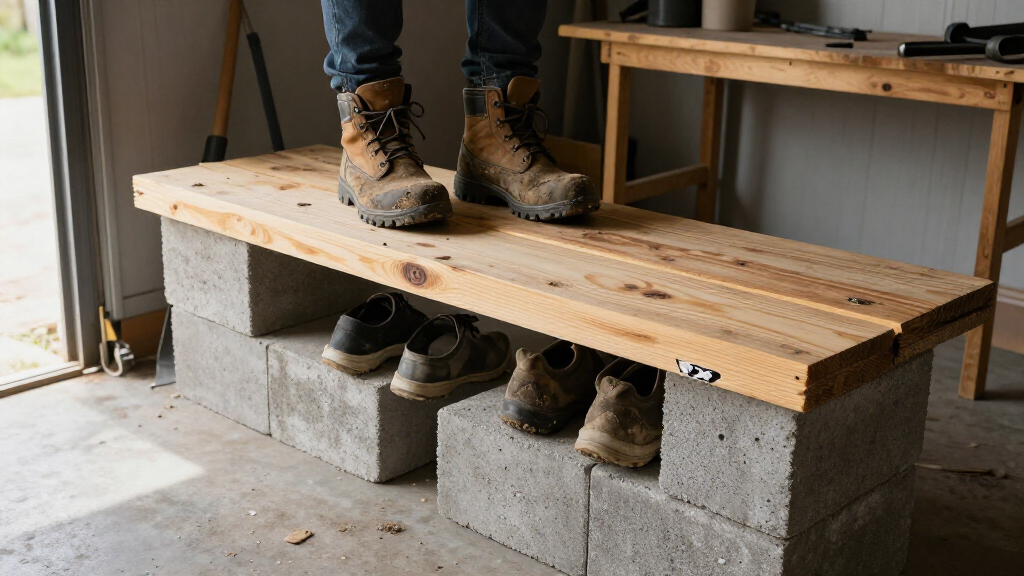
A Hunker report outlines a DIY shoe-storage shelf built from six standard concrete blocks and three pieces of plywood, offering an alternative to a metal shoe rack. The report says the shelf can be assembled in place, customized with paint and stain, and used for shoes or small items; its stability depends on the setup, and the instructions do not provide load ratings.
Hunker has described a DIY shoe shelf made from six concrete blocks and three plywood boards, presenting it as an alternative to a metal shoe rack for an entryway or bedroom. The proposed build creates three levels for footwear and other items, though the report gives no tested weight limit or independent safety assessment.
The materials listed are six blocks measuring 8 by 8 by 16 inches and three matching plywood pieces, each 16 inches wide. The plywood length can vary, according to the report, depending on the intended shelf dimensions. Hunker cited a Home Depot price of less than $2 per block, but that figure is a reported price and may vary by location and date. Paint and wood stain are optional finishing materials.
The instructions recommend painting the blocks outdoors, including the visible interiors of their openings. If the plywood is rough, the report says to sand it with fine-grit sandpaper, wipe away dust, apply stain, and let the materials dry. Assembly is intended to take place where the shelf will stand: set a board horizontally on the floor, position two blocks at each end as supports, add another board, and arrange the remaining blocks and final board to form the upper level.
Construction adhesive is optional in the Hunker instructions, which name Liquid Nails Extreme Heavy Duty Construction Adhesive as an example. The report says the arrangement should be sturdy without it, but does not provide measurements, a load test, anchoring guidance, or instructions for uneven floors. Block openings can serve as small cubbies. The three board levels can hold shoes, while the top can be used for decor or everyday belongings. Baskets, bins, labels, or a tension rod and short curtain are suggested as ways to keep footwear out of view.
A Low-Cost Alternative to Shoe Racks
The idea gives renters and homeowners a simple, adaptable way to organize shoes using common building materials rather than a purpose-made metal rack. Its layout can fit near an entrance or in a bedroom, and the open block design offers additional cubby space. Since the boards and block count are specified but board lengths are flexible, the finished shelf can be adjusted to available space, within the limits of a stable arrangement.
The project also leaves room for practical and visual changes: stain or paint can coordinate with a room, while baskets or a curtain can conceal shoes. Those options may be useful in a shared entryway, where clutter is visible to visitors. However, the source does not establish that the shelf is cheaper than every retail rack or more durable under all conditions. The cited block price is not a complete project budget, and plywood, finishes, tools, and any adhesive add to the cost.
Popular right now

KitchenAid Artisan Series 5-Quart Tilt-Head Stand Mixer, Dried Rose (KSM150PS)

Vitamix Propel Series 510 Professional-Grade Blender, 3 Programs, Black

Dreame L50 Ultra Robot Vacuum and Mop
As an affiliate, we earn on qualifying purchases.
How the Three-Level Layout Works
The report frames the build as a furniture-style shelf made from stacked materials, not as a permanently joined cabinet. Two blocks at each end support the bottom board, with another board placed above them. The remaining blocks sit at the ends of that middle board and support the top board. The openings in the blocks face forward on the lower supports and inward toward one another on the upper pair, according to the described arrangement.
That setup allows shoes to be placed on the board surfaces and smaller objects to be tucked into block openings. Hunker suggests using the lower two levels for footwear and reserving the top for decor, or adding containers to hide shoes. The source attributes the DIY concept to BEHR Paint, but does not provide a separate statement from the company or a record of testing the design.
“The piece “should be sturdy even without” construction adhesive.”
— Hunker
Load Limits and Stability Details
The source does not say how much weight the shelf can safely hold, whether the blocks or plywood should be secured to one another, or how the unit performs on uneven flooring. It also gives no guidance on anchoring the shelf to a wall, which may matter in homes with children or pets. The report’s statement that adhesive is unnecessary is not accompanied by testing or a specified load.
Final dimensions and total cost remain variable because the plywood length is left open and the cited block price may change. The material does not identify a particular plywood thickness or grade, paint coverage, drying times, or a tested finish for the blocks. Readers should treat the instructions as a DIY concept rather than a certified furniture design, and assess the stability of their own build before loading it.
Measure and Check Before Use
Anyone following the idea would need to measure the available floor space, choose plywood lengths, and decide whether the shelf will remain open or use bins or a curtain. The boards and blocks should be arranged on a level surface, and the finished unit should be checked for movement before shoes or other belongings are placed on it. The source does not identify a later product launch, formal test, or follow-up development; the next steps are practical choices for people adapting the design to their homes.
Key Questions
What materials does the shoe shelf use?
The Hunker instructions call for six 8-by-8-by-16-inch concrete blocks and three pieces of plywood, each 16 inches wide. Plywood length is flexible. Paint, stain, and construction adhesive are optional additions in the report.
Does the shelf need construction adhesive?
The report says adhesive can be used but is not required for the arrangement it describes. It provides no load testing or stability certification, so that claim should not be treated as a weight guarantee.
How can the shoes be hidden?
Hunker suggests placing baskets or bins on the wooden levels, or using a tension rod and short curtain in front of the footwear. The report also mentions labels for assigning containers to different household members.
How much does the project cost?
The source cites blocks of the specified size at less than $2 each at Home Depot when it was written. It does not give a complete project total, and current prices, plywood costs, finishes, and optional adhesive can vary.
How much weight can the finished shelf hold?
The source does not provide a weight limit. It also does not specify plywood thickness or report stability testing. Check the construction carefully and avoid assuming the shelf can support heavy items.
Source: rss