TL;DR

Get business pricing on tools and workshop supplies
- Business-only prices and quantity discounts
- Tax-exempt purchasing
- Multiple users, one account, clear invoices
An Apartment Therapy writer says a light coating of WD-40 around exterior window frames kept spider webs from returning for a month, including after heavy rain. That is a personal, short-term test; the report does not establish that the method works for other homes or lasts up to a year.
An Apartment Therapy writer reported that spraying a light coating of WD-40 around outdoor window frames kept spider webs from reappearing for a month at her Florida home. The result is a personal test, not a controlled study, and the report does not establish that the technique works reliably for other homes or provides lasting protection.
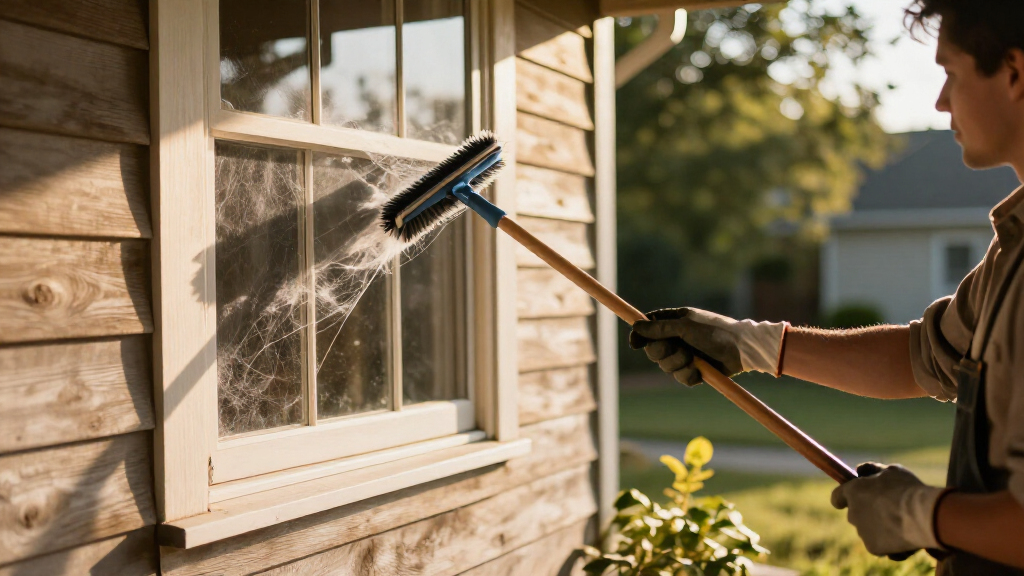
The writer said spiders repeatedly built webs in the corners of her exterior window panes, despite her regularly clearing them and cleaning the glass. After removing the webs and cleaning the windows, she sprayed WD-40 around the frame perimeter, beginning at the sill and covering the sides and top. She also applied a small amount to corners where spiders tended to gather.
She avoided spraying the glass to reduce the chance of leaving a greasy-looking film, then let the product dry without wiping it. The writer said she saw no webs after one week and still saw none after a month. She also reported that the coating appeared to hold up through several heavy rains, though she did not describe a longer monitoring period or a comparison with untreated windows.
The report suggests that the lubricant may leave a surface on which spiders have difficulty attaching webs, and that the product’s odor might also discourage them. Those explanations are the writer’s speculation: the article does not cite testing or expert evidence confirming how WD-40 affects spiders. It also does not provide independent verification of the result.
A Short-Term Result, Not a Guarantee
Spider webs around windows can mean repeated cleaning for residents, especially where webs quickly collect dust or debris. The writer’s account describes a low-effort method that appeared to reduce that upkeep at her home for a month, which may interest people looking for a household fix.
But readers should distinguish that report from evidence of a proven pest-control treatment. One home and one month of observation cannot show how well the approach works across different climates, window materials, spider species, or levels of infestation. The claim that one coating can last as long as a year is not supported by the observation period described.
The method also involves applying a spray product around exterior windows. The source does not assess potential effects on paint, sealants, plastics, plants, pets, or other surfaces. Anyone considering it should check the product label and test surface compatibility in a discreet spot rather than assuming the approach is suitable for every frame.
Popular right now

KitchenAid Classic Series 4.5 Quart Tilt-Head Stand Mixer K45SS, Onyx Black

Ninja Specialty Coffee Maker CM401, 10-Cup Carafe, Fold-Away Frother, Black

Bose QuietComfort True Wireless Earbuds with Active Noise Cancellation, Black
As an affiliate, we earn on qualifying purchases.
How the Window Test Was Done
The report is a first-person household account from a writer living in an older home in Florida. She described webs returning within days after routine cleaning, then tried WD-40 after removing the existing webs and washing the windows. Her application focused on the frame perimeter and small corners, not the glass itself.
The article’s title calls the method a “hack,” but its reported evidence is limited to the writer’s observations. It does not describe a measured spider count, a control group, a comparison with other products, or expert review. The account also says the writer believed the coating might repel other insects and discourage bees or wasps from nesting near doors and soffits; these additional effects were not tested in the described window trial.
““I was skeptical if this hack would work at all.””
— Apartment Therapy writer
What the Account Cannot Establish
The report does not show whether the same application would prevent webs in other homes, how long the effect lasts beyond one month, or whether rain and weather conditions change the result over time. It also does not identify the spider species or establish whether the apparent effect came from the product’s lubricating properties, its odor, or another factor.
No expert assessment or controlled test is included, and the suggested year-long durability is not demonstrated by the writer’s month of follow-up. The article also does not document possible damage or residue on different window-frame materials. Those questions remain unanswered by the source.
Check Labels Before Trying It
The Apartment Therapy report provides no scheduled follow-up or independent testing. Its writer’s account ends after a month without visible webs, so any longer-term result remains unknown. Readers who want to try the method can consult the product’s current label and follow its directions, including precautions for outdoor use and nearby surfaces.
For persistent spider activity, residents can remove existing webs and address places where insects gather, which may attract spiders. If the problem continues or involves a potentially hazardous species, a qualified pest-control professional can identify the issue and discuss appropriate options. The reported WD-40 result should be treated as an anecdote until broader evidence is available.
Key Questions
Did WD-40 keep spiders away in the reported test?
The Apartment Therapy writer said she saw no webs for one month after spraying around her outdoor window frames. That is a single personal observation, not proof that the method works generally.
Where did the writer spray the product?
She applied a light coating around the window-frame perimeter and in small corners, while avoiding the glass to limit greasy-looking residue. She let it dry without wiping it.
Does the report prove the coating lasts a year?
No. The article mentions a belief that the coating may last up to a year, but the writer reported only one month of observation. The longer duration was not established by the test described.
Is WD-40 proven to repel other insects or prevent nests?
The writer suggested it might repel other bugs and discourage bees or wasps from nesting, but the report does not describe tests supporting those claims. They should not be treated as confirmed effects.
Source: rss