TL;DR

Get business pricing on tools and workshop supplies
- Business-only prices and quantity discounts
- Tax-exempt purchasing
- Multiple users, one account, clear invoices
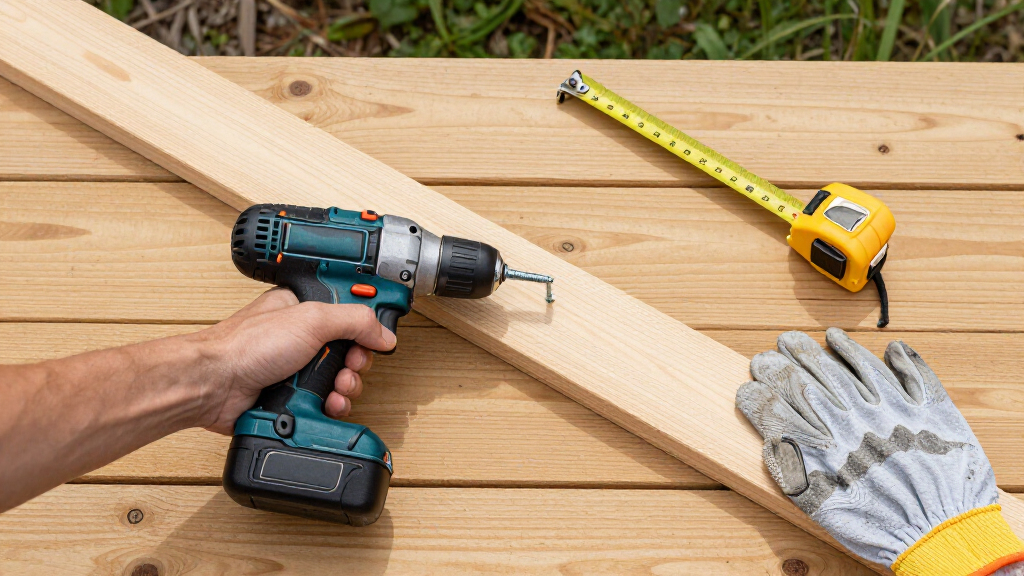
The best cordless impact driver for deck building is a compact brushless 18V/20V Max model with roughly 1,500–2,200 in-lb of torque, multiple speed modes, and two 4.0–5.0Ah batteries. More torque than that mostly strips screw heads and overdrives composite boards. Buy into the battery platform you’ll use for your saws and other tools, not the flashiest single tool.
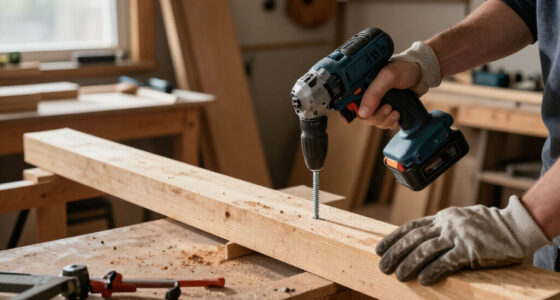
I once watched a homeowner sink a $90 box of composite-rated screws halfway through a brand-new PVC deck board because his impact driver had one speed: hammer. Every screw cratered the surface like a golf divot. That tool was powerful enough to frame a house — and completely wrong for the job at hand.
Here’s the truth after twenty-plus years on job sites: the best cordless impact driver for deck building is not necessarily the most powerful model on the shelf. Deck work rewards control, runtime, and a tool that doesn’t wreck your wrist by lunch. It also punishes cheap bits, undersized batteries, and anyone who treats torque numbers like a scoreboard.
In this guide, you’ll learn exactly which specs matter for deck screws and structural fasteners, which voltage class fits your project, how to match your driver to pressure-treated lumber, cedar, hardwood, and composite boards — and when you should skip buying altogether and rent instead.
1,500–2,200 in-lb of torque covers deck screws, structural screws, and small lags — more torque mostly strips heads and overdrives composite boards.
18V and 20V Max are the same nominal voltage class; buy based on motor, battery platform, and ergonomics, not the voltage sticker.
Get a brushless model with multiple speed modes, a three-LED nose light, and a two-battery kit in the 4.0–5.0Ah range.
Match the tool to the material: full power for wet pressure-treated lumber, low mode and pilot holes for cedar, manufacturer-approved fasteners and restraint f…
Ordinary deck screws never substitute for code-approved structural connectors — and deck structural work typically requires permits and inspection.
CONTRACTOR’S FIELD GUIDE // DECK BUILDING
Best Cordless Impact Drivers for Deck Building
Twenty-plus years on job sites point to one truth: the best impact driver for deck work isn’t the most powerful tool on the shelf. Deck building rewards control, runtime, and a battery platform that fits the rest of your kit — and punishes cheap bits, undersized batteries, and torque-scoreboard thinking.
In this guide: which specs actually matter for deck screws and structural fasteners, which voltage class fits your project, and how to match your driver to pressure-treated lumber, cedar, hardwood, and composite boards.
“That tool was powerful enough to frame a house — and completely wrong for the job at hand.”
— On a one-speed driver that cratered $90 of composite screwsSECTION 01 // TORQUE REALITY CHECK
How Much Torque You Actually Need (Spoiler: Less Than You Think)
Torque is like horsepower on a minivan: nice on paper, wasted in the school pickup line. Every capable brushless 18V/20V Max tool from the last five years already covers deck screws, structural screws, and small lag fasteners. Anything beyond that range is mostly marketing.
What extra torque does
Strips Phillips-head screws. That’s it. The rotational hammering of an overpowered single-speed tool chews driver recesses before you can react.
Cedar & softwood damage
Overdrives fasteners through soft cedar, leaving a recess that collects water and rots the board from the fastener outward.
Composite & PVC damage
Mushrooms a dome of plastic up around the screw head that no amount of sanding fixes. Permanent, visible, on every board.
Pick the tool with the best low-speed trigger control you can find — not the highest torque number on the box. Feather a screw to flush without punching through the board.
SECTION 02 // PICK YOUR VOLTAGE
Why 18V/20V Max Is the Deck-Building Sweet Spot
Here’s the confusing part the tool industry doesn’t love explaining: 18V and 20V Max are the same nominal voltage class. The difference is largely labeling. Motor design, electronics, battery cells, and gearing determine performance — not the sticker.
Surprisingly capable for deck boards, railings, and repairs. Light, compact, fits between joists. Slows down on big structural fasteners.
→ DIYer, one small ground-level deck
Enough power for structural screws, enough runtime for full days, and the broadest tool ecosystems if you expand later. Handles ledger connections and framing.
→ Most builders & pros ✓
Strong performance and runtime, but tools and batteries run heavier — and fatigue is real on day three of screwing down 400 sq ft of decking.
→ Max power, accept the weight
A “20V Max” DeWalt is not more powerful than an “18V” Makita by virtue of the label. Buy based on motor, battery platform, and ergonomics.
→ Ignore the voltage sticker
SECTION 03 // MOTORS & BATTERIES
Brushless Motors and Batteries: The Two Specs That Decide Your Day
A brushless motor is worth the extra money for deck building, full stop — greater efficiency, more runtime per battery, better heat management, and electronic speed modes brushed motors can’t offer. Think of batteries like gas tanks: a small one makes the car nimble, a big one means fewer pit stops.
| Battery Size | Best For | The Tradeoff | Verdict |
|---|---|---|---|
| 2.0Ah | Overhead work, repairs, small decks | Frequent charging interrupts your rhythm | ~ Situational |
| 4.0–5.0Ah | Full-day deck work | Best balance of runtime and weight | ✓ Buy two |
| 6.0Ah+ | Long workdays, heavy fasteners | Noticeable fatigue by afternoon | ~ Big jobs only |
| Cracked | Never — retire the pack | Safety hazard on a dusty, damp deck site | ✗ Remove from service |
Runtime advantage: brushless vs. brushed (relative)
Buy a two-battery kit. Two mid-size batteries beat one giant one every time — one charges while the other drives. Plus: keep packs off hot decking (150°F surfaces cook batteries) and out of standing water, and always remove the battery before clearing jams.
SECTION 04 // MATERIAL MATCHING
Match Your Driver to the Decking Material You’re Actually Screwing Into
The material matters as much as the tool — each decking type punishes a different mistake. Same tool, two very different jobs: a 4-inch structural screw through wet pressure-treated 2×10 joist stock demands sustained power; a 2-1/2 inch composite-deck screw demands restraint.
Pressure-Treated Lumber // Full power
Dense and often sopping wet
The impact mechanism shines here — long screws with far less wrist-twisting reaction force than a drill. Don’t overdrive: a recessed head creates a water trap. Use manufacturer-approved fasteners and flashing; copper treatment corrodes the wrong coatings.
Cedar & Redwood // Low-speed mode
Soft woods that split at board ends
Drop to a low speed mode, use careful trigger control, and drill pilot holes near ends and edges. Full-power bursts will crack the board like a walnut.
Hardwood (Ipe, Cumaru) // Pilot holes required
Dense tropical hardwoods
Generally require pilot holes and countersinking — an impact driver alone won’t give a clean installation. Plan on a drill working alongside the driver.
Composite & PVC // Maximum restraint
Where overpowered drivers do their worst damage
Excessive speed or torque mushrooms the board surface around the screw head — permanent damage no sanding fixes. Low mode, manufacturer-approved fasteners, and fastener restraint clips are the safe path.
SECTION 05 // ON-SITE WORKFLOW
The Deck Fastening Sequence
How the two tools trade off across a full deck build — most deck builders benefit from owning both so they never switch bits constantly.
Pilot & clearance holes where the material demands — ends, edges, hardwoods
Countersink recesses for flush, non-trapping screw heads
Drive deck & structural screws — impacts reduce wrist reaction force
Feather each screw to flush — never punch through the board
Ordinary deck screws never substitute for code-approved structural connectors — and deck structural work typically requires permits and inspection.
SECTION 06 // STRONG CHOICES BY USER TYPE
Product Families Worth Considering
Specific model availability changes, but these product families are commonly associated with the following strengths. Above all: buy into the battery platform you’ll use for your saws and other tools — not the flashiest single tool.
PROFESSIONAL DECK BUILDER
Milwaukee M18 Fuel · DeWalt 20V Max XR · Makita 18V LXT
Performance, broad ecosystems, and service availability. Premium low-speed modes start screws gently near board ends, then ramp up for long framing screws.
COMPACT PREMIUM TOOL
DeWalt Atomic · Milwaukee M12 Fuel · Makita Compact Brushless
Low weight and access in tight spaces — between joists, railings, and confined framing bays. Saves your shoulder on board-only builds.
MAXIMUM FASTENING POWER
Flex 24V · High-Output Milwaukee / DeWalt
Fast driving of long structural screws — with the weight tradeoff to match. Best for framing crews, not day-three decking marathons.
ADVANCED CONTROL
Multi-Mode Fuel / XR / LXT Premium Models
Adjustable speeds and application modes for composite decking, trim work, and precision flush-setting.
VALUE-FOCUSED HOMEOWNER
Ryobi One+ HP · Ridgid 18V Brushless · Craftsman V20 Brushless
Useful performance at moderate prices. Compare kit prices carefully — a kit with batteries and charger often beats a cheaper bare tool.
EXISTING BATTERY OWNER
Match Your Brand Platform
Whatever platform your circular saw, reciprocating saw, blower, and nailers already live on — that’s your impact driver brand. Avoid duplicate batteries and chargers.
How Much Torque You Actually Need (Spoiler: Less Than You Think)
An impact driver needs roughly 1,500–2,200 in-lb of torque to handle deck screws, structural screws, and small lag fasteners — which describes nearly every capable brushless 18V or 20V Max tool made in the last five years. Anything beyond that range is mostly marketing. Torque is like horsepower on a minivan: nice on paper, wasted in the school pickup line.
Here’s what extra torque actually does on a deck. It strips Phillips-head screws. It overdrives fasteners through soft cedar, leaving a recess that collects water and rots the board from the fastener out. It mushrooms composite material, pushing a dome of plastic up around the screw head that no amount of sanding fixes.
What matters more than the big number is trigger control. A progressive, predictable trigger lets you feather a screw to flush without punching through the board. Premium drivers from Milwaukee, DeWalt, and Makita earn their price not through peak torque but through low-speed modes that start a screw gently near a board end, then ramp up for the long framing screws.
Real-world example: driving a 4-inch structural screw through wet pressure-treated 2×10 joist stock demands sustained power and good heat management. Driving a 2-1/2 inch composite-deck screw into a trex board demands restraint. The same tool can do both — if it has speed modes and a trigger you can modulate.
Rule of thumb: pick the tool with the best low-speed control you can find, not the highest torque number on the box.
Popular right now

Bose QuietComfort Wireless Bluetooth Headphones with Active Noise Cancellation, Mic, USB‑C Charging, Deep Bass, 24‑Hour Battery – White Smok

DeLonghi Rivelia Automatic Espresso Machine Bundle with Grinder and Frother, Beige

Shark Navigator Lift-Away Upright Vacuum (NV360)
As an affiliate, we earn on qualifying purchases.
Pick Your Voltage: Why 18V/20V Max Is the Deck-Building Sweet Spot
For deck building, an 18V or 20V Max brushless impact driver is the right class for almost everyone. Here’s the confusing part the tool industry doesn’t love explaining: 18V and 20V Max are the same nominal voltage class. The difference is largely labeling. A “20V Max” DeWalt is not more powerful than an “18V” Makita by virtue of the sticker — motor design, electronics, battery cells, and gearing determine performance.
So what about the other classes?
- 12V tools (like Milwaukee M12 Fuel) are surprisingly capable for deck boards, railings, and repairs. They’re light, compact, and fit between joists. They will slow down on big structural fasteners, but for a small ground-level deck, they’ll finish the job.
- 18V/20V Max is the best all-around class — enough power for structural screws, enough runtime for full days, and the broadest tool ecosystems if you expand later.
- 24V platforms (Flex, Kobalt) offer strong performance and runtime, but tools and batteries run heavier, and fatigue is real on day three of screwing down 400 square feet of decking.
My honest take as a contractor: a DIYer building one deck with mostly deck-board screws could absolutely use a 12V tool and save their shoulder. Anyone touching framing, ledger connections, or long structural screws should be in the 18V/20V class. Professionals doing this daily should stay there too — the 24V torque is nice, but weight and ecosystem breadth usually matter more.
Brushless Motors and Batteries: The Two Specs That Decide Your Day
A brushless motor is worth the extra money for deck building, full stop. Brushless impact drivers deliver greater efficiency, more runtime from the same battery, better heat management, and electronic speed modes that brushed motors simply can’t offer. A brushed model can still get a small DIY deck done if budget is the main concern — but on a full-size build, you’ll feel the difference by the second hundred screws.
Battery choice shapes your whole workday. Think of batteries like gas tanks: a small one makes the car nimble, a big one means fewer pit stops.
| Battery Size | Best For | The Tradeoff |
|---|---|---|
| 2.0Ah compact | Overhead work, repairs, small decks | Frequent charging interrupts rhythm |
| 4.0–5.0Ah | Full-day deck work | Best balance of runtime and weight |
| 6.0Ah+ | Long workdays, heavy fasteners | Noticeable fatigue by afternoon |
The single best move: buy a two-battery kit. Two mid-size batteries beat one giant one every time, because one can charge while the other drives. On my deck jobs, a fast charger and a spare pack eliminate virtually all downtime.
Battery care on a deck site matters too. Keep lithium-ion packs out of standing water and off hot decking boards in summer sun — a black composite surface in July can hit 150°F and cook a battery sitting on it. Never use a pack with a cracked housing, and remove the battery before clearing any jam or inspecting the chuck.
Match Your Driver to the Decking Material You’re Actually Screwing Into
The material you’re fastening matters as much as the tool, because each decking type punishes a different mistake. Here’s how to adjust.
Pressure-treated lumber: Dense and often sopping wet from the yard. Use full power — the impact mechanism shines here, driving long screws with far less wrist-twisting reaction force than a drill. Just don’t overdrive: a recessed screw head creates a water trap that shortens the board’s life. Use manufacturer-approved fasteners and flashing with treated lumber, since the copper treatment corrodes the wrong coatings.
Cedar and redwood: Soft woods that split at board ends. Drop to a low speed mode, use careful trigger control, and drill pilot holes near ends and edges. Full-power bursts will crack the board like a walnut.
Hardwood decking (ipe, cumaru): Dense tropical hardwoods generally require pilot holes and countersinking — an impact driver alone won’t give you a clean installation. Plan on a drill working alongside the driver.
Composite and PVC: These are where overpowered drivers do their worst damage. Excessive speed or torque mushrooms the material or sinks screws too deep. Use the manufacturer’s approved fasteners, clips, or plugs, run a low mode, and follow their spacing instructions — PVC in particular has temperature-related gapping requirements.
This is exactly the scenario from my intro: the guy cratering PVC boards. A driver with a proper low mode would have cost him $60 more and saved him $400 in ruined boards. Control is cheaper than repairs.
The Features Worth Paying For (and the Ones That Aren’t)
When you’re comparing drivers, a handful of features genuinely change deck-building productivity — and a handful are window dressing. Here’s the honest breakdown.
Worth paying for:
- Multiple speed modes. Low for starting screws and board edges, high for long structural screws. This is the single most useful feature for deck work.
- Three-LED nose lighting. LEDs around the chuck illuminate the work evenly; a single light near the trigger throws shadows exactly where you’re aiming.
- One-hand bit insertion. A quick-release 1/4-inch hex collet makes the constant bit changes of deck work painless.
- Belt hook and tether points. Essential on elevated framing, stairs, and ladders.
- Sealed electronics. Deck sites mean dust, damp lumber, and occasional rain. No cordless driver is waterproof — but better sealing buys resilience.
Worth skipping (for most people): Bluetooth tool tracking, unless you run a crew; hydraulic or oil-impulse mechanisms unless noise is a real concern — they’re quieter and smoother, great for occupied remodels and noise-sensitive neighborhoods, but they cost more and give up peak performance on big structural fasteners. And skip the torque arms race entirely.
One spec trap to avoid: compare weights with the battery installed. Some brands advertise bare-tool weight, which is like weighing a truck without the engine. A 2.5 lb bare tool with a 6.0Ah battery can outweigh a heavier-advertised tool with a compact pack.
Bits, Fasteners, and the Mistake That Fails Inspection
The driver is only one-third of the fastening system — the bit and the fastener carry the rest. Use impact-rated bits only; standard bits shatter or round off under repeated impact forces, and a snapped bit becomes a projectile. Replace worn bits promptly — a $4 bit is cheaper than a stripped screw you have to extract with an extractor kit.
Choose star-drive (Torx) screws over Phillips whenever possible. The star pattern resists cam-out dramatically better, which means fewer stripped heads, less downward pressure, and less wrist strain over a few hundred fasteners.
Now the serious part. Ordinary deck screws are not structural fasteners. If your plans call for structural screws, joist hanger nails, or hurricane ties, you must use the code-approved fastener specified by the connector manufacturer — substitutions can fail inspection and, worse, fail in service. According to Bauecho’s guidance on deck fastening, never substitute ordinary deck screws for structural connectors unless both the manufacturer and your local code explicitly permit it.
An impact driver is not a calibrated torque wrench. Structural connectors must be installed to the fastener and connector manufacturer’s specifications — and deck structural work and ledger attachments typically require permits and inspection. Check your local building code before you build.
Match fastener coating to your lumber and climate, too: pressure-treated lumber demands compatible coatings, and coastal environments often call for stainless steel. And in coastal areas, corrosion failures happen quietly, under the boards, where you don’t see them for three years.
Buy, Budget, or Rent: A Decision Framework That Saves You Money
Here’s the question most buying guides skip: should you buy at all? As someone who’s watched a lot of tools get purchased for one project and never used again, let me give you the honest tiered answer.
- Already own batteries from a brand? Buy that brand’s impact driver as a bare tool. The battery platform is the real investment — circular saws, reciprocating saws, nailers, and blowers all share it. Never buy into a new ecosystem for one tool.
- First-time tool buyer, moderate budget? Get a value kit: Ryobi One+ HP, Ridgid 18V brushless, or Craftsman V20 brushless. These deliver genuinely useful deck performance at homeowner prices. A kit with two batteries and a charger usually beats a cheaper bare tool.
- Building decks professionally? Milwaukee M18 Fuel, DeWalt 20V Max XR, or Makita 18V LXT. You’re paying for sustained speed, durability, and service availability — the things that matter when the tool runs eight hours a day.
- Building one deck, ever? Rent a quality driver for the weekend, or borrow one. A rental fee of $40–60 beats a $200 tool that lives in a drawer. Spend the savings on better fasteners and bits.
Whichever tier you choose, budget for the supporting cast: a drill/driver for pilot holes and countersinking (you’ll want both tools so you’re not swapping bits constantly), impact-rated Torx bits, and a second battery. The battery ecosystem decision is the one that follows you for a decade — a Milwaukee owner buys future Milwaukee tools, so choose like you’re choosing a garage, not a screwdriver.
And one last safety pass before you pull the trigger: eye and hearing protection every time, confirm the bit is fully seated in the collet, check for wiring and plumbing before fastening into framing, and never hold the back of a fastener where a slipping bit could find your fingers.
Frequently Asked Questions
How much torque does an impact driver need for deck building?
Around 1,500–2,200 in-lb handles deck screws, common structural screws, and small lag fasteners. Nearly every quality brushless 18V or 20V Max driver falls in or above this range. Real-world speed, trigger control, and heat management matter more than the maximum advertised torque figure.
Can a 12V impact driver build a deck?
Yes — particularly for deck boards, railings, and moderate-size screws. A 12V tool like a Milwaukee M12 Fuel is light and fits between joists easily. It will slow down on large structural fasteners, so an 18V/20V-class tool is better suited for extensive framing or frequent heavy-fastener work.
Is an impact driver better than a drill for deck screws?
Usually, yes. Its rotational impacts drive long screws faster and transfer far less twisting force to your wrist. But a drill/driver remains the better tool for pilot holes, countersinking, hole saws, and standard round-shank bits. Most deck builders use both so they’re not constantly swapping bits.
Will an impact driver damage composite decking?
It can if you run excessive speed or torque — the material mushrooms or screws sink too deep. Use the decking manufacturer’s approved fasteners and installation system, select a low speed mode, feather the trigger, and avoid overdriving. Many composite systems specify an exact recess depth or use hidden clips instead.
Should I buy a bare tool or a kit?
If you already own compatible batteries and a charger, a bare tool saves money. If this is your first tool from that brand, a kit with two batteries and a fast charger is almost always the better deal — and two mid-size batteries are more practical on a deck build than one oversized pack, since one can charge while the other works.
Should I just rent an impact driver for a one-time deck build?
If you’ll never use it again, renting or borrowing beats buying — a weekend rental typically costs $40–60 versus $150–250 for a decent kit. But if you foresee future projects, a mid-priced brushless kit from a broad battery platform (Ryobi One+ HP, Ridgid 18V) is the smarter long-term buy, since future tools share the batteries.
Conclusion
If you remember one thing: the best cordless impact driver for deck building is the one you can control, not the one with the biggest number. A compact brushless 18V/20V Max tool with speed modes, ~2,000 in-lb of torque, and two batteries will outperform a torque-monster in the hands of anyone who cares how the finished deck looks.
Buy into the ecosystem you’ll actually grow with, spend the difference on good Torx fasteners and impact-rated bits, and respect the code on structural connections. Twenty years from now, nobody will admire your impact driver — but they’ll absolutely notice a deck where every screw sits flush.