
TL;DR

Get business pricing on tools and workshop supplies
- Business-only prices and quantity discounts
- Tax-exempt purchasing
- Multiple users, one account, clear invoices
Choose a jobsite chain saw for the wood, location, power source, and operator’s training; then inspect it, wear chain-saw protective gear, and plan a clear work zone before cutting. Keep the chain sharp, tensioned, and lubricated, and stop when the saw binds or the wood moves unpredictably. Leave tree felling, tensioned timber, and work near power lines to qualified professionals.
A chain saw can turn a fallen limb into manageable pieces in minutes, then bite back hard enough to cause a life-changing injury in seconds. The difference often comes down to choices made before the engine starts: the right saw, a checked chain, protective gear, and a clear plan for where the wood will move.
This guide covers how to match a saw to jobsite work, prepare the operator and work area, reduce kickback risk, and care for the tool after the cut. You’ll also see where a battery saw fits, what to check when a chain feels dull, and when the sensible move is to stop and call a qualified tree-care professional.
Match saw size and power to the material, work location, runtime needs, and operator training.
Wear chain-saw protective legwear, suitable boots, eye and hearing protection, and other PPE called for by site hazards.
Inspect the chain, brake, controls, guards, handles, tension, and lubrication before cutting; remove a damaged saw from service.
Plan footing, escape routes, overhead hazards, bystanders, and wood movement before starting a cut.
Stop when the chain binds or the wood shifts; leave tree felling, tensioned timber, and power-line work to qualified professionals.
Best Practices for Using and Caring for Jobsite Chain Saws
Choose a saw that fits the wood, location, power source, and operator’s training. Inspect it, wear the right protective gear, and plan a clear work zone before cutting. Keep the chain sharp, tensioned, and lubricated. Stop when the saw binds or the wood moves unpredictably.
Set up for control
Safe operation starts before the engine or motor runs. Make the tool, worker, and work area fit the task.
Choose the right saw
Match power and bar length to the material and the manufacturer’s recommendations. Consider access to fuel or charging, runtime, safe staging, and the operator’s training. A larger saw can be heavier and harder to control.
Use trained operators
Only trained, authorized workers should operate a chain saw. New operators need hands-on instruction and supervision before production work. Review the manual, intended use, compatible parts, and operating limits.
Wear task-ready PPE
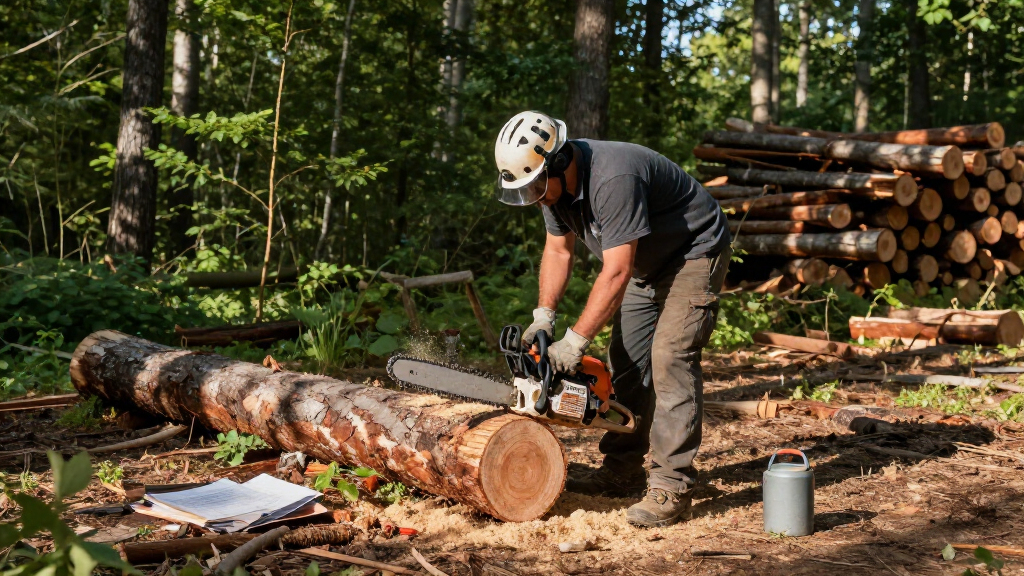
Use chain-saw protective legwear, suitable work boots, secure-grip gloves, and eye and hearing protection. Add a fitted helmet where objects may fall, and high-visibility clothing near vehicles or coworkers.
Gear reduces exposure to hazards; it does not make an unstable position or unsafe cut acceptable. Check that clothing and equipment fit, stay secure, and work together.
Run the pre-cut check
With the saw off, inspect the parts that affect control and stopping. Follow the manufacturer’s brake test and setup instructions.
Look for damage. Confirm the chain is sharp and correctly tensioned.
Check chain brake function as specified, throttle control, and switches.
Inspect for missing, loose, or damaged parts before starting.
Confirm chain oil supply. Refuel a cool, switched-off gas saw outdoors or in good ventilation, away from ignition sources.
If a safety feature is missing, damaged, or fails its specified check, stop. Tag the saw and use a serviceable tool; do not rely on appearance or guesswork.
Plan the work. Control the cut.
Before cutting, identify where people and wood could move. Keep the work zone clear and change the plan when conditions change.
Kickback can happen when the moving chain near the bar tip hits an object or gets pinched. Keep the tip clear, use a functioning chain brake, and hold the saw as instructed. A brake helps reduce risk but cannot prevent every injury.
Choose the power source for the shift
Fuel and battery models each suit different work patterns. Neither removes cutting or kickback hazards.
Long outdoor work
Refueling can support extended work, while fuel handling and exhaust require planning. Shut off and cool the engine before refueling; keep fuel away from ignition sources and clean up spills.
Lighter-duty tasks
Often convenient for lighter cuts, with reduced noise at the point of use and no exhaust emissions during operation. Runtime, charging, spare batteries, and proper battery handling still matter.
Know when to stop
Stop if the chain binds, the wood shifts, footing becomes unstable, or conditions change. Tree felling, tensioned timber, and work near power lines belong to qualified professionals. Do not treat these as routine beginner tasks.
Choose a saw you can control through the whole cut
A jobsite chain saw should match the wood, the work area, available power, and the operator’s training. That match affects both how well the saw cuts and how much control the operator has when resistance changes. A larger saw is not automatically safer or faster: its extra weight and power can make the bar harder to control, especially when you’re tired or working in a cramped spot. A saw that is too small can also be a poor choice if it encourages repeated, awkward cuts or forces the operator to push. Trimming small construction offcuts, for example, calls for a different tool than bucking a thick storm-fallen trunk.
Check the manual for the saw’s intended use, bar and chain compatibility, and operating limits. A compatible bar and chain matter because the saw is designed to work with specific parts; an unsuitable combination can affect performance and safe operation. Think about the full shift, too. A fuel saw offers refueling flexibility for long outdoor work, while a battery saw can be convenient for lighter cuts where charging and spare batteries fit the schedule. The tradeoff is that fuel brings refueling and exhaust considerations, while battery runtime and charging can limit how much work gets done between breaks. Neither power source removes cutting or kickback hazards.
Only trained, authorized workers should run a chain saw. Training matters because the operator must recognize how the saw reacts, keep control through the cut, and stop when the wood or work area changes. A new operator needs hands-on instruction and supervision before taking on production work. On a landscaping crew, that might mean learning controlled cuts on stable, supported material before approaching a heavy limb.
For occasional work, renting a saw suited to the task may make more sense than buying a heavy pro-grade model that spends most of the year on a shelf. The benefit is matching the tool to an infrequent job without storing and maintaining an oversized saw. A rental still needs a manual review, inspection, and an operator who knows how to use it; unfamiliar controls or an unchecked machine can erase that convenience.
- Match power and bar length to the material and the manufacturer’s recommendations.
- Account for access to fuel, charging, and safe staging.
- Choose control over size when you’re comparing saws for similar work.
Popular right now

Vitamix Propel Series 510 Professional-Grade Blender, 3 Programs, Black

Bose QuietComfort Wireless Bluetooth Headphones with Active Noise Cancellation, Mic, USB‑C Charging, Deep Bass, 24‑Hour Battery – White Smok

Shark Navigator Lift-Away Upright Vacuum (NV360)
As an affiliate, we earn on qualifying purchases.
Gear up before you put the saw on the ground
Protective equipment reduces exposure to common chain-saw hazards, but it does not make a risky cut safe. Wear eye and hearing protection, suitable work boots, secure-grip gloves, and chain-saw protective legwear rated for the task. Add a properly fitted helmet where falling or flying objects could strike you, and high-visibility clothing when vehicles or other workers share the area.
Picture a crew clearing branches beside a delivery route: a bright vest helps the driver see the operator, while eye protection keeps chips out of their eyes. Each item addresses a different hazard. A helmet does not stop a chain, and protective trousers do not justify cutting from an unstable position.
Inspect your gear before work. Replace torn or compromised protective clothing, check that footwear gives you stable footing, and adjust hearing and eye protection so it stays in place when you move. Loose straps, fogged lenses, or gloves that slide on the handles can distract you at exactly the wrong moment.
Protective gear is the last layer of defense. Your first protection is a sound plan, a trained operator, a maintained saw, and the choice to stop when conditions change.
On a dusty, noisy jobsite, make sure your protective equipment fits together. Eye protection should not interfere with hearing protection or your helmet. If the site also requires other PPE, follow its procedures and the saw manufacturer’s instructions.
Run this pre-cut check before every shift
A pre-cut inspection catches damage and setup problems before the chain is moving. With the saw off, check the chain, guide bar, brake, throttle control, handles, guards, and fasteners; then confirm the chain is sharp, correctly tensioned, and lubricated according to the manual. Each check matters because a defect can change how the saw behaves under load: for instance, a damaged control or brake can undermine your ability to stop or manage the chain. If a safety feature is damaged or missing, take the saw out of service.
Use the manual’s test procedure for the chain brake rather than guessing. A brake that appears intact may still fail its function check, so its appearance alone is not evidence that it will work when needed. As a practical example, if you find a loose handle or a damaged guard while setting up to cut scrap for a framing repair, label the saw and switch tools instead of hoping it holds together. The pause protects the operator and prevents a known defect from being passed to the next worker.
Fuel-powered saws need extra care during refueling. Turn the engine off, let it cool, and refuel outdoors or in a well-ventilated place. Keep fuel away from sparks and other ignition sources; wipe up spills and move away from the refueling spot before starting. These steps reduce the chance that fuel vapors or spilled fuel meet an ignition source while the saw is being started.
- Inspect the chain, bar, controls, guards, handles, and hardware with the saw off.
- Confirm tension, sharpness, oil supply, and brake function using the manufacturer’s directions.
- Fuel safely if you have a gas model, then move to a clear starting area.
- Stop and tag the saw if a safety part is missing, damaged, or not working as specified.
This routine takes little time compared with a shift lost to a preventable equipment failure. It also gives you a baseline: if the chain later starts cutting crooked or running hot, you can stop and compare its condition with the checks you made before work. That makes changes easier to catch before they become a reason to force the cut.
Plan the cut so wood and people have room to move
Before cutting, identify your footing, overhead hazards, escape routes, nearby people, and the direction the material could shift or fall. Establish a work zone and keep bystanders clear. This planning helps prevent a cut from turning into a collision or trapping the operator when the wood moves. A jobsite chain saw can clear storm debris or support construction or landscaping work, but a branch under tension can spring as sharply as a loaded bowstring. Its stored force may send the wood or saw in an unexpected direction.
Take a simple cleanup job: a limb has fallen across a walkway. Before making a cut, check whether its weight is supported, whether branches are pinning it, and where each piece will settle. That assessment matters because removing one support can shift the load and change the next cut. Keep a stable stance and a firm two-handed grip; keep the saw below shoulder height, avoid the bar tip, and never cut from a ladder or other unstable position. A ladder can move as the saw or wood shifts, leaving little room to recover control.
Let the saw do the work. Forcing the chain can reduce control and increase the chance that the saw binds. If the wood shifts, the bar pinches, your footing changes, or another worker enters the area, stop the cut and reassess instead of pushing through. Continuing under changed conditions risks turning a manageable cut into a loss of control, and a pinched bar can make an improvised attempt to free it especially hazardous.
Tree felling, cutting trees under tension, and work near power lines require specialized knowledge and may need qualified professionals. These tasks involve forces and hazards that are difficult to judge from a routine cleanup perspective, and a mistake can affect people or property well beyond the cut. Contact the relevant utility before any work near electrical lines, and use a licensed professional for hazardous tree work. If the task involves structural changes, gas, roofing, or electrical work beyond ordinary cleanup, use the properly qualified trade and follow permit and code requirements.
Keep the bar tip clear to cut kickback risk
Kickback happens when the moving chain near the bar tip hits an object or gets pinched, sending the saw suddenly toward the operator. The tip can be hard to see when it passes behind a branch or into crowded material, which is why keeping track of its position and maintaining a clear view of the cut matter. Avoid cutting with the upper tip area, follow the saw maker’s grip and operating instructions, and keep a controlled two-handed grip. A functioning chain brake helps reduce risk, but it cannot prevent every injury.
On a crowded cleanup site, a hidden branch or a neighboring piece of timber can enter the tip area before you notice it. That’s why a clear view of the cut and enough room to control the saw matter as much as the brake. Keep other workers outside the work zone and don’t reach past material to make an awkward cut. Repositioning the work or getting help may take longer, but it preserves the operator’s ability to see and control the bar.
Modern saws may include low-kickback chains, anti-vibration systems, hand guards, and chain brakes. These features can help manage specific hazards, but they do not replace training, inspection, and good technique. A safety feature is more like a guardrail than a steering wheel: helpful, never a substitute for control. Relying on a feature as if it makes any cut safe can encourage the operator to work beyond the saw’s limits.
If the saw binds, don’t yank it free while the chain is moving. Keep your stance, release the controls as directed by the manual, and make the area safe before addressing the pinch. Pulling against a trapped chain can destabilize the saw or suddenly release stored force in the wood. If the wood is under tension or its movement is hard to predict, step back and get help from someone trained for that work.
Keep the chain sharp, tensioned, and oiled
A sharp chain cuts efficiently and is easier to control than a dull one. A dull chain can tempt the operator to press harder, which adds effort without restoring the cutting edge and can make control less predictable. Maintain correct tension and lubrication using the manual’s checks and adjustment steps. If the saw starts producing fine dust instead of clean chips, needs extra pressure, wanders through a cut, or runs unusually hot, stop and inspect the chain rather than leaning harder on it.
For example, during a day of cutting dry, dirty storm debris, a chain can lose its edge faster than it would on clean, supported lumber. Dirt and grit wear the cutting edge, so work conditions affect how often a check may be needed. A quick check during breaks can catch the change before every cut turns into a slow grind. Don’t adjust a moving chain, and follow the manufacturer’s instructions for tensioning and sharpening; too loose or too tight can affect how the chain runs and wears.
Clean the saw after use and look for damage around the bar, chain, and controls. Debris can hide wear or interfere with parts, so cleaning also makes it easier to spot issues before the next shift. Follow the service schedule for items such as air filters, spark plugs, and sprockets where applicable. Use compatible replacement parts and approved chain oil; the wrong part or lubricant can compromise function.
Before maintenance that could start the saw, disconnect the spark plug lead or remove the battery, as the manual directs. This reduces the chance of an accidental start while hands are near the chain. Battery models still need careful handling and charging with compatible equipment. Store batteries and the saw according to the manufacturer’s guidance, away from damage and conditions that can cause trouble.
- Stop for symptoms: dust-like output, extra pressure, crooked cuts, or excess heat.
- Check the basics: sharpness, tension, lubrication, and bar condition.
- Maintain safely: disable the starting source before service and follow the manual.
When the saw needs repairs beyond routine maintenance, take it to a qualified service provider. A jobsite shortcut on a brake, throttle, or other safety system is not worth the risk, because those parts help the operator manage the saw when something changes during a cut.
Pick battery power for the right kind of job
A battery-powered saw can suit lighter-duty work when its cutting capacity, runtime, and charging plan fit the job. It produces no exhaust emissions during operation and is often quieter at the point of use than a fuel-powered saw. Those traits can make it easier to use in some work areas, but they do not establish that a particular site allows it or that the saw can complete the workload. It still has a moving chain, kickback risk, and a battery that needs proper handling.
Consider a crew trimming a handful of small limbs near a finished interior or on a compact site where exhaust is unwelcome. A charged battery and a spare may be enough for that task. A long day cutting larger timber can call for more capacity, more batteries, or a different tool; check the manufacturer’s duty guidance and the actual work rather than assuming runtime. The practical tradeoff is that extra batteries and charging access take planning, while fuel models can be refueled during the shift. Either way, rushed work at the end of available runtime or fuel can undermine safe decisions.
Think of runtime as part of the tool’s capacity, just like bar length. A saw that cuts well but runs out of charge before the work is done can disrupt the job and invite rushed decisions. Plan charging where permitted, use compatible batteries and chargers, and inspect battery housings for damage. A realistic estimate of the work and charging time helps the crew decide whether the saw is suited to the shift rather than just to the first few cuts.
Fuel models can make sense where continuous outdoor work and refueling logistics favor them. Battery models can make sense when reduced point-of-use noise and no operating exhaust matter. The right choice depends on the material, duration, site rules, and operator training—not on the power source alone.
Frequently Asked Questions
What protective gear should I wear when using a chain saw?
Wear eye and hearing protection, chain-saw protective legwear, suitable work boots, and gloves that provide a secure grip. Use a fitted helmet where falling or flying objects pose a risk, and high-visibility clothing near vehicles or other workers. PPE lowers some risks but does not make an unsafe cut safe.
How can I tell when a chain is dull?
A dull chain may produce fine dust rather than clean chips, need extra pressure, cut crookedly, or make the saw run hot. Stop and inspect the chain instead of pushing harder. Sharpen and tension it according to the saw manufacturer’s instructions.
What causes kickback, and how can I reduce the risk?
Kickback can occur when the moving chain near the bar tip contacts an object or becomes pinched. Keep the bar tip clear, maintain a controlled two-handed grip, and use a saw with a working chain brake. The brake helps reduce risk but cannot prevent every injury.
Is a battery-powered saw suitable for construction work?
It can suit lighter-duty work when its cutting capacity and runtime meet the task. Battery saws have no exhaust emissions during operation and can be quieter at the point of use, but they retain cutting hazards and need proper battery handling. Check site rules, the manual, and your charging plan before relying on one for a shift.
Which chain-saw jobs should I leave to a professional?
Leave tree felling, cutting trees under tension, and work near power lines to qualified professionals with the right training and equipment. Contact the utility before work near electrical lines. If the wood is unstable or its movement is hard to predict, stop and get expert help.
Conclusion
Treat every jobsite chain saw cut as a planned operation: choose a controllable saw, inspect it, wear the right gear, and give the wood and people room to move. Keep the chain sharp, tensioned, and lubricated, and stop when the saw or material behaves differently than expected.
The saw should leave the site cleanly and safely, with its guard in place and its next operator ready to work. A few quiet minutes of preparation beat the sudden crack of a bad cut.