
TL;DR

Get business pricing on tools and workshop supplies
- Business-only prices and quantity discounts
- Tax-exempt purchasing
- Multiple users, one account, clear invoices
A dehumidifier size calculator helps you match the unit’s capacity to your space’s needs. Accurate inputs are key for effective humidity control and energy savings. Recent tech advances make these tools smarter and easier to use.
Choosing the right dehumidifier isn’t about guessing or going by hearsay. It’s about knowing your space, understanding your needs, and using a simple tool — a dehumidifier size calculator. This tiny device can save you money, prevent mold, and keep your home comfortable.
Instead of wasting time with oversized units that cycle constantly or undersized ones that struggle to keep humidity in check, a calculator guides you to the perfect capacity. It’s a straightforward, practical step that makes all the difference in humid environments or damp basements.
Accurate room measurements and humidity levels are essential for proper dehumidifier sizing.
Using a dehumidifier size calculator reduces energy waste by matching capacity to your space’s needs.
Oversized units cycle often, wasting power; undersized units struggle to control moisture effectively.
Recent tech advances include smart sensors and AI, making size recommendations more precise and user-friendly.
Always consider environmental factors like moisture sources and climate zone for best results.
What a dehumidifier size calculator actually does for you
A dehumidifier size calculator helps you figure out the ideal pint capacity — usually measured in pints per day — based on your room’s specifics. It considers your space’s size, current humidity, and how dry you want it to be.
Imagine trying to keep a 300-square-foot basement dry. The calculator asks for your current humidity level (say, 70%) and your target (around 50%). It crunches the numbers and suggests a 30, 40, or 50 pint unit. That way, you avoid buying a unit that’s too small or wasting money on an oversized model.
This tool isn’t magic — it’s about inputting accurate details. Proper data ensures the recommendation fits like a glove, saving energy and boosting efficiency.
Understanding exactly what your space needs helps prevent common pitfalls. For instance, choosing a unit too small means it will run constantly trying to keep up, increasing energy costs and reducing lifespan. Conversely, an oversized unit might cycle infrequently, leading to unnecessary energy consumption and higher upfront costs. Accurate calculations help balance these tradeoffs, ensuring you get the most efficient and cost-effective solution for your specific environment.
Popular right now

Bose QuietComfort Wireless Noise-Cancelling Over-Ear Headphones, Black

Apple AirPods Pro 3 Wireless Earbuds with Active Noise Cancellation

KitchenAid Classic Series 4.5 Quart Tilt-Head Stand Mixer K45SS, Onyx Black
As an affiliate, we earn on qualifying purchases.
How to use a dehumidifier size calculator step-by-step
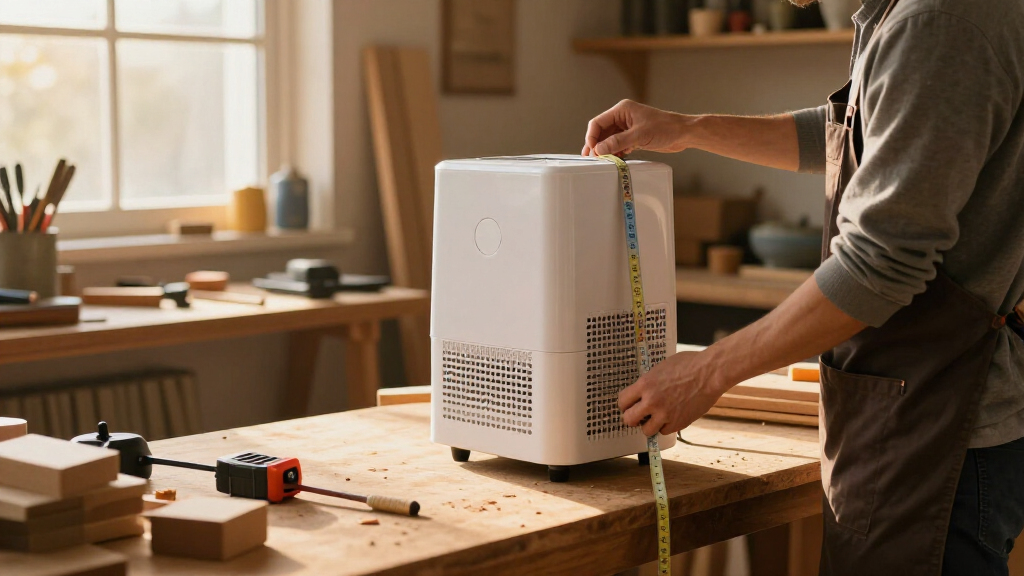
- Measure your room’s square footage (length x width). For example, a 20×15 ft room equals 300 sq ft.
- Estimate the current humidity — use a hygrometer if you have one. For instance, 70% RH (relative humidity).
- Decide your target humidity level — typically 45-50% for comfort and mold prevention.
- Input these numbers into the calculator — most ask for room size, current humidity, and desired humidity.
- Review the suggested pint capacity. For our example, the calculator might recommend a 30-40 pint dehumidifier.
- Choose a model that matches or slightly exceeds the recommendation for optimal performance.
Always double-check your measurements and consider room conditions, like moisture sources or climate. Accurate data ensures the calculator’s advice hits the mark. Remember, even small inaccuracies can lead to over- or under-sizing, which impacts your energy bills and humidity control effectiveness. For example, underestimating the room size by just 50 sq ft might lead to choosing a unit that struggles to keep humidity stable, especially in high-moisture environments. Conversely, overestimating might mean paying more upfront and running a larger unit than necessary, which consumes more energy without added benefit. Precision in measurement and input helps you avoid these costly mistakes and ensures your dehumidifier performs optimally over its lifespan.
Comparison table: 30, 40, and 50 pint dehumidifiers — which is right for you?
| Capacity | Best For | Room Size | Pros | Cons |
|---|---|---|---|---|
| 30 Pint | Small rooms, closets, or dry spaces | Up to 300 sq ft | Energy-efficient, compact | Limited moisture removal in larger or damp spaces |
| 40 Pint | Medium rooms, basements, high humidity areas | 300-500 sq ft | Versatile, effective for most homes | Slightly larger, more power consumption |
| 50 Pint | Larger basements, high moisture environments | 500+ sq ft | Strong moisture removal, suitable for damp spaces | Higher energy use, bigger size |
Matching your room size and moisture level to the right capacity prevents overworking or underperforming units. For example, a 30 pint might struggle in a damp basement over 400 sq ft, leading to persistent humidity issues and potential mold growth. Conversely, a 50 pint in a small, dry room could cause unnecessary energy use and increased wear on the unit. Selecting the correct capacity based on thorough measurement and understanding of your environment ensures you balance efficiency, cost, and performance, ultimately maintaining healthier indoor air quality and avoiding costly repairs or replacements.
Common mistakes when using a dehumidifier size calculator
Many folks input rough measurements or ignore environmental factors, leading to wrong recommendations. For instance, assuming a room is 200 sq ft when it’s really 350 sq ft can cause under-sizing, leaving your space damp and prone to mold growth. Overestimating room size often leads to selecting a larger unit than necessary, which results in higher initial costs and increased energy consumption without proportional benefits.
Another common mistake? neglecting moisture sources like laundry, plants, or frequent cooking. These activities significantly increase indoor humidity, and if not accounted for, the calculator might suggest a capacity too low to handle the actual moisture load. This oversight can cause persistent dampness, mold, and damage over time.
Always use an accurate hygrometer to measure humidity, double-check your room dimensions, and consider environmental factors like moisture sources, outdoor climate, and ventilation. Small errors in input—such as underestimating humidity or room size—can lead to selecting an underperforming unit that fails to keep humidity within healthy ranges. Recognizing these details and adjusting your inputs accordingly ensures your dehumidifier operates efficiently, saving energy and preventing costly mold remediation or property damage.
The future of dehumidifier size tools — smarter and more accurate
New tech makes these calculators smarter than ever. Some are integrated with smart home systems, pulling real-time humidity data from sensors. Others incorporate AI, learning your space’s patterns to refine recommendations.
Imagine a smart home app that automatically detects rising humidity and suggests the perfect dehumidifier capacity — or even adjusts your existing unit’s settings. These tools are making humidity control effortless and more precise.
Enhanced accuracy and user-friendly designs mean fewer mistakes, less wasted energy, and longer-lasting units.
Frequently Asked Questions
How do I know what size dehumidifier I need for my room?
Measure the room’s square footage, check the current humidity with a hygrometer, and decide your target humidity. Then, use a dehumidifier size calculator or guidelines to find the right capacity. For example, a 300 sq ft room with 70% humidity might need a 30-40 pint unit.Why is choosing the right size so important?
A properly sized dehumidifier ensures effective moisture removal, saves energy, and extends the unit’s lifespan. Too small, and it can’t keep up; too large, and it wastes power by cycling too often.Can I use a bigger or smaller dehumidifier than recommended?
Using a smaller unit will struggle to control humidity, risking mold. A larger one may cycle too much, increasing wear and energy use. Stick close to the calculator’s recommendation for best results.Are online dehumidifier size calculators reliable?
Yes, if you input accurate data. They combine room size, humidity, and environmental factors to give a good estimate. But remember, real-world conditions can vary, so adjust accordingly.What other factors should I consider besides capacity?
Noise levels, energy efficiency, portability, and extra features like auto-drain or smart controls matter. Choose a model that fits your lifestyle and space specifics for the best experience.Conclusion
Picking the right dehumidifier size isn’t about guesswork. It’s about data, precision, and understanding your space’s unique needs. A good calculator guides you there — helping you avoid waste, mold, and discomfort.
Remember: measurements matter, and accuracy saves money. Use these tools wisely, and your home’s humidity will stay just right, quietly and efficiently.
Dehumidifier Size Calculator
Estimate daily pint capacity from room size and how damp the space feels.
Your room likely starts in the 20 to 30 pint range. Compare compact dehumidifiers for smaller spaces.
See compact dehumidifier matchesYour room points to a 35 to 40 pint unit. Compare mid-size dehumidifiers and check drainage options.
See mid-size dehumidifier matchesYour conditions call for a 50 pint or larger unit. Compare larger dehumidifiers and confirm room moisture sources.
See larger dehumidifier matchesEstimate only. Check product specs, local rates, and site conditions before buying or planning around these numbers.