TL;DR

Get business pricing on tools and workshop supplies
- Business-only prices and quantity discounts
- Tax-exempt purchasing
- Multiple users, one account, clear invoices
A Hunker report describes crushed granite as a driveway alternative that compacts into a more stable surface than conventional gravel while retaining drainage. The report gives an average material cost of $25 to $50 per cubic yard, but says installation requires excavation, layered compaction and edging; actual prices and durability depend on local conditions and proper installation.
Crushed granite is being presented as an alternative to conventional gravel driveways, with a tighter-compacting surface that can still drain water and may require less frequent reshaping when properly installed. A Hunker report puts its average material cost at $25 to $50 per cubic yard, a range that overlaps with the report’s $15 to $75 estimate for gravel, though the installation process is more involved.
The materials differ in shape and how they behave under pressure. Gravel is formed through natural erosion and its pieces vary in shape and smoothness. Crushed granite is manufactured by breaking solid granite into more uniform, angular pieces. According to the report, those edges interlock more effectively when compacted, helping the driveway resist the shifting and ruts that can develop in loose gravel.
The report says a properly installed and maintained crushed granite driveway can last 20 years or more. That is a conditional estimate, not a guarantee: the material’s performance depends on installation and upkeep. It also remains permeable enough for water to drain, according to the report, though it does not provide performance data or a direct long-term comparison from a study.
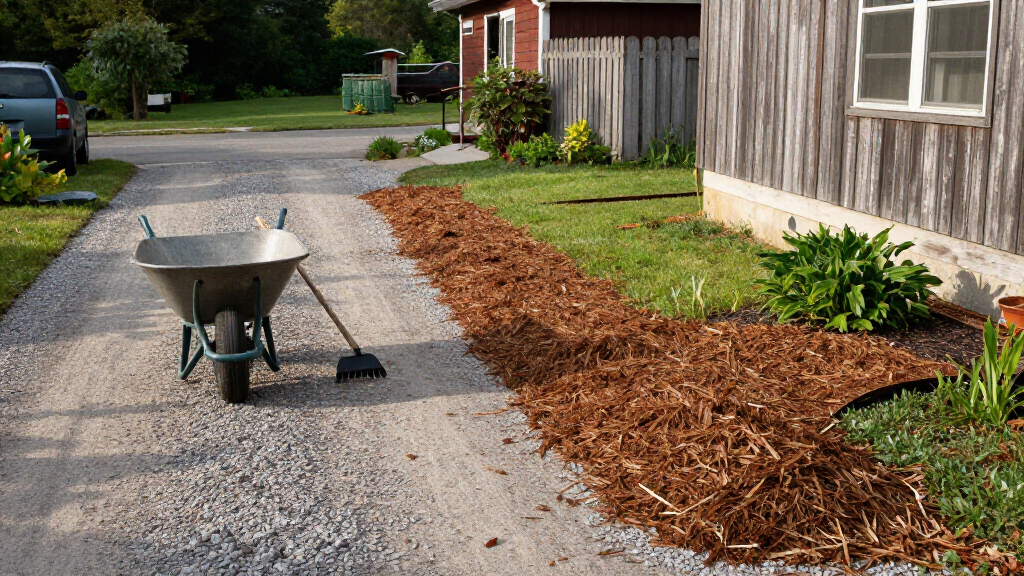
Preparing the surface adds work beyond spreading stone. For regular vehicle use, installers cited by Hunker recommend excavating 6 to 8 inches, grading the base for drainage and potentially laying landscape fabric. Edge restraints help limit movement. Crushed granite should then be spread and compacted in successive 2-inch layers, with water applied during compaction; a finer grade can be used for the top layer to fill gaps.
A Firmer Surface With Upfront Work
For homeowners who regularly rake gravel back into place or fill developing ruts, a more tightly compacted stone surface could reduce that recurring maintenance. The option may also appeal to people seeking a finished stone appearance without choosing a paved surface. Those are practical advantages described by the report, but it does not quantify maintenance savings or establish how crushed granite performs across different climates, soils or driveway designs.
Price comparisons also need to include labor and preparation, not just the cost of stone. The reported $25 to $50 per cubic yard for crushed granite falls within the stated gravel range, but the additional excavation, grading, compaction and edge restraints can affect the final project price. Homeowners should compare local material and installation quotes before treating the material estimate as the total cost.
Popular right now

KitchenAid Artisan Series 5-Quart Tilt-Head Stand Mixer, Dried Rose (KSM150PS)

Vitamix Propel Series 510 Professional-Grade Blender, 3 Programs, Black

Dreame L50 Ultra Robot Vacuum and Mop
As an affiliate, we earn on qualifying purchases.
How Granite Compares With Other Stone
Crushed granite is not the only alternative discussed. Decomposed granite comes from the same basic material but is much finer, with a texture closer to sand. Hunker says it can be compacted, but rain and vehicle use may lead to rutting and displacement over time. It should not be treated as interchangeable with coarser crushed granite.
Crushed limestone is another angular stone that can compact well and is usually less expensive than crushed granite, according to the report. The trade-off is its susceptibility to weathering and erosion. The report also says limestone erosion can gradually raise soil pH, a potential concern for people growing acid-loving plants nearby. Availability and local prices can shape which material makes sense.
“Properly installed and maintained, a crushed granite driveway can last for 20 years or more.”
— Hunker report
Costs and Lifespan Depend on Site
The supplied report does not specify when its price estimates were collected, where they apply, or whether they include delivery, labor or site preparation. The figures are per cubic yard, not a complete driveway quote, and costs can vary by location, material availability and project size.
The stated lifespan of 20 years or more is also qualified by proper installation and maintenance. The report provides no testing data, warranty terms or comparison under controlled conditions. It is not clear how a particular driveway would perform given local rainfall, soil, slope, traffic or upkeep. Homeowners should ask local suppliers or contractors to assess those factors before choosing a surface.
Compare Local Quotes and Materials
Homeowners considering a replacement can request itemized estimates for crushed granite and gravel that separate stone, delivery, excavation, base preparation, edging and labor. They can also ask contractors how they will grade for drainage, compact the material in layers and account for soil and expected vehicle use. Those details make it easier to compare the full installation rather than the stone price alone.
The report does not announce a new product, regulation or scheduled industry change; it presents crushed granite as one option for homeowners weighing driveway maintenance and appearance. A final choice depends on local costs, site conditions and the homeowner’s priorities, with limestone and decomposed granite remaining alternatives with different trade-offs.
Key Questions
How much does crushed granite cost?
Hunker reports an average material price of $25 to $50 per cubic yard. It does not say whether that figure includes delivery or installation, so local project quotes may be higher.
Is crushed granite more durable than gravel?
The report says its angular pieces compact more tightly than variable-shaped gravel and may resist shifting and rutting. It says a properly installed and maintained driveway can last 20 years or more, but does not provide comparative test data or guarantee that lifespan.
How deep should a crushed granite driveway be?
Installers cited in the report recommend excavating 6 to 8 inches for driveways expecting regular vehicle traffic. The appropriate depth can depend on the site and the project design.
Is decomposed granite the same as crushed granite?
No. Both come from granite, but decomposed granite is much finer, closer to sand. The report says rain and vehicle traffic can cause it to rut or move over time.
What should homeowners compare before choosing?
Compare local material and delivery prices, installation labor, excavation, edging and drainage preparation. Soil conditions, rainfall, expected traffic, upkeep and the availability of stone nearby can also affect the choice.
Source: rss