
TL;DR

Get business pricing on tools and workshop supplies
- Business-only prices and quantity discounts
- Tax-exempt purchasing
- Multiple users, one account, clear invoices
A Hunker report presents basalt stones as an alternative to concrete blocks for garden retaining walls, citing their dense composition, weather resistance and dark appearance. The stones can be heavy, and the report says walls taller than 24 inches should be handled by a professional; it does not provide comparative cost or lifespan data.
A Hunker report identifies basalt stones as an alternative to concrete blocks for garden retaining walls, citing their dense composition, weather resistance and dark appearance. The material may suit homeowners looking for a natural-looking wall, but the stones’ weight and the report’s safety guidance for taller walls make installation a significant consideration.
The report says basalt is a dense volcanic stone that can stand up to rain, frost and sun. Its color ranges from deep gray to black, and Hunker says the dark stone can provide a contrasting backdrop for garden plants. These are general material and design claims in the report, not results from a cited comparative test.
Weight is a practical constraint. Hunker gives a range of 100 to 200 pounds for larger boulders and 70 to 100 pounds for medium-sized stones. Smaller, unfinished rocks are listed at 15 to 70 pounds each. The report advises getting professional help and heavy machinery for larger stones, and says even smaller stones may require help from other people.
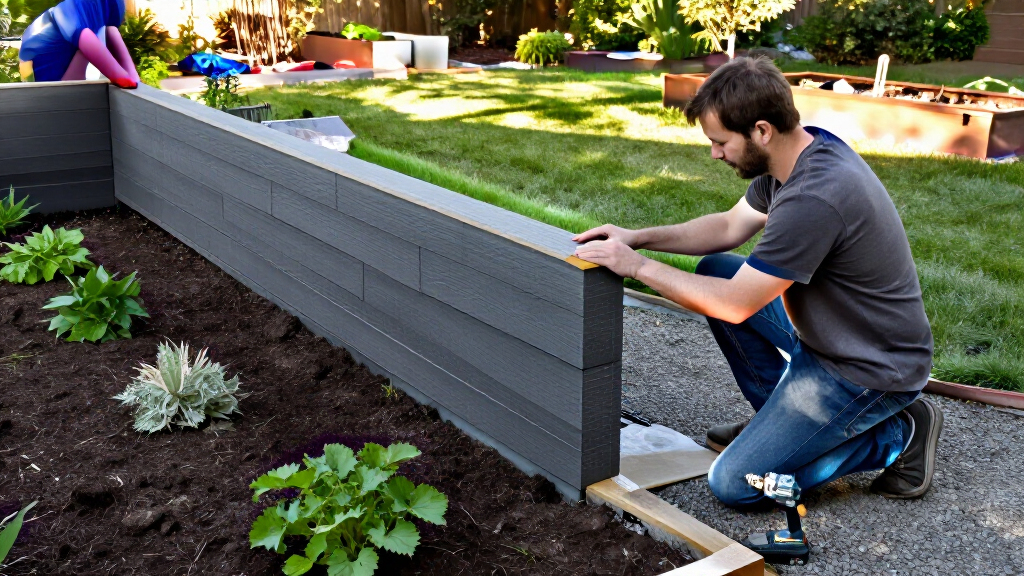
For construction, the report describes a low wall built in staggered rows, with each course set back slightly toward the soil. It gives a suggested inward slope of one inch per foot of wall height and says its do-it-yourself guidance applies to walls up to 24 inches tall. The article does not provide engineering calculations or establish that this approach is suitable for every site or soil condition.
Weight Changes the Installation Plan
Basalt’s appeal is not limited to appearance: a naturally dark stone can create a different look from uniform concrete blocks, while its reported density and weather resistance may appeal to homeowners concerned about maintenance. But the material choice also affects the work required. Moving and positioning stones weighing tens or hundreds of pounds can call for additional labor, lifting equipment and professional installation.
That trade-off matters when comparing options for a garden project. The source does not give prices, service-life estimates or measured repair rates for basalt versus concrete, so readers cannot use it to conclude that basalt is cheaper over time or always more durable. Project costs and suitability will depend on factors such as the wall’s height, site conditions, stone availability and installation needs.
Popular right now

Vitamix Propel Series 510 Professional-Grade Blender, 3 Programs, Black

KitchenAid Artisan Series 5-Quart Tilt-Head Stand Mixer, Dried Rose (KSM150PS)

Dreame L50 Ultra Robot Vacuum and Mop
As an affiliate, we earn on qualifying purchases.
A Garden-Wall Material Alternative
The source frames basalt as an option for simple garden retaining walls, particularly for people who want a natural stone finish rather than the plain appearance it attributes to concrete blocks. It says concrete blocks can crack, stain or crumble after exposure to weather, but does not cite a study or quantify how often those problems occur. The comparison is therefore descriptive rather than a measured assessment of both materials.
Hunker also outlines a basic method for a short wall: mark the area, dig a shallow trench, place stones close together, fill gaps and build subsequent rows with joints staggered. The report recommends leaning the wall slightly into the retained soil. That outline is not a substitute for site-specific engineering advice, particularly where a wall will retain substantial soil or sit near structures, paths or other areas where failure could cause harm.
Costs and Site Suitability Remain Unknown
The supplied report does not include a publication date, named engineering source, product data or comparative testing. It gives no cost estimates, quantified lifespan, maintenance schedule or evidence that basalt will outperform concrete in all climates and installations. Its descriptions of durability and appearance should be read as the report’s claims, not as a guarantee for a particular wall.
It also does not assess drainage design, soil type, local building rules or the load a proposed wall must hold. Those factors can affect safety and performance. The stated 24-inch limit is the report’s do-it-yourself guidance; it is not presented as a universal legal threshold or a substitute for local code requirements.
Check the Site Before Choosing Stone
Homeowners considering basalt should first establish the wall’s planned height, the ground and drainage conditions, and whether local permits or building rules apply. They should obtain local installation and material quotes before comparing the project with concrete, since the source provides no cost data.
For heavy boulders, difficult access, steep corners or taller walls, the report points toward professional help and machinery. Any wall project should be reviewed for site-specific safety and stability rather than relying on a general do-it-yourself outline. The supplied material describes no announced product launch or scheduled follow-up, so whether further comparative information will be published is unclear.
Key Questions
What makes basalt an alternative to concrete blocks?
The Hunker report describes basalt as a dense volcanic stone that can withstand rain, frost and sun, and notes its dark gray-to-black appearance. It does not provide test data proving it lasts longer than concrete.
How heavy are basalt stones for a retaining wall?
The report lists larger boulders at 100 to 200 pounds, medium stones at 70 to 100 pounds, and smaller unfinished rocks at 15 to 70 pounds. Actual weights will vary by stone.
Can I build a basalt retaining wall myself?
Hunker says its DIY guidance is for walls up to 24 inches tall and advises professional expertise for taller walls. Heavy stones, challenging corners and site conditions may also require professional help. Check local rules and site-specific safety needs before starting.
Does basalt cost less than concrete?
The supplied report gives no price comparison. Stone weight, delivery, equipment, labor and local availability could affect the total, so homeowners would need project-specific quotes.
Source: rss