TL;DR

Get business pricing on tools and workshop supplies
- Business-only prices and quantity discounts
- Tax-exempt purchasing
- Multiple users, one account, clear invoices
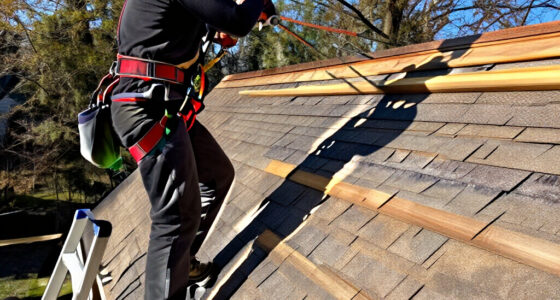
Choose a safety harness for tower work by matching its approved attachment points and fit to the task, then checking every connection, anchorage, clearance requirement and rescue step. A harness is one part of a personal fall protection system; it cannot prevent every fall or make an incompatible setup safe.
A harness can stop a fall and still leave you suspended in a dangerous spot. That is why choosing one for tower work starts with the whole job: where you can fall, how you will move, what you will connect to and how a coworker will reach you if the system arrests a fall.
This guide walks you through the practical choices: restraint, positioning or fall arrest; harness configuration and fit; compatibility, clearance and swing falls; inspection, training and rescue. You will also see where a rental or a qualified fall protection professional makes more sense than buying equipment and guessing. Local rules and manufacturer instructions govern the final setup, because a spec that works on one tower may not work on the next.
Choose restraint, work positioning or fall arrest based on the actual task and fall hazards.
Use only attachment points approved for the specific application; dorsal, front and side points do different jobs.
Check compatibility from the worker’s harness through the connector and device to the anchorage or lifeline.
Calculate clearance from the equipment instructions and account for swing hazards and nearby structures.
Fit and inspect the harness for each worker, and plan a workable rescue before climbing.
How to Choose the Right Safety Harness for Tower and Elevated Work
Start with the task, map the fall hazards, then match the harness and every connection to the system. Fit, clearance, inspection and rescue all belong in the plan before anyone climbs.
Match the system to the fall hazard
The word “tower” does not determine the setup. Walk the route and identify edges, ladder transitions, platforms, obstructions, and places where the worker must lean or reach.
Fall restraint
Limits travel so the worker cannot reach an edge. Use only when the system is designed for that purpose and the task can be completed within its limits.
Work positioning
Supports a worker hands-free while working. Positioning points and connections have specific approved uses and do not automatically provide fall arrest.
Fall arrest
Stops a fall after it begins. The system must account for the device, anchor, clearance, swing hazards, and a workable rescue method.
Use only the attachment point approved for the task
Attachment points are not interchangeable. Check the harness label, the device instructions, and the system design for the exact application at each stage of the job.
Check compatibility across the whole system
Trace the connection from the anchorage to the worker. Each component must be approved for the intended use, fit with the next component, and be used as its manufacturer allows.
Calculate clearance and account for swing
There is no single clearance figure for every setup. Required distance depends on the device, connection location, worker position, and manufacturer instructions.
Check below the worker
Allow enough unobstructed distance for the system to deploy and stop a fall. Include platforms, cross members, antennas, ledges, and equipment in the assessment.
Check the swing path
An anchor far to one side can create a pendulum path. A worker may have enough vertical clearance and still strike a steel brace or another obstacle.
Fit, inspect, train, and plan rescue
A harness that fits one worker may not fit another. Selection should account for the range of users, the clothing and equipment worn, and the site’s rescue capability.
Start by matching the harness to the fall hazard
Choose a safety harness only after you know whether the task calls for fall restraint, work positioning or fall arrest, because those systems solve different problems. Restraint keeps you from reaching an edge; positioning supports you while you work hands-free; fall arrest stops a fall after it starts. A harness cannot tell you which one the job needs.
Walk the route before anyone climbs. Mark open edges, ladder transitions, platforms, obstructions below and places where you must lean or reach. For example, a tower technician who can stay inside a guarded platform may need a different setup from someone climbing a mast and connecting to a vertical system. The work path, not the word “tower,” drives the choice.
Think of the harness as one link in a chain. The anchorage, connector, lanyard or self-retracting device, lifeline and rescue method all have to suit the task. A strong harness attached to an unsuitable anchor is like a good wrench turning a loose bolt: the tool itself does not fix the system.
For a short job on an elevated structure, restraint may be a practical way to prevent access to the edge if the system is designed for that use. Where you need to move beyond restraint, the plan must address positioning or arrest and their specific connection requirements. Have qualified or competent personnel assess the setup as required by applicable rules.
Before work starts, identify who owns the system assessment and how workers will confirm the chosen method. If the job changes, stop and reassess. A moved anchor or a new route can change the fall hazard in minutes.
Popular right now

Samsung 48-Inch S90H OLED 4K Smart TV (2026)

Breville BES870XL Barista Express Espresso Machine, Brushed Stainless Steel

eufy E25 Robot Vacuum and Mop Combo with HydroJet Roller Mop
As an affiliate, we earn on qualifying purchases.
Use only the attachment point approved for your task
A tower safety harness needs attachment points approved for the exact use in the system design. A full-body harness is commonly used for personal fall arrest, with a dorsal attachment point often serving that purpose. Front points may be approved for certain climbing systems, and side points may support work positioning, but you must check the labels and instructions for the specific harness and equipment.
Those points are not interchangeable. Clipping a fall-arrest device to a side positioning point because it is easier to reach can change how the harness loads the body in a fall. Likewise, a point designed for a specific climbing system may have limits that do not match a generic lanyard. The metal ring can look sturdy and still be wrong for the connection.
Suppose you are fitting a worker for tower access. The harness has a dorsal D-ring, front attachment points and side rings. The worker’s route uses a compatible climbing system, while a separate fall-arrest setup is planned for another portion of the job. The site plan and manufacturer instructions should specify which point to use at each stage, so a rushed connection does not become a guess.
Read the equipment labels before climbing and confirm the connector locks correctly. If a label is missing or unreadable, remove the equipment from service and follow the manufacturer’s evaluation instructions. Never assume a familiar-looking harness has the same approved uses as the last one.
Use the attachment point named for the application. Convenience and appearance do not establish approval.
Check every connection before you leave the ground
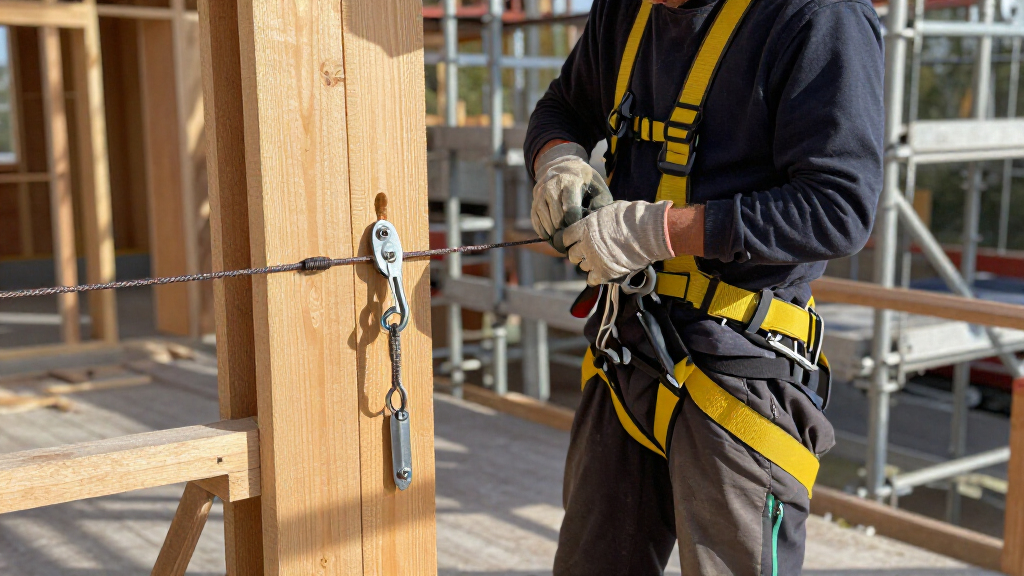
A harness works only when it is compatible with the connector, lanyard or self-retracting device, anchorage, lifeline and climbing system around it. Check that each component is approved for the intended use, fits with the next component and connects as its manufacturer allows. One mismatched link can compromise an otherwise sound setup.
Start at the anchor and trace the connection to the worker. Look for incompatible connectors, gates that do not close or lock, awkward loading directions and equipment combinations the manufacturers prohibit. A connector that appears clipped in can still be poorly seated against a ring or structure. The visual check matters, but so do the product instructions and the system design.
For instance, if a worker changes from a tower’s fixed climbing system to a separate fall-arrest device, the second connection must be planned. The worker needs clear instructions about where to connect during that change and how to remain protected through the transition. A connection plan that ends halfway up the tower is not a complete plan.
Do not mix components just because they are available in the truck. Even if two pieces attach physically, their compatibility and intended use still need confirmation. Consult the manufacturer and the person responsible for system design when specifications are unclear.
Some current equipment offers lighter materials, more adjustable designs, easier-to-see connection features or digital inspection and asset tracking. Those features can help with a real site problem, but they do not replace a compatible system or trained users. Evaluate durability, support, training demands and compatibility alongside convenience.
Calculate clearance and prevent a swing into the tower
A fall-arrest system needs enough unobstructed space below the worker for the equipment to deploy and stop the fall. There is no single clearance figure that applies to every harness and connection: the required distance depends on the device, connection location, worker position and manufacturer instructions. A poorly placed anchor can also create a swing fall that drives a worker into the tower or another obstacle.
Before climbing, check what sits beneath and beside the work area: cross members, platforms, antennas, ledges and equipment. A worker attached far to one side of an anchor may swing like a pendulum if a fall occurs. Even with enough vertical clearance, that sideways arc can cause a hard impact.
Picture a technician working near the edge of a platform with an anchor behind and to the side. If the worker falls, the device may arrest the drop while the body swings into a steel brace. Moving the connection point or changing the planned work position may reduce that risk, but the system must be assessed against the manufacturer’s directions and site conditions.
Use the fall-arrest device instructions and system calculation to establish clearance. Account for the actual connection setup and the obstacles around the worker; do not copy a number from another job or guess by eye. Have a qualified person verify the arrangement when needed, especially where the available drop distance is tight.
If the task can be completed with a properly designed restraint setup that prevents access to the hazard, that may avoid a fall-arrest clearance problem. The right choice depends on the work method and rules that apply at the site.
Get the fit right over the clothes and tools you will wear
A harness must fit the individual worker snugly, with straps routed correctly, buckles secured and excess webbing managed. Fit it over the clothing and equipment the person will wear on the job, then check the manufacturer’s adjustment instructions. A harness that is loose, incorrectly routed or unsuited to the wearer can increase injury risk during a fall.
Fit is not a one-time decision made at the shop counter. A winter jacket, radio harness, tool belt or other work gear can change how the straps sit. Have the worker put on the full setup before climbing and confirm that the leg, shoulder and chest straps are adjusted as instructed. The harness should allow the movement the task needs without loose straps flapping or buckles sitting out of place.
Consider a crew with workers of different sizes who share equipment. A single model may not fit everyone, even if its size range appears broad. Make sure each user can adjust the harness correctly and that the site has suitable options available. An untested fit discovered on a narrow ladder is a bad time to improvise.
Ask workers to practice fitting and connecting at ground level. They should know where each strap routes, how each buckle closes and how to spot a poor fit. Training turns a printed adjustment guide into a routine the worker can perform before the climb.
Comfort matters because a harness that pinches or restricts movement can distract the worker and discourage proper use. But comfort does not override fit, approved use or the instructions for the specific model.
Inspect the harness before every use and after any fall
Inspect the harness and connected equipment before each use, following the manufacturer’s checklist and any employer or local requirements. Look for cuts, abrasion, burns, chemical damage, damaged stitching or hardware, missing labels and signs that the equipment has arrested a fall. If you find damage or cannot confirm the equipment’s status, remove it from service.
Run your eyes and hands over the webbing and stitching; check buckles, rings and connectors for visible damage or poor function. A clean harness is not automatically a sound one. Paint, dust or grime can hide wear, while an apparently small cut may be a reason to follow the manufacturer’s removal criteria rather than make your own repair.
If a harness or connected component arrests a fall, take the affected equipment out of service immediately. Do not return it to use because it looks fine after a quick check. Follow the manufacturer’s inspection and disposition instructions, including any required evaluation or disposal.
Keep equipment clean and stored as directed so webbing and hardware do not collect avoidable damage. Maintain inspection records when required by the manufacturer, employer or local rules; requirements vary. For example, a crew that records a damaged connector and tags it out can prevent the next shift from finding it in the common equipment rack.
There is no universal service-life number that overrides the product instructions and condition of the equipment. Replace or remove equipment when it fails inspection, has illegible identification, has arrested a fall or reaches a stated manufacturer limit.
Plan a rescue before anyone climbs
A fall-arrest plan needs a practical way to reach and recover a suspended worker. Decide who will perform the rescue, what equipment they will use, how they will communicate and how the method fits the actual tower. Selecting a harness without planning rescue leaves a serious gap after the fall has stopped.
Walk through the scenario at the site. If a worker is suspended below a platform, can the designated rescuers reach that location with the available equipment? Who calls for help, and who stays in contact with the worker? A rescue plan that depends only on someone “getting help” may not explain how rescuers reach a person hanging on the far side of a structure.
For example, a team may have a compatible harness and lifeline but no equipment staged to lower or otherwise recover a worker. That team has planned to arrest the fall, but not to complete the response. The rescue method, personnel and equipment need to be identified before work begins and made practical for the site.
Training should cover fitting, inspection, connections, equipment limits and the rescue procedure. Employers should use qualified or competent personnel to assess work and system design where applicable regulations require them. A brief site discussion can help workers understand their roles, but it does not replace the required training or planning.
Rules and product standards vary by country and may change. In the United States, OSHA requirements and relevant ANSI/ASSP standards are common references; other regions have their own requirements. Check current local rules, applicable standards, product labels and manufacturer instructions rather than treating a rule from another jurisdiction as universal.
Frequently Asked Questions
Is a full-body harness always required for tower work?
No single harness setup fits every tower task. A full-body harness is commonly used for personal fall arrest, but the right equipment depends on the work method, hazard, system design and rules that apply at the site.
What is the difference between fall restraint, positioning and fall arrest?
Restraint keeps you from reaching a fall hazard. Work positioning supports you at a work location, often so you can work hands-free. Fall arrest stops a fall after it begins; each use needs equipment and connections designed for that purpose.
Which harness attachment point should I use?
Use the point specified by the manufacturer and system design for your task. The dorsal point is commonly used for fall arrest, while front or side points may have other approved uses. Do not assume the points are interchangeable.
How do I know whether there is enough clearance below me?
Use the device instructions and system calculation, accounting for the connection setup, worker position, deployment and stopping distance, and obstacles below. Ask a qualified person to verify the setup when needed; do not rely on a universal number or a visual guess.
Can I use a harness after it has stopped a fall?
No. Remove the harness and affected system components from service immediately after a fall arrest. Follow the manufacturer’s inspection and disposition instructions before any decision about evaluation or disposal.
How often should I inspect a tower harness?
Inspect the harness and connected equipment before each use, following the manufacturer’s checklist. Additional documented inspections may apply under employer requirements, manufacturer instructions or local rules.
What should a tower rescue plan include?
Identify the rescue method, responsible people, equipment, communication steps and how rescuers will reach and recover a suspended worker at that site. The plan should fit the tower and be understood before anyone climbs.
Conclusion
Choose the harness as part of a complete system built around the task, the worker and the tower. Confirm the approved connection points, fit, compatibility, clearance and rescue method before the climb, and stop if any part of the setup is uncertain.
A harness is not a permission slip to take a fall. It is one piece of a carefully planned system; make every connection count before boots leave the platform.