TL;DR

Get business pricing on tools and workshop supplies
- Business-only prices and quantity discounts
- Tax-exempt purchasing
- Multiple users, one account, clear invoices
Cordless reciprocating saws are useful for rough cuts in plumbing and electrical remodeling, but their fast, aggressive stroke can damage hidden services or make a cut wander. Check and isolate services, secure the work, choose the shortest suitable blade, and keep the shoe against the material. Use a pipe cutter or another controlled tool when a clean, square cut matters or you cannot confirm what lies behind the blade.
A cordless reciprocating saw can cut through a pipe in seconds—and put a hidden cable in the same seconds if you rush. That fast back-and-forth stroke is useful in a cramped remodel, where a full-size saw or pipe cutter may not fit, but speed does not make the blade path safe.
This guide covers best practices for using cordless reciprocating saws around plumbing and electrical work: checking what sits behind the cut, isolating services, choosing a blade, and keeping the tool under control. You will also see when a pipe cutter, hacksaw, or oscillating tool gives you a cleaner, safer result.
Think of the saw as a demolition and access tool, not a precision instrument. If you cannot identify what the blade might hit, pause and open the area by a more controlled method. A few extra minutes of inspection beat a flooded cabinet, damaged cable, or expensive repair.
Inspect the full blade path and use the shortest blade that safely reaches the work.
Turn off and verify electrical circuits; shut off and drain plumbing lines before cutting.
Secure the pipe or conduit, brace the saw shoe, and stop if the blade binds or wanders.
Use a pipe cutter for a clean, square plumbing cut and deburr conduit after cutting.
Call licensed professionals for electrical or gas work when you cannot verify safety, scope, or code requirements.
Field guide / Remodel safely
Best Practices for Using Cordless Reciprocating Saws
Fast, portable cuts can help with plumbing and electrical remodeling—but the blade can reach hidden services in seconds. Inspect the full path, isolate utilities, support the work, and treat this saw as a demolition tool rather than a precision cutter.
Five habits that prevent costly surprises
The aggressive back-and-forth stroke is useful in tight remodel spaces. Control comes from preparation, support, and knowing when to switch tools.
Inspect behind and beside the cut; use the shortest blade that reaches safely.
Switch off and verify circuits. Shut off and drain plumbing lines.
Secure pipe or conduit, brace the shoe, and stop if the blade binds or wanders.
Choose a pipe cutter for clean, square cuts; deburr conduit after cutting.
Bring in licensed professionals when safety, scope, or code requirements are unclear.
Pause. Prepare. Cut. Recheck.
A few minutes of inspection can prevent a flooded cabinet, damaged cable, or repair that reaches into the framing.
- STEP 01LocateCheck plans, inspect both sides when practical, and look for wires, pipes, gas lines, and structural members.
- STEP 02IsolateDe-energize and verify circuits; shut off and drain the affected water line.
- STEP 03Set upSupport the work, choose a sound short blade, clear the area, and wear task-appropriate protection.
- STEP 04ControlUse a two-handed grip when possible. Start steadily, keep the shoe firm, and do not twist or force.
The blade keeps moving beyond the visible cut on every stroke. Choose the shortest blade that safely reaches through the material, and consider a depth-limiting accessory when clearance is tight.
Blade choice changes the result
Use a blade designed for the material and follow the saw and blade makers’ guidance on length and application.
| Material or task | Good starting choice | Watch for |
|---|---|---|
| Metal pipe or conduit | Fine-tooth metal blade | Secure work; deburr the edge |
| Wood framing | Coarser wood blade | Hidden services and structural limits |
| Copper or plastic pipe, clean finish | Pipe or tubing cutter | Access and room to turn the tool |
| Rough demolition / access | Reciprocating saw | Blade reach, support, and nearby finishes |
Steady hands start with a stable setup
The shoe helps steady the saw and limit exposed blade only when it stays firmly against the material.
Stop movement
Clamp or support pipe and conduit. A moving workpiece can chatter, pinch the blade, and pull the cut off line.
Let the blade work
Start at a manageable speed, let the blade reach speed, then apply steady pressure. Avoid sideways levering.
Fix the cause of binding
Stop the saw. Remove the battery before inspection, then check for a dull blade, poor support, or pinching.
Dress for the work
Wear eye and hearing protection, task-suited gloves, and respiratory protection when dust or debris requires it.
Manage the surroundings
Secure loose clothing and hair. Watch for hot chips, sharp pipe edges, falling cutoffs, and finished surfaces.
Use compatible power
Use a charged, compatible battery. Follow the manual; electronic controls and vibration reduction do not guarantee a safe or straight cut.
Rough access or a clean finish?
The reciprocating saw shines in demolition and hard-to-reach rough cuts. Precision and uncertainty call for another approach.
Access and removal are the priority
The work is identified and isolated, the material is supported, and a rough cut is acceptable. Keep the shoe planted and the blade clear of services beyond the cut.
Finish, control, or clearance matters
A pipe or tubing cutter can make a cleaner, squarer plumbing cut. A hacksaw or oscillating tool may offer better control in some spaces. If the blade path is uncertain, make a small inspection opening or get qualified help.
From uncertainty to a safer cut
Treat what you cannot verify as a reason to pause, not a reason to guess.
- CHECKWhat is nearby?Services, framing, finishes, and the full blade stroke.
- VERIFYCan it be isolated?Confirm power is off; shut off and drain water.
- SUPPORTCan it stay stable?Secure the work and brace the saw shoe.
- DECIDEIs this the right tool?Cut only when the path and method are clear.
Check the blade path before you cut
Before using cordless reciprocating saws near a wall, floor, or service run, identify what lies behind and beside the cut. Check plans, inspect from both sides when you can, and use suitable inspection tools to locate wires, water lines, gas lines, and structural members. A stud finder or scanner can help, but it cannot prove that every cavity is clear.
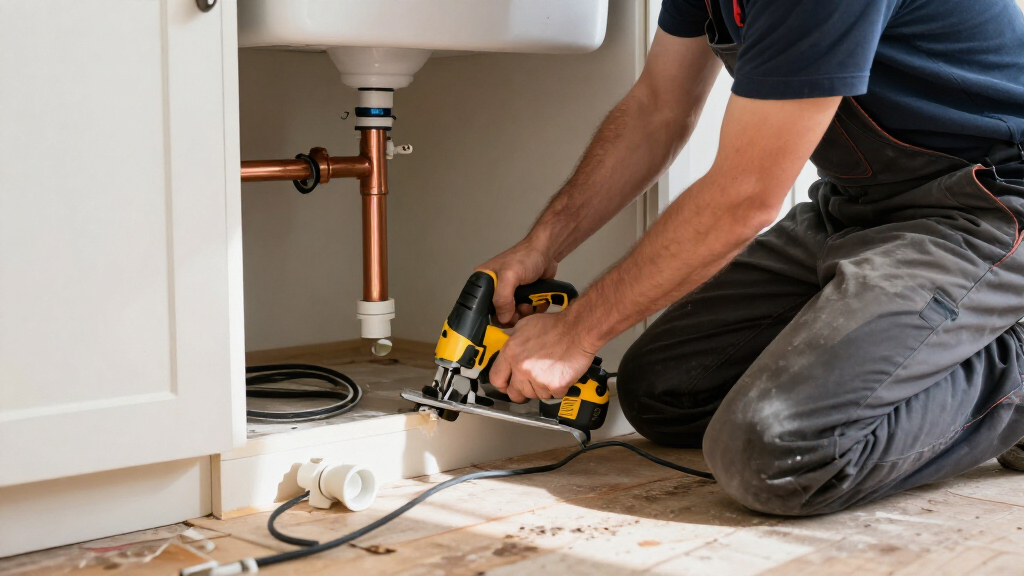
For example, a plumber replacing a short section of copper under a sink may see the pipe clearly but miss a cable stapled to the cabinet wall just beyond it. The saw blade can travel past the pipe as it breaks through. Use the shortest blade that safely reaches the work, and consider a depth-limiting accessory when clearance is tight.
If you cannot confirm the path, treat that uncertainty as a stop sign. Make a small inspection opening with a controlled tool, gain access from the other side, or choose a method that keeps the blade away from hidden services. Guessing is not a locating method, especially around gas or live electrical systems.
Keep the blade’s full stroke in mind. The blade can reach beyond the visible cut on every pass, so inspect the space behind the pipe as well as the pipe itself.
Members of a wall or floor may also carry loads or provide bracing. Do not notch or cut structural framing based on guesswork; check the plans and applicable requirements, and bring in a qualified professional if the cut could affect the structure. That small check can prevent a repair from turning into a framing problem.
Popular right now

Ninja Specialty Coffee Maker CM401, 10-Cup Carafe, Fold-Away Frother, Black

Ninja Flip Toaster Oven & Air Fryer, 8-in-1, Stainless Steel, SP151

Samsung 48-Inch S90H OLED 4K Smart TV (2026)
As an affiliate, we earn on qualifying purchases.
Isolate water and electricity before cutting
Cordless reciprocating saws do not make a work area safe by themselves. Before cutting near electrical wiring, switch off the relevant circuit and verify that it is de-energized with an appropriate tester. If you cannot identify the circuit or verify its status, do not cut into the area; call a licensed electrician.
For plumbing, shut off the supply and drain the affected line before cutting. A pipe can hold enough water to soak a cabinet or wall even after the main flow stops. Put a bucket and towels below the cut, and plan for trapped water to escape when the pipe opens.
Imagine cutting a horizontal copper line beneath a bathroom vanity. If you skip draining it, water can run down the cabinet and swell the particleboard base. Supporting the pipe and placing a catch pan helps, but those steps do not replace shutting off and draining the line.
Electrical work carries shock and fire risks, and plumbing and electrical changes may fall under local code or permit rules. Follow site procedures and local requirements; hire licensed professionals for electrical or gas work when the task calls for it. Never cut energized wiring, and do not treat a saw as a substitute for proper isolation.
Gas lines deserve extra care. Do not use a reciprocating saw to cut or alter a gas line; contact a licensed professional. If you suspect a line is damaged or smell gas, stop work, leave the area, and follow local emergency guidance.
Choose a blade that matches the pipe or conduit
The right blade depends on the material, cut, and clearance. Fine-tooth blades generally suit metal pipe and conduit because they engage the material more smoothly; coarser teeth remove wood faster. Use blades designed for the material, and follow the saw and blade manufacturers’ guidance on length and application.
For example, a short metal-cutting blade can make a controlled cut through de-energized steel conduit in an accessible work area. A long wood blade used there may snag, chatter, or reach into a cable or framing behind the conduit. Blade length matters as much as the tooth pattern.
Plastic pipe and copper can often be cut with a reciprocating saw, but the result may be rough or angled if the pipe shifts. A tubing cutter often gives you a cleaner, more square cut for a fitting. In demolition, where the pipe will be removed and access matters more than finish, the saw may be the faster choice.
| Material or task | Blade or tool choice | What to watch for |
|---|---|---|
| Metal pipe or conduit | Fine-tooth metal-cutting blade | Secure it and deburr the edge after cutting |
| Wood framing | Coarser wood blade | Check for hidden services and structural limits |
| Copper or plastic pipe with a clean finish needed | Pipe or tubing cutter | Check access and leave room for the tool to turn |
Replace a blade that is dull, bent, cracked, or missing teeth. A damaged blade can bind or wander, and forcing it increases the chance of a poor cut. Remove the battery before changing blades or adjusting the tool.
Keep the saw steady through the cut
To control a reciprocating saw, secure the work, brace the shoe, and let the blade do the cutting. Use a two-handed grip when possible, start at a manageable speed, and avoid twisting or forcing the tool. The shoe helps steady the saw and limits how much blade is exposed when you hold it firmly against the material.
Suppose you are cutting a short length of conduit in a wall cavity. If the conduit can rattle, clamp or support it before cutting; otherwise the blade may chatter and the cut may wander. Start slowly, let the blade reach speed, then apply steady pressure without levering the saw sideways.
Binding often points to a problem you can fix: a dull blade, poor support, a twisted cut, or material pinching the blade as it shifts. Stop the saw, remove the battery before inspecting it, and correct the cause. Do not pull or twist a stuck blade while the tool is powered.
Orbital action can speed some cuts in wood, but it is generally less suited to controlled cuts in metal or near delicate services. Variable-speed triggers and vibration reduction can help with handling, yet neither feature guarantees a straight or safe cut. Check the manual and set the tool for the material.
Wear eye and hearing protection, and add respiratory protection when dust or debris calls for it. Secure loose clothing and hair, and keep a clear path for falling cutoffs. Metal chips can be hot; freshly cut pipe edges can be sharp enough to slice a glove.
Plan plumbing cuts to prevent leaks and pinched blades
For plumbing, support the pipe and account for water before you cut. A pipe that flexes can pinch the blade, break a fitting, or leave an uneven end that makes joining harder. Shut off and drain the line, support both sides where practical, and keep nearby insulation and finished surfaces out of the blade’s path.
Picture replacing a short run of plastic drainpipe behind a vanity. If you cut the pipe without supporting the free section, its weight can pull downward as the cut completes, pinching the blade and stressing a nearby fitting. A simple clamp or a second support can keep the pieces steady until you finish.
Once cut, prepare the pipe end for the joining method. That may mean removing burrs, cleaning the surface, or making a square end; follow the fitting manufacturer’s instructions and applicable plumbing code. A rough cut may be fine when you are removing an abandoned section, but it is a poor foundation for a watertight connection.
When the pipe sits in an accessible straight run, a pipe or tubing cutter can make a cleaner, more square cut than a reciprocating saw. The saw is useful for rough cuts in tight demolition or when a fitting blocks a cutter’s rotation. Choose based on access and the finish the repair requires.
If the line’s purpose is unclear, or it may carry gas, stop and identify it before cutting. A wrong guess can put you in danger and damage the building. Bring in a licensed plumber for gas work or a repair that exceeds your qualifications.
Cut conduit only after you confirm it is de-energized
You can cut metal conduit with a reciprocating saw only when you have confirmed the circuit is safely de-energized and the conduit is secure. Identify what the conduit serves, switch off the correct circuit, and verify the absence of voltage with suitable equipment. If you cannot establish that status, stop and call a licensed electrician.
For example, a remodeler may need to remove an abandoned conduit stub behind a cabinet. Before cutting, they confirm it is disconnected and secured so it will not swing into a cable or another service. They use a short metal-cutting blade, keep the shoe against the conduit, then inspect and deburr the cut.
Deburring matters because a sharp metal edge can damage conductor insulation as wires pass through the conduit. Use the right fitting and protect conductors from sharp edges as required by the installation. Follow applicable electrical codes and permit requirements; a neat cut does not make a noncompliant installation acceptable.
Do not cut an electrical cable with a reciprocating saw. Even if a cable appears abandoned, confirm its status and route before you touch it. Electrical identification and modifications can require training, testing, and code knowledge beyond a typical DIY repair.
For a small, precise opening near installed wiring, an oscillating tool may offer more control, but it still needs a known blade path and safe isolation. If your cut could expose or alter wiring, have a licensed electrician handle it. Safety depends on the work area and procedure, not the tool label.
Know when another tool will make the job cleaner
A reciprocating saw fits demolition and rough access; a purpose-built cutter fits a clean, precise finish. Choose another tool when you need a square end, the workpiece cannot be secured, the blade path is uncertain, or nearby services cannot be isolated or protected. A slower cut can save time by avoiding repairs and rework.
For instance, a tubing cutter can make a tidy copper cut in an open cabinet, leaving a controlled end for a fitting. A reciprocating saw can be more practical when you are removing a damaged pipe section beside a wall and there is no room to rotate the cutter. An oscillating tool can help with a small access cut, while a hacksaw offers a simple manual option where vibration is a problem.
Tool choice also depends on how often you will use it. A DIY-grade cordless saw may suit occasional demolition; brushless motors, higher-capacity lithium-ion batteries, and electronic controls can improve power delivery, runtime, or tool life on some models. Results vary by model and workload, and a bigger battery adds weight in a tight cavity.
If the job involves repeated cuts in a remodel, compare the saw’s runtime, battery compatibility, vibration, blade release, and clearance before buying. For a one-off cut in a difficult material, renting a suitable tool or hiring a qualified trade may make more sense. Buy for recurring work; rent for rare, demanding work when that gives you better control and the right capacity.
Frequently Asked Questions
Can I cut copper or plastic plumbing pipe with a reciprocating saw?
Yes, with a blade suited to the material and a pipe that is supported against movement. Shut off and drain the line first. For a clean, square end on accessible pipe, a tubing or pipe cutter often gives you better control.
Can I use a reciprocating saw on metal conduit?
Often, if you have confirmed it is de-energized, secured it, and selected a metal-cutting blade. Afterward, deburr the cut and use the correct fittings so sharp edges do not damage conductors. Follow applicable electrical code and permit requirements.
How can I avoid cutting something hidden behind a pipe?
Inspect the space with plans, suitable locating tools, and access from both sides when practical. Use the shortest blade that safely reaches the work and limit blade depth where possible. If you cannot verify the path, open the area carefully or use another tool.
Why does my reciprocating saw blade bend or bind?
A blade may bind when the workpiece shifts, pinches the blade, or is poorly supported; forcing or twisting the saw can bend it. A dull or damaged blade can also wander. Stop, remove the battery before inspection, secure the work, and replace a damaged blade.
Should I use orbital action for plumbing or electrical cuts?
Orbital action can speed some cuts in wood, but it is generally a poor fit for controlled cuts in metal or near delicate services. Follow the saw manual and choose settings for the material. A setting cannot compensate for an uncertain blade path.
When is a reciprocating saw the wrong tool?
Use another tool when you need a particularly clean or square cut, cannot secure the material, or cannot confirm what the blade might hit. A pipe cutter, hacksaw, or oscillating tool may offer better control for the task. Hire a licensed electrician or plumber when the work requires their training or code knowledge.
Conclusion
Use a cordless reciprocating saw when you need fast access or a rough removal cut, and control the risks before you squeeze the trigger. Identify hidden services, isolate the line, support the work, and match blade length and teeth to the material.
If you cannot see or verify where the blade will travel, choose a more controlled method or call a licensed professional. The best cut is the one that leaves the pipe, wiring, and the rest of the house intact.