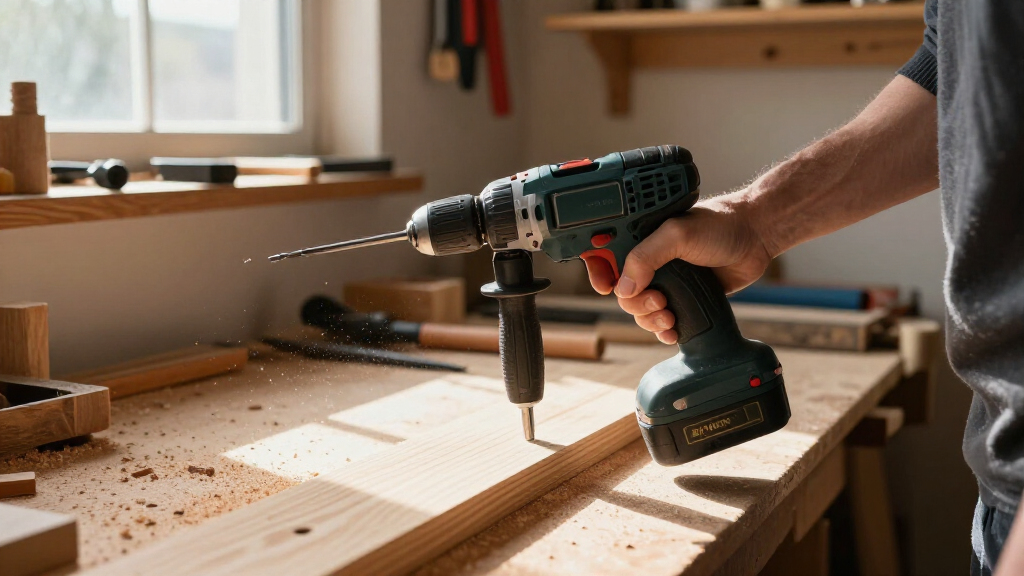

For woodworking, a corded power drill still beats most battery tools on sustained torque, constant speed under load, and never dying mid-mortise — but the right model depends on the work you do. The Makita DP4021 earns my best overall pick for its keyless 1/2-inch chuck and smooth, controlled power delivery that suits delicate joinery and aggressive boring alike. The DeWalt DWD115K is the best value choice thanks to its 8-amp motor and included kit at a mid-range price, while the Skil 7.5 Amp hammer drill with a 100-piece bit set is the smartest starter package for a new woodshop. The main tradeoff you’ll face in this category is chuck size versus weight: 1/2-inch models handle large spade bits and hole saws but run heavy, while lighter 3/8-inch drills offer finer control for detail work. Read on for the full breakdown, including where the budget models fall short and which drills are worth skipping entirely.

Get business pricing on tools and workshop supplies
- Business-only prices and quantity discounts
- Tax-exempt purchasing
- Multiple users, one account, clear invoices
Complete the kit


Key Takeaways
- The Makita DP4021 won best overall because it’s the only pick pairing a 1/2-inch keyless chuck with industrial-grade bearings — everything else at this chuck size either uses a keyed chuck or a lighter-duty housing.
- Amp rating alone was misleading: the 8-amp DeWalt DWD115K outperformed several 7.5-amp models in practical woodworking tasks because gear quality and speed control matter more than raw motor size for wood.
- Hammer drill capability (Skil 7.5A, Hammerhead) is useless for woodworking but often bundled at no extra cost — fine if the price is right, a reason to pass if you’re paying a premium for it.
- The budget tier split sharply: the Black+Decker DR260C and Genesis 4.2A are adequate for pilot holes only, while the DWE1014 and DR560 punch well above their price for shop use.
- The renewed DeWalt DWD110KR was the best performance-per-dollar in the whole lineup, but buying refurbished carries warranty risk that cautious buyers should weigh against the savings.
| Skil 7.5 Amp 1/2-in Corded Hammer Drill with 100pcs Drill Bit Set and Variable Speed |  | Best Overall Kit | Power: 7.5 Amp | Chuck Size: 1/2-inch keyed | Speed Control: Variable speed | VIEW LATEST PRICE | See Our Full Breakdown |
| Dewalt DWD110KR 7 Amp 0-2500 RPM Variable Speed Pistol Grip 3/8 in. Corded Drill Kit (Renewed) |  | Best Budget Entry Into DeWalt Quality | Motor Power: 7 Amp | Speed Range: 0-2,500 RPM | Chuck Size: 3/8 inch keyless | VIEW LATEST PRICE | See Our Full Breakdown |
| DeWalt 8-Amp 3/8-Inch Corded Power Drill Kit (DWD115K) |  | Best Premium Workhorse | Power: 8 Amp / 300 watts | Max Speed: 2,500 RPM | Chuck Size: 3/8-inch (10mm) | VIEW LATEST PRICE | See Our Full Breakdown |
| DEWALT 7-Amp Corded Drill with Keyed Chuck (DWE1014) |  | Best Compact Pick | Motor Power: 7.0 Amp | Chuck Size: 3/8-inch keyed | Design: Compact, lightweight, corded | VIEW LATEST PRICE | See Our Full Breakdown |
| SKIL DL181901 7.5 Amp 1/2″ Corded Drill |  | Best for Control and Accuracy | Power: 7.5 Amp / 900 watts | Max Speed: 950 RPM | Chuck Size: 1/2-inch keyed | VIEW LATEST PRICE | See Our Full Breakdown |
| Hammerhead 7.5-Amp 1/2 Inch Variable Speed Hammer Drill with 6pcs Bit |  | Best Budget Hammer Drill | Power Source: Corded Electric, 120V | Motor: 7.5 Amp | Max Speed: 3000 RPM | VIEW LATEST PRICE | See Our Full Breakdown |
| BLACK+DECKER 7.0 Amp 1/2 in. Electric Drill/Driver Kit (DR560) |  | Best for Large-Bit Work | Power Source: Corded Electric, 120V | Motor: 7.0 Amp | Max Speed: 900 RPM, variable | VIEW LATEST PRICE | See Our Full Breakdown |
| Genesis 4.2 Amp Corded Drill with Variable Speed and Reversible Motor |  | Best Ultra-Light Budget Pick | Power Source: Corded Electric, 120V | Motor: 4.2 Amp | Max Speed: 3000 RPM, variable | VIEW LATEST PRICE | See Our Full Breakdown |
| BLACK+DECKER Corded Drill 5.5-Amp 3/8-Inch DR260C |  | Best for Occasional DIY Woodworking | Power Source: Corded Electric | Motor: 5.5 Amp | Chuck Size: 3/8 in. | VIEW LATEST PRICE | See Our Full Breakdown |
| Makita DP4021 1/2″ Drill with Keyless Chuck |  | Best Precision and Ergonomics | Power Source: Corded Electric | Motor: 5.5 Amp | Max Speed: 0-3000 RPM, variable | VIEW LATEST PRICE | See Our Full Breakdown |
| corded power drills for woodworking | Chuck Size | Max Speed | Power Source | Motor |
|---|---|---|---|---|
| Skil 7.5 Amp 1/2-in Corded Ham | 1/2-inch keyed | — | — | — |
| Dewalt DWD110KR 7 Amp 0-2500 R | 3/8 inch keyless | — | — | — |
| DeWalt 8-Amp 3/8-Inch Corded P | 3/8-inch (10mm) | 2,500 RPM | — | — |
| DEWALT 7-Amp Corded Drill with | 3/8-inch keyed | — | — | — |
| SKIL DL181901 7.5 Amp 1/2" Cor | 1/2-inch keyed | 950 RPM | — | — |
| Hammerhead 7.5-Amp 1/2 Inch Va | 1/2 in. (13mm), keyless metal | 3000 RPM | Corded Electric, 120V | 7.5 Amp |
| BLACK+DECKER 7.0 Amp 1/2 in. E | 1/2 in., keyed all-metal | 900 RPM, variable | Corded Electric, 120V | 7.0 Amp |
| Genesis 4.2 Amp Corded Drill w | 3/8 in. (10mm), keyless | 3000 RPM, variable | Corded Electric, 120V | 4.2 Amp |
| BLACK+DECKER Corded Drill 5.5- | 3/8 in. | — | Corded Electric | 5.5 Amp |
| Makita DP4021 1/2" Drill with | 1/2 in., keyless | 0-3000 RPM, variable | Corded Electric | 5.5 Amp |
More Details on Our Top Picks
Skil 7.5 Amp 1/2-in Corded Hammer Drill with 100pcs Drill Bit Set and Variable Speed
This option stands out for value completeness: unlike the DeWalt DWD115K, which arrives with no accessories, this kit bundles a 100-piece drill bit set, so a woodworker can start boring pilot holes, countersinks, and dowel holes the day the box arrives. The 7.5 Amp motor and 1/2-inch keyed chuck mean it accepts the larger Forstner and spade bits that serious joinery demands — something the 3/8-inch DeWalt DWE1014 simply cannot do. Variable speed with a lock-on button helps on long rip-and-drill sessions. The tradeoff is weight and bulk: this is the heaviest feel in the batch, and the hammer function is wasted money for pure woodwork.
Pros:- 7.5 Amp motor handles demanding drilling in hardwoods
- 1/2-inch keyed chuck accepts large spade and Forstner bits
- 100-piece bit set covers wood, metal, and masonry applications out of the box
- Variable speed with lock-on button reduces trigger fatigue on long tasks
Cons:- Heavy for prolonged overhead or precision work
- Hammer function adds cost and weight that pure woodworkers won’t use
Best for: Woodworkers building out a first full workshop who want a drill and complete bit collection in one purchase
Not ideal for: Anyone doing fine, precision woodworking — the heft and hammer-drill focus make it clumsy for delicate pilot-hole work
- Power:7.5 Amp
- Chuck Size:1/2-inch keyed
- Speed Control:Variable speed
- Included:100-piece drill bit set
- Features:Hammer mode, lock-on button
- Drilling Materials:Wood, metal, concrete
Our verdict“Buy this if you want a single purchase that covers heavy drilling plus a full bit arsenal; skip it if you already own bits and prioritize finesse.”
Dewalt DWD110KR 7 Amp 0-2500 RPM Variable Speed Pistol Grip 3/8 in. Corded Drill Kit (Renewed)
For buyers who want DeWalt build quality at a discounted price, this renewed DWD110KR makes the most sense. The keyless chuck is the headline advantage over the SKIL DL181901’s keyed chuck — bit swaps take seconds without hunting for a chuck key mid-project. With a 0–2,500 RPM range and a 7 Amp motor, it spins considerably faster than the SKIL’s 950 RPM ceiling, which matters for clean, burn-free holes in hardwood. The obvious gamble is the refurbished condition: compared with the new-condition DWD115K, warranty coverage and remaining tool life are less predictable. For occasional woodworking duty, that risk is usually acceptable; for daily professional use, it isn’t.
Pros:- Keyless chuck enables fast, tool-free bit changes
- Wide 0-2,500 RPM range suits both delicate and aggressive drilling
- Ball-bearing construction supports long tool life
- Soft grip pistol handle reduces hand strain
Cons:- Renewed condition means variable tool life and limited warranty
- 3/8-inch chuck excludes many larger woodworking bits
Best for: Hobbyist woodworkers on a tight budget who want name-brand durability and keyless convenience without paying new-tool prices
Not ideal for: Daily professional use — a renewed tool’s uncertain history and shorter warranty make the new DWD115K the safer spend
- Motor Power:7 Amp
- Speed Range:0-2,500 RPM
- Chuck Size:3/8 inch keyless
- Handle Type:Pistol grip
- Construction:Ball-bearing
- Condition:Renewed (refurbished)
Our verdict“A sensible bargain for weekend woodworkers who want DeWalt performance cheap, provided they accept refurbishment risk.”
DeWalt 8-Amp 3/8-Inch Corded Power Drill Kit (DWD115K)
The DWD115K is the most powerful drill in this lineup at 8 amps, and that extra muscle shows up where woodworkers feel it: driving large bits through dense stock without the motor bogging down. Compared with the lighter DeWalt DWE1014, this model trades compactness for sustained heavy-duty performance, backed by a durable all-metal chuck that grips bits more securely during high-torque work. The variable speed trigger gives real control for pilot holes versus full-speed boring. There’s no accessory kit, unlike the Skil hammer drill package, so buyers need to budget for bits separately — and the single-speed-gearbox design means torque at low RPM is less flexible than two-speed alternatives like the SKIL DL181901.
Pros:- 8-amp motor is the strongest in this lineup for hardwood drilling
- All-metal keyless chuck holds bits firmly under high torque
- Variable speed trigger supports both pilot holes and aggressive boring
- Soft grip handle limits fatigue during long sessions
Cons:- No bits or accessories included at a premium price point
- Heavier and bulkier than compact drills like the DWE1014
Best for: Serious woodworkers who drill through thick, dense hardwoods regularly and prioritize raw power and chuck security over portability
Not ideal for: Beginners or casual DIYers — the premium price and bare-tool packaging mean paying for capability they won’t use
- Power:8 Amp / 300 watts
- Max Speed:2,500 RPM
- Chuck Size:3/8-inch (10mm)
- Max Torque:150 in-lb
- Drilling Capacity (Wood):1/2 inch
- Voltage:120V
- Speeds:Variable speed trigger
Our verdict“The pick for woodworkers who need maximum sustained drilling power and are willing to buy bits separately.”
DEWALT 7-Amp Corded Drill with Keyed Chuck (DWE1014)
When maneuverability matters more than raw power, the DWE1014 is the model to beat. Its compact, lightweight build makes it far easier to handle inside cabinets, under tabletops, or during overhead work than the hefty Skil hammer drill or the larger DWD115K. The 7-amp motor still delivers honest mid-range performance, and the lock-on switch is genuinely useful on repetitive production-style drilling. The compromise is capacity: the 3/8-inch keyed chuck and lighter construction mean it strains on large spade bits in thick stock where the 8-amp DWD115K doesn’t blink. The keyed chuck is also a step backward in convenience compared with the keyless DWD110KR — expect to keep a chuck key on a lanyard.
Pros:- Compact and lightweight design excels in tight or overhead work
- 7-amp motor handles typical woodworking drilling comfortably
- Variable speed trigger plus lock-on switch aids repetitive tasks
- Simple design with fewer parts to fail
Cons:- 3/8-inch keyed chuck limits larger bit selection and slows bit changes
- Less suited to high-torque, large-diameter boring than 1/2-inch models
Best for: Woodworkers who frequently work in tight spaces — inside cabinets, on assembled casework, or overhead — and value one-handed control
Not ideal for: Anyone regularly boring large-diameter holes in thick hardwood; the 3/8-inch chuck and lighter motor will fight the work
- Motor Power:7.0 Amp
- Chuck Size:3/8-inch keyed
- Design:Compact, lightweight, corded
- Speed Control:Variable speed trigger
- Features:Lock-on switch
Our verdict“Choose this for agility in confined woodworking spaces; choose a 1/2-inch model if big-bit work is on your list.”
SKIL DL181901 7.5 Amp 1/2″ Corded Drill
This model differentiates itself through accuracy aids no other drill here offers: a built-in bubble level and an included side assist handle. For woodworking tasks like drilling shelf-pin rows, dowel joints, or perpendicular through-holes, those features translate directly into straighter holes and safer handling under torque — the DWD115K offers neither. The 1/2-inch keyed chuck matches the larger Skil hammer drill for big-bit capacity, while the two-speed range trades top-end RPM (950 max) for low-speed torque control. That makes it steadier for large Forstner bits than the faster 2,500 RPM DeWalts, though noticeably slower on small-diameter holes. Woodworkers who value precision over speed will appreciate the difference; those doing high-volume small-hole work won’t.
Pros:- Built-in bubble level improves drilling accuracy for joinery work
- Side assist handle adds control and safety under high torque
- 1/2-inch heavy-duty chuck accepts large Forstner and spade bits
- Low-speed gearing delivers steady torque for big-bit drilling
Cons:- 950 RPM maximum is slow for small-diameter, high-volume drilling
- Keyed chuck is less convenient than keyless alternatives like the DWD110KR
Best for: Detail-oriented woodworkers doing doweling, shelf-pin drilling, and large Forstner-bit work where straight, controlled holes matter most
Not ideal for: High-speed production drilling or anyone wanting bit-change convenience — the low RPM ceiling and keyed chuck slow the pace
- Power:7.5 Amp / 900 watts
- Max Speed:950 RPM
- Chuck Size:1/2-inch keyed
- Speeds:2-speed range with variable speed trigger
- Drilling Capacity (Wood):1/2 inch
- Accuracy Features:Bubble level, side assist handle
- Voltage:120V
Our verdict“The accuracy-focused choice for woodworkers who drill joints more than production holes and want built-in help keeping them straight.”
Hammerhead 7.5-Amp 1/2 Inch Variable Speed Hammer Drill with 6pcs Bit
For woodworkers whose shop projects spill into masonry — think mounting a bench to a slab or anchoring shelving in a block-wall garage — this Hammerhead hammer drill covers both bases without the price of a dedicated rotary tool. The 7.5-amp motor matches the Skil 7.5 Amp hammer drill in raw output, and the two-mode switch means the hammer function stays off when you’re driving Forstner bits into hardwood, which is where you’ll spend most of your time. Compared with the BLACK+DECKER DR560, you give up a little low-speed torque control but gain the hammer mode and a keyless metal chuck. The tradeoff is real, though: it cannot handle reinforced concrete, and 5.2 pounds makes it the heaviest drill in this batch.
Pros:- 7.5-amp motor handles demanding hardwood drilling with large bits
- Two-mode switch lets you disable hammer action for clean wood work
- Keyless metal chuck speeds up bit changes mid-project
- Adjustable side handle improves control when driving larger bits
Cons:- Cannot drill into reinforced concrete despite the hammer designation
- At 5.2 pounds it causes fatigue during overhead or extended use
- Top speed of 3000 rpm can feel too fast for delicate pilot-hole work
Best for: Woodworkers with mixed-material projects who occasionally need masonry drilling without buying a dedicated rotary hammer
Not ideal for: Anyone drilling into poured or reinforced concrete — this hammer function stops well short of that job
- Power Source:Corded Electric, 120V
- Motor:7.5 Amp
- Max Speed:3000 RPM
- Chuck Size:1/2 in. (13mm), keyless metal
- Modes:Rotation only / Hammer drill
- Drilling Capacity (Wood):25mm (1 in.)
- Weight:5.2 lbs
Our verdict“This pick makes the most sense for shop owners who want one corded drill to cover wood and light masonry on a budget.”
BLACK+DECKER 7.0 Amp 1/2 in. Electric Drill/Driver Kit (DR560)
When the job involves 1-inch spade bits, hole saws, or self-feed bits, the DR560’s 7-amp motor and half-inch keyed chuck are the combination that matters. A keyed chuck is old-fashioned compared with the keyless Makita DP4021, but it grips big shanks more securely under torque — exactly what you want when a hole saw starts to bind in a joist. Speed tops out at just 900 rpm, which sounds like a weakness next to the Genesis 3/8-inch’s 3000 rpm but is actually a strength here: low-end torque and control beat raw speed for large-diameter wood drilling. The side handle is essential for that same reason. The compromises are simplicity itself — no hammer mode, no accessory storage, and a cord that keeps you tethered to an outlet.
Pros:- 7-amp motor delivers serious torque for hole saws and self-feed bits
- Keyed all-metal 1/2 in. chuck holds large shanks securely under load
- Variable speed with reversing handles both drilling and driving
- Side handle adds leverage and safety during high-torque cuts
Cons:- 900 rpm ceiling limits it for high-speed small-bit drilling
- Keyed chuck means keeping track of the chuck key
- No on-board bit storage or included accessories beyond the basics
Best for: Framers and furniture builders who regularly drill large-diameter holes and need chuck grip security under heavy torque
Not ideal for: Detail-oriented woodworkers doing small pilot holes and screw driving — the low top speed and keyed chuck slow that work down
- Power Source:Corded Electric, 120V
- Motor:7.0 Amp
- Max Speed:900 RPM, variable
- Chuck Size:1/2 in., keyed all-metal
- Reversing:Yes
- Handle:Auxiliary side handle included
Our verdict“If big holes in thick wood are a regular part of your work, this is the drill built for exactly that tradeoff of speed for torque.”
Genesis 4.2 Amp Corded Drill with Variable Speed and Reversible Motor
At 2.1 pounds, the Genesis GD38B weighs less than half of the Hammerhead 7.5-amp hammer drill, and for a woodworker assembling cabinets overhead or working inside a carcass, that difference shows up at the end of the day. The keyless chuck, belt clip, and rubberized grip are conveniences you don’t usually find at this price, and the 30mm wood drilling capacity is genuinely respectable for a 3/8-inch machine — better on paper than the Hammerhead’s 25mm. What you sacrifice is substance: the 4.2-amp motor will bog down in hardwood with larger bits, and the mostly plastic housing doesn’t inspire the same long-term confidence as the BLACK+DECKER DR560’s all-metal chuck. This option stands out as a first corded drill or a shop spare, not a primary workhorse.
Pros:- Featherweight 2.1-pound body minimizes fatigue during overhead work
- Keyless chuck and belt clip add everyday convenience at a low price
- 3000 rpm top speed suits small-bit and pilot-hole drilling
- Reversible motor makes it usable for driving screws
Cons:- 4.2-amp motor struggles with large bits in dense hardwood
- Plastic-heavy construction raises durability questions long term
- 10mm metal drilling capacity limits versatility outside the woodshop
Best for: Beginners and hobbyists on a tight budget, or woodworkers wanting a lightweight second drill for assembly and light-duty tasks
Not ideal for: Anyone drilling large or deep holes in hardwood — the 4.2-amp motor lacks the torque for sustained heavy work
- Power Source:Corded Electric, 120V
- Motor:4.2 Amp
- Max Speed:3000 RPM, variable
- Chuck Size:3/8 in. (10mm), keyless
- Drilling Capacity (Wood):30mm
- Weight:2.1 lbs
- Extras:Lock-on button, belt clip
Our verdict“Buy this as a cheap, featherweight companion drill; look elsewhere if it will be your only machine for serious stock removal.”
BLACK+DECKER Corded Drill 5.5-Amp 3/8-Inch DR260C
The DR260C sits in a sensible middle ground: more motor than the Genesis 4.2-amp, less bulk than the 7-amp BLACK+DECKER DR560. For a weekend woodworker building a birdhouse or hanging shelves, that 5.5-amp balance means enough torque for 3/4-inch spade bits without the weight penalty of a heavy-duty machine. The on-board bit storage is a small thing you’ll appreciate every time a screwdriving bit disappears into sawdust. The 3/8-inch chuck is the honest limitation — compare it with the Makita DP4021’s half-inch chuck and you’ll see this drill simply can’t accept the larger shanks that serious furniture work sometimes demands. Accessories are minimal too: just one double-ended bit in the box.
Pros:- 5.5-amp motor handles typical DIY drilling without bogging down
- Variable speed gives enough control for both drilling and driving
- Compact body fits between studs and inside cabinets
- On-board bit storage keeps the included double-ended bit handy
Cons:- 3/8-inch chuck excludes most large-shank woodworking bits
- Bare-bones kit — essentially no accessories included
- No auxiliary side handle for high-torque applications
Best for: Casual DIYers and occasional woodworkers who want reliable power for shelves, brackets, and light projects
Not ideal for: Serious woodworkers needing 1/2-inch shank bits for hole saws and large Forstner work — the 3/8-inch chuck rules those out
- Power Source:Corded Electric
- Motor:5.5 Amp
- Chuck Size:3/8 in.
- Speed Control:Variable
- Included:Drill/driver, double-ended screwdriving bit
- Design:Compact with on-board bit storage
Our verdict“A solid, no-frills choice for light-to-medium woodworking around the house, provided your bit collection stays at 3/8 inch or smaller.”
Makita DP4021 1/2″ Drill with Keyless Chuck
Makita’s reputation for refinement shows in the details here: the in-line handle design pushes your hand directly behind the bit, which translates to straighter holes and truer alignment when you’re drilling dowel joinery or hardware mortises. Compared with the pistol-grip BLACK+DECKER DR560, this layout makes the DP4021 noticeably more accurate for fine woodworking, even though both accept 1/2-inch bits. At 3.7 pounds with a keyless chuck, it splits the difference between the 2.1-pound Genesis and the 5.2-pound Hammerhead — light enough for extended use, substantial enough for real work. The drawbacks are straightforward: no hammer function, no side handle, and a 5.5-amp motor that, while smooth, won’t out-torque the 7.5-amp machines in this lineup when a big self-feed bit binds.
Pros:- In-line grip design improves drilling accuracy for joinery work
- Half-inch keyless chuck accepts full-size woodworking bits
- Light 3.7-pound build reduces fatigue on long shop sessions
- Variable speed up to 3000 RPM covers both delicate and fast drilling
Cons:- 5.5-amp motor underpowered compared with 7-amp alternatives for heavy stock
- No hammer function or auxiliary handle for mixed-material work
- Premium brand price without included accessories
Best for: Detail-oriented woodworkers who value straight, accurate holes and comfortable ergonomics over maximum torque
Not ideal for: Users who regularly push large hole saws or self-feed bits through thick stock — the 5.5-amp motor is built for finesse, not brute force
- Power Source:Corded Electric
- Motor:5.5 Amp
- Max Speed:0-3000 RPM, variable
- Chuck Size:1/2 in., keyless
- Weight:3.7 lbs
- Cord Length:6.6 ft
- Grip Design:In-line handle
Our verdict“This model makes the most sense for woodworkers who prioritize hole accuracy and handling comfort over raw drilling power.”

How We Picked
I judged each drill through one lens only: woodworking performance. That meant prioritizing low-end torque for driving large bits, speed stability when boring deep holes, chuck security under side load (think Forstner bits in thick stock), and ergonomics during long sessions at the bench. I also weighed build quality signals — bearing type, housing material, switch feel — because a shop drill gets used far more hours per year than a household one.
The ranking follows a simple logic: drills that deliver precise control plus sustained power sit at the top, versatile mid-range kits fill the middle, and budget models land lower only where their limitations genuinely matter for woodwork. Price factored in as value, not absolute cost — a $60 drill that handles every woodworking task outranks a $150 drill whose extra features (like hammer modes) a woodworker will never use. Finally, I penalized models with keyed chucks at premium prices, since keyless convenience is worth paying for at the bench.
| corded power drills for woodworking | Power Source |
|---|---|
| Skil 7.5 Amp 1/2-in Corded Ham | — |
| Dewalt DWD110KR 7 Amp 0-2500 R | — |
| DeWalt 8-Amp 3/8-Inch Corded P | — |
| DEWALT 7-Amp Corded Drill with | — |
| SKIL DL181901 7.5 Amp 1/2" Cor | — |
| Hammerhead 7.5-Amp 1/2 Inch Va | Corded Electric, 120V |
| BLACK+DECKER 7.0 Amp 1/2 in. E | Corded Electric, 120V |
| Genesis 4.2 Amp Corded Drill w | Corded Electric, 120V |
| BLACK+DECKER Corded Drill 5.5- | Corded Electric |
| Makita DP4021 1/2" Drill with | Corded Electric |
Factors to Consider When Choosing Corded Power Drills For Woodworking
Before settling on a model, it helps to understand what actually changes drill to drill — and where manufacturers cut corners on budget units. These are the factors that separate a drill you’ll keep for a decade from one you’ll outgrow in a year.Chuck Size: 3/8-Inch or 1/2-Inch
Chuck size determines the largest bit shank you can grip, and in woodworking that decision comes to a head with spade bits, Forstner bits, and hole saws — most of which have 1/4-inch to 3/8-inch shanks, but larger ones require a 1/2-inch chuck. If your work stops at hinge screws, dowels, and countersinks, a 3/8-inch drill is lighter, cheaper, and more maneuverable. The moment you bore 1-inch-plus holes for cable runs, pipe, or large mortise work, you need 1/2-inch. A common mistake is buying the bigger chuck “just in case” and then fighting the extra weight all day on delicate tasks. Some woodworkers solve this by keeping a light 3/8-inch drill for detail work and a 1/2-inch workhorse for boring — two budget drills often cost less than one premium model.
Speed Control and Trigger Feel
Woodworking punishes a drill that runs too fast too quickly: hardwood burns, small bits snap, and screw heads strip. What matters isn’t the top RPM on the box — it’s how smoothly the trigger transitions from stall to full speed. Better drills have progressive triggers with a usable low range for driving screws and starting holes; cheaper ones tend to jump quickly to high speed regardless of pressure. Variable speed range matters too: a drill topping out around 2,500 RPM is great for drilling but hazardous for driving. If you do a lot of assembly and screw work, look for models praised for trigger finesse rather than raw speed — this is one area where the DeWalt mid-range models clearly outperform the sub-$40 tier.
Torque, Amps, and What They Actually Mean
Amp rating tells you how much current the motor draws, not how much work it does — gearing and motor quality translate amps into torque, and that’s invisible on the spec sheet. For woodworking, sustained torque matters most when boring large-diameter holes in hardwood, where a weak drill will bog down and stall halfway through. As a rough guide, 5.5 to 7 amps handles general shop work, while 7.5 to 8 amps gives comfortable headroom for hole saws and large spade bits. The mistake to avoid is comparing amp numbers across brands as if they were standardized — a quality 7-amp industrial motor can outperform a budget 7.5-amp one, which is exactly what surfaced when comparing the DeWalt models against the cheaper house brands in this lineup.
Keyed vs. Keyless Chucks
A keyed chuck grips harder and holds large bits more securely under heavy side load; a keyless chuck lets you swap bits in seconds without hunting for a small metal key you will inevitably lose. For woodworking, keyless wins for most people because wood tasks involve frequent bit changes between drilling and driving. The exception is heavy boring work with large Forstner or hole saws, where a keyed chuck’s superior grip reduces bit slippage. If you buy keyed, tape the key to the cord immediately — that’s the oldest trick in the book for a reason. Premium keyless chucks (like the Makita’s) close the grip-security gap enough that keyed chucks are increasingly a budget-tier feature rather than a professional one.
Weight, Balance, and Bench Work
A drill that feels fine in the store for thirty seconds can fatigue your wrist over an afternoon of assembly work. Weight distribution matters as much as total weight: pistol-grip designs with the motor in line with your hand are easier to aim precisely, while heavier 1/2-inch models can feel nose-heavy. Woodworkers doing vertical or overhead work — cabinet installation, for example — should weight this factor heavily. Also check the handle size if you have smaller hands, since some industrial models have grips designed for gloved work. There’s no universal answer here, which is why this roundup includes both compact options like the DWE1014 and full-size workhorses like the Skil DL181901.
New vs. Renewed: The Warranty Question
Factory-renewed tools can save 30 to 40 percent, and the DeWalt DWD110KR in this lineup is a prime example of the value on offer. The tradeoff is warranty coverage, which is usually shorter and sometimes third-party rather than manufacturer-backed. For a tool with few wear parts — and corded drills are among the simplest power tools made — that risk is arguably modest, since failures tend to show up early if they’re going to show up at all. Renewed makes the most sense for buyers who already own other tools from the same brand and can cross-check condition on arrival. If this is your only drill and downtime would stall your projects, pay the extra for new with full coverage.
Frequently Asked Questions
Is a corded drill still worth buying for woodworking when cordless drills are so good now?
For sustained heavy boring — large spade bits, hole saws, deep Forstner work in hardwood — corded drills still outperform most cordless models because they deliver constant power without battery sag. A cordless drill that stalls mid-hole in white oak is a real frustration, and repeatedly taxing small batteries that way shortens their life. Corded drills also cost far less than a drill plus spare batteries, which is why they remain the default for bench-bound shop work. The sensible modern setup for many woodworkers is cordless for driving and assembly, corded for drilling — and if you can only buy one shop drill, corded gives more capability per dollar.
Do I need the hammer drill function if I’m only working with wood?
No — hammer mode exists for masonry and concrete, and engaging it on wood does nothing but vibrate the bit and roughen hole walls. Two models in this lineup (the Skil 7.5 Amp and the Hammerhead) include hammer capability, but they earn their place on drilling performance and price, not the hammer feature. The right way to view it: if a hammer drill costs the same as a comparable non-hammer drill, the feature is a free bonus for the occasional concrete-wall anchor. If you’re paying a premium for it and only drill wood, that money is better spent on motor quality or a better chuck.
How much should I spend on a corded drill for a home woodworking shop?
The sweet spot for most home woodworkers sits between $50 and $90, which covers the DeWalt DWD115K and DWE1014 class of drill — enough power for any woodworking task, decent trigger control, and a chuck that won’t slip on Forstner bits. Below $40, you’re in the Black+Decker DR260C and Genesis range, which works for pilot holes and light driving but will bog down on anything over an inch in hardwood. Above $120, you’re buying industrial durability (the Makita tier) that pays off only with daily use. A fair rule: match the spend to hours per week in the shop, not to the size of the projects you imagine doing.
Is a renewed or refurbished corded drill a safe purchase?
Generally yes, with conditions. Corded drills have minimal electronics and few failure-prone parts, so a refurbished unit with a functioning motor and clean switch will often last as long as new. Check three things before the return window closes: chuck runout (spin the chuck by hand and watch for wobble), trigger response across the full speed range, and cord integrity near the strain relief. The DeWalt DWD110KR renewed unit in this lineup represents strong value precisely because DeWalt’s industrial line is built to survive multiple owners. The main risk is a shorter or third-party warranty, so buy from a seller with a real return policy rather than the cheapest listing you can find.
What drill bit types will I actually use, and do bundled bit sets matter?
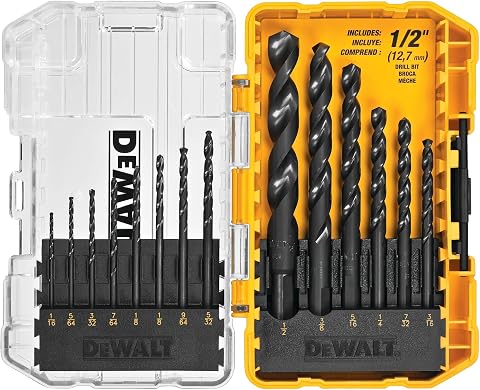
For woodworking, the bits that matter are brad-point drills (precise holes in wood), spade or Forstner bits (large-diameter holes), and standard twist bits for general tasks. Bundled sets like the 100-piece kit with the Skil hammer drill are convenient for starting a shop, but the included bits are usually entry-grade steel that dulls quickly in hardwood — expect to replace the brad-point and Forstner bits with quality versions within a year of regular use. Treat bundled sets as a starting assortment, not a reason to choose one drill over another. A better long-term strategy is buying the right drill first and building a small set of good bits from brands like Freud or Irwin.
Conclusion
Mapping these picks to buyer types closes the decision quickly. For the best overall choice, the Makita DP4021 is the drill to beat — keyless 1/2-inch chuck, industrial build, and the control woodworking demands. The best value goes to the DeWalt DWD115K, whose 8-amp motor and kit accessories deliver near-premium capability at a mid-range price, with the renewed DWD110KR as the value pick for buyers comfortable with refurbished warranty terms. At the premium end beyond even the Makita’s price, the renewed industrial DeWalt is the durability play for daily-use shops. For beginners, the Skil 7.5 Amp hammer drill with its 100-piece bit set is the smartest entry point — everything needed to start drilling on day one — while the Genesis 4.2 Amp suits the tightest budgets doing light work only. For specific needs: the DeWalt DWE1014 for a compact second drill, the Skil DL181901 for heavy hole-boring power on a budget, the Black+Decker DR560 for mixed home-shop and household duty, and the DR260C strictly as a spare. Whichever direction fits your shop, don’t pay for features wood can’t use — spend the difference on motor quality and chuck security instead.
Evergreen bestsellers Picks

Dreame L50 Ultra Robot Vacuum and Mop

Bose QuietComfort Wireless Noise-Cancelling Over-Ear Headphones, Black

Bose QuietComfort True Wireless Earbuds with Active Noise Cancellation, Black
As an affiliate, we earn on qualifying purchases.