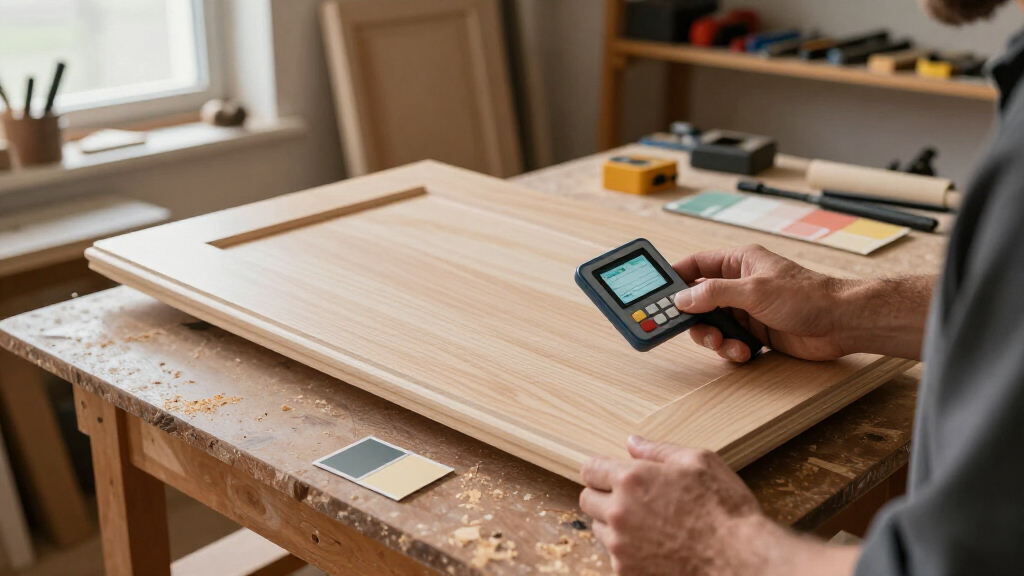

The best paint identification tools help you find a close color match, but the right choice depends on whether you need a portable scanner, deeper color data, or better viewing light. My best overall pick is the COLOR MUSE 2, which pairs a colorimeter with a protective case; the Spectro 3 stands out for buyers seeking a mobile spectrophotometer, while the Datacolor ColorReader offers a simpler app-connected route. The main tradeoff is between straightforward color matching and more specialized measurement or lighting tools. Surface texture, lighting conditions, and the way results connect to your paint supplier can all affect how useful a reading is. Read on for the full breakdown and guidance on choosing a tool for your project.

Get business pricing on tools and workshop supplies
- Business-only prices and quantity discounts
- Tax-exempt purchasing
- Multiple users, one account, clear invoices
Complete the kit


Key Takeaways
- The COLOR MUSE 2 leads the roundup as a portable colorimeter supplied with a protective case, while the standard Color Muse is the simpler alternative in the same family.
- The Spectro 3 and Spectro 1 Pro are spectrophotometer options for buyers who prioritize instrument-based color measurement over a basic colorimeter workflow.
- The Master Elite and Astro Pneumatic 50SL are matching lights, not paint-scanning colorimeters; they help judge color under controlled illumination rather than identify a paint code on their own.
- The Datacolor ColorReader, Nix Mini 3, and VEYKOLOR pair sensor-based identification with app or display workflows, making result presentation and device compatibility key distinctions.
- The LS173 D/8 is a more specialized portable colorimeter, while compact consumer-oriented tools may be easier to carry and use for occasional touch-ups.
| COLOR MUSE 2 Paint Color Matching Colorimeter with Protective Case |  | Best for Paint-and-Sheen Identification | Brand: COLOR MUSE | Model: 9000Bundle | Connectivity: Bluetooth | VIEW LATEST PRICE | See Our Full Breakdown |
| Master Elite LED Color Matching Light, 500 Lumens |  | Best for Automotive Paint Inspection | Light output: 500 lumens | Color temperatures: 2700K, 4500K, 6500K | Color rendering index: CRI 96+ | VIEW LATEST PRICE | See Our Full Breakdown |
| Spectro 3 Mobile Spectrophotometer and Paint Color Matching Tool | 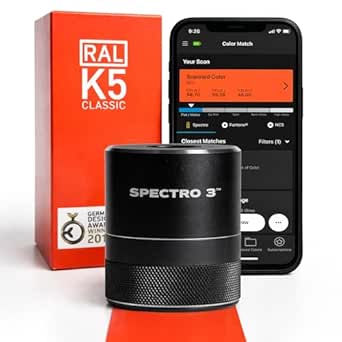 | Best Premium Multi-Material Analyzer | Measurement modes: Color and 60° gloss | Optical geometries: 45/0° and d/8° | Battery life: 1,000+ measurements per charge | VIEW LATEST PRICE | See Our Full Breakdown |
| Color Muse Colorimeter, Mobile Color Matching Tool |  | Best for App-Based Color Coordination | Model number: 9600 | Item weight: 27.22 g | Color accuracy: Over 90% | VIEW LATEST PRICE | See Our Full Breakdown |
| Datacolor ColorReader Paint Color Matching Tool |  | Best for On-Site Brand Matching | Model: CR100 | Measurement accuracy: 92% | Light source: 6 high-CRI white LEDs | VIEW LATEST PRICE | See Our Full Breakdown |
| LS173 D/8 Portable Digital Colorimeter |  | Best for Detailed Color Analysis | Optical geometry: D/8, including specular reflected light | Light source: Full-spectrum LED, 400–700 nm at 10 nm intervals | Repeatability: ΔE*ab standard deviation within 0.03 | VIEW LATEST PRICE | See Our Full Breakdown |
| Spectro 1 Pro Spectrophotometer for Paint Color Matching |  | Best for Brand Fan Deck Matching | Manufacturer: Variable, Inc. | Model: 9200SCI | Weight: 8 ounces | VIEW LATEST PRICE | See Our Full Breakdown |
| Nix Mini 3 Portable Color Sensor and Colorimeter |  | Best for Broad Paint Library Matching | Model: NIXMINI003 | Paint library: More than 300,000 brand-name paint colors | Supported color databases: Pantone, RAL, and NCS | VIEW LATEST PRICE | See Our Full Breakdown |
| Astro Pneumatic Tool 50SL Rechargeable Color Match Light, 400 lm, CRI 97 |  | Best for Visual Paint Inspection | Model: 50SL | Brightness: 400 lumens | Color rendering index: CRI 97 | VIEW LATEST PRICE | See Our Full Breakdown |
| VEYKOLOR Color Sensor Colorimeter with Display and App |  | Best for On-Device and App Flexibility | Display: 1.14-inch screen | Color formats: sRGB, CMYK, CIELAB, HEX, LCH, LRV, and opacity | Repeatability: ΔE00 ≤ 0.08 | VIEW LATEST PRICE | See Our Full Breakdown |
| paint identification tool | Model | Connectivity | Included components |
|---|---|---|---|
| COLOR MUSE 2 Paint Color Match | 9000Bundle | Bluetooth | Bluetooth module, Color Muse app, protective case |
| Master Elite LED Color Matchin | — | — | — |
| Spectro 3 Mobile Spectrophotom | — | Spectro by Variable mobile app | — |
| Color Muse Colorimeter | — | Wireless connection to the Color Muse app | Device, micro USB charging cable, user guide |
| Datacolor ColorReader Paint Co | CR100 | Bluetooth | ColorReader device, Micro USB cable, calibration cap |
| LS173 D/8 Portable Digital Col | — | — | — |
| Spectro 1 Pro Spectrophotomete | 9200SCI | Wireless | — |
| Nix Mini 3 Portable Color Sens | NIXMINI003 | — | Diagnostics tile, lanyard, and soft USB-C cable |
| Astro Pneumatic Tool 50SL Rech | 50SL | — | — |
| VEYKOLOR Color Sensor Colorime | — | — | Stand, cards, and storage box |
More Details on Our Top Picks
COLOR MUSE 2 Paint Color Matching Colorimeter with Protective Case
The COLOR MUSE 2 earns this role by pairing paint color matching with sheen identification, a useful distinction when a wall’s finish matters as much as its hue. Bluetooth links it to the Color Muse app, which searches colors across multiple major paint brands; the included protective case also suits a device carried between project sites. Unlike the Master Elite LED Color Matching Light, which helps reveal color differences and surface defects under adjustable lighting, this tool scans a surface and returns app-based matches. Its tradeoff is surface and project fit: it is intended for smooth, flat surfaces and broad painting projects, not spot touch-ups. Phone screen colors can also differ from the scan, so use the app as a matching aid rather than a perfect visual proof.
Pros:- Identifies both paint colors and sheen levels from flat/matte through high-gloss
- App cross-references colors from multiple major paint brands
- Bluetooth connects the scanner to the Color Muse app
- Protective case is included for carrying between projects
Cons:- Not recommended for spot touch-ups
- Requires a smooth, flat scanning surface for suitable results
- Phone screen colors may not look identical to the scanned color
Best for: DIYers and painting contractors comparing colors and sheen across smooth, flat surfaces for a larger repaint
Not ideal for: Anyone matching a small spot repair, scanning textured surfaces, or needing a waterproof color tool
- Brand:COLOR MUSE
- Model:9000Bundle
- Connectivity:Bluetooth
- Sheen identification:Flat/Matte to High-Gloss
- Claimed color matching accuracy:Over 95%
- Recommended surface:Smooth, flat surfaces
- Included components:Bluetooth module, Color Muse app, protective case
- Waterproof:No
Our verdict“Choose the COLOR MUSE 2 if you need app-based paint and sheen identification for a broader repaint, but skip it for small touch-ups.”
Master Elite LED Color Matching Light, 500 Lumens
For automotive color work, the Master Elite LED Color Matching Light fills a different need than a surface-scanning colorimeter: it helps you judge paint appearance and spot defects under controlled light. Its three settings—2700K, 4500K, and 6500K—let technicians inspect a finish under different color temperatures, while CRI 96+ supports faithful color rendering. The tilting head, magnetic base, and swivel hook make it easier to aim or mount the light around a vehicle. Compared with the COLOR MUSE 2, it does not identify a paint code or search brand libraries; it is an inspection aid, not a digital matching database. Runtime is the main compromise: it operates for 2.5 hours per charge and takes four hours to recharge, which may interrupt longer shop sessions.
Pros:- Three color temperatures help assess paint under varied lighting conditions
- CRI 96+ supports accurate color rendering during inspection
- Magnetic base and swivel hook offer flexible placement
- Tilting lamp head adjusts up to 180 degrees
Cons:- Does not scan surfaces or provide paint-brand matches
- Working time is limited to 2.5 hours per charge
- Takes four hours to recharge
Best for: Automotive technicians and detailers who need to compare paint appearance and reveal scratches or bodywork defects
Not ideal for: Homeowners seeking a scanned paint match, brand color lookup, or a tool for long work sessions without recharging
- Light output:500 lumens
- Color temperatures:2700K, 4500K, 6500K
- Color rendering index:CRI 96+
- Power source:Rechargeable lithium-ion battery
- Working time:2.5 hours
- Charging time:4 hours
- Lamp head adjustment:Up to 180 degrees
- Mounting:Built-in magnet and fold-out swivel hanging hook
Our verdict“Pick this light for automotive paint inspection and defect spotting, not for digitally identifying a paint color.”
Spectro 3 Mobile Spectrophotometer and Paint Color Matching Tool
The Spectro 3 is the most measurement-focused option here, combining color readings with a 60° gloss meter in a portable instrument. That pairing can help professionals compare not just paint hue but also surface gloss, while its 45/0° and d/8° optical geometries support different measurement approaches. Built-in UV illumination adds a way to detect fluorescence, and the app captures and compares readings across paint, plastics, textiles, leather, and printed materials. Compared with the COLOR MUSE Colorimeter, which is oriented toward matching paint through a consumer-facing app, Spectro 3 offers broader material measurement and more technical capabilities. The tradeoff is complexity: the Advanced QC Module is optional, and the supplied information does not establish how its workflow fits casual repaint projects. It is better suited to professional comparison tasks than quick household color lookup.
Pros:- Measures color and 60° gloss with one portable device
- Supports paint, plastics, fabrics, leather, and printed materials
- Built-in UV illumination detects fluorescence
- Battery supports more than 1,000 measurements per charge
Cons:- Advanced QC Module is optional
- Its broader measurement feature set may be unnecessary for basic home paint matching
- Requires the Spectro by Variable mobile app for connected color capture and comparison
Best for: Color and quality-control professionals who need portable color and gloss measurements across several material types
Not ideal for: DIY painters who only need a straightforward paint-brand match or do not need measurement and QC functions
- Measurement modes:Color and 60° gloss
- Optical geometries:45/0° and d/8°
- Battery life:1,000+ measurements per charge
- Battery:1 included lithium-ion battery
- Connectivity:Spectro by Variable mobile app
- UV detection:Built-in UV illumination for fluorescence detection
- Weight:11.7 ounces
- Package dimensions:6 x 3 x 3 inches
Our verdict“Choose Spectro 3 for professional multi-material color and gloss analysis; for simpler paint matching, the COLOR MUSE models are more focused options.”
Color Muse Colorimeter, Mobile Color Matching Tool
The original Color Muse Colorimeter is a practical pick when paint identification is only part of the job. Its app can match scans to paint products, display RGB, CMYK, and LAB values, and let you compare, save, and share colors—handy when coordinating a repaint with other finishes or passing a color reference to someone else. Like the COLOR MUSE 2, it scans smooth, flat surfaces and depends on the Color Muse app; the newer model adds sheen identification and comes with a protective case. This model’s appeal is its straightforward combination of color lookup and digital values, but it has no stated sheen-reading feature and is not water resistant. Scanned colors may also look different on a phone screen, so screen previews should not be treated as exact paint samples.
Pros:- App connects scans to a broad library of paint brands and products
- Provides RGB, CMYK, and LAB color values
- Lets users compare, save, and share scans
- Lightweight aluminum device is easy to carry between locations
Cons:- Best results require a smooth, flat surface
- Not water resistant
- Phone display colors may differ from the scanned color
Best for: Home decorators and DIY painters who want paint matches plus shareable digital color values for coordination
Not ideal for: People who need sheen identification, waterproof construction, or scans from textured surfaces
- Model number:9600
- Item weight:27.22 g
- Color accuracy:Over 90%
- Connectivity:Wireless connection to the Color Muse app
- Included components:Device, micro USB charging cable, user guide
- Color values:RGB, CMYK, LAB
- Style and finish:Silver, anodised aluminium
- Water resistance:Not water resistant
Our verdict“Choose this Color Muse for app-based paint lookup and color coordination, but choose the COLOR MUSE 2 if sheen identification is part of the job.”
Datacolor ColorReader Paint Color Matching Tool
The Datacolor ColorReader suits painters who want a portable scan translated into both technical color data and familiar paint-brand options. Its app cross-references colors from Sherwin-Williams, Benjamin Moore, and Behr, while formats such as CIELAB, HEX, RGB, CMYK, LCh, LRV, and Delta E give more detail than a simple color name. Six high-CRI white LEDs provide consistent illumination at the scan point, and its pocket-sized design is useful for sampling colors on site. Compared with the Color Muse Colorimeter, Datacolor lists a defined set of three major paint brands and a broad set of output formats; Color Muse emphasizes saving, sharing, and coordinating scans through its app. The key limitation is that brand matching depends on the mobile app and Bluetooth connection. It is also not a substitute for an inspection light like the Master Elite.
Pros:- App cross-references scans with Sherwin-Williams, Benjamin Moore, and Behr
- Reports a wide range of color formats, including CIELAB, HEX, RGB, LRV, and Delta E
- Six high-CRI white LEDs illuminate scans consistently
- Compact design and included calibration cap support on-site use
Cons:- Paint-brand matching requires the mobile app
- Bluetooth connectivity is required for the app-based workflow
Best for: Painters and decorators who scan colors at a job site and want app-based matches to major paint brands plus technical color values
Not ideal for: Buyers who need paint matches without a phone app or Bluetooth, or who need a light for inspecting defects
- Model:CR100
- Measurement accuracy:92%
- Light source:6 high-CRI white LEDs
- Color data formats:CIELAB, HEX, RGB, CMYK, LCh, LRV, Delta E, Lab
- Brand compatibility:Sherwin-Williams, Benjamin Moore, Behr
- Connectivity:Bluetooth
- Included components:ColorReader device, Micro USB cable, calibration cap
- Warranty:1 year
Our verdict“Pick the ColorReader for portable scans and detailed app-based matches to major paint brands, but skip it if you need standalone operation.”
LS173 D/8 Portable Digital Colorimeter
The LS173 is the strongest fit here for buyers who need more than a paint name: its D/8 measurement system, multiple color spaces, and nine color-difference formulas support closer analysis of samples and repeat measurements. Compared with the Nix Mini 3, which emphasizes a large paint library and straightforward surface matching, the LS173 offers broader measurement and data-recording options, including spectral curves and USB or Bluetooth export. Its touchscreen and stated repeatability of ΔE*ab standard deviation within 0.03 also suit work where consistency matters. The tradeoff is a more involved tool than a simple app-led scanner, and the 8 mm aperture may not fit tiny or irregular samples. Bluetooth export also depends on the LColor app.
Pros:- Offers many color spaces and nine color-difference formulas for detailed comparisons.
- Stores readings and supports USB or Bluetooth data export.
- Rated for up to 10,000 measurements per charge.
- Includes a positioning plate and calibration report.
Cons:- The 8 mm aperture can be too large for small or narrow samples.
- Bluetooth transfer requires the LColor mobile app.
Best for: Paint professionals and color-focused makers who need repeatable readings, color-difference analysis, and exportable measurement records.
Not ideal for: Casual users who only want a quick paint-library match, or anyone measuring samples too small for an 8 mm aperture.
- Optical geometry:D/8, including specular reflected light
- Light source:Full-spectrum LED, 400–700 nm at 10 nm intervals
- Repeatability:ΔE*ab standard deviation within 0.03
- Measurement aperture:8 mm
- Display:3.5-inch IPS capacitive touchscreen
- Storage capacity:1,000 standard colors, 1,000 color-difference records, 1,000 measurement records, and 100 spectral curves
- Battery:4000mAh rechargeable lithium battery; up to 10,000 measurements per charge
- Data transfer:USB to PC software or Bluetooth to the LColor app
Our verdict“Choose the LS173 if measurement depth and recordkeeping matter more than a simple paint-library lookup.”
Spectro 1 Pro Spectrophotometer for Paint Color Matching
The Spectro 1 Pro makes sense for buyers whose main task is finding a paint match within a known brand’s fan deck. Its wireless connection to the Spectro app and support for major paint-brand libraries give it a paint-focused workflow, unlike the LS173, which puts more emphasis on measurement formats, stored records, and color-difference analysis. The handheld body weighs 8 ounces and comes with a pouch, so it is suited to carrying between samples or job sites. Its limitation is that the app is central to wireless use; buyers seeking a standalone display or detailed onboard measurement data may prefer the LS173 or the VEYKOLOR Color Sensor. The supplied details also do not specify its aperture, measurement time, or repeatability, making direct precision comparisons difficult.
Pros:- Supports fan deck libraries from major paint brands.
- Connects wirelessly to an iOS and Android app.
- Portable 8-ounce handheld design.
- Includes a protective carrying pouch and USB charging cable.
Cons:- Wireless use requires the Spectro app.
- Provided product details do not state measurement repeatability or aperture size.
Best for: Painters, decorators, and color consultants who need portable scans matched against major paint-brand fan decks through a phone.
Not ideal for: Buyers who want a standalone screen, extensive onboard records, or documented measurement precision without relying on an app.
- Manufacturer:Variable, Inc.
- Model:9200SCI
- Weight:8 ounces
- Dimensions:8 x 2.5 x 2 inches
- Connectivity:Wireless
- App compatibility:Spectro app for iOS and Android
- Paint libraries:Supports fan deck libraries from major paint brands
- Included accessories:USB charging cable and protective carrying pouch
Our verdict“Pick the Spectro 1 Pro if paint-brand fan deck matching on a phone is your priority.”
Nix Mini 3 Portable Color Sensor and Colorimeter
The Nix Mini 3 is the clearest choice when the goal is matching a surface to a wide range of named colors. Its library of more than 300,000 paint colors, plus Pantone, RAL, and NCS database support, gives it a broader lookup emphasis than the VEYKOLOR Color Sensor, whose listed supported color cards are narrower. It also returns digital values such as RGB, HEX, and CMYK and requires no calibration, reducing setup for routine scans. Compared with the data-heavy LS173, the Nix Mini 3 is more focused on accessible matching than on extensive measurement records and formulas. Library availability varies by region, and performance is better suited to matte samples, so glossy or location-specific projects may need another route.
Pros:- Searches a library of more than 300,000 brand-name paint colors.
- Supports Pantone, RAL, and NCS databases.
- Provides digital values including RGB, HEX, and CMYK.
- Requires no calibration and has an IPX4 water-resistance rating.
Cons:- Paint library availability varies by country or region.
- Color matching is better suited to matte samples than glossy surfaces.
Best for: Homeowners, decorators, and design professionals who want to identify matte paint samples against a broad brand-name color library.
Not ideal for: Buyers scanning glossy finishes or relying on a specific library that may not be available in their country or region.
- Model:NIXMINI003
- Paint library:More than 300,000 brand-name paint colors
- Supported color databases:Pantone, RAL, and NCS
- Color values:RGB, HEX, CMYK, and more
- Calibration:No calibration required
- Water resistance:IPX4
- Included components:Diagnostics tile, lanyard, and soft USB-C cable
Our verdict“Choose the Nix Mini 3 for convenient paint-name matching across a large library, especially on matte surfaces.”
Astro Pneumatic Tool 50SL Rechargeable Color Match Light, 400 lm, CRI 97
The Astro 50SL is not a scanner that names a paint color; it is a high-CRI inspection light for seeing color differences and surface flaws under better-rendered light. Its CRI 97 rating and 400-lumen output can help a painter spot mismatched panels, uneven coverage, or imperfections before calling a finish complete. That makes it a different tool from the Nix Mini 3 and Spectro 1 Pro, which identify colors through sensors and app-based matching. The magnetic folding base and rotating hook also make it easier to aim light at awkward work areas. The tradeoff is fundamental: it cannot provide a paint code or digital color reading, so buyers choosing a tool for identification need a colorimeter alongside it.
Pros:- CRI 97 light helps reveal paint differences and surface imperfections.
- Removable lens can be cleaned.
- Rotating hook and folding magnetic base allow flexible positioning.
- Impact-resistant construction suits workshop use.
Cons:- Does not scan surfaces or return paint codes and digital color values.
- Provides visual inspection rather than an app-based or stored color-matching workflow.
Best for: Auto-body painters, contractors, and finishers who need to inspect paint consistency and surface defects under high color-rendering light.
Not ideal for: Anyone whose main need is identifying a paint code or matching a surface to a digital color library.
- Model:50SL
- Brightness:400 lumens
- Color rendering index:CRI 97
- Power:Rechargeable
- Lens:Removable and cleanable
- Hook:Collapsible, 360-degree rotating
- Base:180-degree folding magnetic
- Durability:Impact resistant
Our verdict“Buy the 50SL to inspect paint under high-CRI light, not to identify a color by code.”
VEYKOLOR Color Sensor Colorimeter with Display and App
The VEYKOLOR stands out for offering both a built-in display and an app workflow, so a reading can be viewed on the device or saved and shared through ColorMeter. It reports a useful spread of values—including CIELAB, HEX, LCH, LRV, and opacity—and displays color differences, giving it more measurement detail than the Spectro 1 Pro listing provides. Unlike the library-led Nix Mini 3, its supplied data centers on color formats and supported cards such as Pantone Coated/UnCoated and RAL 5. The 1.14-inch screen is small, and the recommended paper surface plus need for a flat, opaque sample narrow where it can work well. App access may also be a concern, since Google Play availability was listed as under review.
Pros:- Can display readings independently or connect to the ColorMeter app.
- Measures several formats, including CIELAB, HEX, LCH, LRV, and opacity.
- Displays color-difference measurements.
- App supports matching, saving, sharing, and building color databases.
Cons:- Requires a flat, opaque, solid sample, with paper listed as the recommended surface.
- Google Play app availability was listed as under review.
Best for: Designers and print or paint professionals who want on-device readings plus app-based saving, sharing, and color-card identification on flat samples.
Not ideal for: Users who need to scan curved, textured, transparent, or glossy surfaces, or who depend on Android app availability.
- Display:1.14-inch screen
- Color formats:sRGB, CMYK, CIELAB, HEX, LCH, LRV, and opacity
- Repeatability:ΔE00 ≤ 0.08
- App:ColorMeter
- Supported color cards:Pantone Coated/UnCoated and RAL 5
- Recommended surface:Paper
- Included components:Stand, cards, and storage box
Our verdict“Choose VEYKOLOR if you want a small on-device readout and app-based records for flat, opaque samples.”

How We Picked
I ranked these tools by how directly they help a buyer identify or verify paint color, then weighed usability, portability, the clarity of the result workflow, and the role each device serves. A colorimeter or spectrophotometer can read a target surface, while a matching light changes how colors appear to the eye; I treated those as different jobs rather than interchangeable features. I also considered whether the listed product details point to a practical advantage, such as a protective case, an onboard display, or a mobile workflow.
The ranking favors tools that make a useful paint-matching process accessible without assuming every buyer needs professional measurement equipment. The COLOR MUSE 2 takes the lead for its portable colorimeter format and included case; the Spectro 3 is a standout for buyers seeking a spectrophotometer, and the ColorReader offers a more approachable app-connected option. Specialized instruments and standalone lights rank lower for general paint identification because they suit narrower needs or require another step to arrive at a paint choice.
| paint identification tool | Connectivity | Included components |
|---|---|---|
| COLOR MUSE 2 Paint Color Match | Bluetooth | Bluetooth module, Color Muse app, protective case |
| Master Elite LED Color Matchin | — | — |
| Spectro 3 Mobile Spectrophotom | Spectro by Variable mobile app | — |
| Color Muse Colorimeter | Wireless connection to the Color Muse app | Device, micro USB charging cable, user guide |
| Datacolor ColorReader Paint Co | Bluetooth | ColorReader device, Micro USB cable, calibration cap |
| LS173 D/8 Portable Digital Col | — | — |
| Spectro 1 Pro Spectrophotomete | Wireless | — |
| Nix Mini 3 Portable Color Sens | — | Diagnostics tile, lanyard, and soft USB-C cable |
| Astro Pneumatic Tool 50SL Rech | — | — |
| VEYKOLOR Color Sensor Colorime | — | Stand, cards, and storage box |
Factors to Consider When Choosing Best Paint Identification Tools
Before choosing a tool, decide what result you need: a suggested paint match, a numerical color reading, or a dependable way to judge samples under consistent light. The device category alone does not guarantee a usable match; your surface, paint supplier, and workflow matter just as much.
Decide Whether You Need a Scanner or a Matching Light
A sensor-based colorimeter or spectrophotometer reads color from a surface and can help identify a comparable paint shade. A matching light changes the illumination so you can compare samples more consistently, but it does not scan a wall or return a paint identification by itself. Buying a light when you need a code—or a scanner when your main problem is inconsistent room lighting—can leave the original problem unsolved. Some projects benefit from both, especially when matching an existing finish under mixed lighting. Start with the task you need the tool to perform, not a feature list.
Check the Surface Before Trusting a Reading
A reading from a smooth, clean, evenly colored area is usually more useful than one taken across dirt, sheen changes, repairs, or textured paint. Avoid corners, edges, and spots with glare, since a small scanner window may capture more than the color you mean to match. On a patterned or rough surface, several readings from different locations can reveal whether one measurement is misleading. Paint age and fading also matter: a tool can identify the color currently on the wall, not necessarily the original paint formula. For a large repaint, treat the result as a starting point and confirm it with a sample on the actual surface.
Match the Workflow to Your Paint Supplier
A device can produce a color result that still takes effort to turn into a paint purchase. Before choosing, check how its app, display, or software presents matches and whether you can use that information at your preferred paint counter. A numerical color value is not always the same as a ready-to-mix formula, and similar names do not promise identical paint across brands. If you are matching a small repair, a simple shortlist may be enough; for repeat jobs, saved readings and a consistent export process can matter more. Think through the steps from scanning to mixing before paying for a more advanced instrument.
Choose Measurement Depth You Can Use
A spectrophotometer may suit users who need instrument-based color measurement, while a simpler colorimeter may be easier for occasional household matching. More specialized measurement does not automatically produce a better purchase if the additional data has no place in your workflow. Ask whether you need repeatable readings across jobs, a quick consumer-facing match, or a tool for a specific trade task. The LS173 D/8 and Spectro models speak to more measurement-focused needs than a basic mobile color reader. Choose capability you will use rather than assuming the most technical device is always the safest match.
Factor in Portability, Protection, and Power
Compact sensors are convenient for site visits and touch-ups, but small devices are easy to misplace and may need careful handling around dust or paint residue. An included protective case, as with the COLOR MUSE 2, can make transport and storage less fussy. Matching lights have a different portability question: consider where you will use them and whether their light output suits close inspection or broader work. Rechargeable operation can be handy, but check charging expectations and how often the tool will travel away from a power source. For a home project, simple storage may matter more than a rugged field setup; for frequent work, durability and ready access move up the list.
Plan for Lighting and Human Color Perception
The same paint can look different under daylight, warm household bulbs, and cool shop lighting. A color sensor can provide a measured reading, but the final painted area still has to look right in the room where it will live. A dedicated matching light can reduce one source of variation when comparing samples, though it does not replace checking a painted test patch under everyday conditions. Avoid selecting a color from a phone screen alone, since display settings and ambient light can shift its appearance. When the match matters, compare a physical sample at different times of day before committing to a full batch.
Frequently Asked Questions
Can a paint identification tool find the exact original paint formula?
It can help identify a close color match from the surface you scan, but it cannot reliably recover the original formula from appearance alone. Sunlight, aging, cleaning, and sheen can change how existing paint reads. The tool’s suggested match may also map to a different brand or mixing system than the original. For a small repair, test the suggested paint in an inconspicuous area and let it dry before judging the result. If an exact brand formula matters, look for the original label or purchase record as well.
Should I buy a colorimeter or a spectrophotometer for home touch-ups?
For occasional household touch-ups, a straightforward colorimeter may be easier to use and may provide all the information you need to find a close match. A spectrophotometer is more appropriate when your work depends on instrument-based measurement or repeated color readings. The added measurement capability only helps if your workflow can make use of its results. Both types still need a suitable surface and a useful path from reading to paint purchase. If you rarely match colors, favor a simple process over extra technical detail.
Will a paint scanner work on textured, glossy, or patterned walls?
It may return a reading, but texture, reflection, and patterns can make that reading less representative of the overall wall color. Glossy areas can reflect nearby colors or light, while a small sensor may capture only part of a pattern. Clean the target area and take multiple readings from similar spots rather than relying on one result. If the surface is heavily textured or patterned, test the suggested match on a sample board or a discreet section. A scanner is most dependable when it can sit flat against a consistent, matte area.
Do I need a color-matching light if my tool already scans paint?
Not always: a scanner identifies or measures a surface, while a matching light helps you inspect colors under controlled illumination. If your main need is a suggested paint match, a light alone cannot replace a sensor. If you compare physical samples in rooms with mixed or changing light, a dedicated light may help you judge them more consistently. Even then, check the sample in the room’s usual lighting before making a final choice. The two tool types address different parts of the matching process.
How should I verify a scanner’s suggested paint match before repainting?
Use the suggested match to obtain a small sample, then apply it to a test area or sample board with the same surface preparation and finish you plan to use. Let the paint dry fully, since wet paint can look different from its finished color. View the sample in daylight and under the room’s regular lighting, including at the times you use the space most. Check sheen as well as color, since a finish mismatch can make two otherwise similar shades look different. For a large area, confirm the result before buying or mixing the full quantity.
Conclusion
For most buyers seeking one portable tool for paint identification, I would start with the COLOR MUSE 2 as the best overall pick, particularly if its case suits how you store and carry a scanner. The best value-style choice is the standard Color Muse for buyers who want a simpler colorimeter format without needing the added case. For a more measurement-focused or best premium direction, compare the Spectro 3 and Spectro 1 Pro against the demands of your work before choosing. Beginners may find the app-connected Datacolor ColorReader easier to approach, while buyers who need controlled viewing light should look at the Master Elite or Astro Pneumatic 50SL instead of expecting a scanner to solve that problem. Choose the LS173 D/8 for specialized measurement needs, or compare the Nix Mini 3 and VEYKOLOR when portability and their app or display workflows fit your routine.