

The best air sealing products match the material and size of the gap: for an all-around home repair pick, I favor PROSOCO AirDam for sealing around windows and doors, while RectorSeal 81880 is the targeted choice for duct joints and Hilti CF-116 suits larger gaps that call for foam. The lineup also includes removable-style tape and compressible seals for drafty windows and doors. The main tradeoff is between a quick, simple installation and a more durable, gap-specific seal. Choosing the wrong form—such as using foam where a flexible gasket is needed—can make the repair less effective. Read on for the full comparison and guidance on matching a product to the job.

Get business pricing on tools and workshop supplies
- Business-only prices and quantity discounts
- Tax-exempt purchasing
- Multiple users, one account, clear invoices
Complete the kit


Key Takeaways
- AirDam, duct seal compound, and insulating foam serve different jobs: a window-and-door sealant, a duct-joint compound, and gap-filling foam are not interchangeable.
- Window tapes offer a straightforward surface-sealing option, while EPDM and foam weatherstrips rely on compression and need a suitable contact surface.
- Door seals vary in profile and length, so measuring the gap and checking how the door closes matters more than choosing the widest or longest strip.
- Specialty products address narrow problems: the M-D air-conditioner weatherseal and moldable sealant clay are aimed at specific openings rather than broad home sealing.
- The lineup’s biggest tradeoff is application range versus precision: broad-use sealants cover more kinds of joints, while tapes, gaskets, and duct compound work best when matched to their intended surfaces.




| air sealing product | Brand | Width | Color |
|---|---|---|---|
| ECOHomes Window Weather Sealin | ECOHomes | 2 inches | Clear |
| XFasten Transparent Window Wea | — | 2 inches (50.8 mm) | Clear |
| M-D Building Products Air Cond | M-D Building Products | 1.25 inches | Gray |
| RectorSeal 81880 Duct Seal Com | RectorSeal | — | Gray |
| Holikme Weather Stripping Door | Holikme | 1.8 inches | — |
| M-D Building Products Self-Adh | M-D Building Products | 3/8 in | White |
| Alien Draft Seal | — | 1.4 in | — |
| Hilti CF-116 Stop & Go Insulat | Hilti | — | — |
| 33 ft EVA Foam Weather Strippi | — | — | — |
| 6-Pack Moldable Sealant Clay | JSWKKGD | — | White |
| PROSOCO AirDam Air and Weather | PROSOCO | — | — |
More Details on Our Top Picks
ECOHomes Window Weather Sealing Tape – 2 Inch Wide x 90 Ft, Clear
Long coverage and clean removal make the ECOHomes tape a versatile choice for sealing drafts around windows, doors, and window air conditioners. Its 90-foot roll gives it more reach than the XFasten Transparent Window Weather Sealing Tape, which comes in a 30-yard roll, while both offer clear tape and residue-free removal. The 2-inch width is useful for covering seams and edges without adding a bulky profile, and hand application keeps the job simple.
The tradeoff is surface preparation: the adhesive may not hold well on rough or dirty areas, so this is a better match for smooth, cleaned surfaces than masonry or peeling trim. I’d choose it for broad, straightforward sealing jobs; for a defined gap around an AC unit, the compressible foam of M-D Building Products Air Conditioner Weatherseal is a more tailored fit.
Pros:- 90-foot roll covers more area than the XFasten tape’s 30-yard roll.
- Clear, 2-inch-wide tape suits window and door seams.
- Designed to remove without residue, helping protect finished surfaces.
- Cut-and-press application requires no special tools.
Cons:- Adhesion may be unreliable on very rough or dirty surfaces.
- Tape is less suited than compressible foam to filling a substantial open gap.
Best for: Homeowners sealing several smooth window or door seams who want a clear, removable tape and a long roll.
Not ideal for: People sealing dusty, rough, or uneven surfaces, where the adhesive may not bond reliably, or anyone who needs foam to fill a wider gap.
- Brand:ECOHomes
- Model number:ECH-WWST-S01
- Length:90 feet
- Width:2 inches
- Color:Clear
- Item weight:5.92 ounces
- Quantity:1 roll
Our verdict“Choose ECOHomes for long, clear, removable coverage on clean window and door surfaces; pick foam weatherseal for larger physical gaps.”
XFasten Transparent Window Weather Sealing Tape, 2 in x 30 yd
Anti-curling backing gives the XFasten tape a practical advantage during application: it is designed to lie flatter as it is positioned, which can make long window and door seams easier to cover neatly. Like the longer ECOHomes Window Weather Sealing Tape, it is clear, 2 inches wide, and made to remove without residue. Its pressure-sensitive adhesive also targets air and water infiltration, with stated resistance to moisture, UV exposure, and temperature extremes.
The main distinction is handling rather than coverage: XFasten supplies 30 yards, while ECOHomes supplies 90 feet. Choose XFasten if backing that resists curling matters more than having the longer roll. The available product information does not include independent performance testing, and, like any adhesive tape, it needs a clean surface. For gaps that need cushioning rather than a surface cover, M-D Building Products Air Conditioner Weatherseal is the better format.
Pros:- Anti-curling backing is designed to make positioning easier.
- Clear 2-inch tape keeps the seal visually discreet.
- Designed to resist moisture, UV exposure, and temperature extremes.
- Designed to remove cleanly without residue.
Cons:- The 30-yard roll is shorter than ECOHomes’ 90-foot roll.
- No independent performance testing is provided in the product information.
- Adhesive tape is not a substitute for compressible gap-filling foam.
Best for: DIYers sealing smooth window and door edges who want clear tape with backing designed to resist curling during placement.
Not ideal for: Buyers who need a long continuous supply or a material that fills and cushions a gap rather than covering a seam.
- Width:2 inches (50.8 mm)
- Length:30 yards (27.43 m)
- Color:Clear
- Adhesive:Pressure-sensitive
- Backing:Anti-curling
- Removal:Designed to remove cleanly
- Weather resistance:Designed to resist moisture, UV exposure, and temperature extremes
Our verdict“Pick XFasten for straightforward application on clean seams, especially if its anti-curling backing matters more than extra roll length.”
M-D Building Products Air Conditioner Weatherseal, Gray, 42 in.
Compressible open-cell foam makes this a more targeted air-sealing pick than either clear tape: it is shaped to fill the space around a window air conditioner, where drafts, noise, and vibration can pass through a noticeable gap. The 42-inch strip can be cut with scissors, and its stated maximum gap size of 1.25 inches gives buyers a clear fit limit. Compared with the peel-and-stick Holikme Weather Stripping Door Seal, this product is specifically described for AC-unit surrounds rather than a range of door and window uses.
That specialization is also the drawback. It covers a limited length and will not suit gaps wider than 1.25 inches; the foam may compress or degrade over time. For long, narrow seams, I’d favor ECOHomes tape, while this foam makes more sense when the goal is to cushion and close the space beside an AC unit.
Pros:- Open-cell foam is designed to block drafts, noise, and vibration around AC units.
- Can be cut to length with standard scissors.
- Specified for gaps up to 1.25 inches thick.
- Gray color can blend with many window frames.
Cons:- The 42-inch length limits coverage compared with the long tape rolls.
- Not suitable for gaps wider than 1.25 inches.
- Foam may compress or degrade with extended use.
Best for: People with a window air conditioner and a measured surrounding gap no wider than 1.25 inches who want a cut-to-fit foam seal.
Not ideal for: Anyone sealing long door or window seams, gaps wider than 1.25 inches, or locations where a thin tape seal is more suitable.
- Brand:M-D Building Products
- Material:Open-cell foam
- Color:Gray
- Length:42 inches
- Width:1.25 inches
- Thickness:1.25 inches
- Maximum gap size:1.25 inches
- Model number:2006
Our verdict“Choose this foam for a measured, modest window-AC gap; use tape or longer weather stripping for broad seam coverage.”
RectorSeal 81880 Duct Seal Compound, 1 lb
Hand-moldable, reusable putty gives RectorSeal a different job from the tapes and foam in this lineup. It is designed to form an air- and water-tight seal on clean, dry surfaces around HVAC, plumbing, and electrical applications, then be painted immediately. Unlike ECOHomes Window Weather Sealing Tape, it can be shaped to fit irregular openings instead of covering them with a flat strip; unlike M-D Building Products Air Conditioner Weatherseal, it is not limited to a specific foam thickness or AC surround.
That flexibility does not make it a universal building sealant. Its stated surface requirement is strict: the area must be clean and dry, and the compound’s putty-like form is less convenient for long, straight window seams than tape. I’d reserve it for small, irregular utility penetrations where reuse and paintability matter, rather than choosing it for broad weatherstripping runs.
Pros:- Can be hand-molded to fit irregular openings.
- Reusable, unlike the adhesive tapes in this lineup.
- Creates an air- and water-tight seal according to the product description.
- Paintable immediately and described as non-corrosive to metals.
Cons:- Requires a clean, dry surface for adhesion.
- Putty is less convenient than tape for long, straight seams.
- A 1-pound quantity may not suit large-scale sealing work.
Best for: DIYers or maintenance workers sealing small, irregular HVAC, plumbing, or electrical penetrations on clean, dry surfaces.
Not ideal for: People weatherstripping long door or window edges, or applying a seal to wet, dirty, or unsuitable surfaces.
- Brand:RectorSeal
- Model:81880
- Weight:1 pound
- Color:Gray
- Application temperature:25°F to 120°F
- Material type:Putty-like compound
- Reusable:Yes
- Paintable:Yes; immediately after application
- Resistance:Water, alcohol, mild acids, and mild bases
Our verdict“Choose RectorSeal for reusable, paintable sealing around small irregular utility gaps, not for routine long-run window or door weatherstripping.”
Holikme Weather Stripping Door Seal, 1.8-Inch Wide, 33 Feet
Flexible, peel-and-stick coverage makes Holikme a practical choice for door and window gaps that do not call for rigid foam or a narrow tape strip. Its two rolls provide 33 feet total, and the material is described as conforming to uneven gaps up to 1.2 inches wide. It can also be used along shower door bottoms to reduce splashes and seepage, giving it a wider set of household uses than the AC-specific M-D Building Products Air Conditioner Weatherseal.
There are limits: the 1.2-inch maximum gap is narrower than the M-D foam’s stated 1.25-inch capacity, and the adhesive depends on careful surface cleaning and preparation. Compared with ECOHomes Window Weather Sealing Tape, Holikme is more suited to a flexible gap-filling strip than a clear, discreet seam cover. I’d skip it for dirty surfaces or openings beyond its stated fit range.
Pros:- Flexible design is described as conforming to uneven gaps.
- Two rolls provide 33 feet of total coverage.
- Can be cut to fit doors and windows.
- Can also be used at shower door bottoms to reduce splashes and seepage.
Cons:- Limited to gaps up to 1.2 inches wide.
- Adhesion depends on cleaning and preparing the surface.
- More visible and substantial than clear seam-sealing tape.
Best for: Households sealing uneven door or window gaps up to 1.2 inches, especially those who want one product for several indoor applications.
Not ideal for: Buyers with gaps wider than 1.2 inches, unprepared or dirty mounting surfaces, or a preference for clear tape that is less visible.
- Brand:Holikme
- Product type:Weather stripping
- Quantity:2 rolls
- Total length:33 feet
- Width:1.8 inches
- Maximum gap width:1.2 inches
- Installation:Peel-and-stick
Our verdict“Pick Holikme for flexible coverage across prepared, uneven household gaps within its 1.2-inch limit.”
M-D Building Products Self-Adhesive EPDM Rubber Window Seal, White, 17 ft
For narrow, consistent gaps around windows or doors, M-D’s EPDM seal offers a more targeted fit than the broad flap on the Alien Draft Seal. Its 3/8-inch width and 1/8-inch height suit extra-small openings, while the 17-foot self-adhesive strip can be cut with scissors to match a frame. EPDM stays flexible across the listed range of -40°F to 140°F, a useful trait where seasonal temperature swings can stiffen lesser materials. The tradeoff is its narrow profile: it is not a remedy for larger or uneven gaps, where expanding Hilti foam or a wider strip may be a better match. Installation also depends on a clean, dry surface above 40°F, so cold-weather application may need to wait.
Pros:- EPDM remains flexible from -40°F to 140°F
- Self-adhesive backing avoids separate fasteners
- Can be cut to fit individual frame lengths
- Designed to block drafts, moisture, dust, and insects in extra-small gaps
Cons:- The 1/8-inch profile is unsuitable for larger openings
- Application surface must be clean, dry, and above 40°F
Best for: Homeowners sealing narrow, uniform gaps around window or door frames who want a cut-to-length rubber strip.
Not ideal for: Buyers dealing with wide, irregular openings or planning to apply the strip to a cold, damp, or dirty surface.
- Brand:M-D Building Products
- Material:EPDM rubber
- Color:White
- Length:17 ft
- Width:3/8 in
- Height:1/8 in
- Temperature range:-40°F to 140°F
- Mounting type:Self-adhesive
- Model number:2618
Our verdict“Choose this strip for narrow frame gaps and temperature flexibility, but pick a wider seal or foam for larger openings.”
Alien Draft Seal – 49 ft Anti-Draft Adhesive & Flexible Flap for Doors and Windows
The Alien Draft Seal is the coverage pick here: three rolls provide 49 feet of transparent, 1.4-inch-wide silicone strip for seams where a narrow EPDM profile like the M-D seal may not cover enough surface. Its flexible flap is suited to door and window edges, and the stated range of compatible materials—wood, glass, metal, ceramic, and plastic—makes it adaptable around the home. Transparency helps it draw less attention than a white strip on glass or a light-colored frame. That width also means it needs careful measuring and trimming; it is not a ready-made solution for every gap shape. The adhesive is described as moisture-proof, but prolonged heavy moisture may reduce stickiness, so I would favor it for exposed seams rather than persistently wet locations.
Pros:- 49 feet of total strip across three rolls
- Transparent silicone is visually unobtrusive
- Adheres to wood, glass, metal, ceramic, and plastic
- Flexible material is described as staying pliable in cold weather
Cons:- Requires measuring and cutting for each opening
- Adhesion may weaken with excessive moisture over time
- The 1.4-inch width may be more than needed for very narrow gaps
Best for: Homeowners sealing multiple door and window seams who want long coverage and a transparent strip for mixed surfaces.
Not ideal for: Buyers sealing persistently wet areas or those who need a compact, pre-sized seal with no measuring or cutting.
- Material:Premium-grade silicone
- Rolls per pack:3
- Width:1.4 in
- Length per roll:16.34 ft
- Total length:49 ft
- Adhesive type:Strong, moisture-proof adhesive
- Compatible surfaces:Wood, glass, metal, ceramic, and plastic
Our verdict“Pick Alien Draft Seal for broad coverage across several visible seams, but avoid it where moisture is constant or the gap is tiny.”
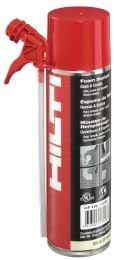
Hilti CF-116 Stop & Go Insulating Foam with Straw Applicator
Where a flat weather strip cannot follow an uneven opening, Hilti CF-116 expanding foam fills gaps around windows, doors, and pipes instead of bridging them with tape. The Stop & Go applicator is designed for reusable dispensing, which can help limit leftover foam compared with a single-use approach, while the included straw gives more control in confined areas. Its quick tack-free time is useful when work needs to move along, though the supplied product details do not specify a fixed cure time; conditions can change how long the foam takes. Compared with the cut-to-fit M-D rubber seal, this is better for irregular voids but less suited to a neat, removable surface strip. It comes as one can, so larger projects may need more material than this package provides.
Pros:- Expands to fill irregular gaps rather than just covering their surface
- Stop & Go dispensing is designed to support reuse and reduce waste
- Straw applicator offers control around confined areas
- Becomes tack-free in minutes according to the product description
Cons:- Cure time varies with environmental conditions
- Package contains one can, which may not cover a large project
- Expanding foam is less suited than adhesive strips to tidy, visible seams
Best for: DIYers filling irregular gaps around pipes, window frames, or door openings who need an expanding sealant and controlled straw application.
Not ideal for: Buyers sealing narrow, visible seams with a clean removable strip, or those who need a stated multi-can quantity for a large project.
- Brand:Hilti
- Product:CF-116 Stop & Go insulating foam
- Manufacturer part number:2005479
- Unit count:1
- Number of pieces:1
- Applicator:Straw applicator
- Dispensing feature:Stop & Go technology
- Tack-free timing:Minutes; varies with environmental conditions
Our verdict“Choose Hilti for filling uneven voids around pipes and frames, not for small, exposed seams that call for a narrow strip.”
33 ft EVA Foam Weather Stripping Door Seal Tape
This 33-foot EVA foam tape is the flexible, multipurpose option for buyers who want one roll for doors, windows, vents, appliances, vehicles, or furniture. Its foam can cushion as well as seal, so it may help with friction and noise where a rigid fit is not the only concern. Compared with the M-D EPDM strip, this tape is presented for a wider range of household surfaces and uses, but its product data give less detail about dimensions and temperature performance. That makes fit harder to judge before application, especially for a specific window gap. The self-adhesive mesh backing keeps installation simple, though the listing notes that adhesion depends on the surface and installation. I would choose it for general-purpose projects, not when documented performance or a precisely specified profile matters.
Pros:- 33-foot length can cover multiple small projects
- Cut-to-fit format adapts to different openings
- EVA foam offers cushioning as well as sealing
- Listed for a broad range of household and vehicle applications
Cons:- Product data do not specify tape width or thickness
- Adhesion may vary with surface condition and installation
- No temperature range or other verified performance details are provided
Best for: DIYers handling several small sealing or cushioning jobs across doors, windows, vents, appliances, vehicles, or furniture.
Not ideal for: Buyers who need specified tape thickness, temperature limits, or verified performance for a demanding air-leak repair.
- Length:33 ft
- Material:EVA foam
- Adhesive:Self-adhesive mesh backing
- Applications:Doors, windows, vents, appliances, vehicles, furniture, and garages
- Uses:Sealing, cushioning, insulation, sound reduction, and surface protection
- Cut-to-fit:Can be cut to fit
Our verdict“Choose this for flexible, general-purpose sealing and cushioning, but select a better-specified product for a gap that demands a precise fit.”
6-Pack Moldable Sealant Clay, White Fast-Drying Repair Putty for Pipes, Wall Holes, and AC Gaps
For awkward holes around pipes or air-conditioning lines, moldable sealant clay can be pressed into shapes that a straight strip like the Alien Draft Seal cannot follow. This six-pack comes in individual 30-gram portions, so the material can be divided among small repairs without opening a single large container. The tool-free application is straightforward, and the description positions the white putty for indoor and outdoor household gaps. The main compromise is patience: the listed 3–5 day drying time is much longer than the tack-free period described for Hilti CF-116 foam. The surface also needs to be clean and dry, ruling it out for damp repairs. I would reserve it for small, irregular penetrations rather than long seams or jobs that need a quick return to service.
Pros:- Moldable putty conforms to irregular holes and penetrations
- Tool-free kneading and application
- Six individually packaged portions can be used for separate repairs
- Described as weather-resistant for indoor and outdoor household use
Cons:- Full drying takes 3–5 days
- Cannot be applied to damp or wet surfaces
- Surface must be thoroughly cleaned before application
Best for: Homeowners plugging small, irregular openings around drain pipes, wall penetrations, or AC lines who can leave the repair undisturbed while it dries.
Not ideal for: Buyers sealing long door or window seams, working on wet surfaces, or needing a repair that cures quickly.
- Brand:JSWKKGD
- Color:White
- Quantity:6 pack
- Weight per unit:30 grams
- Drying time:3–5 days
- Model number:SDCV622625
- Application method:Knead and apply; no tools required
- Stated use:Pipes, wall holes, and air-conditioning gaps
Our verdict“Choose this clay for small, irregular pipe or AC gaps when easy shaping matters more than a fast cure.”
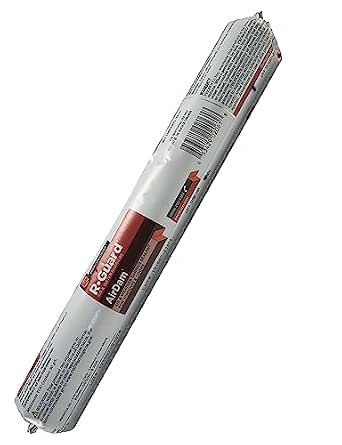
PROSOCO AirDam Air and Weather Barrier Sealant for Windows and Doors
PROSOCO AirDam earns a place for buyers sealing the joints around windows and doors, where a dedicated air and weather barrier sealant is a closer fit than general-purpose weather stripping. Its stated application gives it a more targeted role than Holikme Weather Stripping Door Seal, which is designed as an adhesive door seal, or the window-sealing tapes in this roundup. That makes AirDam the more relevant option when the goal is sealing a window or door perimeter rather than adding a strip across a moving gap.
The tradeoff is limited product information: the supplied data does not specify application method, cure time, compatibility, or package size. I’d choose it for a project where the intended use is clear, but compare the technical label with the job requirements before buying. It is not the most flexible pick for shoppers who need a known length of tape or a ready-to-fit weather strip.
Pros:- Designed specifically for use around windows and doors
- Provides an air and weather barrier
- Offers a sealant alternative to tapes and mechanical weather-stripping strips
Cons:- Provided product data does not state application method or cure time
- No package quantity or coverage information is provided
- Less clearly suited than adhesive weather stripping for quick, strip-based door gap sealing
Best for: Homeowners and contractors sealing air and weather leaks at window or door perimeters who specifically want a barrier sealant rather than tape or a compressible strip.
Not ideal for: Buyers who need a specified tape length, a self-adhesive strip for a moving door, or detailed application and curing information before choosing a sealant.
- Brand:PROSOCO
- Product type:Air and weather barrier sealant
- Stated application:Windows and doors
- Intended barrier:Air and weather
- Application category:Perimeter sealing
- Application method:Not specified in provided product data
- Cure time:Not specified in provided product data
- Package size:Not specified in provided product data
Our verdict“Choose PROSOCO AirDam when you need a dedicated sealant for window or door perimeters and can confirm its application details for your project.”

How We Picked
I ranked these products by how directly their format and stated use match common air-leak locations: window and door edges, duct joints, air-conditioner gaps, and openings around pipes or walls. I also weighed application control, fit, material flexibility, stated coverage, and the chance that a product could be mismatched to the surface or gap. A product with a specialized role can rank highly for that repair without being a sensible whole-home choice.
The order reflects usefulness across the range of jobs in this roundup, not a claim that one material replaces all others. Flexible sealants and foam address irregular gaps; tape and weatherstripping are more appropriate for accessible edges and surfaces that need a low-profile seal. I gave weight to clear use cases and practical fit, while accounting for drawbacks such as narrow application scope, surface-preparation needs, and the possibility that a fixed profile will not suit every gap.
Factors to Consider When Choosing Best Air Sealing Products
Before choosing an air sealing product, identify where air is moving and how the joined surfaces behave. The right material depends on gap size, movement, access, and whether the surface must open or close afterward.
Match the product to the location
Start by locating the leak rather than buying one product for every room. A duct joint calls for a duct-appropriate seal, while a window sash or door edge usually needs a compressible gasket or surface-applied tape. Gaps around pipes and rough openings may need a sealant or foam that can follow irregular shapes. A common mistake is applying a product simply because it says “weather sealing,” without checking the intended substrate or use. Keep separate products for separate jobs when the materials and movement differ. This reduces the risk of a seal that peels, blocks a moving part, or fails to close the actual air path.
Measure gap size and movement
Measure the gap at several points; old doors and windows can vary from top to bottom. A thin tape or gasket may work on a narrow, consistent seam but struggle with a wide or uneven opening. Foam can fill a larger irregular void, yet it is not a substitute for a flexible seal at a joint that moves or needs to open. For doors and operable windows, check that the seal compresses without making the latch difficult to use. Overfilling a gap can cause binding or leave an untidy surface. When dimensions vary, choose an approach that can accommodate the widest point without obstructing the narrowest one.
Check surface condition and preparation
Adhesive products depend on a clean, dry, sound surface, so dust, loose paint, grease, or moisture can weaken the bond. Before installation, remove residue and let the area dry according to the product directions. Rough masonry, painted trim, metal, and plastic may accept adhesives differently; confirm compatibility instead of assuming all surfaces behave alike. A frequent mistake is applying tape over a failing coating, which can make the coating—not the adhesive—the weak link. If the surface is damaged, repair it before sealing. Careful preparation often matters more than choosing a longer roll.
Choose flexibility for joints that move
Temperature changes, door operation, and building movement can all shift a joint after installation. Flexible rubber weatherstripping or an appropriate flexible sealant can accommodate some movement better than a rigid fill. Foam and putty have different behavior, so use them only where their instructions allow and where they will not interfere with moving components. For an opening that must remain accessible, avoid sealing it permanently unless that is the intended repair. Think about what happens during seasonal expansion and contraction, not just how the gap looks today. This helps prevent a neat-looking seal from separating after repeated movement.
Factor in application control and cleanup
Application method affects how much control you have, especially around finished trim and narrow joints. Tape and preformed strips can be easier to place in straight runs, while sealant and foam need a steady hand and careful masking or protection. Read the directions for curing, cleanup, and ventilation before starting; some products cannot be readily removed once set. Avoid filling a cavity blindly when you cannot see what lies behind it, and do not cover drainage paths or ventilation openings. If the repair is highly visible, practice the application on a scrap surface first when possible. A slower, controlled application can prevent cleanup from becoming the largest part of the job.
Balance coverage against job-specific fit
A long roll can cover multiple seams, but only if its profile and adhesive suit each location. A specialized sealant may cover fewer kinds of tasks yet perform a better-matched role at the joint it was designed for. Compare the usable length or quantity with the measured repair area, allowing for corners, overlaps, and mistakes. Buying a multipurpose product for a small, specialized repair can leave you with the wrong material; buying several narrow-use products for one simple seam can add needless complexity. Prioritize compatibility and fit first, then coverage. This is the clearest way to compare value without relying on package size alone.
Frequently Asked Questions
Can I use one product to seal windows, doors, and ducts?
Usually, one product is not the best choice for all three. Windows and doors often need a compressible strip or a surface tape suited to an accessible edge, while duct joints call for a material intended for duct sealing. A broad-use sealant may cover some building joints but still be a poor fit for a moving door or a duct connection. Check the product’s labeled use and the surfaces involved before applying it. Matching the material to each leak location is more reliable than choosing the package with the broadest-sounding claims.
Should I use weatherstripping or foam around a door?
Use weatherstripping when the leak is along the door perimeter and the seal needs to compress each time the door closes. Foam is more appropriate for filling a stationary gap when the product instructions support that application; it can interfere with a door if placed where the door must move. Measure the closed-door gap and check whether the latch still operates freely after adding a seal. A strip that is too thick can make the door hard to shut, while one that is too thin may not contact the frame. The door’s movement and gap shape should decide the material.
How do I choose between window sealing tape and a rubber window seal?
Tape is a low-profile option for a suitable surface seam, while a rubber seal works by compressing against a mating surface. Check whether the window opens, how wide the gap is, and whether the added thickness will affect operation. Tape may be easier to position along a straight edge, but its bond depends on surface cleanliness and compatibility. A rubber strip may better suit a repeat-contact edge, provided its profile fits the gap. Do not cover drainage channels or moving hardware with either product.
When should I choose duct seal compound instead of foam?
Choose duct seal compound for duct joints when the product is labeled for that use; it is designed for a different task than filling a general wall cavity. Foam is intended to expand into gaps and can be difficult to control in a narrow connection or around components that need access. Before applying either, identify the leak and confirm the material is compatible with the duct and surrounding surfaces. Avoid using building foam as a stand-in for a duct-specific seal simply because both products close gaps. Follow the product directions, especially where access or system operation could be affected.
What should I do if the gap changes width along the seam?
Measure several points and note the widest and narrowest sections before selecting a material. A fixed-profile strip may seal one section but leave another open, or it may be too thick where the gap narrows. For an irregular stationary opening, a flexible material that can follow the changing shape may be a better fit, subject to its use instructions. If the seam moves or must remain operable, avoid filling it with a rigid or expanding material without checking the consequences. For a large variation, split the repair into sections or address the underlying alignment problem first.
Conclusion
For the broadest range of window-and-door sealing needs in this lineup, I’d start with PROSOCO AirDam as the best overall, while recognizing that it is not a substitute for every gasket or duct product. For a value-focused door repair, compare the Holikme door seal and the 33 ft EVA foam tape against your measured gap and preferred profile. Beginners may find a straight run of window sealing tape easier to place than foam or liquid sealant, provided the surface is suitable. Choose Hilti CF-116 for an appropriate larger gap, RectorSeal 81880 for duct-joint work, and the M-D air-conditioner weatherseal for its specific appliance-gap use. For a targeted specialty repair, select the product whose labeled purpose matches the opening rather than stretching one seal across unrelated jobs.