The right dust extractor for woodworking depends on the machines you run and the air you want to breathe. For most home shops, the Bosch VAC090AH stands out as the best overall pick, pairing true HEPA filtration with automatic filter cleaning and tool-triggered operation at a price well below the Festool tier. If you connect stationary machines like a planer or table saw, the WEN DC1300 offers far more collection capacity per dollar, while the Festool CT MIDI I is the stronger choice if you own Festool or other high-end handheld tools. The core tradeoff in this category is airflow versus filtration: high-CFM bag collectors move huge volumes of coarse dust but miss fine particles, while HEPA extractors capture the dangerous sub-micron dust at lower volume. Keep reading for the full breakdown of all 11 options and which one fits your shop.

Get business pricing on tools and workshop supplies
- Business-only prices and quantity discounts
- Tax-exempt purchasing
- Multiple users, one account, clear invoices
Complete the kit


Key Takeaways
- True HEPA units (Bosch VAC090AH, DEWALT DWV010, Festool CT 15, Rockler 9-Gallon) captured fine dust far better than 5-micron bag collectors, but the bag units moved 3–4x the airflow for stationary machines — no single product won both categories.
- Automatic filter cleaning was the single biggest usability differentiator in this lineup: units without it (ECOMAX, WEN DC3401, Festool CT 15) lost suction noticeably faster during long sanding sessions.
- The two Festool units justified their premium mainly through hose compatibility and build refinement, not raw performance — budget buyers get 90% of the capability from the Bosch or DEWALT for less.
- The Abestorm DecDust 1350IG doesn’t replace a dust extractor at all; it’s an ambient air scrubber that only makes sense as a second unit alongside chip collection, and ranking it required treating it as a different tool class.
- Wet/dry versatility (both ECOMAX units) added real value for mixed shops, but came with the tradeoff of manual filter maintenance and bulkier storage compared with dedicated extractors.


More Details on Our Top Picks
WEN DC3401 Woodworking Dust Collector, 5.7-Amp Motor with 12-Gallon Bag
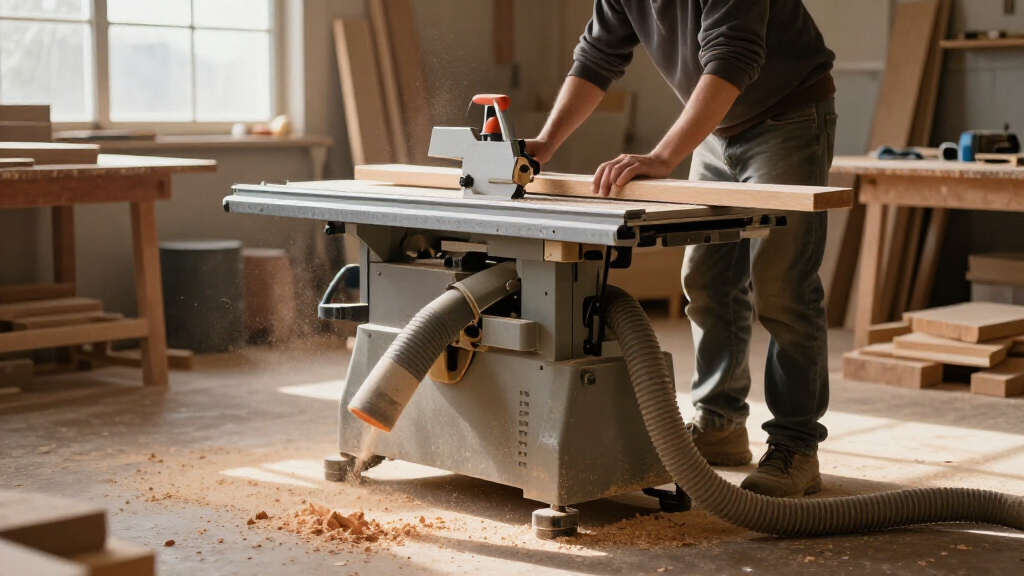
This is where most woodshops should start, because the WEN DC3401 attacks the biggest part of the dust problem: chips and shavings from stationary machines. Its 660 CFM airflow dwarfs every shop-vac-style option here — the DYNAVEX manages 142 CFM and the Bosch VAC090AH tops out at 150 CFM — which matters because a tablesaw or planer produces far more volume than a sander ever will. At 17 pounds with a carrying handle and lockable casters, it moves between machines without fuss, and the optional wall mount frees up floor space. The real tradeoff is filtration: a 5-micron bag lets the finest, most hazardous dust pass back into the air, so this works best paired with a separate HEPA unit or ambient air cleaner rather than as your only line of defense.
Pros:- 660 CFM airflow handles chip-heavy machines far better than shop-vac extractors
- Lightweight at 17 pounds with carrying handle, casters, and optional wall mount
- Standard 4-inch port connects directly to most woodworking machinery
- Two-year warranty backs the budget price point
Cons:- 5-micron collection bag allows fine, hazardous dust to escape back into the shop air
- Brushed motor will likely need more maintenance than brushless alternatives over time
Best for: Woodworkers with stationary machines like planers, jointers, and tablesaws who need high-volume chip collection on a budget
Not ideal for: Anyone sanding indoors or concerned about fine airborne dust — the 5-micron bag won’t capture sub-micron particles
- Motor:5.7-amp brushed
- Airflow:660 CFM
- Impeller:6 inches
- Dust Port:4 inches
- Collection Bag:12-gallon, 5-micron zippered
- Base:Mobile base with lockable swivel casters; optional wall mount
- Weight:17 pounds
- Warranty:2 years
Our verdict“Buy this for machine-duty chip collection, but pair it with HEPA filtration if fine dust is a concern in your shop.”
DYNAVEX 10-Amp Portable Woodworking Dust Extractor, 12-Gallon
The DYNAVEX sits in a smart middle ground: it delivers 0.5-micron HEPA filtration and a 12-gallon tank at a price point well below the Bosch VAC090AH, while including the hose, adaptors, clamps, and replacement filters that competitors often sell separately. Its AUTO mode starts extraction the moment your connected tool powers on, mirroring the auto-start on the Rockler Dust Right — though DYNAVEX caps connected tools at 550 watts while Rockler allows up to 7 amps, so larger routers may fall outside its limits. The generous tank means fewer emptying trips than the 9-gallon Bosch or Rockler units. Know the ceiling before buying: continuous use is limited to one hour, and 142 CFM makes this a sanding-and-handheld-tool machine, not something you’d hook to a planer.
Pros:- 0.5-micron HEPA filter captures fine wood dust that bag-style collectors miss
- AUTO mode syncs extraction with your power tool automatically
- 12-gallon tank is the largest in this batch, reducing emptying frequency
- Complete accessory package includes hose, adaptors, clamps, and spare filters
Cons:- Auto-start only supports connected tools up to 550 watts
- Continuous operation limited to one hour before cooldown
- Wheels ship uninstalled and require user assembly
Best for: Hobbyist woodworkers who want HEPA filtration and auto-start for sanders and handheld tools without paying premium-brand prices
Not ideal for: Runout-heavy production work or high-draw tools — the 550-watt auto-start limit and one-hour duty cycle will cut sessions short
- Motor:1.5 HP, 10A
- Airflow:142 CFM
- Tank Capacity:12 gallons
- Filtration:0.5-micron HEPA
- Hose:4 in. x 6.5 ft.
- Auto-Start Tool Limit:550 watts
- Continuous Usage Limit:1 hour
- Included Accessories:2 hose clamps, 2 replacement paper filters, 4 wheel fittings, 4 hose adaptors
Our verdict“A strong value pick for weekend woodworkers who need true HEPA extraction for handheld tools and can live within its duty-cycle limits.”
Bosch VAC090AH 9-Gallon Dust Extractor with Automatic Filter Cleaning
What separates the Bosch VAC090AH from cheaper extractors is its automatic filter cleaning every 15 seconds — a feature that keeps suction constant during long sanding sessions instead of letting it fade as the filter clogs. Compared with the Rockler Dust Right, which uses pulse cleaning, Bosch adds adjustable suction, letting you dial down for delicate tasks or max out the 97-inch static water lift for stubborn debris. The certified HEPA filter capturing 99.97% of particles at 0.3 microns, plus a fleece bag for dry dust, makes this the most defensible choice if you’re working toward OSHA Silica Table 1 requirements — though Bosch describes it as moving toward compliance, not guaranteeing it, so verify your full setup. The premium engineering carries a premium price, and 150 CFM still limits it to handheld tools rather than stationary machines.
Pros:- Automatic filter cleaning every 15 seconds maintains consistent suction during long sessions
- 99.97% HEPA filtration at 0.3 microns for genuine fine-dust capture
- 97-inch static water lift handles both fine dust and heavier debris
- Adjustable suction and power-tool activation add real versatility
Cons:- OSHA compliance is described as support toward compliance, not a certification
- 150 CFM airflow limits it to handheld tools, not stationary machinery
- Premium feature set comes at a premium price versus the DYNAVEX
Best for: Serious hobbyists and pros who sand for hours at a time and need suction that doesn’t degrade mid-session
Not ideal for: Budget-conscious buyers or anyone expecting standalone OSHA compliance certification out of the box
- Capacity:9 gallons
- Maximum Airflow:150 CFM
- Maximum Static Water Lift:97 inches
- Filter Cleaning:Automatic, every 15 seconds
- Filter:HEPA; captures 99.97% of particles 0.3 microns or larger
- Included Bag:Fleece filter bag
- Power Tool Activation:Supported
- Compliance Support:Designed to help move toward OSHA Silica Table 1 compliance
Our verdict“The pick for woodworkers whose priority is uninterrupted, certified-grade HEPA extraction during marathon sanding sessions.”
Rockler 9-Gallon HEPA Dust Collector with Power Tool Auto-Start
If noise drives you crazy — or you share walls with family — the Rockler Dust Right is the standout here at ≤65 dB, noticeably quieter than typical extractor operation. Its auto-start socket fires the unit the instant your tool switches on, with a 5-second shutoff delay to clear the hose, and the washable HEPA filter rated to 0.3 microns means no recurring filter purchases — a running-cost advantage over paper-filter designs like the DYNAVEX. A 20-foot cord and 12-foot hose give it the best reach of this batch, and the bundled floor brush, crevice tool, and extension wands let it double as a shop vacuum. The catch is raw power: at 85 CFM, it trails Bosch’s 150 CFM by nearly half, and a single power level with a 7-amp auto-start cap rules out heavier tools.
Pros:- Quietest option in this batch at ≤65 dB
- Washable HEPA filter eliminates recurring filter replacement costs
- 20-foot cord plus 12-foot hose covers a large workshop without re-plugging
- Full accessory kit including floor brush, crevice tool, and extension wands
Cons:- 85 CFM suction is the weakest of the powered extractors here
- Only one power level with no adjustable suction
- Auto-start limited to tools drawing up to 7 amps; indoor use only
Best for: Woodworkers in shared or residential spaces who value quiet operation, washable filtration, and long cord reach
Not ideal for: High-draw tools above 7 amps or anyone needing maximum suction for heavy debris collection
- Capacity:9 gallons
- Filter:Washable HEPA, 0.3 micron
- Suction:85 CFM
- Noise Level:≤65 dB
- Auto-Start:Power tool activated, up to 7 amps, 110V socket
- Shutoff Delay:5 seconds
- Power Cord / Hose:20 ft cord / 12 ft hose
- Wheels:4 oversized 3-inch casters
Our verdict“The right choice for quiet, low-fuss HEPA extraction around sanders and small tools, provided you don’t need serious suction.”
Festool 578441 CT 15 HEPA Dust Extractor
The Festool CT 15 earns its place through build quality and warranty rather than raw specs. Its 3-year comprehensive warranty including wear and tear is the strongest coverage in this lineup — the WEN DC3401 offers two years on a budget machine, while Festool backs everything down to consumables on a robust chassis with steel axles designed to survive shop abuse. The adjustable high-performance turbine and touch controls feel more refined than the single-speed Rockler Dust Right, and onboard storage for the crevice and upholstery nozzles keeps the kit together. The honest tradeoff: at under 4 gallons, its container is roughly a third the size of the DYNAVEX’s 12-gallon tank, so expect frequent bag changes in a busy shop. You’re paying a premium for durability and system integration, not capacity.
Pros:- 3-year comprehensive warranty including wear and tear is best in this lineup
- Adjustable turbine with touch controls outclasses single-speed competitors
- Robust chassis and steel axles built for daily shop abuse
- Onboard nozzle storage keeps accessories from getting lost
Cons:- Sub-4-gallon container requires frequent emptying compared to 9- and 12-gallon rivals
- Premium pricing with fewer included accessories than the Rockler or DYNAVEX
- Specs like CFM and dB aren’t published, making direct comparison difficult
Best for: Festool-system owners and craft-focused woodworkers who want a durable, compact extractor backed by exceptional warranty coverage
Not ideal for: High-volume shops or budget buyers — the small sub-4-gallon container and premium price don’t suit heavy chip loads
- Model:578441 CT 15
- Filtration:HEPA
- Container Capacity:3.96 gallons (15 liters)
- Controls:Touch operation with adjustable turbine
- Included Accessories:Crevice nozzle and upholstery nozzle
- Chassis:Robust design with steel axles
- Warranty:3-year comprehensive, including wear and tear
Our verdict“A buy-it-once compact extractor for Festool loyalists who prize durability and warranty depth over tank capacity.”
ECOMAX 8-Gallon Wet/Dry Shop Vacuum and Dust Extractor
This ECOMAX model earns its spot as the only pick in this lineup that genuinely does double duty as a wet/dry vacuum and a tool-triggered dust extractor. Where the DEWALT DWV010 and Rockler 9-Gallon are extraction-only machines, this one handles a flooded shop floor or a spilled finish the same afternoon it captures sanding dust. The stainless steel tank with drain port is the practical payoff here — wet pickup in a polymer drum gets messy, and draining beats tipping a heavy canister. Tool auto-start works the same way it does on the Festool CT 15, so a connected sander or router triggers suction without touching a switch. The tradeoff is refinement: semi-automatic filter cleaning isn’t as hands-off as the DEWALT’s fully automatic system, and the HEPA filtration is shop-vac grade rather than certified extraction grade. For a generalist workshop, though, that’s a fair compromise.
Pros:- Handles both wet and dry pickup, unlike extraction-only rivals
- Automatic startup when a connected power tool is switched on
- Stainless steel tank with drain port simplifies liquid disposal
- Anti-static hose and included accessory kit cover most cleanup tasks
Cons:- Corded design limits range from an outlet
- Semi-automatic filter cleaning requires more user involvement than fully automatic systems
Best for: Woodworkers who want one machine for power-tool dust extraction AND everyday wet/dry shop cleanup
Not ideal for: Fine-dust purists — semi-automatic filter cleaning and shop-vac HEPA filtration trail dedicated extractors like the Bosch VAC090AH
- Capacity:8 gallons
- Motor power:6.5 HP
- Tank material:Stainless steel
- Filter type:HEPA
- Power source:Corded electric, 120V
- Hose length:10 ft
- Special features:Power tool activation, semi-automatic filter cleaning, dust-full indicator, drain port
Our verdict“Buy this if you refuse to own two machines and want credible dust extraction plus genuine wet/dry vacuum capability in one drum.”
Festool 578512 CT MIDI I Dust Extractor
The CT MIDI I is the refined, system-based option in this roundup — a category the DEWALT DWV010 and Bosch VAC090AH compete in but approach more bluntly. Its standout trick is Bluetooth remote start/stop: pair it with a compatible Festool tool and the extractor fires up the instant the tool does, even across the room, without relying on a plugged-in auto-start socket. Compared with the Festool CT 15, the MIDI adds the smooth suction hose, internal hose garage, and four-wheel chassis that make it noticeably easier to drag between stations. Tool-free filter changes keep maintenance to a minute rather than an afternoon. The honest tradeoff is capacity and control — a compact canister fills faster under heavy routing than a 9-gallon Rockler, and the single power level means no low-flow setting for delicate sanding tasks. You’re paying for integration and polish, not raw volume.
Pros:- Bluetooth remote start/stop with compatible tools
- Compact four-wheel chassis moves easily between workstations
- Tool-free filter changes simplify maintenance
- HEPA filtration with SELFCLEAN filter bag system
Cons:- Corded power source limits mobility despite the compact design
- Single power level offers no variable suction control
- Smaller capacity means more frequent bag changes during heavy stock removal
Best for: Festool system owners and finish-focused woodworkers who value mobility, clean filtration, and wireless tool-triggered extraction
Not ideal for: Budget-conscious buyers or those with stationary machines — a WEN DC1300 moves far more air for high-volume chip production
- Model:578512 CT MIDI I
- Filter type:HEPA
- Power source:Corded electric
- Power levels:1
- Chassis:4-wheel canister
- Special features:Bluetooth remote start/stop, automatic tool start, SELFCLEAN filter bag, internal hose garage
- Recommended uses:Woodworking, construction, hard floors, tile
Our verdict“This is the pick for Festool owners and detail-oriented finishers who want a polished, portable extraction system rather than maximum airflow per dollar.”
Abestorm DecDust 1350IG 360-Degree Air Filtration System with Built-In Ionizer
The DecDust 1350IG solves a different problem than every extractor here: it doesn’t connect to tools at all. While the WEN DC1300 captures chips at the source, fine suspended dust that escapes collection — the kind that lingers and matters most for lung health — is what this unit targets. With up to 1,350 CFM of 360-degree intake covering rooms to 1,700 sq ft, plus a built-in ionizer that addresses odors and ultra-fine particles, it functions as a shop-wide air scrubber rather than a vacuum. Installation flexibility is strong: hang it, bench it, or ceiling-mount it, and control it via touch panel or a remote that works from 27 feet away. Tradeoffs are real, though. It can’t ship to California due to air cleaner regulations, its MERV-11 filters need swapping every 2–4 months, and at 60–69 dBA it’s audible in a small shop. Think of it as a supplement to — never a replacement for — source extraction.
Pros:- 360-degree intake with up to 1,350 CFM covers shops up to 1,700 sq ft
- Built-in ionizer tackles odors and ultra-fine particles
- Flexible installation: hang, bench, or direct ceiling mount
- Remote control operation from up to 27 feet away
Cons:- Cannot capture dust at the tool — it’s a supplement, not a primary extractor
- Filters require replacement every 2-4 months
- 60-69 dBA noise is noticeable in smaller workshops
Best for: Woodworkers with small-to-mid shops who already capture dust at the tool and want to scrub the escaping fine dust from the air
Not ideal for: Anyone needing at-source extraction, and California residents — it cannot ship there due to air cleaner regulations
- Air flow:1050-1350 CFM
- Filter type:MERV-11 (4 reusable filters included)
- Coverage area:1700 sq ft
- Power:115V, 60 Hz, 1.5 A
- Noise level:60-69 dBA
- Control method:Touch panel and remote (27 ft range)
- Installation:Ceiling hang, workbench, or ceiling mount
- Weight:27 lbs
Our verdict“Pair this with a source extractor like the WEN DC1300 if air quality in your shop is the priority; skip it if you only own one dust machine budget.”
ECOMAX 8-Gallon HEPA Shop Vacuum and Dust Extractor
This polymer-tank ECOMAX is essentially the budget entry point to auto-start extraction. It delivers the features that matter most — tool-triggered startup, HEPA filtration, semi-automatic filter cleaning, a dust-full indicator, and a 10-foot anti-static hose — at a price tier well below the Bosch VAC090AH or Rockler 9-Gallon, which carry the same core functions with heavier-duty build and certification. Compared with its stainless steel sibling, the wet/dry ECOMAX 8-Gallon elsewhere in this roundup, this version trades the metal drum for a lighter polymer tank, which is arguably better if you move the unit between garage and job site. The accessory bundle is generous for the money: two extension wands, four nozzles, three filter bags, and both HEPA and foam filters. The compromises are predictable — 75 dB is loud for a shared indoor space, and a single-speed corded motor offers none of the refinement of the Festool CT MIDI I. As a first extractor, though, it covers the fundamentals.
Pros:- Automatic startup when a connected power tool is switched on
- HEPA filtration with semi-automatic filter cleaning
- Generous accessory kit including bags, wands, and four nozzles
- Lighter polymer tank is easy to reposition
Cons:- 75 dB noise level is loud for indoor or attached-garage shops
- Corded single-speed motor limits flexibility
Best for: Hobbyists and garage woodworkers who want auto-start HEPA extraction without paying premium-brand prices
Not ideal for: Quiet-shop requirements or professional daily use — the 75 dB output and single-speed motor trail the Bosch VAC090AH
- Capacity:8 gallons
- Motor power:6.5 HP, 15 A
- Filter type:HEPA
- Power tool activation:Automatic
- Hose length:10 ft anti-static
- Tank material:Polymer
- Noise level:75 dB
- Power source:Corded electric, 120V
Our verdict“If auto-start HEPA extraction on a budget is the goal, this covers the essentials while you decide whether woodworking justifies a premium system later.”
WEN DC1300 13-Amp 5-Micron Woodworking Dust Collector with 50-Gallon Collection Bag and Mobile Base
When the dust problem is chips and shavings from stationary machines — a planer, jointer, table saw — a shop-vac-style extractor simply can’t move enough air. That’s where the DC1300 plays: 1,300 CFM from a 14-amp motor and 10-inch steel impeller, dwarfing anything from the ECOMAX vacuum or the Festool CT MIDI I in raw volume. The dual 4-inch inlets let you duct two machines at once, and the 50-gallon collection bag means emptying is a monthly chore rather than a daily one — a genuine quality-of-life difference over 8- or 9-gallon canisters. The mobile base with swivel casters makes a 50-gallon machine repositionable, which softens the fixed-workflow drawback of most collectors. The real tradeoff is filtration: 5-micron bags let fine dust pass through, so pairing it with the Abestorm DecDust air scrubber (or upgrading the bag) is wise for anyone breathing that air all day. It also won’t auto-start with a handheld tool the way the DEWALT DWV010 does.
Pros:- 1,300 CFM airflow handles high-volume chip production from stationary machines
- Dual 4-inch inlets allow two tools to be connected simultaneously
- 50-gallon collection bag with quick-release clasp minimizes emptying
- Mobile base with four swivel casters for shop repositioning
Cons:- 5-micron filtration is coarser than cartridge or HEPA systems, letting fine dust escape
- Single speed with no power-tool auto-start functionality
Best for: Woodworkers with stationary machines — planers, jointers, table saws — who need high-volume chip collection
Not ideal for: Handheld-tool users and fine-dust purists — 5-micron filtration and no auto-start make it a poor handheld companion
- Airflow:1,300 CFM
- Motor:14-amp
- Impeller:10-inch steel, up to 3450 RPM
- Filtration:5-micron
- Inlets:Dual 4-inch
- Collection bag capacity:50 gallons
- Base:Mobile base with 4 swivel casters
- Warranty:2 years
Our verdict“This makes sense for machine-heavy shops that need bulk chip collection on a budget — pair it with finer filtration or an air scrubber for complete dust control.”
DEWALT DWV010 8-Gallon HEPA Dust Extractor with Automatic Filter Cleaning
The DWV010 earns its place as the most jobsite-hardened option in this lineup. While the Bosch VAC090AH offers similar automatic filter cleaning, the DEWALT pulls ahead for woodworkers who also work outside the shop, thanks to heavy-duty wheels and casters and a 15-amp motor producing 150 CFM — noticeably more pulling power than the Festool CT 15, which prioritizes refinement over raw airflow. The filter pulses clean every 30 seconds, so suction stays consistent during long sanding sessions where competitors slowly choke down. Power tool actuation means the extractor fires up the instant your sander or router does. The tradeoff is size and weight: this is a rolling drum, not a benchside companion, and EPA RRP compliance for lead-safe work requires optional DWV9330 filters rather than the stock setup.
Pros:- Automatic filter cleaning pulses every 30 seconds, maintaining suction through long sessions
- Power tool actuation starts and stops the vacuum automatically with your connected tool
- 150 CFM from a 15-amp motor outpulls compact extractors like the Festool CT 15
- Heavy-duty wheels and casters survive jobsite transport that would wreck shop-only units
Cons:- EPA RRP lead-safe compliance only applies when optional DWV9330 filters are purchased separately
- Large, drum-style body takes up floor space and is awkward in small home workshops
Best for: Woodworkers and remodelers who split time between a garage shop and job sites and need one extractor that survives both
Not ideal for: Woodworkers in tight home shops who want a compact, wall-adjacent unit — the DWV010’s footprint and jobsite build are overkill indoors
- Capacity:8 gallons
- Motor:15 amps
- Airflow:150 CFM
- Hose Length:15 ft anti-static hose
- Hose Diameter:1.25 inches
- Filter Cleaning:Automatic, pulses every 30 seconds
- Compliance:Meets EPA RRP Rule with optional DWV9330 filters
- Filtration:HEPA
Our verdict“Buy the DWV010 if you need maximum airflow and jobsite durability in one rolling package; skip it if your dust collection never leaves a compact home shop.”

How We Picked
I judged each product against four criteria, weighted for how woodworkers actually use these machines. Filtration quality came first: anything claiming HEPA had to meet the standard for fine-particle capture, because lung-damaging sub-micron dust is the real health risk in a woodshop. Airflow and capacity came second, since a dust extractor that can’t keep up with a planer or router is just an expensive shop vac. Third, I scored day-to-day usability — automatic filter cleaning, tool-triggered outlets, bag or canister changes, noise, and mobility around a small shop.
Finally, I weighed value relative to the job: a $600 extractor isn’t overpriced if it protects a $700 track saw workflow, and a budget bag collector isn’t cheap if it can’t capture fine dust at all. That’s why the ranking mixes tool classes rather than treating all 11 as interchangeable — a 50-gallon collector, a compact HEPA extractor, and an ambient air scrubber serve different corners of the same problem. Products ranked higher when they delivered strong results across multiple criteria without a disqualifying weakness.
Factors to Consider When Choosing Dust Extractors For Woodworking
Before clicking buy on any of the 11 picks above, it helps to understand the category itself — because the most common mistake in this space isn’t picking the wrong model, it’s picking the wrong type of machine entirely.Extractor vs. Dust Collector vs. Air Scrubber
These three machine types get lumped together in search results, but they solve different problems. A dust extractor is a high-static-pressure, high-filtration machine designed to connect directly to handheld tools — sanders, routers, track saws — where the goal is capturing fine dust at the source. A dust collector moves massive airflow at lower static pressure, ideal for ducted runs to stationary machines like planers and jointers where chips come off in volume. An ambient air scrubber like the Abestorm in this lineup does neither; it cleans the air that already escaped your tools, which makes it a supplement rather than a primary solution. Buyers who buy an air scrubber expecting chip collection, or a bag collector expecting clean sanding air, end up disappointed. Match the machine type to your dominant workflow before comparing models within a type.
Filtration Ratings That Actually Matter
Marketing labels like ‘fine dust filter’ mean almost nothing without a micron rating. A 5-micron bag — standard on budget collectors like the WEN models here — catches visible chips and sawdust but passes the particles under 2.5 microns that reach deep into your lungs. Genuine HEPA certification captures 99.97% of particles at 0.3 microns, which is the threshold that matters for long-term respiratory health. The middle ground is a 1-micron cartridge or bag upgrade, a popular retrofit on bag collectors that dramatically improves performance for modest cost. If you sand, rout, or work with MDF regularly, treat HEPA as non-negotiable; if you only dimension lumber on stationary machines, coarser filtration with good airflow is a defensible compromise — with a quality respirator as backup.
Airflow (CFM) and Static Pressure
Two numbers govern whether a machine keeps up with your tools, and first-time buyers routinely check only the first. CFM (cubic feet per minute) measures volume — a planer blasting out chips needs 350+ CFM to avoid clogging the hose. Static pressure measures pull through resistance — sanders and small-diameter hoses need high static pressure to maintain suction at the tool. That’s why a 50-gallon collector with huge CFM can underperform a small HEPA extractor on a random-orbit sander: the airflow dies in the narrow hose. As a rule, handheld tools want an extractor optimized for pressure, while stationary machines want volume. If you do both, that’s the strongest argument for owning two modest machines rather than one expensive compromise.
Automatic Filter Cleaning and Maintenance
This is the feature woodshop owners most often undervalue and later regret skipping. As fine dust loads the filter, suction drops — sometimes within minutes of continuous sanding — and machines with automatic filter cleaning (the Bosch VAC090AH and DEWALT DWV010 here) pulse the filter clean on a timer to hold consistent airflow. Manual-clean machines require you to stop, pull the filter, and knock it clear, which means maintenance gets skipped and performance quietly degrades over months. Before buying any extractor, check what a replacement filter costs and how long bags last under your expected workload — a cheap machine with $60 filters you replace twice a year isn’t cheap. Also confirm the bag or canister empties without spilling; a design that dumps dust back into the room during emptying undoes much of the health benefit.
Auto-Start, Capacity, and Shop Footprint
Small conveniences compound quickly in a daily-use machine. A tool-triggered outlet — standard on the Bosch, Rockler, DEWALT, and both Festools here — starts the extractor the moment you power your sander, so dust never escapes during the first second of a cut. Tank capacity determines how often you empty: 8–9 gallons suits occasional hobby work, while heavy planing can fill that weekly. Mobility matters more than most buyers expect; a machine on casters or a mobile base gets positioned close to the dust source, which improves capture dramatically compared with a fixed unit at the end of a long hose. Finally, measure your floor space honestly — the WEN DC1300’s 50-gallon bag and mobile base claim a real chunk of a two-car garage, while a compact extractor tucks under a bench.
When Paying More Is Worth It
The price ladder in this category is steep, and the justification depends on your tool ecosystem. Premium extractors like the Festools make sense when you already own Festool or Mirka tools, because hose diameters, sleeves, and trigger electronics are designed to work as a system — adapters for other brands work but leak and reduce suction. For everyone else, the mid-tier HEPA machines deliver the same filtration for meaningfully less money, and that’s where most buyers should land. Where I would not economize: if you work in an attached garage sharing air with your home, or anyone in the household has respiratory sensitivity, spend up for certified HEPA and skip the budget bag tier entirely. And if your budget is genuinely tight, a better strategy is one solid mid-range extractor plus a good P100 respirator, rather than a cheap collector that misses the fine dust altogether.
Frequently Asked Questions
Can a dust extractor replace a shop vacuum in my workshop?
For tool-connected dust capture, yes — most modern extractors like the Bosch VAC090AH or ECOMAX models handle wet/dry pickup and general cleanup duties alongside extraction. The tradeoffs are tank size and hose ergonomics: extractors typically run smaller tanks and stiff anti-static hoses designed for tool ports, not sweeping a floor. If you do a lot of general shop cleanup, a dedicated shop vac with a fine-dust bag inside, paired with a true extractor for sanding, is the cleaner division of labor. Also confirm the extractor you’re eyeing is rated for wet pickup before vacuuming anything damp, since not all HEPA units are.
Do I need a HEPA extractor if I already wear a respirator?
A respirator protects you while you’re at the tool, but fine wood dust stays airborne for hours after you stop cutting, so you keep breathing it with the mask off. A HEPA extractor removes that dust at the source, which also keeps it off every surface in your shop — and out of your house if you work in an attached garage. The two protections stack rather than substitute: extraction reduces how much dust becomes airborne, the respirator catches what escapes. If budget forces a choice, source capture with real filtration delivers more total health benefit than a mask alone.
Is a 5-micron bag collector enough for a beginner woodshop?
It’s enough for the chips, not the dust. Machines like the WEN DC1300 do an excellent job keeping planer and jointer shavings off your floor, and for rough dimensioning work that’s a legitimate win. The problem is what passes through: 5-micron filtration releases the fine particles that pose the actual long-term health risk, especially from sanding and MDF. A practical middle path is buying the collector for volume and upgrading to a 1-micron cannister bag later, or running it alongside a small HEPA extractor for detail work. Starting with a bag collector is defensible; relying on one as your only lung protection is not.
How many CFM do I actually need for my tools?
Handheld tools are the easy case — most sanders and routers need only 100–150 CFM, which any compact extractor supplies comfortably. Stationary machines are where the numbers jump: a benchtop planer wants roughly 350 CFM, a cabinet saw with a 4-inch port wants 400+, and anything connected through long duct runs loses CFM every foot. That’s why the big bag collectors exist, and why ducting design matters as much as the machine — each bend and foot of hose eats into your usable airflow. If you’re ducting multiple machines, plan for the hungriest tool in the system, not the average.
Are Festool extractors worth it if I don’t own Festool tools?
Honestly, mostly no. The CT MIDI I and CT 15 are beautifully built machines with excellent filtration, but their biggest advantages — seamless hose fit, systainer storage integration, and trigger compatibility — only pay off within the Festool ecosystem. A Bosch or DEWALT HEPA extractor with automatic filter cleaning delivers comparable dust capture for the dust itself, and generic adapters connect fine to most major-brand sanders, though they can leak slightly at the port. Where a Festool still makes sense for non-Festool owners: if you value maximum mobility, quiet operation, and expect to add premium tools over time. Otherwise, put the savings toward a respirator or a second machine for stationary tools.
Conclusion
After comparing all 11 options, the right pick comes down to what your shop actually produces. For the best overall choice, I’d point most woodworkers to the Bosch VAC090AH — it hits the sweet spot of HEPA filtration, automatic filter cleaning, and tool-triggered operation without climbing into premium pricing. The best value split two ways: the WEN DC1300 is unbeatable for stationary-machine airflow per dollar, while the ECOMAX 8-Gallon HEPA is the smart budget entry for fine-dust capture with wet/dry versatility thrown in. Best premium goes to the Festool CT MIDI I for anyone building around Festool or Mirka tools, with the DEWALT DWV010 as a close runner-up that earns its keep on job sites.
For beginners, the WEN DC3401 is the gentlest on-ramp — simple, affordable, and enough for a first bench machine, with an upgrade path later. Specific needs round out the list: choose the Rockler 9-Gallon HEPA if you want auto-start and HEPA in a compact rolling package, the DYNAVEX 10-Amp for a do-it-all portable at mid-tier pricing, and add the Abestorm DecDust 1350IG only as a second unit to scrub escaped dust from a larger shop’s air. Whatever you choose, prioritize capturing fine dust at the source — that’s the decision your lungs will thank you for years from now.