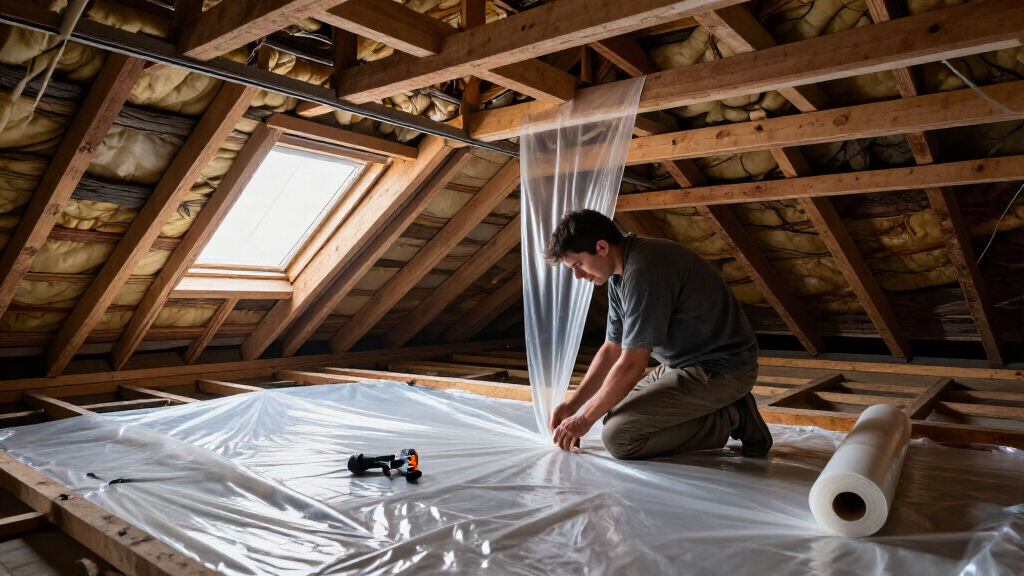

The best attic vapor barriers depend on whether you need to slow moisture diffusion, reflect radiant heat, or both—those are different jobs. I rank CertainTeed MemBrain as the best overall choice for moisture control because it is a smart vapor retarder, while AtticFoil Original stands out for a straightforward radiant-barrier project and US Energy Products for broad roll coverage. The main tradeoff is between a membrane designed to manage vapor movement and reflective foil products aimed at reducing radiant heat; neither should be treated as a substitute for sound air sealing or ventilation. Roll width and total area also affect handling, seams, and waste. Read on for the full comparison, selection criteria, and advice on choosing the right material for your attic.

Get business pricing on tools and workshop supplies
- Business-only prices and quantity discounts
- Tax-exempt purchasing
- Multiple users, one account, clear invoices
Complete the kit


Key Takeaways
- MemBrain is the clearest moisture-control pick: Its smart vapor-retarder role separates it from the four reflective radiant-barrier rolls, which serve a different purpose.
- The two MemBrain sizes suit different layouts: The 8-foot-wide roll is easier to handle in smaller work areas, while the 120-inch version can reduce seams across broad surfaces.
- Large coverage favors the 1,000-square-foot rolls: US Energy Products, AtticFoil, and Houseables offer more area per roll than RadiantGUARD Xtreme’s 542 square feet.
- Reflective foil is not interchangeable with a vapor-control membrane: Buyers should choose based on the moisture and heat problem they need to address, not the word “insulation” on a package.
- Roll dimensions change installation effort: A 26-inch-wide RadiantGUARD roll may be easier to manage in narrow spaces, while four-foot and wider products cover faster but can be awkward overhead.


| attic vapor barrier | Material | Coverage | Model |
|---|---|---|---|
| US Energy Products 1000 sq ft | Aluminum foil, Mylar, and woven polyethylene scrim | 1,000 sq ft | — |
| CertainTeed MemBrain Smart Vap | Plastic | — | 902008 |
| AtticFoil Original Attic Radia | Double-sided pure aluminum foil with internal tear-resistant fabric | 1,000 sq ft | — |
| CertainTeed MemBrain Smart Vap | Clear | — | 902010 |
| RadiantGUARD Xtreme Radiant Ba | Reinforced aluminum | 542 sq ft | RG-X |
| Houseables Radiant Barrier Ins | — | 1,000 sq ft | RaBa |
More Details on Our Top Picks
US Energy Products 1000 sq ft Reflective Insulation Roll, 4 ft x 250 ft
For an attic project where covering a broad area with one roll matters, this 1,000-square-foot, 4-foot-wide sheet is the scale-focused pick. Its five-layer construction combines foil, Mylar, and reinforced scrim, giving it more tear resistance than a simple reflective film; the product claims up to 97% radiant heat reflection. Unlike the perforated AtticFoil Original, this roll is non-perforated, so it does not provide the same path for moisture to pass through. That distinction matters: radiant barriers are not interchangeable with vapor-control materials, and a non-perforated sheet may be unsuitable where moisture needs to escape. I’d choose it for a large, suitable installation where coverage and scrim reinforcement are priorities, not as a universal attic vapor barrier. Cooling results also depend on climate and the existing insulation.
Pros:- Covers 1,000 square feet in a single roll
- Reinforced woven scrim adds tear resistance
- Five-layer foil, Mylar, and scrim construction
- Reflective surface is specified for up to 97% radiant heat reflection
Cons:- Non-perforated construction does not let moisture pass through the sheet
- Radiant-barrier performance is not a substitute for a vapor-control strategy
- Cooling benefits depend on climate and existing insulation
Best for: DIYers covering a large attic or outbuilding who need a long, reinforced reflective roll and have confirmed that non-perforated material suits the assembly.
Not ideal for: Homeowners seeking a humidity-responsive vapor retarder or a moisture-permeable radiant barrier; its non-perforated construction may not fit those needs.
- Coverage:1,000 sq ft
- Dimensions:4 ft x 250 ft
- Thickness:8 mils
- Material:Aluminum foil, Mylar, and woven polyethylene scrim
- Perforation:Non-perforated
- Radiant heat reflection:Up to 97%
- Recommended uses:Attics, sheds, warehouses, and house wrapping
- Manufacturer:US Energy Products
Our verdict“Choose this for broad attic coverage when you want reinforced reflective material and have verified that a non-perforated sheet is appropriate.”
CertainTeed MemBrain Smart Vapor Retarder, 8 ft x 100 ft
Unlike the reflective rolls in this lineup, MemBrain is designed as a smart vapor retarder, not a radiant barrier. Its permeance changes with humidity: it helps limit moisture entry during winter conditions and allows moisture in a wall cavity to escape when conditions shift. That makes it a more purpose-built moisture-control choice than the US Energy Products reflective roll, whose non-perforated construction does not offer the same humidity-responsive behavior. The 8-foot width and 100-foot length suit interior applications with unfaced insulation where local building practice calls for a vapor retarder. The tradeoff is limited scope: this product is not a universal attic solution, and its use is intended for climate zones where a vapor retarder is required. Buyers looking for radiant-heat reflection should compare it with AtticFoil Original instead.
Pros:- Permeance adapts to changing humidity
- Helps limit winter moisture entry while allowing summer drying
- Designed for use with unfaced insulation
- Installs like standard polyethylene sheeting
Cons:- Intended only for climate zones and assemblies where a vapor retarder is required
- Does not provide the radiant-heat reflection offered by foil barriers
- The 8-foot width may not suit every installation layout
Best for: Homeowners and contractors installing unfaced insulation in an interior assembly within a climate zone where a vapor retarder is required.
Not ideal for: Buyers seeking a reflective attic radiant barrier or those working in assemblies where a vapor retarder is not appropriate.
- Model:902008
- Dimensions:8 ft x 100 ft
- Weight:9.8 lbs
- Material:Plastic
- Color:Clear
- Usage:Interior
- Package quantity:1 roll
- Insulation compatibility:Unfaced insulation
Our verdict“Pick MemBrain for specified interior moisture control with unfaced insulation, not for radiant-heat reduction in an attic.”
AtticFoil Original Attic Radiant Barrier, 48-Inch Wide, 1,000 Sq. Ft.
Among the reflective choices here, AtticFoil Original stands out for pairing a perforated design with a tear-resistant internal fabric. The perforations allow moisture to pass through, a meaningful difference from the non-perforated US Energy Products roll; they do not, however, make this a smart vapor retarder like CertainTeed MemBrain. AtticFoil is specified for horizontal installation in open-frame attics, and its included foil tape can help with seams during that layout. The product claims 97% reflectivity, but buyers should treat that as a radiant-barrier claim, not a guarantee of lower energy use. Its 48-inch width and stated installation orientation make it less flexible for some attic shapes. I’d favor it over a non-perforated foil roll when moisture passage through the barrier is part of the plan.
Pros:- Perforations allow moisture to pass through
- Internal tear-resistant fabric supports handling
- Double-sided pure aluminum foil
- Foil tape is included for seams
Cons:- Specified as best for horizontal installation in open-frame attics
- Radiant-barrier material is not a substitute for a smart vapor retarder
- The 97% reflectivity figure is a product claim, not a guaranteed energy saving
Best for: DIYers with open-frame attics planning horizontal installation who want a perforated reflective barrier and included seam tape.
Not ideal for: Buyers needing a humidity-responsive vapor retarder, or installers whose attic layout calls for a different orientation or sheet width.
- Coverage:1,000 sq ft
- Width:48 inches
- Material:Double-sided pure aluminum foil with internal tear-resistant fabric
- Perforated:Yes; allows moisture to pass through
- Reflectivity:97% claimed
- Included components:AtticFoil insulation and foil tape
- Product dimensions:48 x 6 x 6 inches
- Model number:1000AK2FT1
Our verdict“Choose AtticFoil Original for horizontal open-frame attic work where a perforated radiant barrier and seam tape suit the installation.”
CertainTeed MemBrain Smart Vapor Retarder, 120 in x 100 ft
This wider MemBrain roll gives the humidity-adaptive moisture control of the 8-foot CertainTeed version, but its 120-inch width is sized for 10-foot-tall walls. That can reduce horizontal seams on a matching wall installation, while the narrower MemBrain is easier to handle where its width already fits the job. Like its sibling, this is a smart vapor retarder for unfaced insulation: it limits moisture entry in winter and allows cavity moisture to escape in summer. It is not a foil radiant barrier like AtticFoil Original, so it addresses a different problem than reducing radiant heat gain. The main drawback is fit specificity: the wide sheet can be cumbersome or wasteful on shorter walls, and it is intended only where a vapor retarder is required. Match it to the assembly and local requirements before choosing it for attic use.
Pros:- Humidity-responsive permeance supports seasonal moisture control
- 120-inch width matches 10-foot-tall walls
- Allows moisture buildup to escape in summer conditions
- Installs like polyethylene sheeting
Cons:- Designed for 10-foot walls, so shorter layouts may create excess material
- Use is intended for assemblies where vapor retarders are required
- Does not reflect radiant heat like foil attic barriers
Best for: Contractors or homeowners lining 10-foot-tall interior walls with unfaced insulation where a smart vapor retarder is specified.
Not ideal for: DIYers working on shorter walls, tight spaces, or attic radiant-barrier projects; its wide format and moisture-control purpose may not fit.
- Model:902010
- Size:120 in x 100 ft
- Wall height:10 ft
- Material:Clear
- Insulation compatibility:Unfaced insulation
- Vapor control:Smart vapor retarder with humidity-adaptive permeance
- Installation style:Installs like polyethylene sheeting
Our verdict“Choose this wider MemBrain roll for specified moisture control on 10-foot walls, and choose a reflective barrier instead for radiant-heat management.”
RadiantGUARD Xtreme Radiant Barrier Attic Insulation, 542 sq ft, 26 in x 250 ft
RadiantGUARD Xtreme is the narrow-format pick: at 26 inches wide and 250 feet long, its roll can suit repeated rafter runs where a broad sheet would be harder to position. It is reinforced aluminum and claims to block up to 95% of radiant heat, slightly below the 97% claims attached to AtticFoil Original and the US Energy Products roll. That figure alone should not decide the purchase; installation fit and the distinction between radiant control and vapor control matter more. This product is stapled to attic rafters and can be cut with common tools, but that means a hands-on installation with a staple gun. The listing describes it as fiber-free and Class A/Class 1 fire rated. Unlike CertainTeed MemBrain, it does not adapt to humidity, so it should not be treated as a smart vapor retarder.
Pros:- Narrow 26-inch roll can fit repeated rafter runs
- Reinforced aluminum construction
- Can be cut with utility scissors or a hacksaw
- Described as fiber-free and Class A/Class 1 fire rated
Cons:- Staple-gun installation requires hands-on work
- Covers 542 square feet, less area than the 1,000-square-foot foil rolls
- Temperature and utility-bill reduction claims are not substantiated in the supplied product information
Best for: DIY installers working along attic rafters who prefer a narrow, cut-to-fit reflective roll and can staple it in place.
Not ideal for: Buyers seeking a humidity-responsive vapor retarder, broad sheet coverage with fewer runs, or independently substantiated energy-savings claims.
- Brand:RadiantGUARD
- Model:RG-X
- Coverage:542 sq ft
- Roll dimensions:26 in x 250 ft
- Material:Reinforced aluminum
- Radiant heat blocked:Up to 95%
- Recommended uses:Attic, roof, window, RV, and metal building insulation
Our verdict“Choose RadiantGUARD Xtreme for narrow rafter runs and DIY cutting, but not as a replacement for a purpose-built vapor retarder.”
Houseables Radiant Barrier Insulation Roll, 250 ft × 4 ft, 1,000 sq ft
I’d choose this Houseables roll when the priority is covering a large attic area with a lightweight radiant barrier: its 250-foot length covers 1,000 square feet, and the foil is designed to be cut and handled without adding much installation burden. Its double-sided reflective surface is aimed at reducing radiant heat transfer, not serving as a conventional smart vapor retarder. That distinction matters: unlike CertainTeed MemBrain, which is designed for vapor-control applications, this perforated foil product is intended to reflect heat and is described as breathable. Compared with the narrower RadiantGUARD Xtreme roll, Houseables provides a wider 4-foot sheet that may mean fewer runs across a large attic. The tradeoff is that radiant-barrier performance depends on climate and installation, and the thin material calls for careful handling to avoid tears.
Pros:- One roll covers 1,000 square feet, reducing the need to join multiple rolls across a large area.
- Four-foot width can mean fewer installation runs than narrower attic-barrier rolls.
- Lightweight material is easy to cut and position.
- Perforated construction is described as breathable, and the product is stated to meet multiple ASTM safety and breathability standards.
Cons:- Radiant heat reduction and any cooling-cost effect depend on climate and correct installation.
- Thin foil can tear if handled roughly during installation.
- It is a radiant barrier, not a substitute for a vapor retarder such as CertainTeed MemBrain.
Best for: Homeowners covering a broad attic area who want a lightweight, cut-to-fit radiant barrier rather than a dedicated smart vapor retarder.
Not ideal for: Buyers seeking a product specifically designed to manage vapor diffusion, or installers who need a thicker material that can tolerate rough handling.
- Brand:Houseables
- Model:RaBa
- Roll length:250 ft
- Roll width:4 ft
- Coverage:1,000 sq ft
- Reflective value:>97%
- Construction:Double-sided, perforated aluminum
- Pack count:1
Our verdict“Choose Houseables for lightweight, wide-area radiant-barrier coverage, but pick a dedicated vapor retarder if vapor control is your main goal.”

How We Picked
I ranked these six products by how clearly their design fits an attic need, then weighed coverage, roll dimensions, likely handling demands, and the risk of buyers confusing radiant barriers with vapor retarders. That distinction matters most: CertainTeed MemBrain is the lineup’s dedicated smart vapor-retarder option, while US Energy Products, AtticFoil, RadiantGUARD Xtreme, and Houseables are reflective radiant-barrier products. I gave MemBrain the top position for buyers specifically searching for vapor control, while recognizing that it is not a radiant-heat substitute.
Within the reflective group, I compared stated coverage and width to identify which rolls make sense for broad runs versus tighter spaces. The large 1,000-square-foot rolls rank ahead for fewer restocking interruptions on sizable projects; RadiantGUARD’s narrower 26-inch format earns a distinct place for easier handling in constrained areas, despite covering less area. I did not treat coverage or reflective appearance as proof of moisture performance, and I favor checking the manufacturer’s installation directions and local assembly requirements before selecting any product.
| attic vapor barrier | Material |
|---|---|
| US Energy Products 1000 sq ft | Aluminum foil, Mylar, and woven polyethylene scrim |
| CertainTeed MemBrain Smart Vap | Plastic |
| AtticFoil Original Attic Radia | Double-sided pure aluminum foil with internal tear-resistant fabric |
| CertainTeed MemBrain Smart Vap | Clear |
| RadiantGUARD Xtreme Radiant Ba | Reinforced aluminum |
| Houseables Radiant Barrier Ins | — |
Factors to Consider When Choosing Best Attic Vapor Barriers
Before choosing a roll, identify the building problem and the location of the material in the attic assembly. A vapor retarder, a radiant barrier, insulation, ventilation, and air sealing each address different parts of heat and moisture behavior. The right purchase depends on climate, existing layers, and whether the project is a repair or a new assembly.
Match the Material to the Problem
Start by separating vapor diffusion from radiant heat transfer. A vapor retarder slows moisture moving through building materials, while a reflective radiant barrier is intended to reduce radiant heat transfer when installed as directed. Neither product automatically fixes air leaks, wet insulation, or inadequate attic ventilation. A common mistake is buying foil because it is labeled “insulation” when the real concern is moisture migration through a ceiling assembly. If you are addressing condensation or a damp roof deck, first identify the moisture source and check the recommended assembly for your climate.
Check Climate and Assembly Requirements
Vapor-control placement can vary with climate, air-conditioning use, and the materials already in the roof or ceiling assembly. Adding a low-permeance layer in the wrong location can restrict drying and trap moisture rather than solve a problem. Before installation, check local code guidance and product instructions, especially when an attic has existing foam, foil-faced insulation, or a finished ceiling. Buyers should not assume one vapor-control strategy works in every region. When the assembly is complex or shows signs of moisture damage, get advice from a qualified building professional before adding another layer.
Plan Coverage Around Seams and Obstructions
Calculate the area to cover, then allow for overlaps, cuts, and irregular framing rather than matching the roll’s listed area exactly. Wider rolls can reduce seams on long, open runs, but may be harder to position around rafters, ducts, and access hatches. Narrower rolls are easier to maneuver in tight areas, though more joints may take extra time to lay out and seal. Measure the actual surfaces and map obstacles before choosing between the 26-inch, four-foot, eight-foot, and 120-inch formats in this lineup. The easiest roll to handle often matters more than a small difference in nominal coverage.
Treat Installation Details as Part of Performance
Reflective barriers typically need the specified air space and installation orientation to function as intended; pressing a reflective layer flat against another surface can change its performance. Membranes also depend on correct seam treatment, edge detailing, and placement within the assembly. Follow the manufacturer’s fastening and overlap instructions instead of improvising with generic tape or staples. Avoid blocking ventilation paths or covering electrical equipment and fixtures in ways that conflict with safety instructions. A carefully installed smaller area can be more useful than a large roll installed without attention to airflow and continuity.
Decide When More Coverage Is Worth It
Large rolls can simplify a broad, uninterrupted project by reducing roll changes and potentially limiting seams, but they are bulky to store and handle. A smaller or narrower roll can be a better fit for patching, a compact attic, or work done without a helper. Compare usable coverage after overlap and cutting, not just the printed area. Also check whether the project calls for a membrane or a radiant barrier before comparing roll sizes: more square footage does not make one product type a substitute for another. Pay for extra coverage only when the attic layout can use it without excessive waste.
Inspect Existing Moisture and Ventilation First
Do not cover stained sheathing, damp insulation, or active leaks before finding and correcting the source. A vapor-control layer cannot repair a roof leak, and a radiant barrier does not remove moisture from the attic. Check that soffit and exhaust ventilation paths remain open where the attic design relies on them, and look for air leaks around plumbing, wiring, and ceiling penetrations. Sealing those leaks may address moisture and heat movement more directly than adding a new roll layer. If mold, persistent condensation, or roof-deck deterioration is present, arrange an inspection before choosing materials.
Frequently Asked Questions
Can I use a radiant barrier instead of a vapor retarder in my attic?
Usually, no: the products in this roundup do not all perform the same function. Reflective rolls such as AtticFoil, US Energy Products, RadiantGUARD Xtreme, and Houseables are positioned as radiant barriers, while MemBrain is the dedicated smart vapor-retarder option. A radiant barrier should not be assumed to control vapor diffusion just because it is reflective or described as insulation. Identify whether your concern is radiant heat, moisture movement, or both, then select materials for those separate needs. Check the intended assembly and installation instructions before combining layers.
Which roll width should I choose for a small or awkward attic?
For tight spaces, a narrower roll is generally easier to carry, position, and cut around obstructions, which makes RadiantGUARD Xtreme’s 26-inch width a distinct fit in this lineup. Wider rolls can cover open runs faster and reduce the number of seams, but they may be difficult to control overhead or between closely spaced framing. Measure access openings as well as the surfaces you plan to cover; a roll that cannot pass through the hatch creates a practical problem before installation starts. If you have a helper and long clear runs, a wider format may save handling time. For a one-person project with many corners, maneuverability may matter more than fewer seams.
Should I cover the whole attic or only the roof rafters?
The correct surface depends on whether the attic is vented, conditioned, or part of a different roof assembly. A radiant barrier installed at the roofline and a vapor retarder placed within a ceiling or wall assembly have different purposes and placement rules. Covering every visible surface without checking the assembly can block ventilation or reduce the structure’s ability to dry. Review the product directions and local requirements, and identify existing insulation and air-control layers first. If the attic has been converted to living space or includes spray foam, get project-specific guidance before adding a layer.
Can I install a vapor barrier over existing attic insulation?
Do not assume that placing a new sheet over insulation is the right approach. The intended location of a vapor retarder depends on climate, the ceiling and roof layers, and the existing materials; an added low-permeance layer can sometimes trap moisture. Inspect for wet or compressed insulation and resolve roof leaks or air leaks before covering anything. The MemBrain products are vapor-retarder options, but their placement and seam details still need to match the manufacturer’s instructions and the assembly design. If you cannot identify the existing layers, pause and seek an assessment rather than burying them.
When is the wider 120-inch MemBrain roll a better choice than the 8-foot roll?
The 120-inch roll may suit broad, open surfaces where reducing seams is useful and the material can be moved into place safely. The 8-foot roll is narrower and may be easier to handle in more confined work areas or when access and helper availability are limited. Both are the same product type, so the main distinction is layout and handling rather than a change in purpose. Measure the surface and access route, and account for overlaps and cuts before choosing a width. A wider roll is not automatically more efficient if it creates difficult lifts or excess offcuts.
Conclusion
For a buyer whose priority is vapor control, I recommend CertainTeed MemBrain as the best overall pick; choose the 8-foot roll for more manageable handling or the 120-inch size for broad runs where fewer seams help. For a large radiant-barrier project, US Energy Products is my best value-style choice in this lineup because its 1,000-square-foot coverage supports extensive runs, while AtticFoil Original is a straightforward alternative for buyers focused specifically on radiant heat. I would reserve RadiantGUARD Xtreme for narrow or awkward spaces, where its 26-inch width can be easier to position, and consider Houseables when a four-foot, 1,000-square-foot reflective roll matches the project layout. Beginners should choose by material type first, then pick the width they can handle safely; anyone facing active moisture, unclear existing layers, or a finished attic should get the assembly checked before installing a barrier.