
The best home insulation products depend on where heat is escaping: broad reflective rolls suit larger surfaces, while window kits, sealants, and outlet pads target specific drafts. My best overall pick is Owens Corning R-19 fiberglass batt for insulating compatible framed cavities, while the Duck window kit is a practical seasonal choice and the US Energy Products duct wrap is made for accessible HVAC ducts. These products are not interchangeable: insulation type, fit, installation method, and the surface being treated all affect the result. A reflective roll may cover a large area, but it needs the right installation conditions; a small sealing product is easier to use but addresses a narrower problem. Read on for the full comparison and guidance on matching a product to your project.

Get business pricing on tools and workshop supplies
- Business-only prices and quantity discounts
- Tax-exempt purchasing
- Multiple users, one account, clear invoices
Complete the kit


Key Takeaways
- Owens Corning R-19 batt is the strongest general-purpose pick in this lineup for suitable framed cavities; it is a different kind of solution from the reflective rolls and draft-sealing products.
- Reflective insulation rolls vary more by intended use and coverage than by name. The large US Energy Products rolls suit broad projects, while the shorter DGSL and Reflectix formats are easier to handle in smaller areas.
- Window insulation is a seasonal, surface-specific fix. Duck‘s film kit covers a window opening, while ECOHomes tape is a narrower option for sealing around a window.
- Spray foam and outlet pads target small leakage points. They can complement larger insulation work, but neither replaces insulation across an attic, wall, or floor.
- The best choice depends on access and fit as much as material. Duct wrap, an attic-door cover, and a magnetic curtain each address a distinct part of the home’s thermal boundary.




| home insulation product | Material |
|---|---|
| US Energy Products 4 ft × 250 | Aluminum foil, Mylar, and woven scrim |
| ECOHomes Clear Window Weather | — |
| Duck MAX Strength Window Insul | Shrink film |
| EcoFoil Single-Bubble Reflecti | — |
| US Energy Products Radiant Bar | — |
| Owens Corning R-19 Unfaced Fib | Fiberglass |
| Loctite Tite Foam Big Gaps Spr | Polyurethane foam |
| DGSL Double Reflective Bubble | Double reflective aluminum foil and bubble material |
| Outlet Insulators Draft Sealer | EVA foam |
| Loctite Tite Foam Gaps & Crack | — |
| US Energy Products R-8 HVAC Du | — |
| Magnetic Thermal Insulated Doo | — |
| DGSL Attic Door Insulation Cov | Two aluminum layers with bubble insulation |
| Reflectix BP24025 Reflective B | — |
| LSGCQ Reflective Bubble Insula | Reflective aluminum film and bubble insulation |
More Details on Our Top Picks
US Energy Products 4 ft × 250 ft Solid White Reflective Insulation Roll
For buyers covering a broad attic, shed, or warehouse area, this 1,000 sq ft roll offers more reach than the EcoFoil 500 sq. ft. roll. Its double-sided foil and Mylar construction, backed by woven scrim, is designed to resist tearing during handling across larger projects. The non-perforated format suits installations where a continuous sheet is appropriate, including some house-wrapping applications. Unlike the Duck MAX Strength Window Insulation Kit, which seals individual windows seasonally, this is a building-scale material that needs to be cut and installed for the intended surface. The tradeoff is that non-perforated construction will not suit every application, and radiant-heat benefits depend on climate and installation. The manufacturer cites fire testing, but the supplied data does not establish independent energy savings.
Pros:- Covers 1,000 sq ft per roll for broad installations
- Woven scrim reinforces the sheet against tearing
- Double-sided reflective construction
- Listed for attics, sheds, warehouses, and house wrapping
Cons:- Non-perforated construction may not fit applications that require perforation
- Radiant-heat savings depend on climate and household conditions
- The supplied product data does not independently verify energy savings
Best for: Homeowners or building crews covering large attic, shed, or warehouse areas with a continuous reflective layer
Not ideal for: Buyers who need perforated material or a ready-to-fit seasonal window draft kit
- Manufacturer:US Energy Products
- Brand:AES
- Dimensions:4 ft × 250 ft
- Coverage:1,000 sq ft
- Thickness:8 mils
- Material:Aluminum foil, Mylar, and woven scrim
- Perforation:Non-perforated
- Fire testing:ASTM E84 using E2599 mounting method
Our verdict“Choose this roll for large, varied building projects where broad coverage and tear reinforcement matter more than a perforated format.”
ECOHomes Clear Window Weather Sealing Tape, 2 in x 90 ft
This tape is a targeted fix for narrow gaps around windows, doors, and air conditioner units. Its tool-free application makes it simpler to use than the Duck MAX Strength Window Insulation Kit, which needs scissors and a hair dryer to shrink its film into place. The clear tape is also designed for seasonal removal from wood, glass, and vinyl without residue, giving renters and homeowners a less involved option for spot sealing. At 90 feet long, one roll can cover multiple edges, though the actual area depends on the gaps being sealed. It is not a substitute for the Duck kit’s full-window film, and the product data gives no measured insulation or noise reduction results. Adhesion and clean removal may vary with surface condition, so it makes most sense for small, accessible leaks.
Pros:- Applies by hand without installation tools
- Clear tape is designed for discreet sealing
- Designed for residue-free removal from wood, glass, and vinyl
- Can be used around windows, doors, and air conditioner units
Cons:- Adhesion and removal results may vary by surface
- No performance measurements are provided for insulation or noise reduction
Best for: Renters or homeowners seeking a simple, removable way to seal localized gaps around window, door, or air conditioner frames
Not ideal for: Buyers trying to insulate entire window panes or seeking quantified thermal or noise performance
- Brand:ECOHomes
- Width:2 in
- Length:90 ft
- Color:Clear
- Item weight:5.92 oz
- Number of items:1
- Model number:ECH-WWST-S01
Our verdict“Pick this for quick, localized gap sealing, but choose the Duck MAX Strength kit when you need a film layer across the window itself.”
Duck MAX Strength Window Insulation Kit
For cold-weather drafts coming through several windows, this kit covers more than the narrow frame gaps addressed by ECOHomes Clear Window Weather Sealing Tape. Its film is described as twice as thick as standard kits and puncture-resistant, giving buyers a sturdier seasonal barrier across each pane. The included tape and film can cover up to five windows around 3 by 5 feet, while a hair dryer tightens the film after installation. That full-window coverage makes it a stronger fit for cold-season window sealing than tape alone, but installation takes more steps and the film is a single-use seasonal product. It needs replacing each year, whereas a permanent insulation project would call for a different material. Buyers should also be comfortable using a hair dryer to get the intended taut finish.
Pros:- Film is described as twice as thick as standard kits
- Puncture-resistant film creates a seasonal barrier across window panes
- Covers up to five windows of approximately 3 ft × 5 ft each
- Clear film maintains visibility
Cons:- Requires a hair dryer for installation
- Single-use film must be replaced each season
Best for: Households sealing several drafty windows for the cold season and willing to install and replace film annually
Not ideal for: Buyers who want a permanent window upgrade, a tool-free fix, or coverage for more than five typical windows per kit
- Brand:Duck
- Film dimensions:62 in × 210 in
- Tape dimensions:0.5 in × 84 ft
- Coverage:Up to 5 windows, approximately 3 ft × 5 ft each
- Color:Clear
- Material:Shrink film
- Installation tools:Scissors and hair dryer
Our verdict“Choose this kit for seasonal coverage across multiple windows when full-pane film matters more than quick spot sealing.”
EcoFoil Single-Bubble Reflective Insulation Roll, 48 in x 125 ft
The single-bubble construction gives this roll a more cushioned, roughly 1/8-inch profile than the 8-mil sheet in the US Energy Products Solid White Reflective Insulation Roll. EcoFoil lists 500 sq. ft. of coverage and 96% radiant heat reflectance, so it suits buyers who want a lighter material for a garage, crawl space, or other warm-climate project. It can be cut with scissors or a utility knife, which makes fitting around obstructions easier than handling a full-size building sheet. Properly installed and sealed, it can also act as a vapor barrier. That role has limits: the description says it is best suited to warmer regions with little snow or ice, and its coverage is half that of the two US Energy Products rolls. It is the more specialized choice, not the broadest-area option.
Pros:- Listed radiant heat reflectance of 96%
- Lightweight roll can be cut with scissors or a utility knife
- Can serve as a vapor barrier when properly installed and sealed
- Suitable for homes, garages, pole barns, and crawl spaces
Cons:- Described as best suited to warmer regions with minimal snow or ice
- 500 sq. ft. coverage is half that of the larger US Energy Products rolls
Best for: DIY homeowners in warmer regions who need a lightweight reflective layer for a garage, crawl space, or small building project
Not ideal for: Buyers in snowy or icy climates, or those needing a 1,000 sq. ft. roll for broad coverage
- Width:48 in
- Length:125 ft
- Coverage:500 sq. ft.
- Thickness:Approximately 1/8 in (3.175 mm)
- Color:White/foil
- Construction:Single bubble
- Radiant heat reflectance:96%
- Emissivity:4%
- Made in:USA
Our verdict“Choose EcoFoil for a manageable reflective project in a warm climate, but look to a larger roll for extensive coverage.”
US Energy Products Radiant Barrier Reflective Insulation Roll, 1,000 sq. ft.
Among the broad-area rolls in this batch, this one foregrounds a stated 99.7% reflective value alongside 1,000 sq. ft. of coverage. That makes it a direct alternative to the US Energy Products Solid White Reflective Insulation Roll, which specifies an 8-mil thickness and woven scrim, while this product description emphasizes double-sided, tear-resistant construction and waterproof, weatherproof use. Its 250-by-4-foot format is lightweight and intended to be easy to cut, which can simplify fitting across a large building surface. Unlike EcoFoil’s single-bubble roll, it is positioned for expansive coverage rather than a smaller, cushioned sheet. The limitation is that the supplied data does not independently verify the reflective claim or energy savings; results will vary with climate and installation. Buyers should compare the application needs as well as the headline reflectance.
Pros:- Covers 1,000 sq. ft. in one roll
- Double-sided construction is described as tear-resistant
- Lightweight material is designed to be easy to cut and install
- Product data lists waterproof and weatherproof construction
Cons:- The 99.7% reflective value is not independently verified in the supplied data
- Cooling savings vary by climate and are not guaranteed
Best for: Homeowners or building crews seeking a lightweight, weather-resistant reflective roll for a large installation
Not ideal for: Buyers who need independent performance verification or a smaller bubble-style roll for a compact project
- Coverage:1,000 sq. ft.
- Roll dimensions:250 ft long × 4 ft wide
- Reflective value:99.7%
- Material weight:70 grams
- Construction:Double-sided, tear-resistant
- Standards:ASTM E2599, C1313, E-84, and 96-00
- Origin:Made in the USA
- Water resistance:Waterproof
- Weather resistance:Weatherproof
Our verdict“Pick this roll for broad reflective coverage and weather resistance when you are comfortable relying on the stated performance figures.”
Owens Corning R-19 Unfaced Fiberglass Insulation Batt, 15 in x 93 in, 77.5 Sq. Ft Coverage
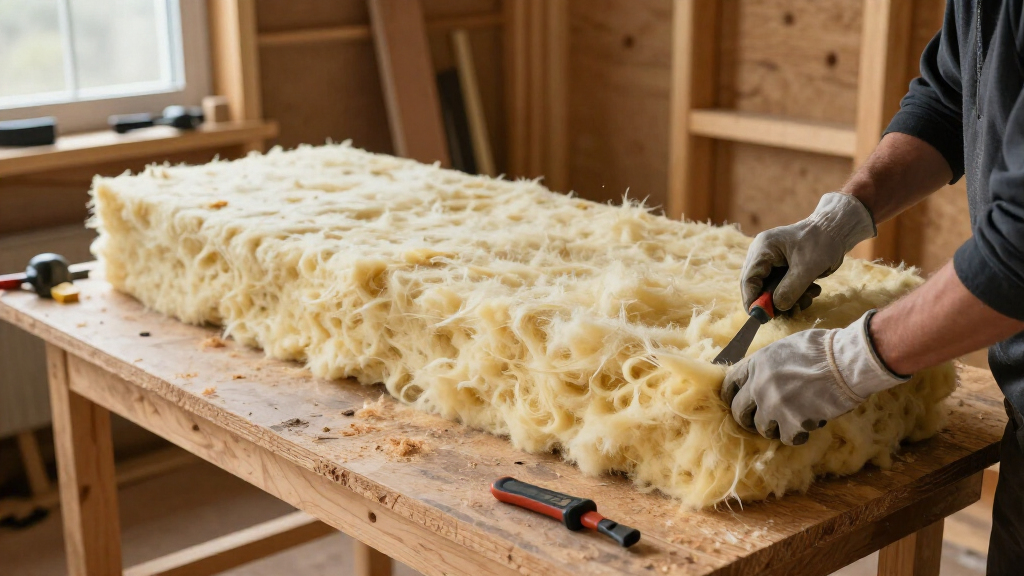
R-19 performance for deeper cavities gives this Owens Corning batt a distinct place in a roundup otherwise heavy on reflective rolls and gap sealants. Its 6.5-inch thickness is suited to 2×6 framing, floors, and attics, where it provides broad cavity coverage and can also help reduce sound. Compared with Loctite Tite Foam Big Gaps, it insulates larger framed areas rather than sealing isolated cracks; it is also a more substantial wall-cavity option than window-focused DGSL bubble foil.
The unfaced design leaves vapor control to the rest of the wall assembly, so buyers need a suitable moisture-control plan. Fiberglass also calls for protective gear during installation. Choose it for open framing or retrofit work where batt dimensions match the cavity; skip it for small air leaks or spaces that need a built-in vapor barrier.
Pros:- R-19 rating in a 6.5-inch batt suited to 2×6 framing
- Covers 77.5 square feet per bag for larger framed areas
- Provides thermal insulation and sound reduction
- Batts are described as easy to cut and able to recover quickly
Cons:- Unfaced batts require separate moisture control in the assembly
- Fiberglass installation calls for protective gear due to irritation risk
Best for: Homeowners insulating 2×6 walls, floors, or attic framing who can provide separate moisture control.
Not ideal for: Buyers sealing a few narrow cracks or anyone needing insulation with an integrated vapor barrier.
- Brand:Owens Corning
- Model:E55
- Material:Fiberglass
- R-value:R-19
- Thickness:6.5 inches
- Batt dimensions:93 in L x 15 in W
- Coverage:77.5 square feet
- Batts per bag:8
- Facing:Unfaced; no vapor barrier
Our verdict“Choose these batts for substantial 2×6 cavities when you want broad thermal and sound coverage and already have a moisture-control plan.”
Loctite Tite Foam Big Gaps Spray Foam Sealant, 12 fl oz, 1 Pack
When a gap is too wide for a thin seal, Loctite Tite Foam Big Gaps is the more targeted fix: its polyurethane foam fills openings up to 3 inches and adheres to common building materials including wood, concrete, metal, and PVC. That wider stated capacity sets it apart from the standard Loctite Tite Foam Gaps & Cracks, which is intended for gaps up to 1 inch. It can also seal an awkward perimeter that outlet pads or a window film kit cannot reach.
This is a single-can repair product, not a replacement for batts across a wall or attic. The listing describes flexible, UV-resistant foam, but gives no coverage area or cured expansion details, so planning a larger job is difficult. Pick it for localized, wide cracks and skip it when you need measured cavity coverage or a flat, removable window solution.
Pros:- Fills gaps up to 3 inches wide
- Adheres to wood, concrete, brick, stone, metal, PVC, and other surfaces
- Flexible foam can accommodate building movement
- Resists UV exposure
Cons:- One 12 fl oz can is suited to localized repairs rather than broad insulation coverage
- The supplied product data does not state coverage yield or an R-value
Best for: Homeowners sealing isolated gaps up to 3 inches around building materials such as wood, brick, or PVC.
Not ideal for: People insulating large wall or attic areas, or buyers who need a clearly stated coverage yield.
- Volume:12 fl oz
- Pack size:1 can
- Material:Polyurethane foam
- Maximum gap size:3 inches
- Compatible surfaces:Wood, concrete, brick, stone, metal, PVC, and more
- UV resistance:Resists UV exposure
Our verdict“Pick this can for isolated wide cracks that exceed the standard Loctite foam’s stated 1-inch limit.”
DGSL Double Reflective Bubble Foil Insulation, 23.6 in x 10 ft
Cut-to-fit reflective coverage makes this DGSL roll a flexible choice for windows, garages, or RVs where a broad batt or fixed panel is impractical. The double-sided foil and bubble construction is intended to help reduce heat transfer, and the included 60 adhesive pads give buyers a simple way to attach pieces. Unlike the Owens Corning R-19 batts, it does not need a framed cavity; compared with larger reflective rolls elsewhere in the roundup, this short roll is easier to reserve for a few openings.
The tradeoff is visibility: the opaque foil blocks the view wherever it covers a window. Product data also provides no measured insulation performance, so it is hard to compare its thermal effect with rated batts. Choose it for flexible, removable-feeling coverage where sightlines are secondary; skip it for clear windows or primary whole-room insulation.
Pros:- Double reflective foil and bubble material can be cut to fit openings
- Suitable for windows, garages, RVs, roofs, and other spaces
- Includes 60 self-adhesive pads
- Short roll is manageable for small coverage jobs
Cons:- Opaque foil blocks the view through covered windows
- Product data provides no measured insulation performance
Best for: RV owners and homeowners covering a few windows or utility spaces where blocking the view is acceptable.
Not ideal for: Buyers who need transparent window coverage or documented R-value performance for a major insulation project.
- Dimensions:23.6 in x 10 ft
- Material:Double reflective aluminum foil and bubble material
- Weight:200 g per 10.76 sq ft
- Included accessories:60 self-adhesive pads
- Installation:Cut to size with scissors or a utility knife
Our verdict“Choose this roll for small, custom-cut reflective coverings when blocking window light and views is an acceptable tradeoff.”
Outlet Insulators Draft Sealers, 30 Pack EVA Foam Electrical Outlet Insulation Pads for Duplex, Toggle & Rocker Wall Plates
For drafts that seem to come from outlet and switch plates, Wakhow’s 30-pack of EVA foam pads offers a small, room-by-room fix. The pre-cut shapes cover toggle, duplex, and rocker plate openings, and excess foam can be trimmed for a closer fit. That makes this a practical complement to larger measures such as Owens Corning R-19 batts, which address framed cavities but are not a quick plate-level seal. The pack quantity also suits buyers working through several rooms in one pass.
These pads target minor gaps behind cover plates, not open cracks or poorly insulated walls. The listing notes that non-standard plates may need trimming and that thin foam may leave larger gaps unsealed. Choose them for accessible outlets and switches with noticeable drafts; use spray foam for wider openings and skip these if the leak is not at the plate.
Pros:- 30 pads can cover outlets and switches across multiple rooms
- Pre-cut shapes accommodate toggle, duplex, and rocker plates
- Trim-to-fit design helps with some non-standard plates
- EVA foam is listed as suitable for use in any room
Cons:- Non-standard plate openings may require trimming
- Thin foam may not seal larger gaps
Best for: Homeowners addressing drafts around multiple standard outlet and switch plates throughout the house.
Not ideal for: Buyers trying to seal large wall gaps or non-standard openings that thin foam pads cannot cover.
- Brand:Wakhow
- Model:OI 30
- Quantity:30 count
- Material:EVA foam
- Dimensions:2.48 in W x 4.21 in H
- Compatible plate types:Toggle, duplex, rocker
- Installation type:Screw in
Our verdict“Choose this pack for small drafts behind standard wall plates when you want to address several rooms at once.”
Loctite Tite Foam Gaps & Cracks Spray Foam Sealant, 12 fl oz, 1 Pack
For gaps up to 1 inch, this Loctite can is a more focused sealant than the Big Gaps version elsewhere in this roundup. Its polyurethane foam bonds to wood, concrete, brick, stone, metal, and PVC, letting buyers close small openings in varied materials. The stated high-density, uniform-cell structure is intended to insulate as it seals, while resistance to UV exposure and building movement supports use where materials shift. Compared with Wakhow outlet pads, it reaches cracks beyond a cover plate.
The limitation is scale: a 12 fl oz can is for localized repairs, not whole-wall coverage like the Owens Corning batts. Expanding foam can also be messy and may need trimming after curing. Choose this when a narrow crack needs a bonded seal; for openings wider than an inch, the Big Gaps formula has the larger stated capacity.
Pros:- Fills and seals gaps up to 1 inch
- Bonds to wood, concrete, brick, stone, metal, PVC, and more
- High-density, uniform-cell foam is intended to provide insulation
- Resists UV exposure and building movement
Cons:- Expanding foam can be messy to apply
- Cured foam may need trimming
- A single 12 fl oz can is suited to localized cracks rather than broad coverage
Best for: Homeowners sealing narrow cracks and gaps up to 1 inch around common construction materials.
Not ideal for: People filling gaps wider than 1 inch or insulating large framed areas that need broad coverage.
- Size:12 fl oz
- Quantity:1 can
- Type:Polyurethane expanding foam sealant
- Maximum gap size:Up to 1 inch
- UV resistance:Yes
- Bonds to:Wood, concrete, brick, stone, metal, PVC, and more
Our verdict“Choose this can for narrow cracks up to 1 inch, and opt for the Big Gaps version when the opening is wider.”
US Energy Products R-8 HVAC Duct Wrap Insulation – Double Sided Reflective Foam Core, Class 1-A ASTM Fire Rated, 1/4 Inch Thick, 2FT x 25FT (50 SQFT)
For exposed heating and cooling ducts, I’d choose this wrap over a general-purpose reflective roll because its R-8 rating is specified for HVAC use and its foam core helps limit condensation as well as heat transfer. The double-sided reflective surface is waterproof and fiber-free, which makes cutting and handling simpler than working with the Owens Corning R-19 fiberglass batt. Its stated Class 1/Class A fire rating is another practical fit for duct projects, though buyers should confirm installation requirements for their specific system. The tradeoff is coverage: one roll covers just 50 square feet, so long or branching duct runs can call for multiple rolls. This is a focused duct solution, not a substitute for insulating broad attic or wall areas.
Pros:- R-8 rating is specified for HVAC applications
- Waterproof foam core helps resist moisture and condensation
- Fiber-free material is easier to cut and handle than fiberglass
- Class 1/Class A fire rating is stated in the product data
Cons:- Each roll covers only 50 square feet, which may mean buying several for a large duct system
- The 1/4-inch thickness is a specialized duct wrap, not a thick fill for cavities
Best for: Homeowners insulating accessible HVAC ducts who want a fiber-free wrap with a stated R-8 rating and moisture resistance
Not ideal for: Buyers covering large attic, wall, or roof areas who need broad coverage from each roll
- Coverage:50 sq ft
- Roll dimensions:2 ft x 25 ft
- R-value:R-8
- Thickness:1/4 inch (5 mm)
- Core:Double-sided foam core
- Moisture resistance:Waterproof
- Installation methods:Staple, nail, glue, or spray adhesive
Our verdict“Choose this for accessible HVAC ducts where its stated R-8 rating and moisture resistance matter more than broad roll coverage.”
Magnetic Thermal Insulated Door Curtain, 38 x 84 in
This curtain is aimed at a different problem from the insulation rolls in this lineup: it creates a hands-free barrier across a doorway instead of covering a wall or cavity. The triple-layer fabric, cotton filling, and 36-magnet closure are intended to reduce drafts while letting people and pets pass through; four weighted bars help keep the bottom edge in place. Its 90% blackout rating may also suit rooms where light through the doorway is unwelcome. Compared with the DGSL attic door cover, this is easier to pass through regularly, but it does not seal an attic hatch or provide a stated R-value. Fit is the key limitation: the opening must be no larger than 36 x 82 inches, and a fabric curtain may not insulate as consistently as a permanent door.
Pros:- Triple-layer fabric and cotton filling are designed to reduce drafts and heat transfer
- Magnetic seam closes behind people and pets
- Waterproof Oxford fabric is easy to clean
- 90% blackout rating also limits light through the opening
Cons:- Fits openings only up to 36 x 82 inches, excluding the frame
- A temporary curtain may not insulate as consistently as a fitted permanent door
- No R-value is provided
Best for: Households with a correctly sized, frequently used doorway that needs a removable draft barrier for people and pets
Not ideal for: Buyers seeking a permanent door seal, a stated R-value, or coverage for an attic hatch
- Curtain dimensions:38 x 84 inches
- Maximum door size:36 x 82 inches, excluding frame
- Outer material:Waterproof Oxford fabric
- Filling:Cotton
- Construction:Triple layer
- Closure:36 magnets
- Bottom weights:4 gravity bars
- Light blocking:90% blackout
Our verdict“Pick this for a frequently used, correctly sized doorway where a pass-through draft barrier is more useful than fixed insulation.”
DGSL Attic Door Insulation Cover, 25 x 54 x 11 Inches
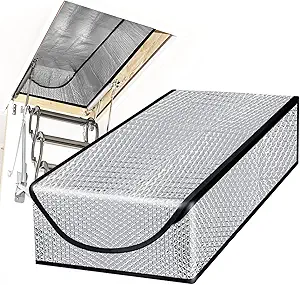
An attic hatch can leave a small but direct path for heat transfer, and this cover is designed specifically to fit over that opening. Its foil bubble construction is listed at R-14 and reflects 97% of radiant heat, giving it a more targeted role than the Reflectix BP24025, which comes as a general-purpose roll for several project types. A zippered access panel lets the hatch remain usable without removing the whole cover, while the enclosure is also intended to help block dust and pollutants from the attic. The fit is fixed at up to 25 x 54 x 11 inches, so measure the opening before choosing it. Installation requires stapling to the door frame, making this less suitable for renters or anyone avoiding fasteners.
Pros:- Purpose-built dimensions for an attic door opening
- Product data lists R-14 and 97% radiant heat reflection
- Zipper allows access to the attic without removing the cover
- Designed to help block dust and pollutants
Cons:- Fits openings only up to 25 x 54 x 11 inches
- Installation requires stapling to the attic door frame
- The fixed cover is less versatile than a cut-to-size reflective roll
Best for: Homeowners with an attic hatch within the listed dimensions who want a dedicated cover and zippered access
Not ideal for: Renters or buyers with oversized attic openings who cannot staple a cover to the frame
- Dimensions:25 x 54 x 11 inches
- Material:Two aluminum layers with bubble insulation
- R-value:R-14
- Radiant heat reflected:97%
- Access:Zipper
- Installation:Staples to attic door frame
- Unit count:1
Our verdict“Choose this for a measured attic hatch if you want a dedicated cover with zippered access and can staple it to the frame.”
Reflectix BP24025 Reflective Bubble Pack Insulation, 24 in x 25 ft
I’d favor this roll for buyers who have several small reflective insulation jobs rather than one precisely sized opening. Its 24-inch width and 25-foot length can be cut for attics, crawl spaces, walls, and metal buildings, while the seven-layer build pairs foil that reflects radiant heat with bubbles that resist conductive heat flow. That gives it a broader stated project range than the DGSL attic cover, which is made for a specific hatch size and includes a zipper. At just 16 ounces, the roll is easy to handle, and its fiber-free material avoids the itch associated with fiberglass. The tradeoff is that this is only the insulation roll: no additional components are included, and the supplied data gives no R-value. Buyers should check the requirements for their intended assembly before treating radiant reflection as a complete insulation solution.
Pros:- Seven-layer construction combines reflective foil and insulating bubbles
- Listed for several project types, including crawl spaces and metal buildings
- Lightweight 16-ounce roll is easy to handle
- Fiber-free material can be cut to fit
Cons:- No additional installation components are included
- No R-value is provided in the product data
- The 5/16-inch profile is not a substitute for thick cavity insulation
Best for: DIY homeowners who need a lightweight, cuttable reflective layer for varied small projects in attics, crawl spaces, or metal buildings
Not ideal for: Buyers who need a specified R-value, a complete installation kit, or thick insulation for a wall cavity
- Brand:Reflectix
- Model:BP24025
- Dimensions:24 in x 25 ft
- Thickness:5/16 in
- Layers:7
- Radiant heat reflected:97%
- Item weight:16 oz
- Quantity:1
Our verdict“Choose this roll for flexible, lightweight reflective projects when you can supply the installation materials and do not need a stated R-value.”
LSGCQ Reflective Bubble Insulation Roll, 23.6 in x 10 ft
This compact roll makes the most sense for patch-sized jobs—such as a window, RV panel, or small garage area—where cut-to-fit material matters more than a published thermal rating. At 23.6 inches by 10 feet, it is much shorter than the Reflectix BP24025, so it is easier to reserve for a limited project but offers less coverage for larger spaces. The reflective film and bubble layer are described as waterproof and scratch-resistant, and double-sided tape is included to simplify attachment. That convenience does not fill the information gap: the listing gives no R-value or other thermal performance figure, making it harder to compare insulation performance with the DGSL attic cover. Cutting and taping also take hands-on fitting, and the product data does not describe a permanent fastening system.
Pros:- Compact roll suits limited projects and tight spaces
- Can be cut and folded to fit the application
- Double-sided tape is included
- Waterproof, scratch-resistant surface is described in the product data
Cons:- No R-value or thermal performance specifications are provided
- Ten-foot length offers less coverage than the Reflectix BP24025
- Installation requires cutting and taping the material in place
Best for: DIYers insulating a small window, RV section, or other limited area who value easy cutting and included tape
Not ideal for: Buyers covering large areas or comparing products by R-value, since this listing provides no thermal rating
- Brand:LSGCQ
- Material:Reflective aluminum film and bubble insulation
- Dimensions:23.6 in x 10 ft
- Quantity:1 roll
- Included:Double-sided tape
- Model number:QPM00
- Features:Waterproof, reflective, cuttable, foldable
Our verdict“Pick this for a small, cut-to-fit project when included tape is useful and a published thermal rating is not required.”

How We Picked
I ranked these products by how clearly their format and stated use match a real home insulation task: insulating framed cavities, limiting heat transfer at ducts and attic access points, or reducing drafts around windows, doors, and outlets. I also weighed coverage, ease of handling, likely installation demands, and whether a product solves a broad problem or a small, specific one. That puts the R-19 batt first for buyers with compatible open cavities, while targeted sealing products rank as useful complements rather than whole-home fixes.
Reflective rolls are ranked according to the scale and specificity suggested by their dimensions and product type, with compact formats better suited to limited areas and larger rolls to planned projects. The two Loctite foams have similar roles, so their placement reflects their different stated applications: gaps and cracks versus big gaps. Product details supplied for this roundup do not establish comparative lab performance, installation results, or suitability for every building assembly; I treat those as questions for the product label and local building guidance, not as proven advantages.
Factors to Consider When Choosing Best Home Insulation Products
Before choosing a product, identify the path where heat or air is moving and decide whether you need insulation, air sealing, or both. The following factors help prevent a mismatch between material, surface, and project scale.
Find the heat-loss path before choosing a material
Start by identifying the location of the problem rather than shopping by insulation type alone. Cold drafts around a window or outlet call for targeted air sealing, while a large uninsulated cavity may call for batt or another assembly-appropriate insulation. Warm or cold HVAC ducts in an unconditioned area present a different problem from a drafty door. A quick inspection can reveal gaps, missing insulation, or an attic hatch that does not seal against its frame. Treating the wrong surface can leave the original problem intact even if the product itself is sound. For complex or concealed areas, a home energy assessment can help prioritize work.
Match insulation to the assembly and climate
Insulation products are designed for different places, and a material suitable for one location may be unsuitable in another. Check the product’s intended application, required clearance, and relevant building guidance before fitting it into a wall, roof, or floor. Reflective products depend on installation details and an adjacent air space to provide their intended radiant-barrier function; they should not be treated as direct substitutes for cavity insulation. In cold climates, air and moisture control also affect how a wall or roof assembly performs. If you are insulating a closed cavity or changing a vapor-control layer, get advice that accounts for your climate and assembly. The package’s R-value, where provided, is more useful for comparing thermal resistance than a general material label.
Choose coverage and format for the job size
Roll dimensions and coverage determine how much material you will need and how manageable installation will be. A long, wide roll can make sense for a planned large surface, but it can be awkward to measure, cut, and position alone. Compact rolls are easier to store and handle for small repairs, though seams and leftover material may make them less efficient on a broad area. Measure the surface, account for obstructions, and follow the package’s overlap or fastening instructions before buying. For small leaks, a tape, pad, or sealant may reduce waste compared with covering a much larger area. Avoid treating advertised area as guaranteed finished coverage when the installation requires overlaps or trimming.
Separate air sealing from thermal insulation
Insulation slows heat transfer through a surface; air sealing limits uncontrolled movement through gaps. Many homes need both, but one product rarely handles both jobs across every part of the building. Seal obvious leakage points before adding insulation where practical, since moving air can bypass otherwise useful material. Use a sealant only where its label permits, and avoid blocking ventilation openings or creating unsafe clearances around heat sources. Window film can reduce drafts at a window opening, while a curtain changes the interior barrier and has different installation limits. Thinking in terms of the specific mechanism helps set realistic expectations for each product.
Plan around moisture, fire safety, and access
Installation conditions can matter as much as the insulation itself. Do not cover damp materials or active leaks; trapped moisture can damage building components and reduce performance. Check fire ratings and required separation from wiring, lights, chimneys, and other heat sources, especially in attics and wall cavities. Spray foam expands after application, so confirm the product suits the gap and apply it carefully to avoid obstructing moving parts or vents. Duct insulation should match the duct location and the product’s temperature and fire guidance. When the work involves concealed services or uncertain clearances, consult a qualified installer.
Decide when paying for a larger solution makes sense
A larger roll or more specialized product makes sense when it matches a measured, substantial area and avoids piecemeal repairs. For a single drafty outlet or window edge, a targeted fix is usually easier to apply and limits unused material. For repeated seasonal window drafts, compare the effort of fitting film each year with longer-term window improvements suited to the building. If heating bills are the concern, do not assume the most visible leak is the largest source of heat loss; attic, wall, floor, and duct conditions may matter more. Prioritize fixes by area, severity, and installation access, then expand the project if the first measures address only part of the problem. This approach helps keep spending tied to the actual building need.
Frequently Asked Questions
Can reflective bubble insulation replace fiberglass batts in a wall?
Do not assume that it can. Reflective bubble products and fiberglass batts work differently, and their performance depends on the assembly and installation conditions. A reflective product’s radiant-barrier effect depends on the required adjacent air space, while a batt is intended to insulate a compatible cavity. Check the product documentation and local building requirements for the exact wall construction. If the wall is already closed, get assembly-specific advice before adding a layer that could affect moisture behavior.
Should I seal drafts before adding attic insulation?
In many attic projects, air sealing accessible ceiling penetrations before adding insulation helps limit warm, moist indoor air from reaching the attic. Insulation alone does not stop air moving through gaps around wiring, plumbing, or the attic hatch. Keep required ventilation paths open and follow clearance rules around heat-producing equipment. If you see dampness, mold, or roof leaks, address those conditions before covering the area. For uncertain attic conditions, a building professional can help distinguish leakage from ventilation issues.
Which product type is more suitable for a renter who cannot make permanent changes?
Removable window film, a magnetic door curtain, or loose-fitting draft solutions may be more practical than spray foam or cavity insulation, which are harder to reverse. The right choice depends on whether the draft comes from a window, door, or another opening. Check how a product attaches and whether removal could affect paint or trim. Ask the landlord before applying anything that could alter a fixture or surface. These temporary measures address specific openings and do not replace insulation improvements to the building.
How do I choose between window film and weather-sealing tape?
Choose based on where air is entering and what part of the window you can cover. A film kit covers the window opening and can create a seasonal barrier, while tape is intended for sealing narrower edges or joints where it is compatible. Inspect the frame and sash first so you do not cover drainage features or interfere with opening and closing the window. Follow the kit’s surface-preparation and removal instructions, especially on delicate finishes. If the glass, frame, or seal is damaged, a temporary film or tape may not address the underlying repair need.
When should I hire a professional instead of using a DIY insulation product?
Bring in a professional when work involves enclosed cavities, uncertain moisture conditions, complex roof or wall assemblies, or clearances around electrical and heat-producing equipment. Spray foam near wiring or in a location with limited access can also require careful planning. A pro can identify whether the main issue is air leakage, missing insulation, duct loss, or a moisture problem before material is installed. For simple, accessible tasks such as a window film kit or an attic hatch cover, many homeowners can follow the product directions themselves. If local code or a rebate program applies, confirm its requirements before starting work.
Conclusion
For compatible framed cavities, I recommend Owens Corning R-19 batt as the best overall pick in this group. Buyers planning broader reflective coverage can choose a large US Energy Products roll as a best value by project scale, while the US Energy Products R-8 duct wrap is the best premium-style specialized pick for accessible ducts when its specifications fit the installation. For beginners addressing a seasonal window draft, the Duck insulation kit offers a focused project with a clear scope; for small leaks, choose tape, outlet pads, or the Loctite foam suited to the gap. The attic-door cover, magnetic curtain, and compact reflective rolls serve specific access and fit needs. Match the product to the surface, check its installation requirements, and tackle the actual source of heat loss first.