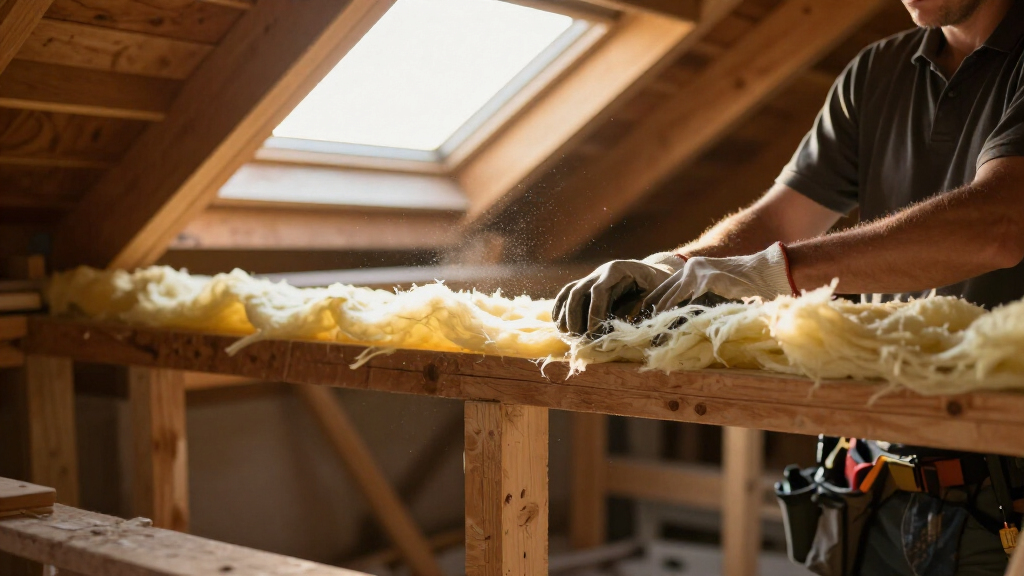
The best attic insulation materials depend on your climate, attic layout, and whether you need to slow heat flow or reduce radiant heat. I name Owens Corning R-38 Unfaced Fiberglass Batt Insulation my best overall pick for its higher stated R-value per batt and familiar batt format. For radiant-barrier coverage, Houseables Double-Sided Radiant Barrier stands out for its broad roll, while Owens Corning R-19 Unfaced Fiberglass is a more manageable choice for smaller or shallower spaces. The main tradeoffs are thermal resistance, coverage and fit, installation effort, and whether a reflective product suits the attic conditions. Read on for the full comparison and guidance on choosing a material for your project.

Get business pricing on tools and workshop supplies
- Business-only prices and quantity discounts
- Tax-exempt purchasing
- Multiple users, one account, clear invoices
Complete the kit



Key Takeaways
- R-38 fiberglass is the strongest all-around batt choice in this lineup when the goal is higher stated thermal resistance; it is less suited to shallow cavities than the R-19 batt.
- Fiberglass and radiant barriers serve different roles: the Owens Corning batts provide stated R-values, while the reflective rolls are designed to reduce radiant heat transfer and should not be treated as equivalent R-value replacements.
- Houseables and US Energy Products offer large-format radiant-barrier rolls suited to broad coverage, but their width and roll size can be awkward in tight attic access areas.
- Reflectix BP24025 is the more manageable reflective option for smaller sections or limited work areas, while its narrower, shorter roll means more joins on a large attic.
- UBmove’s 48-inch-by-125-foot roll favors extended coverage, but buyers still need to check installation requirements and attic ventilation rather than assuming reflective material alone will solve heat loss.
| UBmove Reflective Bubble Insulation Roll, 48 in x 125 ft |  | Best for Flexible, Cut-to-Fit Coverage | Roll dimensions: 48 in x 125 ft | Bubble layer thickness: 3/16 in | Material: Polyethylene with reflective foil | VIEW LATEST PRICE | See Our Full Breakdown |
| Owens Corning R-19 Unfaced Fiberglass Insulation, 77.5 sq. ft., 15 x 93 in. |  | Best for 2×6 Framed Attics | Material: Fiberglass | R-value: R-19 | Thickness: 6.5 in | VIEW LATEST PRICE | See Our Full Breakdown |
| Reflectix BP24025 Reflective Bubble Insulation, 24 in. x 25 ft. |  | Best Compact Reflective Roll | Model: BP24025 | Dimensions: 300 in L x 24 in W | Thickness: 0.31 in | VIEW LATEST PRICE | See Our Full Breakdown |
| Houseables Double-Sided Radiant Barrier Insulation Roll, 250 ft x 4 ft, 1,000 sq ft |  | Best for Large Attic Radiant-Barrier Runs | Roll dimensions: 250 ft x 4 ft | Coverage: 1,000 sq ft | Material: Double-sided reflective aluminum foil | VIEW LATEST PRICE | See Our Full Breakdown |
| US Energy Products Radiant Barrier Insulation Roll, 1,000 sq ft, 4 ft Wide |  | Best for Breathable, High-Reflectivity Coverage | Coverage: 1,000 sq ft | Width: 4 ft (48 in) | Length: 250 ft (3,000 in) | VIEW LATEST PRICE | See Our Full Breakdown |
| Owens Corning R-38 Unfaced Fiberglass Batt Insulation, 24 × 48 in, 8 Bags |  | Best for High-R-Value Batt Coverage | Brand: Owens Corning | Material: Fiberglass | R-value: R-38 | VIEW LATEST PRICE | See Our Full Breakdown |
| attic insulation material | Coverage | Material | Thickness |
|---|---|---|---|
| UBmove Reflective Bubble Insul | — | Polyethylene with reflective foil | — |
| Owens Corning R-19 Unfaced Fib | 77.5 sq ft | Fiberglass | 6.5 in |
| Reflectix BP24025 Reflective B | 7,200 sq in | — | 0.31 in |
| Houseables Double-Sided Radian | 1,000 sq ft | Double-sided reflective aluminum foil | — |
| US Energy Products Radiant Bar | 1,000 sq ft | — | — |
| Owens Corning R-38 Unfaced Fib | 512 sq ft | Fiberglass | 12 in |
More Details on Our Top Picks
UBmove Reflective Bubble Insulation Roll, 48 in x 125 ft
UBmove’s wide, cut-to-size roll suits attic areas where rigid batt dimensions are awkward, such as around obstructions or along irregular surfaces. Its polyethylene bubbles and reflective foil combine a cushioning layer with radiant-heat reflection, while the 48-inch width and 125-foot length offer room to tailor sections. Compared with Owens Corning R-19 Unfaced Fiberglass Insulation, it is easier to trim and does not use loose fiberglass, but it is not a direct substitute for a specified R-value batt in framed cavities. The listed R-value range of 4.9 to 14.1 varies, so I would not treat the upper figure as a guaranteed assembly performance. Its one-sided reflective construction also makes installation orientation relevant, and buyers should check the intended application and local code requirements.
Pros:- 48-inch-wide roll can be cut to fit unusual attic sections
- Polyethylene bubble layer adds cushioning alongside reflective foil
- Lightweight 5-pound roll is easier to handle than bulky batt packs
- Made in the USA
Cons:- One-sided reflective construction requires attention to which face is exposed
- Listed R-value spans 4.9 to 14.1 rather than specifying one consistent value
- Does not provide the same clearly defined cavity-fill performance as R-19 fiberglass batts
Best for: DIYers fitting reflective insulation around irregular attic surfaces who want a lightweight roll they can cut to size.
Not ideal for: Buyers insulating standard 2×6 cavities to a defined R-19 target, or anyone who needs a clearly stated, consistent assembly R-value.
- Roll dimensions:48 in x 125 ft
- Bubble layer thickness:3/16 in
- Material:Polyethylene with reflective foil
- Listed thermal resistance:R-value range of 4.9 to 14.1
- Weight:5 lb
- Pack quantity:1 roll
- Country of manufacture:USA
Our verdict“Choose UBmove for trim-to-fit reflective coverage on irregular attic surfaces, not as a straightforward replacement for rated cavity batts.”
Owens Corning R-19 Unfaced Fiberglass Insulation, 77.5 sq. ft., 15 x 93 in.
For a framed attic cavity with 2×6 spacing, this R-19 batt offers a more clearly defined thermal rating than the reflective rolls in this lineup. Eight unfaced pieces cover 77.5 square feet, and the 6.5-inch thickness is intended to fit 2×6 framing. That makes it the more direct choice for filling suitable cavities than Houseables Double-Sided Radiant Barrier Insulation Roll, which reflects radiant heat across a broad surface rather than filling a framing bay. The unfaced design leaves moisture control to the rest of the assembly, so it is not a complete moisture-management solution on its own. Fiberglass can also be less comfortable to handle than the fiber-free Reflectix BP24025. I would choose this when cavity fit and a stated R-19 value matter more than roll convenience.
Pros:- R-19 rating is specified for thermal insulation
- 6.5-inch thickness is suited to 2×6 framing
- Eight batts cover 77.5 square feet per bag
- Can help reduce sound transmission
Cons:- Unfaced construction has no vapor barrier, so moisture control must be handled separately
- Fiberglass requires more care during handling than fiber-free reflective rolls
- Fixed 15 x 93-inch batts are less adaptable to irregular areas than cut-to-fit rolls
Best for: Homeowners filling accessible 2×6 attic framing who want unfaced batts with a stated R-19 rating and can provide moisture control separately.
Not ideal for: People insulating open, irregular attic surfaces without framing, or buyers who need insulation with an integrated vapor-facing layer.
- Material:Fiberglass
- R-value:R-19
- Thickness:6.5 in
- Batt dimensions:15 x 93 in
- Coverage:77.5 sq ft
- Batts per bag:8
- Facing:Unfaced
- Recommended uses:Thermal insulation for walls, floors, and attics
Our verdict“Pick these batts for framed 2×6 attic cavities where a specified R-19 value matters and moisture control is addressed separately.”
Reflectix BP24025 Reflective Bubble Insulation, 24 in. x 25 ft.
Reflectix BP24025 is the compact option for smaller attic sections, narrow runs, or buyers who prefer a roll that is easier to manage than a 250-foot radiant-barrier roll. Its seven-layer, 5/16-inch construction pairs reflective foil with insulating bubbles, aiming to reflect radiant heat while resisting conductive heat flow. Compared with the much larger Houseables Double-Sided Radiant Barrier Insulation Roll, this 24-inch-wide, 25-foot roll is easier to handle in a limited work area but covers far less ground. It is also fiber-free and weighs just 16 ounces, a practical advantage for overhead placement. This remains reflective insulation, not a like-for-like replacement for Owens Corning R-19 batts in a framed cavity. Warranty support requires contacting customer service, another distinction for buyers who value a straightforward support route.
Pros:- Compact 24-inch width and 25-foot length are manageable for small jobs
- Seven-layer construction combines reflective foil and insulating bubbles
- Lightweight 16-ounce roll is easier to lift and position
- Fiber-free material suits buyers avoiding fiberglass handling
Cons:- 7,200 square inches of coverage is limited compared with 1,000-square-foot rolls
- Reflective construction is not equivalent to a specified R-19 cavity batt
- Warranty support requires contacting customer service
Best for: DIYers treating a small attic section, crawl space, or narrow run who want a lightweight, fiber-free reflective roll.
Not ideal for: Buyers covering a large attic in one pass or filling framed cavities that call for a specified batt R-value.
- Model:BP24025
- Dimensions:300 in L x 24 in W
- Thickness:0.31 in
- Coverage:7,200 sq in
- Layers:7
- Materials:Aluminum foil, polyethylene, and insulating bubbles
- Weight:16 oz
- Pack quantity:1
Our verdict“Choose Reflectix for a small, manageable reflective-insulation job, but select a larger roll or rated batts for broad attic coverage or cavity filling.”
Houseables Double-Sided Radiant Barrier Insulation Roll, 250 ft x 4 ft, 1,000 sq ft
Houseables is the high-coverage choice when an attic project calls for a continuous radiant barrier rather than cavity batts. One roll covers 1,000 square feet, and the double-sided foil is listed as reflecting more than 97% of radiant heat. Its 4-foot width and long 250-foot run can reduce the need to join many small pieces, unlike the compact Reflectix BP24025. The material is lightweight, tear-resistant, and cuts with scissors, which helps when adapting it to a large installation. Still, its thin construction can wrinkle during handling, and the listed reflectivity does not promise the same cooling impact in every climate. Compared with Owens Corning R-19 Fiberglass Insulation, it serves a different purpose: radiant-heat control across an area, not a rated fill for 2×6 cavities.
Pros:- Single roll covers 1,000 square feet
- Double-sided foil is listed as reflecting more than 97% of radiant heat
- Lightweight, tear-resistant material cuts with scissors
- Listed as meeting ASTM fire, smoke, and breathability standards
Cons:- Energy savings depend on climate and installation conditions
- Thin foil can wrinkle while being handled
- Radiant-barrier coverage does not replace a specified batt R-value in framed cavities
Best for: Owners planning a large attic radiant-barrier installation who want broad roll coverage and a material that can be cut with scissors.
Not ideal for: Buyers who need cavity insulation with a specified R-value, or those expecting identical energy savings across different climates and installations.
- Roll dimensions:250 ft x 4 ft
- Coverage:1,000 sq ft
- Material:Double-sided reflective aluminum foil
- Listed reflective value:More than 97%
- Model number:RaBa
- Number of rolls:1
- Cutting:Cuts with scissors
- Standards:Listed ASTM fire, smoke, and breathability standards
Our verdict“Choose Houseables for broad attic radiant-barrier coverage, not when your main need is a rated insulation batt for framing cavities.”
US Energy Products Radiant Barrier Insulation Roll, 1,000 sq ft, 4 ft Wide
US Energy Products pairs full 1,000-square-foot coverage with a perforated, five-layer build, making it the strongest fit here for buyers seeking a breathable radiant barrier across a large attic. Its metalized aluminum, Mylar, and nylon scrim construction is listed at 99.7% reflectivity, higher than Houseables’ stated figure of more than 97%. Perforations support breathability for building applications, while the tear-resistant design is intended to make handling easier. This is still a thin roll, so careful installation matters, and the stated reflectivity alone cannot predict energy savings in a particular climate. Compared with Owens Corning R-19 batts, this product covers broad surfaces rather than filling framing cavities to a defined R-value. It is a better match than Reflectix BP24025 for large-area work, but less convenient when only a short, narrow section needs covering.
Pros:- 1,000-square-foot roll suits broad attic installations
- Five-layer construction uses metalized aluminum, Mylar, and nylon scrim
- Perforated design supports breathability for building applications
- Listed 99.7% reflective value and tear-resistant construction
Cons:- Thin material calls for careful handling during installation
- Actual energy savings vary with climate and installation
- Radiant barrier is not a substitute for a specified cavity-batt R-value
Best for: Installers or homeowners covering a large attic, shed, or warehouse who want a perforated radiant barrier and can handle thin roll material carefully.
Not ideal for: Buyers filling framed attic cavities to a specified R-value, or those handling a small repair where a 1,000-square-foot roll is excessive.
- Coverage:1,000 sq ft
- Width:4 ft (48 in)
- Length:250 ft (3,000 in)
- Construction:Five-layer reflective material with metalized aluminum, Mylar, and nylon scrim
- Listed reflective value:99.7%
- Standards:ASTM E84, E2599, C1313, and E96-00
- Brand and manufacturer:AES
- Country of origin:USA
Our verdict“Choose this roll for large, breathable radiant-barrier coverage, but use rated batts when you need to insulate framed cavities to a defined R-value.”
Owens Corning R-38 Unfaced Fiberglass Batt Insulation, 24 × 48 in, 8 Bags
I’d choose these R-38 fiberglass batts when the goal is substantial attic insulation in a format suited to fitting between framing members. The package covers 512 square feet, making it a larger-area option than the Owens Corning R-19 unfaced batts in this roundup, while the 12-inch thickness provides a higher stated R-value. Unlike the reflective rolls from UBmove or Reflectix, these batts add insulation through their fiberglass material rather than relying on a radiant-barrier format. The unfaced construction also avoids a paper backing, but it does not remove the need for careful installation: the product description calls for at least two inches of properly ventilated air space in attic use. I’d skip it where that clearance cannot be maintained or where exterior-wall insulation is needed.
Pros:- R-38 rating offers more stated thermal resistance than the Owens Corning R-19 batts in this roundup.
- Eight-bag package covers 512 square feet.
- Unfaced format has no paper backing.
- Can also be used in interior walls, floors, and ceilings, and is listed for soundproofing.
Cons:- The 12-inch thickness needs sufficient cavity depth and careful fitting.
- Attic installation requires at least two inches of properly ventilated air space.
- Not suitable for exterior walls.
Best for: Homeowners insulating a sizable attic area who want R-38 fiberglass batts and can maintain the specified ventilation clearance.
Not ideal for: Buyers insulating exterior walls or attics where framing and ventilation conditions cannot accommodate 12-inch batts and the required air space.
- Brand:Owens Corning
- Material:Fiberglass
- R-value:R-38
- Coverage:512 sq ft
- Package quantity:8 bags
- Batt dimensions:24 × 48 in
- Thickness:12 in
- Facing:Unfaced
- Recommended use:Attic insulation
Our verdict“Choose these batts for broad attic coverage and an R-38 rating if your framing and ventilation setup can accommodate their thickness.”

How We Picked
I compared these six products by the job each material is built to do, rather than treating all attic insulation as interchangeable. For fiberglass, I focused on the stated R-value, batt dimensions, and how readily a buyer can match the product to a cavity. For reflective products, I weighed roll width and length, coverage practicality, and the distinct role of a radiant barrier; I did not treat a reflective surface as a substitute for a listed batt R-value.
The ranking favors options with a clear fit for common attic projects and a useful balance of thermal performance, handling, and coverage. The R-38 batt leads for buyers seeking higher stated resistance in a batt format; R-19 follows as a more modest and potentially easier-to-fit fiberglass choice. Large rolls rank well for expansive radiant-barrier applications, while narrower rolls suit smaller jobs but require more seams. Since the right choice depends on climate, assembly, and installation details, I also considered where each product may be a poor fit.
| attic insulation material | Material |
|---|---|
| UBmove Reflective Bubble Insul | Polyethylene with reflective foil |
| Owens Corning R-19 Unfaced Fib | Fiberglass |
| Reflectix BP24025 Reflective B | — |
| Houseables Double-Sided Radian | Double-sided reflective aluminum foil |
| US Energy Products Radiant Bar | — |
| Owens Corning R-38 Unfaced Fib | Fiberglass |
Factors to Consider When Choosing Best Attic Insulation Materials
Before choosing a roll or batt, I would first identify the heat-control problem and the part of the attic assembly the material will occupy. These checks can prevent a common mistake: selecting a product by roll size or material name without confirming its performance, fit, and compatibility with the roof or ceiling assembly.
Match the Material to the Heat-Transfer Problem
Fiberglass batts and radiant barriers address heat in different ways, so compare them by function rather than appearance. Fiberglass is labeled with an R-value, which lets you evaluate its stated resistance to heat flow. A reflective barrier is intended to reflect radiant heat and does not automatically provide the same insulating performance as a batt. In cold climates or where the attic floor is the main boundary, buyers commonly focus on insulation above the ceiling; hot, sunny roof assemblies may call for radiant-heat control as part of a broader design. Check local building guidance and the existing assembly before deciding that one category can replace the other.
Plan Around the Required R-Value and Available Depth
Use the R-value target for your climate and assembly as a starting point, then check whether the attic has enough depth for the chosen material. A higher-R batt can provide more stated resistance in its intended installation, but compressing it to squeeze into a shallow space can reduce its effectiveness. Adding layers may be possible, though the placement and coverage need to suit the joists and existing insulation. Do not assume that a product marked R-19 or R-38 will meet the whole-house target by itself. Local energy codes or a qualified building professional can clarify what level is appropriate for your home.
Measure Access, Coverage, and Seams Before Buying
Measure the attic access opening, the areas to cover, and the spacing or dimensions of the cavities before choosing package size. A wide, long roll can reduce joins across a large open area, but it may be hard to maneuver through a hatch or around framing. A compact roll is easier to carry and handle in smaller sections, though it can mean more seams and work on a large attic. Batt dimensions need to match the framing spaces without being forced into place. Leave room in your plan for cuts, irregular corners, and material that cannot be used after trimming.
Protect Ventilation and Keep Insulation Clear of Hazards
Insulation should not block soffit or other designed ventilation paths, since airflow helps manage moisture and heat in many attic assemblies. Before installation, identify recessed lights, chimneys, flues, wiring, and other areas that may require clearance or a specific barrier. Product choice does not remove those requirements. Reflective material also needs installation in a way that follows its instructions and suits the roof assembly; placement and air space can affect how it performs. If the attic has signs of moisture, roof leaks, or uncertain wiring, address those issues before covering the area.
Decide Whether the Project Fits a DIY Installation
Unfaced fiberglass batts can be cut and fitted around framing, but attic work exposes installers to fibers, dust, heat, and tight working conditions. Protective clothing and respiratory and eye protection are sensible precautions, and the product instructions should guide handling. Reflective rolls may be lighter, yet securing wide sheets and keeping seams tidy can take two people, especially in a cramped attic. A difficult roofline or complex set of obstructions can make professional installation worthwhile even when the material itself seems simple. Base the decision on safe access and the quality of the final coverage, not only on the ease of carrying the package.
Compare Total Project Fit, Not Just Package Coverage
Package coverage is only useful if the product suits the areas you can actually insulate. Account for attic shape, framing, obstructions, cuts, and any existing material that will remain in place. Large rolls can be efficient on open spans, while batts may fit divided cavities more predictably. Also check whether the selected material can be installed over or alongside what is already there, and whether that arrangement is permitted by product instructions and local guidance. A material that leaves fewer gaps and preserves ventilation may be a better project choice than one with more nominal coverage.
Frequently Asked Questions
Can a radiant barrier replace fiberglass insulation in my attic?
Usually, a radiant barrier should not be treated as a direct replacement for fiberglass batts. The fiberglass products in this roundup list R-values, while the reflective rolls are intended to reduce radiant heat transfer under suitable installation conditions. Your climate, roof assembly, and attic-floor insulation needs determine whether a barrier is useful alongside other insulation. Check the product instructions and local energy guidance before substituting one material for another. If your main goal is to meet a specified R-value, compare products with a stated R-value for the intended installation.
Should I choose R-19 or R-38 fiberglass for my attic?
Choose based on the required performance and the space available, not the number alone. The R-38 batt has a higher stated R-value than the R-19 option in this roundup, but it also needs a suitable cavity and installation arrangement. A thicker batt that is compressed or poorly fitted may not deliver its intended performance. R-19 may fit some shallower spaces more readily, though it may not meet the target for your home by itself. Check local requirements and the existing insulation before buying.
Is a wide radiant-barrier roll better than a narrow one?
A wider roll can reduce the number of seams on a broad, open attic span, which may simplify coverage. It can also be harder to carry through a small access hatch and manage around framing or obstructions. A narrower roll, such as the Reflectix BP24025, is easier to handle in smaller work areas but may require more joins on a large surface. The best width depends on access, layout, and how the product is meant to be installed. Measure the attic and entry path before choosing by coverage figures alone.
Can I install new attic insulation over material that is already there?
Sometimes, but the existing material must be dry, in suitable condition, and compatible with the new installation. First check for roof leaks, dampness, pests, damaged wiring, or compressed insulation that may need attention. Adding material over a problem can hide damage and make later repairs harder. Also verify that the additional layer will not block ventilation or cover components that need clearance. When the existing assembly is unclear, seek advice from a qualified insulation professional or local building authority.
What should I check before installing reflective insulation under a roof?
Confirm that the specific product is intended for that placement and follow its installation instructions, including any required air space, attachment method, and seam treatment. Reflective performance depends on the assembly and installation, so simply fastening a sheet against a surface may not deliver the intended result. Keep roof and attic ventilation paths open, and account for moisture control in the roof assembly. Check clearances around heat-producing fixtures and flues as well. If you cannot confirm compatibility with your roof construction, get professional guidance before covering it.
Conclusion
For most buyers comparing these six options, I would start with Owens Corning R-38 Unfaced Fiberglass Batt as the best overall choice when a higher stated R-value batt suits the attic depth and project. The Owens Corning R-19 batt is my value-oriented pick for shallower or smaller areas where its listed performance fits the need. For buyers who want a simple, familiar batt format, R-19 is also the best option for beginners, provided they verify the required R-value and follow safe handling practices. If the project specifically calls for radiant-heat control over a broad area, Houseables Double-Sided Radiant Barrier is my premium large-roll pick, while Reflectix BP24025 makes more sense for compact sections and limited access. Choose UBmove or US Energy Products when their roll dimensions best match your coverage plan; neither should be selected as a substitute for R-value insulation without checking the needs of the attic assembly.
Halloween Picks

10-Foot Halloween Inflatable Double-Headed Dragon Archway

10 ft Halloween Inflatable Archway with Built-in LEDs

Spirit Halloween 54-Inch Sitting Scarecrow Animatronic
As an affiliate, we earn on qualifying purchases.