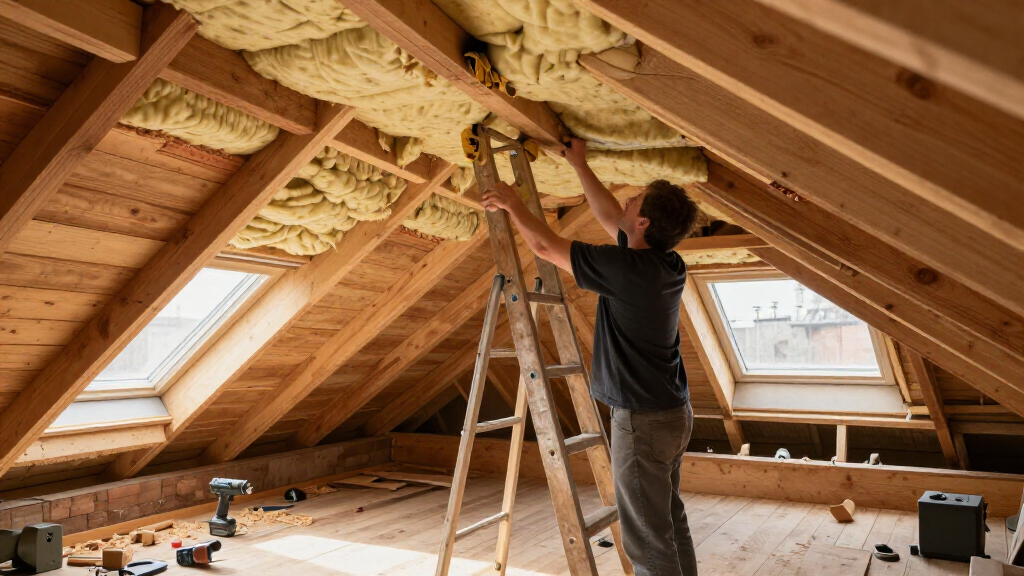

The best cathedral ceiling insulation in this lineup is CertainTeed R-30 Kraft Faced High Density, a purpose-focused choice for assemblies designed around 2×8 framing. Knauf R-30 Kraft Faced is a strong alternative for buyers seeking another high-density cathedral batt, while Owens Corning R-38 Kraft Faced suits deeper 2×12 cavities where a higher labeled R-value is appropriate. The main tradeoffs are cavity depth, batt width and length, facing, and how much insulation the job requires—not just the R-value printed on the package. A batt that is too thick or too wide can compress or obstruct the ventilation space, reducing the value of choosing a higher rating. Read on for the full comparison and guidance on matching a product to your roof assembly.

Get business pricing on tools and workshop supplies
- Business-only prices and quantity discounts
- Tax-exempt purchasing
- Multiple users, one account, clear invoices
Complete the kit


Key Takeaways
- Fit comes before the highest R-value: the CertainTeed and Knauf R-30 batts are explicitly labeled for cathedral use, while the R-38 option is listed for deeper 2×12 attic cavities.
- R-30 is the lineup’s most direct cathedral-ceiling match: three R-30 products offer different combinations of facing, density, dimensions, and package coverage.
- Faced and unfaced batts solve different installation needs: kraft facing is present on several R-30 and R-38 options, while both Owens Corning R-19 products are unfaced.
- Coverage and batt dimensions affect purchasing and handling: the listed products range from 77.5 to 775 square feet, with shorter sections and longer batts suited to different layouts.
- A higher nominal rating does not make a batt universally better: the R-38 product requires a cavity that can accommodate its listed thickness without compression or loss of ventilation space.


| cathedral ceiling insulation | Brand | Material | Thickness | Coverage |
|---|---|---|---|---|
| Certainteed R-30 Kraft Faced 2 | Certainteed | Fiberglass | 8 inches | 613.36 sq ft |
| Owens Corning R-19 Unfaced Fib | Owens Corning | Fiberglass | 6.5 inches | 77.5 sq ft |
| Owens Corning R-30 Kraft Faced | Owens Corning | Fiberglass | 9.5 inches | 469 sq ft |
| Owens Corning R-19 Unfaced Fib | Owens Corning | Fiberglass | 6.25 inches | 775 sq ft |
| Owens Corning R-30 Unfaced Fib | Owens Corning | Fiberglass | 10 inches | 426.64 sq ft |
| Owens Corning R-38 Kraft Faced | Owens Corning | Kraft faced fiberglass | 12 inches | 341 sq ft |
| Knauf R-30 Kraft Faced Fibergl | Knauf | Fiberglass | 8 inches | 440 sq ft |
More Details on Our Top Picks
Certainteed R-30 Kraft Faced 23 x 48 Fiberglass Batt Insulation for 2×8 Floors or Attics (High Density, Cathedral)
I rank this Certainteed batt first for cathedral ceilings framed with 2×8 cavities: its R-30 rating and 8-inch thickness are directly matched to that framing, while kraft facing adds a vapor-retarder layer where the assembly design calls for one. Its 23-by-48-inch format is broader and shorter than the 16-by-48 Owens Corning R-30 options, so buyers should check joist spacing and cutting needs before ordering. The 613.36-square-foot package also covers more area than the Owens Corning R-30 Kraft Faced pack listed here. The tradeoff is that kraft facing is not automatically right for every ceiling assembly, and this large shipment takes delivery planning. I would choose it for a compatible 2×8 build, not as a substitute for checking local moisture-control requirements.
Pros:- R-30 rating and 8-inch thickness suit the listed 2×8 application.
- Kraft facing provides a moisture-control layer when appropriate for the assembly.
- 23 x 48-inch batts are designed for the stated framing use.
- 613.36 square feet of coverage exceeds the listed Owens Corning R-30 kraft-faced package.
Cons:- Kraft facing may not suit every cathedral-ceiling moisture-control design.
- Batt width must be checked against actual framing spacing to avoid poor fit or excessive cutting.
- Large, heavy delivery may need advance coordination.
Best for: Homeowners insulating a cathedral ceiling with 2×8 framing who need R-30 batts and have confirmed the batt width fits their cavity spacing.
Not ideal for: Buyers with shallower framing, unusual joist spacing, or an assembly that calls for unfaced insulation or a different vapor-control strategy.
- Brand:Certainteed
- Material:Fiberglass
- R-value:R-30
- Dimensions:23 x 48 inches
- Thickness:8 inches
- Coverage:613.36 sq ft
- Package:8 bags
Our verdict“Choose this for a 2×8 cathedral ceiling when its batt width and kraft facing match the planned assembly.”
Owens Corning R-19 Unfaced Fiberglass Insulation, 77.5 sq ft, 6.5 inches thick, fits 2×6 walls
This Owens Corning R-19 pack is the small-coverage choice in this group, which can be useful when insulating a limited section rather than buying a multi-bag project supply. Its 15-by-93-inch batts are sized for 2×6 framing, but the R-19 rating is below the R-30 options from Certainteed and Owens Corning, making it a less compelling fit when the ceiling design calls for higher thermal resistance. Unfaced batts leave vapor control to the rest of the assembly; that gives a builder flexibility, but also means the product does not supply a facing layer. I would reserve it for a compatible, smaller-area job where its framing depth and insulation target have been verified, rather than selecting it for a full cathedral-ceiling upgrade by default.
Pros:- 77.5-square-foot package suits small jobs and repairs.
- Unfaced design gives the assembly designer control over vapor-management layers.
- 15 x 93-inch dimensions match the stated 2×6 framing use.
- Fiberglass batts provide thermal insulation and some sound reduction.
Cons:- R-19 is lower than the R-30 options in this roundup.
- No facing is included, so vapor control must be addressed separately where required.
- Long batts can be awkward to maneuver in tight ceiling spaces.
Best for: DIYers patching or insulating a modest area of 2×6-framed ceiling who need a small quantity of unfaced batts.
Not ideal for: Buyers insulating a large cathedral ceiling or seeking R-30 performance in deeper framing; the coverage and R-value are lower than the R-30 choices.
- Brand:Owens Corning
- Material:Fiberglass
- Thermal resistance:R-19
- Dimensions:15 x 93 inches
- Thickness:6.5 inches
- Coverage:77.5 sq ft
- Number of batts:8
Our verdict“Pick this for a small, verified 2×6 ceiling area when R-19 and unfaced insulation fit the assembly plan.”
Owens Corning R-30 Kraft Faced Fiberglass Insulation, 469 sqft, 8 Bags, 16×48
This Owens Corning option pairs R-30 performance with kraft facing in a 16-by-48-inch batt format. Compared with the Certainteed R-30, it lists a thicker 9.5-inch batt and less total coverage, so the key decision is not brand alone: buyers need framing deep enough for the product and must confirm that the narrower batt fits their cavities. The facing can help manage vapor when specified for the ceiling assembly, but it is not a replacement for a ventilation plan; the product data also warns that facing must be kept away from open flames. Eight bags covering about 469 square feet make it a sizable project purchase, though less area than the Certainteed pack. I would choose it when kraft facing is called for and the deeper batt profile suits the framing.
Pros:- R-30 thermal resistance suits higher-performance ceiling applications.
- Kraft facing provides a vapor-control layer where the assembly design specifies it.
- 16 x 48-inch format may suit framing layouts that take this batt width.
- Eight-bag package covers approximately 469 square feet.
Cons:- At 9.5 inches thick, it may not fit shallower framing without compression or a different assembly.
- Kraft facing needs suitable protection from open flames and must match the moisture-control plan.
- Coverage is lower than the Certainteed R-30 kraft-faced package.
Best for: Renovators with compatible, deeper ceiling cavities who want R-30 fiberglass batts with kraft facing and can use a multi-bag quantity.
Not ideal for: Buyers with shallow 2×8 cavities or those needing a larger coverage pack; the listed 9.5-inch thickness and 469-square-foot coverage may not fit their project.
- Brand:Owens Corning
- Material:Fiberglass
- R-value:R-30
- Dimensions:16 x 48 inches
- Thickness:9.5 inches
- Coverage:469 sq ft
- Package:8 bags, 10 batts per bag
Our verdict“Choose this when you need kraft-faced R-30 batts and have verified that the 9.5-inch thickness fits your ceiling assembly.”
Owens Corning R-19 Unfaced Fiberglass Insulation 775 SQFT, 10 Bags (15 x 93, 6.25 inches thick)
For buyers covering a broad area with unfaced batts, this Owens Corning pack supplies 775 square feet across 10 bags, far more coverage than the 77.5-square-foot R-19 pack in this roundup. That scale can reduce repeat ordering for a large project, but it does not raise the insulation level: at R-19 and 6.25 inches thick, it sits below the R-30 Certainteed and Owens Corning choices for cathedral-ceiling applications. The 15-by-93-inch friction-fit format is intended for compatible framing, and the unfaced construction leaves vapor management to the rest of the assembly. I would treat this as a coverage-focused pick for a ceiling plan that specifically calls for R-19, not as an automatic upgrade for a cathedral roof where depth and target R-value may call for more.
Pros:- 775-square-foot coverage is the largest listed among the two R-19 options.
- Unfaced construction suits assemblies where vapor control is handled separately.
- Friction-fit design can simplify installation in compatible framing.
- 15 x 93-inch batts cover long cavities with fewer pieces.
Cons:- R-19 is below the R-30 products in this roundup.
- No facing is included, so moisture-control details must be planned separately.
- Long batts and a 10-bag shipment can be challenging to handle and stage.
Best for: Contractors or homeowners insulating a large, compatible interior area where the specified assembly calls for R-19 unfaced batts.
Not ideal for: Anyone whose cathedral-ceiling plan requires R-30 or a facing layer; this product supplies neither, and its long batts may be cumbersome overhead.
- Brand:Owens Corning
- Material:Fiberglass
- R-value:R-19
- Dimensions:15 x 93 inches
- Thickness:6.25 inches
- Coverage:775 sq ft
- Package:10 bags
Our verdict“Choose this for a large project that calls for R-19 unfaced batts, but select an R-30 option if your ceiling assembly requires more insulation.”
Owens Corning R-30 Unfaced Fiberglass Insulation – 427 SQFT, 8 Bags (16 x 48, 10″ Thick)
This is the unfaced R-30 pick for a cathedral-ceiling plan that needs substantial fiberglass insulation without an attached kraft layer. At 10 inches thick, it requires deeper framing or a suitable designed assembly; that makes it a poor match for a standard shallow cavity, even though its 16-by-48-inch batt format may be manageable in sections. Compared with the Owens Corning R-30 kraft-faced batt, this model gives the installer more freedom to specify vapor control separately, but it does not provide that layer in the package. Its 426.64-square-foot coverage is also lower than the Certainteed R-30 pack. I would put it ahead of the R-19 unfaced options when the target is R-30, provided the cavity depth, ventilation, and moisture strategy have already been worked out.
Pros:- R-30 rating exceeds the R-19 unfaced alternatives in this roundup.
- Unfaced format allows vapor-control materials to be chosen for the specific assembly.
- 16 x 48-inch batt dimensions can be easier to place in sections than long 93-inch batts.
- Listed as suitable for floor-ceiling and attic applications.
Cons:- 10-inch thickness may not fit standard shallow ceiling cavities.
- No vapor barrier or facing is included.
- 170-pound listed package weight can require help with moving and installation.
Best for: Builders with a designed, deeper cathedral-ceiling assembly who want R-30 fiberglass batts and prefer to manage vapor control separately.
Not ideal for: Owners with shallow 2×8 cavities or anyone who needs a ready-made facing layer; the 10-inch thickness and unfaced format may not suit their assembly.
- Brand:Owens Corning
- Material:Fiberglass
- R-value:R-30
- Dimensions:16 x 48 inches
- Thickness:10 inches
- Coverage:426.64 sq ft
- Package:8 bags
- Weight:170 pounds
Our verdict“Choose this for a deeper cathedral-ceiling assembly needing R-30 unfaced batts, not for shallow cavities or projects that require factory facing.”
Owens Corning R-38 Kraft Faced Fiberglass Insulation, 341 SQFT, 8 Bags of 16×48 Batt Fits 2×12 Attic
I’d pick this Owens Corning batt when a cathedral ceiling’s framing can accommodate its 12-inch thickness and the project calls for the lineup’s highest stated R-value. At R-38, it offers more thermal resistance per batt than the Knauf R-30 Cathedral insulation, but that advantage depends on having a cavity deep enough for the material to fit without compression. The Kraft facing can serve as a vapor retarder when installed in the appropriate orientation for the assembly, but it is not a substitute for a complete moisture-management plan. Its 341 square feet of coverage is also less than the Knauf’s 440 square feet, so larger projects may require more packages. I’d favor it for compatible deep framing, not for shallower cathedral cavities.
Pros:- R-38 rating provides the highest stated thermal resistance among these two products.
- 12-inch thickness is suited to deep 2×12 cavities when the assembly allows it.
- Kraft facing provides a facing layer that can function as a vapor retarder when correctly installed.
- Eight bags provide 341 square feet of stated coverage.
Cons:- The 12-inch thickness rules it out for many shallower cathedral-ceiling cavities.
- Coverage is lower than the Knauf R-30 product’s 440 square feet.
- Eight-bag bulk packaging can be cumbersome to move and store.
Best for: Homeowners insulating cathedral ceilings with 2×12 framing who prioritize higher stated R-value and can handle bulky batt packaging.
Not ideal for: Owners with 2×8 or 2×10 cathedral framing, or anyone who needs broad coverage in a shallower cavity; the 12-inch batts may not fit and must not be compressed.
- Brand:Owens Corning
- Material:Kraft faced fiberglass
- R-value:R-38
- Thickness:12 inches
- Batt dimensions:16 x 48 inches
- Coverage:341 sq ft
- Number of bags:8
- Listed framing fit:2×12 attic
- Made in:USA
Our verdict“Choose this batt for a cathedral ceiling with compatible 2×12 framing when higher R-value matters more than coverage per package.”
Knauf R-30 Kraft Faced Fiberglass Batt Insulation, 15 x 48, High Density (Cathedral), 8 Bags, 440 sq ft
For a cathedral ceiling framed with 2×8 members, this Knauf batt is the more practical fit than the Owens Corning R-38, whose 12-inch thickness calls for deeper framing. The 8-inch thickness and stated 2×8 application make cavity compatibility its clearest advantage; the R-30 rating suits buyers who need insulation for that shallower space rather than a thicker batt that cannot fit. Its 440 square feet of coverage also exceeds the Owens Corning product’s 341 square feet, which can simplify planning across a larger area. The listing describes the product as both Kraft faced and unfaced, so I’d verify the supplied facing before choosing it for a ceiling assembly with specific vapor-control requirements. Its 15-inch width also limits it to matching framing layouts.
Pros:- Eight-inch thickness is specified for 2×8 construction and cathedral-ceiling applications.
- R-30 rating is suited to a shallower cavity than the Owens Corning R-38 batt.
- 440 square feet of stated coverage exceeds the Owens Corning product’s 341 square feet.
- Fiberglass batt format is intended for use in attics, floors, and cathedral ceilings.
Cons:- The 15-inch batt width may not match the framing layout.
- Product information conflicts on whether the insulation is unfaced or Kraft faced; confirm the supplied version before purchase.
- The R-30 rating is lower than the Owens Corning R-38 option for compatible deeper cavities.
Best for: Homeowners insulating 2×8 cathedral-ceiling cavities who want a batt sized for that framing and need coverage across a substantial area.
Not ideal for: Buyers with wider or differently spaced framing, or those who require a clearly specified facing for their vapor-control plan without confirming the product details first.
- Brand:Knauf
- Material:Fiberglass
- R-value:R-30
- Thickness:8 inches
- Batt dimensions:15 x 48 inches
- Coverage:440 sq ft
- Number of bags:8
- Listed application:2×8 construction, attics, and cathedral ceilings
Our verdict“Choose the Knauf batt for a 2×8 cathedral ceiling when its 15-inch width and facing details match your assembly.”

How We Picked
I ranked these products by how clearly their listed specifications match cathedral-ceiling needs, then by the practical fit information a buyer can verify before ordering. R-value, intended cavity depth, batt dimensions, density, facing, and stated coverage all mattered. Products specifically labeled high-density or cathedral received an edge for buyers seeking a closer match to sloped-ceiling assemblies; products described for wall, floor, or attic applications were ranked lower unless their dimensions and R-value still offered a plausible use in a suitable assembly.
The order also reflects how much uncertainty a product leaves at purchase time. A clearly identified R-30 cathedral batt ranks ahead of a general-purpose R-19 product because its stated use is more aligned with this roundup, not because R-30 is right for every roof. I treated package coverage as a planning aid rather than a performance advantage, and did not assume that facing type alone determines the correct vapor-control strategy. These are fiberglass batt products; actual suitability depends on framing depth, ventilation design, climate, and the roof assembly.
| cathedral ceiling insulation | Brand | Material | R-value |
|---|---|---|---|
| Certainteed R-30 Kraft Faced 2 | Certainteed | Fiberglass | R-30 |
| Owens Corning R-19 Unfaced Fib | Owens Corning | Fiberglass | — |
| Owens Corning R-30 Kraft Faced | Owens Corning | Fiberglass | R-30 |
| Owens Corning R-19 Unfaced Fib | Owens Corning | Fiberglass | R-19 |
| Owens Corning R-30 Unfaced Fib | Owens Corning | Fiberglass | R-30 |
| Owens Corning R-38 Kraft Faced | Owens Corning | Kraft faced fiberglass | R-38 |
| Knauf R-30 Kraft Faced Fibergl | Knauf | Fiberglass | R-30 |
Factors to Consider When Choosing Best Cathedral Ceiling Insulation
Before choosing a batt, match the insulation to the roof assembly rather than shopping by R-value alone. I would check the framing, ventilation plan, local requirements, and interior moisture-control details first; those choices can rule out a product before package coverage becomes relevant.
Match Batt Thickness to the Full Roof Cavity
Measure the actual cavity depth and account for any ventilation channel above the insulation before choosing a batt. A batt that is thicker than the available space may be compressed, and compression can lower its effective thermal performance. In a vented cathedral roof, the space needed for airflow must remain open rather than being filled by insulation. Framing labels do not always tell the whole story because rafters, strapping, and other assembly layers can change usable depth. If the cavity cannot fit the batt and the required air channel, compare a thinner product or ask a building professional about a different assembly. Fit the assembly first; compare R-values second.
Choose R-Value for the Assembly, Not as a Standalone Number
A larger R-value can be useful only when the roof can accommodate the insulation as designed. This lineup ranges from R-19 products to R-30 and R-38, but the products are not interchangeable across cavity depths. Check local energy requirements and the roof design before deciding whether a lower rating is acceptable or a higher one will fit. Adding layers may also affect how the roof manages heat and moisture, so it is not automatically a simple upgrade. If you are unsure whether the target is a cavity rating or a whole-assembly requirement, confirm that distinction before ordering. Do not let the biggest printed number substitute for an assembly plan.
Treat Facing as One Part of Moisture Control
Kraft-faced batts include a facing layer, while unfaced batts do not, but that difference alone does not identify the right vapor-control approach for a home. Climate, indoor humidity, exterior roof layers, and the location of other vapor-retarding materials all affect the decision. Using multiple layers that restrict drying can trap moisture in the assembly, while omitting a required control layer can create a different risk. Follow local code and the roof designer’s guidance rather than adding a separate vapor barrier by habit. If the assembly already has a specified vapor-control layer, verify that the batt facing is compatible with it. Choose facing to suit the complete roof build-up.
Plan for Ventilation and Air Sealing
Insulation slows heat flow, but it does not replace air sealing or a designed ventilation path. Before installing batts, identify where air can leak around the ceiling plane, fixtures, and framing connections, and address those details using methods appropriate to the assembly. In vented roofs, baffles or another designed channel may be needed to keep airflow clear above the insulation. Pushing batts into that channel can undermine the roof design even when the insulation appears to fill the cavity neatly. Recessed lights, chimneys, and other heat-producing or fire-sensitive features may call for specific clearances and materials. Protect the air channel and follow fixture-clearance requirements.
Calculate Coverage and Batt Layout Before Ordering
Measure the insulated roof area and map the bays before selecting a package count. The listed products span markedly different coverage totals, and a large package is not automatically easier to use if the job has many short or irregular sections. Batt widths and lengths affect how much cutting is needed and how neatly pieces fit around framing. Include a reasonable allowance for offcuts, but avoid buying by floor area alone when the roof has slopes, dormers, or complex framing. Confirm whether the stated coverage applies to the complete package configuration and compare it with your measured net area. Use dimensions and coverage together to estimate waste and handling.
Know When to Choose a Different Insulation System
Fiberglass batts make the most sense when framing bays are accessible and regular enough for careful fitting. Roofs with irregular cavities, limited depth, difficult air-sealing details, or a need for continuous insulation may call for a different approach or a combination of materials. A higher-density batt can help match a specified cavity application, but it does not solve thermal bridging through rafters. Local climate and code may also affect whether cavity-only insulation meets the project target. Compare system-level performance, installation constraints, and moisture design before committing to a batt-only solution. When the framing or roof design is unusual, get assembly-specific advice.
Frequently Asked Questions
Can I use the R-38 batt in a cathedral ceiling?
Only if the cavity and roof assembly are designed to accommodate its listed thickness. The Owens Corning R-38 product is described as fitting 2×12 attic framing, so that listing alone does not establish suitability for every cathedral ceiling. Check usable rafter depth and preserve any required ventilation space above the batt. Compressing it to make it fit can reduce performance, and blocking airflow can create roof problems. Confirm the assembly and local requirements before choosing it over an R-30 product.
Should I choose faced or unfaced fiberglass for a sloped roof?
Neither facing type is automatically right for every cathedral roof. Kraft-faced products add a facing layer, while unfaced batts leave that layer out; the correct choice depends on climate, interior humidity, and the placement of other moisture-control materials. Multiple vapor-retarding layers can limit drying, so adding a separate barrier without checking the roof build-up can be a mistake. Follow the assembly plan and applicable local code. If the roof design does not specify facing, ask a qualified professional to review the layers before installation.
Is an R-19 batt a sensible choice for a cathedral ceiling?
It can be a fit for a cavity or project whose specified insulation target is compatible with R-19, but it should not be treated as a direct substitute for the R-30 cathedral-focused products. The Owens Corning R-19 options are unfaced and listed for 2×6 walls, so their product descriptions do not specifically identify them as cathedral batts. Check local energy requirements, usable cavity depth, and the rest of the roof assembly. If your design calls for a higher cavity rating, choosing R-19 simply because it fits may leave the project short of its target. Confirm the required assembly performance before ordering.
How do I estimate how many packages to buy for a cathedral roof?
Measure the actual sloped ceiling area rather than using the room’s floor area, then compare that figure with the package coverage listed for the exact product. Divide the measured area by the listed coverage per package and account for cuts around framing, valleys, dormers, and other interruptions. Batt width and length can change waste, especially when the roof contains many short bays. Check that the package quantity and coverage details refer to the complete bundle being sold. A small allowance for offcuts can help, but irregular roofs may need a more detailed layout estimate.
Can fiberglass batts be installed without a ventilation channel?
That depends on whether the roof is designed as a vented or unvented assembly; the products alone do not answer that question. A vented cathedral roof generally needs a clear, designed airflow path above the insulation, and filling that space with a batt can obstruct it. Unvented assemblies have their own requirements for insulation placement and moisture control. Do not remove or add a ventilation channel based only on the batt’s thickness or facing. Follow the roof design, code, and qualified installation guidance for the specific assembly.
Conclusion
For most buyers whose roof design calls for a high-density R-30 cathedral batt, I would start with CertainTeed R-30 Kraft Faced High Density as the best overall match because its listing directly identifies cathedral use and 2×8 framing. Knauf R-30 Kraft Faced High Density is the best alternative for shoppers comparing another cathedral-specific R-30 option, while the Owens Corning R-30 products give buyers different facing and package configurations to match their plans. I would call the Owens Corning R-19 listings the value-oriented choices only when their rating and wall-oriented specifications suit the project—not as universal substitutes for cathedral insulation. For buyers who already have a compatible deeper cavity and an assembly designed for it, the R-38 option is the best fit for a specific higher-rating need. Beginners should choose by the roof plan and measured cavity rather than by package size, and anyone unsure about ventilation or moisture layers should confirm the assembly before buying.
Halloween Picks

Kalolary 12ft Halloween Witch Haunted House Inflatable Archway

Max Fun 10-Foot Halloween Dragon and Pumpkin Inflatable Archway with LED Lights

Vexalify 11-Inch Halloween Pumpkin Fog Machine with 12-Color Lights
As an affiliate, we earn on qualifying purchases.