For an all-around choice, I’d start with the FROTH-PAK 630, whose 15-foot hose may make it easier to reach basement cavities and awkward areas. The Amptern 240-board-foot kit is a strong alternative when stated coverage is a priority, while Sprayman’s fire-rated kit stands out for buyers focused on fire-rating claims. These kits differ in application format, stated coverage, pack size, and fire-rating details, so the right pick depends on the surfaces you need to insulate and the product instructions for your project. Foam kits also call for careful preparation and attention to ventilation, protective equipment, and local code requirements. Read on for the full comparison, buying guidance, and recommendations by project type.

Get business pricing on tools and workshop supplies
- Business-only prices and quantity discounts
- Tax-exempt purchasing
- Multiple users, one account, clear invoices
Complete the kit



Key Takeaways
- FROTH-PAK 630 stands out for its included 15-foot hose, a useful distinction when access around basement framing is difficult.
- Amptern and BEEST FullStop both list 240 board feet, making stated coverage a clear point of comparison; actual results depend on application and site conditions.
- Sprayman and Kraken Bond identify fire-rated or Class-A features in their product names, so buyers should verify the exact documentation and assembly requirements before choosing on that basis.
- Can-based kits such as Adhesive Guru, Y’allCanDIY, and STANLEY Supercoat are presented by can or pack count, which cannot be directly compared with board-foot claims without confirmed yield data.
- Vega Bond V200 lists 200 board feet, below the 240-board-foot claims from Amptern and BEEST; matching coverage to the measured job matters more than pack count alone.
| Amptern 12-Pack Closed-Cell Spray Foam Insulation Kit, 240 Board Feet |  | Best Overall for Most Basements | Brand: Amptern | Pack Size: 12 cans | Coverage: 240 board feet | VIEW LATEST PRICE | See Our Full Breakdown |
| BEEST FullStop Spray Foam Insulation Kit, 240 Board Feet |  | Best for Documented Thermal Performance | Brand: BEEST | Coverage: Up to 240 board feet | R-value: 8.24 at 2 inches | VIEW LATEST PRICE | See Our Full Breakdown |
| Sprayman Spraycoat Fire-Rated Closed-Cell Spray Foam Insulation Kit, 18 Packs |  | Best for Fire-Safety Priorities | Brand: Sprayman | Pack Count: 18 | Coverage: 360 sq. ft. | VIEW LATEST PRICE | See Our Full Breakdown |
| Adhesive Guru Closed-Cell Spray Foam Insulation Kit, 12 Cans |  | Best for Small Sealing Jobs and Detail Work | Material: Polyurethane closed-cell foam | R-value: 5.66 per inch | Thermal conductivity: 0.025 W/(m·K) | VIEW LATEST PRICE | See Our Full Breakdown |
| Y’allCanDIY Spray Foam Insulation Kit, 18 Cans |  | Best Value for Two-Person Projects | Brand: Y’allCanDIY | Foam cans: 18 | Can size: 25.3 fl oz (750 ml) each | VIEW LATEST PRICE | See Our Full Breakdown |
| STANLEY Supercoat Closed-Cell Spray Foam Insulation Insulation Kit, 24-Pack |  | Best for Whole-Basement Projects | Brand: STANLEY | Foam type: Closed-cell polyurethane aerosol | Coverage: Up to 480 sq. ft. | VIEW LATEST PRICE | See Our Full Breakdown |
| FROTH-PAK 630 Closed-Cell Spray Foam Insulation Kit with 15 ft Hose | 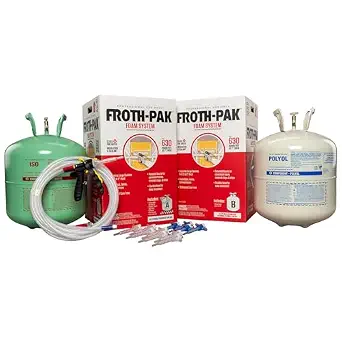 | Best Coverage Per Kit | Brand: FROTH-PAK | Foam type: Two-component closed-cell polyurethane | Coverage: Up to 630 sq. ft. at 1 inch thick | VIEW LATEST PRICE | See Our Full Breakdown |
| Kraken Bond Fastcoat Class-A Fire-Rated Closed-Cell Spray Foam Insulation Kit, 18 Cans |  | Best Balance of Size and Safety Gear | Brand: Kraken Bond | Foam type: Closed-cell polyurethane | Coverage: 360 sq. ft. at 2 inches | VIEW LATEST PRICE | See Our Full Breakdown |
| Vega Bond V200 Closed-Cell Spray Foam Insulation Kit, 200 Board Feet |  | Best for Small-Space Air Sealing | Brand: Vega Bond | Model: V200 | Foam type: Two-component closed-cell, 2 lb. density | VIEW LATEST PRICE | See Our Full Breakdown |
| basement insulation kit | Brand | Coverage | R-value | Foam Type |
|---|---|---|---|---|
| Amptern 12-Pack Closed-Cell Sp | Amptern | 240 board feet | — | High-density closed-cell |
| BEEST FullStop Spray Foam Insu | BEEST | Up to 240 board feet | 8.24 at 2 inches | — |
| Sprayman Spraycoat Fire-Rated | Sprayman | 360 sq. ft. | 11.32 at 2 in. | Closed-cell polyurethane |
| Adhesive Guru Closed-Cell Spra | — | Up to 20 sq ft per can at 1-inch thickness | 5.66 per inch | — |
| Y’allCanDIY Spray Foam Insulat | Y’allCanDIY | — | — | — |
| STANLEY Supercoat Closed-Cell | STANLEY | Up to 480 sq. ft. | 11.32 per 2 inches | Closed-cell polyurethane aerosol |
| FROTH-PAK 630 Closed-Cell Spra | FROTH-PAK | Up to 630 sq. ft. at 1 inch thick | 6.2 per inch; 12.2 at 2 inches | Two-component closed-cell polyurethane |
| Kraken Bond Fastcoat Class-A F | Kraken Bond | 360 sq. ft. at 2 inches | 5.66 per inch; 11.32 at 2 inches | Closed-cell polyurethane |
| Vega Bond V200 Closed-Cell Spr | Vega Bond | 200 board feet at 1-inch thickness | R-7 per inch | Two-component closed-cell, 2 lb. density |
More Details on Our Top Picks
Amptern 12-Pack Closed-Cell Spray Foam Insulation Kit, 240 Board Feet
This kit stands out for balancing coverage, completeness, and price in a way most basement projects demand. The 240 board feet of high-density closed-cell foam is enough to tackle rim joists and wall cavities in a typical unfinished basement, and the adhesion across concrete, brick, and stone matters more here than it would in an attic, since basement surfaces are rarely uniform. Compared with the BEEST FullStop kit at the same coverage, Amptern includes disposable straws and an adjustable nozzle that make detail work around pipes and wiring less frustrating. The tradeoff: unlike BEEST, it publishes no R-value per inch and no coverage-per-can figure, so buyers planning precise layer thicknesses are working with less data. Cans also need to sit around 68°F before use, which takes planning in a cold basement.
Pros:- Complete kit includes gun, nozzles, cleaner, and full protective gear
- Adheres to concrete, brick, stone, and other basement-typical surfaces
- High-density closed-cell foam resists moisture better than open-cell alternatives
- Disposable straws and adjustable nozzle help with detail sealing
Cons:- No published R-value or coverage per can, making project planning less precise
- Requires careful can and surface temperature preparation before application
Best for: Homeowners insulating an unfinished basement who want a complete all-in-one kit with tools and safety gear included
Not ideal for: Buyers who need documented R-value specs for code compliance or energy calculations, since no R-value is published
- Brand:Amptern
- Pack Size:12 cans
- Coverage:240 board feet
- Foam Type:High-density closed-cell
- Included Components:Spray gun, adjustable nozzle, gun cleaner, disposable foam straws, gloves, goggles, coverall suit
- Compatible Materials:Wood, concrete, brick, stone, metal, PVC, glass, MDF
- Recommended Can Temperature:Approximately 68°F
- Recommended Working Temperature:41°F–86°F
Our verdict“If you want one box that covers a full basement sealing project without shopping for accessories separately, this is the most sensible starting point.”
BEEST FullStop Spray Foam Insulation Kit, 240 Board Feet
What separates this option from the otherwise similar Amptern 12-pack is transparency: a published R-value of 8.24 at 2 inches, plus Class A surface-burning performance under ASTM E84. For anyone whose basement project touches a permit inspection or an energy-efficiency checklist, those numbers are the difference between a guess and a documented claim. The kit includes the same practical completeness as its rivals — gun, cleaner, gloves, goggles, coverall — but it’s noticeably stricter about conditions: application is recommended only between 68–77°F, a narrower window than the Sprayman kit’s broader usability. That constraint is a real drawback in a space that tends to run cold. Compared with the FROTH-PAK 630 in this roundup, it lacks hose-fed application, so large continuous wall sections take longer.
Pros:- Published R-value of 8.24 at 2-inch thickness
- Class A surface-burning performance under ASTM E84
- Full accessory bundle including gun, cleaner, and safety gear
- Bonds to wood, metal, drywall, concrete, and brick
Cons:- Narrow 68–77°F application temperature window
- 12-can format means frequent can swaps on larger wall sections
Best for: DIYers and contractors who need published R-value and fire-test data for permits or energy calculations
Not ideal for: Cold-climate basements where holding a 68–77°F application window is impractical
- Brand:BEEST
- Coverage:Up to 240 board feet
- R-value:8.24 at 2 inches
- Flame Spread Index:0 (ASTM E84)
- Smoke Developed Index:120 (ASTM E84)
- Number of cans:12
- Application temperature:68–77°F
- Item weight:26.6 pounds
Our verdict“Choose this when paperwork matters — it’s the pick with the specs to back up the insulation claim.”
Sprayman Spraycoat Fire-Rated Closed-Cell Spray Foam Insulation Kit, 18 Packs
For a basement — where egress is limited and building codes lean strict — a Class A fire rating is the headline feature here, and the Sprayman backs it up with the strongest R-value in this batch: 11.32 at 2 inches, well ahead of BEEST’s 8.24. That higher rating means you can achieve code-level insulation with less thickness, which matters in basements where every inch of floor space counts against a furring wall. Coverage of 360 sq. ft. also outpaces the 12-can kits. The tradeoff is content: no gloves, goggles, or coverall are included, unlike the Amptern or Y’allCanDIY bundles, so you’ll need to source safety gear yourself. UV exposure can also discolor the cured foam, so any exposed application needs covering. Compared with the Kraken Bond fire-rated kit, the tool bundle here is lighter but the R-value is more clearly documented.
Pros:- Class A fire-rated closed-cell formula
- Highest documented R-value in this batch at 11.32 for 2 inches
- 360 sq. ft. coverage beats the 12-can kits
- Resists cracking, shrinking, and settling over time
Cons:- No safety gear included — gloves, goggles, and coverall must be bought separately
- UV exposure can discolor the cured foam unless covered
- Only two interchangeable nozzles included for a large kit
Best for: Owners finishing a basement into living space who want maximum R-value per inch and a fire-rated formula
Not ideal for: First-time spray foam users who expect safety gear in the box — it isn’t included
- Brand:Sprayman
- Pack Count:18
- Coverage:360 sq. ft.
- R-Value:11.32 at 2 in.
- Foam Type:Closed-cell polyurethane
- Included Components:Application gun, two interchangeable nozzles, gun cleaner
- Suitable Surfaces:Drywall, wood, concrete, plaster, stucco, brick, glass, metal, PVC, OSB
Our verdict“The strongest pick when fire rating and insulation density are non-negotiable, provided you already own protective equipment.”
Adhesive Guru Closed-Cell Spray Foam Insulation Kit, 12 Cans
This kit makes the most sense for buyers whose basement project is really a gap-sealing job — rim joists, sill plates, pipe penetrations — rather than full wall coverage. The published 20 sq. ft. per can at 1-inch thickness and R-value of 5.66 per inch give it the clearest per-can math in the lineup, which helps when you’re budgeting foam can by can. Unlike the Sprayman kit, it includes a genuinely thorough accessory loadout: 24 nozzles in two types, two face masks, and a full safety set. The drawbacks are real though: a cure time of up to 24 hours slows multi-layer work, and bonding can lag on uneven or gapped surfaces, so prep matters more here than with the Amptern formula. It’s not the pick for covering large wall sections — the Sprayman or Y’allCanDIY kits handle that better.
Pros:- Clear per-can coverage figure of 20 sq. ft. at 1-inch thickness
- Generous accessory bundle with 24 nozzles, masks, and safety gear
- Dual-purpose heat and sound insulation
- Reliable adhesion to most common building materials
Cons:- Up to 24-hour cure time slows layered or follow-up applications
- Bonding can be delayed on uneven surfaces or wide gaps
Best for: DIYers sealing rim joists, cracks, and pipe penetrations rather than insulating entire walls
Not ideal for: Anyone insulating full basement walls — 12 cans at 1-inch depth won’t stretch that far
- Material:Polyurethane closed-cell foam
- R-value:5.66 per inch
- Thermal conductivity:0.025 W/(m·K)
- Can size:930 g (32.8 oz)
- Quantity:12 foam cans
- Coverage:Up to 20 sq ft per can at 1-inch thickness
- Cure time:Up to 24 hours
- Made in:Türkiye
Our verdict“A smart buy for precision sealing and small cavities, but the wrong tool for whole-wall insulation.”
Y’allCanDIY Spray Foam Insulation Kit, 18 Cans
This is the only kit in the batch built for a two-person job: two guns, two cleaners, two coveralls, two masks, and 24 gloves mean a helper can spray alongside you without sharing tools mid-job. That matters more than it sounds — spray foam cans set up fast, and trading a single gun back and forth (as you would with the BEEST kit) wastes working time. The generous accessory loadout, including 18 straws, spreaders, and long straws, makes it the most beginner-friendly bundle here despite the hobbyist branding. The compromises are honest ones: R-8 at 2 inches is the lowest documented rating in this group — well behind Sprayman’s R-11.32 — and coverage varies heavily with technique, so first-timers should expect to use more foam than the math suggests.
Pros:- Includes two complete sets of guns, cleaners, and safety gear for two workers
- Widest accessory variety: straws, spreaders, and nozzles for detail work
- Broad 60–90°F application window suits real basement conditions
- 18-can supply covers more area than 12-can rivals
Cons:- R-8 at 2 inches is the weakest documented rating in this batch
- Coverage varies considerably with depth, surface, and application technique
Best for: Pairs of DIYers tackling a basement together who want duplicate tools and full safety gear in one purchase
Not ideal for: Buyers chasing maximum R-value per inch — other kits in this roundup insulate better at the same thickness
- Brand:Y’allCanDIY
- Foam cans:18
- Can size:25.3 fl oz (750 ml) each
- Thermal resistance:Up to R-8 at 2-inch thickness
- Recommended application temperature:60–90°F (15–32°C)
- Included accessories:2 foam guns, 2 gun cleaners, 12 pairs nitrile gloves, 2 safety glasses, 2 respiratory masks, 2 coveralls, 18 gun straws, 18 spreaders, 4 long straws, 4 nozzles
- Compatible surfaces:Wood, concrete, metal, glass, brick, drywall, masonry
Our verdict“Two people, one basement, one purchase — this kit earns its spot on teamwork and completeness rather than raw insulation numbers.”
STANLEY Supercoat Closed-Cell Spray Foam Insulation Insulation Kit, 24-Pack
Most kits in this roundup cover a wall here and a crawl space there; the STANLEY Supercoat 24-Pack is built for finishing an entire basement in one go, with up to 480 sq. ft. of coverage and an R-value of 11.32 at 2 inches. What separates it from smaller kits like the Kraken Bond 18-can setup is volume plus completeness: you get 24 cans, two cleaners, a foam gun, gloves, glasses, and a suit in one box, so there is no piecemeal shopping before you start. The seamless, waterproof application also means fewer thermal bridges than you’d get from rigid board sections. The tradeoff is honest, though — this is a lot of material and a lot of gun cleanup if your project is really just one framed wall.
Pros:- Up to 480 sq. ft. of coverage for large multi-surface projects
- Complete accessory bundle including foam gun, two cleaners, and full safety gear
- Seamless waterproof barrier that blocks thermal bridging
- Thermal plus acoustic insulation in one application
Cons:- 24 cans is overkill and over-budget for small repair jobs
- Foam gun and protective gear add meaningful cleanup and handling steps after each session
Best for: Homeowners insulating a full basement or multiple rooms who want enough material and safety gear in a single purchase
Not ideal for: Anyone patching a small rim-joist bay or single wall section — half this kit will sit unused
- Brand:STANLEY
- Foam type:Closed-cell polyurethane aerosol
- Coverage:Up to 480 sq. ft.
- R-value:11.32 per 2 inches
- Can count / volume:24 cans, 27.1 fl oz each
- Included:24 foam cans, 2 cleaners, foam gun, gloves, glasses, suit
Our verdict“Buy this if you’re insulating a whole basement in one weekend; skip it for small patch jobs where a 12-can kit makes more sense.”
FROTH-PAK 630 Closed-Cell Spray Foam Insulation Kit with 15 ft Hose
If the STANLEY Supercoat is the big canned option, the FROTH-PAK 630 is the professional-grade alternative — a two-component tank system that covers 630 sq. ft. at 1 inch thick in a continuous run, with no can swaps interrupting your rhythm. That tank-plus-15-foot-hose design is the real differentiator: compared with can-based kits like the Kraken Bond, you can work from one spot and reach across ceiling and wall cavities without moving ladders constantly. The 30-second cure time and 6.2 R-value per inch make it efficient for serious air-sealing work, and the Green Circle and LEED v4 credentials matter for code-conscious builds. Just know that PPE is not included — unlike STANLEY or Vega Bond — so budget for a respirator and suit separately.
Pros:- Largest coverage in the roundup at up to 630 sq. ft. per kit
- 15 ft hose allows reach without constantly repositioning
- Fast 30-second cure speeds up large jobs
- Green Circle Certified and LEED v4 compliant for code requirements
Cons:- No personal protective equipment included — a real added cost and planning step
- Adult signature required at delivery adds a logistical hurdle
Best for: Contractors and serious DIYers insulating large basement areas who want continuous, high-volume application
Not ideal for: First-time foam users or small-project buyers — the tank system is aggressive, requires separate PPE, and needs a delivery signature
- Brand:FROTH-PAK
- Foam type:Two-component closed-cell polyurethane
- Coverage:Up to 630 sq. ft. at 1 inch thick
- R-value:6.2 per inch; 12.2 at 2 inches
- Cure time:About 30 seconds
- Hose length:15 ft
- Included:A/B tanks, applicator and hose, 8 cone nozzles, 4 fan nozzles, petroleum jelly, instructions
Our verdict“The most efficient choice for big, code-driven basement insulation jobs — provided you already own or will buy proper PPE.”
Kraken Bond Fastcoat Class-A Fire-Rated Closed-Cell Spray Foam Insulation Kit, 18 Cans
The Kraken Bond Fastcoat sits in the sweet spot between the oversized STANLEY 24-pack and smaller 12-can kits: 18 cans, 360 sq. ft. of coverage at 2 inches, and a complete accessory loadout with gun, cleaner, goggles, worksuit, and gloves. Its standout trait for basement work is the dual-nozzle system — the wide spray nozzle handles walls while a second option supports vertical and ceiling applications, which matters when you’re insulating rim joists overhead. Like STANLEY, it carries a Class-A ASTM E84 fire rating, something the Vega Bond kit doesn’t advertise. The catch is temperature discipline: cans perform best warmed to 68°F, so a cold basement in winter means planning ahead or you’ll waste material.
Pros:- Class-A fire rating meeting ASTM E84 for basement code compliance
- Includes gun, cleaner, and complete safety gear out of the box
- Dual-nozzle system handles both wall and overhead applications
- Seals against air, water, pests, and drafts in one pass
Cons:- Cans must be warmed to around 68°F for proper expansion — easy to botch in a cold basement
- Requires good ventilation and strict safety adherence during use
Best for: DIYers mid-project — a finished wall plus ceiling section — who want fire-rated foam and full safety gear without a 24-can commitment
Not ideal for: Buyers in cold climates working in unheated basements who can’t reliably warm cans before application
- Brand:Kraken Bond
- Foam type:Closed-cell polyurethane
- Coverage:360 sq. ft. at 2 inches
- R-value:5.66 per inch; 11.32 at 2 inches
- Can count / size:18 cans, 27.1 oz each
- Application temperature:41°F to 86°F (cans best at 68°F)
- Included:18 cans, gun, cleaner, wide spray nozzle, goggles, worksuit, gloves
Our verdict“The most well-rounded mid-size kit for a typical basement finishing project, as long as you can manage can temperature.”
Vega Bond V200 Closed-Cell Spray Foam Insulation Kit, 200 Board Feet
Not every basement job needs industrial volume. The Vega Bond V200 targets the narrower job — 200 board feet at 1 inch — which translates to rim joists, penetrations, and one framed wall rather than a whole floor. Its edge over can-style kits like the Amptern 12-Pack is the two-component tank design: R-7 per inch beats the typical 5.66 per inch of canned options, and the quick-cure closed-cell formula builds a moisture and vapor barrier in one step. You also get a gun and hose assembly, coverall, glasses, and a full set of spray tips. Compared with the FROTH-PAK 630, it’s the scaled-down sibling — same tank concept, a third of the coverage, no delivery signature drama. But you’ll need to source a respirator separately and warm canisters to 75–85°F.
Pros:- R-7 per inch outperforms most canned closed-cell alternatives
- Quick cure seals gaps and forms a moisture/vapor barrier
- Includes gun and hose assembly plus safety coverall and glasses
- Right-sized tank system without large-kit waste
Cons:- Respirator mask not included despite foam application requiring one
- Canisters must be warmed to 75°F–85°F for ideal results
Best for: Homeowners tackling rim joists, sill plates, and gap-sealing in a small basement who want higher R-value per inch
Not ideal for: Buyers planning full wall coverage — 200 board feet runs out fast, and a larger kit is better value per square foot
- Brand:Vega Bond
- Model:V200
- Foam type:Two-component closed-cell, 2 lb. density
- Coverage:200 board feet at 1-inch thickness
- R-value:R-7 per inch
- Recommended application temperature:75°F–85°F
- Included:Gun and hose assembly, safety coverall, safety glasses, spray nozzles, fan tips, cone tips
- Mask:Not included
Our verdict“The smart pick for targeted basement air-sealing where per-inch performance matters more than total square footage.”

How We Picked
I compared the nine kits on the details supplied for each product: application format, stated board-foot coverage when available, pack or can count, hose access, and fire-rating claims. For basement projects, those differences affect how a buyer plans coverage, reaches framing bays, and checks whether a product suits the intended installation. I gave more weight to specific, comparable information than to pack counts by themselves; a can count does not establish how much finished foam a kit will produce.
The ranking reflects how clearly each option serves a distinct buyer need based on the supplied product details. FROTH-PAK 630 leads for its hose length and recognizable project fit, while the 240-board-foot Amptern and BEEST kits rank well for stated coverage. Fire-rated claims distinguish Sprayman and Kraken Bond, but the product name alone cannot confirm code compliance. I treat products with less comparable information as more specialized choices and recommend checking current manufacturer instructions, yield data, and local requirements before buying.
| basement insulation kit | Foam Type |
|---|---|
| Amptern 12-Pack Closed-Cell Sp | High-density closed-cell |
| BEEST FullStop Spray Foam Insu | — |
| Sprayman Spraycoat Fire-Rated | Closed-cell polyurethane |
| Adhesive Guru Closed-Cell Spra | — |
| Y’allCanDIY Spray Foam Insulat | — |
| STANLEY Supercoat Closed-Cell | Closed-cell polyurethane aerosol |
| FROTH-PAK 630 Closed-Cell Spra | Two-component closed-cell polyurethane |
| Kraken Bond Fastcoat Class-A F | Closed-cell polyurethane |
| Vega Bond V200 Closed-Cell Spr | Two-component closed-cell, 2 lb. density |
Factors to Consider When Choosing Best Basement Insulation Kits
Before choosing a kit, I’d work backward from the basement job: identify the surfaces, estimate the area, check access, and confirm the product is suitable for that assembly. The details that look comparable on a listing page may describe different things, especially when one kit gives board feet and another gives only can count.
Measure the job before comparing coverage
Start by measuring the area you intend to insulate and separating broad surfaces from narrow gaps and rim joists. Board-foot claims offer a more useful comparison than pack counts, but they are still estimates whose meaning depends on the stated thickness and application conditions. Ask the manufacturer how its yield is calculated and whether it assumes a particular cured thickness. A common mistake is to buy by the number of cans or packs, then discover that the format does not map cleanly to the project area. Leave room for uneven framing, trimming, and missed spots when estimating material. If a kit’s listing does not state usable yield clearly, treat that uncertainty as part of the buying decision.
Match the application format to basement access
Basements combine open wall bays with tight corners, overhead rim areas, pipes, and other obstacles. Think through where the applicator and hose need to reach before selecting a system; the 15-foot hose on FROTH-PAK 630 is a concrete access detail, though the room layout still determines whether it helps. Consider whether you can keep the kit positioned safely while applying foam and whether you can work without blocking your exit. For cramped spaces, reaching the target cleanly can matter as much as the amount of foam in the kit. Avoid choosing solely by pack size if the applicator will be awkward to handle in the intended area. Follow the product’s directions for setup, use, and curing.
Check fire-rating claims against the whole assembly
A fire-rated label or Class-A claim deserves a closer look, especially for foam installed near occupied rooms or utilities. Ask for the product documentation and identify what the rating covers: the foam alone, a tested assembly, or a particular use condition. Building codes may require a thermal or ignition barrier over foam, and requirements vary by location and installation. Do not assume that a fire-related phrase in a product name makes an exposed basement installation compliant. Confirm the rules with your local building department or a qualified professional before purchase. This check can change which products are suitable even when their coverage and application seem like a good fit.
Plan for preparation, protection, and cleanup
Spray foam application calls for careful setup, and the product instructions should guide ventilation, protective equipment, temperature limits, and surface preparation. Check the kit’s specified conditions before starting; cold concrete or an unsuitable surface can affect application and curing. Protect nearby finishes and belongings because overspray or foam that expands beyond the intended gap can be difficult to remove. Decide in advance how you will handle masking, ventilation, and safe access to the work area. Buyers new to foam should read the full instructions before opening the kit and practice only where the manufacturer permits. If those steps are impractical in the basement, consider getting qualified help.
Pay for the feature that solves your constraint
A larger stated yield helps only if it covers the job, and a fire-rating claim helps only if it matches the required assembly. For a small, irregular project, access and control may matter more than the biggest coverage figure. For a broad area, reliable yield information can make planning easier than a listing that gives only pack count. If a project has strict code or fire-protection needs, spend time verifying documentation before weighing convenience. Buyers should also check shelf life, storage conditions, and whether unused components can be kept for later use. The best value is the kit that fits the measured work and can be applied as directed, not necessarily the one with the largest number on its label.
Frequently Asked Questions
How do I compare a kit listed in board feet with one listed by can count?
Board feet provide a stated coverage measure, while can count only tells you how many containers are included. I would not assume that two cans from different brands produce the same amount of cured foam. Look for the manufacturer’s yield estimate, the thickness behind that estimate, and any conditions that can reduce output. If those details are missing, contact the manufacturer before comparing the kit with Amptern, BEEST, or Vega Bond, which list board-foot figures. Use the same project area and target thickness when evaluating alternatives.
Are fire-rated or Class-A kits safe to leave exposed in a basement?
A fire-rated or Class-A phrase does not, by itself, establish that foam can remain exposed in your basement. The rating may apply under specific test conditions or as part of a larger wall or ceiling assembly. Local building rules can require a thermal barrier or ignition barrier over foam, depending on the space and its use. Request the product’s technical documentation and confirm the installation requirements with your local building department or a qualified professional. Check those details before buying Sprayman or Kraken Bond based on their fire-related claims.
What should I check before using spray foam on basement walls?
First confirm that the product is intended for the surface and application you have, then check its instructions for surface preparation, moisture, temperature, ventilation, and protective equipment. Basement walls can have moisture issues that need attention before insulation; foam should not be used to hide an unresolved water problem. Review how the kit handles application and curing, and protect adjacent areas from overspray. If the wall assembly or code requirements are unclear, ask a qualified professional before work begins. These checks help prevent a coverage decision from turning into a wall or safety problem.
Is a longer hose worth prioritizing for basement work?
A longer hose can help when the work area is behind framing, around obstructions, or far from a safe place to position the kit. FROTH-PAK 630 specifies a 15-foot hose, giving it a clear access advantage in some layouts. That feature may matter less in an open, easily reached wall bay, where coverage and application details are stronger priorities. Measure or inspect the path from the kit’s likely position to the areas you need to spray. Also confirm the hose and application instructions fit the job; length alone does not guarantee easier or more controlled work.
When should I choose a lower stated coverage kit instead of a 240-board-foot option?
A smaller stated yield can make sense when it fits a measured project and helps avoid buying more material than you can use. Vega Bond lists 200 board feet, while Amptern and BEEST list 240, but those figures do not settle the choice without checking thickness assumptions and application instructions. A kit with lower coverage may also suit a job where access, handling, or a specific product requirement matters more than maximum yield. Compare the documented yield with the area you need to insulate and check storage or reuse rules for leftover components. Do not select the larger figure automatically if the product does not fit your installation conditions.
Conclusion
For most buyers seeking a clear combination of access and general project fit, I’d choose FROTH-PAK 630 as the best overall, especially when the 15-foot hose suits the basement layout. For best value by stated coverage, compare Amptern and BEEST FullStop, both listed at 240 board feet, and verify their yield details before deciding. I’d treat Sprayman as the best fit for buyers prioritizing a fire-rated product claim, subject to confirming its documentation and local assembly rules. For beginners, choose the kit with the clearest instructions, setup requirements, and support rather than assuming any can-based option is automatically easier. For specific coverage needs, Vega Bond V200 may suit a smaller measured job, while buyers needing a Class-A claim can investigate Kraken Bond; either way, confirm suitability before purchase.