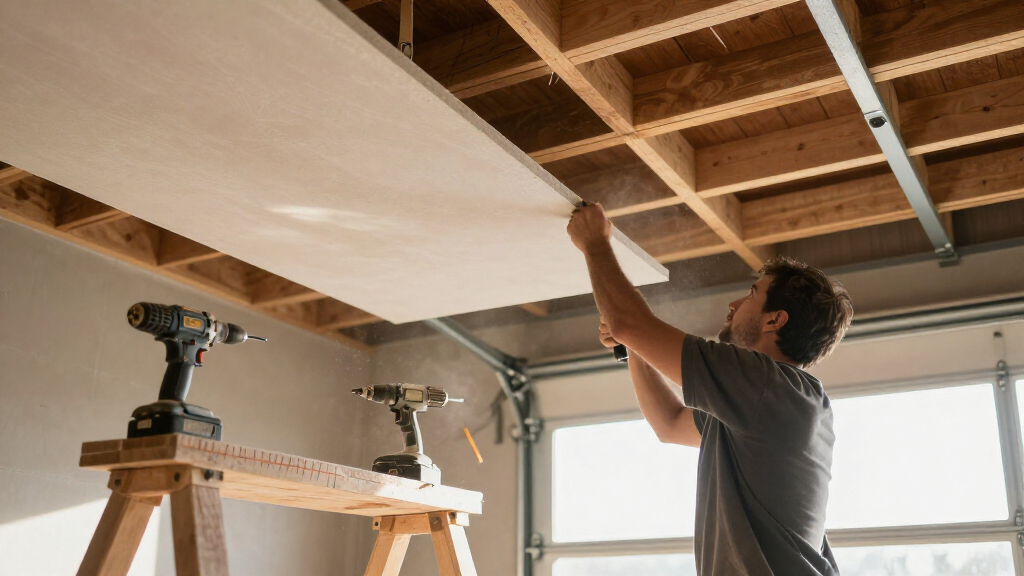
The best drywall lift for ceiling installation needs to hold a full sheet steady at ceiling height, tilt and swivel smoothly for fastening, and survive being loaded and cranked hundreds of times without wobble. For most buyers, an 11 ft lift with 150 lb capacity, a 360° swivel cradle, and a 60° tilt hits that balance, which is why the 11 ft Drywall Lift with 150 lb Capacity earns my best overall pick — its tilt range and rotation make sloped and flat ceiling work far less frustrating. If your budget is tight, the VEVOR 11-Foot Drywall Lift covers standard 8–10 ft flat ceilings dependably, and for tall great rooms or vaulted spaces the Winado 16 ft Drywall Lift is the only option here with the reach you need. The main tradeoff in this category is portability versus height capability, followed by how smooth the winch mechanism feels under a full load. Keep reading for the full breakdown of all nine models.

Get business pricing on tools and workshop supplies
- Business-only prices and quantity discounts
- Tax-exempt purchasing
- Multiple users, one account, clear invoices
Complete the kit


Key Takeaways
- All nine lifts share the same 150 lb capacity rating, so real differentiation comes from maximum extension height, cradle rotation, tilt range, and wheel quality — not the headline spec.
- Cradle articulation separated the top picks: lifts with both 360° swivel and 60° tilt handled angled and corner ceiling work far better than fixed-cradle models.
- Eight of the nine lifts max out at 11 ft, which handles flat ceilings up to about 10 ft; only the Winado 16 ft model reaches vaulted or great-room ceilings.
- Three of the nine picks are Garvee-family products with overlapping specs — the version with lockable wheels and a telescopic arm is the one worth paying attention to for solo work.
- Wheel design mattered more than expected in this comparison: lockable casters keep a loaded lift from drifting mid-fasten, a recurring weakness on budget models.
| 11 ft Drywall Lift with 150 lb Capacity, 360° Swivel and 60° Tilt |  | Best Overall | Material: Carbon steel | Load capacity: 150 lb (68 kg) | Maximum reach: 11 ft (3.35 m) | VIEW LATEST PRICE | See Our Full Breakdown |
| Drywall Lift 11 Ft, 150 lb Capacity Sheetrock Panel Hoist |  | Best Value Pick | Max load: 150 lbs | Height range: 4–11 ft | Recommended panel size: Up to 4 ft x 11 ft | VIEW LATEST PRICE | See Our Full Breakdown |
| VEVOR 11-Foot Drywall Lift, 150 lb Capacity |  | Best for Beginners | Maximum capacity: 150 lb (68 kg) | Maximum lift height: 11 ft (3353 mm) | Telescoping arm: 4.09–9.58 ft | VIEW LATEST PRICE | See Our Full Breakdown |
| Garvee 11 ft Drywall Lift, 150 lb Capacity |  | Best Compact Storage | Maximum reach: 11 ft | Weight capacity: 150 lb | Frame material: Alloy steel | VIEW LATEST PRICE | See Our Full Breakdown |
| Garvee 11 FT Drywall Lift Panel Hoist, 150 LBS Heavy Duty Sheetrock Jack |  | Best for High Ceilings | Load capacity: 150 lbs | Max lifting height: 16 ft | Adjustable arm range: 4 to 9.5 ft | VIEW LATEST PRICE | See Our Full Breakdown |
| Rovibek 11FT Drywall Lift Jack for Ceiling and Wall Installation |  | Best for Easy Transport and Storage | Max Height: 11 ft | Max Load Capacity: 150 lbs | Adjustable Length: 4.1 ft to 9.5 ft | VIEW LATEST PRICE | See Our Full Breakdown |
| Drywall Lift, 11-Foot Height, 150 lb Capacity |  | Best Value Pick | Lifting Range: 4 to 11 ft | Weight Capacity: 150 lb | Telescoping Arm: 4 to 9.5 ft | VIEW LATEST PRICE | See Our Full Breakdown |
| GarveeTech 11 ft 150 lbs Drywall Lift / Sheetrock Hoist |  | Best Heavy-Duty Build | Max Reach: 11 ft | Capacity: 150 lbs | Telescopic Arm Range: 4 – 9.5 ft | VIEW LATEST PRICE | See Our Full Breakdown |
| Winado 16 ft Drywall Lift Panel Hoist Jack with Caster Wheels and Adjustable Telescopic Arm |  | Best for High Ceilings | Max Lifting Height: 16 ft | Load Capacity: 150 lbs | Telescopic Arm Range: 49″ to 114″ | VIEW LATEST PRICE | See Our Full Breakdown |
| drywall lift for ceiling installation | Material |
|---|---|
| 11 ft Drywall Lift with 150 lb | Carbon steel |
| Drywall Lift 11 Ft | Powder-coated steel |
| VEVOR 11-Foot Drywall Lift | Carbon steel |
| Garvee 11 ft Drywall Lift | — |
| Garvee 11 FT Drywall Lift Pane | Steel |
| Rovibek 11FT Drywall Lift Jack | All welded steel, powder-coated finish |
| Drywall Lift | Steel |
| GarveeTech 11 ft 150 lbs Drywa | Carbon steel |
| Winado 16 ft Drywall Lift Pane | Heavy duty steel |
More Details on Our Top Picks
11 ft Drywall Lift with 150 lb Capacity, 360° Swivel and 60° Tilt
This model earns the top spot because it balances full-range positioning with a stable, locked-down base better than anything else in this lineup. The cam lock brake on the winch is the detail that separates it from the VEVOR lift — once a panel is cranked up, the brake holds it firmly against the ceiling, freeing both hands for fastening. Combined with 360° rotation and 60° tilt, it handles flat ceilings, sloped surfaces, and even wall panels without repositioning the tripod constantly.
The tradeoff is familiar: it’s a manual crank, so raising a full 4×8 sheet takes real effort, and the 150 lb ceiling rules out double-layer or thicker commercial board. Compared with the Garvee folding model, it’s slightly less compact in storage, but the outrigger-style legs make it the steadier choice on uneven subfloors.
Pros:- Cam lock brake holds panels steady so both hands stay free for screwing
- Full 360° rotation plus 60° tilt covers flat, sloped, and wall installations
- Outrigger legs and locking casters keep the tripod stable under load
- Tool-free assembly means it goes from trunk to ceiling-ready quickly
Cons:- Manual winch demands physical effort on every raise
- 150 lb maximum capacity excludes thicker or layered panels
Best for: Solo DIYers and general contractors who hang standard panels on flat or sloped 8–11 ft ceilings and want hands-free panel support
Not ideal for: Anyone working above 11 ft or hanging heavy double-layer board — the reach and capacity both cap out
- Material:Carbon steel
- Load capacity:150 lb (68 kg)
- Maximum reach:11 ft (3.35 m)
- Minimum height:4.09 ft
- Cradle movement:360° rotation, 60° tilt
- Base:Tripod with 3 locking casters
- Operation:Manual winch with cam lock brake
Our verdict“If you’re hanging standard drywall on ceilings up to 11 ft and want the most stable, full-featured lifter in this price class, this is the one to buy.”
Drywall Lift 11 Ft, 150 lb Capacity Sheetrock Panel Hoist
What makes this lift a smart value play is that it publishes a recommended panel size of 4×11 ft — a spec most competitors leave vague, including the Garvee hoist. That clarity matters: you know before buying that full sheets sit properly in the cradle. The 4 to 11 ft lifting range matches the category leaders, and the powder-coated steel frame resists the jobsite scuffs that strip paint off cheaper finishes.
Compared with my top pick, you give up the cam lock brake nuance for a standard winch-and-brake setup, and assembly demands more attention — every fastener needs checking before the first lift, which is a genuine safety chore some buyers will skip. For a single-room basement or garage ceiling project, though, those tradeoffs are easy to accept at this price point.
Pros:- Published panel size guidance (up to 4×11 ft) takes the guesswork out of fit
- Full 4–11 ft range covers standard residential ceiling heights
- Powder-coated finish shrugs off scratches better than bare steel
- Collapsible frame stores in a car trunk between projects
Cons:- Assembly required, with fasteners that must be re-verified before each use
- Manual crank is tiring over a full day of hanging
Best for: Budget-minded homeowners tackling a one- or two-room ceiling project who want full-size lifting capability without paying for premium refinements
Not ideal for: Frequent movers between jobsites — assembly and fastener checks add setup time every time it’s transported
- Max load:150 lbs
- Height range:4–11 ft
- Recommended panel size:Up to 4 ft x 11 ft
- Cradle movement:60° tilt, 360° swivel
- Wheels:3 lockable casters
- Material:Powder-coated steel
Our verdict“The most sensible choice for a one-project buyer who wants proven 11 ft capability at the lowest total cost.”
VEVOR 11-Foot Drywall Lift, 150 lb Capacity
First-time drywall hangers tend to make two mistakes: fighting complicated assembly and second-guessing where the panel will land. The VEVOR addresses both. Tool-free setup gets a nervous novice from box to ready in minutes, and the non-slip lockable wheels mean the lift stays exactly where you park it — a small detail that builds confidence when there’s an 80 lb sheet hovering overhead.
Against the value pick from the same category, the VEVOR’s telescoping arm spec (4.09–9.58 ft) is more transparent, which helps beginners understand exactly how it fits their room before ordering. The drawbacks are honest ones: 150 lb capacity is fine for standard half-inch board but nothing heavier, and the assembly step still exists even if no tools are needed. It’s the gentlest entry point here, not the most capable.
Pros:- Tool-free assembly and disassembly suits first-time users
- Non-slip locking wheels keep the lift planted during positioning
- Tilt and rotation handle sloped as well as flat ceilings
- Clearly documented telescoping arm range eliminates height guesswork
Cons:- 150 lb capacity limits users to standard-weight panels
- Assembly required before first use despite tool-free design
Best for: First-time DIYers hanging a small ceiling who value simple setup and predictable stability over professional-grade capacity
Not ideal for: Experienced crews moving fast on large jobs — the modest specs and assembly step slow down high-volume work
- Maximum capacity:150 lb (68 kg)
- Maximum lift height:11 ft (3353 mm)
- Telescoping arm:4.09–9.58 ft
- Panel movement:60° tilt, 360° rotation
- Base:Tripod with 3 non-slip lockable wheels
- Material:Carbon steel
Our verdict“The easiest drywall lift for a nervous first-timer to set up and trust on an 8–11 ft ceiling.”
Garvee 11 ft Drywall Lift, 150 lb Capacity
Most drywall lifts live in a garage corner collecting dust for eleven months a year. The Garvee solves that: its folding alloy steel frame collapses to roughly 130 x 50 x 17 cm, small enough to slide behind shelving or into a van alongside other tools. Compared with the Garvee 16 ft telescopic model in this roundup, this one gives up reach but wins decisively on portability — a fair trade for anyone whose ceilings sit at standard heights.
The winch, steel cable, and pulley system is worth calling out because it lifts smoothly and quietly, which matters when you’re inching a sheet into position against joists. The compromises are real, though: like every manual lift here it takes physical effort, and there’s no published tilt-and-rotation detail, so I’d treat it as a straight ceiling hoist rather than a versatile wall-and-slope machine like the top pick.
Pros:- Folds down to compact dimensions for shelf or van storage
- Alloy steel frame keeps weight manageable despite full 150 lb capacity
- Cable-and-pulley winch lifts smoothly and quietly
- Tool-free assembly gets it working fast between uses
Cons:- 11 ft reach ceiling rules out taller rooms
- Limited positioning documentation makes it best suited to straightforward flat ceilings
Best for: Owners of small workshops or vans who need a lifter for occasional ceilings and can’t spare permanent storage space
Not ideal for: Anyone needing sloped-ceiling versatility — the positioning flexibility is less documented than on the swivel-and-tilt models
- Maximum reach:11 ft
- Weight capacity:150 lb
- Frame material:Alloy steel
- Lifting mechanism:Manual winch, steel cable, and pulley
- Folded dimensions:130 x 50 x 17 cm
- Assembly:Tool-free
Our verdict“The pick for space-constrained DIYers who want occasional ceiling help that disappears into storage afterward.”
Garvee 11 FT Drywall Lift Panel Hoist, 150 LBS Heavy Duty Sheetrock Jack
Every other lift in this batch stops at 11 ft, which strands anyone working under a vaulted entryway or a tall stairwell. This Garvee reaches 16 ft at full extension, making it the only sensible option here for high-ceiling work short of renting a Winado-class hoist. The telescopic arm adjusts from 4 to 9.5 ft, so it handles standard rooms too, and the 360° rotation and 60° tilt mean sloped cathedral ceilings aren’t off-limits.
The reach comes at a cost. An extended telescoping arm trades leverage for height, so a 150 lb sheet at 16 ft demands more care — and more winch effort — than the same load on the 11 ft top pick. It’s also described as a residential-duty design, so daily commercial crews pushing heavy board should look elsewhere. For the homeowner facing one great-room ceiling, nothing else here comes close.
Pros:- 16 ft maximum height is the tallest reach in this batch
- Adjustable 4–9.5 ft arm still handles standard 8 ft rooms
- 360° rotation and 60° tilt manage sloped cathedral ceilings
- Wide tripod base with three locking casters steadies loads at full extension
Cons:- Extended arm reduces leverage and increases winch effort at full height
- Bulky to store and transport when assembled
- Residential-duty construction may not survive professional daily use
Best for: Homeowners or part-time contractors facing vaulted, cathedral, or stairwell ceilings from roughly 11 to 16 ft
Not ideal for: Full-time commercial hangers — the residential-duty build and extended-arm stability limits don’t suit daily heavy abuse
- Load capacity:150 lbs
- Max lifting height:16 ft
- Adjustable arm range:4 to 9.5 ft
- Rotation:360°
- Tilt:60° forward/backward
- Wheels:3 non-slip lockable casters
- Material:Steel
Our verdict“The only choice in this lineup for ceilings above 11 ft — buy it for the reach, accept the extra effort it demands.”
Rovibek 11FT Drywall Lift Jack for Ceiling and Wall Installation
Most 11-foot lifts in this roundup share the same 150 lb ceiling and similar reach, so what separates the Rovibek is its foldable frame. Where the GarveeTech lift weighs in at over 78 lbs and stays awkward between jobs, this model collapses down for trunk transport and garage-shelf storage — a real advantage for contractors who move between sites or DIYers without a dedicated workshop. The hand-chain winch with a safety brake gives controlled raising and lowering, and the reinforced tripod base with lockable wheels holds steady under a full 4′ x 11′ sheet. The tradeoff: like its peers, the chain operation is manual, and 150 lbs leaves no room for heavier or double-layer board. This pick makes the most sense for anyone who values portability as much as lifting performance.
Pros:- Folds down compactly for transport and storage
- Hand-chain winch with safety brake for controlled panel handling
- Reinforced steel tripod base with lockable wheels for stability
- Handles full-size 4′ x 11′ sheets solo
Cons:- 150 lb load ceiling limits heavier panel types
- Hand-chain cranking demands physical effort on every raise
Best for: Mobile contractors and DIYers who need to transport the lift between job sites in a car or SUV
Not ideal for: Builders working with double-layer drywall or heavy cement board — the 150 lb limit is non-negotiable
- Max Height:11 ft
- Max Load Capacity:150 lbs
- Adjustable Length:4.1 ft to 9.5 ft
- Panel Size Supported:Up to 4 ft x 11 ft
- Material:All welded steel, powder-coated finish
- Base Type:Tripod with non-slip feet and lockable wheels
- Power Source:Hand chain
- Loading Height:54 in
Our verdict“Buy this if you need one-lift performance that also travels well between locations.”
Drywall Lift, 11-Foot Height, 150 lb Capacity
Positioned against the Rovibek, this unbranded 11-foot lift delivers the same core capability — a 4 to 11 ft lifting range, a 150 lb rating, and a full telescoping arm — without extra refinements, which is exactly why it earns the value slot. The cradle tilts 60° and rotates 360°, which matters when you’re trying to seat a sheet against a sloped or close-quarter ceiling without dropping it off the hooks. Three lockable swivel wheels let you reposition the loaded lift rather than winch down and start over. The compromise is at the edges: it ships disassembled with instructions and a hardware pack, so expect some setup time before the first lift, and its effective panel capacity varies with sheet size in a way the Rovibek’s fixed rating does not.
Pros:- Full 4 to 11 ft lifting range covers standard residential ceilings
- 360° rotating, 60° tilting cradle simplifies panel alignment
- Lockable swivel wheels allow repositioning a loaded lift
- Single-person manual operation
Cons:- Ships unassembled and requires assembly before use
- Real-world panel capacity varies depending on sheet size and type
Best for: Budget-conscious homeowners tackling a one-time basement or garage ceiling project
Not ideal for: Buyers who want to work immediately out of the box — assembly is required before first use
- Lifting Range:4 to 11 ft
- Weight Capacity:150 lb
- Telescoping Arm:4 to 9.5 ft
- Cradle Tilt:60°
- Cradle Rotation:360°
- Wheels:3 lockable swivel wheels
- Material:Steel
Our verdict“A straightforward, no-frills lift that covers standard ceiling heights at the lowest complexity — a sensible choice for one-off projects.”
GarveeTech 11 ft 150 lbs Drywall Lift / Sheetrock Hoist
Where the budget 11-foot lift feels like a project tool, the GarveeTech is built like a jobsite fixture. Its carbon steel frame and 78.3 lb body translate directly into stability: less wobble when a full sheet is cranked to 11 feet, and more confidence on uneven subfloors thanks to locking outriggers and anti-slip casters. The 60° tilt plus 360° rotation covers flat and inclined ceilings, matching the Rovibek’s range but with a more planted feel under load, and quiet operation is a nice bonus in occupied homes. The honest drawback is that weight itself — at 78.3 lbs, moving and setting it up alone is a genuine workout, and the hand-crank operation adds more manual effort on every sheet. This option stands out for durability-minded buyers who leave the lift assembled on site.
Pros:- Heavy-duty carbon steel construction for long-term durability
- Locking outriggers and anti-slip casters keep the lift planted under load
- 360° rotation and 60° tilt handle flat and inclined ceilings
- Quiet operation suits occupied homes
Cons:- At 78.3 lbs, transport and solo setup are difficult
- Hand-powered cranking requires physical effort on every panel
Best for: Frequent users and pros who prioritize frame rigidity and leave the lift set up on an active jobsite
Not ideal for: Solo DIYers who need to load, move, and set up the lift by themselves — the weight makes that a struggle
- Max Reach:11 ft
- Capacity:150 lbs
- Telescopic Arm Range:4 – 9.5 ft
- Tilt Angle:60° forward/backward
- Rotation:360°
- Material:Carbon steel
- Item Weight:78.3 lbs
- Power Source:Hand-powered
Our verdict“The sturdiest 11-footer in this lineup — right for regular use on site, wrong if you need to haul it around alone.”
Winado 16 ft Drywall Lift Panel Hoist Jack with Caster Wheels and Adjustable Telescopic Arm
Every other lift in this roundup stops at 11 feet, which is exactly why the Winado exists. Its 16 ft maximum height and support for 4 ft x 16 ft sheets open up vaulted foyers, stairwells, and cathedral ceilings that an 11-footer simply cannot reach — if your ceiling is 13 or 15 feet tall, this is your only option here. The tool-free assembly is a meaningful contrast to the budget 11-foot lift, which arrives as a box of parts, and the 360° rotating cradle with 4-inch lockable casters mirrors the positioning flexibility of the GarveeTech. Tradeoffs come with the territory: working at 16 feet demands head protection and careful site setup, and the extended telescopic arm (49″ to 114″) adds bulk that makes transport clumsy even though it folds.
Pros:- Reaches 16 ft ceilings — beyond every 11 ft model in this roundup
- Handles large 4 ft x 16 ft panels for fewer seams on big ceilings
- Tool-free assembly and folding design for faster setup
- 360° rotating cradle and lockable 4-inch caster wheels for safe positioning
Cons:- High-altitude operation requires helmet and added safety precautions
- Bulky to transport despite its folding design
Best for: Homeowners and renovators facing vaulted or cathedral ceilings above 11 feet
Not ideal for: Standard 8 to 9 ft residential ceilings — the extra height capability adds weight and cost you’ll never use
- Max Lifting Height:16 ft
- Load Capacity:150 lbs
- Telescopic Arm Range:49″ to 114″
- Max Panel Size:4 ft x 16 ft
- Caster Wheel Size:4 inches
- Material:Heavy duty steel
Our verdict“If your ceiling is taller than 11 feet, this is the pick; if it isn’t, a shorter lift is easier to live with.”

How We Picked
Since every lift in this category carries the same 150 lb capacity rating, I evaluated them on the factors that actually change the experience of hanging a ceiling. Height range came first: an 11 ft lift is fine for flat 8–10 ft ceilings but useless in a vaulted space, so the Winado 16 ft model earned its place purely on reach. Cradle articulation came second — a 360° swivel lets you rotate a sheet into position without lowering it, and a 60° tilt handles sloped ceilings and upper-wall work, which is why lifts with both features ranked above fixed or single-axis cradles.
From there I weighed stability under load (frame gauge, tripod footprint, and whether the casters lock), winch and cable smoothness, since a jerky crank is what usually causes sheets to chip or drop, and assembly and storage practicality — these lifts ship flat and disassemble into three pieces, but some go together far more easily than others. Finally, I considered value positioning within the lineup: several models here are near-duplicates of each other, so I ranked them by which version offers the most usable features at its price point rather than treating specs in isolation.
| drywall lift for ceiling installation | Material |
|---|---|
| 11 ft Drywall Lift with 150 lb | Carbon steel |
| Drywall Lift 11 Ft | Powder-coated steel |
| VEVOR 11-Foot Drywall Lift | Carbon steel |
| Garvee 11 ft Drywall Lift | — |
| Garvee 11 FT Drywall Lift Pane | Steel |
| Rovibek 11FT Drywall Lift Jack | All welded steel, powder-coated finish |
| Drywall Lift | Steel |
| GarveeTech 11 ft 150 lbs Drywa | Carbon steel |
| Winado 16 ft Drywall Lift Pane | Heavy duty steel |
Factors to Consider When Choosing Best Drywall Lift For Ceiling Installation
Before picking a specific model, it helps to understand what actually separates a useful ceiling-hanging lift from a frustrating one. These are the factors I weighed most heavily, along with the mistakes that catch first-time buyers off guard.Measure Your Ceiling Height Before Anything Else
The single most common mistake in this category is buying an 11 ft lift for a ceiling the lift can’t actually reach. An 11 ft maximum extension means the cradle tops out around 10 ft 6 inches to 11 ft depending on the model, which is comfortable for standard 8 and 9 ft flat ceilings but leaves no margin for anything taller. Vaulted ceilings, stairwells, and two-story foyers generally need a 15–16 ft lift like the Winado, which is a physically larger and heavier tool to move and store. Also remember the sheet itself sits in the cradle, so you need lift height plus working clearance for your arms and screw gun between the sheet and the joists. When in doubt, buy more reach than you think you need — a taller lift works fine on low ceilings, but the reverse is never true.
Why Cradle Tilt and Swivel Matter More Than Capacity
Buyers tend to fixate on the 150 lb capacity number, but every standard 4×8 sheet of half-inch drywall weighs around 50–55 lbs — well under what any of these lifts is rated for. What you’ll actually feel on the job is whether the cradle tilts and rotates under load. A 360° swivel lets you spin a sheet into alignment against a wall or around a light fixture without lowering and repositioning the whole lift, and a tilt function (ideally up to 60°) lets you attack angled ceilings and the top sections of walls. Lifts with fixed or awkwardly detented cradles force you to do the fine positioning by hand while the sheet is at full height, which is exactly the strain and risk you bought the tool to avoid. If you’re doing anything beyond flat ceilings, treat articulation as a must-have, not a bonus feature.
Stability: Frame, Footprint, and Lockable Wheels
A loaded drywall lift is a tall column with a 50-plus pound sheet balanced at the top, so stability is a safety issue, not a convenience feature. Look at three things: the tripod footprint when fully extended (wider is steadier but harder to snake through doorways), the frame and cable construction, and — the detail most budget models get wrong — whether the casters actually lock. A lift that rolls or rotates on its own while you’re driving screws is genuinely dangerous, and several otherwise similar models in this category differ mainly on wheel quality. Check the floor condition too: lockable wheels only help on level concrete or wood. On uneven garage floors or dirt-stage construction sites, a wider stance matters more than anything rolling. Also confirm there’s a mechanical brake or automatic cable lock that holds the cradle if the winch slips — that backup is what separates a real tool from a liability.
Solo Versus Two-Person Workflow
Think honestly about who will be running the lift. One person working alone needs smooth single-handle winching, easy sheet loading at waist height, and a lift that rolls on lockable casters so it can be repositioned while loaded — this is where the Garvee model with the telescopic arm and locking wheels stands out from its siblings. A two-person crew can tolerate a cruder winch and fixed wheels because one person can steady the sheet while the other cranks, which makes the cheaper fixed-cradle models more reasonable. Loading technique also differs: you tip the lift forward, lay the sheet in the cradle, then crank up, and low-friction cradle rollers or a load hook make that step much easier solo. If you’re a solo DIYer, don’t compromise on the winch and wheels to save a little money — those are the two components you interact with on every single sheet.
Assembly, Transport, and Storage Reality
These lifts all ship disassembled into roughly three sections — base, telescoping column, and cradle — and assembly quality varies more than the specs suggest. Some go together with clearly labeled parts and fit-up in under an hour; others have misaligned bolt holes or vague instructions that add real frustration before you’ve hung a single sheet. Weight is the other practical issue: expect 80–110 lbs total, which disassembled is manageable but assembled is not something you want to carry up stairs repeatedly. If you’re moving between job sites, check whether the breakdown fits in your vehicle — the taller 16 ft class models have longer column sections that won’t fit in a sedan. For occasional home use, plan storage space too; a lift wedged behind the water heater tends to never come out, which is how people end up hanging sheets by hand.
When It Makes Sense to Pay More (and When It Doesn’t)
In this category, paying more usually buys you better winch hardware, smoother cradle articulation, and sturdier casters — not more lifting capacity, since the 150 lb rating is standard across the board. Pay up if you’re hanging more than a room or two, if your ceilings are anything other than flat, or if you work alone and will feel every design shortcut on every sheet. Don’t pay up if this is a one-time basement ceiling job with flat 8 ft joists and a helper; a basic 11 ft hoist will get you through the weekend and resell easily afterward. The genuinely wasted money in this category is the middle ground: paying extra for cosmetic differences between near-identical models. Also budget for the consumables people forget — quality lifting cables fray, and a spare cable ordered ahead of time is cheap insurance mid-project.
Frequently Asked Questions
Will an 11 ft drywall lift work on a vaulted or cathedral ceiling?
Usually not, and this is the most common mismatch in the category. An 11 ft lift comfortably handles flat ceilings up to about 10 ft, but vaulted peaks often reach 13–16 ft or more, and no amount of cranking gets you past the column’s maximum extension. For those spaces you want a 15–16 ft class lift like the Winado 16 ft model in this lineup. There’s a partial workaround worth knowing: on modest slopes, a lift with a 60° tilting cradle can angle the sheet to match the pitch, but only if the lift physically reaches the height. Measure your highest point before buying — it’s the one spec in this category with no workaround.
Can one person hang a ceiling with a drywall lift?
Yes, that’s the entire point of the tool, but the experience depends heavily on the model. A solo operator needs a smooth winch, a cradle that swivels so the sheet can be fine-tuned at height without lowering, and lockable wheels so the lift doesn’t drift while both hands are on the screw gun. The practical rhythm is: roll the lift into position, tilt and load the sheet at waist height, crank up, lock the wheels, then fasten — repeating roughly every 4×8 sheet. It’s slower than a two-person crew but dramatically faster and safer than hand-lifting sheets overhead, which is how most DIY ceiling injuries happen. If you’ll always work alone, prioritize winch quality and wheel locks over any other feature.
What’s the real difference between the several Garvee models in this roundup?
The Garvee and GarveeTech lifts share the same 11 ft reach and 150 lb capacity, so the differences come down to the details that affect daily use. The standout version is the one with the 360° adjustable telescopic arm and three lockable wheels — the locking casters keep a loaded lift planted during fastening, and the telescopic arm extends cradle reach for positioning sheets in corners or against walls. The other Garvee variants trim one or both of those features, which makes them better suited to two-person crews or purely flat, open ceiling runs where repositioning is simple. If you’re comparing them head to head, check the wheel type first and the arm mechanism second; everything else is largely cosmetic.
Can a drywall lift also be used for walls, not just ceilings?
Yes, and this dual use is one of the better arguments for choosing a model with a tilting cradle. Most lifts with a 60° or greater tilt can angle the sheet toward a wall plane, letting you raise and hold upper-wall panels — the 4 ft and higher sections that are miserable to hold by hand. The Rovibek and the 360°/60° tilt model in this lineup are both designed explicitly for ceiling and wall installation. The limitation is that standard lifts won’t bring a sheet fully vertical and press it against the wall; they position it, and you or a helper still need to pin it with screws quickly. For full lower-wall work, a panel lift is overkill anyway — that’s a two-person or deadman-brace job.
Is a drywall lift worth it for a one-room DIY project, or should I just rent one?
This depends on your timeline more than your budget. If the room will be done in a single weekend, renting typically makes sense since you avoid assembly, storage, and resale hassle — though rental availability outside major metro areas is spotty, which surprises a lot of buyers. Buying wins if your project will stretch across several weekends, if you’re finishing a basement plus a garage, or if a lift purchase lets you work at your own pace without rental deadlines forcing rushed days. Another practical point: purchased lifts hold value well and sell quickly secondhand in most markets, since demand from other DIYers is constant. For anything beyond one small room, buying a mid-range 11 ft model and reselling it afterward is often the most economical path of all.
Conclusion
Here’s how the nine options map to real buyers. For the best overall pick, the 11 ft Drywall Lift with 150 lb Capacity, 360° Swivel and 60° Tilt is the model I’d point most people toward — its full cradle articulation covers flat, angled, and corner ceiling work, and it handles upper-wall panels as a bonus. For the best value, the VEVOR 11-Foot Drywall Lift delivers dependable core performance for standard flat ceilings, as does the straightforward 11-Foot Drywall Lift/Sheetrock Panel Hoist if VEVOR isn’t available. Best for beginners goes to the Rovibek 11FT, whose ceiling-and-wall design and forgiving operation make it a confident first lift for a DIYer working solo. For tall or vaulted spaces, the Winado 16 ft Drywall Lift is the clear — and only — choice in this lineup, trading portability for the reach great rooms demand. Finally, for solo operators who reposition constantly, the Garvee 11 ft model with lockable wheels and the telescopic arm is worth the upgrade over its near-identical siblings. Match the lift to your ceiling height first, then to your crew size, and the right pick becomes obvious.
Halloween Picks

10.5 ft Lighted Pumpkin and Ghost Halloween Inflatable Archway

Vexalify 11-Inch Halloween Pumpkin Fog Machine with 12-Color Lights

Max Fun 10-Foot Halloween Dragon and Pumpkin Inflatable Archway with LED Lights
As an affiliate, we earn on qualifying purchases.