
TL;DR

Get business pricing on tools and workshop supplies
- Business-only prices and quantity discounts
- Tax-exempt purchasing
- Multiple users, one account, clear invoices
A Hunker report recommends plain white shaving cream as a possible way to remove everyday grease, fingerprints and food residue from painted wood cabinets. The report says to test it in an inconspicuous spot, avoid natural or unsealed wood, and wipe away the cream promptly; it does not establish that the method is safe for every cabinet finish.
Hunker has reported that plain white shaving cream can be used to help remove everyday grease, fingerprints and food stains from painted wood cabinets, offering a household alternative to stronger cleaners. The report cautions that users should test the product first and avoid applying it to natural or unsealed wood.
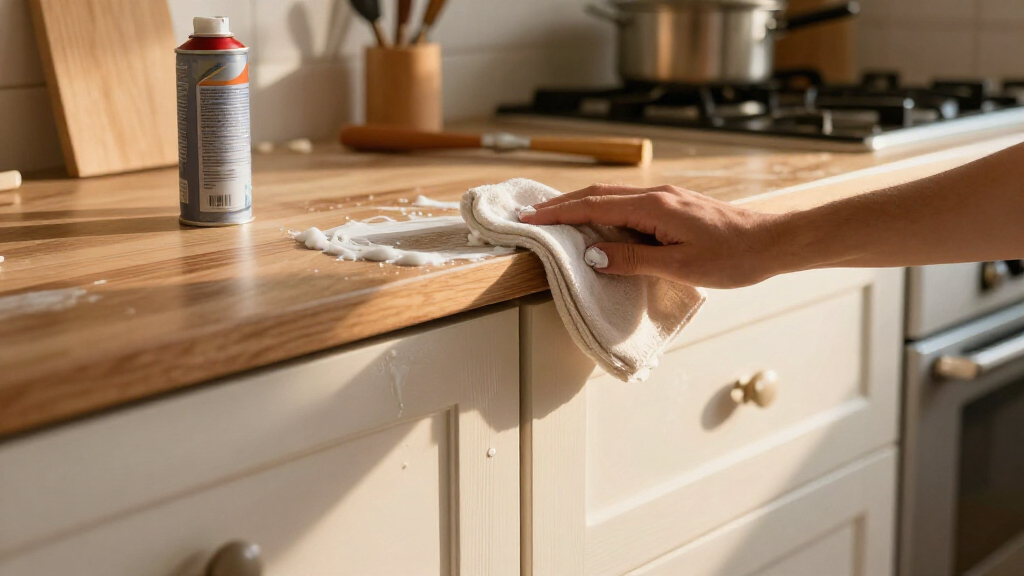
The method described by Hunker uses plain, white shaving cream, rather than shaving gel or a cream containing dyes and fragrances. Put a small amount on a damp microfiber cloth, then rub the soiled area in circular motions. The report recommends paying attention to high-touch areas around knobs and handles, where grime can build up.
After cleaning, wipe the cabinet surface with a separate dry microfiber cloth to remove the cream and residue. Hunker says the method was tried on household stains, including cabinet stains, but the supplied report does not provide a controlled comparison with other cleaners or product-specific testing across different finishes.
The report also describes shaving cream as an option for certain glass surfaces, including cabinet doors, to address water spots, soapy film and smears. For glass, it advises leaving the cream on the dirty area briefly before wiping. That guidance is distinct from the cabinet method, where the cream should be wiped away after scrubbing.
A Low-Cost Option for Painted Cabinets
The recommendation may appeal to people looking for a readily available cleaning option for routine marks, especially around cabinet handles. Hunker says shaving cream contains cleaning compounds similar to those found in hand soaps, along with ingredients that create its thick lather. Those properties may help loosen oily residue when the product is wiped across a surface.
That does not make shaving cream a universal cabinet cleaner. Cabinet materials and finishes vary, and the report’s advice is limited: it identifies painted wood as the usual target and warns against natural or unsealed wood. A small-area test matters because the source does not establish how every paint, coating or cabinet maker’s finish will react. Readers should follow any care instructions provided for their cabinets.
Popular right now

Bose QuietComfort Wireless Bluetooth Headphones with Active Noise Cancellation, Mic, USB‑C Charging, Deep Bass, 24‑Hour Battery – White Smok

DeLonghi Rivelia Automatic Espresso Machine Bundle with Grinder and Frother, Beige

Shark Navigator Lift-Away Upright Vacuum (NV360)
As an affiliate, we earn on qualifying purchases.
How the Shaving Cream Method Works
Cabinets can collect finger marks, grease, food residue and everyday grime, particularly in kitchens and around frequently used handles. The Hunker report presents shaving cream as a simple household hack rather than a product formally marketed as a cabinet cleaner. It attributes the suggested cleaning effect to compounds in traditional shaving creams and their ability to form a creamy lather.
The report frames the cream as potentially milder than reaching immediately for a heavy-duty cleaner because shaving cream is formulated for use on skin. That is the report’s rationale, not proof that every shaving cream is suitable for every surface. Its practical directions are specific: select a plain white cream, test an inconspicuous area, use a damp microfiber cloth, and remove the product afterward. It specifically says not to use the method on natural or unsealed wood.
““shaving cream isn’t technically a household cleaner””
— Hunker report
Finish Compatibility Is Not Established
The supplied report does not specify the publication date, identify independent testing, or compare shaving cream’s performance with named cabinet cleaners. It also does not list all ingredients in the creams discussed or establish how the method performs on every paint, varnish or protective coating.
Hunker describes the hack as something it tried on household stains, but the source material gives no measured results or details about the test conditions. It is therefore unclear how consistently the method works across different kinds of grime and cabinet finishes. The report’s recommendation should be treated as a practical suggestion, not a guarantee of safety or effectiveness for every surface.
Test Before Cleaning More Widely
Anyone considering the method can first check the cabinet maker’s care guidance, then apply a small amount of plain white shaving cream to an out-of-sight area and observe the finish before cleaning a larger section. If the test area changes appearance, or if the cabinet is natural or unsealed wood, do not proceed with the hack. For a surface with uncertain care requirements, use a cleaner recommended for that finish or seek advice from the cabinet maker.
The Hunker report does not announce follow-up testing or additional results. For now, its directions remain a limited household tip: use a plain cream on a damp microfiber cloth for suitable painted cabinets, scrub gently, and wipe off the residue.
Key Questions
What is shaving cream supposed to remove from cabinets?
Hunker says it may help lift grease, oily residue, fingerprints, grime and food stains from painted cabinets. The report does not provide measured results for each type of stain.
What kind of shaving cream does the report recommend?
It recommends plain white shaving cream, not gel, and says to avoid formulas with dyes or fragrances. It also advises testing the product on an inconspicuous spot first.
Can shaving cream be used on natural wood cabinets?
The report says to avoid natural or unsealed wood. It does not establish compatibility with every painted or coated cabinet finish, so a small-area test and the cabinet maker’s care instructions are relevant.
How do you apply shaving cream to a cabinet?
Put a small amount on a damp microfiber cloth, rub the soiled area in circular motions, then wipe away the residue with a dry microfiber cloth, according to Hunker.
Does the report prove shaving cream works better than cabinet cleaner?
No. Hunker describes trying the hack, but the supplied material gives no controlled comparison, measurements or results showing it works better than other cleaners.
Source: rss