TL;DR

Get business pricing on tools and workshop supplies
- Business-only prices and quantity discounts
- Tax-exempt purchasing
- Multiple users, one account, clear invoices
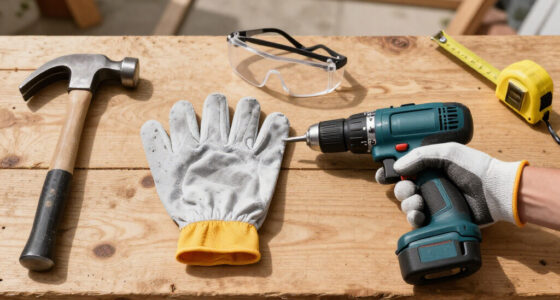
The safety gear every homeowner needs for home improvement work: impact-rated safety glasses with side shields, hearing protection, task-matched gloves, safety-toe footwear, and the right respirator for the dust or fumes involved. Home improvement work can expose people to flying debris, noise, dust, and heavy objects — the right equipment reduces injury risk, but it supplements safe practices rather than replacing them. Match each piece of gear to the specific hazard, not to the project label.
The $3 pair of glasses you skipped is the one that catches the angle-grinder spark. I spent twenty-plus years on renovation sites, and I can tell you exactly how fast a chunk of cut nail travels from a reciprocating saw to an eyeball. Faster than you can blink — literally.
Home improvement work can expose people to flying debris, loud noise, silica dust, chemical fumes, and falling lumber. The right protective equipment reduces injury risk, but it should supplement safe work practices — never replace them. That distinction matters more than any brand or price tag.
In this guide, you’ll learn which pieces of safety gear actually earn their place in a homeowner’s kit, how to match each one to the hazard in front of you, and where DIY-grade gear ends and pro-grade (or rental) territory begins. No product roundups. Just what works and why.
Wear impact-rated safety glasses with side shields for any drilling, cutting, or hammering, and step up to sealed goggles for dust, liquids, and chemical splas…
Match the respirator to the hazard: disposable particulate masks for basic dust, NIOSH-approved respirators with the correct cartridge for fine particles, mold…
Own task-specific gloves (cut-resistant, coated-grip, chemical-rated) rather than one general-purpose pair, and skip gloves entirely where the tool manufacture…
Treat PPE as your last layer of defense: eliminate hazards, use guards, ventilate, and only then rely on what you’re wearing.
For roof work, electrical, gas, or structural changes, hire licensed professionals — fall-arrest systems and code compliance are not DIY territory.
Top Safety Gear for Home Improvement Projects
The gear every homeowner actually needs: impact-rated safety glasses with side shields, hearing protection, task-matched gloves, safety-toe footwear, and the right respirator for the dust or fumes involved. Match each piece of gear to the specific hazard — not to the project label. The $3 pair of glasses you skipped is the one that catches the angle-grinder spark.
A chunk of cut nail travels from a reciprocating saw to an eyeball faster than you can blink — literally.
— 20+ years on renovation sitesEye & Ear: The Two Pieces Most People Skip
Eye protection is the most frequently overlooked item — tasks like pulling nails or snipping wire seem low-risk right up until a wire end whips back at your face. Hearing damage is permanent, and hearing protection gets ignored even more. The rule: safety glasses for impact, sealed goggles for anything liquid or airborne.
Safety Glasses
Always with side shields. For drilling, cutting, sanding, hammering, and general demolition. Look for impact-resistant lenses, anti-fog coating for humid spaces, and compatibility with prescription eyewear — regular glasses are not impact-rated.
Sealed Goggles
When liquids or particles come from all directions. Chemical splashes, spraying muriatic acid on brick, sanding drywall in a closed room. Fine dust and splashes reach where side shields can’t.
Hearing Protection
Earplugs for moderate exposure; earmuffs for louder or prolonged work. Double up — plugs plus muffs — around compressors, demolition hammers, and saws running all day. Gear you don’t have with you is gear you don’t wear.
Respirators: Match the Filter to the Hazard
The difference between a disposable mask and a NIOSH-approved respirator isn’t marketing — it’s chemistry. A paper or N95-style mask filters many airborne particles. Against chemical vapors, solvent fumes, or oxygen-deficient spaces, it does nothing.
first — fan + window
basic sawdust
fine dust & silica
asbestos / lead?
Right Filter, Right Job
P100 particulate filters for dust, silica, and mold. Organic vapor cartridges for solvents, strippers, and finishes. Never use a dust mask for unknown chemical vapors.
The Seal Check
Facial hair along the seal line leaks. So does a slack strap. Cover the cartridges, inhale, and feel for air sneaking in — every time. Replace filters on schedule or when breathing gets noticeably harder.
Unknown material? Stop. Old insulation, suspected lead paint, possible asbestos — get qualified advice before you breathe through anything. Ventilation is your first line of defense; a fan and open window do more for your lungs than any mask.
Gloves & Footwear: One Pair of Each Isn’t Enough
Gloves protect against cuts, punctures, splinters, heat, chemicals, and vibration — and no single glove does all six. Buying one general-purpose glove for every job is like owning one screwdriver and calling it a toolkit. Here’s the comparison worth taping inside your workshop cabinet:
| Task | Glove Type | Why It Matters | Fit Rule |
|---|---|---|---|
| Sheet metal, utility knives, glass | Cut-resistant (ANSI A4+) | Stops lacerations from edges that go through leather | ✓ Snug fit |
| Framing lumber, tool handling | Coated-grip (nitrile palm) | Grip and splinter protection without losing feel | ✓ Snug fit |
| Solvents, strippers, epoxies | Chemical-resistant nitrile | Rated for the specific chemical — not just “chemicals” | ✓ Snug fit |
| Demolition, nail-pull, wire | Puncture-resistant | Blocks nails and debris that pierce standard gloves | ✓ Snug fit |
| Table saw & router operations | None — per manufacturer | Loose gloves entangle in rotating tools; a chuck grab can break a wrist | ✗ Skip gloves |
Closed-Toe, Slip-Resistant
Sturdy and slip-resistant as the floor. Electrical-hazard-rated boots exist, but they don’t make electrical work safe — for panels or circuits, call a licensed electrician.
Safety-Toe Boots
Steel or composite toe when carrying lumber, swinging a sledge, or standing in demolition debris. A 2×10 dropped flat on a composite toe hurts; dropped on a running shoe, it ends the project — and possibly the toe.
Gear You Hope You Never Need
Hard hats, face shields, and fall-arrest systems — the gear with the least forgiveness when you skip it.
Hard Hats
Worthwhile beneath overhead hazards, on ladders, in unfinished structures, or during demolition. Replace after any significant impact or when the shell shows brittleness, cracks, or UV deterioration — most shells are rated ~5 years.
Face Shields
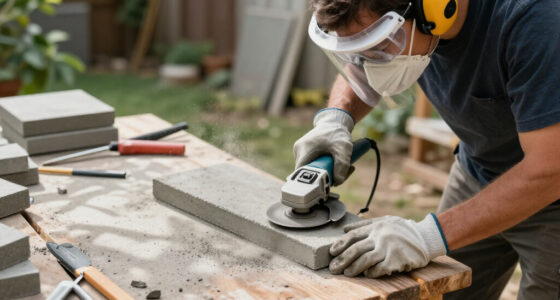
For grinding, cutting, chipping, and chemical handling. Never wear one alone — shields leave gaps around the eyes where an angle-grinder fragment can slip through. Always glasses or goggles underneath.
Fall Protection
Not DIY territory. Harnesses and lifelines must be selected, fitted, anchored, and inspected correctly — a harness doesn’t prevent a fall unless the entire system is properly designed. Roof work: hire licensed professionals.
Noise Exposure at a Glance
A circular saw runs around 100 dB; a hammer drill can push higher. Damage is cumulative — and permanent.
The Hierarchy of Protection
PPE is your last layer of defense — it supplements safe work practices, never replaces them. Work the chain from left to right:
Know your limits: For roof work, electrical, gas, or structural changes, hire licensed professionals. Fall-arrest systems and code compliance are not DIY territory. That distinction matters more than any brand or price tag.
Eye and Ear Protection: The Two Pieces Most People Skip
Impact-rated safety glasses with side shields are the single most important piece of safety gear for drilling, cutting, sanding, hammering, and demolition. Eye protection is also the most frequently overlooked item, because tasks like pulling nails or snipping wire seem low-risk — right up until a wire end whips back at your face.
Here’s the rule I use: safety glasses for impact, sealed goggles for anything liquid or airborne. Cutting pressure-treated lumber? Glasses. Spraying muriatic acid on brick or sanding drywall in a closed room? Sealed goggles, because fine dust and splashes come from directions side shields can’t cover. Look for impact-resistant lenses, side protection, anti-fog coating for humid spaces, and compatibility with prescription eyewear — your regular glasses are not impact-rated.
Hearing protection gets ignored even more, and the damage is permanent. A circular saw runs around 100 dB; a hammer drill can push higher. According to Bauecho’s safety guidance, use earplugs for moderate exposure and earmuffs for louder or prolonged work, and double up — plugs plus muffs — around compressors, demolition hammers, and saws running all day. I keep foam plugs in my truck door pocket because gear you don’t have with you is gear you don’t wear.
- Safety glasses: drilling, cutting, hammering, general demo — always with side shields
- Sealed goggles: chemical splashes, fine dust, liquids, overhead work
- Earpuffs or plugs: any power tool, shop vac, or compressor session over a few minutes
Popular right now

Vitamix Propel Series 510 Professional-Grade Blender, 3 Programs, Black

Dreame L50 Ultra Robot Vacuum and Mop

Bose QuietComfort Wireless Bluetooth Headphones with Active Noise Cancellation, Mic, USB‑C Charging, Deep Bass, 24‑Hour Battery – White Smok
As an affiliate, we earn on qualifying purchases.
Respirators and Dust Masks: Match the Filter to the Hazard
Respiratory protection for home improvement work means choosing between a disposable particulate mask and a properly fitted, NIOSH-approved respirator — and the difference is not marketing, it’s chemistry. A paper or N95-style mask filters many airborne particles. It does nothing against chemical vapors, solvent fumes, or oxygen-deficient spaces. Nothing.
Dust from drywall, concrete, masonry, wood, insulation, and mold irritates or scars lung tissue, and silica dust from cutting concrete is a long-term hazard, not a same-day one. For basic sawdust, a disposable particulate mask may be fine. For fine dust, mold, or fumes, use a half-mask respirator with the correct cartridge — P100 particulate filters for dust, organic vapor cartridges for solvents and finishes.
Fit is everything. Facial hair along the seal line leaks. So does a strap gone slack. Do the user seal check every time: cover the cartridges, inhale, and feel for air sneaking in. Replace filters on the manufacturer’s schedule or when breathing gets noticeably harder.
Never use a dust mask for unknown chemical vapors. If you can’t identify the material — old insulation, suspected lead paint, possible asbestos — stop work and get qualified advice before you breathe through anything.
And remember: ventilation is your first line of defense. A fan and an open window do more for your lungs than any mask, and PPE never justifies skipping them.
Gloves and Footwear: Why One Pair of Each Isn’t Enough
The best work glove depends entirely on the task, because gloves protect against cuts, punctures, splinters, heat, chemicals, and vibration — and no single glove does all six. Buying one general-purpose glove for every job is one of the most common mistakes I see on homeowner projects. It’s like owning one screwdriver and calling it a toolkit.
Here’s a comparison worth taping inside your workshop cabinet:
| Task | Glove Type | Why It Matters |
|---|---|---|
| Sheet metal, utility knives, glass | Cut-resistant (ANSI A4+) | Stops lacerations from edges that go through leather |
| Framing lumber, tool handling | Coated-grip (nitrile palm) | Grip and splinter protection without losing feel |
| Solvents, strippers, epoxies | Chemical-resistant nitrile | Rated for the specific chemical, not just ‘chemicals’ |
| Demolition, nail-pull, wire | Puncture-resistant | Blocks nails and debris that pierce standard gloves |
Fit matters as much as material. Loose gloves get entangled in rotating tools — a drill chuck grabbing a floppy cuff can break a wrist before you let go of the trigger. And for some table saw and router operations, the manufacturer explicitly says no gloves at all. Follow that guidance.
Footwear: sturdy, slip-resistant, closed-toe as the floor. Safety-toe boots (steel or composite) when you’re carrying lumber, swinging a sledge, or standing in demolition debris — a 2×10 dropped flat on a composite toe hurts; dropped on a running shoe ends the project and possibly the toe. Electrical-hazard-rated boots exist, but they don’t make electrical work safe. For anything involving panels or circuits, call a licensed electrician.
Gear You Hope You Never Need: Hard Hats, Face Shields, and Fall Protection
The safety gear you rarely use — hard hats, face shields, and fall-arrest systems — is the gear with the least forgiveness when you skip it. A hard hat is valuable whenever you’re beneath overhead hazards, on ladders, in unfinished structures, or doing demolition. Replace it after any significant impact, or when the shell shows brittleness, cracks, or UV deterioration — most manufacturers rate shells for roughly five years of service.
Face shields belong in your kit for grinding, cutting, chipping, and chemical handling. But here’s the mistake I see constantly: a face shield worn alone. It’s a secondary barrier. Always wear safety glasses or goggles underneath, because shields leave gaps around the eyes where a fragment from an angle grinder can slip through.
Fall protection is where I stop talking DIY entirely. Working on a roof? Guardrails, a stable platform, or a properly anchored personal fall-arrest system — and a harness does nothing unless the entire system is selected, fitted, anchored, and inspected correctly. Most homeowners don’t own an anchor point rated for 5,000 pounds, and they shouldn’t improvise one. Roof work and structural changes call for licensed professionals with the right rigging and, often, permits. Code compliance on fall protection isn’t bureaucracy — it’s written from accident reports.
PPE is the last line of defense, not the first. Eliminate the hazard, use guards and ventilation, and only then rely on what you’re wearing.
How to Choose Safety Gear: Ask These 7 Questions Before You Start
Choosing safety gear means matching equipment to the specific hazard, not to the project label — ‘bathroom remodel’ tells you nothing; ‘demolishing a tiled wall over my head’ tells you everything. Before you cut, drill, or swing anything, run through this checklist.
- What can strike, cut, puncture, or crush me? This drives eye, hand, and foot protection choices.
- Will the work create dust, fumes, sparks, or splashes? This determines respirator type and whether flame-resistant clothing is needed.
- How loud is the equipment? Anything louder than a loud restaurant earns earplugs; sustained tool noise earns muffs.
- Could I fall, or drop something on someone below? If yes, rethink the platform, the ladder condition, and whether this is a pro job.
- Does the gear fit and allow safe movement? Ill-fitting PPE gets removed mid-task — and that’s when injuries happen.
- Is it compatible with other gear? Muffs that break the seal of your respirator, glasses that won’t fit under a shield — test combinations before work starts.
- Is anything damaged, expired, or contaminated? Inspect before each use. Replace anything cracked, worn, or past its service life.
Scenario: you’re refinishing a deck. The questions tell you — chemical-resistant gloves and organic vapor cartridges for the stripper, safety glasses for scraping, hearing protection for the orbital sander, and sunscreen plus breathable long sleeves for the six hours you’ll actually spend out there. That’s the whole kit, chosen in two minutes.
Buy products that meet recognized safety standards (ANSI Z87.1 for eyewear, NIOSH for respirators) and follow the manufacturer’s instructions. A no-name $1.50 pair of ‘safety’ glasses from a discount bin is costume equipment.
10 Mistakes That Get People Hurt (and How to Skip Every One)
Most home improvement injuries come from a short list of predictable mistakes — shortcuts that feel harmless until they aren’t. I’ve watched every one of these play out on real jobsites. Run the list before your next project and cross off anything you recognize.
- Wearing ordinary sunglasses instead of impact-rated safety glasses
- Using a face shield with no eye protection underneath
- Assuming a paper dust mask stops chemical vapors
- Wearing loose gloves near rotating blades, drill chucks, or routers
- Using a damaged ladder, or standing on the top step
- Wearing synthetic clothing around sparks or open flame — synthetics melt onto skin
- Reusing disposable respirators long past their intended condition
- Skipping a respirator fit check because ‘it worked last time’
- Ignoring ventilation because you’re wearing a mask anyway
- Continuing to use PPE after a serious impact or visible damage
The thread connecting all ten: treating gear as a box to check instead of a system to maintain. A hard hat that took a drop last month is a cracked helmet. A scratched lens scatters light and hides hazards. Inspect before every use — it takes thirty seconds and it’s the cheapest insurance you’ll ever buy.
DIY-Grade vs. Pro-Grade: Where to Spend and Where to Rent
Most homeowner safety gear belongs solidly in the DIY-grade category, and that’s fine — a $12 pair of ANSI Z87.1 safety glasses protects your eyes exactly as well when you’re hanging shelves as it does on a commercial site. Spend your money on fit and standards compliance, not logos. Where pro-grade earns its premium is repetition: earmuffs you’ll wear for eight hours, respirators with replaceable cartridges and real fit systems, boots that survive a season of demo.
Rent (or hire out) instead of buy when the hazard outruns the gear. Scaffolding for a two-story paint job, a HEPA vacuum and containment for suspected lead or asbestos, a fall-arrest setup for roof work — all of these are situations where the equipment without the training is a false economy. According to Bauecho’s guidance, the emphasis in modern PPE has shifted toward fit testing, comfort, and correct use rather than simply owning equipment — gear that’s comfortable and compatible gets worn correctly and consistently, and gear that doesn’t, doesn’t.
One more honest note on knee pads and back supports: good knee pads are worth every penny for flooring and tiling. Back belts are not a substitute for lifting technique, mechanical assistance, or asking a neighbor for help. Lift with your legs, use a dolly, and keep your spine out of the equation.
Frequently Asked Questions
What safety gear should every homeowner own?
At minimum: impact-rated safety glasses with side shields, hearing protection, work gloves, sturdy closed-toe footwear, a dust mask or task-appropriate respirator, and a stocked first-aid kit. Add specialized protection — goggles, face shields, chemical gloves, safety-toe boots — based on the specific project and its hazards.
Are safety glasses really necessary for small jobs?
Yes. Eye injuries happen during simple tasks like drilling, hammering, snipping wire, or pulling nails — a fragment travels faster than your blink reflex. The size of the job doesn’t predict the speed of the hazard, so wear rated glasses any time a tool or material can fragment.
Are N95 respirators suitable for all home improvement work?
No. An N95 filters many airborne particles like sawdust, but it does not protect against gases, chemical vapors, solvents, or oxygen-deficient spaces. The respirator must match the hazard — use a half-mask with organic vapor cartridges for fumes, and get qualified advice for mold, lead, or suspected asbestos.
Can I wear prescription glasses instead of safety glasses?
Ordinary prescription glasses are not necessarily impact-resistant and lack side protection. Wear prescription safety glasses rated to ANSI Z87.1, or approved over-the-glasses protectors designed to fit over your eyewear. Contact lenses plus rated safety glasses also work.
Do gloves make power-tool work safer?
Not always. Gloves protect against cuts, splinters, and heat, but loose gloves can get caught in rotating blades, drill chucks, and routers — and some tools, like table saws, should be used bare-handed per the manufacturer. Read the tool’s manual before gloving up.
How often should safety equipment be replaced?
Replace gear when it’s damaged, worn, contaminated, no longer fits, or reaches the manufacturer’s stated service life. Hard hats typically need replacement after any significant impact or when the shell shows brittleness — usually within about five years. Respirator cartridges go on a scheduled replacement, not a ‘when it looks dirty’ basis.
Conclusion
If you take one thing from this guide, make it this: match the gear to the hazard, not the project, and inspect everything before you use it. The homeowner who owns a modest kit — rated glasses, earplugs, task-matched gloves, safety-toe boots, and the right respirator — and actually wears it is safer than the one with a locker full of gear they skip ‘just for this one quick cut.’
Next time you pick up a tool, ask the seven questions first. Two minutes of thinking beats two months of healing. Your eyes, ears, and lungs have to last a lifetime — outfit them accordingly.