TL;DR

Get business pricing on tools and workshop supplies
- Business-only prices and quantity discounts
- Tax-exempt purchasing
- Multiple users, one account, clear invoices
Wear impact-rated safety glasses with side shields as a baseline, add close-fitting goggles when dust can get around them, and wear a face shield over eye protection when larger fragments may fly. Use wet cutting or a compatible shroud and dust collector to control silica at the tool; eyewear does not protect your lungs. Inspect PPE and the blade or wheel, keep guards in place, and follow the tool instructions and local exposure rules.
Wear impact-rated safety glasses with side shields as your baseline; ordinary glasses and sunglasses are not substitutes.
Use close-fitting goggles when fine particles can get around frames, and wear a face shield over eye protection when larger fragments may fly.
Control silica dust at the tool with effective water delivery or a compatible shroud and dust collector; eye protection does not protect your lungs.
Inspect the blade or wheel, guard, lenses, straps, and dust controls before starting, and stop the tool before adjustments.
Rinse an eye gently after dust exposure; seek prompt care for embedded fragments, pain, vision changes, or persistent irritation.
FIELD GUIDE / CONCRETE SAFETY
How to Protect Your Eyes and Face During Concrete Cutting and Grinding
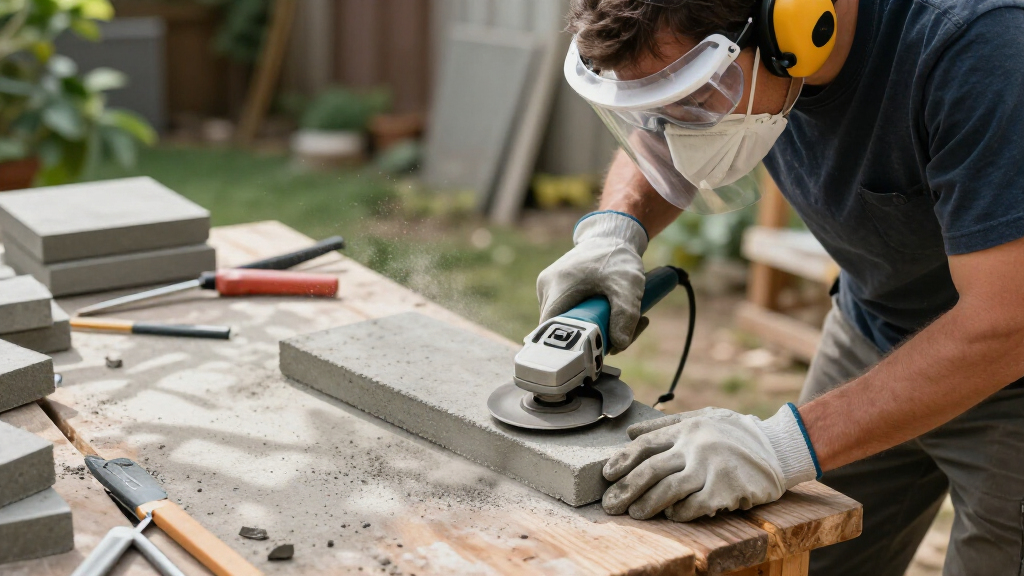
Start with impact-rated eye protection. Add a face shield for flying fragments, and control silica dust at the tool. A chip can cross a room before you have time to blink.
Match your eyewear to the debris
Choose a combination that fits the tool, work position, and hazard assessment. Each layer has a distinct job.
Safety glasses
Use impact-rated glasses with side shields as a baseline. Ordinary prescription glasses and sunglasses are not protective substitutes.
Protective goggles
Choose close-fitting goggles when fine dust or grit can get around frames. Check compatibility with your respirator and manage fogging before work.
Face shield
For high-energy grinding or larger flying fragments, add a face shield over glasses or goggles to cover cheeks and forehead.
Check the markings and fit. Inspect lenses, straps, and shields before each use. Replace cracked, distorted, or deeply scratched items. Keep protection in place until airborne debris settles.
Build the right combination
Use equipment instructions and the employer’s hazard assessment to select protection for the full exposure.
| Work situation | Protection to consider | Why it helps |
|---|---|---|
| Basic cutting with controlled debris | Impact-rated safety glasses with side shields | Blocks direct and side impact while keeping a clear view. |
| Fine dust or grit can reach around frames | Close-fitting goggles, compatible with a respirator | Reduces gaps around the eyes. |
| Grinding or larger fragments may fly | Face shield over safety glasses or goggles | Adds coverage across cheeks and forehead. |
| Overhead work or nearby tools are operating | Protection selected for the full exposure | Debris may fall from above or approach from another direction. |
If corrective lenses are needed, use prescription safety eyewear or approved protective eyewear that fits over your glasses. A sturdy appearance alone does not confirm impact protection.
Stop dust before it reaches you
Concrete dust can contain respirable crystalline silica. Eye and face protection block debris; they do not protect your lungs.
Effective water delivery
Use a saw or grinder with a water system that delivers properly and suits the tool. Check it before starting so dust is controlled at the cutting point.
Shroud + dust collection
Use a compatible shroud and effective dust collector. Check hoses, filters, and connections; a poor seal or clogged filter can leave a visible plume.
Keep controls working. Follow applicable exposure-control requirements and use respiratory protection when required by the assessment and local rules. Clean settled dust with appropriate wet methods or a HEPA-filtered vacuum. Dry sweeping and compressed air can put dust back into the air.
CONTROL
FIRST
Set up before the wheel turns
Direct debris away from people, secure the work, and stop the tool before adjustments or clearing material.
- Blade, wheel, guardMatch the accessory to the tool, material, and speed. Check for damage and keep the guard in place.
- Work and footingStabilize the piece, plant your feet, and clear loose objects that could shift or catch.
- Debris directionPoint the cutting path and likely chip stream away from your face and other people.
- Adjust safelySwitch off and wait for the blade or wheel to stop before changing settings or clearing material.
Fogging or eye exposure?
Clear vision is part of safe operation. Never lift eyewear while the tool runs or dust remains airborne. Stop safely and solve the visibility problem before restarting.
Fogged lenses Adjust fit or airflow, or use an approved anti-fog treatment.
Dust in the eye Rinse gently; do not rub the eye.
Embedded fragment, pain, vision change, or persistent irritation Seek prompt medical care.
Choose protection that covers both fine dust and flying chips
To protect your eyes and face during concrete cutting and grinding, start with impact-rated safety glasses with side shields, then add goggles or a face shield when the task creates exposure those glasses cannot block. A shield covers more of your face, but it generally does not replace the glasses or goggles underneath it. A grinder working along a concrete edge can kick chips out at an angle. Side shields help block debris from the sides; close-fitting goggles can help when fine particles could slip around ordinary frames. For high-energy grinding or a risk of larger fragments, wear a face shield over your primary eye protection. Think of the glasses as the lock on the front door and the shield as a storm door: each has a different job. Regular prescription glasses and sunglasses are not impact-rated protective substitutes. If you need corrective lenses, use prescription safety eyewear or approved protective eyewear that fits over your glasses. Check the equipment markings and the manufacturer’s instructions before work; a pair that looks sturdy may still lack the rating needed for impact hazards. Clean lenses matter as much as coverage. A scratched lens can turn a sharp cut line into a hazy smear, while dust on a shield can hide a chip’s path. Before a short cut on a patio paver, inspect the lenses, straps, and shield, and replace anything cracked, distorted, or deeply scratched.Popular right now

KitchenAid Artisan Series 5-Quart Tilt-Head Stand Mixer, Dried Rose (KSM150PS)

Vitamix Propel Series 510 Professional-Grade Blender, 3 Programs, Black

Dreame L50 Ultra Robot Vacuum and Mop
As an affiliate, we earn on qualifying purchases.
Match your eyewear to the cut, grind, and work position
Concrete cutting and grinding call for different combinations of eye and face protection, depending on the tool, debris, position, and nearby work. Safety glasses provide a baseline for impact hazards; goggles can close gaps around the eyes; a face shield adds coverage for the rest of the face. Use the tool manual and the employer’s hazard assessment to choose the setup.| Work situation | Protection to consider | Why it helps |
|---|---|---|
| Basic cutting with controlled debris | Impact-rated safety glasses with side shields | Blocks direct and side impact while keeping a clear view |
| Fine dust or grit can reach around frames | Close-fitting goggles, compatible with a respirator | Reduces gaps around the eyes |
| Grinding or larger fragments may fly | Face shield over safety glasses or goggles | Adds coverage across cheeks and forehead |
| Overhead work or several tools operating nearby | Protection selected for the full exposure | Debris may fall from above or come from another direction |
Control silica dust before it reaches your eyes and lungs
Dust control starts at the blade or grinding wheel, because concrete dust can contain respirable crystalline silica that damages the lungs. Use a saw or grinder with effective water delivery or a compatible shroud connected to dust collection. Eye and face protection can block debris, but it cannot filter the air you breathe. Wet cutting can keep dust from blooming into a pale cloud, but the water system must deliver properly and suit the tool. Dry work may call for a compatible shroud and effective dust collector. Check the collection system, hoses, filters, and connections before starting; a loose hose or clogged filter can leave a grey plume hanging over the workbench. Follow applicable exposure-control requirements and use respiratory protection when required by the assessment and local rules. For example, grinding a small lip from a basement slab can coat nearby shelves in fine powder if the shroud does not seal or the extractor is poorly maintained. Move people out of the debris zone, keep dust controls working, and clean settled dust with appropriate wet methods or a HEPA-filtered vacuum. Dry sweeping and compressed air can put settled dust back into the air. Requirements differ by jurisdiction and task, so check current local regulations and equipment instructions rather than assuming one respirator or eyewear combination works everywhere. For substantial concrete work or unclear exposure controls, get competent safety guidance. PPE is the last line you wear; the dust-control system does the heavy lifting at the source.Set up the tool so chips travel away from people
A safe concrete cut starts with the right blade or wheel, an intact guard, a stable workpiece, and a clear debris zone. Set up the tool so the cutting path and likely chip stream point away from you and anyone nearby. Concrete cutting and grinding can expose workers to flying fragments, so keep eye protection in place until airborne debris settles.- Choose the correct blade or wheel. Match it to the tool, material, and operating speed. Check for damage and install it as the manufacturer directs.
- Inspect guards and dust controls. Keep the guard in place and confirm that water delivery or the dust-collection shroud works.
- Secure the work. Clamp or otherwise stabilize the piece, plant your feet, and clear loose objects that could catch or shift.
- Set the debris direction. Position the tool and work so chips move away from your face and other people; keep bystanders outside the debris zone.
- Stop before adjustments. Turn off the tool before changing settings or clearing material, and wait for the blade or wheel to stop moving.