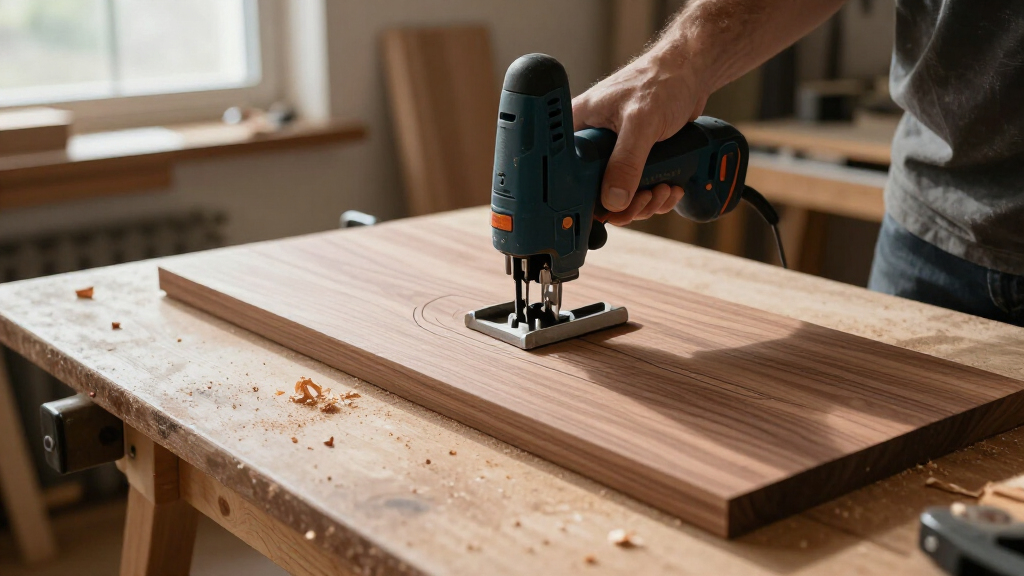

The best cordless jigsaw for fine cuts is the Makita XVJ05Z barrel-grip model, because its low center of gravity, minimal blade deflection, and smooth variable-speed trigger give it the cleanest curves and tightest scroll work in this lineup. If budget matters more than absolute precision, the DEWALT DCS334B delivers nearly comparable cut quality with better bevel controls and a tool-free blade change, while the SKIL PWR CORE 20V kit is the smartest bundled option for hobbyists who need a battery and charger included. The core tradeoff in this category is control versus power: high-stroke, aggressive orbital saws chew through thick stock but tear out fibers, whereas fine-cut performers trade speed for glass-smooth edges. Bare-tool versus kit pricing is the second big decision, since several top performers ship without batteries. Read on for the full ranked breakdown.

Get business pricing on tools and workshop supplies
- Business-only prices and quantity discounts
- Tax-exempt purchasing
- Multiple users, one account, clear invoices
Complete the kit


Key Takeaways
- Barrel-grip designs (Makita XVJ05Z) consistently outperformed D-handle saws for fine work because the lower hand position reduces tipping on curves — this single design choice separated the top pick from the rest.
- Every fine-cut standout shared three traits: a soft-start brushless motor, low orbital settings that actually work (not just a toggle), and a stable blade-plunger system — budget models like the DEMIMA only partly delivered these.
- Orbital action range matters more than max RPM: the 3200 RPM DEMIMA was faster on paper but produced more tear-out than slower brushless models like the CAMXTOOL and RYOBI ONE+ HP.
- Tool-only pricing hides real cost: the DEWALT DCS334B and Makitas are bare tools, so buyers already in a battery ecosystem save the most; battery-included kits (TaskStar, SKIL) won on true cost for first-time buyers.
- Blade change systems and bevel detents varied widely — tool-free, one-handed changes (DEWALT, Makita) became a practical daily advantage over the screw-based systems on cheaper compatibles.
| DEMIMA Cordless Jigsaw for DeWalt 20V Batteries |  | Best for Deep Wood Cuts | Battery platform: DeWalt 20V; battery not included | Motor: 800W brushless | Maximum speed: 3,200 RPM | VIEW LATEST PRICE | See Our Full Breakdown |
| TaskStar Brushless Cordless Jigsaw with Two 2.0Ah Batteries |  | Best Complete Kit for Fine Cuts | Motor: Brushless | Speed range: 0–3,500 SPM | Speed settings: 6 | VIEW LATEST PRICE | See Our Full Breakdown |
| Makita XVJ05Z 18V LXT Brushless Cordless Barrel Grip Jig Saw |  | Best for Controlled, Detailed Cuts | Model: XVJ05Z | Voltage and platform: 18V Makita LXT | Motor: Brushless | VIEW LATEST PRICE | See Our Full Breakdown |
| SKIL PWR CORE 20V Brushless Jig Saw Kit (JS8290B-10) |  | Best Value Kit for Occasional Precision Work | Voltage: 20V | Motor: Digital brushless | Battery: 2.0Ah included | VIEW LATEST PRICE | See Our Full Breakdown |
| Cordless Brushless Jigsaw Compatible with DeWalt 20V Batteries |  | Best Compact Feature Set for DeWalt Owners | Battery compatibility: DeWalt 20V batteries; battery not included | Motor: Brushless | Maximum speed: 2,700 SPM | VIEW LATEST PRICE | See Our Full Breakdown |
| DEWALT 20V MAX XR Cordless Brushless Jig Saw (DCS334B), Bare Tool |  | Best Overall for Fine Cuts | Model: DCS334B | Power: 20V MAX battery; bare tool | Motor: Brushless | VIEW LATEST PRICE | See Our Full Breakdown |
| RYOBI ONE+ HP 18V Brushless Cordless Jig Saw (Tool Only) PBLJS01 |  | Best for ONE+ Platform Owners | Model: PBLJS01 | Voltage: 18V | Motor: Brushless | VIEW LATEST PRICE | See Our Full Breakdown |
| Makita XVJ04Z 18V LXT Brushless Cordless Jig Saw, Tool Only |  | Best for Controlled Starts | Model: XVJ04Z | Voltage: 18V | Battery platform: Makita LXT Lithium-Ion | VIEW LATEST PRICE | See Our Full Breakdown |
| CAMXTOOL 20V Brushless Cordless Jig Saw, Tool Only |  | Best Accessory Bundle for DEWALT Battery Owners | Power source: Battery powered; battery not included | Battery compatibility: DEWALT 20V Max lithium-ion | Motor: Brushless | VIEW LATEST PRICE | See Our Full Breakdown |
| cordless jigsaw for fine cut | Motor |
|---|---|
| DEMIMA Cordless Jigsaw for DeW | 800W brushless |
| TaskStar Brushless Cordless Ji | Brushless |
| Makita XVJ05Z 18V LXT Brushles | Brushless |
| SKIL PWR CORE 20V Brushless Ji | Digital brushless |
| Cordless Brushless Jigsaw Comp | Brushless |
| DEWALT 20V MAX XR Cordless Bru | Brushless |
| RYOBI ONE+ HP 18V Brushless Co | Brushless |
| Makita XVJ04Z 18V LXT Brushles | Brushless |
| CAMXTOOL 20V Brushless Cordles | Brushless |
More Details on Our Top Picks
DEMIMA Cordless Jigsaw for DeWalt 20V Batteries
The DEMIMA pairs a stated 80 mm wood cutting depth with seven speed settings, giving DeWalt 20V battery owners room to tune the cut for different materials. Its three orbital settings add flexibility for faster rough cuts, though fine work calls for a slower setting and a suitable blade. Compared with the Makita XVJ05Z, which emphasizes barrel-grip control and reports a specific MDF-per-charge figure, the DEMIMA offers more stated wood capacity but less evidence about sustained cutting performance. It also includes six wood and metal blades, so it is ready for varied jobs once a compatible battery is available. The battery and charger are not included, and the listed 16-ounce weight appears unreliable, making balance harder to judge from the supplied data.
Pros:- Seven speed settings allow adjustment for different materials and cut control
- Three orbital settings cover both slower cuts and faster material removal
- Supports bevel cuts up to 45 degrees in both directions
- Includes six blades for wood and metal
Cons:- DeWalt 20V battery and charger are not included
- Listed weight of 16 ounces appears inaccurate, so actual handling balance is unclear
Best for: DeWalt 20V owners who need a jigsaw for deeper wood cuts and occasional bevel work
Not ideal for: Buyers who need a complete ready-to-use kit or dependable weight information before choosing a tool for precise, extended cuts
- Battery platform:DeWalt 20V; battery not included
- Motor:800W brushless
- Maximum speed:3,200 RPM
- Speed settings:7
- Orbital settings:3
- Bevel angle:Up to 45 degrees in both directions
- Maximum cutting depth:Wood: 80 mm; steel: 8 mm; PVC: 20 mm
- Included blades:4 wood blades and 2 metal blades
Our verdict“Choose the DEMIMA if you already own a DeWalt 20V battery and value stated wood depth over a complete kit or clearly documented handling.”
TaskStar Brushless Cordless Jigsaw with Two 2.0Ah Batteries
The TaskStar is the most ready-to-work option here: it includes two batteries, a charger, nine blades, a parallel guide, and dust collection accessories. That guide can help keep straight cuts on course, while the non-marring shoe cover is useful when the workpiece already has a finished surface. Its six-speed dial and four orbital positions offer more adjustment than the SKIL PWR CORE 20V kit, whose supplied data does not specify speed or orbital counts. TaskStar’s tradeoff is a stated 30+ minutes of total runtime, which may mean interruptions on longer jobs, and its metal capacity is limited to thin stock without a stated depth. For fine cuts, the controls and included guide are appealing, but the guide and blade choice still matter more than the speed range alone.
Pros:- Two 2.0Ah batteries and charger make it a complete cordless kit
- Parallel guide supports repeatable straight cuts
- Non-marring shoe cover helps protect finished work surfaces
- Four orbital positions and six speed settings provide material-specific adjustment
Cons:- Stated total runtime is 30+ minutes, which may require a battery change during longer work
- Metal use is described for thin material, with no thicker-metal capacity specified
Best for: DIYers starting without compatible batteries who want a guide, dust accessories, and multiple blades for detailed home projects
Not ideal for: Woodworkers planning long sessions or cutting thicker metal, since the stated runtime is limited and metal capacity is unspecified
- Motor:Brushless
- Speed range:0–3,500 SPM
- Speed settings:6
- Orbital action:4 positions
- Bevel angle:0–45 degrees
- Batteries:2 × 2.0Ah rechargeable
- Stated runtime:30+ minutes total
- Included accessories:Charger, 9 blades, parallel guide, dust tube with adapters, hex wrench, carrying bag
Our verdict“Pick the TaskStar for a well-equipped first kit and guided cuts, provided its stated runtime suits the length of your projects.”
Makita XVJ05Z 18V LXT Brushless Cordless Barrel Grip Jig Saw
The Makita XVJ05Z earns its place for buyers who want barrel-grip control and a broad speed range for careful work. Its five speed settings cover 800–3,000 strokes per minute, and the straight-cut mode gives a less aggressive alternative to its three orbital settings when a cleaner edge matters. Compared with the DEMIMA, Makita supplies a reported cutting figure—up to 135 feet of 1-inch MDF per charge with a 5.0Ah battery—while DEMIMA lists greater maximum wood depth. That figure depends on a battery that is not included, and the Makita also requires a compatible LXT battery. The barrel grip may suit users who guide a saw with a lower hand position, but buyers who prefer a conventional top handle or need a complete kit should look to the TaskStar instead.
Pros:- Barrel grip supports a controlled hand position for guided cuts
- Variable speed from 800 to 3,000 SPM with five settings
- Three orbital settings plus straight-cut mode suit different cut priorities
- Reported capacity of up to 135 feet of 1-inch MDF per charge with a 5.0Ah battery
Cons:- Battery and charger are not included
- Reported cutting capacity depends on a specific 5.0Ah battery and material
Best for: Makita LXT owners who prioritize hand control and want adjustable speed for cabinetry, trim, or other detailed cuts
Not ideal for: Buyers without Makita LXT batteries or anyone who prefers a standard top-handle grip and a ready-to-use kit
- Model:XVJ05Z
- Voltage and platform:18V Makita LXT
- Motor:Brushless
- Grip:Barrel grip
- Speed range:800–3,000 strokes per minute
- Speed settings:5
- Cutting modes:3 orbital settings plus straight cutting
- Reported cutting capacity:Up to 135 ft. of 1-inch MDF per charge with a 5.0Ah BL1850B battery
Our verdict“Choose the Makita XVJ05Z if you already use LXT batteries and favor barrel-grip control for detail work.”
SKIL PWR CORE 20V Brushless Jig Saw Kit (JS8290B-10)
The SKIL keeps the setup simple with a 20V battery, charger, and wood and metal blades in the box, plus tool-free blade and bevel adjustments. Its variable-speed trigger lets the user feather speed directly, a natural fit for starting carefully at a layout line. The LED’s pre-light and afterglow also help keep the cut area visible as the saw starts and stops. Compared with the TaskStar, SKIL supplies fewer accessories and its speed range and orbital settings are not specified in the provided product data; TaskStar is the more adjustable kit for buyers who need a guide and dust attachments. SKIL’s advantage is a straightforward bundle with a digital brushless motor. Since cutting depth and bevel range are not stated here, buyers planning demanding or precisely specified cuts may prefer a model with those figures listed.
Pros:- Includes 2.0Ah battery, charger, and wood and metal blades
- Variable-speed trigger offers direct speed control
- Tool-free blade changes and bevel adjustment simplify setup
- LED worklight includes pre-light and afterglow
Cons:- Provided product data does not state cutting depth or maximum bevel angle
- Speed range and orbital setting count are not specified in the supplied details
Best for: Homeowners who want a battery-included 20V jigsaw for occasional trim, repair, and small craft projects
Not ideal for: Buyers who need published cutting-depth limits, a parallel guide, or detailed speed and orbital specifications before purchasing
- Voltage:20V
- Motor:Digital brushless
- Battery:2.0Ah included
- Blade change:Tool-free
- Bevel adjustment:Tool-free
- Worklight:LED with pre-light and afterglow
- Included accessories:Battery, charger, wood blade, metal blade
Our verdict“The SKIL suits occasional users who want a complete 20V starter kit and simple controls, with fewer published cut specifications than TaskStar.”
Cordless Brushless Jigsaw Compatible with DeWalt 20V Batteries
This DeWalt-compatible jigsaw offers a focused combination of four orbital settings, a brushless motor, and a tool-free all-metal blade clamp. Its 2,700 SPM ceiling is lower than the TaskStar’s 3,500 SPM, which may suit buyers who value a more measured speed range over maximum pace; the supplied details do not establish which tool cuts more cleanly. Compared with the DEMIMA, it gives one additional orbital position but lists fewer speed settings and the same 80 mm maximum cutting depth. Bevel cuts reach ±45 degrees, adding flexibility for angled trim. The main limitation is practical: this model needs a compatible DeWalt 20V battery, sold separately, and the product data does not include a speed dial count or worklight details. Its six included blades help cover basic jobs once powered.
Pros:- Brushless motor avoids carbon brush replacement
- Four orbital settings allow adjustment for different cutting approaches
- Bevel cuts up to ±45 degrees
- All-metal tool-free blade clamp and six included blades
Cons:- DeWalt 20V battery is required and not included
- Maximum speed is 2,700 SPM, below the TaskStar’s stated 3,500 SPM
- Supplied specifications omit speed-setting count and worklight details
Best for: DeWalt 20V battery owners who want a brushless saw with several orbital choices and tool-free blade changes
Not ideal for: First-time cordless tool buyers who need batteries and a charger, or users who require stated speed controls and worklight details
- Battery compatibility:DeWalt 20V batteries; battery not included
- Motor:Brushless
- Maximum speed:2,700 SPM
- Orbital settings:4
- Bevel angle:Up to ±45 degrees
- Maximum cutting depth:80 mm
- Blade replacement:Tool-free, all-metal clamp
- Included accessories:6 blades and 1 hex wrench
Our verdict“Choose this model if you already own DeWalt 20V batteries and want four orbital settings, while accepting a lower stated top speed and sparse control details.”
DEWALT 20V MAX XR Cordless Brushless Jig Saw (DCS334B), Bare Tool
I’d put the DEWALT DCS334B first for fine cuts because its speed dial and variable-speed trigger offer two ways to keep the blade controlled as a cut begins or follows a curve. The integrated dust blower and LED help keep the line visible, while the no-mar shoe cover protects finished surfaces when fitted. Compared with the Makita XVJ04Z, which adds a soft no-load mode for starting accurately, the DEWALT gives me four orbital settings and a stated maximum of 3,200 SPM. Those settings support a broader range of cutting aggression, though orbital action may need to be reduced for a cleaner edge. Its lever-action blade change is convenient, but the bare-tool format means I need a compatible 20V MAX battery and charger already. I’d also keep the shoe cover installed on delicate workpieces.
Pros:- Brushless motor is designed for efficient performance and longer runtime than the DCS331.
- Variable-speed trigger and dial allow speed adjustments for controlled starts and cuts.
- LED, dust blower, and no-mar shoe cover support visibility and surface protection.
- Four orbital settings and lever-action, tool-free blade changes add flexibility.
Cons:- Battery and charger are sold separately.
- The metal shoe may scratch delicate surfaces if the no-mar cover is not installed.
Best for: DEWALT 20V MAX owners who want adjustable speed, a clear cut line, and control for curves and finish work.
Not ideal for: Buyers without a DEWALT 20V MAX battery and charger, or anyone seeking a jigsaw that includes a complete power kit.
- Model:DCS334B
- Power:20V MAX battery; bare tool
- Motor:Brushless
- Maximum blade speed:3,200 SPM
- Orbital action:4 positions
- Bevel capacity:0–45 degrees
- Blade type:T-shank
- Blade change:All-metal lever-action, keyless
Our verdict“Choose the DCS334B if you already own DEWALT 20V MAX batteries and want a well-equipped jigsaw with flexible speed control for detail work.”
RYOBI ONE+ HP 18V Brushless Cordless Jig Saw (Tool Only) PBLJS01
The RYOBI PBLJS01 is a sensible fine-cut pick for buyers already invested in the ONE+ battery system. Its four orbital settings and tool-free bevel adjustment let me tune the cut for the material and angle, while the easy-release blade lever makes blade swaps straightforward. Compared with the DEWALT DCS334B, Ryobi specifies a locking 45-degree detent to either side, which can simplify repeat bevel adjustments; DEWALT, by comparison, lists detents at 0, 15, 30, and 45 degrees. Ryobi’s stated performance gains are relative to its own prior model, not a direct comparison with DEWALT or Makita. This is a wood-focused option, and its tool-only package leaves battery and charger to the buyer. I’d choose it for platform convenience over a more material-flexible setup.
Pros:- Brushless motor is specified to deliver up to 36% faster cutting and 78% longer runtime than the prior model.
- Four orbital settings give options for balancing cut speed and finish.
- Tool-free bevel adjustment has 45-degree locking detents left and right.
- Easy-release blade lever and onboard LED support quick changes and line visibility.
Cons:- Battery and charger are not included.
- The product is positioned primarily for wood cutting rather than heavy-duty materials.
Best for: DIY woodworkers who own RYOBI ONE+ batteries and want a brushless jigsaw with quick bevel and blade adjustments.
Not ideal for: Buyers starting from scratch who need batteries and a charger included, or those planning frequent heavy-duty material cutting.
- Model:PBLJS01
- Voltage:18V
- Motor:Brushless
- Orbital settings:4
- Bevel adjustment:45-degree locking detent left and right
- Weight:4.3 lb
- Included:Tool only; no battery or charger
- Warranty:3-year full warranty
Our verdict“Pick the PBLJS01 if you own RYOBI ONE+ batteries and mostly need adjustable jigsaw control for wood projects.”
Makita XVJ04Z 18V LXT Brushless Cordless Jig Saw, Tool Only
The Makita XVJ04Z stands out for its soft no-load mode, which is designed to help the blade start more accurately before reaching its cutting speed. For fine work where a blade can wander at startup, that feature gives it a distinct role beside the DEWALT DCS334B, whose listed strengths instead include a speed dial, dust blower, and no-mar shoe cover. Makita offers three orbital settings plus straight cutting, enough choice to adapt the cutting action, but fewer orbital positions than the four on DEWALT and RYOBI. Its maximum speed is 3,000 strokes per minute, below DEWALT’s 3,200 SPM. The two-finger trigger and lock-on button provide another way to manage operation, though the product data does not list a battery or charger as included. I’d favor it for careful starts over maximum speed or accessory completeness.
Pros:- Soft no-load mode is designed to support more accurate starts.
- Brushless variable-speed motor offers up to 3,000 strokes per minute.
- Three orbital settings plus straight cutting provide several cutting modes.
- LED work light illuminates the cutting area.
Cons:- Tool-only listing means a compatible battery and charger are not included.
- Three orbital settings offer fewer choices than the four-position DEWALT and RYOBI models.
Best for: Makita LXT owners making precise starts on curves or detail cuts who value controlled blade engagement.
Not ideal for: Buyers who want four orbital settings, the highest listed speed in this group, or a battery and charger in the package.
- Model:XVJ04Z
- Voltage:18V
- Battery platform:Makita LXT Lithium-Ion
- Motor:Brushless
- Speed:0–3,000 strokes per minute
- Cutting settings:3 orbital settings plus straight cutting
- Start feature:Soft no-load mode
- Included:Tool only
Our verdict“Choose the XVJ04Z if controlled starts matter more to your detail work than extra orbital settings or the highest listed speed.”
CAMXTOOL 20V Brushless Cordless Jig Saw, Tool Only
The CAMXTOOL 20V has a practical angle for buyers who already use DEWALT 20V Max batteries: it is described as compatible with that platform and includes seven T-shank blades and a guide ruler. That makes it more accessory-ready than the bare-tool DEWALT DCS334B, though compatibility alone does not settle which tool will suit a particular battery setup. For fine cuts, six speed settings and four orbital settings give useful adjustment, and tool-free blade changes reduce setup friction. Its stated ceiling is 2,800 RPM, while the DEWALT lists 3,200 SPM; those units are reported as provided and should not be treated as directly interchangeable. CAMXTOOL’s product data gives less detail on features that help keep a fine cut on line, such as a work light or dust blower, and the battery is not included.
Pros:- Described as compatible with DEWALT 20V Max lithium-ion batteries.
- Six speed settings and four orbital settings allow adjustments for different cuts.
- Tool-free blade changes simplify setup.
- Includes seven T-shank blades and a guide ruler.
Cons:- Battery and charger are not included.
- The product data does not list an LED work light or integrated dust blower.
- Its stated maximum of 2,800 RPM is lower than the DEWALT’s listed 3,200 SPM, though the units differ.
Best for: DEWALT 20V Max battery owners who want an included blade selection and guide ruler for occasional wood projects.
Not ideal for: Buyers who need a battery and charger included, or who prioritize detailed cut-line visibility features and a clearly documented speed rating.
- Power source:Battery powered; battery not included
- Battery compatibility:DEWALT 20V Max lithium-ion
- Motor:Brushless
- Variable speeds:6 settings, up to 2,800 RPM
- Orbital settings:4
- Bevel angle:Up to 45 degrees left or right
- Included accessories:7 T-shank blades, guide ruler, screwdriver, instruction manual
- Dimensions:9.2 × 3.15 × 8.85 in
Our verdict“Consider the CAMXTOOL if you already have a compatible DEWALT 20V Max battery and value included blades and a guide ruler over documented visibility aids.”

How We Picked
I judged every saw through one narrow lens: how cleanly and controllably it cuts when the goal is precision, not speed. That meant prioritizing blade stability and plunger guide design (less blade wander equals tighter curves), orbital action range (fine cuts demand a genuinely effective zero-orbit setting), trigger and speed control at low RPM where delicate work happens, and handle geometry — barrel grips simply give better balance for detail work. Motor type carried weight too, since brushless models maintain speed under load without burning through batteries.
I also weighed real-world ownership factors: battery ecosystem compatibility (a big deal for the Dewalt-compatible third-party models), blade change convenience, bevel adjustment accuracy, and LED visibility over the cut line. Saws were then ranked by how well their strengths matched fine-cut use cases — a saw that rips through thick lumber fast but tears out on veneer ranked below a slower, smoother performer. Where two saws cut similarly, the tiebreaker went to build quality and long-term value.
Factors to Consider When Choosing Best Cordless Jigsaw For Fine Cuts
Choosing a jigsaw for fine cuts involves tradeoffs that spec sheets rarely make obvious. These are the factors that actually change how your finished work looks, and where buyers most often go wrong.Blade Support and Plunger Design: The Hidden Precision Factor
Most buyers compare stroke speed and battery voltage, but blade deflection is what ruins fine cuts. A blade that bows mid-cut produces angled, splintered edges that no sanding fully fixes. Better saws use dual plunger guides and roller bearings right behind the blade to keep it tracking straight, which is why premium models cut noticeably cleaner in thick stock. The difference shows up most on tight curves, where side pressure on the blade is highest. If your projects involve scrollwork, inlays, or visible furniture parts, this spec matters more than any other. Cheaper saws often omit details here, so research the blade support system before anything else.
Orbital Action: Why You Want More Settings, Not More Speed
Orbital action pushes the blade forward on the upstroke, cutting faster but rougher. For fine work, the question isn’t whether a saw has orbital action — it’s whether the lowest orbital setting is truly straight-stroke. Some budget saws have three positions, but even the lowest still rocks the blade enough to tear out on plywood veneer and hardwoods. Look for four or more settings, including a clean zero-orbit mode, and read how the saw behaves at that lowest position. A common mistake is buying a fast-cutting saw for rough carpentry and expecting it to also do cabinet-grade curves; those goals pull in opposite directions. Match the orbital range to the finest work you plan to do, not the coarsest.
Barrel Grip Versus D-Handle: Ergonomics for Detail Work
Handle type changes how the saw behaves in your hand far more than most buyers expect. A barrel grip lowers your hand closer to the workpiece, which reduces tipping on curves and gives finer steering feedback — the reason furniture makers prefer it. A D-handle with trigger offers variable speed by squeeze, easier one-handed operation, and better comfort for general-purpose cutting. Neither is objectively better; it depends on how you work. If you spend hours on detailed curves, barrel grip wins. If you switch between rip cuts, plunge cuts, and curve work constantly, a trigger-controlled D-handle is more versatile. Also check glove compatibility and switch reach, since barrel grips can fatigue smaller hands during long sessions.
Bare Tool Versus Kit: Calculating the Real Cost
Third-party saws compatible with DeWalt or Makita batteries look cheap until you add the cost of batteries you don’t own. A bare tool only makes sense if you already own compatible batteries and a charger from other tools. First-time buyers should compare the total cost of tool plus two batteries plus charger against bundled kits — sometimes the kit with a single small battery still loses to buying a larger battery separately. Battery capacity also affects fine cutting more than people assume: lower amp-hour batteries sag under load in dense hardwoods, causing speed dips that mar the cut. Two modest batteries generally beat one large one for workflow, since you can charge while you cut.
Blades Are Half the Equation
No jigsaw, however good, can produce a fine cut with a coarse blade. Downcutting blades, high-TPI blades, and reverse-tooth designs eliminate tear-out on veneered plywood — often more effectively than upgrading the saw itself. Budget for quality blades from day one, and match tooth count to material: 10–14 TPI for hardwoods, 20+ TPI for veneer and thin stock. Blade quality also explains why two identical saws can produce wildly different results in two different workshops. Another common mistake is running blades past their sharp life; a dull blade wanders, burns wood, and forces you to push, which deflects the blade. Buy blades in multi-packs and treat them as consumables.
Motor Type and Speed Control at the Low End
Brushless motors get marketed for runtime, but for fine cutting their bigger advantage is smooth, consistent speed under load — the motor doesn’t bog down mid-curve, which is when burn marks and wander happen. Equally important is how the saw behaves at low speeds. Fine work often happens between 800 and 1500 strokes per minute, and some saws with aggressive triggers surge or stall there. Soft-start features also help on delicate starts where a jolt can skid the blade off your line. Don’t be swayed by a high maximum RPM; you’ll rarely use it for precision work. What you’ll use constantly is clean control in the bottom third of the speed range.
Frequently Asked Questions
Can a budget cordless jigsaw really produce fine cuts, or do I need a premium model?
A capable budget brushless saw like the CAMXTOOL or a DeWalt-compatible third-party model can produce genuinely clean cuts — provided you pair it with a quality high-TPI blade, use zero orbital action, and cut at moderate speed. What premium models add is consistency: less blade wander in thick stock, steadier speed under load, and cleaner bevel adjustments. If your fine cuts happen in thin material or plywood occasionally, budget models are sufficient. If you cut expensive hardwoods or visible furniture parts regularly, the waste from a single ruined workpiece can exceed the price difference. My suggestion is to spend on the saw only after you’ve spent on good blades, since blades move the needle first.
Is a barrel grip actually better for fine cuts, or is it just preference?
There’s a real mechanical argument behind the preference. Gripping the barrel puts your hand directly over the cutting line and lower to the material, which reduces the leverage that causes the saw to tip on curves — tipping is a major source of wandering cuts and angled edges. D-handles place your hand higher, which improves comfort and trigger-based speed control but sacrifices some of that steering finesse. Furniture makers and luthiers overwhelmingly choose barrel grips for this reason. That said, if you have smaller hands or frequently switch between rough and fine tasks, a D-handle is more versatile and less fatiguing. Both Makitas in this lineup illustrate the split: the XVJ05Z barrel for pure detail work, the XVJ04Z D-handle for general precision cutting.
Should I buy a bare tool if I don’t already own batteries from that brand?
Almost never, unless the bare tool is dramatically better than any kit alternative. Batteries and a charger typically add substantial cost, and cheap aftermarket batteries often deliver inconsistent voltage that hurts cut quality — the exact thing you’re trying to optimize. If you’re starting from zero, look at kits like the TaskStar or SKIL PWR CORE, which include two batteries and a charger for less than the cost of assembling those separately. The exception is planning ahead: if you intend to build out a tool collection in one ecosystem (DeWalt 20V, Makita 18V LXT, Ryobi ONE+), buying the bare jigsaw now and a combo kit later can be economical. Otherwise, do the full math on tool plus power before comparing prices.
How much does orbital action matter if I’m mostly doing fine cuts?
It matters in an indirect way: a saw with well-designed orbital settings gives you a genuinely straight zero-orbit mode, and many saws with only two or three settings compromise on that lowest position. Fine cutting lives entirely in zero-orbit territory, so the quality of that one setting is what you’re really paying for. The higher settings still matter occasionally — even detail-heavy woodworkers make rough cuts to size stock before refining, and doing those in zero orbit wastes blades and time. Ideally you want four or more settings so the transition between rough and fine work is smooth. Also check that the orbital adjustment is easy to reach mid-job, because toggling it shouldn’t require stopping and fiddling.
What’s the biggest cause of tear-out on plywood, and can a better jigsaw fix it?
Tear-out happens when blade teeth exit the top veneer layer unsupported, and it has three main causes: an aggressive orbital setting, a coarse or dull blade, and feeding too fast. A better jigsaw helps mainly through smoother speed control and blade support, but it can’t override the first two factors. The most effective fix is a downcutting or reverse-tooth blade, which cuts the show face on the downstroke and leaves the bottom face to splinter instead — flip your workpiece so the good face is up. Painter’s tape over the cut line adds a bit more support for ultra-thin veneers. Among these saws, the ones with a true zero-orbit mode combined with a downcutting blade will produce nearly chip-free plywood cuts; the saw alone, no matter how good, will not.
Conclusion
The right pick depends less on which saw is objectively best and more on how you work. For the best overall fine-cut performance, the Makita XVJ05Z stands apart — its barrel grip and blade stability make it the clear choice if precision curves are the priority. The DEWALT DCS334B is the best premium all-rounder for buyers already in the DeWalt ecosystem, pairing near-equal cut quality with better everyday ergonomics. For best value, the CAMXTOOL 20V and the DeWalt-compatible brushless models deliver most of the fine-cut fundamentals at a lower entry point — ideal if you already own 20V batteries. Beginners and first-time cordless buyers get the most from the SKIL PWR CORE kit or the TaskStar, since batteries and charger are included and neither punishes early mistakes. The Ryobi ONE+ HP fills a specific niche: dependable fine cutting for anyone already invested in the massive ONE+ platform. And for scrollwork and detail-heavy woodworking where you want D-handle comfort, the Makita XVJ04Z is the best for sustained precision work without going barrel grip. Whichever you choose, remember that a quality blade at the right speed matters as much as the saw itself.