
TL;DR

Get business pricing on tools and workshop supplies
- Business-only prices and quantity discounts
- Tax-exempt purchasing
- Multiple users, one account, clear invoices
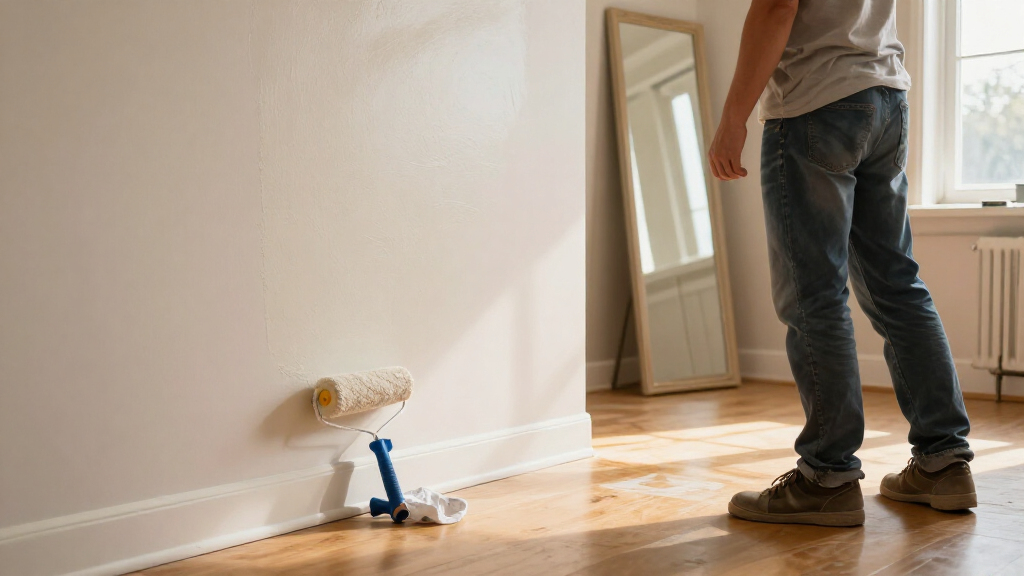
A House Beautiful report outlines seven paint strategies interior designers say can make small rooms feel more spacious, including painting an accent wall, covering walls and ceilings in one color, and testing undertones in the room. These are design recommendations about visual perception, not guarantees that paint will increase a room’s physical size.
House Beautiful’s report describes seven paint approaches that interior designers say can make small rooms feel more spacious, including coordinating wall and ceiling colors and choosing shades with a room’s natural light in mind. The recommendations aim to affect visual perception; they do not change a room’s actual dimensions, and the source does not provide measurements or independent testing of the techniques.
The strategies range from limited color changes to painting nearly every surface. Interior designer Amber Guyton recommends an accent wall for people who want to add color without covering the whole room. She says it can provide a focal point and visually elongate the space. Guyton also suggests painting only the lower four to six feet of a wall, around chair-rail height, or using wainscoting to create a partial-color treatment.
For a more unified effect, designer Jewel Marlowe recommends applying one color to the walls, trim, doors and ceiling. She says this color-drenching approach can blur the boundaries between surfaces. Marlowe suggests adding contrast through finishes, such as wipeable matte paint on walls and high-gloss paint on trim or cabinetry. The report also notes that painting the ceiling, either to match the walls or in a slightly lighter or darker shade, can soften the visual transition between walls and ceiling.
The remaining guidance focuses on choosing a shade rather than a painting pattern. Designer Joe Waroquier advises considering undertones and natural light, and testing large paint samples in the room at different times of day before choosing. The report also challenges the assumption that small rooms should always be painted pale: its designers say saturated dark colors can blur corners and create a more enveloping, visually deep effect.
How Paint Changes Room Perception
The recommendations matter to renters and homeowners looking for relatively direct ways to change the appearance of a compact room. Paint can unify surfaces, draw attention to a wall or ceiling, and shift how boundaries are perceived. Those effects may help a room feel less cramped, but they are visual design choices, not evidence that the room has become larger or brighter in measurable terms.
The advice also cautions against treating “light paint makes a room bigger” as a universal rule. A pale shade with warm or muddy undertones may not produce the bright effect someone expects, while a dark shade may feel intentional rather than confining. The source presents these as designers’ experience and judgment; results can vary with the room, its lighting, its finishes and personal preference.
Popular right now

De’Longhi Classic Matte Black Espresso Machine with Milk Frother

Vitamix Propel Series 510 Professional-Grade Blender, 3 Programs, Black

Sony WH-1000XM6 Wireless Noise-Canceling Over-Ear Headphones, Blue, Bundle
As an affiliate, we earn on qualifying purchases.
Seven Approaches in the Report
The report groups the recommendations around different ways paint can influence the view of a room: paint an accent wall; color-drench walls, trim, doors and ceiling; pay attention to undertones; paint the ceiling; divide a wall with a partial-height treatment; consider dark hues; and let natural light guide the color choice. The strategies are not mutually exclusive, though the source does not prescribe a single combination for every room.
Designers interviewed for the piece compare paint with familiar small-room techniques such as mirrors, reducing clutter and carefully choosing decor. Their case for paint is that changing the color and finish of surfaces can alter how the space reads. The source is a design report, rather than a controlled study comparing paint colors or measuring perceived room size.
“Paint is a great way to make a small room feel larger because it changes the visual perception of the space.”
— Joe Waroquier, founder and principal designer of Joe Waroquier Home
Results Depend on the Room
The supplied report does not say when it was published, provide links to research on perceived room size, or quantify how much any technique changes a viewer’s impression. Its claims are attributed design advice, not a guarantee that a particular color or finish will work in every home. The article also does not provide specific paint brands, exact shades or cost estimates.
How a color reads can depend on natural and artificial light, undertones, surface texture, furnishings and the viewer’s taste. The source recommends testing large swatches in the room throughout the day, but does not specify how many samples to use or a standard method for comparing them.
Test Samples Before Painting
The report’s practical next step is to test several large swatches in the intended room and check them under changing light before committing to a color. Readers considering color-drenching can compare a unified treatment with a partial approach, such as an accent wall or paint below chair-rail height. Those weighing a darker shade should evaluate it in the room itself rather than relying only on how it appears on a small chip.
No follow-up study or further publication date is given in the source. Whether the techniques make a specific room feel bigger remains a matter of how the chosen paint interacts with that room’s lighting and design.
Key Questions
What are the seven paint tricks in the report?
The report recommends an accent wall, color-drenching walls and other surfaces, checking undertones, painting the ceiling, using a partial-height wall treatment, considering dark hues, and choosing paint with the room’s natural light in mind.
Does dark paint always make a small room feel smaller?
No. The designers quoted by House Beautiful say saturated dark colors can blur a room’s edges and create a cocooning effect. That is a design judgment, not a guaranteed result for every room.
What is color-drenching?
In the report, color-drenching means using one color on walls, trim, doors and the ceiling. Designer Jewel Marlowe says the approach can make the boundaries between surfaces less distinct.
How should I test a paint color in a small room?
Joe Waroquier recommends testing several large swatches in the room and viewing them at different times of day, because undertones and changing light can affect how a shade looks.
Source: housebeautiful.com