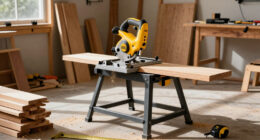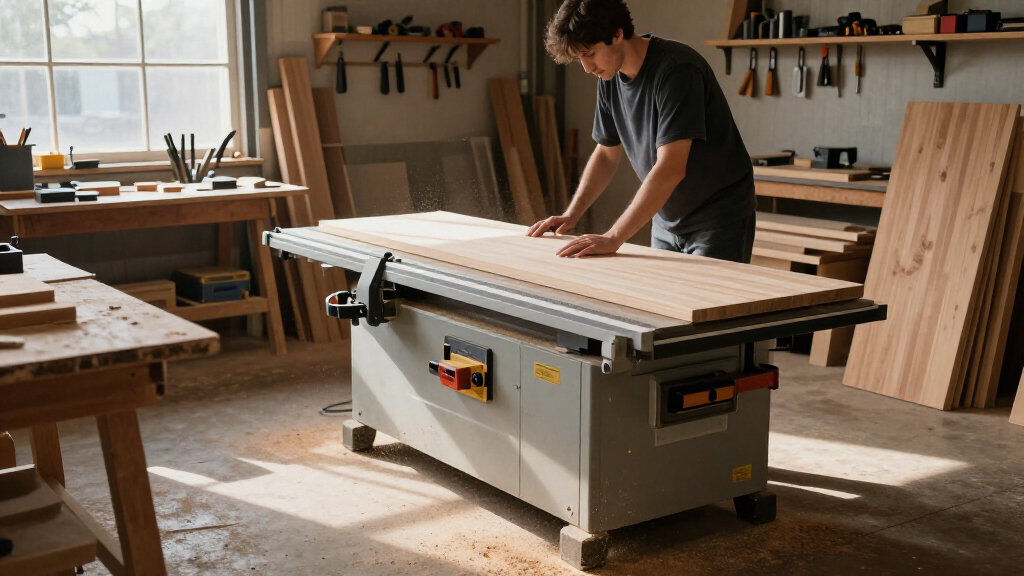

For most small workshops, I’d start with the DEWALT DWE7485: its compact footprint and jobsite-oriented design make it a strong all-around choice when floor space is limited. The SKIL TS6307-00 stands out for buyers who want a 10-inch blade and folding stand, while the Proxxon 37070 FET suits detail work where controlled, precise cuts matter more than sheet-goods capacity. The main tradeoff is between a saw that stores easily and one with the blade size, fence capacity, and support needed for larger stock. Mini saws take up less room but cannot replace a full-size table saw for general woodworking. Continue reading for the full breakdown and guidance on matching a saw to your shop and projects.

Get business pricing on tools and workshop supplies
- Business-only prices and quantity discounts
- Tax-exempt purchasing
- Multiple users, one account, clear invoices
Complete the kit


Key Takeaways
- The compact jobsite models lead the general-purpose picks: the DEWALT DWE7485 is the strongest fit for a small shop that needs a portable, usable table saw without committing to a 10-inch footprint.
- A folding stand changes storage, not just setup: the SKIL TS6307-00 makes more sense than a benchtop-only saw when the shop must reclaim floor space after each session.
- Ten-inch blades do not automatically make a saw the better small-shop choice: larger models such as the DEWALT DWE7491RS offer broader cutting capacity, but need more room and support.
- Mini saws serve a different job: the Proxxon FET and small DIY models suit fine parts and light craft work, not routine ripping of full-size boards or sheet goods.
- Stand, fence, and work support separate practical saws from bare-minimum kits: a compact motor alone does not make a useful workshop setup if the saw is difficult to position or control with longer stock.
| Garvee 10-Inch Table Saw with Stand |  | Best Ready-to-Use 10-Inch Option | Blade diameter: 10 inches | Motor: 15A, corded electric | Speed: 5,000 RPM | VIEW LATEST PRICE | See Our Full Breakdown |
| SKIL 15-Amp 8-1/4-Inch Compact Portable Jobsite Table Saw |  | Best for Compact Storage | Motor: 15A, 1,800W | Blade diameter: 8-1/4 inches | Maximum depth of cut: 2-1/2 inches at 0° | VIEW LATEST PRICE | See Our Full Breakdown |
| DEWALT 15 Amp 8-1/4-Inch Compact Portable Jobsite Table Saw (DWE7485) |  | Best for Sheet-Goods Accuracy | Model: DWE7485 | Motor: 15A, 1,800W | Blade diameter: 8-1/4 inches | VIEW LATEST PRICE | See Our Full Breakdown |
| MarvTool 15-Amp Portable 10-Inch Table Saw |  | Best Lightweight 10-Inch Pick | Motor: 15A, 120V | Blade diameter: 10 inches | Blade teeth: 36 | VIEW LATEST PRICE | See Our Full Breakdown |
| Portable 1200W Mini Table Saw with Dust Collector Port |  | Best for Tiny Projects and Benchtop Storage | Motor power: 1,200W | Motor speed: 5,000 RPM | Power supply: 110V / 60Hz, corded | VIEW LATEST PRICE | See Our Full Breakdown |
| SKIL 15-Amp 10-Inch Jobsite Table Saw with Folding Stand, TS6307-00 |  | Best Overall for a Small Workshop | Motor: 15 A | Power: 120 V, corded electric | Blade diameter: 10 in | VIEW LATEST PRICE | See Our Full Breakdown |
| 4-Inch 60W Mini Benchtop Table Saw with Two Blades |  | Best for Small Craft Projects | Power: 60 W | Voltage: 110 V | No-load speed: 4500 rpm | VIEW LATEST PRICE | See Our Full Breakdown |
| Jobsite Table Saw, 8-Inch 6.7 Amp Copper Motor, 3576 RPM, 24T Blade, Compact Portable Kit with Sliding Miter Gauge – DIY Woodworking |  | Best Compact Jobsite-Style Option | Motor: 6.7 A | Power: 2000 W listed | Blade size: 8 in | VIEW LATEST PRICE | See Our Full Breakdown |
| EliteEdge 10-Inch Table Saw with Stand |  | Best for a Ready-to-Set-Up Package | Blade diameter: 10 in | Motor: 15 A | Speed: 5,000 rpm | VIEW LATEST PRICE | See Our Full Breakdown |
| DEWALT 10-Inch Jobsite Table Saw with Rolling Stand (DWE7491RS) |  | Best for Wide Stock and Frequent Setup | Motor: 15 A | Speed: 4800 rpm | Blade diameter: 10 in | VIEW LATEST PRICE | See Our Full Breakdown |
| Proxxon 37070 FET Table Saw for Precision Cuts |  | Best for Fine Detail Work | Model: 37070 | Power source: Corded electric | Voltage: 110–120 V AC, 60 Hz | VIEW LATEST PRICE | See Our Full Breakdown |
| DEWALT 8-1/4-Inch Portable Table Saw with Stand (DWE7485WS) |  | Best for Sheet Goods in a Small Shop | Model: DWE7485WS | Blade diameter: 8-1/4 inches | Rip capacity: 24.5 inches | VIEW LATEST PRICE | See Our Full Breakdown |
| Precision Mini Electric Table Saw for DIY Woodworking |  | Best for Lightweight Craft Projects | Power source: Corded electric | Blade teeth: 40 | Blade material: Stainless steel | VIEW LATEST PRICE | See Our Full Breakdown |
| table saws for small workshop | Weight | Dimensions | Blade diameter | Motor |
|---|---|---|---|---|
| Garvee 10-Inch Table Saw with | — | 35 × 30 × 40 inches | 10 inches | 15A, corded electric |
| SKIL 15-Amp 8-1/4-Inch Compact | 40 pounds | 25.98 × 22.83 × 12.99 inches | 8-1/4 inches | 15A, 1,800W |
| DEWALT 15 Amp 8-1/4-Inch Compa | 54 pounds | 22.75 × 22.75 × 13 inches | 8-1/4 inches | 15A, 1,800W |
| MarvTool 15-Amp Portable 10-In | 28.3 pounds | 41.3 × 33.6 × 32.3 inches | 10 inches | 15A, 120V |
| Portable 1200W Mini Table Saw | — | 13.4 × 11 × 7.7 inches | — | — |
| SKIL 15-Amp 10-Inch Jobsite Ta | 51.2 lb | 28.74 × 27.17 × 16.93 in | 10 in | 15 A |
| 4-Inch 60W Mini Benchtop Table | 3.5 kg | 7.48 × 5.51 × 4.7 in | 4 in (100 mm) | — |
| Jobsite Table Saw | 30.6 lb | 18 × 15 × 22 in | — | 6.7 A |
| EliteEdge 10-Inch Table Saw wi | 53 lb | — | 10 in | 15 A |
| DEWALT 10-Inch Jobsite Table S | 110 lb | — | 10 in | 15 A |
| Proxxon 37070 FET Table Saw fo | 18.5 lbs (8.4 kg) | — | — | — |
| DEWALT 8-1/4-Inch Portable Tab | 66 pounds | 26.54 × 17.08 × 26.76 inches | 8-1/4 inches | 15 A |
| Precision Mini Electric Table | 1.66 kg | 18 × 14 × 8 in | — | — |
More Details on Our Top Picks
Garvee 10-Inch Table Saw with Stand
The Garvee pairs a 10-inch blade with a stand and core cutting accessories, making it a more complete starting setup than the SKIL 8-1/4-inch saw, whose folding stand is sold separately. Its 15A motor and 5,000 RPM speed suit general shop work, while adjustable blade height and a 0°–45° bevel range let you handle more than basic square cuts. The included guard, push stick, and overload protection add useful safeguards, and the dust port gives you a route to manage debris. The tradeoff is its 35 × 30-inch footprint: it may be harder to store in a crowded workshop than the compact SKIL or DEWALT jobsite saws. I’d choose it for a fixed work area, not frequent carry-and-store use.
Pros:- 10-inch blade with adjustable height and 0°–45° bevel capability
- Metal stand, rip fence, and miter gauge are included
- Blade guard, push stick, and overload protection are supplied
- Dust-collection port and built-in storage support a tidier setup
Cons:- The 35 × 30 × 40-inch dimensions take up meaningful space in a small shop
- The supplied details do not specify rip capacity or maximum cut depth
- A 24-tooth blade may leave a rougher finish than a finer-tooth blade for finish work
Best for: DIYers setting up a small workshop who want a 10-inch saw, stand, and basic accessories in one package.
Not ideal for: Woodworkers who need to reclaim floor space after each session or regularly transport a saw; its listed dimensions are larger than the compact SKIL and DEWALT models.
- Blade diameter:10 inches
- Motor:15A, corded electric
- Speed:5,000 RPM
- Blade teeth:24
- Cutting angles:90° crosscut; 0°–45° bevel
- Dimensions:35 × 30 × 40 inches
- Included components:Metal stand, blade guard, push stick, rip fence, miter gauge, wrenches
- Dust collection:Dust-collection port
Our verdict“Choose the Garvee if you have room for a standing 10-inch saw and want the stand and basic accessories included.”
SKIL 15-Amp 8-1/4-Inch Compact Portable Jobsite Table Saw
The SKIL’s compact 40-pound body is a good fit for a workshop where the saw needs to move off the bench or into storage between projects. Its rack-and-pinion fence makes width adjustments more controlled than a basic sliding fence, and the 24.5-inch right rip capacity gives it room for common sheet-goods cuts. Compared with the Garvee, it has a smaller blade and no stand in the package, but its listed dimensions are far more manageable for tight quarters. The aluminum table helps keep the unit portable; the cost of that portability is a 2-1/2-inch maximum cut depth at 90°, less than a 10-inch saw may offer. I’d favor it over the DEWALT DWE7485 when lower weight matters more than the DEWALT’s higher stated blade speed.
Pros:- 40-pound weight and compact dimensions suit limited storage
- Rack-and-pinion fence supports quick, controlled width changes
- 24.5-inch right rip capacity accommodates wide sheet goods
- Includes anti-kickback pawl, modular guard, and dust port elbow
Cons:- Folding stand is sold separately
- Vacuum for dust collection is not included
- Maximum cut depth is 2-1/2 inches at 90°
Best for: Small-shop owners who need a capable portable saw they can carry, store, and use for plywood or framing lumber.
Not ideal for: Buyers who want a stand included or need greater cut depth for thick stock; the folding stand and vacuum are separate purchases.
- Motor:15A, 1,800W
- Blade diameter:8-1/4 inches
- Maximum depth of cut:2-1/2 inches at 0°
- Rip capacity:24.5 inches right; 12 inches left
- Weight:40 pounds
- Dimensions:25.98 × 22.83 × 12.99 inches
- Table material:Aluminum
- Stand compatibility:SKIL Folding Saw Stand SFS0001, sold separately
Our verdict“Pick the SKIL if storing and moving the saw matters more than a 10-inch blade or an included stand.”
DEWALT 15 Amp 8-1/4-Inch Compact Portable Jobsite Table Saw (DWE7485)
For a small workshop that still needs to break down full-size panels, the DEWALT combines a 24.5-inch rip capacity with a rack-and-pinion fence in a compact jobsite format. That makes it a stronger sheet-goods choice than the mini VGJ, while its 5,800 RPM motor runs faster than the SKIL’s listed 15A model. Tool-free guard adjustments and onboard accessory storage also reduce setup friction when changing tasks in a tight space. The tradeoff is the 8-1/4-inch blade: the supplied data does not give a maximum cut depth, and a smaller blade generally limits depth compared with 10-inch options such as the Garvee. At 54 pounds, it is also heavier than the SKIL. I’d select it when fence adjustment and panel capacity outweigh easy carrying.
Pros:- 24.5-inch rip capacity is suited to 4 × 8 sheet goods
- Rack-and-pinion fence supports repeatable adjustments
- Tool-free guarding system speeds up configuration changes
- Onboard storage keeps accessories with the saw
Cons:- 54-pound weight makes it less convenient to lift than the 40-pound SKIL
- 8-1/4-inch blade offers less depth capacity than a 10-inch format
- Corded power limits use to locations with an electrical outlet
Best for: Cabinet and furniture DIYers in compact shops who often cut sheet goods and value quick fence adjustments.
Not ideal for: Buyers who need a 10-inch blade for greater cutting depth or a lighter saw for frequent lifting and storage.
- Model:DWE7485
- Motor:15A, 1,800W
- Blade diameter:8-1/4 inches
- Speed:5,800 RPM
- Rip capacity:24.5 inches
- Weight:54 pounds
- Dimensions:22.75 × 22.75 × 13 inches
- Included components:Fence, anti-kickback pawls, miter gauge, push stick, riving knife, modular guard system
Our verdict“Choose the DEWALT if you regularly rip wide panels and want a compact saw with a precise fence, rather than a larger blade.”
MarvTool 15-Amp Portable 10-Inch Table Saw
The MarvTool offers a 10-inch blade at 28.3 pounds, a notable combination for a buyer who wants a larger blade but cannot dedicate a heavy saw to the shop. Its stated 3.4-inch cut thickness at 90° gives it more depth than the SKIL and DEWALT 8-1/4-inch models, while the 0°–45° adjustment adds flexibility for bevel work. The included 36-tooth blade is a more balanced starting point for general cutting than the Garvee’s 24-tooth blade. But the portability claim needs a little perspective: its listed 41.3 × 33.6-inch footprint is not especially compact on a bench or floor, and the 4,600 RPM speed is lower than the Garvee’s stated 5,000 RPM. I’d choose it for occasional repositioning and deeper cuts, not routine packing away.
Pros:- 10-inch blade with 3.4-inch stated cut thickness at 90°
- 28.3-pound weight is relatively easy to reposition
- 36-tooth blade included for general-purpose cutting
- Blade guard and vacuum-compatible dust port support safer, cleaner work
Cons:- Listed 41.3 × 33.6-inch footprint may be awkward in a very tight shop
- Stated 4,600 RPM is lower than the Garvee’s 5,000 RPM
- Stand and miter gauge are not listed among included components
Best for: DIY woodworkers who want 10-inch cutting depth and bevel capability in a saw light enough to reposition around a small workshop.
Not ideal for: Users seeking a genuinely small storage footprint or a package that includes a stand and miter gauge; neither is listed among the included components.
- Motor:15A, 120V
- Blade diameter:10 inches
- Blade teeth:36
- Speed:4,600 RPM
- Maximum cut thickness at 90°:3.4 inches
- Maximum cut thickness at 45°:2.1 inches
- Weight:28.3 pounds
- Dimensions:41.3 × 33.6 × 32.3 inches
Our verdict“Choose the MarvTool if you want a light-to-move 10-inch saw and deeper cuts, and can accommodate its wide listed footprint.”
Portable 1200W Mini Table Saw with Dust Collector Port
The VGJ is the most space-conscious option here, with a 13.4 × 11-inch tabletop footprint that fits small craft and repair work where a jobsite saw would dominate the room. Its 1,200W motor and 5,000 RPM speed are paired with a fence, parallel rails, and measurement markings, giving small cuts more guidance than a bare miniature saw. Compared with the SKIL, it gives up the 24.5-inch rip capacity and the ability to handle broad sheet goods; its 40 mm maximum cut depth keeps it in light-duty territory. The maker lists wood, plastic, bamboo, and non-ferrous metals as possible materials with an appropriate blade, but the included data specifies a 10-tooth alloy-steel blade, so I would not treat it as a ready-made metalworking setup. This is a specialty pick, not a substitute for a full-size saw.
Pros:- Very small 13.4 × 11-inch footprint suits crowded work areas
- Fence, parallel rails, and marked tabletop help guide small cuts
- Dust-collector connection port is included
- Can be used for listed materials such as wood, plastic, and bamboo
Cons:- 40 mm maximum cut depth is far below the 10-inch MarvTool and Garvee saws
- Small tabletop and unspecified rip capacity limit workpiece size
- Non-ferrous metal cutting requires an appropriate blade, which is not specified as included
Best for: Model makers, crafters, and repair-minded DIYers who cut small pieces and need a saw that stores on a shelf or benchtop.
Not ideal for: Woodworkers ripping plywood, framing lumber, or other wide and thick stock; the 40 mm cut depth and compact table are limiting.
- Motor power:1,200W
- Motor speed:5,000 RPM
- Power supply:110V / 60Hz, corded
- Maximum cutting depth:40 mm at 90°
- Tabletop material:Stainless steel
- Dimensions:13.4 × 11 × 7.7 inches
- Blade:10 teeth, alloy steel
- Dust collection:Port for connecting a dust collector
Our verdict“Choose the VGJ for small craft and repair cuts when storage space is the priority, not for routine lumber or sheet-goods work.”
SKIL 15-Amp 10-Inch Jobsite Table Saw with Folding Stand, TS6307-00
I’d put the SKIL TS6307-00 near the top for a small workshop that needs full-size cutting without a permanently installed saw. Its integrated folding stand makes it easier to store between projects, while the rack-and-pinion fence is a meaningful advantage when making repeatable rip cuts. The 25.5-inch rip capacity and ability to cut 4×4 stock at 90 degrees give it more range than the miniature options here, including the 4-Inch 60W Mini Benchtop Table Saw. Compared with the DEWALT DWE7491RS, it takes up less of a transport commitment and has a lighter listed weight, but its rip capacity is smaller and it lacks a rolling stand. It also needs a separate dado blade set and insert for dado work, so it’s best for general cutting rather than a workshop built around joinery.
Pros:- Integrated folding stand helps reclaim floor space between jobs.
- Rack-and-pinion fence supports smooth, repeatable adjustments.
- 25.5-inch rip capacity and 4×4 cutting capacity cover a broad range of workshop tasks.
- Dust port elbow helps direct debris toward a collection container.
Cons:- Dado cuts require a separate 8-inch dado blade set and dado insert.
- Its rip capacity is less than the DEWALT DWE7491RS, which is better suited to wider stock.
- At 51.2 pounds, it is portable for storage but not especially light to carry.
Best for: Home woodworkers who need a full-size 10-inch saw that can fold away after cutting plywood, framing stock, and ordinary project lumber.
Not ideal for: Woodworkers who routinely cut wide panels or dadoes; the DEWALT DWE7491RS offers more rip capacity, and this SKIL needs separate dado equipment.
- Motor:15 A
- Power:120 V, corded electric
- Blade diameter:10 in
- Rip capacity:25.5 in
- Bevel capacity:0–45°
- Cutting capacity:4×4 at 90°
- Weight:51.2 lb
- Dimensions:28.74 × 27.17 × 16.93 in
Our verdict“Choose the SKIL TS6307-00 if you want a capable 10-inch saw with a folding stand and can work within its more modest rip capacity.”
4-Inch 60W Mini Benchtop Table Saw with Two Blades
This mini saw earns a place for a different kind of small workshop: one focused on models, crafts, and small material pieces rather than boards or sheet goods. At 7.48 × 5.51 × 4.7 inches, it can sit on a crowded bench or be put away after use, a footprint the full-size SKIL TS6307-00 cannot match. Two included blades and an adjustable miter gauge add flexibility for small cuts across several material types. The limit is just as clear: its 15 mm maximum cutting depth and 60 W motor rule out the everyday lumber work expected from the SKIL or the DEWALT DWE7491RS. The listed cut accuracy may vary by 1–2 mm, which makes careful setup important for precise parts. I’d treat it as a specialist bench tool, not a smaller substitute for a jobsite saw.
Pros:- Small footprint suits crowded benches and easy storage.
- Includes diamond and manganese-steel blades for different small-project materials.
- Adjustable miter gauge supports angled cuts on small pieces.
- Listed for cutting wood, plastic, glass, stone, and metals within its depth limits.
Cons:- Maximum cutting depth is only 15 mm at 90 degrees.
- The 60 W motor limits cutting capacity compared with the SKIL TS6307-00 and other full-size saws.
- Cuts may have 1–2 mm of error, a concern for tightly fitted parts.
Best for: Model makers and craft hobbyists who need a compact powered saw for thin wood, plastic, and other small workpieces.
Not ideal for: DIYers cutting framing lumber, plywood, or other substantial stock; the shallow cutting depth and 60 W motor are far below full-size saw capability.
- Power:60 W
- Voltage:110 V
- No-load speed:4500 rpm
- Blade diameter:4 in (100 mm)
- Maximum cutting depth at 90°:15 mm (0.6 in)
- Soft-metal cutting depth:13 mm
- Hard-metal cutting depth:4 mm
- Dimensions:7.48 × 5.51 × 4.7 in
- Weight:3.5 kg
Our verdict“Pick this mini saw for light craft and model work, not as a substitute for a table saw that handles workshop lumber.”
Jobsite Table Saw, 8-Inch 6.7 Amp Copper Motor, 3576 RPM, 24T Blade, Compact Portable Kit with Sliding Miter Gauge – DIY Woodworking
The ExploreHorizon is a middle ground between a miniature craft saw and a conventional 10-inch jobsite model. Its 8-inch blade and 30.6-pound listed weight suit a workshop where a smaller machine is easier to place and move than the SKIL TS6307-00 or the 110-pound DEWALT DWE7491RS. The carry handle and claimed 0–45° bevel adjustment add practical flexibility for occasional DIY work. However, the product data describes cutting wood up to 8 inches wide but gives no rip-capacity measurement, so I wouldn’t choose it for repeated wide-board work. Its stated 98.5% dust collection rate also lacks details about the test setup, making a direct comparison difficult. The 6.7 A motor is a less convincing choice for demanding cuts than the 15 A SKIL; this is better viewed as a compact, lighter-duty option.
Pros:- 8-inch blade format offers a smaller alternative to the 10-inch SKIL TS6307-00.
- Carry handle and 30.6-pound listed weight support moving it around a workshop.
- Adjustable 0–45° bevel angle accommodates angled cuts.
- Includes a sliding miter gauge for crosscut setups.
Cons:- No rip-capacity figure is provided, making its suitability for wide stock hard to judge.
- The 6.7 A motor is less powerful on paper than the 15 A motors in the SKIL and DEWALT models.
- The stated 98.5% dust collection rate is not accompanied by test details.
Best for: DIY woodworkers with limited floor space who mostly cut smaller wood pieces and want an 8-inch saw that can be moved around the shop.
Not ideal for: Buyers who need reliable capacity for wide panels or demanding stock; the rip capacity is not specified, and the motor is rated at 6.7 A.
- Motor:6.7 A
- Power:2000 W listed
- Blade size:8 in
- Blade teeth:24
- Cutting speed:3576 rpm
- Cut angles:90° crosscut; 0–45° bevel
- Dimensions:18 × 15 × 22 in
- Weight:30.6 lb
Our verdict“Consider the ExploreHorizon for smaller DIY cuts when compact size matters more than the known capacity and higher motor rating of the SKIL TS6307-00.”
EliteEdge 10-Inch Table Saw with Stand
The EliteEdge brings a 10-inch blade, stand, and basic safety accessories in one package, which can suit a small shop that wants a conventional table saw without piecing together a setup. Its 36 × 25-inch table and 53-pound weight make it closer in scale to the SKIL TS6307-00 than to the much heavier DEWALT DWE7491RS. It also lists a 5,000 rpm speed and bevel cuts up to 45 degrees. What it does not provide is a rip-capacity figure or details about fence adjustment, so I’d be more cautious about repeatable wide cuts than with the SKIL’s rack-and-pinion fence and published capacity. The listed 30-day warranty is also a notable drawback for a powered shop tool. It may fit straightforward cutting needs, but the available specifications offer less confidence than the better-documented alternatives.
Pros:- Includes a stand, transparent blade guard, and push stick.
- 10-inch blade and 5,000 rpm listed speed suit general table-saw tasks.
- Supports 90-degree crosscuts and bevel cuts from 0–45 degrees.
- Dust-collector port and accessory storage help organize a compact shop setup.
Cons:- No rip-capacity measurement is provided.
- Fence system details are not specified, unlike the SKIL TS6307-00’s rack-and-pinion rails.
- The listed 30-day warranty provides limited coverage.
Best for: Occasional home woodworkers who want a 10-inch saw, stand, blade guard, and push stick in a single listed package.
Not ideal for: Buyers who need a dependable fence system, verified rip capacity, or longer warranty coverage; the SKIL TS6307-00 has clearer capacity and fence information.
- Blade diameter:10 in
- Motor:15 A
- Speed:5,000 rpm
- Maximum crosscut depth:74 mm
- Maximum bevel-cut depth:52 mm
- Cutting angles:90° crosscut; 0–45° bevel
- Table dimensions:36 × 25 in
- Weight:53 lb
- Warranty:30 days listed
Our verdict“Choose the EliteEdge only if its included stand and accessories suit your basic needs and you can accept sparse capacity details and short listed warranty coverage.”
DEWALT 10-Inch Jobsite Table Saw with Rolling Stand (DWE7491RS)
For a small workshop that regularly handles wide shelving or trim, the DEWALT DWE7491RS offers the most capacity in this group: its 32-1/2-inch rip capacity exceeds the SKIL TS6307-00’s 25.5 inches. The rack-and-pinion fence helps make those long adjustments faster and more repeatable, while the folding rolling stand makes setup and breakdown easier than lifting a saw onto a bench. Onboard storage also helps keep the fence and accessories together in a cramped shop. The tradeoff is substantial: at 110 pounds, it is much heavier than the SKIL and does not feel like a saw to carry up stairs or move casually. Its dust port requires a vacuum, adding another piece of equipment. I’d rank it highest for capacity, but not for the smallest footprint or lightest handling.
Pros:- 32-1/2-inch rip capacity handles wider stock than the SKIL TS6307-00.
- Rack-and-pinion fence supports quick, accurate adjustments.
- Rolling stand folds for setup, breakdown, and movement around the shop.
- Onboard storage keeps included accessories close at hand.
Cons:- At 110 pounds, it is far heavier than the SKIL TS6307-00 and difficult to carry by hand.
- Dust collection requires a vacuum connected to the 2-1/2-inch port.
- Its rolling stand and larger capacity may take more room to store than a compact benchtop saw.
Best for: Small-shop woodworkers who routinely rip wide shelving or trim and want a rolling stand for repeated setup and breakdown.
Not ideal for: Buyers who need to carry a saw by hand, have limited storage for a rolling stand, or do not want to connect a vacuum for dust collection.
- Motor:15 A
- Speed:4800 rpm
- Blade diameter:10 in
- Rip capacity:32-1/2 in
- Cutting depth at 90°:3-1/8 in
- Cutting depth at 45°:2-1/4 in
- Table dimensions:21-7/8 × 26-3/8 in
- Weight:110 lb
- Dust collection port:2-1/2 in
Our verdict“Pick the DEWALT DWE7491RS if wide-stock capacity and a rolling setup matter more to you than low weight and minimal storage space.”
Proxxon 37070 FET Table Saw for Precision Cuts
For a small workshop focused on miniature parts, model work, or careful cuts in thin stock, the Proxxon 37070 FET offers more control than a conventional jobsite saw. Its micro-adjustable fence helps position narrow pieces accurately, while adjustable blade height and angle support straight cuts and miters. The 12 × 12-inch table and extendable surface give small workpieces room to register without demanding much bench space. A vacuum adapter can also help contain debris in a compact shop.
The tradeoff is capacity: its 22 mm maximum cutting depth rules out many everyday lumber cuts. Compared with the DEWALT DWE7485WS, this Proxxon is far better suited to fine, shallow work, but it cannot match that saw’s sheet-goods capacity or general-purpose reach. I’d skip it if one saw needs to handle framing lumber or full-size plywood.
Pros:- Micro-adjustable fence supports careful positioning of small workpieces
- Adjustable blade height and angle handle straight cuts and miters
- Extendable table adds support while keeping the saw’s footprint compact
- Vacuum adapter offers a way to manage dust in a small workspace
Cons:- Maximum cutting depth of 22 mm excludes many common woodworking cuts
- Small 12 × 12-inch table limits support for larger stock
- 110–120 V AC specification restricts use to compatible power supplies
Best for: Model makers and detail-focused woodworkers who cut thin wood, plastic, or non-ferrous metal and need precise fence adjustments in a compact shop.
Not ideal for: Buyers who regularly cut thick boards, construction lumber, or sheet goods; the 22 mm cutting depth is too limited for those jobs.
- Model:37070
- Power source:Corded electric
- Voltage:110–120 V AC, 60 Hz
- Motor speed:7,000 rpm
- Wattage:200 W
- Table size:12 × 12 in (300 × 300 mm)
- Cutting depth:1–22 mm
- Maximum miter angle:45 degrees
- Weight:18.5 lbs (8.4 kg)
Our verdict“Choose the Proxxon for accurate, shallow cuts on small parts, but pick the DEWALT DWE7485WS if your workshop needs full-size sheet-goods capacity.”
DEWALT 8-1/4-Inch Portable Table Saw with Stand (DWE7485WS)
A small workshop can still need to break down full sheets, and the DEWALT DWE7485WS is the most capable choice here for that job. Its 24.5-inch rip capacity is designed to handle 4×8 plywood or OSB, while the rack-and-pinion fence makes width changes easier to set accurately than a basic sliding fence. The included stand and onboard accessory storage help make a dedicated cutting station practical without requiring a permanent bench.
That capacity comes with a real footprint and weight cost: at 66 pounds, it is less convenient to move than the 18.5-pound Proxxon, and it needs a corded outlet. It is also a different kind of tool: the Proxxon is better for small, shallow precision work, while this DEWALT is meant for larger stock. I’d choose it when versatile cutting capacity matters more than easy lifting or compact storage.
Pros:- 24.5-inch rip capacity supports cutting 4×8 sheet goods
- Rack-and-pinion fence enables quick, controlled width adjustments
- Includes a stand, reducing the need to build a dedicated base
- Blade brake and power-loss reset add useful safety features
Cons:- At 66 pounds, it is less manageable to lift and move than the Proxxon 37070 FET
- Corded operation requires a nearby compatible power outlet
- Needs more setup and storage room than a precision mini saw
Best for: Small-shop woodworkers who regularly cut plywood or OSB and want a portable saw-and-stand setup with a wide rip capacity.
Not ideal for: People with very limited storage or those who need to carry a saw frequently; its 66-pound weight and larger working setup are less convenient than a compact benchtop model.
- Model:DWE7485WS
- Blade diameter:8-1/4 inches
- Rip capacity:24.5 inches
- Motor:15 A
- Voltage:120 V
- Wattage:1850 W
- Cutting angle:90 degrees
- Weight:66 pounds
- Dimensions:26.54 × 17.08 × 26.76 inches
Our verdict“Choose this DEWALT if sheet goods are a regular part of your work; choose the Proxxon instead when bench space and fine-detail cuts matter more.”
Precision Mini Electric Table Saw for DIY Woodworking
This mini saw is aimed at craft and DIY work where a small, movable cutting surface matters more than the capacity of a standard table saw. At 1.66 kg, it is the lightest option in this group, and its aluminum-alloy body and precision rail and scale are intended to help with small, measured cuts. The stated material range—wood, plastic, PVC, circuit boards, and acrylic—also makes it more versatile for hobby projects than a wood-only setup.
Its limits are substantial for anyone expecting a scaled-down jobsite saw. The product data gives no motor power, blade diameter, or cutting depth, so I can’t judge how thick a workpiece it can handle. Compared with the Proxxon 37070 FET, it is easier to move, but the Proxxon provides clearer capacity details and specified blade-height and angle adjustment. I’d reserve this pick for light projects, not demanding or safety-critical cuts.
Pros:- Light 1.66 kg weight makes it easy to move around a compact workspace
- Precision rail and scale are intended to support measured cuts
- Listed for work with wood, plastic, PVC, circuit boards, and acrylic
- Aluminum-alloy body keeps the overall unit compact
Cons:- No cutting-depth, blade-diameter, or motor-power data is provided
- Small format limits it to light-duty and miniature work
- Performance details are sparse compared with the Proxxon 37070 FET
Best for: Hobbyists and DIY makers who need a lightweight corded saw for small cuts in craft materials such as acrylic, PVC, plastic, or thin wood.
Not ideal for: Woodworkers who need known cutting depth, substantial stock capacity, or detailed performance specifications before buying.
- Power source:Corded electric
- Blade teeth:40
- Blade material:Stainless steel
- Body material:Aluminum alloy
- Dimensions:18 × 14 × 8 in
- Weight:1.66 kg
- Color:Silver and black
- Included components:1
Our verdict“Pick this mini saw for lightweight craft cuts across several materials, but choose the Proxxon if you need better-documented capacity and blade adjustments.”

How We Picked
I compared these 13 saws through the constraints that define a small workshop: storage footprint, setup needs, cutting capacity, and control. I also weighed blade size and motor class against likely work, since a compact 8-1/4-inch jobsite saw can be a more sensible shop tool than a larger saw when projects are modest and space is shared. Stand design, fence and miter support, dust collection provisions, and the apparent scope of each tool helped distinguish workable general-purpose options from specialized mini saws.
The order favors versatility per unit of shop space, not maximum size or power in isolation. Models with a clearer role in ordinary woodworking rank above tools intended mainly for miniature cuts, while larger saws earn a place when added capacity justifies their storage demands. Product listings vary in the detail they provide, so I treat underspecified models cautiously rather than assuming that a low weight or a long feature list guarantees reliable accuracy, support, or durability.
Factors to Consider When Choosing Table Saws For Small Workshops
Before choosing a saw, I would map the work area and the largest cuts the shop actually needs. A compact saw can still be awkward if its outfeed path is blocked, while a larger model can become a burden if it must be moved after every cut. These factors help separate real space savings from compromises that simply push the problem elsewhere.
Measure the whole cutting zone, not just the saw
Measure the saw’s footprint with its stand open, then add room for the workpiece to enter and exit the blade. Long boards and sheet goods need support beyond the table, so a compact saw may still require a folding outfeed stand or a clear bench. A common mistake is buying by closed-storage dimensions alone and finding that the saw cannot be used safely in the available aisle. If the shop shares space with a car or other tools, mark the operating area on the floor before deciding. A saw that stores vertically or folds quickly can be more useful than one with a larger table that stays in the way. Keep access to the switch and blade controls clear in both working and stored positions.
Match blade size and capacity to the material you cut
Choose blade size around the thickest stock and cut types you expect to handle, rather than assuming the largest blade is always best. A 10-inch model can offer broader capacity for common lumber work, while an 8-1/4-inch saw may be easier to store and adequate for many smaller projects. Mini saws are for small components and craft-scale stock; their compact size does not make them a substitute for ripping full boards. Check the stated rip capacity and depth of cut against your actual materials, including the need to trim sheet goods. If those figures are missing or unclear, avoid planning demanding work around assumed capacity. For occasional large panels, a track saw or guided circular saw may take less workshop space than sizing up the table saw.
Budget space and money for work support
The table itself is only one part of a usable cutting station. A stand can make a saw easier to position and put away, but it does not automatically provide enough infeed or outfeed support for long stock. Benchtop models can save floor space if a sturdy, level bench is already available; otherwise, the cost and storage of a separate stand can erase that advantage. Before buying, decide where the saw will sit, how it will be secured, and what will support material past the table. Improvised support that sits at the wrong height can catch stock or interfere with a cut. In a tight shop, modular rollers or a folding support surface can be a better addition than a larger saw.
Treat fence quality and alignment as buying priorities
For repeatable rip cuts, a fence that locks square and holds its position matters more than a headline motor specification. Look for clear adjustment and locking methods, and plan to verify alignment between the fence, blade, and miter slot when the saw is set up. Small errors become more apparent on narrow parts and can lead to inconsistent results. A compact machine is not automatically precise, particularly when product details give little information about the fence or table. Allow time for setup and occasional checks, especially after moving a portable saw. If accuracy is central to the work, prioritize a stable, adjustable fence over accessories that see little use.
Plan dust collection and noise before the first cut
A dust port is useful only if it connects to a collector or vacuum that can handle the saw’s output. In a small enclosed shop, airborne dust can spread quickly, so check port size and hose routing before choosing where the machine will live. A compact saw may be easier to move near a door or extraction point, but long hoses can create trip hazards and restrict setup. Noise also carries farther in small rooms and shared spaces; hearing protection remains necessary even for short tasks. Do not treat a dust port as a replacement for suitable collection and cleanup. If the listing provides little detail about extraction, plan for a compatible adapter or another dust-control method.
Buy capacity you will use, not capacity you may need someday
Paying more for a larger saw makes sense when regular work calls for its extra rip capacity, blade size, or rolling mobility. It is less sensible when those features demand storage space and support that the shop cannot provide. New woodworkers often benefit more from a stable setup, a usable fence, and straightforward controls than from maximum capacity. If projects are mainly small parts, a precision mini saw may fit better, but buyers should accept its narrow range of work. For occasional oversized cuts, consider whether another tool or a borrowed shop setup can cover the exception. The best small-shop purchase is the saw that fits routine tasks without making every setup more difficult.
Frequently Asked Questions
Is an 8-1/4-inch table saw enough for a small workshop?
It can be enough if most work involves smaller furniture parts, trim, or stock within the saw’s stated cutting capacity. An 8-1/4-inch blade can help keep the machine compact, which matters when the shop doubles as storage or another work area. Before choosing one, check depth of cut and rip capacity against the material you use most often. If you regularly break down thick hardwood or large panels, a 10-inch saw or a separate cutting method may be a better fit. The smaller blade is a space-saving tradeoff, not a sign that every cut will be easier.
Should I choose a benchtop saw or one with a folding stand?
I’d choose based on where the saw will be stored and whether a suitable bench is already available. A benchtop model can be compact when it stays on a sturdy, level work surface, but lifting and securing it each time may become inconvenient. A folding stand adds storage bulk but can make setup and put-away more predictable, especially in a shared garage. Check whether the stand provides a stable working height and whether you still need separate support for long stock. The right choice is the one that makes a safe setup easier to repeat.
Can a mini table saw replace a full-size saw for hobby woodworking?
Only if the projects stay small enough for the mini saw’s table, blade, and motor. These tools can suit miniature parts, model work, and light craft tasks where a compact cutting surface is an advantage. They are not a practical stand-in for routine ripping of full-size lumber or breaking down sheet goods. Compare the saw’s stated capacity with the largest workpiece you expect to cut, rather than choosing by its small footprint alone. If your projects may grow, a compact jobsite saw offers a broader range of work.
What should I do if my small shop cannot handle full sheets of plywood?
You do not need a table saw that can manage every sheet from edge to edge if the shop lacks space for safe support. Many woodworkers break sheets down with a track saw or a guided circular saw before using a table saw for smaller, repeatable cuts. This reduces the amount of material that must move through a confined area. Plan support for both the sheet and the offcut, and avoid balancing a large panel on a small table. If full-sheet processing is a regular requirement, arrange access to a larger workspace rather than forcing the cut into a cramped shop.
How much should I prioritize a stand and dust port when choosing a saw?
Prioritize a stand if the saw must be set up and stored often, but check stability and storage dimensions rather than treating any included stand as a bonus. A dust port matters most when you have a compatible extractor and a practical way to route the hose. Neither feature makes up for a fence that is difficult to align or a cutting capacity that does not match your work. In a very small shop, a folding stand can free floor space, while dust control can make indoor work easier to manage. Choose accessories around the way your workspace operates, not their presence in a product description.
Conclusion
For the best overall fit, I’d choose the DEWALT DWE7485 when compact storage and general-purpose jobsite capability matter most. The best value for a shop needing a 10-inch blade and folding stand is the SKIL TS6307-00, while the DEWALT DWE7491RS is my best premium-style capacity pick for buyers who can make room for a larger, more capable setup. Beginners with a suitable bench can start with a compact jobsite model, prioritizing a manageable setup and fence alignment over maximum capacity. For fine, small-scale cuts, the Proxxon 37070 FET is the specialized choice; skip it if you need to rip ordinary boards. Match the saw to your most frequent cuts and available operating space, then add support and dust collection that suit the shop.
Halloween Picks

Spirit Halloween 54-Inch Sitting Scarecrow Animatronic

Vexalify 11-Inch Halloween Pumpkin Fog Machine with 12-Color Lights

10.5 ft Lighted Pumpkin and Ghost Halloween Inflatable Archway
As an affiliate, we earn on qualifying purchases.