
TL;DR

Get business pricing on tools and workshop supplies
- Business-only prices and quantity discounts
- Tax-exempt purchasing
- Multiple users, one account, clear invoices
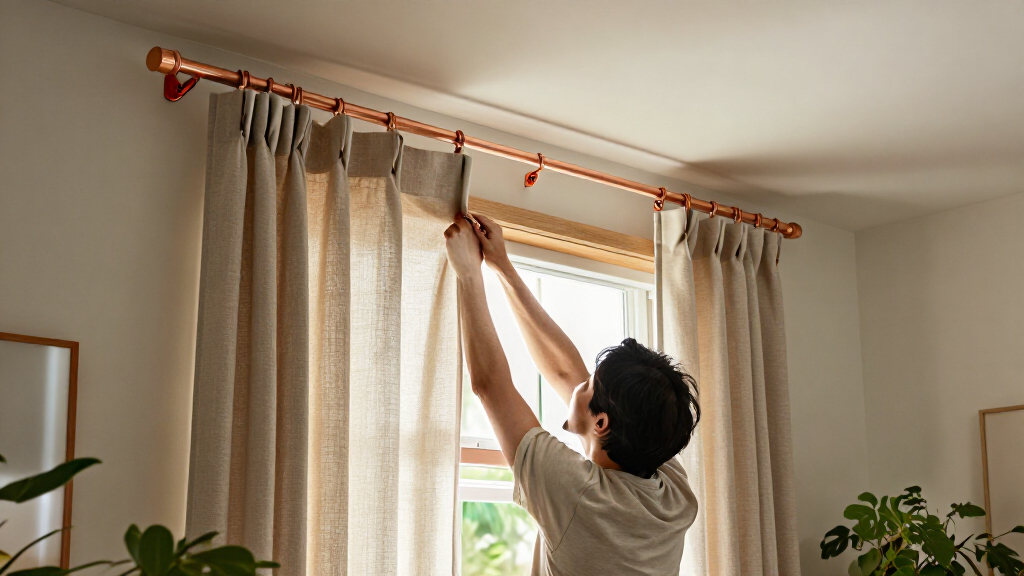
A Hunker report describes using copper plumbing pipe as a DIY curtain rod, an alternative to standard retail hardware. Its example lists a five-foot Type M pipe at $16.54 at Home Depot, but the finished cost varies with fittings, tools and local prices. The pipe must be measured and supported for the curtains’ weight because it cannot be adjusted like many store-bought rods.
Hunker has outlined a DIY alternative to conventional curtain rods: using copper plumbing pipe and fittings to make window hardware with a visible metal finish. The guide says the approach may cost less than a retail curtain rod, though its cited $16.54 price applies only to one five-foot length of Type M pipe; additional parts and local prices affect the total.
According to Hunker’s materials list, the project uses a half-inch, five-foot copper Type M pipe, two flanges, two copper male adapters and two elbows. The guide says a copper tee can be added as a center support if needed. It lists Cerro pipe at $16.54 at Home Depot and cautions that prices can vary by store or region. Hunker does not provide a complete project price, so the pipe’s listed cost should not be read as the total.
Hunker’s suggested tools include a tape measure, level, pencil, drill, deburring tool or sandpaper, and a tubing cutter if the pipe needs shortening. Curtain rings are optional, depending on the curtains. The guide advises measuring the window and allowing space for supports and panels before buying: unlike an adjustable rod, a cut pipe will not extend if it is too short.
For installation, Hunker describes cutting the pipe to length, smoothing its ends to prevent snags, and attaching the flanges and adapters to the wall. The guide suggests using the pipe and elbows to position the second support before fixing that flange in place. It says the completed rod must hold the combined weight of the pipe and curtains and recommends a center tee if extra support is needed.
A Custom Look With Fit Constraints
The idea offers homeowners a way to make curtain hardware part of a room’s design rather than treating it as a purely functional fixture. Hunker suggests that the warm metal can suit different interiors, including farmhouse-style rooms with white curtains and weathered wood or industrial spaces with exposed brick. These are the guide’s styling suggestions, not evidence that the pipe will work in every room or with every curtain setup.
Cost is another reason readers may consider the project, but Hunker’s price comparison is incomplete. The pipe is only one line item: flanges, adapters, elbows, possible support hardware, paint and tools may add expense. The choice also trades adjustability for a fixed, measured length. For readers, the main practical question is whether the desired appearance and custom fit justify sourcing and assembling separate plumbing parts.
Installation also affects how well the rod performs. Hunker warns that the pipe must be supported for the curtains’ weight, but does not supply a load rating. A pipe that is too long, poorly supported or attached without regard to the curtain load could sag or come loose. Readers should check that the wall and mounting method can support the finished assembly and select additional support where the span or load requires it. Hunker presents its instructions as a DIY outline, not as a guarantee of compatibility.
Popular right now

Vitamix Propel Series 750 Professional-Grade Blender, 4 Programs, Black

Shark Navigator Robot Vacuum with 30-Day Self-Emptying Base, White (AV2110S)

KitchenAid Classic Series 4.5 Quart Tilt-Head Stand Mixer (K45SS), Onyx Black
As an affiliate, we earn on qualifying purchases.
How the Pipe Rod Is Assembled
Hunker presents copper pipe as an unexpected decor use for a material generally sold for plumbing. Its appeal comes from leaving the metal visible, rather than concealing it behind a conventional rod. The guide proposes painting the flanges copper to coordinate with the pipe, since it says flanges commonly come in silver, and pairing the hardware with copper curtain rings for a consistent look.
Hunker’s installation sequence depends on careful measuring. After cutting, the installer smooths the pipe ends, attaches one flange and adapter, and uses the assembled pipe and elbows to mark the placement of the other support. The pipe is then removed while the second flange is installed, before the rod and curtains are put in place. Measuring and marking before drilling helps account for the fittings and support locations, which take up space beyond the window’s width.
Hunker says copper can tarnish over time and suggests rubbing affected areas gently with a cut lemon dipped in kosher salt, then wiping the surface with a damp cloth and drying it thoroughly. The guide does not specify how frequently cleaning may be needed or whether a protective coating would change the finish or maintenance.
Costs, Loads and Wall Mounting
Hunker does not state the total cost of the finished rod, provide a comparison price for a specific retail curtain rod, or identify how prices vary across locations beyond its general caveat. The guide also gives no load rating for the pipe, fittings or wall anchors. Appropriate support spacing will depend on the pipe length, the weight of the curtains and the wall surface; Hunker does not give a formula for calculating those factors.
Hunker does not identify specific compatible product models beyond the example pipe, so it is unclear whether every combination of fittings and pipe will fit together as described. Readers should check dimensions and connections before purchasing. The guide reports no testing results and does not state that its method meets any particular building standard.
Measure Before Buying Parts
For anyone considering the project, Hunker’s instructions point to measuring the intended span and accounting for the full layout, including elbows, flanges, curtain clearance and any center support. Check the curtain weight and plan suitable wall attachment before cutting the pipe. Then compare the cost of all required components with a ready-made rod; Hunker’s cited pipe price alone cannot establish which option is cheaper.
After installation, check that the rod is level and firmly supported before hanging the full set of curtains. Keep the cut ends smooth to avoid damaging fabric, and dry the copper after cleaning, as Hunker advises. The report does not announce a product launch or a formal update to the project; it presents a home-decor idea, with the finished cost and performance dependent on the materials and installation chosen.
Key Questions
How much does the copper pipe cost in the example?
Hunker lists a five-foot, half-inch Cerro Type M copper pipe at $16.54 at Home Depot. The report says prices can vary by store or region, and that figure does not include fittings, tools or other project costs.
What parts are needed to make the rod?
Hunker’s materials list includes copper pipe, two flanges, two copper male adapters and two elbows. The guide says a copper tee can provide center support if needed. Curtain rings are optional, depending on the curtains.
Can copper pipe adjust to different window widths?
No. Hunker contrasts the fixed pipe with an adjustable retail rod. The guide advises measuring the window and planned fittings before buying or cutting, since the pipe will not extend if it is short.
How can the copper be cleaned if it tarnishes?
Hunker suggests gently rubbing tarnished areas with a cut lemon dipped in kosher salt. Wipe away the residue with a damp cloth and dry the copper thoroughly.
Does the guide provide a weight limit?
No. Hunker gives no load rating for the pipe or mounting hardware. The finished rod must be supported for the combined weight of the pipe and curtains, and the guide says a center tee may be needed depending on the setup.
Source: rss