
TL;DR

Get business pricing on tools and workshop supplies
- Business-only prices and quantity discounts
- Tax-exempt purchasing
- Multiple users, one account, clear invoices
Apartment Therapy writer Meg Hemphill documented how professional organizer Jessica Litman of The Organized Mama transformed her cluttered built-in bookshelf using four steps: group like items, organize books by function, style from the bottom up, and leave breathing room. The piece frames the approach as a repeatable method for styling tall or built-in shelving without it looking crowded.
A writer at Apartment Therapy has detailed how a professional organizer transformed her cluttered built-in bookshelf using four simple tips, after her own attempts at shelf styling repeatedly fell short. The piece, published roughly two days ago and written by Meg Hemphill, draws on direct advice from Jessica Litman of The Organized Mama, a professional organizing service, and lays out a step-by-step method readers can apply to their own shelving.
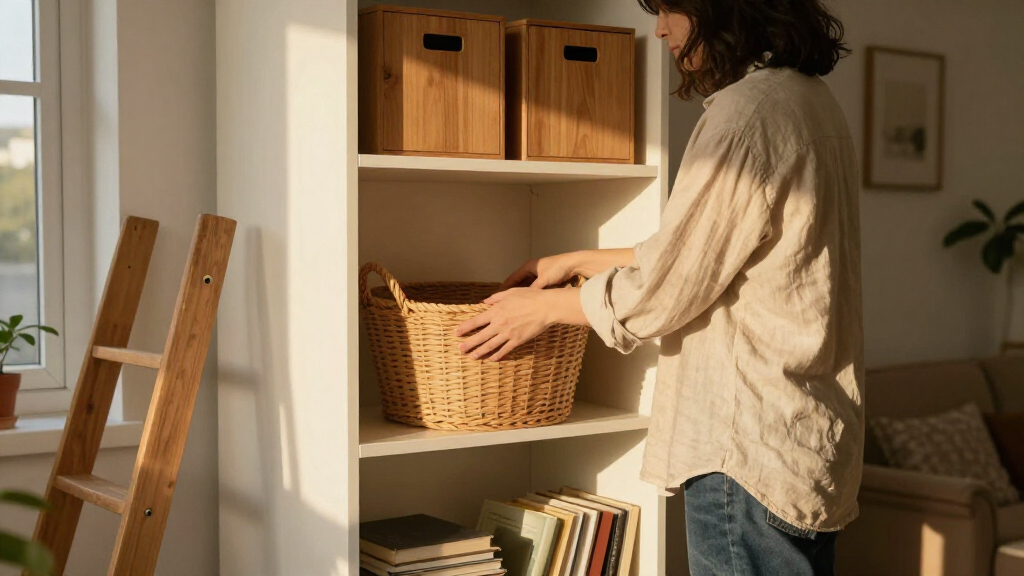
According to the article, Hemphill had long wanted a tall bookshelf with a rolling ladder — the kind seen in cozy library photographs — but once it was installed, she struggled to arrange it without the display looking cluttered. She says she tried familiar styling conventions, including grouping objects in threes and stacking books horizontally, but nothing felt right. With shelves half-empty and a box of photo frames still on the floor, she brought in Litman for expert help.
Litman’s first tip was to pull everything off the shelves and sort items into categories before deciding what to showcase. “Start by grouping all your items together, then decide what you want to showcase and group based on category,” Litman is quoted as saying. She suggests grouping by collections, types of books, colors, or whatever system makes sense for the items involved. Hemphill reports that this meant pairing silver photo frames with a matching candlestick and loosely arranging books by topic.
The remaining tips address arrangement and spacing. Litman recommends organizing books by function — placing children’s books on lower shelves for easy access, grouping fiction by genre, and setting aside books still to be read so they don’t get lost. Hemphill says she followed this logic, gathering cookbooks, separating fiction, nonfiction, and children’s books, and stacking coffee table books horizontally for texture. The third tip, styling from the bottom up, calls for heavier objects on lower shelves and smaller, lighter items at eye level, which Hemphill says made the bookcase feel grounded and balanced. The final tip emphasizes leaving white space so displayed items remain visible and don’t get lost at the back of the shelves.
Why These Bookshelf Tips Resonate
The article speaks to a common household frustration: homeowners who invest in statement shelving — particularly built-ins and tall bookcases — often find that filling them well is harder than acquiring them. Hemphill’s account frames the problem as one of method rather than taste, suggesting that a structured sorting process can succeed where ad-hoc styling tricks fail.
The advice also carries practical weight for families. Litman’s recommendation to place children’s books on lower shelves ties organization to daily use, making the shelving functional rather than purely decorative. Her closing guidance — to put items up, walk away, and adjust over time — explicitly addresses the perfectionism that the article identifies as a barrier to finishing the project.
The piece arrives amid sustained reader interest in home organization content, a category Apartment Therapy covers regularly. Its value lies in being a repeatable, low-cost method that requires no purchases, only rearrangement of items already owned.
Popular right now

Bose QuietComfort Wireless Noise-Cancelling Over-Ear Headphones, Black

Apple AirPods Pro 3 Wireless Earbuds with Active Noise Cancellation

KitchenAid Classic Series 4.5 Quart Tilt-Head Stand Mixer K45SS, Onyx Black
As an affiliate, we earn on qualifying purchases.
The Writer’s Bookshelf Journey
According to the article, Hemphill’s built-in bookshelf was the result of a long-standing wish for a tall library-style unit with a rolling ladder. Once installed, the challenge shifted from acquisition to arrangement. She reports having already tried widely circulated styling techniques — including grouping objects in odd numbers and horizontal book stacking — as well as professional bookshelf styling tips published previously by Apartment Therapy, before deciding to consult an organizer.
Jessica Litman is identified in the piece as the professional behind The Organized Mama, an organizing service. Apartment Therapy notes that its product links may earn the publication a commission, and that prices cited were accurate at the time of publishing — standard disclosure language for the outlet.
“Start by grouping all your items together, then decide what you want to showcase and group based on category. This could be grouping by collections, types of books, colors, or whatever you feel makes sense for your stuff.”
— Jessica Litman, The Organized Mama
What the Article Doesn’t Establish
The piece is a first-person account rather than an independent evaluation, and the reported transformation — a bookshelf that now feels “warm, personal, and truly reflective” of the writer — is Hemphill’s own assessment. There is no third-party verification of the results, and no before-and-after measurements of how much was stored or removed.
The article also does not specify how long the process took, what it cost, or whether Litman’s services were compensated or arranged for editorial purposes. Whether the four tips produce similar results across different shelf sizes, room layouts, or household types is not addressed, and no professional beyond Litman is consulted for a second opinion.
Living With the Shelves
Litman’s own advice points to the next phase: incremental adjustment. Rather than treating the arrangement as final, she recommends tweaking the shelves over time as daily use reveals what works. For readers, the immediate next step is applying the four-part process — empty, categorize, arrange by weight and function, and leave gaps — to their own shelving.
Apartment Therapy regularly publishes follow-up organizing and styling content, and readers seeking more guidance from Litman can find The Organized Mama’s resources directly. No formal follow-up to this specific project has been announced.
Key Questions
Who provided the bookshelf organizing tips in the Apartment Therapy article?
The tips come from Jessica Litman of The Organized Mama, a professional organizer, as quoted by Apartment Therapy writer Meg Hemphill.
What are the four tips?
They are: group like items together before styling; organize books by function or topic; style from the bottom up with heavier objects on lower shelves; and leave white space so displayed items stay visible.
Do the tips require buying anything?
No purchases are required according to the article. The method involves rearranging items already owned, though Apartment Therapy’s standard disclosure notes its product links may earn commissions.
Where should children’s books go, according to the organizer?
Litman recommends placing children’s books on lower shelves so kids can reach and read them independently.
What if the arrangement still doesn’t look right?
Litman’s advice is to avoid overthinking: put items up, walk away, and adjust gradually as you live with the shelves over time.
Source: rss