
TL;DR

Get business pricing on tools and workshop supplies
- Business-only prices and quantity discounts
- Tax-exempt purchasing
- Multiple users, one account, clear invoices
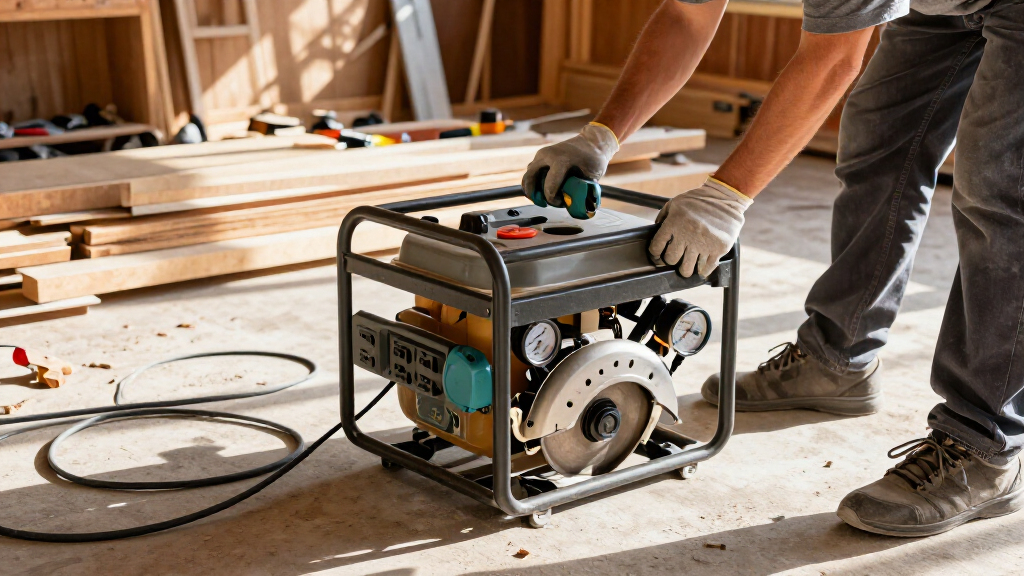
Choose a jobsite portable generator by adding the running watts of tools you’ll use at once, checking the largest motor’s startup surge, and leaving reasonable headroom. Compare runtime at a stated load, outlet and circuit ratings, power quality, safety protections, and service access; the peak-watt number alone cannot tell you whether a generator will carry a full workday.
A generator can roar to life at 7 a.m. and still leave your crew waiting by 7:15. The usual culprit is a mismatch between the tools’ starting loads and the generator’s continuous output, or a runtime estimate that looked generous until the saw, compressor, and lights were all running.
When you compare jobsite portable generators, start with the work the machine needs to do: which tools run together, how often motors start, and how many hours you need power before a break. Then check fuel, outlets, power quality, weather limits, noise, and maintenance. Those details determine whether a generator fits your site or becomes another piece of equipment to babysit.
This guide gives you a practical way to read the specs and spot the tradeoffs. You’ll see when a conventional unit makes sense, when an inverter or battery system may fit better, and when renting can save you from buying more capacity than the job calls for.
Add the running loads of tools used at once, then account for the largest motor’s startup surge.
Compare runtime only at a stated load; a larger tank does not reveal how long a loaded generator will run.
Match outlet and circuit ratings, power quality, and extension cords to the equipment and jobsite conditions.
Keep fuel generators outdoors with exhaust clear of openings, and follow the manual and electrical code for weather, grounding, and building connections.
Compare service access and local support with purchase price; rent when a short job needs capacity your crew rarely uses.
Field Guide · Continuous Power
Top Features to Look for in Jobsite Portable Generators
A generator that starts is only the beginning. Match sustained output, motor surges, runtime, circuits, and site conditions to the way your crew actually works.
At a glance
Five checks that prevent a stalled shift
Use this sequence to turn spec sheets into a practical equipment decision.
Key insight
Total generator capacity does not raise an individual outlet’s limit. A 20-amp circuit stays limited to its rating even when other parts of the generator have unused capacity.
Buyer checklist
Features that earn their place on site
Compare the details against your tools, shift length, working environment, and service plan.
Usable output
Add simultaneous running loads, then account for the largest motor’s startup demand. Keep practical headroom; peak output is brief, not all-day capacity.
Runtime at load
Compare published runtime at the same stated load, commonly 25% or 50%. Tank size alone says little about useful hours with your tools running.
Stable output
Check voltage, frequency, and the manufacturer’s THD specification for chargers and sensitive electronics. Inverters often offer cleaner power.
Outlets & protection
Match outlet type, voltage, amperage, and placement. Look for breakers, GFCI protection, overload response, and low-oil shutdown.
Rugged & movable
A roll cage, protected panel, rugged wheels, lifting points, and weather-resistant construction help. Weather-resistant does not mean rain-safe.
Noise & service
Compare noise only when distance and load are clear. Check emissions rules, service intervals, oil and filter access, parts, and local support.
Step 1 · Size the load
Start with what runs together
Build the load list around the crew’s work sequence—not every tool in the truck.
Running watts describe sustained output. Surge watts cover a brief startup demand. A motor can start successfully while the generator still struggles to sustain the full tool mix afterward.
List tools used at the same time, then consider what happens when a compressor or pump starts while a saw is cutting. Check tool labels and manuals for watts, amps, voltage, and starting guidance. Leave headroom based on manufacturer instructions; there is no universal margin for every setup.
Extra capacity can add cost, fuel use, weight, and space. Buy for frequent high-load work; for a short, lighter job, a correctly sized smaller unit or rental may make more sense.
Load planning example
Use actual equipment specifications. This sequence illustrates the check, not a wattage estimate.
List
Identify tools that operate together.
Add
Sum their sustained running loads.
Check
Account for the largest motor’s start.
Match
Compare running and surge ratings.
Step 2 · Plan the shift
Compare runtime at a real load
A brochure figure matters only when its test load and conditions resemble your work.
Look for runtime at a stated load, commonly 25% or 50%, and compare models at the same point. Runtime changes as demand rises; similar tank sizes can deliver different working hours.
Chargers and lights may draw steadily, while saws and compressors create changing loads. Fuel type, engine condition, and site conditions also affect results. Plan a reserve and follow the manual’s shutdown and cooling instructions before refueling.
Check fuel availability, storage rules, and output ratings for each fuel type. Dual-fuel operation adds flexibility, but performance and convenience can differ by fuel.
Step 3 · Match the connection
Outlets, circuits, and power quality
Total watts are shared across the generator, while each outlet and branch circuit keeps its own rating.
| What to check | Why it matters | Buyer action |
|---|---|---|
| Outlet & circuit rating | One circuit can reach its limit before the generator reaches total capacity. | ✓ Match voltage, amps, outlet type, and tool load. |
| Power quality | Chargers and control systems may need stable voltage and frequency. | ✓ Check THD and equipment-maker requirements. |
| Adapters & cords | A connector does not increase a circuit’s safe capacity. | ~ Use rated cords; never exceed outlet limits. |
| Inverter model | Often provides cleaner power and adjusts engine speed to demand. | ~ Confirm it has enough continuous output for the job. |
| Parallel operation | Compatible inverter units may combine available output. | ~ Verify model compatibility and combined limits. |
Step 4 · Protect people & equipment
Safety belongs in the specification
Convenience features can help crews, but they do not replace safe placement, correct connections, and routine checks.
Keep carbon monoxide outside
Run fuel generators outdoors, well away from doors, windows, and air intakes. Never operate one in a building, garage, or enclosed area. Use a CO alarm where people may be exposed.
Respect site conditions
Weather-resistant construction does not make operation in rain or standing water safe. Follow the manual and electrical-safety rules for placement and protection.
Follow the connection plan
Grounding and neutral-bonding depend on the generator and connection. Follow its manual; have transfer-switch or building connections handled by a qualified electrician.
Make upkeep practical
Check oil and air-filter access, service intervals, parts, and local support. Track operating hours and fuel use to plan service before it interrupts a shift.
Choose the right setup
Generator, inverter, battery, or rental?
Match the power source to load, noise limits, exhaust needs, and how often the capacity will be used.
Frequent heavy loads
Conventional jobsite unit
Consider when sustained capacity for a larger tool mix is the priority. Check portability, fuel use, noise, and emissions rules.
Electronics or changing loads
Inverter generator
May suit cleaner power needs and variable demand. Confirm the exact model’s output, THD, runtime, and parallel limits.
Lower loads or short duration
Battery or rental
Battery and hybrid systems can fit strict noise limits or work near occupied areas; check capacity and recharge plans. Renting can cover a brief need for extra power.
Size the generator for tools running at the same time
For a jobsite generator, size the unit by the tools you’ll run together and the startup surge of the largest motor, then compare those needs with its running and surge ratings. Running watts describe sustained output; surge watts cover a brief startup demand. That distinction matters because a generator can start a motor successfully but still be unable to sustain the full collection of tools after startup. A peak rating does not mean the generator can deliver that power all day.
Make a short load list before comparing models. A circular saw, compressor, pump, and work lights may not all run at once, but a compressor can start while the saw is cutting. Motors often draw more power briefly at startup than during steady operation. If that surge coincides with other loads, an undersized unit may bog down, drop voltage, or trip a breaker. Check each tool’s label or manual for watts, amps, voltage, and motor-starting guidance; do not guess from the tool’s size. Where only amps are listed, use the voltage and manufacturer guidance to work out the load safely.
For example, if your crew runs a saw and lights while a compressor cycles on and off, add the saw and lights’ running loads, then account for the compressor’s starting requirement at the moment it starts. Leave practical headroom for the next tool or a change in the work sequence. Headroom helps absorb brief variations and avoids running at the edge of capacity, where one unexpected start can interrupt work. There is no single margin that suits every setup, so use the tool and generator makers’ instructions and avoid treating the maximum surge rating as continuous capacity.
- List simultaneous tools, not every tool in the truck. This reflects the load the generator must actually carry.
- Check motor-starting demand for compressors, pumps, and saws. Their startup draw can be the limiting factor even when their running wattage looks modest.
- Compare both ratings: sustained running watts and brief surge watts. The first governs ongoing work; the second helps determine whether motors can start while other tools are operating.
A bigger generator is not automatically the smarter buy. Extra capacity can cost more, burn more fuel, and take up space in the truck. It may also be harder to move between work areas. On a one-day cabinet install with a saw, charger, and lights, a smaller correctly sized unit may be easier to move and manage than a heavy machine intended for a larger crew. For frequent high-load work, though, buying more capacity can prevent delays and allow the crew to add tools without repeatedly rearranging the load.
Popular right now

Bose QuietComfort Wireless Noise-Cancelling Over-Ear Headphones, Black

Vitamix Propel Series 510 Professional-Grade Blender, 3 Programs, Black

Sony WH-1000XM6 Wireless Noise-Canceling Over-Ear Headphones, Blue, Bundle
As an affiliate, we earn on qualifying purchases.
Compare runtime at a real load, not by tank size
Runtime tells you how long a generator can supply power before refueling, but the figure only means something when you know the test load and conditions. Compare manufacturer claims at the same load—often 25% or 50%—and expect runtime to change as demand rises. Tank capacity alone does not tell you how many useful work hours you’ll get: two models with similar tanks can consume fuel at different rates, and the heavier load changes how long either one runs.
Think about the rhythm of your day. A finish crew may run battery chargers and lights steadily, while a framing crew may draw heavier power in bursts as saws and compressors cycle. The same generator can use fuel very differently in those two situations. A published runtime at a light load may be a poor guide for a crew that regularly starts motors or runs several tools together. Fuel type, engine condition, ambient conditions, and the actual mix of tools also affect run time.
Imagine a crew working outside a house with one small tank of fuel left in the truck. A unit advertised for long operation at a light load may need attention much sooner when a compressor runs regularly. That gap can interrupt work and add refueling trips, so estimate against the crew’s likely load and plan a reserve rather than scheduling right up to the brochure figure. Check the manual for refueling directions, including shutdown and cooling steps. Never pour fuel into a hot or running generator; plan breaks so the machine can be handled safely.
Fuel logistics are part of the specification. Check which fuels are available near the site, how your employer or local rules govern storage, and whether the model’s output changes by fuel type. Dual-fuel capability can add flexibility when one fuel is easier to obtain, but it does not make every fuel equally convenient or provide identical performance on each one. A fuel that delivers less output may change which tools can run together, so compare the model’s ratings for the fuel you expect to use.
For multi-shift work, runtime and maintenance become a scheduling question. Keep a record of hours and fuel use during the first few days; that gives you a better estimate for your own load than a best-case brochure figure. It also helps the crew plan refueling and routine service before they disrupt a shift. If uninterrupted power matters more than portability, compare the cost of a suitable rental or a properly designed hybrid setup as well.
Match outlet ratings and power quality to your equipment
Choose outlets that match your tools’ voltage and amperage, and check the power quality requirements of chargers and electronics. A generator may have plenty of total watts while one outlet or branch circuit still reaches its own limit. The generator’s total output is shared across its available circuits, but the rating of each circuit remains a separate ceiling. Outlet type, voltage, breaker rating, and placement all matter; an adapter cannot safely turn a lower-rated circuit into a higher-rated one.
Take a common site setup: two workers want to charge batteries while another runs a saw. If the chargers and saw share a circuit, their combined demand can trip that circuit even when the generator has unused capacity on a different outlet. Lay out the loads by outlet and circuit, then use extension cords rated for the current, length, and conditions. This circuit map can reveal that you need to move a charger or choose a model with a different outlet layout, rather than simply buying more total wattage. Damaged cords, undersized wire, and loose connections can create heat and voltage drop, which can affect tool performance and create a hazard.
Power quality matters when you charge tool batteries or run equipment with electronic controls. Inverter generators generally regulate output and adjust engine speed to demand, and many provide cleaner power than conventional units. They are often smaller, though, and may not have enough running or surge capacity for a large group of construction tools. Check the generator’s stated total harmonic distortion (THD), voltage regulation, and the equipment makers’ requirements rather than relying on the word “inverter.” The tradeoff is practical: a quieter, more regulated unit can suit sensitive electronics, but it only works for the job if its output and circuits can also handle the tools.
Use the generator’s outlet and breaker information as a wiring map, not decoration. Keep cords as short as the layout allows, protect connections from damage and moisture as instructed, and do not daisy-chain cords beyond their ratings. If the manual or tool maker does not clearly answer a compatibility question, get guidance from the manufacturer or a qualified electrician before putting the equipment on the circuit.
Choose site-ready controls, protection, and weather limits
A jobsite generator should have controls and protection that suit its environment: accessible breakers, clear labels, useful shutdown protections, and a sturdy frame that can take routine transport. GFCI outlets, overload protection, and low-oil shutdown can reduce specific risks, but each covers a limited condition. For example, overload protection does not prevent every shock or cord hazard, and low-oil shutdown does not replace checking fluid levels. Read the model’s manual before the first start, especially when the generator has a bonded neutral or special grounding instructions; the wrong connection can cause protection devices to work incorrectly.
Portability has a practical cost. A roll cage may protect the controls when the machine rides beside ladders and toolboxes, while large wheels and proper lifting points can make movement over packed dirt less punishing. On a narrow renovation lot, a generator that two workers can position without dragging it by the frame may save time and prevent damage. Check weight and handle design alongside the wattage. A heavier unit may offer more capacity, but if it is difficult to position safely, the crew may be tempted to leave it in a poor location or move it improperly.
Weather-resistant construction does not mean rainproof operation. Water and electricity are a dangerous mix, and standing water can put both the generator and cords at risk. Follow the manufacturer’s instructions for weather protection and clearances; never improvise a cover that traps heat or exhaust. A cover that blocks ventilation can cause overheating, while one that redirects exhaust toward people or openings can create a CO hazard. If a site cannot provide a dry, ventilated location, change the setup or choose another power source.
Carbon monoxide is an immediate life-safety hazard. Run gasoline, propane, or diesel generators outdoors, away from doors, windows, and air intakes, following the manual and current safety guidance. Never operate one inside a building, garage, basement, or other enclosed area. CO can build up without warning and can be fatal. A CO alarm can provide added warning where people may be exposed, but it does not make indoor operation acceptable.
Grounding and neutral bonding depend on the generator’s configuration and how you connect it. Follow the manual and applicable electrical code; do not assume a ground rod is always required or sufficient. A mismatched neutral and grounding setup can affect shock protection, so verify the arrangement for the specific connection. Never plug a portable generator into a wall outlet to energize building wiring. A qualified electrician should install an approved transfer switch or other permitted connection to prevent dangerous backfeeding.
Balance noise, emissions, and service against the purchase price
The best generator for a remote foundation pour may be the wrong choice for a residential remodel. Noise affects nearby occupants and workers who spend hours beside the machine, while emissions rules differ by location, engine type, and date. Compare sound ratings only when the test distance and load conditions match, and check current local requirements before you buy or rent. A quieter rating can improve comfort and reduce disruption, but it does not tell you whether the machine will meet the site’s power needs.
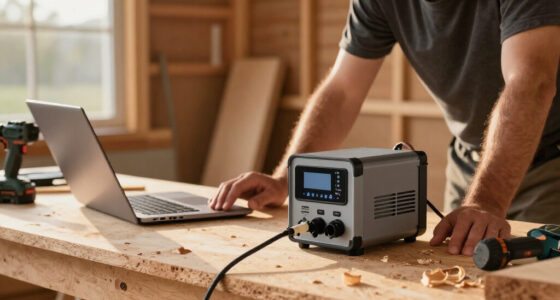
At a tight urban site, a quieter inverter unit or battery power station may reduce disruption, provided it can handle the tools and duration. A battery system produces no exhaust at the point of use, which can help where noise or exhaust placement limits the options. Its energy capacity, output, and recharge time may not support sustained high-wattage work. A battery’s watt rating tells you how much it can supply at once; its stored energy and the load determine how long it can keep doing so. If a crew needs to run a large saw for repeated cuts all morning, battery capacity can disappear faster than expected, and recharging may take the unit out of service when the crew needs it most.
Maintenance access affects real uptime. Look for clear access to the oil fill and drain, air filter, spark plug where relevant, and service points. Check the service intervals, parts availability, and local repair support. These details determine whether routine upkeep is quick enough to fit between shifts and whether a breakdown can be resolved promptly. A low purchase price loses its appeal if an air filter is hard to replace or a common part leaves the generator parked for days during a multi-shift job.
For occasional or specialized work, renting can be the sensible choice. Say your regular crew needs modest power for repairs but a one-week concrete job requires heavier equipment: renting a properly sized unit may beat storing and maintaining a larger generator all year. The rental cost buys short-term capacity without the ongoing storage and service burden, while ownership can make more sense when the higher load is routine. Ask the rental desk for the actual running and surge ratings, fuel requirements, noise data, and maintenance expectations for the model supplied.
Recent models may add digital displays, hour meters, remote start, CO shutoff, parallel capability, or multiple fuel options. Treat those features as conveniences that need model-by-model verification. An hour meter can help track service, for instance, but it does not guarantee that the generator will alert you when service is due. Parallel operation works only with compatible units and approved connections, and it does not remove the need to total the loads or respect circuit limits. Weigh each feature against a task your crew actually needs to perform.
Use this checklist before you put a generator to work
A pre-purchase checklist turns a shelf of spec sheets into a decision you can defend. Start with the crew’s expected tools and work hours, then confirm that the specific generator supports the loads, connections, and site conditions. For example, a remodeler planning to run a compressor, saw, chargers, and lights should map which tools may start or cycle together instead of relying on a single total-watts estimate. That map helps uncover both startup conflicts and circuit limits that a headline wattage number can hide.
- Write down simultaneous loads. Check tool labels and manuals for running watts, voltage, amps, and motor-starting needs. This establishes the real demand instead of assuming every tool runs at once.
- Compare generator ratings. Match continuous output to sustained demand and check surge capacity for startup. If either rating falls short, the crew may need to change the work sequence or choose another model.
- Set the workday target. Compare runtime at a stated load with the hours between planned breaks and safe refueling. A runtime figure at a lighter load can overstate what to expect during heavier work.
- Check every connection. Confirm outlet types, circuit ratings, GFCI protection where applicable, and cord ratings for the site. This shows whether the loads can be distributed safely across the available circuits.
- Verify safe placement. Follow CO clearances, grounding instructions, weather directions, and local electrical rules. A model that meets the load may still be unsuitable if the site cannot accommodate its safe setup.
- Plan upkeep and support. Confirm service intervals, parts access, repair availability, and local emissions requirements. These determine whether the unit can stay available across the jobs you expect it to handle.
Write the answers beside the model number, not on a loose note that gets separated from the quote. A useful comparison includes rated output, surge output, fuel and stated runtime, outlet configuration, sound test conditions, weight, service schedule, and warranty support. If one seller gives runtime at 25% load and another at 50%, those numbers do not offer a fair comparison because the generators were measured against different demands.
Then ask whether the job really calls for ownership. A compact unit can suit a punch-list crew that moves daily; a heavy machine may make sense for regular high-load work with a secure storage plan. For a short project or unusual load, renting lets you match the equipment to the work without paying to transport, store, and service excess capacity. The best choice depends on how often the crew needs that capacity and whether ownership costs less than repeated rentals over time.
Frequently Asked Questions
How many watts do I need for a jobsite generator?
List the tools you expect to use at the same time, add their running loads, and account for the startup demand of motors such as compressors and pumps. Compare that total with the generator’s running and surge ratings. Check tool and generator manuals for the ratings that apply to your setup.
How long will a portable generator run on one tank?
Use the manufacturer’s runtime figure only when it includes a stated load, such as 25% or 50%. Actual runtime changes with the tools running, fuel, engine condition, and operating conditions. Follow the manual’s shutdown, cooling, and refueling directions.
Can I run a generator all day or overnight?
Some models support extended operation, but the permitted schedule and maintenance needs depend on the model. Follow its operating limits, service intervals, and refueling instructions, and check site noise rules. Never run a fuel generator indoors or in an enclosed area, even overnight.
Is an inverter generator powerful enough for construction tools?
It can be if its continuous and surge ratings meet the tools’ needs. Inverter models often provide stable output and can be quieter, but many have less capacity than conventional jobsite generators. Check the exact model’s ratings and the power requirements of your tools.
Can I connect a portable generator to my house or jobsite building?
Never connect it to building wiring through a wall outlet, which can cause dangerous backfeeding. A qualified electrician should install an approved transfer switch or other permitted connection and confirm the correct grounding and neutral arrangement.
Can I run a portable generator in the rain?
Only use a setup the manufacturer explicitly permits, and follow its weather-protection instructions. Keep equipment away from standing water and never use a cover that traps heat or exhaust. If you cannot keep the generator dry and ventilated as directed, change the setup.
Conclusion
Choose the generator that carries your real workday, not the one with the biggest number on its label. Match running watts and startup surge to the tools, then verify runtime at a stated load, circuit limits, safe placement, and service support before the crew depends on it.
Write down the loads, read the manual, and plan where the exhaust will go. A good generator should hum in the background while the work moves forward—not become the loudest problem on the site.