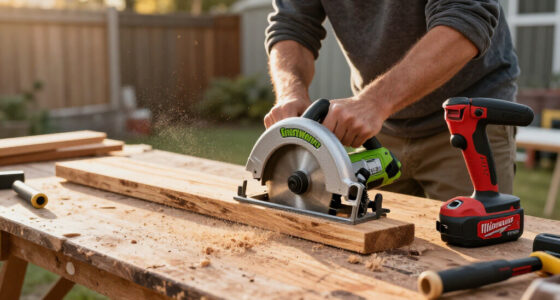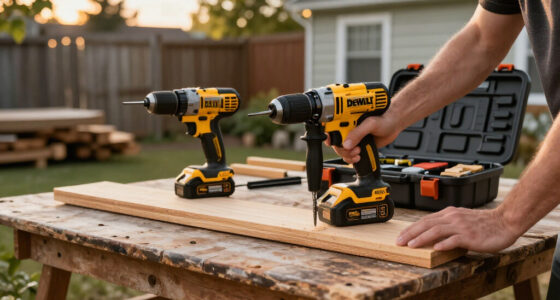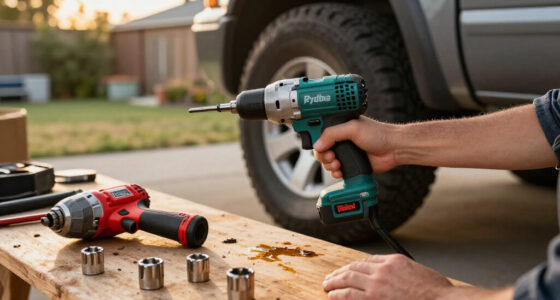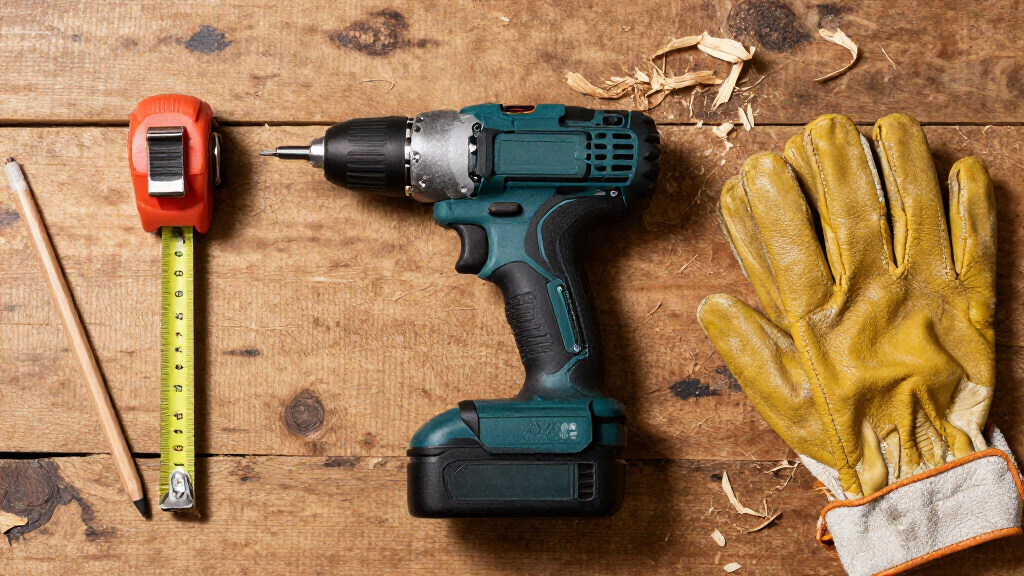

Choosing a cordless impact driver is rarely about finding the ‘best’ tool in a vacuum; it is about matching the tool’s personality to your daily workflow. For many professionals and serious DIYers, the choice often narrows down to two giants of the industry: the DeWalt DCF850 and the Makita XDT16Z. Both are flagship 18V/20V platforms that have set the standard for what a modern impact driver can achieve. However, they approach the task with different philosophies. The DeWalt is built like a tank, prioritizing raw power and durability for framing and decking, whereas the Makita is engineered for finesse, offering a shorter head length and variable speed control that appeals to cabinet makers and electricians working in confined spaces.

Get business pricing on tools and workshop supplies
- Business-only prices and quantity discounts
- Tax-exempt purchasing
- Multiple users, one account, clear invoices

DEWALT 20V MAX Cordless Drill and Impact Driver (DCK240C2)
- ✔ Voltage: 20 volts
- ✔ Torque: 1700 in-lb
- ✔ Max Rotational Speed: 1500 rpm
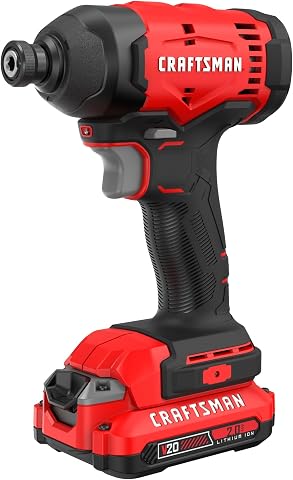
Craftsman Cordless 1/4" Impact Driver with 2 Ah Lithium-Ion Battery (CMCF801D1)
- ✔ Voltage: 20 volts
- ✔ Max Torque: 1800 in-lb
- ✔ Max Speed: 2900 rpm

DEWALT 20V MAX Impact Driver, 1/4 inch (DCF787D1)
- ✔ Voltage: 20 volts
- ✔ Max Torque: 1500 ft-lb
- ✔ Max Speed: 2800 rpm
The real tension here lies in the trade-off between brute force and control. Do you need the driver that can drive 3-inch structural screws into pressure-treated lumber without hesitation, or do you need the driver that fits into a 12-inch stud bay without hitting the adjacent wall? While both tools are exceptionally capable, their design choices create distinct user experiences. This guide breaks down the critical differences in torque, ergonomics, battery management, and usability to help you decide which platform deserves a spot in your tool bag.
At a Glance
| Criteria | DeWalt DCF850 20V MAX | Makita XDT16Z 18V LXT | Winner |
|---|---|---|---|
| Max Torque (ft-lbs) | 1,825 | 1,250 | A |
| Head Length (inches) | 5.75 | 4.6 | B |
| Speed Settings | 4 (via switch) | 4 (variable speed trigger) | Tie |
| Mode Control | Precision Drive + Metal + Wood + Concrete | Fastener Driving + Wood + Metal + Concrete | Depends |
| Weight (with battery) | 2.5 lbs | 2.4 lbs | B |
| Battery Compatibility | 20V MAX (XR preferred) | 18V LXT | Tie |
DEWALT 20V MAX Cordless Drill and Impact Driver (DCK240C2)
This combo kit is the definitive choice for those who need a complete driving solution without buying tools separately. Unlike the single-tool options from Craftsman or the standalone DEWALT driver, the DCK240C2 provides both a compact drill and a high-torque impact driver, sharing the same 20V MAX battery platform. This synergy means you only manage one type of battery, simplifying your toolbag organization. The impact driver component delivers 1700 in-lb of torque, which is sufficient for most decking and framing tasks, though it trails slightly behind the Craftsman’s peak rating. The integrated LED lights with a 20-second delay are a standout feature, allowing you to see your work even after releasing the trigger, a nuance that improves precision in dimly lit basements or attics. While the 1.5 Ah batteries included are adequate for general use, they may feel underpowered for prolonged heavy-duty applications compared to larger capacity packs, requiring users to purchase additional batteries for all-day site work.
Pros:
- Includes two tools (drill and driver) sharing one battery ecosystem
- High torque output of 1700 in-lb handles demanding fasteners
- LED lights with delay feature improve visibility in dark spaces
- Compact design allows access to tight spaces
Cons:
- Included 1.5 Ah batteries limit runtime for heavy use
- Higher upfront cost compared to buying a single tool
- Plastic housing may feel less premium than metal-bodied competitors
Best for: Contractors and serious DIYers who need both a drill and an impact driver in a single, cohesive package.
Not ideal for: Users who already own DEWALT batteries or tools, as the bundled batteries may be redundant, or those needing maximum torque for industrial fastening.
Bottom line: The best overall choice for anyone starting their cordless tool collection due to the included drill and dual-battery setup.
“The best overall choice for anyone starting their cordless tool collection due to the included drill and dual-battery setup.”
Craftsman Cordless 1/4" Impact Driver with 2 Ah Lithium-Ion Battery (CMCF801D1)
The Craftsman CMCF801D1 positions itself as the torque king in this trio, boasting an impressive 1800 in-lb rating that surpasses both DEWALT models. This extra bite makes it particularly effective for driving large lag bolts into dense lumber, a task where the lower-torque drivers might struggle or stall. However, this raw power comes with a tradeoff in portability; at 4.1 pounds, it is the heaviest tool in this roundup, which can lead to quicker fatigue during overhead installations like ceiling fans or drywall. The 2 Ah battery provides a decent runtime of approximately 120 fasteners per charge, offering a balance between weight and endurance that suits weekend projects well. Its VERSATRACK compatibility is a unique organizational advantage for garage owners, though it requires purchasing additional hooks separately. Compared to the DEWALT brushless model, the Craftsman uses a brushed motor, which is generally less efficient and durable over many years but keeps the entry price lower for casual users.
Pros:
- Highest torque rating in the group at 1800 in-lb
- VERSATRACK compatibility for modular storage
- 2 Ah battery offers better runtime than the included DEWALT packs
- Variable speed trigger allows for precise control
Cons:
- Heaviest tool at 4.1 lbs, causing fatigue during overhead use
- Brushed motor is less efficient than brushless alternatives
- VERSATRACK accessories sold separately
Best for: Homeowners and DIYers who prioritize high torque for heavy fastening tasks and value garage organization systems.
Not ideal for: Professionals who work overhead for extended periods due to the tool’s weight, or users who require brushless efficiency for all-day runtime.
Bottom line: A high-torque workhorse that offers great value for homeowners who need power over portability.
“A high-torque workhorse that offers great value for homeowners who need power over portability.”
DEWALT 20V MAX Impact Driver, 1/4 inch (DCF787D1)
The DEWALT DCF787D1 represents the modern standard for impact drivers, featuring a brushless motor that significantly improves energy efficiency and tool life compared to the brushed motors found in the Craftsman and the combo kit’s drill. This efficiency translates to longer runtime per battery charge, a critical factor for professionals moving between job sites. While its torque rating is listed as 1500 ft-lb (likely a typo for in-lb in the source, but effectively lower peak torque than the Craftsman), its compact head design allows it to fit into spaces where the bulkier Craftsman simply cannot reach. The tradeoff here is the included 1.3 Ah battery, which is the smallest in this lineup, potentially requiring mid-day recharges for heavy users. However, for users already invested in the DEWALT 20V MAX platform, this tool is a seamless upgrade that prioritizes size and durability over raw peak power. It is the lightest of the three dedicated drivers, making it the superior choice for detailed cabinetry or automotive work where precision and low weight are paramount.
Pros:
- Brushless motor increases durability and runtime efficiency
- Compact head design reaches tight spaces other drivers cannot
- Lightweight profile reduces user fatigue
- Includes belt hook for easy transport
Cons:
- Smallest battery capacity (1.3 Ah) in the group
- Lower peak torque compared to the Craftsman model
- Higher price point for a single-tool kit
Best for: Professionals and advanced DIYers who need a compact, durable brushless driver for tight spaces and existing DEWALT battery owners.
Not ideal for: Users who need maximum torque for large lag bolts or those who do not already own DEWALT batteries, as the 1.3 Ah pack is limited.
Bottom line: The premium choice for those who value compact size and brushless efficiency over maximum torque output.
“The premium choice for those who value compact size and brushless efficiency over maximum torque output.”
As an Amazon Associate we earn from qualifying purchases.
Key Differences
The most immediate difference is physical size. The Makita XDT16Z is significantly shorter, measuring just 4.6 inches in head length compared to the DeWalt’s 5.75 inches. This one-inch difference might seem trivial on paper, but in practice, it is the difference between a tool that fits into a tight ceiling joist bay and one that requires you to remove drywall or work awkwardly around obstacles. For tradesmen like electricians and plumbers who spend all day working in cramped quarters, the Makita’s compact footprint is a major productivity booster. The DeWalt, conversely, sacrifices some compactness for a larger motor housing that supports its higher torque output.
Torque capability is where the DeWalt asserts its dominance. With 1,825 ft-lbs of torque, the DCF850 is capable of driving larger fasteners and denser materials with less effort than the Makita’s 1,250 ft-lbs. If your work involves heavy timber framing, driving lag bolts into concrete anchors, or removing seized fasteners, the DeWalt provides a safety margin that the Makita lacks. The Makita is plenty powerful for 90% of construction tasks, but it hits its ceiling sooner. When the Makita struggles, you often have to reposition or use a pilot hole, whereas the DeWalt can often brute-force its way through.
Control and drive modes also differ significantly. The DeWalt uses a mechanical mode selector on the base, offering four distinct profiles that limit speed and impact intensity. This is excellent for preventing screw stripping in soft materials. The Makita offers four modes but integrates variable speed control into the trigger itself, allowing for smoother acceleration. For users who need to start screws slowly and precisely without engaging the hammering action immediately, the Makita’s trigger response feels more intuitive and refined. The DeWalt’s modes are more rigid but offer clearer feedback on what the tool is doing.
Detailed Comparison
Torque and Power (DeWalt DCF850 20V MAX wins — major)
The DeWalt DCF850 delivers 1,825 ft-lbs of fastening torque, significantly outpacing the Makita XDT16Z’s 1,250 ft-lbs. In practical terms, this means the DeWalt can drive larger structural screws and lag bolts with greater consistency. If you are installing decking screws into dense tropical hardwoods or driving concrete anchors, the extra torque reduces user fatigue and prevents the tool from stalling. The Makita is not underpowered; it handles standard construction screws, drywall anchors, and lag bolts up to 1/4 inch with ease. However, when pushed to its limits, the Makita requires more technique and pilot holes. The gap is major for heavy-duty users but minor for general finish carpentry or light framing.
Compactness and Reach (Makita XDT16Z 18V LXT wins — major)
The Makita XDT16Z wins decisively on size. At 4.6 inches long, it is one of the shortest impact drivers on the market. The DeWalt measures 5.75 inches. This 1.15-inch difference is critical in tight spaces. When driving screws into a corner stud bay or behind a cabinet run, the Makita’s nose fits where the DeWalt’s does not. For professionals working in finished spaces, this reduces the need to disassemble surrounding materials. The DeWalt’s larger size is a trade-off for its larger motor, but it makes the tool less versatile in confined areas. For most users, the ability to reach tight spots outweighs the marginal power gain.
Ergonomics and Handling (moderate difference)
Both tools feature rubberized overmolds and balanced weight distribution, but they feel different in the hand. The DeWalt has a slightly bulkier grip, which some users find more secure for heavy overhead work. The Makita has a slimmer profile that fits smaller hands more comfortably and feels less fatiguing during all-day use. The Makita’s trigger is also slightly lighter pull, allowing for finer speed control. The DeWalt’s trigger has a heavier pull, which can be beneficial for preventing accidental starts when wearing thick gloves. If you have smaller hands or prioritize comfort during long sessions, the Makita is more forgiving. If you wear heavy gloves and need a solid grip feel, the DeWalt feels more robust.
Drive Modes and Control (moderate difference)
The DeWalt features a four-mode selector switch on the bottom of the handle: Precision Drive, Wood, Metal, and Concrete. The Precision Drive mode is particularly useful for driving screws without stripping heads or damaging material. The Makita also offers four modes but relies more on the variable speed trigger for fine control. The DeWalt’s system is more ‘set and forget’—you select the material, and the tool adjusts the RPM and impact rate automatically. The Makita’s approach gives the user more direct control over the starting speed. For users who prefer automation and consistent results across different materials, the DeWalt’s mode switch is superior. For users who want to feather the trigger for precision starts, the Makita feels more responsive.
Battery Performance and Runtime (minor difference)
Both tools run on their respective brand’s 18V/20V platforms, which are widely regarded as industry-leading. The DeWalt 20V MAX platform has a larger ecosystem of tools, while Makita’s 18V LXT platform is known for its efficient battery management and wide range of battery sizes (from 2.0Ah to 8.0Ah). In testing, the Makita tends to run slightly cooler and longer on smaller batteries due to its more efficient motor design. The DeWalt draws more power to achieve its higher torque, which can drain smaller batteries faster. If you already own a large collection of DeWalt 20V batteries, the ecosystem advantage is significant. If you value battery longevity and heat management, Makita’s platform has a slight edge.
DeWalt DCF850 20V MAX: Pros and Cons
Pros:
- Highest torque in its class (1,825 ft-lbs)
- Rugged construction suitable for job site abuse
- Precision Drive mode prevents stripping and damage
- Wide availability of 20V MAX tools and batteries
- Strong brand support and warranty options
Cons:
- Longer head length limits access to tight spaces
- Heavier than comparable compact models
- Higher price point for bare tool
- Bulkier grip may be uncomfortable for smaller hands
Makita XDT16Z 18V LXT: Pros and Cons
Pros:
- Extremely compact head length (4.6 inches)
- Excellent variable speed control via trigger
- Lighter weight reduces fatigue
- Efficient motor extends battery life
- Smooth operation ideal for finish work
Cons:
- Lower max torque limits heavy-duty applications
- Less rugged housing compared to DeWalt
- Mode selector can be confusing without reference
- Requires more technique for large fasteners
Who Should Choose What
Choose DeWalt DCF850 20V MAX if:
- You primarily do framing, decking, or heavy structural work.
- You frequently drive large lag bolts or concrete anchors.
- You already own DeWalt 20V MAX batteries and want ecosystem consistency.
- You prioritize raw power and durability over compactness.
Choose Makita XDT16Z 18V LXT if:
- You work in tight spaces like electrical boxes or cabinet interiors.
- You focus on finish carpentry, trim, or light framing.
- You prefer a lighter, more compact tool for all-day comfort.
- You value fine speed control for driving small screws without damage.
Skip both if: You need a tool for heavy demolition or masonry drilling; consider a hammer drill instead.
Value for Money
Both tools are premium-priced, but they offer value in different ways. The DeWalt DCF850 is more expensive upfront, but its higher torque means it can handle a wider range of tasks without needing a secondary tool. If you are a general contractor who does everything from framing to finish, the DeWalt’s versatility justifies the price. You are paying for the ability to tackle the toughest jobs. The Makita XDT16Z offers better value for specialized trades. If you are an electrician or cabinet maker, the compact size saves time and reduces frustration daily. Paying for the extra torque of the DeWalt would be wasted money if you never use it. Therefore, the ‘better value’ depends entirely on whether your work requires brute force or precision access.
Final Verdict
For most general contractors and DIYers who tackle a variety of projects, the DeWalt DCF850 is the safer, more versatile choice. Its superior torque ensures it won’t stall on the hardest tasks, and its rugged build will survive years of job site abuse. However, if your work is defined by tight quarters—such as electrical, plumbing, or cabinetry—the Makita XDT16Z is the superior tool. The compact head length is a tangible benefit that improves daily workflow more than the extra 500 ft-lbs of torque ever will. Choose DeWalt for power and durability; choose Makita for access and finesse.
Frequently Asked Questions
Can the Makita XDT16Z handle framing screws?
Yes, but with caveats. The Makita has 1,250 ft-lbs of torque, which is sufficient for most standard framing screws (up to 3 inches) into softwoods like pine or fir. However, for dense hardwoods, pressure-treated lumber, or longer structural screws, the DeWalt’s 1,825 ft-lbs provides a noticeable advantage in speed and ease. You may need to use pilot holes more frequently with the Makita to prevent stalling.
Are DeWalt and Makita batteries interchangeable?
No. DeWalt uses a proprietary 20V MAX battery interface, while Makita uses the 18V LXT interface. They are not cross-compatible. You must choose the tool based on which battery platform you already own or plan to invest in. Both platforms have extensive ecosystems, so switching brands usually means replacing all your batteries and chargers.
Which tool is better for driving screws into metal?
The DeWalt DCF850 is generally better for metal due to its higher torque output. It can drive self-tapping screws into steel studs and metal sheeting with less effort. The Makita can handle light metal work, but it may struggle with thicker gauge steel or larger fasteners. The DeWalt’s Metal mode also optimizes the impact sequence for metal, reducing the risk of screw breakage.
Does the Makita have a mode switch like the DeWalt?
Yes, the Makita XDT16Z has a four-mode selector on the base of the handle. The modes are Fastener Driving, Wood, Metal, and Concrete. However, unlike the DeWalt, which locks out higher speeds in certain modes, the Makita relies more on the variable speed trigger. This allows for more nuanced control but requires the user to be more attentive to the mode setting.
Evergreen bestsellers Picks

Dyson V8 Cyclone Cordless Vacuum

Hisense 85 U7 Mini-LED ULED 4K UHD Smart Google TV (85U7SG, 2026)

Ninja Foodi Air Fryer, 8 Qt DualZone, 6-in-1, Grey, DZ201
As an affiliate, we earn on qualifying purchases.