
TL;DR

Get business pricing on tools and workshop supplies
- Business-only prices and quantity discounts
- Tax-exempt purchasing
- Multiple users, one account, clear invoices
The best cordless circular saw blade is determined primarily by the material you’re cutting, the finish you need, and your saw’s specs — not simply by whether the saw is cordless. For cordless tools, thin-kerf blades with the right tooth count deliver noticeably more cuts per battery charge. Match roughly 24 teeth for framing, 40-60 teeth for plywood and finish work, TCG geometry for metals and plastics, and PCD teeth for abrasive materials like fiber cement.
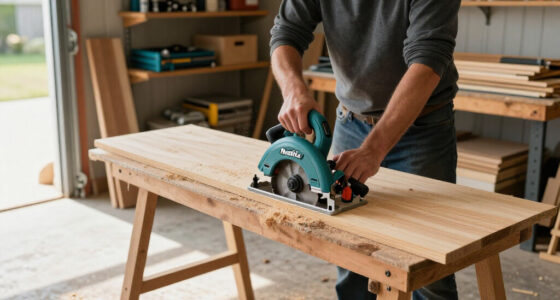
I once watched a guy burn through an entire 5.0Ah battery trying to rip pressure-treated 2x10s with a 60-tooth finish blade. Fifteen minutes of smoke, a blackened kerf, and about four feet of cut. He swapped to a 24-tooth framing blade, finished the same rip in one pass, and still had three bars left on the charge. That’s the whole lesson of blade selection in one afternoon.
Here’s the thing most people get wrong: the best blade is determined primarily by the material, the cut quality you need, and your saw’s specifications — not simply by whether the circular saw is cordless. But because your saw is cordless, blade efficiency matters more than it does on a corded tool. Every amp of wasted friction comes straight out of your battery.
In this guide, you’ll get the tooth counts, kerf widths, tooth geometries, and hook angles that actually matter — broken down material by material. I’ll also flag the safety lines you don’t cross, because some of these combinations can hurt you.
Match tooth count to material: 24T for framing, 40-60T for plywood and finish work, 50-80T TCG for metals and plastics, and 4-8T PCD for fiber cement.
Thin-kerf blades are the single biggest runtime upgrade for a cordless circular saw — less material removed means less torque needed and more cuts per charge.
Tooth geometry (ATB vs. TCG vs. FTG vs. high-ATB) often matters more than tooth count; the same 60T count behaves totally differently in wood versus aluminum.
A blade’s material rating matters more than any generic ‘cordless’ label — and a miter-saw blade may not be safe in a handheld circular saw even if it fits the…
Fiber cement cutting is a silica hazard regulated by OSHA 29 CFR 1926.1153; it requires a PCD blade, dust extraction, and respiratory protection — not just cut…
Blade Selection Guide · Cordless Saws · 6½″ / 7¼″
Choosing the Best Cordless Circular Saw Blade for Different Materials
The best blade is determined by the material you cut, the finish you need, and your saw’s specs — not by whether the saw is cordless. But on battery power, every amp of wasted friction comes straight out of your runtime.
24T
Framing starting point
0.071–0.091″
Thin kerf vs 0.125″ full kerf
4–8T
PCD blade for fiber cement
11
Material matchups
5
Tooth geometries
4
Selection factors
3 blades
Cover 95% of residential work
OSHA
1926.1153 silica rule
The 4 Factors That Actually Determine Your Blade Choice
Get these right and 90% of your cutting problems disappear. Ignore them and you get burn marks, splintered plywood, dead batteries, and the occasional kickback that rearranges your weekend.
Factor 01
Tooth Count — Speed vs. Finish
Think sandpaper grit in reverse: a 24T framing blade is a 40-grit belt — aggressive, fast, rough. A 60T finish blade is 220-grit — slow, smooth, refined. Too few teeth grab; too many build heat and bog down.
Factor 02
Kerf Width — The Runtime Lever
A thin-kerf blade (≈0.071″–0.091″ on a 7¼″ blade vs. 0.125″ full kerf) removes less material, needs less torque, draws less current — more cuts per charge. Tradeoff: it flexes and wanders if you force it.
Factor 03
Tooth Geometry — Shape Beats Count
Two blades with identical 60-tooth counts behave completely differently if one has ATB teeth and the other TCG. Geometry often matters more than the number on the box.
Factor 04
Hook Angle — Aggression Control
Positive hook pulls the blade into the wood for fast ripping. Low or negative hook resists self-feeding — which is why metal, plastic, and laminate blades use it. In metal, self-feeding isn’t a feature, it’s a hazard.
The Tooth Count Spectrum
Fewer teeth = faster, rougher, cooler. More teeth = slower, cleaner, hotter — and harder on the battery.
Fiber cement
Framing lumber
All-around wood
Melamine · MDF
Plastic · Acrylic
Quick Reference: The Right Blade for Every Material
Tooth counts assume a common 6½- or 7¼-inch cordless circular saw — counts shift with blade diameter and manufacturer.
| Material | Blade Type | Tooth Count | Key Features |
|---|---|---|---|
| Framing lumber | Framing / ripping | 18–24T | ATB Fast cutting, large gullets |
| Plywood & OSB | Fine-finish | 40–60T | Closely spaced teeth, controlled chip-out |
| Hardwood ripping | Rip blade | 18–30T | Efficient chip removal, low feed resistance |
| Hardwood crosscutting | Finish blade | 40–60T | ATB High tooth count, clean shearing |
| MDF & melamine | Fine-finish | 50–60T | TCG / Hi-ATB Sharp carbide, chip-free edges |
| Laminate flooring | Laminate / PCD | 4–60T varies | Durable carbide or polycrystalline-diamond teeth |
| Aluminum & nonferrous | Nonferrous-metal | 48–80T | TCG Negative hook angle |
| Thin steel | Steel-cutting | Varies | Cermet or carbide teeth, rated for steel |
| Fiber cement | Fiber-cement | 4–8T | PCD Low dust generation |
| Plastic & acrylic | Plastic / nonferrous | 60–80T | TCG Low or negative hook |
| Masonry or tile | Diamond blade | No teeth | Continuous, segmented, or turbo diamond rim |
The pattern: metal-cutting blades pair the highest tooth counts with the least aggressive geometry. That’s not a contradiction — metal wants many small, controlled bites, not aggressive shearing. And fiber cement uses the fewest teeth because PCD does the work while big gullets evacuate abrasive slurry.
Why Tooth Geometry Matters More Than Tooth Count
If you learn one thing from this guide, learn the difference between these five grinds. The same 60T count behaves totally differently in wood versus aluminum.
ATB
Alternate Top Bevel
The all-purpose wood geometry. Beveled points shear fibers cleanly — like slicing a tomato instead of pressing straight down.
Crosscut · Plywood · Finish
Hi-ATB
High Alternate Top Bevel
An exaggerated bevel producing razor-clean cuts in veneers and melamine. Sharper points wear faster — a scalpel edge versus a utility-knife edge.
Veneer · Melamine
FTG
Flat-Top Grind
Blunt, strong, efficient teeth for ripping and rough cutting — a chisel squared to the wood, plowing straight through the grain.
Ripping · Rough Work
TCG
Triple-Chip Grind
Alternates a chamfered tooth with a flat tooth. Many small, controlled bites — ideal where self-feeding would be a hazard.
Aluminum · Plastic · Laminate
PCD
Polycrystalline Diamond
Diamond-tipped teeth that survive abrasive materials that destroy carbide in minutes. Fewer teeth, massive gullets for slurry.
Fiber Cement · Abrasives
⚠ SAFETY
Application Rating
A miter-saw blade may not be safe in a handheld circular saw even if the diameter and arbor match. The rating on the blade matters.
Always check the label
Thin Kerf = The Single Biggest Runtime Upgrade
Picture two workers digging the same trench: one digs exactly wide enough for the pipe, the other digs twice as wide and hauls double the dirt for no benefit. Relative material removed per cut on a 7¼-inch blade:
Less material removed → less torque needed → less current draw → more cuts per charge. On a compact 18V saw, that difference is real. Best thin-kerf blades add plate tensioning, expansion slots, and premium carbide to resist flexing and wandering.
⚠ Safety Line — Do Not Cross
Fiber cement cutting is a silica hazard regulated by OSHA 29 CFR 1926.1153. It requires a PCD blade, dust extraction, and respiratory protection — not just careful cutting. Similarly, never run a blade in material it isn’t rated for: steel-rated blades only in steel, and miter-saw-only blades never in a handheld circular saw, even when they fit the arbor.
The Selection Workflow
Follow this chain every time you swap a blade — it takes ten seconds and prevents nearly every blade-related failure.
Identify Material
Wood, sheet goods, metal, plastic, fiber cement, or masonry?
Match Tooth Count
24T framing · 40–60T finish · 48–80T TCG metal · 4–8T PCD abrasive
Choose Geometry & Hook
ATB for wood, TCG for metals/plastics, negative hook for non-wood
Verify Kerf & Rating
Thin kerf for runtime; confirm the handheld-saw application rating
The Three-Blade Kit That Covers 95% of Residential Work
24T
Framing Blade
Fast ripping and rough cuts in dimensional lumber. Large gullets, aggressive feed.
40T
Combination Blade
The speed-versus-finish compromise for mixed jobsite work.
60T
Finish Blade
Clean crosscuts, plywood, and trim — never for ripping thick stock.
The 4 Factors That Actually Determine Your Blade Choice
Blade selection for any circular saw — and especially for cordless tools — comes down to four factors: the material, the tooth count, the kerf width, and the tooth geometry. Get those right and 90% of your cutting problems disappear. Ignore them and you get burn marks, splintered plywood, dead batteries, and the occasional kickback that rearranges your weekend.
Tooth count is the speed-versus-finish tradeoff. Think of it like sandpaper grit in reverse: a 24T framing blade is a 40-grit belt — aggressive, fast, rough. A 60T finish blade is 220-grit — slow, smooth, refined. Fewer teeth cut fast, clear chips efficiently, and leave a rougher edge; more teeth produce cleaner cuts but increase resistance, heat, and battery drain. A good rule of thumb: several teeth should be engaged in the material at once. Too few and the blade grabs — like a screwdriver skipping out of the slot; too many and it builds heat and bogs down, which is exactly what happened to that guy ripping 2x10s with a finish blade.
Kerf width is where cordless saws differ from corded. Picture two workers digging the same trench: one digs a trench exactly wide enough for the pipe, the other digs one twice as wide and hauls away double the dirt for no benefit. A thin-kerf blade (roughly 0.071″ to 0.091″ on a 7¼-inch blade versus 0.125″ full kerf) is the first worker — it removes less material, so it needs less torque from the motor. Less torque means less current draw, which means more cuts per charge. On a compact 18V saw, that difference is real. The tradeoff: thin-kerf blades flex more easily and wander if you force them, especially in thick or dense stock — like trying to draw a straight line with a wet noodle when you lean on it.
Hook angle — the lean of the tooth — controls aggression. Positive hook angles pull the blade into the wood for fast ripping, the way a ratchet bites when you crank it. Low or negative hook angles resist self-feeding, which is why metal, plastic, and laminate blades use them — in metal, self-feeding isn’t a feature, it’s a hazard. And one warning I’ll repeat later: a blade designed for a miter saw may not be safe in a handheld circular saw even if the diameter and arbor match. The application rating on the blade matters.
Popular right now

DeLonghi Rivelia Automatic Espresso Machine Bundle with Grinder and Frother, Beige

Shark Navigator Lift-Away Upright Vacuum (NV360)

Dreame L40 Ultra Gen 2 Robot Vacuum and Mop
As an affiliate, we earn on qualifying purchases.
Quick Reference: The Right Blade for Every Material
The best cordless circular saw blade for each material comes down to tooth count and tooth geometry matched to the workpiece. Use this table as your starting point — the tooth counts assume a common 6½- or 7¼-inch cordless circular saw, and counts shift with blade diameter.
| Material | Blade Type | Typical Tooth Count | Key Features |
|---|---|---|---|
| Framing lumber | Framing/ripping blade | 18-24T | Fast cutting, large gullets, ATB teeth |
| Plywood & OSB | Fine-finish blade | 40-60T | Closely spaced teeth, controlled chip-out |
| Hardwood ripping | Rip blade | 18-30T | Efficient chip removal, low feed resistance |
| Hardwood crosscutting | Finish blade | 40-60T | High tooth count, ATB geometry |
| MDF & melamine | Fine-finish blade | 50-60T | High-angle ATB or triple-chip, sharp carbide |
| Laminate flooring | Laminate or PCD blade | 4-60T varies | Durable carbide or polycrystalline-diamond teeth |
| Aluminum & nonferrous metal | Nonferrous-metal blade | 48-80T | Triple-chip grind, negative hook angle |
| Thin steel | Steel-cutting blade | Varies | Cermet or carbide teeth, rated for steel |
| Fiber cement | Fiber-cement blade | 4-8T | PCD teeth, low dust generation |
| Plastic & acrylic | Plastic/nonferrous blade | 60-80T | TCG teeth, low or negative hook |
| Masonry or tile | Diamond blade | No teeth | Continuous, segmented, or turbo rim |
A few things jump out. Notice that fiber cement uses the fewest teeth of any material — 4 to 8 — because the PCD teeth do the work and big gullets evacuate the abrasive slurry. Notice too that metal-cutting blades have the highest tooth counts with the least aggressive geometry. That’s not a contradiction; it’s physics. Metal wants many small, controlled bites, not aggressive shearing.
Also: a general-purpose blade is convenient, but specialized blades almost always outperform it. My own kit carries three — a 24T framing blade, a 40T combination, and a 60T finish blade — and that covers 95% of residential work.
Why Tooth Geometry Matters More Than Tooth Count
Tooth geometry — the shape of each individual tooth — often matters more than raw tooth count for cut quality. Two blades with identical 60-tooth counts can behave completely differently if one has ATB teeth and the other has TCG. If you learn nothing else from this section, learn the difference between these five grinds.
- ATB (alternate top bevel): The all-purpose wood geometry. Beveled points shear wood fibers cleanly, which is why it dominates crosscutting, plywood, and finish work. Think of ATB teeth as little chisels slicing diagonally across the grain — like cutting a tomato with a slicing motion instead of pressing straight down.
- High-ATB: An exaggerated bevel that produces razor-clean cuts in veneered plywood and melamine. The sharper points wear faster, so you pay in blade life — a scalpel edge versus a utility-knife edge.
- FTG (flat-top grind): Blunt, strong, efficient teeth for ripping and rough cutting. They work more like a chisel squared to the wood, plowing straight through the grain. They don’t cut pretty, but they survive.
- TCG (triple-chip grind): Alternating chamfered and flat teeth. The chamfered tooth roughs the cut like a roughing pass with a plane, the flat tooth cleans the center like a smoothing pass. Standard for aluminum, plastics, laminates, and abrasive materials.
- Combination grind: Groups of ripping and crosscutting teeth on one blade — the jack-of-all-trades option that masters none, like a Swiss Army knife compared to a dedicated chef’s knife.
Here’s a real-world example of why this matters. Last year I needed to trim a batch of ¼-inch aluminum flat bar for a deck-railing retrofit. The first attempt with a fine wood blade produced a shrieking, grabbing, chip-throwing mess that I aborted after two seconds — genuinely dangerous. Swapping to a 60-tooth TCG nonferrous blade with negative hook angle turned it into smooth, controlled cuts with curled chips instead of shrapnel. Same saw, same tooth count ballpark, completely different geometry.
Specialty materials call for specialty teeth: PCD (polycrystalline diamond) for fiber cement and laminate, and cermet or advanced carbide for steel. These cost more upfront — a PCD fiber-cement blade can run three to five times the price of carbide — but in abrasive materials they can last ten times longer. It’s the difference between buying a $20 carbide blade every two squares of siding versus one $80 PCD blade that outlasts the whole job.
Cordless-Specific Tricks That Add Real Cutting Runtime
For cordless tools, blade efficiency translates directly into runtime. A sharp, thin-kerf blade with the right tooth count can deliver measurably more cuts per charge than a dull or over-toothed blade — sometimes the difference between finishing the day on two batteries instead of four. Think of it like a car’s fuel economy: the saw is the engine, the battery is the tank, and the blade is your driving style. A dull, over-toothed blade is towing a trailer uphill in second gear; a thin-kerf matched blade is cruising in overdrive. This is where cordless saws reward smart blade choices more than corded saws ever will.
Here’s my step-by-step approach to maximizing cuts per charge:
- Start with a thin-kerf, cordless-optimized blade. Manufacturers now design blades specifically for cordless tools with reduced cutting resistance. Look for low-friction coatings and laser-cut plate tensioning for stability. On a real framing day — say, 50 rips of 2×6 plate — the difference between a full-kerf and a thin-kerf blade can be a whole extra battery of work before lunch.
- Match tooth count to the job, not to ambition. Don’t rip framing lumber with a 60T finish blade — remember the guy with the blackened 2x10s. Excess teeth in thick stock generate heat, slow the cut, and can trigger the saw’s overload protection mid-rip. It’s like mowing thick wet grass with the deck set at its lowest setting: the machine labors, the result is ugly, and something eventually overheats.
- Set blade depth correctly. Only a small portion of the teeth should project below the material, per the saw manufacturer’s instructions. For a ¾-inch sheet of plywood, that means setting the depth to roughly 1 inch, not burying the blade to the arbor. Excessive depth exposes more carbide to friction and wastes power — every extra eighth-inch of exposed blade spinning in open air is pure battery drain.
- Let the saw set the pace. Forcing the saw increases heat, kills accuracy, drains the battery, and raises kickback risk. If you’re leaning hard enough that the cut line starts to bow, you’re pushing too hard — ease off and let the blade pull itself through. Modern brushless motors with load-sensing electronics will compensate — but they can’t compensate for a dull or unsuitable blade, any more than cruise control can fix a flat tire.
- Clean pitch and resin off the blade regularly with an approved blade cleaner. A gummed-up blade has effectively become a higher-friction blade. After a day of cutting treated pine, a blade can carry a visible amber crust of pitch — ten minutes soaking in cleaner can restore most of its cutting speed and drop the amp draw noticeably.
Voltage matters too. Compact 12V and 18V saws benefit most from low-resistance blades — thin kerf is almost mandatory on these, the way a small-displacement car needs every horsepower it can get. Higher-voltage and rear handle cordless saws can handle wider kerfs and denser stock, but the blade still has to match the tool’s ratings.
A dull premium blade performs worse — and helps nobody — than a sharp, appropriate budget blade. It’s like a race car with bald tires losing to a hatchback on fresh rubber. Sharpness beats brand every single time.
The Materials That Will Ruin Your Blade (and Your Lungs)
Some materials don’t just demand special blades — they’ll destroy ordinary carbide and create serious health hazards if you cut them wrong. MDF, melamine, laminate flooring, and especially fiber cement sit in this category. Treat this section as the safety-and-money conversation.
MDF and melamine are quietly abrasive. MDF is basically glue and wood fiber, and that glue eats ordinary blade edges. You need a sharp, high-tooth-count carbide blade, and for melamine specifically, a high-ATB or laminate-specific geometry to control the notorious chipping on the coated face. Both materials also produce enormous quantities of fine dust — hook up extraction and wear a respirator, not just a dust mask.
Laminate flooring has an aluminum-oxide wear layer that is genuinely hard on carbide. A standard wood blade will cut it, but it’ll dull noticeably within a room or two of flooring. A laminate-specific carbide or PCD blade costs more and lasts dramatically longer. Just don’t confuse laminate with engineered hardwood (fine carbide blade works), luxury vinyl plank (plastic-compatible blade or score-and-snap), or solid hardwood (standard rip and crosscut blades).
Fiber cement siding is the big one. It’s so abrasive that only a low-tooth-count PCD fiber-cement blade makes sense — 4 to 8 teeth, and it’ll outlast a carbide blade many times over while generating less airborne dust. But the real issue isn’t the blade. It’s crystalline silica exposure, which OSHA regulates with a specific construction standard (29 CFR 1926.1153). Cutting fiber cement requires an approved cutting method, effective dust collection, and appropriate respiratory protection. Cutting outdoors alone does not provide adequate protection.
Masonry and tile need a diamond blade, but an ordinary circular saw is not automatically approved for masonry cutting. Check whether your saw and blade are rated for dry cutting — and never introduce water near a cordless saw unless the complete system is designed for wet use. Continuous-rim diamond blades give smoother tile cuts; segmented rims prioritize cooling and speed in masonry.
Metal, Diameter Rules, and the Safety Lines You Never Cross
Can your cordless circular saw cut metal? Sometimes — but only with the right blade and only if the saw is approved for it. This is where DIY enthusiasm meets hard limits, and where I get blunt. Some of these mistakes send people to the emergency room.
Aluminum is cuttable with a nonferrous-metal blade — typically 48 to 80 TCG teeth with a negative or low hook angle — provided the saw and blade are both rated for it. Clamp the work securely, dampen vibration in thin stock, wear eye and hearing protection, and keep hot, sharp chips away from your body and the battery. Never substitute a wood blade just because it has carbide teeth.
Steel requires a dedicated dry-cut metal blade and a circular saw explicitly approved for the task. A conventional wood saw may run at an unsuitable speed and lack proper guarding and chip management. And here’s one I see DIYers get wrong constantly: do not mount an abrasive cut-off wheel on an ordinary cordless circular saw unless the manufacturer expressly permits it. Abrasive wheels have different guarding, speed, spark, and failure risks. An abrasive wheel that shatters at 5,000 RPM is not a manageable event.
- Never install a blade larger than the saw’s rated diameter — a 7¼-inch blade does not fit a 6½-inch saw, period.
- Never remove or defeat the blade guard to make a blade fit.
- Always verify the blade’s maximum RPM rating meets or exceeds the saw’s no-load speed.
- Always match the rotation arrows on blade and saw.
- Always disconnect the battery before inspecting or changing a blade.
- Always support large sheets so the kerf can’t close on the blade — that pinch is the classic kickback trigger.
Retire any blade that’s cracked, warped, corroded, or missing teeth. There’s no fixing a cracked plate, and there’s no shame in replacing a $15 blade that’s past its prime. High-quality carbide and PCD blades can justify professional sharpening; cheap or damaged blades get replaced.
Frequently Asked Questions
What is the best all-purpose blade for a cordless circular saw?
For a 6½- or 7¼-inch cordless circular saw, a 24-tooth thin-kerf carbide blade is best for construction speed, while a roughly 40-tooth combination blade offers a better balance between speed and finish. If you only own one blade, the 40T combination covers the widest range of mixed woodworking tasks — fast enough to rip 2x lumber, clean enough to trim out a plywood shelf edge.
Are thin-kerf blades worth it on a cordless saw?
Usually yes. Thin-kerf blades remove less material, requiring less torque and preserving battery runtime — a real advantage on 12V and 18V cordless saws. The tradeoff is greater susceptibility to flexing and wandering, so a full-kerf or more rigid plate may be preferable when maximum stability in thick stock matters.
Why is my circular saw blade burning the wood?
Common causes include a dull or resin-coated blade, an excessively high tooth count for the stock, feeding too slowly, misalignment, binding, or setting the cutting depth too deep. Dense resinous woods like pine or treated lumber burn faster. Sharpen or clean the blade, drop the tooth count for ripping, and let the saw set the pace.
Can one blade cut both wood and metal?
Only if the blade manufacturer explicitly rates it for both materials. Ordinary wood-cutting carbide blades should never be treated as metal blades, even though the teeth are carbide. Aluminum requires a TCG nonferrous blade with a low or negative hook angle; steel requires a dedicated dry-cut system with a saw approved for it.
Which side of plywood should face up when cutting?
With most conventional handheld circular saws, the good face goes down, because the blade teeth enter the lower surface first and exit through the top — splintering happens on the exit side. Verify the tooth-entry direction for your specific saw, since track saws and some setups differ. A straightedge guide and painter’s tape on the cut line further reduce chip-out.
How long does a cordless circular saw blade last?
There’s no fixed lifespan — it depends on blade quality, material abrasiveness, cutting volume, hidden fasteners, heat, technique, and maintenance. A 24T framing blade might survive months of rough carpentry; the same blade cutting MDF or laminate could dull in days. High-quality carbide and PCD blades often justify professional sharpening; cheap or damaged blades should simply be replaced.
Conclusion
One crisp rule: pick the blade for the material, not for the marketing. A $25 24-tooth thin-kerf framing blade on a cordless saw will outperform a $70 premium finish blade on the wrong job every time — faster, cleaner relative to intent, and with battery left over. Build your kit around three blades (24T framing, 40T combination, 60T finish) and add specialty blades only when the project demands them.
And remember that guy with the blackened 2x10s. The saw was fine. The battery was fine. The blade was simply wrong for the work. Match the tool to the material, respect the safety lines, and your cordless circular saw will cut like it’s plugged into the wall.