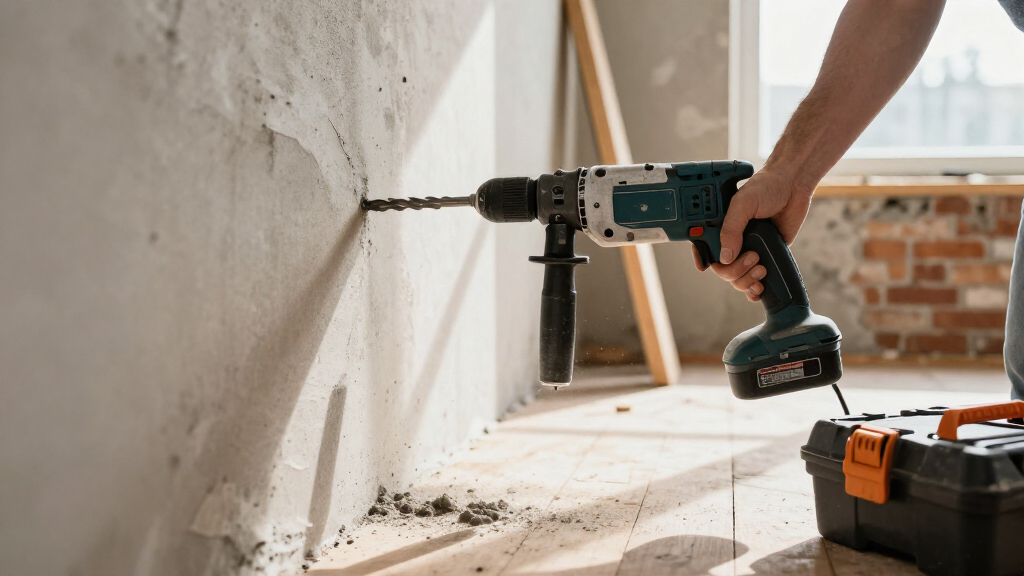
For most buyers seeking the best cordless rotary hammer drill, the DEWALT DCH273B is the strongest overall pick in this lineup, pairing a brushless motor with a three-mode design and a recognizable battery platform. The Seesii 2.8 J model is a higher-impact alternative, while the DEWALT DCH172B suits lighter drilling where compact size matters more than power. The main tradeoffs are impact energy and drilling capacity against tool weight, battery compatibility, and whether a battery and charger are included. Several listings provide limited specifications, so buyers should verify fit and kit contents before choosing. Read on for how the ten options compare and which one fits your work.

Get business pricing on tools and workshop supplies
- Business-only prices and quantity discounts
- Tax-exempt purchasing
- Multiple users, one account, clear invoices
Complete the kit

Key Takeaways
- DEWALT DCH273B leads as the balanced pick: its brushless motor, three modes, and 20V MAX platform make it a practical choice for buyers already using DEWALT batteries.
- Seesii’s 2.8 J model claims the highest impact energy listed, but the lineup details alone do not establish its long-term durability or real-world drilling speed.
- The DCH172B is the compact-work option: its 5/8-inch designation points to smaller drilling tasks, while the DCH133B’s 1-inch class is aimed at larger holes.
- Battery compatibility changes the real value: some models are tool-only, NANWEI includes two batteries, and Greenworks includes a battery and charger.
- Several generic listings leave buyer questions open: confirm battery fit, included accessories, support, and stated drilling capacity before treating their energy figures as directly comparable.

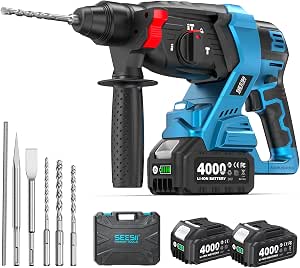


| cordless rotary hammer drill | Impact energy | Motor | Modes | Voltage |
|---|---|---|---|---|
| SDS-Plus Cordless Rotary Hamme | 2.6 J | Brushless | Drill, hammer drill, chisel, and chisel-angle adjustment | — |
| Seesii 1-Inch Cordless SDS-Plu | 2.5 J | Brushless | 4 | — |
| DEWALT 20V MAX Brushless SDS R | 2.1 J | Brushless | Drill, hammer drill, and chip | 20 V |
| NANWEI Cordless SDS-Plus Rotar | 2.0 J | Brushless | Hammer only, hammer drill, and rotary drill | 20 V |
| 20V Brushless SDS-Plus Cordles | 2.5 J | Brushless | Drilling, hammer drilling, chiseling, and chisel-angle adjustment | — |
| Seesii 1-Inch Cordless SDS-Plu | 2.8 J | Brushless | — | — |
| Deshuo 1-Inch SDS-Plus Rotary | 2.21 ft-lbs (3 J) | 9 A | — | — |
| DEWALT 20V MAX Cordless SDS Pl | 1.4 joules | Brushless | Drill and hammer drill | 20V MAX |
| DEWALT 20V MAX SDS Plus 1-Inch | 2.6 joules | Brushless | — | 20V MAX |
| Greenworks 24V Cordless Rotary | 2.1 joules | Brushless | — | 24V |
More Details on Our Top Picks
SDS-Plus Cordless Rotary Hammer Drill, Brushless, 2.6 J, 4 Functions (Tool Only)
With 2.6 J of impact energy and four functions, this is the strongest-impact option among these first five products. It suits buyers who already own compatible Milwaukee 18V batteries and want one tool for drilling and light chiseling. Compared with the DEWALT DCH273B, it offers more listed impact energy and chisel-angle adjustment, while the DEWALT adds vibration control and a named battery platform for its bare tool.
The tradeoff is that this model arrives without a battery or charger, and its listed compatibility limits its appeal to Milwaukee owners. Its overload clutch, thermal shutdown, and shock absorption add useful safeguards, but the plastic construction and lack of included accessories leave buyers to supply the rest of the setup.
Pros:- Highest listed impact energy among these five at 2.6 J
- Four functions include chisel-angle adjustment
- Brushless motor and SDS-Plus chuck
- Overload clutch, thermal shutdown, and shock absorption
Cons:- Battery and charger are not included
- Battery compatibility is limited to Milwaukee 18V lithium-ion batteries
- No bits or chisels are listed as included
Best for: Milwaukee 18V owners who need a compact SDS-Plus tool for concrete holes and occasional chiseling
Not ideal for: First-time cordless tool buyers or anyone without a compatible Milwaukee 18V battery and charger
- Impact energy:2.6 J
- Motor:Brushless
- Chuck:SDS-Plus
- No-load speed:1,100 RPM
- Impact rate:4,800 BPM
- Modes:Drill, hammer drill, chisel, and chisel-angle adjustment
- Maximum concrete capacity:26 mm (1 in)
- Battery compatibility:Milwaukee 18V lithium-ion; battery and charger not included
Our verdict“Choose this Milwaukee-compatible bare tool if impact energy and four functions matter more to you than getting a ready-to-use kit.”
Seesii 1-Inch Cordless SDS-Plus Rotary Hammer Drill, 2.5J Brushless, 4-Mode
The Seesii makes the most sense for buyers who want a cordless rotary hammer setup in one box: it includes two 4.0 Ah batteries, a charger, bits, chisels, and a case. Its four modes cover drilling, hammer drilling, chiseling, and chisel positioning, giving it more flexibility than the DEWALT DCH273B, which has three modes and is sold as a bare tool. At 2.5 J, its listed impact energy is also higher than the DEWALT’s 2.1 J.
The included kit is the clear advantage, though performance under sustained heavy workloads and battery runtime are not specified. The listing says the batteries are compatible with Makita 18V batteries, so buyers with existing packs should verify fit before relying on that compatibility. I’d favor the Seesii for a self-contained starter kit, not for a proven heavy-duty work schedule.
Pros:- Includes two 4.0 Ah batteries and a charger
- Four modes cover drilling and chiseling tasks
- Bits, chisels, depth gauge, and carrying case are included
- Safety clutch, adjustable side handle, and LED work light
Cons:- Battery runtime and heavy-workload performance are not specified
- Listed Makita 18V battery compatibility may need checking
- No impact rate beyond the listed 4,800 BPM is provided
Best for: DIY renovators who need batteries, a charger, and basic SDS-Plus accessories included with their first cordless rotary hammer
Not ideal for: Makita battery owners who require confirmed cross-compatibility, or crews choosing a tool for sustained heavy concrete drilling
- Impact energy:2.5 J
- Motor:Brushless
- Motor power:900 W
- Impact rate:4,800 BPM
- Modes:4
- Maximum concrete capacity:26 mm (1 in)
- Batteries included:2 × 4.0 Ah
- Chuck:SDS-Plus, tool-free
Our verdict“Pick the Seesii if you want a four-mode rotary hammer with batteries and accessories ready in the kit.”
DEWALT 20V MAX Brushless SDS Rotary Hammer Drill, 3 Modes, Bare Tool (DCH273B)
The DCH273B earns its place for buyers who value vibration control during repeated fastening and mounting work. Its three modes—drill, hammer drill, and chip—cover the core tasks, while its 2.1 J impact energy sits below the 2.5 J Seesii and 2.6 J Milwaukee-compatible model in this group. That makes it a more measured choice for concrete work where handling comfort matters more than maximizing the listed impact figure.
It is a bare tool, so DEWALT 20V MAX battery owners have the clearest path to using it without buying into another platform. The Seesii is the more complete kit, and the Milwaukee-compatible pick adds chisel-angle adjustment. The DEWALT’s OSHA Table 1 compliance applies only when paired with the specified DWH303DH extractor, which is an added requirement for buyers who need that setup.
Pros:- Vibration control is designed to reduce vibration felt at the handles
- Brushless motor and German-engineered mechanism
- Three modes cover drilling, hammer drilling, and chipping
- Compatible with DEWALT 20V MAX batteries
Cons:- Battery and charger are not included
- Listed 2.1 J impact energy is lower than the Seesii and Milwaukee-compatible options here
- OSHA Table 1 compliance requires the compatible DWH303DH extractor
Best for: DEWALT 20V MAX owners who do repeated concrete fastening or mounting and prioritize vibration control
Not ideal for: Buyers seeking the highest impact energy, four operating modes, or a complete battery-and-accessory kit
- Impact energy:2.1 J
- Voltage:20 V
- Motor:Brushless
- Modes:Drill, hammer drill, and chip
- Maximum rotational speed:1,100 RPM
- Weight:6.4 lb
- Battery compatibility:DEWALT 20V MAX
- Included:Bare tool only
Our verdict“Choose the DCH273B if you already own DEWALT 20V MAX batteries and want vibration control for recurring concrete mounting work.”
NANWEI Cordless SDS-Plus Rotary Hammer Drill, 3-Mode, 2.0 J, with Two 6.0 Ah Batteries
NANWEI’s distinguishing feature is its two included 6.0 Ah batteries, which give buyers more listed capacity per pack than the Seesii’s two 4.0 Ah batteries. That makes this kit a better fit for longer work sessions where changing batteries is inconvenient. Its brushless motor, SDS-Plus chuck, and three modes cover hammer drilling, rotary drilling, and hammer-only work, though it lists 2.0 J of impact energy—less than the four-mode Seesii and the Milwaukee-compatible drill.
That lower impact figure and the absence of chisel-angle adjustment make it a less flexible pick for chiseling-focused tasks. I’d also treat its wood capacity cautiously: the listing gives both 30 mm and 38 mm. The included safety clutch, work light, and auxiliary handle add practical control features, but the conflicting capacity data makes this a less clear-cut choice than the Seesii kit.
Pros:- Includes two 6.0 Ah lithium-ion batteries and a fast charger
- Brushless motor with variable speed control
- SDS-Plus chuck and three operating modes
- Safety clutch, auxiliary handle, and work light
Cons:- Listed 2.0 J impact energy is lower than the Seesii and Milwaukee-compatible options here
- Wood capacity is inconsistent in the product information: 30 mm in the description and 38 mm in the specifications
- No chisel-angle adjustment mode is listed
Best for: DIY users who expect longer drilling sessions and want two high-capacity batteries included
Not ideal for: Buyers who need stronger listed impact energy, four-mode chisel positioning, or consistent published drilling capacities
- Impact energy:2.0 J
- Voltage:20 V
- Motor:Brushless
- Modes:Hammer only, hammer drill, and rotary drill
- Maximum rotational speed:1,050 RPM
- Maximum impact rate:6,200 IPM
- Batteries included:2 × 6.0 Ah
- Chuck:SDS-Plus
Our verdict“Choose NANWEI if included battery capacity is your priority and you can accept lower listed impact energy and inconsistent wood-capacity details.”
20V Brushless SDS-Plus Cordless Rotary Hammer Drill, Compatible with DeWalt Batteries
This model pairs 2.5 J of impact energy with four modes and compatibility with several listed DEWALT 20V batteries, including DCB203 through DCB206. For buyers who already have those packs, it offers the chisel-angle adjustment absent from the DEWALT DCH273B, while matching the Seesii’s listed impact energy and mode count. Its variable-speed trigger, safety clutch, shock absorption, and 360° handle give the feature set a practical focus on control.
The main limitation is that the listing provides no weight or dimensions, so it is hard to judge overhead handling or storage before buying. It also arrives without a battery or charger, unlike the Seesii and NANWEI kits. Five drill bits and gloves are included, but buyers should choose it for battery-platform fit and four-mode versatility rather than a ready-to-run package.
Pros:- 2.5 J impact energy and four operating modes
- Compatible with several listed DEWALT 20V battery models
- Variable-speed trigger, safety clutch, and shock absorption
- Includes five drill bits and gloves
Cons:- Battery and charger are not included
- No weight or dimensions are provided
- No impact rate or maximum drilling capacities are listed
Best for: DEWALT 20V battery owners who want four operating modes and included drill bits without switching battery platforms
Not ideal for: New cordless tool buyers who need a battery and charger, or users who need published weight and dimensions before choosing a tool
- Battery compatibility:DEWALT 20V batteries, including DCB200, DCB201, DCB203, DCB204, DCB205, and DCB206
- Battery included:No
- Motor:Brushless
- Impact energy:2.5 J
- Chuck:SDS-Plus
- Modes:Drilling, hammer drilling, chiseling, and chisel-angle adjustment
- Speed control:Variable-speed trigger
- Included accessories:5 drill bits and gloves
Our verdict“Pick this model if your DEWALT 20V batteries are already on hand and you want four modes with basic bits included.”
Seesii 1-Inch Cordless SDS-Plus Rotary Hammer Drill, 2.8 J, Brushless Motor
The Seesii pairs 2.8 J of impact energy with four modes, making it a flexible choice for homeowners who need to drill concrete and handle occasional chiseling without a cord. Its kit includes two 4.0 Ah batteries, bits, chisels, and a case, so it arrives better equipped for mixed jobs than the bare-tool DEWALT DCH133B. The tradeoff is that the DCH133B is the clearer fit for buyers already invested in DEWALT’s 20V MAX batteries, while Seesii’s battery compatibility details are unclear. Seesii describes this model for homeowners, DIYers, and light contractors, so I would not rank it ahead of heavier-duty options for sustained professional use. Its included accessories and four modes make it a practical all-rounder for occasional projects.
Pros:- Two 4.0 Ah batteries support longer work away from an outlet
- Four modes cover drilling, hammer drilling, chiseling, and chisel positioning
- Includes SDS-Plus bits, chisels, charger, depth gauge, and case
- Safety clutch and adjustable side handle support control
Cons:- Positioned for homeowner, DIY, and light contractor use rather than heavy-duty professional work
- Battery compatibility details are unclear
Best for: Homeowners who want a ready-to-use cordless kit for concrete drilling, mounting, and occasional light chiseling
Not ideal for: Contractors doing sustained heavy-duty drilling, or buyers who need clearly documented compatibility with an existing battery platform
- Chuck type:SDS-Plus
- Motor:Brushless
- Impact energy:2.8 J
- Impact rate:Up to 5,000 BPM
- Maximum concrete capacity:1 in (26 mm)
- Operating modes:Drill, hammer drill, chisel, chisel positioning
- Batteries included:2 × 4.0 Ah
- Support period:24 months
Our verdict“Choose the Seesii if you want a cordless, accessory-rich kit for varied home projects and do not need a clearly established pro-grade battery platform.”
Deshuo 1-Inch SDS-Plus Rotary Hammer Drill
At 7.19 lbs., the Deshuo is a manageable corded option for DIYers who expect to work near an outlet and want drilling plus light chiseling in one tool. Its four modes, variable speed, reverse, and vibration control give it more task flexibility than the cordless DEWALT DCH172B, which offers only drill and hammer drill modes. Deshuo also lists 3 J of impact energy, but its cord limits where that capability is useful, and the product is described as unsuitable for heavy demolition. The SDS-Plus-only chuck also rules out other bit systems. I’d favor this model for occasional work around a home or workshop where uninterrupted power matters more than mobility; buyers who move between sites should look at a cordless pick instead.
Pros:- Four modes support drilling, hammer drilling, chiseling, and chisel positioning
- Variable speed, reverse, and lock button offer useful control
- Safety clutch and vibration control support more controlled operation
- 7.19 lb. weight is manageable for overhead or downward drilling
Cons:- Cord restricts mobility and requires access to an outlet
- SDS-Plus bits only; other bit systems are not supported
- Not intended for heavy-duty demolition
Best for: DIYers working in a garage or home workshop who want a lighter corded tool for concrete holes and occasional tile or masonry chiseling
Not ideal for: Installers who need to move freely between rooms or job sites, and users planning heavy demolition
- Power source:Corded electric, 120 V
- Motor:9 A
- Chuck and bit compatibility:10 mm chuck; SDS-Plus only
- Impact energy:2.21 ft-lbs (3 J)
- Impact rate:Up to 5,300 BPM
- Maximum speed:1,100 RPM
- Weight:7.19 lbs
- Warranty:24 months
Our verdict“Choose the Deshuo for light-to-moderate DIY work near an outlet when its corded power and four modes matter more than cordless mobility.”
DEWALT 20V MAX Cordless SDS Plus Rotary Hammer Drill, 5/8 in. (DCH172B), Tool Only
The DEWALT DCH172B is built around compact installation work: it weighs little, limits vibration with SHOCKS active vibration control, and handles drilling and hammer drilling in concrete. Its 5/8-inch capacity and 1.4 joules make it a more focused tool than the 1-inch DEWALT DCH133B, which offers more impact energy and a chip mode for broader work. That smaller scale can suit repeated mounting and fastening holes where handling comfort matters, but it is a poor match for buyers who need chiseling or larger holes. This listing is also a bare tool, and the stated OSHA Table 1 compliance depends on pairing it with a specified shroud and dust extractor. I’d choose it for installation tasks, especially within an existing 20V MAX setup.
Pros:- Lightweight design suits installation work and repeated handling
- SHOCKS active vibration control reduces vibration felt at the handles
- Brushless motor supports efficient operation
- Cordless 20V MAX platform supports work away from outlets
Cons:- 1.4 joules and 5/8-inch capacity limit it to smaller drilling tasks
- No chisel mode
- Tool-only listing; stated OSHA Table 1 compliance requires specified shroud and dust extractor
Best for: Installers drilling repeated holes up to 5/8 inch in concrete who value a lightweight tool and already own compatible 20V MAX batteries
Not ideal for: Buyers needing a 1-inch hammer, chiseling mode, included battery and charger, or dust-control equipment in the same purchase
- Model:DCH172B
- Voltage:20V MAX
- Chuck type:SDS Plus
- Capacity:5/8 in.
- Impact energy:1.4 joules
- Motor:Brushless
- Modes:Drill and hammer drill
- Dust-control compliance:OSHA Table 1 compliant with DWH200D shroud and DWH161D1 dust extractor
Our verdict“Choose the DCH172B for compact concrete installation work if its 5/8-inch limit fits your jobs and you have the required battery and accessories.”
DEWALT 20V MAX SDS Plus 1-Inch Cordless Rotary Hammer with D-Handle (Bare Tool, DCH133B)
The DCH133B offers 1-inch capacity and 2.6 joules in a cordless DEWALT 20V MAX tool, a step up in drilling scope from the compact DCH172B. Its three modes—drill, hammer drill, and chip—also cover more than simple hole making, though the Seesii 2.8 J kit adds a fourth mode and arrives with batteries and accessories. That comparison matters: the DCH133B is a bare tool, so it makes the most sense for buyers who already have compatible batteries and a charger. A 360° side handle and depth rod support controlled drilling, but the supplied information does not give a weight figure to help buyers judge handling against lighter models. I’d put it on the shortlist for mounting and anchoring jobs within the DEWALT ecosystem.
Pros:- 1-inch maximum drilling diameter supports larger holes than the DCH172B
- 2.6 joules of impact energy for concrete drilling
- Three modes include a chip setting
- 360° side handle and depth rod are included
Cons:- Bare tool; battery and charger are not specified as included
- Three modes provide less task flexibility than four-mode picks such as the Seesii
Best for: DEWALT 20V MAX owners who need a cordless 1-inch SDS-Plus hammer for anchoring, mounting, and occasional chipping
Not ideal for: First-time cordless-tool buyers who need a battery and charger, or buyers seeking the most complete out-of-box kit
- Model:DCH133B
- Voltage:20V MAX
- Chuck type:SDS Plus
- Maximum drilling diameter:1 inch
- Impact energy:2.6 joules
- Motor:Brushless
- Operating modes:Drill, hammer drill, chip
- Included accessories:360° side handle, depth rod
Our verdict“Choose the DCH133B if you already own DEWALT 20V MAX batteries and need a cordless 1-inch hammer with a chip mode.”
Greenworks 24V Cordless Rotary Hammer Drill with Brushless Motor, 4Ah Battery & Charger
The Greenworks combines a 5.44 lb. body with four modes and a supplied 4 Ah battery and charger, making it an accessible cordless choice for buyers who want to start without assembling a separate kit. Its 2.1 joules sit below the Seesii’s 2.8 J and the DEWALT DCH133B’s 2.6 J, so those models make stronger candidates when drilling capacity is the priority. Greenworks counters with a compact format for tighter spaces and includes chisel operation and chisel rotation lock for light chiseling. The tradeoffs are its Greenworks 24V battery ecosystem and plastic construction, which may concern buyers comparing it with metal-bodied alternatives. I’d choose it for portability and included essentials on intermittent household jobs.
Pros:- 5.44 lb. weight supports handling in tight spaces
- Includes a 4 Ah battery and charger
- Four modes include chiseling and chisel rotation lock
- Brushless motor and LED light are included
Cons:- 2.1 joules is below the Seesii 2.8 J and DEWALT DCH133B 2.6 J
- Battery is limited to the Greenworks 24V ecosystem
- Plastic construction may be less durable than metal-bodied alternatives
Best for: Homeowners who want a light, complete cordless kit for occasional concrete drilling and light chiseling in tight spaces
Not ideal for: Users who need stronger impact energy for demanding concrete work or want batteries interchangeable with another tool platform
- Voltage:24V
- Chuck type:1 in. SDS Plus
- Impact energy:2.1 joules
- Motor:Brushless
- Operating modes:Drilling, hammer drilling, chisel, chisel rotation lock
- Weight:5.44 lbs
- Battery included:4 Ah lithium-ion
- Warranty:3-year tool and battery warranty
Our verdict“Choose the Greenworks if you value a lightweight, ready-to-use kit for occasional jobs more than maximum impact energy or cross-platform battery sharing.”

How We Picked
I ranked these drills by how clearly their listed features serve common concrete-drilling jobs: impact energy and stated drilling class, mode options, brushless motors, battery-platform fit, kit contents, and practical versatility. I gave more weight to models with identifiable platforms and useful published specifications, since buyers can more readily judge fit and expand an existing tool setup. A higher joule figure can favor tougher drilling, but it does not establish drilling speed or durability by itself.
That logic puts the DEWALT DCH273B first as the most balanced, clearly identified option, with the Seesii 2.8 J model ahead for buyers who prioritize its stated impact energy. The DCH172B ranks for compact, smaller-hole work rather than as a substitute for a 1-inch class hammer. Included batteries improve the appeal of NANWEI and Greenworks for buyers starting without a compatible pack, while sparse details keep several generic and battery-compatible listings lower. These rankings use the supplied product information; they do not reflect hands-on tests.
Factors to Consider When Choosing Best Cordless Rotary Hammer Drill
Choose a cordless rotary hammer by matching its job, battery system, and kit contents to the work you actually expect to do. A model with the biggest stated impact figure may be a poor fit if it is awkward overhead or leaves you buying a new battery platform.
Match drilling capacity to the holes you need
Start with the largest hole diameter and the materials you expect to drill, then check the manufacturer’s recommended capacity for that material. A 5/8-inch class tool can make sense for anchors and lighter installations, while a 1-inch class model offers more room for larger bits and heavier tasks. Capacity labels are not promises that every tool can sustain its maximum size in every concrete mix. Repeated large holes put more demand on the motor, battery, bit, and operator than occasional small anchors do. Buying extra capacity can add bulk without helping if your jobs stay small. If your work varies, compare the stated capacity for concrete with the bits you already own.
Read joule figures as one part of performance
Impact energy describes the force delivered per blow, but it cannot predict complete drilling performance on its own. Bit quality, hammer rate, motor control, battery output, and the concrete itself all affect how quickly a hole is made. A higher joule claim may suit tougher drilling, yet it may come with a heavier or less familiar tool. Compare figures only when the makers describe them on a similar basis, and look for published drilling capacity alongside them. Avoid treating a single headline number as proof of durability or speed. For frequent work, service support and suitable replacement bits matter just as much.
Check the whole battery platform, not just voltage
Battery voltage alone does not confirm that a pack will fit or deliver the performance a tool needs. Verify the exact platform and compatibility rules before buying a bare tool, especially when a listing says it works with another brand’s batteries. Consider whether your current packs have enough capacity for extended concrete drilling, which can drain batteries faster than occasional fastening tasks. A kit with batteries and a charger may be easier for a new cordless-tool owner, while a tool-only model can be sensible if you already own compatible packs. Factor in the cost and availability of replacement batteries as part of ownership. Avoid assuming that a physically fitting third-party adapter carries the same support or protection as a platform-native pack.
Choose modes for the work beyond drilling
Mode count matters when it changes what you can do with the tool. Rotary hammer mode combines rotation and impact for concrete, while rotation-only can handle wood or metal with suitable bits; chipping mode, when present, supports light demolition with the correct accessory. A four-mode label is useful only if the listing explains those modes and the tool supports your intended task. If you mainly drill anchors, simpler controls may be easier to use. If you need occasional chiseling, verify that the drill accepts the relevant chisel bits and that the manufacturer permits that work. Do not assume every mode makes a compact drill suitable for prolonged demolition.
Account for handling and overhead use
Tool weight, handle shape, vibration control, and balance affect how tiring a drilling session feels. These details become more noticeable during overhead work or when you need to hold a steady position for several holes. A D-handle and a compact body suit different grips and spaces, so consider where the tool will be used rather than choosing by capacity alone. Battery weight adds to the load, and a larger pack can change balance even when it extends runtime. Look for published weight with the battery attached when available. If the listing omits weight or vibration details, treat that as missing information and check the maker’s documentation before committing.
Compare kit completeness and support
Before choosing a package, check whether it includes batteries, a charger, a case, a depth stop, and any dust-control accessories your work requires. Bare-tool listings can look complete in photos while leaving out the parts needed to start drilling. For less familiar brands, confirm the warranty terms, service route, and access to replacement parts and compatible accessories. A lower-feature tool with a clear support path may be a safer long-term fit than one with a more ambitious specification and little documentation. Confirm the chuck standard and accessory compatibility as well. These checks help prevent a tool that suits the headline job but cannot be maintained or equipped conveniently.
Frequently Asked Questions
Should I choose the Seesii 2.8 J drill over the DEWALT DCH273B?
Choose the Seesii if its stated 2.8 J impact energy and 1-inch class fit your drilling needs, and you are comfortable verifying its battery setup and support details. The DEWALT DCH273B is the more straightforward choice for buyers already invested in DEWALT’s 20V MAX platform who value a named tool line and three modes. The listed joule figures do not show which drill will make holes faster in your concrete. Compare published capacity, tool weight, warranty, and included items before deciding. If you expect routine heavy use, service access may matter more than the higher figure.
Is a 5/8-inch cordless rotary hammer enough for home projects?
It can be enough for many home tasks involving smaller holes for anchors, brackets, or light installations. The DEWALT DCH172B is the lineup’s 5/8-inch class option, so it is better viewed as a compact-duty pick than a stand-in for a 1-inch model. Check the maker’s stated capacity for the actual bit diameter and concrete type you plan to use. If larger holes or frequent drilling are likely, a tool with more capacity may save frustration. Avoid buying a larger, heavier drill solely for a rare task if a suitable rental is practical.
Does a cordless rotary hammer need a battery with a particular amp-hour rating?
There is no single amp-hour rating that suits every job; runtime needs depend on hole size, concrete hardness, and how many holes you drill between charges. Higher-capacity batteries typically extend time between swaps, though they add weight and may change balance. Check which battery platform the exact tool accepts, since voltage labels and brand compatibility are not enough to confirm a match. For occasional work, a smaller compatible pack may be easier to handle. For repeated drilling, having a spare pack can reduce interruptions more effectively than choosing a tool based on battery capacity alone.
Can I use a rotary hammer for chiseling as well as drilling?
Some models list a chipping or hammer-only mode, but the mode label does not tell you how much demolition the tool can sustain. Check the manufacturer’s manual for approved bits and limits before using a drill for chiseling. Rotary hammers are generally suited to lighter chipping, while extended demolition can call for a dedicated breaker. Among these listings, mode counts vary, and the product title alone does not always explain the available modes clearly. Match the tool to the duration and scale of the task, not just the presence of a chisel setting.
What should I verify before buying a bare-tool or third-party battery-compatible model?
Confirm the exact battery model or platform, whether an adapter is required, and whether the manufacturer supports that configuration. Check that a charger, side handle, depth stop, case, and other needed accessories are actually included rather than shown only in product images. Review warranty coverage and the route for service or replacement parts. For listings with limited documentation, look for a manual that states capacity, weight, and mode functions. Those details can determine whether the tool is usable for your job and supportable after purchase.
Conclusion
For the best overall balance, I recommend the DEWALT DCH273B, especially for buyers already using 20V MAX batteries. The best value depends on your setup: NANWEI includes two batteries, while Greenworks supplies a 4Ah battery and charger, making either more complete for someone starting fresh, subject to checking capacity and support. For a premium platform choice, the DEWALT DCH273B is the most clearly specified pick here; the lineup does not provide enough evidence to call any option a proven heavy-duty performer. Beginners with smaller jobs should look at the compact DCH172B, while buyers drilling larger holes can compare the DCH133B and higher-energy Seesii. If your priority is included kit contents, compare NANWEI and Greenworks; if it is compact drilling, favor the DCH172B. Match capacity, battery fit, and support to your work before settling on a model.
Halloween Picks

10.5 ft Lighted Pumpkin and Ghost Halloween Inflatable Archway

Vexalify 11-Inch Halloween Pumpkin Fog Machine with 12-Color Lights

12.5-Foot Lighted Halloween Inflatable Archway
As an affiliate, we earn on qualifying purchases.