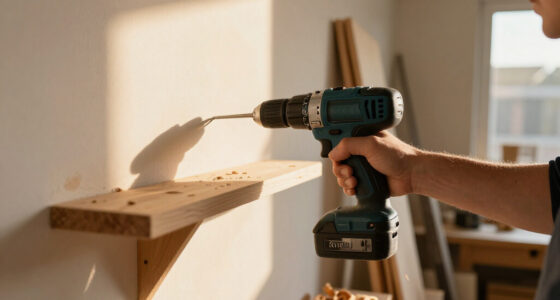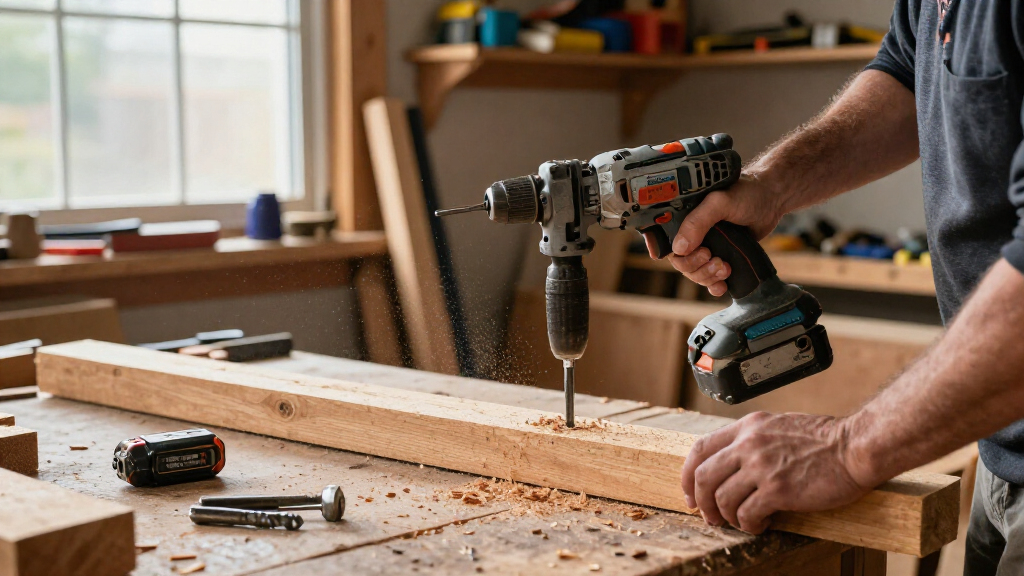
Looking for a cordless hammer drill that can power through concrete and masonry without dragging an extension cord? The DEWALT 20V MAX XR DCD1007B stands out as the best overall for its high-impact mechanism and brushless motor, while the Seesii 2.8J SDS-Plus rotary hammer delivers exceptional value for heavy drilling, and the CRAFTSMAN V20 kit is the friendliest entry point for DIYers. The main tradeoffs come down to power versus portability, chuck type (standard vs. SDS), and which battery platform you already own. Read on for the full breakdown of all 14 picks and a clear path to the right one for your projects.

Get business pricing on tools and workshop supplies
- Business-only prices and quantity discounts
- Tax-exempt purchasing
- Multiple users, one account, clear invoices
Complete the kit

Key Takeaways
- SDS-Plus rotary hammers outperform standard hammer drills on masonry but are heavier, louder, and require dedicated bits—choose based on how often you drill into concrete.
- Brushless motors are now standard across nearly every model in this roundup, but battery capacity varies from 1.5Ah to 5Ah, which directly affects runtime and weight.
- DEWALT dominates the premium tier with three distinct models: the DCD1007B for raw power, the DCD806B for balance, and the DCH273B for SDS work—each serves a different niche.
- Value picks like the Seesii 2.8J and DCA 20V kits offer comparable impact energy to big-name brands, but often with shorter battery life and less refined ergonomics.
- The 1/2-inch chuck size is the sweet spot for general drilling, while SDS models use quick-change chucks that accept only SDS bits—a major compatibility consideration.





| cordless hammer drill | Motor | Chuck | Voltage | Weight |
|---|---|---|---|---|
| SundpeyPRO 21V Brushless Cordl | Brushless | 1/2 in (13 mm) self-locking metal | 21V | 4.14 lb |
| Seesii 1-Inch Cordless SDS-Plu | Brushless | Tool-free SDS-Plus | — | — |
| DEWALT 20V MAX XR Brushless Co | Brushless | 1/2 in metal ratcheting | — | — |
| DCK 20V Brushless Cordless Ham | Brushless | 1/2 in keyless all-metal | 20V | — |
| DEWALT 20V MAX XR Brushless Co | Brushless | 1/2 in | — | — |
| TsuIcaty 18V Cordless SDS-Plus | Brushless | SDS-Plus | 18V | 3.7 lb |
| DEWALT 20V MAX Brushless SDS P | Brushless | — | 20V MAX | 6.4 lb |
| CRAFTSMAN V20 Cordless Hammer | — | 1/2-inch ratcheting | 20V | 5.4 lb |
| DCA 20V Brushless Cordless Ham | Brushless | 1/2-inch all-metal keyless | 20V | 6.8 lb |
| DEWALT DCD798B 20V MAX Brushle | Brushless | 1/2 inch | 20V MAX | 2.7 lb |
| GoYwato 21V Brushless Cordless | Brushless | 1/2-inch (13mm) self-locking metal | 21V | 4.12 lbs (1.87 kg) with battery |
| Seesii Cordless SDS-Plus Rotar | Brushless | — | 18V | — |
| DCA 20V Cordless Hammer Drill | — | 1/2-inch keyless | 20V | — |
| DEWALT 20V MAX Brushless Cordl | Brushless | — | — | 4.59 pounds |
More Details on Our Top Picks
SundpeyPRO 21V Brushless Cordless Hammer Drill, 1060 in-lb
The SundpeyPRO 21V is the strongest fit here for buyers who want a ready-to-work kit rather than a bare tool. Its two 4.0Ah batteries, charger, auxiliary handle, metal chuck, and assortment of bits cover a broad range of household and workshop jobs. Three modes and 20 clutch settings also make it more adaptable for screwdriving than a dedicated rotary hammer such as the Seesii SDS-Plus, which is built around concrete drilling and chiseling.
Its listed 1,060 in-lb torque and two speed ranges give it useful headroom for general drilling, but the impact-drilling mode is described for lightweight concrete and thin materials—not sustained heavy masonry work. The batteries take about two to three hours to charge, so the second pack helps keep work moving. I’d choose it for mixed tasks, not as a substitute for an SDS-Plus tool on demanding concrete jobs.
Pros:- Includes two 4.0Ah batteries, a charger, and a broad accessory set
- Three modes and 20 clutch settings cover varied drilling and screwdriving tasks
- Metal chuck and auxiliary handle support bit retention and two-handed control
- Brushless motor with two speed ranges and overload protection
Cons:- Impact drilling is specified for lightweight concrete and thin materials, not demanding masonry work
- A full battery charge takes about two to three hours
- At 4.14 lb, it is heavier than a compact drill for extended overhead work
Best for: DIYers and homeowners who want one cordless drill kit for screwdriving, wood and metal drilling, and occasional light masonry work.
Not ideal for: Buyers who regularly drill larger holes in concrete or need a dedicated chiseling function; an SDS-Plus rotary hammer is better suited to that work.
- Voltage:21V
- Motor:Brushless
- Maximum torque:1,060 in-lb (120 N·m)
- Batteries:Two 4.0Ah Li-ion batteries
- Speed ranges:0–600 RPM and 0–2,150 RPM
- Working modes:Screwdriving, drilling, and impact drilling
- Chuck:1/2 in (13 mm) self-locking metal
- Weight:4.14 lb
- Warranty:2 years
Our verdict“Choose the SundpeyPRO if you want a well-equipped general-purpose kit with two batteries, but pick an SDS-Plus model for frequent heavy concrete drilling.”
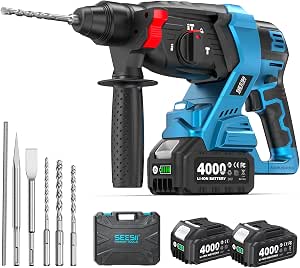
Seesii 1-Inch Cordless SDS-Plus Rotary Hammer Drill, 2.5 J, Brushless, 4 Modes
The Seesii SDS-Plus rotary hammer belongs in this roundup for buyers whose main job is concrete, not for those seeking a conventional hammer drill for everyday screwdriving. Its 2.5 J impact energy, SDS-Plus chuck, and four modes—including chiseling and chisel-angle adjustment—make it more suited to masonry and light demolition than the SundpeyPRO 21V, whose impact mode is limited to lightweight concrete and thin materials.
The kit includes two 4.0Ah batteries, bits, chisels, a depth gauge, and a case, so it arrives better equipped for masonry work than the bare-tool DEWALT DCD806B. That specialization brings tradeoffs: SDS-Plus bits are not the same as standard round-shank drill bits, and the listing gives no tool weight or runtime figures. I’d shortlist it for users who need cordless chiseling, while buyers mostly driving screws or drilling wood should choose a standard hammer drill.
Pros:- Four modes include hammer drilling, chiseling, and chisel-angle adjustment
- 2.5 J impact energy and a stated maximum concrete capacity of 1 in (26 mm)
- Includes two 4.0Ah batteries, drill bits, chisels, depth gauge, and case
- Safety clutch helps limit sudden torque reaction
Cons:- SDS-Plus chuck requires compatible bits and is less suited to routine screwdriving than a standard chuck
- Weight and runtime are not provided in the listed specifications
- Battery compatibility details are limited despite a reference to Ma-kita 18V batteries
Best for: DIY renovators and tradespeople who need a cordless tool for concrete holes and occasional chiseling, with batteries and masonry accessories in the kit.
Not ideal for: Buyers whose work is mostly screwdriving, wood, or metal drilling, or anyone who needs published weight and runtime figures before choosing a tool.
- Motor:Brushless
- Impact energy:2.5 J
- Power:900 W
- Impact rate:4,800 BPM
- Chuck:Tool-free SDS-Plus
- Modes:Four: drilling, hammer drilling, chiseling, and chisel-angle adjustment
- Maximum concrete capacity:1 in (26 mm)
- Batteries:Two 4.0Ah batteries
- Maximum wood capacity:1-3/16 in (30 mm)
Our verdict“Choose the Seesii for cordless concrete drilling and chiseling, but choose a standard hammer drill like the SundpeyPRO for more general-purpose work.”
DEWALT 20V MAX XR Brushless Cordless 1/2-Inch Hammer Drill, Tool Only (DCD806B)
The DEWALT DCD806B makes the most sense for buyers already invested in the 20V MAX battery platform. Its brushless motor, metal ratcheting chuck, two-speed transmission, and ANTI-ROTATION system give it a focused mix of control and familiar platform compatibility. That control feature separates it from the DCK 20V kit, which includes a battery and accessories but does not list a comparable anti-rotation system.
The three-position, 70-lumen LED can be adjusted to light a work area, a practical advantage in cabinets or utility spaces. This is a tool-only purchase, though, so a new buyer must supply a compatible battery and charger; the SundpeyPRO and DCK kits are easier starting points. Its listed maximum speed is 2,000 RPM, and the two-speed setup is less adjustable than the three-speed DEWALT DCD1007B. I’d pick it for platform users who value controlled everyday drilling over maximum listed torque.
Pros:- Compatible with DEWALT 20V MAX batteries and chargers
- ANTI-ROTATION system is designed to help control the tool during bind-ups
- Three-position 70-lumen LED offers adjustable task lighting
- Metal ratcheting chuck supports secure bit retention
Cons:- Battery and charger are sold separately
- Two speed settings offer less range selection than the three-speed DCD1007B
- Listed maximum speed is 2,000 RPM, below the DCK kit’s stated upper speed
Best for: Existing DEWALT 20V MAX owners who want a brushless hammer drill for routine drilling and masonry tasks without adding another battery platform.
Not ideal for: First-time cordless-tool buyers without a compatible 20V MAX battery and charger, or users seeking a bundled kit or three-speed transmission.
- Battery platform:DEWALT 20V MAX
- Motor:Brushless
- Speed settings:Two
- No-load speed:0–650 RPM and 0–2,000 RPM
- Chuck:1/2 in metal ratcheting
- LED work light:Three-position, 70 lumens
- Included:Tool only; battery and charger sold separately
Our verdict“Choose the DCD806B if you already own DEWALT 20V MAX batteries and want a control-focused hammer drill without paying for another kit’s accessories.”
DCK 20V Brushless Cordless Hammer Drill Kit with 4.0Ah Battery
The DCK 20V kit is a practical pick for buyers who want a brushless hammer drill with a battery, charger, and useful starter accessories in the box. Its 4.0Ah battery, 42-piece bit set, belt hook, and storage bag make it a more complete purchase than the bare-tool DEWALT DCD806B. Three operating modes and 22+1+1 clutch settings also give it flexibility for driving screws as well as drilling.
Its listed 531 in-lb torque is more modest than the SundpeyPRO’s 1,060 in-lb, so I’d place it in the everyday DIY category rather than at the head of the lineup for demanding work. The all-metal chuck is a useful durability feature, but the speed data conflict: one listing gives a 2,200 RPM upper range while another cites 2,000 RPM. Runtime also depends on the task, and the kit includes just one battery. It suits buyers who value a bundle over peak output.
Pros:- Includes a 4.0Ah battery, charger, 42 bits, belt hook, and storage bag
- Three operating modes and 22+1+1 clutch settings support varied tasks
- All-metal keyless chuck
- Brushless motor with two speed ranges
Cons:- Listed 531 in-lb torque is substantially below the SundpeyPRO’s 1,060 in-lb figure
- Maximum speed is inconsistent across the supplied specifications: 2,000 or 2,200 RPM
- One included battery may interrupt longer sessions while it recharges
Best for: Home DIYers who want a brushless hammer drill, one 4.0Ah battery, charger, and starter bits for occasional projects.
Not ideal for: Users who need the highest listed torque, a second battery for continuous work, or clear confirmed maximum-speed specifications.
- Voltage:20V
- Motor:Brushless
- Maximum torque:531 in-lb (60 N·m)
- Speed settings:Two; listed ranges include 0–550/0–2,200 RPM, with another specification citing 2,000 RPM maximum
- Impact rate:36,000 IPM
- Torque clutch:22+1+1 settings
- Chuck:1/2 in keyless all-metal
- Battery:4.0Ah lithium-ion
- Included accessories:2A charger, 42 bits, belt hook, and 12 in storage bag
Our verdict“Choose the DCK if a bundled battery, charger, and accessory set matter more than the higher torque or dual-battery setup offered by the SundpeyPRO.”
DEWALT 20V MAX XR Brushless Cordless 1/2-Inch Hammer Drill (DCD1007B), Tool Only
The DEWALT DCD1007B is the high-output choice among these standard hammer drills, with a listed 2,100 in-lb maximum torque and a three-speed all-metal transmission. That makes it a better match for demanding drilling than the DCK, whose listed torque is 531 in-lb, while retaining a conventional 1/2-inch chuck rather than the SDS-Plus system used by the Seesii rotary hammer.
Its anti-rotation system is intended to help control the tool during bind-ups, and the pivoting three-position LED can direct light where the work demands. The cost of this performance is a bare-tool format: battery and charger are sold separately, unlike the SundpeyPRO and DCK kits. The listed maximum rotational speed is also given as 0.75 revolutions per second, not a standard RPM figure, making direct speed comparison difficult. I’d favor it for tough drilling on the DEWALT 20V MAX platform, not for buyers who need a complete kit.
Pros:- Listed maximum torque of 2,100 in-lb
- Three-speed all-metal transmission offers more speed selection than the two-speed DCD806B
- Anti-rotation system is designed to help manage bind-ups
- Pivoting three-position LED can be aimed at the work area
Cons:- Battery and charger are sold separately
- Tool weight and dimensions are not provided
- Maximum rotational speed is listed in revolutions per second, limiting direct comparison with RPM-based specs
Best for: DEWALT 20V MAX owners who tackle demanding drilling in wood, metal, and concrete and want high listed torque with three speed choices.
Not ideal for: Buyers starting without a DEWALT battery and charger, those who prioritize a supplied accessory kit, or users who need published weight and dimensions.
- Battery platform:DEWALT 20V MAX
- Motor:Brushless
- Maximum torque:2,100 in-lb
- Transmission:Three-speed, all-metal
- Chuck:1/2 in
- Anti-rotation system:Included
- LED work light:Pivoting, three-position
- Maximum rotational speed:0.75 revolutions per second, as listed
- Battery and charger:Not included
Our verdict“Choose the DCD1007B if you already own DEWALT 20V MAX batteries and want the lineup’s highest listed torque in a standard hammer drill.”
TsuIcaty 18V Cordless SDS-Plus Rotary Hammer Drill, Bare Tool
The TsuIcaty is a stronger fit for concrete work than the conventional hammer drills in this group: its SDS-Plus chuck and 2.6 J impact energy are aimed at drilling and light chiseling, not just adding hammer action to a standard drill. Four modes let me switch between drilling, hammer drilling, chiseling, and adjusting chisel angle, giving it more flexibility than the three-mode DEWALT DCH273B. A brushless motor, overload clutch, thermal shutdown, and shock-absorption system add useful protection for demanding sessions. The tradeoff is ownership compatibility: it needs a compatible 18V Max battery, and neither battery nor charger is included. I would choose it for a broader set of masonry tasks, but skip it if I need a complete kit or already rely on another battery platform.
Pros:- 2.6 J impact energy and SDS-Plus chuck suit concrete drilling and chiseling.
- Four operating modes cover drilling, hammer drilling, chiseling, and chisel-angle adjustment.
- Brushless motor is paired with overload and thermal protection.
- Shock-absorption system, 360-degree handle, and metal depth gauge support controlled work.
Cons:- Battery and charger are not included.
- Requires a compatible 18V Max lithium-ion battery.
- SDS-Plus rotary-hammer format is less suited to general fastening than a standard hammer drill.
Best for: DIY renovators who need an SDS-Plus tool for concrete drilling and occasional chiseling and already own a compatible 18V Max battery.
Not ideal for: Buyers seeking a ready-to-work kit or a drill for routine wood, metal, and screw-driving tasks; the battery is excluded and the SDS-Plus format is more specialized.
- Voltage:18V
- Motor:Brushless
- Impact energy:2.6 J
- Maximum rotational speed:1100 rpm
- Impact rate:4800 BPM
- Chuck:SDS-Plus
- Operating modes:Drill, hammer drill, chisel, chisel angle adjust
- Maximum concrete drilling capacity:1 in (26 mm)
- Weight:3.7 lb
Our verdict“Choose the TsuIcaty if you need four-mode SDS-Plus versatility for masonry and already have its compatible battery.”
DEWALT 20V MAX Brushless SDS Plus Rotary Hammer, 3 Modes, Bare Tool (DCH273B)
The DCH273B makes the most sense for buyers who spend meaningful time drilling concrete and want a rotary hammer designed around that job. Its 2.1 J impact energy is lower than the TsuIcaty’s 2.6 J, but DEWALT pairs it with vibration control and a lightweight design to reduce fatigue during extended use. Three modes cover drilling, hammer drilling, and chipping; unlike the TsuIcaty, it does not list a chisel-angle adjustment mode. The brushless motor and 1-inch drilling capacity suit regular masonry work, while the extractor pairing adds a jobsite dust-control option: OSHA Table 1 compliance applies only when used with the DWH303DH extractor. This is a bare tool, so buyers need a compatible battery and may need the extractor as well.
Pros:- Vibration control is designed to reduce vibration felt at the handles.
- Brushless motor and 2.1 J impact energy support concrete drilling and chipping.
- Three modes cover drilling, hammer drilling, and chip work.
- Includes a 360-degree side handle, depth rod, and adjustable hook.
Cons:- Battery is not included.
- OSHA Table 1 compliance requires the DWH303DH extractor.
- Its three modes offer less chisel-angle flexibility than the four-mode TsuIcaty.
Best for: Masonry installers and renovation crews who already use DEWALT 20V MAX batteries and value vibration control during repeated concrete drilling.
Not ideal for: Buyers who need a complete kit, four-mode chiseling flexibility, or OSHA Table 1 compliance without purchasing the specified extractor.
- Voltage:20V MAX
- Motor:Brushless
- Impact energy:2.1 J
- Maximum rotational speed:1100 rpm
- Modes:Drill, hammer drill, chip
- Weight:6.4 lb
- Included accessories:360-degree side handle, depth rod, adjustable hook
- Warranty:3-year limited
Our verdict“Pick the DCH273B for repeated concrete work where vibration control matters more than extra modes or included batteries.”
CRAFTSMAN V20 Cordless Hammer Drill Kit, 1/2-Inch, with 2 Batteries and Charger (CMCD711C2)
Unlike the SDS-Plus TsuIcaty and DEWALT DCH273B, the CRAFTSMAN is a conventional 1/2-inch hammer drill for mixed household drilling and fastening, with masonry hammer action as one part of a broader toolkit. Its clearest advantage is that the box includes two batteries and a charger, so a new user can get started without sourcing a battery separately. The two-speed gearbox supports a change of pace between controlled fastening and faster drilling, while the ratcheting chuck helps hold common bits. The listed 280 unit watts out and 25,500 bpm hammer rate provide useful context, but this kit does not list a brushless motor. Its 1.3 Ah batteries may also require more frequent swaps under demanding use than a higher-capacity pack.
Pros:- Includes two lithium-ion batteries and a charger.
- Two-speed gearbox supports both controlled fastening and faster drilling.
- Ratcheting 1/2-inch chuck helps retain common bits.
- Hammer function adds capability for occasional masonry drilling.
Cons:- The listed battery capacity is 1.3 Ah per battery.
- A brushless motor is not specified.
- It lacks the SDS-Plus chuck and chiseling modes of the rotary hammers.
Best for: First-time DIYers who need one ready-to-use drill for household fastening, wood and metal work, and occasional masonry holes.
Not ideal for: Frequent concrete drillers who need SDS-Plus chiseling or buyers prioritizing a brushless motor and higher-capacity batteries.
- Voltage:20V
- Chuck:1/2-inch ratcheting
- Motor output:280 unit watts out
- Maximum rotational speed:1500 rpm
- Hammer rate:25,500 bpm
- Gearbox:2 speeds
- Battery capacity:1.3 Ah
- Batteries included:2
- Weight:5.4 lb
Our verdict“Choose the CRAFTSMAN for a ready-to-use general-purpose kit, not for frequent heavy concrete work.”
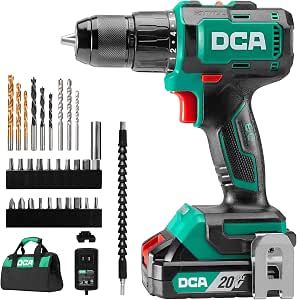
DCA 20V Brushless Cordless Hammer Drill Kit
The DCA kit is aimed at buyers who want one purchase to cover drilling, fastening, and a range of small jobs. Its brushless motor, two speeds, and 18+1+1 settings offer more adjustment than the simpler two-speed CRAFTSMAN, while the 492 in-lb torque rating gives it a clear fastening focus. A 2.0 Ah battery, charger, drill bits, screwdriver bits, extension holder, flexible shaft, and bag make the package unusually self-contained. That breadth does not make it a substitute for a rotary hammer: its 1/2-inch keyless chuck and listed brick capacity suit lighter masonry drilling, not chiseling or sustained concrete work like the DEWALT DCH273B. The included battery is modest in capacity, and the listed 6.8 lb weight may feel substantial during overhead work.
Pros:- Brushless motor with up to 492 in-lb of listed torque.
- Two speeds and 18+1+1 settings allow adjustment for drilling and fastening.
- Kit includes a 2.0 Ah battery, charger, drill and screwdriver bits, and carrying bag.
- All-metal keyless chuck supports convenient bit changes.
Cons:- The included battery capacity is 2.0 Ah.
- At a listed 6.8 lb, it is heavier than the compact DEWALT DCD798B.
- It is not an SDS-Plus rotary hammer and does not list a chiseling mode.
Best for: DIYers who need a brushless drill for varied fastening and drilling jobs and want bits, a charger, and a carrying bag in the kit.
Not ideal for: Masonry specialists who need SDS-Plus chiseling, or users who want a lightweight drill for frequent overhead work.
- Voltage:20V
- Motor:Brushless
- Maximum torque:492 in-lb
- Speeds:2: 0–450 rpm and 0–1800 rpm
- Torque settings:18+1+1
- Impact frequency:27,000 BPM
- Chuck:1/2-inch all-metal keyless
- Battery:2.0 Ah lithium-ion
- Weight:6.8 lb
Our verdict“Choose the DCA if you want an accessory-rich brushless kit for general drilling and fastening rather than dedicated concrete work.”
DEWALT DCD798B 20V MAX Brushless 1/2-Inch Cordless Hammer Drill Driver, Tool Only
At a listed 2.7 lb, the DCD798B is the compact conventional hammer drill in this group, making it easier to handle in tight spaces than the 6.8 lb DCA kit or the SDS-Plus rotary hammers. Its brushless motor, 531 in-lb maximum torque, and built-in LED work light suit everyday drilling and fastening where access and visibility matter. The 1/2-inch chuck keeps it compatible with common bits, but the supplied data lists only 0.5-inch drilling capacities for both wood and metal, so I would not choose it on the assumption that its torque rating means it is a heavy-duty masonry tool. It is also listed as tool-only, with no battery included; the package data mentions a charger, so buyers should check the exact included items before purchase.
Pros:- Listed weight of 2.7 lb makes it notably lighter than the DCA kit.
- Brushless motor and up to 531 in-lb of listed torque.
- Built-in LED work light helps illuminate close or dim work areas.
- 1/2-inch chuck accepts common drill and driver bits.
Cons:- Battery is not included.
- Listed wood and metal drilling capacities are both 0.5 inches.
- It lacks the SDS-Plus chuck and dedicated chiseling modes of the rotary hammers.
Best for: DEWALT 20V MAX owners who want a lighter hammer drill for confined work, routine fastening, and occasional small masonry holes.
Not ideal for: Buyers needing a complete battery kit, a rotary hammer for concrete chiseling, or larger listed wood and metal drilling capacities.
- Voltage:20V MAX
- Motor:Brushless
- Chuck:1/2 inch
- Maximum torque:531 in-lb
- Maximum power:404 W
- Drilling capacity, wood:0.5 in
- Drilling capacity, metal:0.5 in
- Weight:2.7 lb
- Additional feature:Built-in LED work light
Our verdict“Pick the DCD798B for a compact DEWALT-platform hammer drill, but verify the package contents and plan to supply a battery.”
GoYwato 21V Brushless Cordless Hammer Drill Set
The GoYwato is the most rounded conventional hammer drill in this group for DIYers who want one kit for fastening, everyday drilling, and occasional masonry work. Its 1,239 in-lb torque rating, two speeds, and three operating modes give it more range than the lighter-duty DCA 20V set, while the two 4.0Ah batteries reduce interruptions during longer projects. A metal chuck and auxiliary handle add useful control when the drill is working hard. The tradeoff is charging time: each battery takes 2.5 hours, so a depleted pack is not a quick turnaround. At 4.12 pounds with a battery, it is also less suited to prolonged overhead work than a compact tool. I’d choose it for varied home projects, not continuous overload or demanding professional use.
Pros:- Two 4.0Ah batteries provide more working capacity than a single-battery starter kit
- Three modes and two speed settings cover fastening, standard drilling, and hammer drilling
- Metal chuck and auxiliary handle support bit security and control
- Brushless motor and up to 1,239 in-lb of stated torque suit varied household tasks
Cons:- Each battery takes 2.5 hours to charge fully
- At 4.12 pounds with battery, it may tire users during extended overhead work
- The product cautions that continuous overload operation may damage the drill
Best for: DIY homeowners who want one supplied kit for fastening, wood and metal drilling, and occasional masonry jobs
Not ideal for: People doing frequent overhead work or long, intensive drilling sessions who need a lighter drill or faster battery turnaround
- Voltage:21V
- Motor:Brushless
- Maximum torque:1,239 in-lb (140 N·m)
- Speed settings:0–700 RPM and 0–2,300 RPM
- Modes:Screwdriving, drilling, and hammer drilling
- Battery:Two 4.0Ah lithium-ion batteries
- Chuck:1/2-inch (13mm) self-locking metal
- Weight:4.12 lbs (1.87 kg) with battery
Our verdict“Choose the GoYwato if you want a versatile, battery-complete DIY kit and can work around its lengthy charging time.”
Seesii Cordless SDS-Plus Rotary Hammer Drill, 2.8J, Brushless Motor
This Seesii is a different kind of cordless hammer drill from the GoYwato and DCA: its SDS-Plus format and 2.8J impact energy make it the pick here for concrete drilling and light chiseling, rather than general screwdriving. Four modes include chisel positioning, which helps set the bit angle before chipping. It is listed with a 26mm concrete capacity and comes with two 4.0Ah batteries, bits, chisels, a depth gauge, and a case, so buyers have a ready-to-use masonry setup. That specialization comes with limits: it is bulkier than a standard hammer drill and the product is aimed at homeowners and light contractors, not heavy-duty professional work. I’d skip it if most jobs involve driving screws or drilling wood and metal; the GoYwato is more versatile for those tasks.
Pros:- SDS-Plus design and 2.8J impact energy suit concrete drilling and light chiseling
- Four modes include chisel positioning for setting the accessory angle
- Two 4.0Ah batteries and a collection of bits and chisels are included
- Safety clutch and adjustable side handle support control
Cons:- Its rotary-hammer format is less suited to routine fastening than the GoYwato or DCA hammer drills
- The stated target is homeowner and light-contractor work, not heavy-duty professional use
- Battery compatibility is described in the listing as compatible with Ma-kita batteries, so buyers should verify fit and support before relying on that claim
Best for: Homeowners and light contractors who regularly drill concrete or need occasional cordless chiseling away from an outlet
Not ideal for: Buyers seeking a general-purpose drill for frequent screwdriving, woodwork, or heavy professional demolition
- Voltage:18V
- Motor:Brushless
- Impact energy:2.8J
- Maximum impact rate:5,000 BPM
- Maximum rotational speed:1,150 rpm
- Modes:Drill, hammer drill, chisel, and chisel positioning
- Drilling capacity in concrete:1 in (26 mm)
- Included batteries:Two 4.0Ah batteries
Our verdict“Pick this Seesii over a conventional hammer drill when concrete drilling and light chiseling matter more than everyday fastening.”
DCA 20V Cordless Hammer Drill Set with 2.0Ah Battery and Accessories
The DCA is the simpler, lighter-duty choice for buyers whose hammer-drill jobs are occasional and whose kit needs to cover plenty of screwdriving too. Its 18+1+1 clutch and two speed ranges let users tune it for fastening or drilling, while the keyless chuck makes bit changes straightforward. The included assortment—drill bits, screwdriver bits, an extension holder, and a flexible shaft—offers more immediate utility for small household tasks than the bare-tool DEWALT DCH172B. Its main limitation is working capacity: 354 in-lb of maximum torque and a single 2.0Ah battery put it below the GoYwato for sustained or demanding work. The 1,500-rpm ceiling also favors controlled everyday drilling over speed. I’d choose it for occasional repairs and lighter masonry, not frequent concrete drilling or long sessions.
Pros:- Two speed settings and an 18+1+1 clutch support controlled fastening and drilling
- Keyless 1/2-inch chuck allows quick bit changes
- Includes a 2.0Ah battery, drill and screwdriver bits, and a storage bag
- Flexible shaft and extension bit holder add options for awkward access
Cons:- Maximum torque of 354 in-lb is lower than the GoYwato’s stated 1,239 in-lb
- The included 2.0Ah battery offers less capacity than the two 4.0Ah packs supplied with the GoYwato
- Maximum speed is 1,500 rpm, limiting its appeal for faster drilling tasks
Best for: First-time DIYers and homeowners who need a supplied drill, battery, and varied bits for light repairs and occasional masonry
Not ideal for: Frequent masonry users or anyone needing high torque, long runtime, or faster drilling for demanding jobs
- Model:ADJZ2035i13
- Voltage:20V
- Maximum torque:354 in-lb
- Speed settings:0–400 rpm and 0–1,500 rpm
- Impact rate:22,500 IPM
- Battery:One 2.0Ah lithium-ion battery
- Chuck:1/2-inch keyless
- Drilling capacity:7/8 in wood; 1/2 in steel; 5/16 in brick
Our verdict“Choose the DCA for light household drilling and fastening with accessories included, but step up to the GoYwato for more demanding work and battery capacity.”
DEWALT 20V MAX Brushless Cordless SDS Plus Rotary Hammer, 5/8 in. (DCH172B), Tool Only
The DEWALT DCH172B is the most focused choice here for compact concrete drilling where size and vibration control matter more than maximum impact energy. At 4.59 pounds, with a compact listed footprint and a 360-degree side handle, it is easier to position in tight mounting locations than the larger Seesii SDS-Plus rotary hammer. Its brushless motor and SHOCKS active vibration control suit repeated drilling better than a basic hammer-drill format, but its 1.4J impact energy is well below the Seesii’s 2.8J. This is a concrete-oriented tool, not a substitute for a versatile drill-driver like the GoYwato. The biggest purchase caveat is that it is tool only: buyers need a compatible 20V battery and charger, adding setup requirements if they do not already own them.
Pros:- Compact, 4.59-pound design is suited to tight work areas
- Brushless motor and SHOCKS active vibration control support controlled concrete drilling
- 360-degree side handle and depth rod are included
- Three-year limited warranty is specified
Cons:- Sold without a battery or charger
- At 1.4J, it has less impact energy than the Seesii 2.8J rotary hammer
- Its listed modes cover drilling and hammer drilling, not chiseling
Best for: DEWALT 20V owners who need a compact SDS-Plus rotary hammer for concrete anchors and mounting work in confined spaces
Not ideal for: Buyers without a compatible DEWALT battery and charger, or users who need stronger impact energy and chiseling modes
- Model:DCH172B
- Type:SDS-Plus rotary hammer
- Power source:20V battery
- Motor:Brushless
- Impact energy:1.4 joules
- Weight:4.59 pounds
- Included components:360° side handle, belt hook, rotary hammer, and depth rod
- Warranty:3-year limited warranty
Our verdict“Choose the DCH172B for compact concrete drilling if you already own compatible DEWALT batteries; otherwise, its bare-tool format makes the Seesii kit more ready to use.”
How We Picked
To rank these 14 cordless hammer drills, I evaluated them on five criteria: impact power (measured in in-lbs for standard drills and joules for SDS models), battery system (voltage, capacity, and charger included), chuck versatility (keyless vs. SDS), ergonomics (weight, grip, and vibration control), and value (what you get for the price relative to performance). I also separated standard hammer drills from SDS rotary hammers because they serve different jobs—the former is a general-purpose drill with a hammer function, while the latter is a dedicated masonry tool with a spline or SDS chuck.
The ranking logic prioritizes real-world usability over raw specs. A model with slightly lower torque but a better battery platform and lighter weight can outrank a brute-force tool that tires you out after ten minutes. I also factored in brand reliability and availability of replacement parts, which matters for long-term ownership. Each pick below is assigned a clear role—best overall, best value, best for beginners, best premium, or best compact—so you can match the tool to your specific needs.
Factors to Consider When Choosing Cordless Hammer Drills
Before you settle on a cordless hammer drill, there are a few decisions that will shape your experience more than any spec sheet. Here are the factors that matter most when choosing between the models in this roundup.
Standard Hammer Drill vs. SDS Rotary Hammer: Which Do You Need?
The biggest fork in the road is whether you need a standard hammer drill with a 1/2-inch keyless chuck or an SDS-Plus rotary hammer. Standard hammer drills work fine for occasional drilling into brick or light concrete, and they double as regular drills for wood and metal. SDS rotary hammers use a piston mechanism that delivers far more impact energy, making them the right choice for frequent concrete work, rebar encounters, or core drilling. But they are heavier, louder, and require SDS bits, which are more expensive and not interchangeable with standard round-shank bits. If you only drill into concrete a few times a year, a standard hammer drill is the practical pick. If you’re doing serious masonry renovation, an SDS model will save you hours.
Power and Torque: What the Numbers Actually Mean
For standard hammer drills, torque is measured in inch-pounds (in-lbs), and anything above 500 in-lbs is enough for most DIY tasks, while 800 in-lbs or more handles thick steel and large hole saws. For SDS rotary hammers, impact energy is measured in joules (J), and a 2.0J tool can drill 1/2-inch holes in concrete with ease, while 2.8J or higher is better for 3/4-inch and larger bits. But don’t chase the highest number blindly—a high-torque tool is heavier and drains the battery faster. Match the power to your typical workload. If you’re a weekend warrior, a 600 in-lbs hammer drill is plenty. If you’re a contractor drilling anchors all day, invest in a 2.5J+ SDS rotary hammer.
Battery Platform and Runtime
Your battery platform is a long-term commitment. If you already own tools from a brand like DEWALT, CRAFTSMAN, or DCA, buying a bare tool that shares the same battery system is the smartest move—it saves money and reduces charger clutter. If you’re starting fresh, consider the capacity of the included batteries. A 2.0Ah pack is fine for light drilling but will drain quickly under heavy load, while a 4.0Ah or 5.0Ah pack doubles runtime but adds noticeable weight. Also check whether the kit includes a fast charger. Some budget kits ship with a slow charger that takes over an hour to top up a flat battery, which can stall your project.
Chuck Type and Bit Compatibility
Standard hammer drills use a 1/2-inch keyless chuck that accepts round-shank drill bits, including twist bits, spade bits, and hole saws with a hex shank. This gives you maximum versatility—one tool for wood, metal, and masonry. SDS-Plus chucks, by contrast, are quick-change and lock bits securely, but they only accept SDS bits. Some SDS rotary hammers include a rotation-only mode that lets you use a chuck adapter for standard bits, but that adds cost and reduces impact efficiency. Think about what materials you’ll drill most often. If you need a single tool for everything, a standard hammer drill with a quality chuck is the better all-rounder.
Ergonomics and Safety Features
Hammer drilling is physically demanding, especially overhead or at awkward angles. Look for a model with a comfortable grip, a variable-speed trigger, and a side handle that actually helps you control the tool. A brushless motor reduces heat and extends runtime, but it doesn’t automatically improve ergonomics—weight distribution matters. Some models have an anti-vibration system that reduces hand fatigue, which is a genuine selling point for long sessions. Also check for a built-in LED light, a belt clip, and a depth stop rod, especially if you’re drilling precise holes. These small details separate a tool you’ll enjoy using from one you’ll dread.
Frequently Asked Questions
Can a cordless hammer drill replace a corded rotary hammer?
For most residential and light commercial work, a modern cordless hammer drill with an SDS chuck can match the performance of a corded rotary hammer. The limiting factor is battery runtime—under continuous heavy load, a 4.0Ah battery might last only 20 to 30 minutes. If you’re drilling dozens of holes in concrete in one session, you’ll need spare batteries or a fast charger. But for occasional use, the convenience of cordless freedom outweighs the power deficit. If you’re a professional drilling anchors all day, a corded rotary hammer still offers unlimited runtime and slightly higher impact energy, but the gap is closing fast.
What’s the difference between a hammer drill and an SDS drill?
A hammer drill uses a cam-action mechanism that produces a rapid, low-impact vibration, which is fine for brick and light concrete. An SDS drill uses a piston-driven mechanism that delivers a much higher impact energy per blow, making it far more effective on hard concrete and rebar. The SDS chuck also allows bits to slide in and out easily, reducing wear on the bit and the tool. The tradeoff is that SDS drills are heavier and more expensive, and they require SDS bits, which don’t fit in standard chucks. If you’re drilling more than a few holes in concrete per year, an SDS drill is worth the extra cost.
How much torque do I need for drilling into concrete?
For standard hammer drills, look for at least 500 in-lbs of torque to drill 1/4-inch holes in concrete without stalling. For larger holes (1/2-inch or more), you’ll want 800 in-lbs or more. For SDS rotary hammers, the impact energy in joules is more important than torque. A 2.0J tool can handle 1/4-inch to 1/2-inch holes, while a 2.8J tool is better for 3/4-inch and up. Remember that the quality of the drill bit matters just as much as the tool—a cheap masonry bit will dull quickly and put more strain on the motor. Invest in good carbide-tipped bits for the best results.
Should I buy a bare tool or a kit with batteries?
If you already own tools from the same battery platform, buying a bare tool is almost always the better deal—you avoid paying for batteries and a charger you don’t need. If you’re starting fresh, a kit with two batteries and a charger is worth the extra cost, because a single battery will leave you waiting for a recharge mid-project. Look for kits that include a 4.0Ah battery or larger, as 2.0Ah packs drain quickly under hammer drill load. Also check the charger speed—a fast charger can top up a battery in 30 minutes, while a standard charger might take an hour or more. For heavy users, a two-battery kit with a fast charger is the smartest investment.
What is the best battery voltage for a hammer drill?
For cordless hammer drills, 18V and 20V platforms are the industry standard and offer the best balance of power and weight. Higher voltage systems like 36V or 40V are heavier and typically reserved for SDS rotary hammers that need extra punch. In this roundup, all the picks use 18V or 20V batteries, which is fine for drilling up to 1/2-inch holes in concrete. If you’re doing heavy masonry work, consider an SDS model on a 20V or 36V platform—the extra voltage translates to higher impact energy. But remember that voltage alone doesn’t determine performance; the motor design and battery capacity also play a big role.
Conclusion
After comparing all 14 cordless hammer drills, the right choice comes down to your primary use case. For the best overall, the DEWALT DCD1007B offers a rare combination of high torque, low vibration, and a well-balanced design that handles both drilling and driving with authority. If you’re looking for the best value, the Seesii 2.8J SDS-Plus rotary hammer delivers near-professional impact energy at a fraction of the cost of big-name brands, though you’ll sacrifice battery runtime and refinement. For beginners, the CRAFTSMAN V20 kit is the friendliest entry point—it’s lightweight, comes with two batteries and a charger, and has enough power for most DIY projects. If you want the best premium experience, the DEWALT DCD806B offers a more compact build than the DCD1007B while still delivering solid hammer drill performance. And for specific needs like heavy masonry work, the DEWALT DCH273B SDS rotary hammer is the go-to choice for contractors. Match the tool to your workload, and you’ll get years of reliable service.
Fall yard work Picks

Halloween Inflatable Haunted House Maze – 20×20 ft with Removable Roof and Blower
As an affiliate, we earn on qualifying purchases.