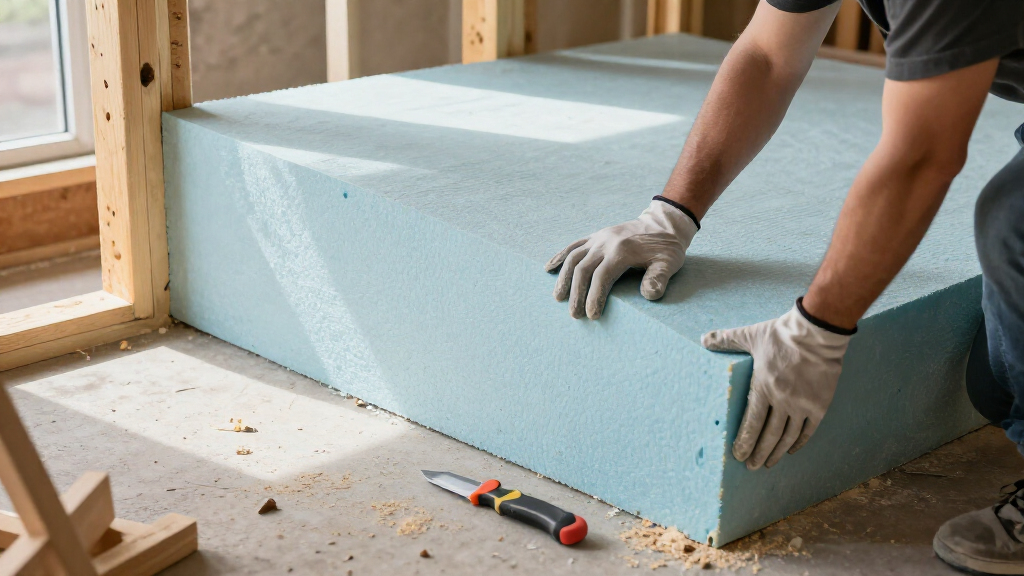

I narrowed this roundup to four foam board products with different jobs: Pangda’s mesh-reinforced panels suit tile installations, while the 2-inch Green XPS boards offer the highest stated R-value in this lineup for compact insulation projects. For more pieces at a thinner profile, the 1-inch Green XPS six-pack is a flexible small-project choice, and the half-inch boards fit situations where a slim layer matters more than high insulation value. The main tradeoff is scale: these Green XPS packs are made from small panels, not full-size sheets for insulating a room or foundation.

Get business pricing on tools and workshop supplies
- Business-only prices and quantity discounts
- Tax-exempt purchasing
- Multiple users, one account, clear invoices
I rank the options by how well their listed construction and dimensions match a clear insulation or substrate task. That means the Pangda product earns a place for a specialized wet-area application, but it is not a general replacement for XPS boards. Before choosing, match the board to the job: tile backing, required thickness, R-value, moisture exposure, and total area all matter more than a broad label like “foam board insulation.”
Complete the kit



Key Takeaways
- Pangda is the specialized pick for shower and bathroom tile projects because its XPS core has fiberglass mesh reinforcement and is described as a waterproof tile substrate.
- The 2-inch Green XPS pack is the only listed option with a stated R-value of 10, but its three 15 × 12-inch pieces cover a small area.
- The 1-inch Green XPS six-pack gives buyers more small panels than the 2-inch pack, but its description does not state an R-value.
- The half-inch Green XPS boards have a stated R-value of 2.8 and six square feet of coverage, making them a thin-layer option rather than a high-insulation solution.
- All three Green XPS options use small panels; for broad wall, roof, or foundation coverage, compare against full-size insulation sheets and verify code and assembly requirements.
| Pangda Waterproof XPS Foam Tile Backer Boards, 48 x 32 x 1/2 Inches, 6-Pack |  | Best for Tile Backer Applications | Material: Extruded polystyrene foam with fiberglass mesh reinforcement | Dimensions: 48 × 32 × 1/2 inches per panel | Quantity: 6 panels | VIEW LATEST PRICE | See Our Full Breakdown |
| Green XPS Insulation Foam Boards, 2 in Thick, 3 Pieces |  | Best for Compact Projects Needing the Highest Stated R-Value | Material: XPS (extruded polystyrene) | Quantity: 3 pieces | Dimensions per piece: Approximately 15 × 12 × 2 inches; length and width may vary by 0.25 inch | VIEW LATEST PRICE | See Our Full Breakdown |
| Green XPS Foam Insulation Boards, 1 in Thick, 6-Pack, 15 × 12 in |  | Best Value in Panel Count for Small Insulation Jobs | Material: XPS (extruded polystyrene) | Color: Green | Thickness: 1 inch | VIEW LATEST PRICE | See Our Full Breakdown |
| Green XPS Foam Insulation Boards, 1/2-Inch Thick, 6-Pack |  | Best for Thin Layers and Shallow Clearances | Material: XPS (extruded polystyrene) | Color: Green | Thickness: 1/2 inch | VIEW LATEST PRICE | See Our Full Breakdown |
| foam board insulation | Material | Quantity | Listed applications | Color |
|---|---|---|---|---|
| Pangda Waterproof XPS Foam Til | Extruded polystyrene foam with fiberglass mesh reinforcement | 6 panels | Shower walls and floors, niches, benches, vanities, and countertops | Yellow |
| Green XPS Insulation Foam Boar | XPS (extruded polystyrene) | 3 pieces | Thermal insulation, moisture protection, crafts, and wall, window, ceiling, or floor coverings | — |
| Green XPS Foam Insulation Boar | XPS (extruded polystyrene) | 6 pieces | Thermal insulation, moisture protection, crafts, and wall, window, ceiling, or floor covering | Green |
| Green XPS Foam Insulation Boar | XPS (extruded polystyrene) | 6 pieces | Thermal insulation, moisture protection, crafts, and wall, window, ceiling, or floor covering | Green |
More Details on Our Top Picks
Pangda Waterproof XPS Foam Tile Backer Boards, 48 x 32 x 1/2 Inches, 6-Pack
I place the Pangda first for buyers whose actual goal is a tile-ready panel in a bathroom, not for people shopping for ordinary wall or attic insulation. Its XPS foam core and fiberglass mesh reinforcement are aimed at supporting direct tile application, and the product description identifies shower walls and floors, niches, benches, vanities, and countertops as possible uses. That specialization gives it a clearer installation role than the small Green XPS panels, which are described more broadly for insulation and crafts.
The larger 48 × 32-inch panels are also a more practical starting format for lining a bathroom surface than 12- or 15-inch boards. Six panels can cover a larger continuous area, although layouts around plumbing, corners, niches, and benches will still call for careful measuring and trimming. The tradeoff is thickness: at half an inch, it is not a thick thermal-insulation board, and the listing does not provide an R-value. I would choose it for the tile-substrate function, not as a way to maximize insulation.
Compared with the half-inch Green XPS pack, Pangda has mesh reinforcement and a stated tile application, but the Green boards are simpler small-format insulation and craft material. The listing gives a total item weight of 42.4 pounds, which may make handling and moving the package less convenient than the lightweight description of the smaller boards suggests. I would also verify the manufacturer’s installation and waterproofing instructions for the complete assembly rather than treating the panel alone as a finished shower system. This is the strongest fit here for a bathroom-tile task, but the most specialized choice.
Pros:- Fiberglass mesh reinforcement is specified for tile installation.
- The listing describes the foam core as waterproof.
- Larger 48 × 32-inch panels suit bathroom layouts better than the small Green XPS pieces.
- Direct tile application and several bathroom uses are specified.
Cons:- At 1/2 inch thick, it is not the lineup’s high-insulation option, and no R-value is listed.
- Panels may need trimming for a particular layout.
- The listed 42.4-pound item weight may make package handling less convenient.
Best for: Buyers building or remodeling a shower or other bathroom area who need a larger-format, mesh-reinforced foam tile substrate.
Not ideal for: Buyers seeking a high-R-value insulation board, a general-purpose craft panel, or a product whose installation does not involve tile.
- Material:Extruded polystyrene foam with fiberglass mesh reinforcement
- Dimensions:48 × 32 × 1/2 inches per panel
- Quantity:6 panels
- Item weight:42.4 pounds
- Water resistance:Described as waterproof
- Color:Yellow
- Shape:Rectangular
- Listed applications:Shower walls and floors, niches, benches, vanities, and countertops
Our verdict“I recommend Pangda for tile-backed bathroom work, but not as a stand-in for thicker thermal insulation boards.”
Green XPS Insulation Foam Boards, 2 in Thick, 3 Pieces
This three-piece pack stands out among the Green XPS options because it is 2 inches thick and carries a stated R-value of 10. That makes it the most compelling choice in this lineup when a compact project needs more insulation per board than the thinner alternatives provide. The boards are described as moisture-resistant, stiff, and lightweight, and the supplied information says they can be cut with a razor or hot knife. Those traits can help with small fitted sections, crafts, or localized covering work.
Its limitation is just as clear: each piece is only about 15 × 12 inches, and there are three pieces in the pack. Compared with the six-pack of 1-inch boards, it gives buyers fewer individual panels and less flexibility for a project with many small areas. Compared with Pangda, it is a thermal-insulation-oriented board rather than a mesh-reinforced tile substrate. I would not choose it for tiling a shower or for covering a large wall, ceiling, or floor without first calculating the actual coverage and confirming the intended assembly.
The thickness may be useful where a deeper panel fits, but it can be awkward in a narrow gap or where a finished surface needs to stay nearly flush. The listed dimensions can vary by up to 0.25 inch, so buyers planning tight-fitting pieces should measure and allow for adjustment rather than designing around perfectly exact dimensions. I rank it above the thinner Green boards because it has the strongest stated thermal figure; I rank Pangda above it overall only because Pangda fills a distinct, more fully specified tile-backer role.
Pros:- The listed R-value of 10 is the highest stated thermal value among these four products.
- Two-inch thickness suits compact applications with room for a deeper board.
- Moisture-resistant, stiff, and lightweight construction is specified.
- Can be cut with a razor or hot knife for shaped pieces.
Cons:- Only three small 15 × 12-inch boards are included.
- The dimensions may vary by up to 0.25 inch.
- The thicker profile may not fit shallow gaps or flush-finish plans.
Best for: Buyers insulating a small area or making fitted craft pieces where a 2-inch board and stated R-10 value suit the available space.
Not ideal for: Buyers covering large surfaces, needing many small pieces, requiring a thin layer, or installing tile over a reinforced substrate.
- Material:XPS (extruded polystyrene)
- Quantity:3 pieces
- Dimensions per piece:Approximately 15 × 12 × 2 inches; length and width may vary by 0.25 inch
- Thickness:2 inches
- R-value:10
- Properties:Moisture-resistant, stiff, and lightweight
- Cutting:Razor or hot knife
- Listed applications:Thermal insulation, moisture protection, crafts, and wall, window, ceiling, or floor coverings
Our verdict“I would pick this pack for a small, thickness-tolerant insulation job where its stated R-10 value matters more than broad coverage.”
Green XPS Foam Insulation Boards, 1 in Thick, 6-Pack, 15 × 12 in
For a buyer who wants several small pieces without moving to the half-inch profile, this six-pack of 1-inch XPS boards is the most balanced Green option in the group. Each panel is approximately 15 × 12 inches, so the pieces are still suited to patch-sized areas, craft work, and small coverings rather than whole-room insulation. The added quantity gives more freedom to cut separate shapes or address several modest gaps, while the 1-inch thickness avoids the bulk of the 2-inch boards.
Compared with the 2-inch Green pack, this one provides twice as many pieces but does not list an R-value. Buyers should not assume it delivers half the thermal performance or make a direct R-value comparison from thickness alone; the supplied information simply does not state a figure. Compared with the half-inch pack, it is a thicker board but has larger 15 × 12-inch pieces rather than 12 × 12-inch pieces. That makes it a reasonable middle ground when the work needs a bit more depth than a thin covering but does not need the deepest option.
The product is described as moisture-resistant, stiff, and lightweight, and it can be cut with a razor or hot knife. Its small format remains the main drawback: six panels can still fall short quickly on a broad surface, and the dimensions may vary by up to a quarter inch. I rank it behind the 2-inch boards for stated thermal information and behind Pangda for tile-specific construction, but it is the clearest choice here for buyers who value a higher piece count and a practical middle thickness for small jobs. I would check the required area and cut plan before ordering.
Pros:- Six panels provide more individual pieces than the 2-inch three-pack.
- One-inch thickness offers a middle profile between the other Green XPS options.
- Moisture-resistant, stiff, and lightweight material is specified.
- Can be cut with a razor or hot knife.
Cons:- No R-value is provided in the supplied specifications.
- Small 15 × 12-inch panels limit coverage on larger projects.
- Dimensions may vary by up to 1/4 inch.
Best for: DIYers handling several small insulation, covering, or craft tasks who want six panels at a moderate 1-inch thickness.
Not ideal for: Buyers who need a published R-value, full-size sheets for broad coverage, a 2-inch panel, or a mesh-reinforced tile backer.
- Material:XPS (extruded polystyrene)
- Color:Green
- Thickness:1 inch
- Dimensions per piece:Approximately 15 × 12 inches, with up to 1/4-inch variation
- Quantity:6 pieces
- Moisture resistance:Described as moisture-resistant
- Cutting:Razor or hot knife
- Listed applications:Thermal insulation, moisture protection, crafts, and wall, window, ceiling, or floor covering
Our verdict“I recommend this six-pack for small, varied projects where panel count and moderate thickness matter more than a published R-value.”
Green XPS Foam Insulation Boards, 1/2-Inch Thick, 6-Pack
This half-inch six-pack is the most appropriate Green choice when the available space is shallow or the buyer needs a thin covering that can be shaped for a modest project. It is the only Green option here with both a stated total coverage figure and a published R-value: 6 square feet total and R-2.8. That makes it easier to compare against a small task’s area and insulation target than the 1-inch six-pack, whose listing provides no R-value. The boards are also described as stiff, lightweight, moisture-resistant, and less prone to crumbling than Styrofoam.
The gain in a slim profile comes with a clear limit. R-2.8 is the lowest stated R-value among the products that publish one, and half an inch cannot provide the depth of the 2-inch boards. It is better suited to a thin layer or small craft application than to a project where substantial thermal resistance is the priority. Compared with the 1-inch six-pack, this one has smaller 12 × 12-inch pieces and half the thickness, but offers explicit coverage and R-value details. Compared with Pangda, it is not described as a tile backer and has no fiberglass mesh reinforcement.
Six pieces may sound ample, yet the supplied coverage is only 6 square feet in total, so I would calculate the area before treating it as a wall or floor solution. The stated dimensions can vary by up to a quarter inch; that matters when cutting multiple pieces to align closely. Its useful distinction is not superior insulation but low profile and clear small-project specifications. I rank it fourth because the other options serve more specific or higher-insulation needs, though it may be the sensible buy when clearance is tight and R-2.8 matches the plan.
Pros:- The listing states R-2.8 and six square feet of total coverage.
- Half-inch thickness fits shallow clearances better than the thicker Green boards.
- Moisture-resistant, stiff, and lightweight construction is specified.
- Can be shaped with a razor or hot knife.
Cons:- The listed R-value is lower than the R-10 figure on the 2-inch boards.
- Six square feet total may be inadequate for larger surfaces.
- Dimensions may vary by up to 1/4 inch.
Best for: Buyers who need a thin, cuttable board for a small area and can work with the stated R-2.8 value and 6-square-foot coverage.
Not ideal for: Buyers seeking higher insulation value, large-area coverage, thicker boards, or a reinforced substrate for direct tile installation.
- Material:XPS (extruded polystyrene)
- Color:Green
- Thickness:1/2 inch
- Dimensions per piece:Approximately 12 × 12 inches, with up to 1/4-inch variation
- Quantity:6 pieces
- Coverage:6 square feet total
- R-value:2.8
- Properties:Moisture-resistant, stiff, lightweight, and described as resisting crumbling
- Listed applications:Thermal insulation, moisture protection, crafts, and wall, window, ceiling, or floor covering
Our verdict“I would choose this pack for a small, thin-layer job, not for substantial insulation or broad coverage.”

How We Picked
I compared these four products by their intended use, stated material, thickness, panel dimensions, quantity, moisture-related claims, and available R-value information. Since the options do not all serve the same purpose, I did not rank them as interchangeable sheets. The Pangda boards are a tile backer substrate with fiberglass mesh, while the other three products are small XPS boards described for insulation, moisture protection, and craft or covering projects.
My ranking favors a clear match between product design and buyer task. Pangda comes first for a defined bathroom-tile role, though it is not my pick for ordinary thermal insulation. Among the Green XPS products, the 2-inch option ranks ahead on stated thermal value, the 1-inch pack follows for buyers who need more pieces at moderate thickness, and the half-inch pack is best for a thin layer where its lower stated R-value can still fit the plan. I also account for limits: small formats restrict coverage, dimensions have stated tolerances, and only two listings provide an R-value. I do not infer performance beyond the supplied specifications.
These products are not substitutes for a complete building-envelope design. I would check local requirements, installation instructions, compatible adhesives and finishes, fire protection rules, and whether the selected board is approved for the exact assembly before buying. In particular, a waterproof tile substrate is not automatically a complete shower waterproofing system, and small craft-oriented XPS panels should not be assumed suitable for every structural or code-regulated application.
| foam board insulation | Material | Color | Listed applications | Dimensions per piece |
|---|---|---|---|---|
| Pangda Waterproof XPS Foam Til | Extruded polystyrene foam with fiberglass mesh reinforcement | Yellow | Shower walls and floors, niches, benches, vanities, and countertops | — |
| Green XPS Insulation Foam Boar | XPS (extruded polystyrene) | — | Thermal insulation, moisture protection, crafts, and wall, window, ceiling, or floor coverings | Approximately 15 × 12 × 2 inches; length and width may vary by 0.25 inch |
| Green XPS Foam Insulation Boar | XPS (extruded polystyrene) | Green | Thermal insulation, moisture protection, crafts, and wall, window, ceiling, or floor covering | Approximately 15 × 12 inches, with up to 1/4-inch variation |
| Green XPS Foam Insulation Boar | XPS (extruded polystyrene) | Green | Thermal insulation, moisture protection, crafts, and wall, window, ceiling, or floor covering | Approximately 12 × 12 inches, with up to 1/4-inch variation |
Factors to Consider When Choosing Best Foam Board Insulation
I would start by naming the job, then compare board type and coverage. These four listings include one tile substrate and three small-format XPS insulation boards; treating them all as the same product can lead to a poor fit.
Start With the Intended Application
For bathroom tile, the Pangda panels are the only option in this roundup described as a tile backer: they have fiberglass mesh reinforcement, a waterproof foam core claim, and listed uses such as shower walls, floors, niches, and benches. The Green XPS panels are described for insulation, moisture protection, coverings, and crafts, but are not specified as reinforced tile substrates. I would not choose a generic foam board for tile simply because it is moisture-resistant.
For a small insulation or craft job, the Green panels are the more direct match. Choose among them by depth, stated thermal information, and how many pieces the task needs. For a full wall or building-envelope project, these small panels are unlikely to be the most practical format; compare full-size boards and check the required assembly details.
Compare Thickness and Published R-Value
Thickness alone is not a complete performance specification, so I would use the published R-values where available. The 2-inch Green boards list R-10, while the half-inch boards list R-2.8. The 1-inch Green boards and Pangda tile panels do not provide an R-value in the supplied details. I would not fill that gap by estimating: ask for the relevant product documentation if thermal performance is central to the purchase.
Also check whether the board will fit the cavity or finished assembly. Two inches may offer more depth but can interfere with clearances, trim, or a flush surface. Half an inch fits tighter spaces, though it offers a lower stated R-value. Match the thickness to the plan rather than assuming thicker is always workable.
Calculate Coverage Before Choosing a Pack
The Green products come in small panels: approximately 15 × 12 inches for the 2-inch and 1-inch products, and 12 × 12 inches for the half-inch product. The half-inch listing states 6 square feet total; the other Green listings do not provide a total coverage figure in the supplied specifications. Measure the usable area, account for cuts and waste, and check the panel count before ordering.
Pangda’s 48 × 32-inch panels cover a larger area per piece, which can reduce the number of seams on a bathroom layout compared with the small Green boards. They may still need trimming around corners, plumbing, and fixtures. I would draw a simple layout before deciding whether any pack covers the planned area.
Separate Moisture Resistance From a Complete Waterproofing System
The Green panels are described as moisture-resistant, while Pangda is described as waterproof and designed for tile applications. Those statements do not make the products interchangeable, nor do they specify every joint, seam, penetration, or surface treatment needed in a finished wet area. I would follow the product instructions for the complete installation and verify that the board is approved for the intended use.
For insulation, moisture exposure can affect the suitability of the whole assembly, including seams, finishes, and adjacent materials. A board’s moisture-related description is only one part of the decision; confirm the intended environment and installation details before relying on it.
Plan for Cutting, Fit, and Dimensional Tolerance
The Green XPS descriptions say the panels can be cut with a razor or hot knife. That makes them useful for small shapes and fitted pieces, but the stated dimensions can vary by up to 1/4 inch on some options and by 0.25 inch on the 2-inch pack. For a close fit, measure each board rather than treating the listed dimensions as exact. Allow space for trimming and account for offcuts.
Pangda’s larger panels may need trimming to suit a bathroom layout, and its listed item weight is 42.4 pounds. Think about carrying and positioning the package as well as cutting it. For any product, use appropriate tools and follow the manufacturer’s safety and installation guidance.
Check Suitability Beyond the Product Listing
Foam insulation can be subject to building-code, fire-protection, vapor-control, and installation requirements. I would confirm the relevant rules for the building and location before using a panel inside a wall, ceiling, floor, or other regulated assembly. The supplied listings do not establish that any one of these products meets every code or assembly requirement.
Likewise, verify compatibility with the planned adhesive, finish, tile system, and substrate. For a large project, compare product documentation for approved uses and performance instead of extrapolating from a small-board listing. This check matters most when moving from crafts or minor coverings into permanent construction.
Frequently Asked Questions
Which option has the highest stated R-value?
The 2-inch Green XPS boards have the highest stated figure in this roundup, at R-10. The half-inch Green boards list R-2.8. The 1-inch Green pack and Pangda tile panels do not provide an R-value in the supplied specifications, so I would not assign them an estimated figure. If thermal performance is the deciding factor, request product documentation and confirm how the board will be installed.
Can I use the Pangda panels as ordinary insulation board?
Pangda is described primarily as a waterproof, mesh-reinforced foam tile substrate for bathroom applications. It may have an insulating foam core, but the supplied listing does not state an R-value, so I would not select it as a high-performance insulation board based on this information alone. Its clearest advantage over the Green XPS products is the stated fiberglass reinforcement and direct tile application, not a published thermal rating.
Are the Green XPS boards suitable for a large wall or floor?
The Green products in this roundup are small panels, roughly 12 or 15 inches across, and the half-inch listing gives only six square feet of total coverage. They may suit patches, craft work, small coverings, or other limited projects, but the format can mean many seams and substantial cutting on a broad surface. I would calculate coverage and compare full-size insulation sheets before using them for a large wall or floor.
Does moisture resistance mean I can use a board in a shower?
No. Moisture resistance on the Green XPS products is not the same as a product specifically described as a tile backer, and it does not establish that a complete shower assembly is waterproof. Pangda is the only listed option with fiberglass mesh reinforcement and a stated bathroom tile-substrate use, but buyers should still follow its installation instructions for seams and penetrations. Verify the full system requirements before building a wet-area assembly.
How should I choose between the 1-inch and 1/2-inch Green packs?
I would choose the 1-inch six-pack when a moderate board depth and six separate 15 × 12-inch panels suit the job; its listing does not state an R-value. The half-inch six-pack fits a shallower space and lists R-2.8 plus six square feet of total coverage, but its pieces are smaller at about 12 × 12 inches. Compare clearance, required coverage, and available thermal documentation rather than choosing on thickness alone.
Conclusion
For a bathroom tile project, I would choose Pangda because it is the only option here specified as a mesh-reinforced tile substrate; I would still confirm the full waterproofing and installation system. For a small insulation job where a published thermal figure matters, my pick is the 2-inch Green XPS pack, with the caveat that three small pieces will not cover much area. Buyers who want more small panels at a middle thickness should choose the 1-inch six-pack, while those working in a shallow gap and needing only a modest layer can consider the half-inch pack.
If the project covers a large wall, floor, ceiling, or foundation, I would look beyond these small-format boards and compare full-size products with documentation for the exact assembly. The best choice here depends less on a universal ranking than on matching tile use, thickness, stated R-value, and coverage to the job.
Halloween Picks

Spirit Halloween 54-Inch Sitting Scarecrow Animatronic

Vexalify 11-Inch Halloween Pumpkin Fog Machine with 12-Color Lights

Kalolary 12ft Halloween Witch Haunted House Inflatable Archway
As an affiliate, we earn on qualifying purchases.